2021 Istanbul Travel Guide: Transportation Tips
Istanbul is Turkey's largest city with a population of over 20 million. Surrounded by sea on two sides, its terrain is hilly with many slopes. The roads are winding and narrow, with frequent ups and downs, making it feel like a roller coaster ride. Sometimes you have to stop on a slope at a red light, which can easily lead to traffic accidents. For example, on downhill sections, weak brakes can cause rear-end collisions. The hardest part is uphill, especially for manual transmission cars, which are prone to rolling back. Only experienced drivers can handle such road conditions, and even I, a veteran driver with nearly 20 years of self-driving experience, feel inadequate. Fortunately, most drivers here are courteous and yielding. This might be a common phenomenon, so drivers don't seem to have any urgency. Additionally, about 80% of vehicles here are manual transmission, so whether you take a taxi or a private car, combined with the road conditions, the ride comfort is poor, making people prone to motion sickness and vomiting. It's advisable for those who are prone to motion sickness to bring motion sickness patches or medication. Moreover, the main areas of Istanbul are extremely crowded, with high population density, narrow and winding roads, and many private cars, resulting in heavy traffic. After the pandemic restrictions were lifted, the city became especially congested from 6:30 AM to 11 PM, or even later. No first-tier city in China has such severe traffic jams. Therefore, if you are traveling independently, it is recommended to get a public transport card and prioritize public transportation, unless you have too much luggage.
Turkey relies on cash transactions, so you must have cash on hand, and only in Turkish Lira (TL). If you have US dollars (I haven't tried RMB), you need to exchange them for Lira at exchange offices. It's recommended to exchange money at the exchange offices along the tram line in the old city, as they offer better rates. Each exchange office has a different rate, with fluctuations of about 0.1. You can also use UnionPay or credit cards to withdraw cash from ATMs that have these card logos. It's recommended to use ATMs with signs like the US dollar symbol or a four-leaf clover, as they offer better exchange rates and lower fees, and the interface supports Chinese. Avoid exchanging money at the airport, as you could lose nearly 1.0 on the exchange rate.
You can get a SIM card at the telecom office in the airport arrival hall, which is open 24 hours. You can also get one near your hotel, which might be cheaper. It's recommended to get a temporary card for about 200 TL, which includes 20GB of data and 500 minutes of local calls. You'll need your passport for registration. Internet in Turkey is not as fast as in China; most networks are 3G, so try to get a 4G card for more stable service.
3. Passport and Health Code
Before entering the country, you need a negative PCR test result within 72 hours and apply for a health code on the Turkish visa website. The health code needs to be linked to your transport card.
The process is similar to getting a transport card in China. There is a deposit of about 20 TL. Once you get the card, you can top it up. It's recommended to top up 50 TL, which will allow you to visit many attractions in Istanbul. The card is valid for buses, metro, the popular small train, trams, and ferries.
5. Where to Get It
You can get it at the service counters at any bus stop. If prepared, it takes less than 10 minutes to get the card.
6. Map App
It's recommended to download Google Maps, which has high information density and accuracy, and allows real-time checking of routes, stations, and ferry information.
7. Translation App
In Istanbul, most young people speak some everyday English, but some older staff may not understand English. In that case, you'll need a translation app, such as Baidu or Google. Since Turkish uses special characters, translation apps may not always be accurate, especially when translating Turkish to Chinese, which has about 50% accuracy and can be misleading. You'll have to rely on your own comprehension. However, translating Chinese to Turkish is mostly accurate, about 90% accuracy, showing the power of the Chinese language. So, using translated Turkish text, most locals can understand the meaning.
This is a route from the airport to major areas in the city, operating 24 hours with high frequency. The station is on the second basement floor of the arrivals building, and the route map is clearly posted on the wall. You can buy tickets with cash or UnionPay card. Since the airport bus uses highways, similar to the outer ring roads in first-tier Chinese cities, it doesn't get stuck in traffic. Usually, you can reach your destination within an hour. Before boarding, use the map app to locate your hotel. You can also ask the hotel in advance, as some hotels offer airport pickup. This information is clearly indicated on the map app.
Compared to first-tier Chinese cities, Istanbul's metro network isn't extensive, but it's sufficient. It connects with airport buses, express lines, trams, and regular buses. The system is somewhat old, but it matches the ancient architecture and scenery of the city. There is one particularly long line that runs from the east to the west of the city, crossing the Bosphorus Strait. Due to the terrain, the line sometimes goes underground and sometimes above ground, offering a unique experience.
The BRT express line is also one of the best options, operating 24 hours. It runs from the south to the north of Istanbul, crossing the European and Asian sides via the Bosphorus Bridge and the Eurasia Bridge. The full route is about 80 km and takes nearly 2 hours. The buses are mostly extended Mercedes-Benz buses, and the fare for the entire route is only 5 TL, which is very cheap. It connects with the metro, tram, high-speed train, and regular bus. Unlike in China, there are no route changes; it's a fixed bus route. Some buses skip stops, similar to short or long express services in China. During peak hours, buses depart every minute, and sometimes three or four buses arrive at the same stop. Considering the city's population of over 20 million, such efficiency is necessary. If you have time, try it. Sitting on the bus, watching the scenery and the traffic jams along the way, while you glide smoothly on the BRT, you'll feel like you're on a VIP line—an unforgettable experience!
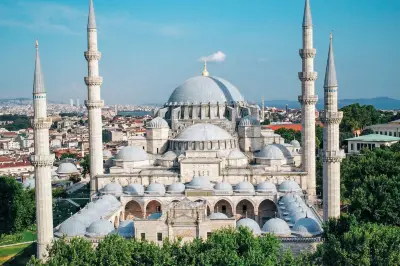
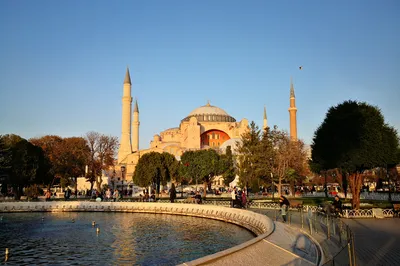
This tram line runs through the old city of Istanbul, connecting with express lines, metro, buses, and ferries. Along the line are famous tourist attractions, including Topkapi Palace, Süleymaniye Mosque, Blue Mosque, Hagia Sophia, Archaeological Museum, Chora Church, Dolmabahçe Palace, Basilica Cistern, Bosphorus Bridge, and Beylerbeyi Palace. All are concentrated along this tram line, with many stops allowing you to get on and off anytime. You need to pay each time you board. This is a must-ride line, combining old and new. Riding it gives you a sense of time not inferior to Istiklal Avenue.
Note: For the metro and express lines, you must tap your card at the fare refund machine after exiting the station; otherwise, you will be charged the full route fare.
This route is a sea transportation between major piers in the city. You must not miss it, as there are many route options. If you don't mind the wind and sun, choose the top deck of the ferry. You'll be able to enjoy Istanbul's various views from different angles and times. Crossing from the European side to the Asian side costs only a few lira, which is a great deal.
Shared bikes and e-scooters are the best way to cover short distances. They work similarly to those in China: download the app, register, link a credit card, top up, and scan to use. Charged by the minute. E-scooters are a bit more expensive than bikes but can navigate narrow alleys and offer a better view of the scenery. You can park them anywhere within the designated area, which is very convenient. For shared bikes, you must return them to designated spots.
Car sharing works the same as in China. If you want to drive yourself, it's a good option. However, you need to have your driver's license certified to register. There aren't many pickup points. If interested, leave a comment.
Taxis are the most convenient way to get around any city. As mentioned earlier, during peak hours in the old city, traffic is particularly bad, so it's better to take public transport. Especially important: always insist on using the meter and open a map app for navigation to avoid overpaying. If a driver refuses to use the meter or negotiate a fair price, refuse. If someone offers to help with your luggage, make sure to agree on terms first. This year, due to the pandemic, everyone is struggling. A small number of drivers might overcharge or have hidden fees. Be careful! You can also download a local taxi app and register to use.
Many travel apps allow you to book rental cars online in advance, but remember to get an English certification for your driver's license. Also, be sure to specify an automatic transmission vehicle; otherwise, you might get a manual. Driving in a city like Istanbul is very challenging, so this could cause many problems and risks.
Istanbul is truly a tourist destination and a living open-air museum. Strolling through its streets and alleys, you'll see Ottoman-era buildings, the Blue Mosque, Hagia Sophia, Istiklal Avenue, Galata Tower, the Grand Bazaar, Topkapi Palace, the Maiden's Tower, and the Bosphorus Strait. The experience is profound and almost time-travel-like.
Special note: Behind the beauty of every tourist city, there are safety risks. I will summarize these in my next article to avoid affecting your travel mood.
Istanbul is a tourist paradise with hilly terrain and high population density, leading to severe traffic congestion. However, the city's public transport system is excellent, with many lines operating 24 hours and affordable fares. If you travel light, it's best to use public transport; it won't get stuck in traffic, and you'll see unique scenery. The only thing to be mindful of is epidemic prevention. Carry hand sanitizer with you, and use it frequently. Each station also provides sanitizer. Map apps are advanced, so you can choose different routes and modes based on your needs.
Travel Notes Index
1. Istanbul Transportation Overview
2. Getting a Transport Card: Requirements
3. Airport Shuttle Routes
4. Metro Lines
5. BRT Express Line
6. Tram Line
7. Public Ferries
8. Shared Bikes and E-scooters
9. Car Sharing
10. Taxis
11. Car Rental
12. Walking
13. Summary
Travel Information
Hotel Index
Tour Index
Ticket Index
Website Navigation
Travel Index
Cruise Index
Corporate Travel Index
Franchise Cooperation
Distribution Alliance
Friendship Links
Corporate Gift Card Procurement
Insurance Agency
Agency Cooperation
Hotel Franchise
Destination and Attraction Cooperation
More Partnerships
About Ctrip
About Ctrip
Ctrip Hot Topics
Contact Us
Careers
User Agreement
Privacy Policy
Security Center
Ctrip Content Center
Intellectual Property
Trip.com Group Algorithm Disclosure