Collision of Ancient Civilizations - A 14-Day Self-Drive Tour in Turkey
Sometimes, choosing a travel destination involves a bit of chance, such as suddenly coming across a book, hearing a song, or seeing a painting... The trip to Turkey originated from the stirring work "Byzantine Empire." The Byzantine Empire, as the longest-standing monarchy in European history, left a brilliant mark on the long tapestry of Europe, like a meteor streaking across the night sky, fleeting yet radiating the most dazzling light. The great Roman Empire did not miss the Middle Ages; it simply moved to Constantinople and continued a thousand-year legend.
The life of the Roman Empire (or Byzantine Empire) began with the fall of the Western Roman Empire. It safeguarded the civilization and glory of the Roman Empire for another thousand years, witnessing the sunset of the Roman Empire and bringing about the dawn of the modern world.
Throughout its brief yet long history, the Byzantine Empire experienced many great rises and falls. It saw glorious eras under wise rulers like Constantine, Theodosius, Basil II, and the Komnenoi, but also often fell into dark ages of warlord fragmentation and foreign invasions. Situated at the crossroads of Europe, Asia, and Africa, for a thousand years, it witnessed one great collision of Eastern and Western civilizations after another: the Hunnic invasions, the collapse of the Western Roman Empire, the rise of the Arab Empire and the establishment of the Islamic world, the split of Christianity into Catholicism and Orthodoxy, the Crusades, the Mongol cavalry sweeping across Eurasia, and the rise of the Turkish Empire... The Byzantine Empire faced challengers from all directions, dominating a vast Orthodox world centered on Constantinople, whose influence at its peak covered modern-day Turkey, the Balkans, Ukraine, southwestern Russia, southern Italy, and the Mediterranean coast of Africa.
But in the end, Byzantium lost this world. In 1453, Constantinople fell to the Turkish army, and the great Byzantine Empire perished. Its legacy to later generations is eternal. From precious documents that inspired the European Renaissance and the Age of Discovery, to the Orthodox faith and Cyrillic script fully inherited by Russia, to the timeless city of Istanbul, the Byzantine legacy has profoundly influenced the course of world development. It can be said that without the Byzantine Empire, our world would certainly not be what it is today. Yet the core of the Byzantine Empire, Constantinople, fell and transformed into today's Istanbul.
Our journey began in Istanbul, passing through the ancient and modern; religion and civilization; nature and development; crossing and inheritance, and finally returning to this city that has endured countless storms and vicissitudes yet still stands proudly...
Day 1: Istanbul – Check in at Coskun House, then visit Topkapi Palace, after lunch visit Hagia Sophia, watch the sunset at the Bosphorus Bridge
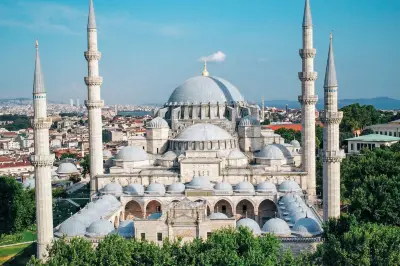
Day 2: Istanbul – In the morning, visit the Blue Mosque and the Basilica Cistern, after a noon break visit Suleymaniye Mosque, watch the sunset at the Bosphorus Bridge
Day 3: Safranbolu – Distance: 410 km. Check in at Sabri Bey Konak Otel, overlooking the entire Safranbolu
Day 4: Hermes Cave Hotel – Distance: 515 km. En route, visit Lake Tuz (Salt Lake), a salt lake in central Turkey, known as Turkey's "Sky Mirror"
Day 5: Hermes Cave Hotel – Cappadocia is famous for its fairy-tale-like fairy chimneys and the frescoes left by monks
Day 6: Edeman Konya Hotel & Convention Center – Distance: 285 km. Pass through Monks Valley and Sultanhan Caravanserai to Konya
Day 7: Lazer Pension – Distance: 288 km. After breakfast, visit the Mevlana Museum in Konya, then pass through the Aspendos Theater to Antalya. In the evening, explore the old city of Antalya
Day 8: Alida Hotel – Distance: 398 km. Check in at a hotel opposite Pamukkale
Day 9: Alida Hotel – In the morning, paragliding; visit the Laodicea ruins, then enter Pamukkale
Day 10: DoubleTree by Hilton Hotel Izmir Airport – Distance: 296 km. Pass through the Temple of Aphrodite and the Ephesus ruins to Izmir
Day 11: Gizem Pansiyon – Distance: 341 km. Pass through Bergama, Red Church, Assos, and then to Canakkale
Day 12: Turkoman Hotel – Distance: 319 km to Istanbul
Day 13: After breakfast, enjoy a Turkish bath; walk along Istiklal Avenue starting from Galata Tower. Gather at a shopping center, rest, then head to the airport for the return flight to Hong Kong
After a night of flying, our spirits were still good. Our hotel was in the heart of Istanbul's old city, with major attractions within walking distance. Istanbul, influenced by the culture, language, and religion of its rulers, has had various names: Byzantium, Constantinople, and Constantinopolis. Besides these, it was also called "New Rome" or "Second Rome" because Constantine the Great established this purely Christian capital of the Roman Empire on the Greek colony of Byzantium to counterbalance Rome, which was still filled with pagans. Another name for Istanbul is "City of Seven Hills," as the old city was built by Constantine on seven hills, mirroring Rome's seven hills. These seven hills are represented in the city's emblem by seven mosques, one on each hill. Due to its immense importance and wealth throughout the Middle Ages, Istanbul was also known as Vasileousa Polis ("Queen of Cities").
The old city in the early morning was quiet and cool, completely unlike a city containing so much richness. Quickly finding our inn, our first visit was to Topkapi Palace. From 1465 to 1853, Topkapi Palace was the main residence and official seat of the Ottoman sultans. It was a venue for state ceremonies and royal entertainment and is now a major tourist attraction. The name Topkapi translates to "Cannon Gate," as cannons were once placed in the fortifications there.
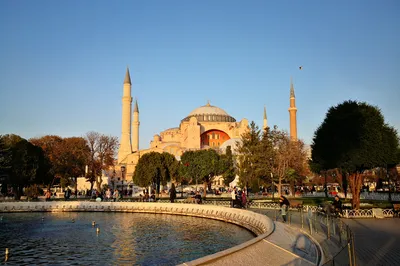
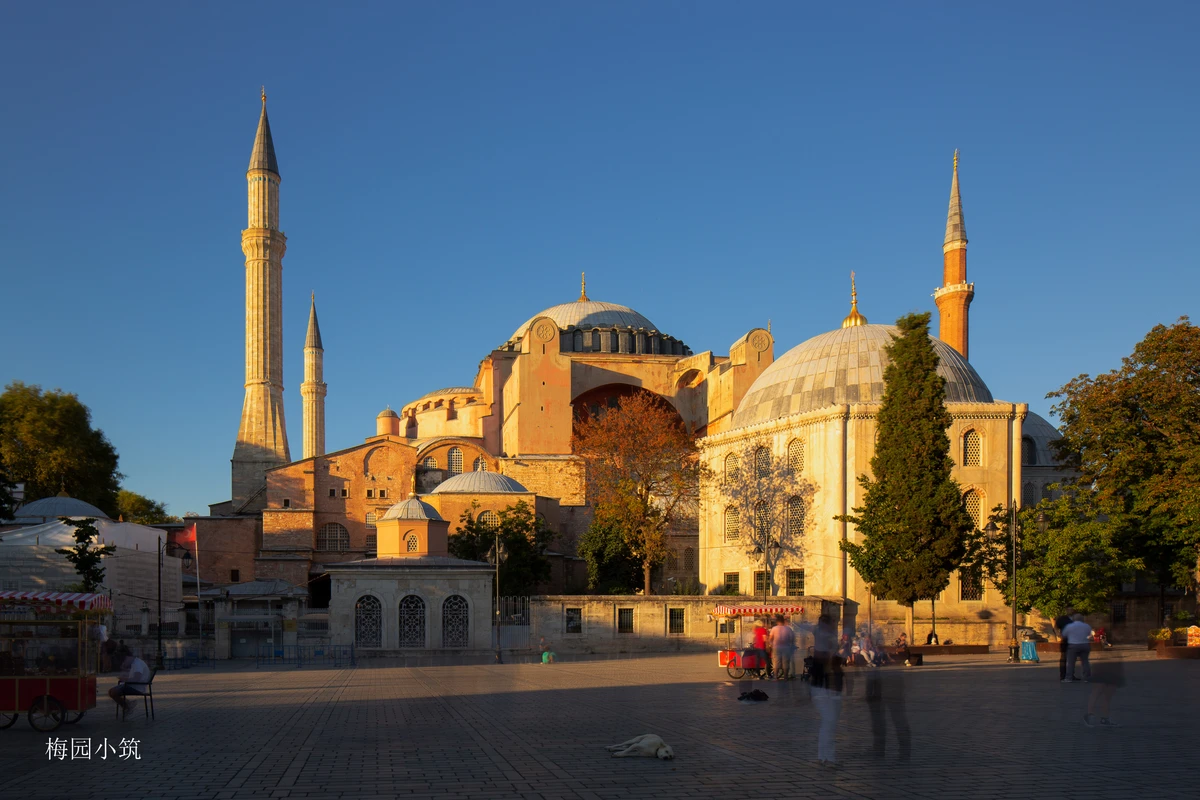
Leaving Topkapi Palace at noon, we enjoyed a hearty lunch nearby and then moved on to Hagia Sophia. With a history spanning nearly 1,500 years, Hagia Sophia is famous for its massive dome and is a masterpiece of Byzantine architecture that "changed architectural history." The cathedral is named after Saint Sophia, meaning "Holy Wisdom" in Greek, and is dedicated to Jesus in Orthodox Christian theology. It is a museum full of mystery, worth exploring in detail.
Leaving Hagia Sophia in the evening, we hurried to the Bosphorus Bridge to watch the sunset. The Bosphorus Strait, also known as the Istanbul Strait, connects the Black Sea and the Sea of Marmara, separating the European and Asian parts of Turkey. The name Bosphorus means "cow's ford," according to legend, Io, transformed into a heifer, wandered across the Thracian Bosphorus. Given the strategic importance of the Bosphorus, Byzantine emperors and later Ottoman sultans built numerous fortresses along both sides of the strait, especially on the European side, to defend Constantinople.
The next morning, we found a rooftop restaurant nearby, enjoying breakfast with views of the surrounding churches: the Blue Mosque, Hagia Sophia, and Suleymaniye Mosque, each with its own beauty and charm, along with the graceful curve of the Bosphorus in the distance.
After breakfast, following the call to prayer (Ezan), we visited the Blue Mosque. In Turkey, the call to prayer is heard almost daily, five times a day, summoning Muslims to prayer. The prayer times are determined by the sun's position, so even in the same city, the call times vary daily. The Blue Mosque is one of Turkey's famous mosques, built in the early 17th century. Its interior is adorned with blue and white Iznik tiles, giving it the name "Blue Mosque." It is one of Istanbul's most important landmarks. The mosque features Byzantine-style domes and six minarets, symbolizing the six pillars of faith in Islam. It is one of the world's top ten wonders.
Istanbul has many cisterns, but the Basilica Cistern (Yerebatan Sarnıcı) is the largest. It is 140 meters long and 70 meters wide, supported by 336 Corinthian columns, each 9 meters high, which are said to have been brought from temples in Anatolia. Here, you can also find Medusa's head, one placed upside down as a talisman, and another tilted sideways, both unsolved mysteries sealed for millennia.
From the cistern, you can walk to Suleymaniye Mosque. Perched on the western shore of the Golden Horn, it is considered Istanbul's most beautiful mosque. The complex is built on a complex and steep hill, ingeniously integrating the hill and surrounding streets. For example, the third and fourth madrasas, completed in 1558 and 1559, descend in a terraced fashion toward the Golden Horn, a masterpiece of architectural history.
On the third day, after breakfast at the rooftop restaurant, we drove 400 km to Safranbolu. The old town of Safranbolu preserves intact Ottoman-era houses and buildings, including private museums, mosques, cemeteries, historic fountains, Turkish baths, clock towers, sundials, and hundreds of houses. After restoration, it was inscribed on the UNESCO World Heritage List.
Our guesthouse was located on a high point, and opening the window offered a view of the entire mountain town. It made dragging our luggage up three flights of stairs worthwhile. Since the entire town is a protected heritage site, there are no modern hotels. The guesthouse rooms were furnished with replica medieval items, and hand-embroidered curtains hung on wooden windows. The sound of the mosque's call to prayer would wake us, making us feel immersed in local life.
Lake Tuz, with its reputation as Turkey's "Sky Mirror," is a stop for almost all travelers from Safranbolu to Cappadocia. Perhaps because it was not the tourist season, we encountered no one at the lake. The lake surface was calm like a mirror, and the distant mountains were hazy. At that time, there was not much water in the lake, and the salt flats under the sun were dazzling, not suitable for a long stay.
In the afternoon, we checked into the Hermes Cave Hotel in Cappadocia, located just 50 meters from Uchisar Castle. The hotel is built from caves and dwellings thousands of years old, overlooking the otherworldly, magnificent landscape of Cappadocia. From the restaurant, balcony, or bar, you can enjoy views of the gorges and rolling hills, taking in the splendid scenery of Uchisar and Pigeon Valley.
Cappadocia is famous for its fairy-tale fairy chimneys: peculiar rock formations, caves, and the historical traces of semi-secluded communities are fascinating. It was originally a refuge for Christians fleeing Roman persecution. In the 4th century, a group of monks established the main part of Cappadocia. Over centuries of erosion by wind and water, unique rock hills of various shapes emerged, with thousands of caves carved into them. Many caves still contain frescoes, unique testimonies to the post-iconoclast period of Byzantine art. Cappadocia's unique karst landscape resembles the lunar surface, earning it the nickname "the most moon-like place on Earth."
Cappadocia now has over 150 churches and monasteries built into rocks, pillars, and underground. However, due to wind, rain, and human damage, many are severely deteriorated. The churches we visited, though relatively intact, were missing pillars, doors, or windows. The frescoes in the caves have also suffered. As far as I could see, not a single one was completely undamaged. Even the icons that ordinary people would not dare to defile have almost all lost their eyes. So many fruits of human wisdom have been ruined by the ignorance of a few.
Ihlara Valley (formerly Peristrema) is 120 km northwest of Goreme. It is not a famous attraction and cannot compare in grandeur to the East African Rift or the Grand Canyon, but it has its own unique character. The valley was one of the preferred hermitages for Byzantine monks, leaving many painted cave churches. Descending via 360 steep steps into the valley, you can walk along the Melendiz Suyu stream. If you visit in mid-summer, the valley is lush with vegetation and birdsong, and there are many churches to explore along the way, making it a pleasant hike without a sense of urgency.
The valley is 12 km long, with over 5,000 cave remnants and 105 cave churches. Major churches include: Eğritaş Kilisesi (Stone Carved Church), Kokar Kilise (Aromatic Church, with well-preserved mosaic frescoes), Karanlık Kale Kilisesi (Dark Castle Church), Sümbüllü Kilise (Hyacinth Church), Yılanlı Kilise (Snake Church, named for a three-headed snake in its frescoes), Pürenli Seki Kilisesi (Pine Needle Terrace Church), and Ağaçaltı Kilise (Under the Tree Church).
From Cappadocia, we passed through Monks Valley and Sultanhan Caravanserai to Konya, 285 km away. 102 km from Konya lies the largest caravanserai in Turkey, Sultanhan Caravanserai. In the 12th century, sultans built caravanserais every 40 km along trade routes to ensure the safety of travelers and promote trade, providing rest stops for armies and caravans. These caravanserais functioned like modern hotels, with facilities such as restaurants, restrooms, medical rooms, and mosques for travelers. Most of these caravanserais are now ruins, but a few remain well-preserved.
Konya is one of the oldest cities in Turkey, serving as the capital of the Seljuk Sultanate in the 12th-13th centuries and a traditional religious and cultural center. Konya is the birthplace of the Whirling Dervishes, who believe that all things are in constant rotation, and that the components of humans rotate with the earth and planets. From birth to death, from youth to old age, it is a cycle, an unceasing rotation. The mosques here are also magnificent.
Mevlana Museum is one of Konya's most famous attractions. "Mevlana" means "my master," referring to Jalal ad-Din Rumi, the founder of the Mevlevi order famous for whirling dervishes. Mevlana (1207-1273), a great philosopher from Afghanistan, died in Konya. His order has a huge influence in the Islamic world, attracting 1.5 million pilgrims annually. The museum is notable for its striking green-tiled spire, a landmark of Konya.
Aspendos Ancient Theater, about 40 km east of Antalya, was built in 155 AD. Despite over 2,000 years of earthquakes and wars, it remains nearly intact and is still in use, hosting concerts in summer (June-July). The theater has a diameter of 96 meters and seats 7,000 spectators on stone tiers divided into two sections by a central walkway. At the top, there is a high colonnade reserved for slaves.
The guesthouse we stayed at in Antalya was in the old town, difficult to find; our car circled many times before getting in. The guesthouse was just a few minutes' walk from the old town's main gate, Hadrian's Gate, making it convenient for exploring the old town at night or taking morning walks. This marble gate was built by Roman Emperor Hadrian during his reign (117-138 AD). Its three arches and light columns retain exquisite carvings, with remnants of the old city walls nearby. Today, Hadrian's Gate blends into the modern city; its prominent location makes it a landmark for guesthouses in the old town.
In the limestone terrain of the Antalya suburbs, there are several impressive waterfalls, with Duden Waterfall being the most worth seeing. The waterfall has two sections: the upper waterfall cuts a 14 km long beautiful canyon northeast of Antalya, with many natural trails along the falls, presenting a majestic rushing spectacle from different angles. Below, the turbulent river plunges into the Mediterranean Sea, a breathtaking sight.
Pamukkale, located in Denizli Province in southwestern Turkey, has an adorable name derived from its appearance like a castle of cotton. The "cotton" is formed by spring water flowing down the mountain, calcifying over millennia to create layered, semicircular white limestone terraces, hence the Turkish name "Pamukkale" (cotton castle).
The formation of Pamukkale is due to underground thermal springs rich in minerals constantly emerging from the earth. The water flows from rocks 200 meters above the plain, and over millennia, calcification creates layers of white stepped terraces that look like large cotton bolls on the hillside. The Turkish call it Pamukkale ("cotton palace"). In this hilly area, abundant calcareous hot springs emerge from deep underground and flow down the slopes, causing erosion and deposition. Over long ages, white limestone accumulates on the surface, eroding into cotton-like trapezoidal rocks, forming countless white cotton bolls stacked in layers, resembling cotton stairs, white as snow, like a cotton castle.
Paragliding over Pamukkale was my favorite activity. As the paraglider took off, my heart soared with it. From the air, I could enjoy the beautiful scenery of the thermal town and feel a sense of crossing through time. The merging of the ancient city of Hierapolis with Pamukkale created an unforgettable aerial visual feast.
Hierapolis, from Greek meaning "sacred city," was founded by the Kingdom of Pergamon in the 2nd century BC. Remains include large baths, arenas, streets, a large theater, and a necropolis. The open-air theater is relatively well-preserved. The necropolis contains marble tombs intricately carved, where high-status individuals were buried. The scattered, complete tombs rest on the vast wilderness, bathed in the golden light of the setting sun, evoking a sense of desolate antiquity. The legendary "Gate to Hell" (Ploutonion) was also discovered here by archaeologists in 2015.
The well-preserved Hierapolis Theater is nestled in a mountain hollow. From the top of the theater, you can overlook the entire city, though Hierapolis is now a ruin. The theater is large, carved into the hillside. The stage features exquisite stone carvings and statues, said to accommodate 8,500 to 10,000 spectators.
The ancient city of Laodicea lies 6 km north of Denizli province. It was founded by Antiochus II in 263-261 BC and named after his wife, Laodike. It is situated on a favorable location south of the Lycos River. Local residents traditionally called the city Laodicea. According to historian Pliny, Laodicea was built on the site of a village that was once called Diospolis ("City of Zeus"), and it housed one of the seven famous churches of Asia Minor.
From Pamukkale, we traveled to Izmir via the Temple of Aphrodite and Ephesus, about 300 km. This route is almost a journey through ancient Roman ruins. The ancient city of Aphrodisias, built over 2,000 years ago, is famous for its sculpture school. It still has Greek-style baths, arches, beams, colonnades, and marble columns pointing to the sky, all carved from white marble with intricate patterns and exquisite craftsmanship. The solitary Temple of Aphrodite glimmers coldly under moonlight, accompanying the seasons. The entire site was nearly empty of tourists; only the three of us wandered through the vast temple.
The 3,000-year-old city of Ephesus was built during the Greek colonial period, with the Temple of Artemis as its core structure, one of the Seven Wonders of the Ancient World, located in the center of Selcuk. The main attraction is the ruined temple of Artemis. Unfortunately, this temple, built over 120 years, was burned down by Herostratus in 356 BC, and its ruins have been exposed to the elements for over 2,300 years.
Fortunately, the Library of Celsus, built by the ancient Greek Teonians in the 10th-11th centuries BC, still stands. Through the standing columns and surviving structures, we can fully appreciate the former glory of Ephesus.
From Ephesus, the next destination was Canakkale, about 300 km away, passing through Bergama, Red Church, and Assos. The lively market town of Bergama is famous for the Asclepion (Temple of Asclepius). Since the Trojan period, this has been a town, thriving particularly from the time of Alexander the Great through the Roman period in Asia Minor. It was one of the richest and most powerful small kingdoms in the Middle East. Bergama was inscribed on the UNESCO World Heritage List in 2014.
Assos is a quiet fishing village on the Aegean coast. Its name is said to come from Greek mythology: the hero Hercules defeated the sea god Poseidon and trapped him under a mountain, naming the place Assos. It is said that in 347 BC, after Plato's death, Aristotle left Athens and, invited by the ruler of Assos, lived there for two or three years, establishing a school for research and teaching, and marrying the ruler's niece. He must have walked along these mountain paths. The path leads to the village of Behramkale. Passing through the village and climbing to the top of the hill, you reach the famous Temple of Athena.
Leaving Assos, we arrived in Canakkale after 8 PM. There are two ferry routes to the European side across the strait, with 1-2 boats per hour. Early the next morning, we took the ferry (with our car) across the Dardanelles Strait, then followed the Sea of Marmara coastline eastward, returning to Istanbul in a few hours.
Back in Istanbul, we can talk about Turkish cuisine. Ancient civilizations inevitably produce classic imperial dishes and traditional cuisine. Turkish cuisine originates from the classic imperial dishes of the Ottoman Empire, much like Chinese imperial cuisine, with unique ingredients and exquisite preparation. Beef, lamb, and chicken are the main meats, with basic cooking methods of grilling and boiling. The meat is carefully selected and specially cooked by chefs, resulting in no gamey taste and a unique flavor.
Then there is the famous Turkish bath. The iconic building for this is the Cagaloglu Hamam in Istanbul's old city, built in 1714, one of Turkey's most famous baths. In the 19th century, English painter Thomas Allom visited and created the famous etching "Cagaloglu Hamam." Later, Allom's print spread across Europe, making Cagaloglu Hamam a symbol of Turkish baths. Reservations are required in advance. The men's and women's sections are at opposite ends of the building; be careful not to enter the wrong one.
For shopping in Istanbul, two great places are the Grand Bazaar and Istiklal Avenue.
The Grand Bazaar, located in the city center, was built in 1461, nearly 550 years old. It is a fully enclosed market covering 30 hectares, with about 65 streets and over 4,400 shops, receiving more than 250,000 visitors daily. The central avenue is magnificent, and the branching streets have a Turkish character. The goods are dazzling, from spices and food from around the world to local Turkish carpets and jewelry. It would take a full day to truly appreciate this huge "department store."
Istiklal Avenue, known as Istanbul's "Champs-Élysées," starts from the medieval Genoese neighborhood near Galata Tower and ends at Taksim Square. This area held great political, economic, and cultural importance throughout the Ottoman Empire. This elegant pedestrian street, about 3 km long, is lined with boutique shops, music stores, bookstores, art galleries, cinemas, theaters, libraries, cafes, bars, nightclubs, old pastry shops, chocolate shops, and restaurants, attracting both locals and foreign tourists, and is a popular place for young people to socialize.
We didn't climb Galata Tower, though it was built around the same time as the Grand Bazaar. As a landmark, climbing it would have been a rare experience, but unfortunately, the queue was too long, so we gave up.
Fourteen days in Turkey was just a glimpse. Though beautiful, there wasn't enough time to savor its beauty. It's no wonder that many blockbuster movies like Star Wars, The Spy Who Loved Me, Skyfall, and Taken 2 chose Turkey as a filming location for various reasons. I wonder when I will be able to step on this mysterious land again...