Into the Ottoman Empire: Safranbolu in Anatolia, Turkey
Safranbolu is about 400 kilometers from Istanbul. After enjoying breakfast on the rooftop restaurant early in the morning, we set off from Istanbul and arrived in Safranbolu in the afternoon. The main delay was leaving Istanbul's urban area, which took some time. We were staying in the old city, so we had to cross almost the entire Istanbul. Once out of Istanbul, the journey was fairly smooth with not many cars, allowing us to maintain a speed of around 70 km/h.
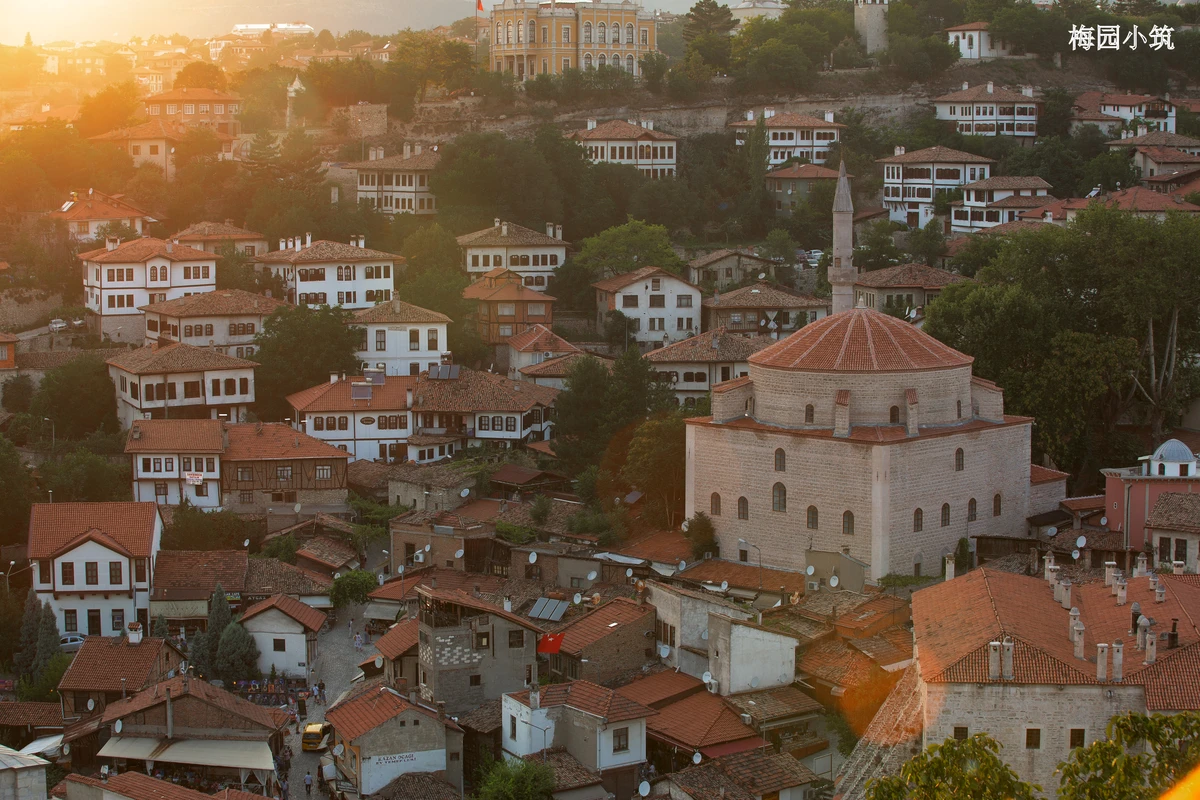
Around three or four in the afternoon, we reached Safranbolu. The guesthouse we booked was located high up, and our rental car could drive right up to its door—very convenient. Opening the window, we could overlook the entire mountain town, making the effort of dragging our luggage up to the third floor worthwhile. Since the entire town is listed as a historical preservation area, there are no modern hotels here. The rooms in the guesthouse were furnished with medieval-style items, thick carpets covered the stairs, hand-embroidered curtains hung on the wooden windows, and the sound of chanting from the mosque drifted in from outside. In a daze, it felt as if we had time-traveled to the 18th century.
After a quick unpacking, we walked down the stone path outside the door toward the lower part of the town. The small town is built in a valley. Buildings of various heights—private museums, mosques, cemeteries, historical fountains, Turkish baths, clock towers, sundials, and hundreds of houses—are scattered around the valley in an orderly manner. Most of these buildings date back to the 18th and 19th centuries, but they are regularly repainted to maintain their bright or pure colors.
The town's iconic building is naturally the mosque. The Pasha Mosque is located in the valley, considered the center of the town. "Pasha" was a high-ranking official in the administrative system of the Ottoman Empire, usually a governor, general, or senior official. Köprülü Mehmed Pasha served as the Grand Vizier of the Ottoman Empire from 1656 to 1661. He was reportedly a powerful minister of his time, yet left little historical memory. The mosque was built in 1661, the year of his death.
It is said that the Köprülü Mehmed Pasha Mosque was one of the most magnificent mosques built during the Ottoman Empire, later rebuilt in 1903, and is considered the most worthwhile building to visit in the area. However, having visited three or four grand, luxurious, solemn, and spectacular mosques in Istanbul just days before, this mosque in the small town felt small and delicate. The mosque requires no ticket and is unattended. Pushing open the heavy door, we entered this centuries-old sanctuary without any hindrance.
The interior of the Pasha Mosque is much like most mosques. Stepping on the thick red carpet, looking up at the carved and painted dome, the patterns mingled with inscriptions always exude a sense of mystery, making one wonder if these texts contain some code or totem beyond our understanding. The afternoon sunlight filtered through the small windows of the dome, illuminating the interior, and the air was filled with devout faith. The fine carpets, unique patterns, intricate carvings, and rich exotic atmosphere are worth savoring slowly as you move from scene to scene.
Stepping out of the Pasha Mosque, the tranquility and piety were immediately broken by the shops, restaurants, and cafes lining the streets at the entrance. Groups of tourists haggled in front of the shops, while visitors in the open-air cafes sat quietly or chatted softly. Walking through Safranbolu and winding through the labyrinthine alleys, the characteristic houses made one feel as if traveling through time, shuttling between the ancient and the new.
As early as the 13th century, Safranbolu was a必经之路 (necessary passage) for trade between East and West. Consequently, it gathered many traditional craftsmen, who still adhere to techniques that are hundreds or even thousands of years old. The streets of the old market are named after the types of handicrafts, such as the Iron Bazaar, Saddle Bazaar, and Shoemaker Bazaar. Each craft—iron, copper, saddles, wood, handmade leather shoes, and glassware—has its own excellence. These old shops, which seem to have traveled through time, make it easy to linger and forget to leave. Safranbolu is truly a treasury of Ottoman handcrafts. By visiting its workshops, you can understand the weight of this old town in the hearts of the locals.
Venturing into the remote lanes offers a different flavor. Walking along these stone paths, the deep and shallow marks on the slabs tell stories of ups and downs over the years. Alleys connect to alleys, forks lead to forks, winding paths leading to secluded spots, giving a labyrinthine mystery. Strolling through the stone-paved lanes, the walls on both sides are within arm's reach. In the leisurely feeling of the streets, perhaps it is the gentle breeze, or an elderly person slowly walking by, the entire town seems frozen in that afternoon moment. Without direction, you just want to quietly experience the tranquility of others' homes. You may never have been here, yet it feels strangely familiar. Walking in the town is like traveling through a long tunnel of time. Every stone door, stone wall, and stone window bears the past years and distant history. Through them, you can vaguely see families who once lived here, filled with warm lights and laughter. On the ancient stone walls hang clusters of vibrant green vines, the freshness of the vines contrasting with the weathered stones. Looking at them, a ripple stirs in your heart, and fragments of old memories come to mind, evoking nostalgia for the passing years. This makes one quiet and peaceful.
The small town at night is quiet and serene; in the morning, it is ancient and elegant; the breakfast there is warm and rich.
Come to this town—it will bring you more feelings, much like the tea brewed here: thick, strong, with a lingering sweetness.