Turkey Straddling Europe and Asia
In 2023, Schengen visas were exceptionally hard to get. France's earliest appointment was about a month away, later extending to a month and a half. Germany's appointments were scheduled for October, that is, four months later. Iceland was relatively niche — if you applied in other cities, you could get an appointment two weeks later. The US appointments were scheduled for the end of the year. The latest news is that some US visa interviews in September and October have been canceled again. The desire to go abroad, suppressed by three years of the pandemic, burst out this summer, but the obstacle to going abroad was the visa capacity of the destination countries.
Turkey's visa is a breath of fresh air: no interview required, no financial proof needed. You just fill out the form and pay on the embassy website, and the visa is issued in minutes. This is surely the future trend for visas.
Due to the pandemic, direct international flights from China were rare, but Turkey was one of the few with such direct flights. China Southern Airlines operates one direct flight per week at affordable prices with a short flight time.
When you look up travel guides for Turkey, negative information dominates: “Taxis overcharge,” “Shoe-shine scam,” “Different prices for foreigners and locals.” We gave up on taxis, bought a transportation card, opened a translation app, and started our Turkey journey.
We stayed three nights in Istanbul and had to find a hotel with convenient transportation. The hotel website mentioned an airport bus, but how far it was remained a mystery. Not wanting to take risks, we chose an airport transfer service. Later, I realized this was the right decision — dragging large suitcases up steep slopes to find the way is no fun.
Arriving at Istiklal Avenue in the early morning, we didn’t feel tired. Walking out of the crowded alley filled with the aroma of toasted bread, we suddenly felt a sense of openness. The sunlight streamed through the clear sky onto the visitors, warm but not scorching. Charming figures and sunny smiles filled Istiklal Avenue with youthful and joyful energy. During our four days in Istanbul, apart from the iconic buildings and mosques reminding me that this was Turkey, I felt as if I were in some European country.
Istiklal Avenue is the most bustling and fashionable district. Here you find the famous candy shop Hafiz Mustafa. Although the exquisite decoration far surpasses the candy itself, I couldn’t resist choosing one without syrup on the outside to try — it was still too sweet. The best restaurant here, Zubeyir Ocakbasi, is hidden in a narrow alley, but not even that can stop foodies from navigating there. On the street, ice cream vendors perform magic tricks with their ice cream as props, captivating everyone’s attention. Dazzling Turkish-style jewelry shops display all kinds of cheap but beautifully designed jewelry. Youthful and trendy clothing stores flaunt their dominance with oversized logos. In small corners, the unassuming Çetin Döviz exchange screen is also a favorite among tourists. Exchange rates here change in real time, and there are over a dozen such exchange shops on one street, each with different rates — much better than at the airport. Throughout Turkey, Istanbul is the most international city, but credit cards are not widely used here; cash is king, fueling the thriving exchange business. The Turkish lira depreciated about 44% against the US dollar in 2021, about 30% in 2022, and about 20% in the first half of 2023. Currency depreciation and severe inflation have sent domestic prices in Turkey skyrocketing. In August 2023, the CPI rose 58.94% year-on-year. Therefore, hotel or homestay rents are mostly around 700 RMB, bus fare 2.6 RMB, and restaurant meals about 80 RMB per person — generally higher than in China. In 2020, when the exchange rate was 1:1 with the RMB, prices were actually lower than in China.
At Taksim Square at the end of Istiklal Avenue, we were driven in circles by navigation. The police, like the navigation app, pointed in different directions — the station was in a multi-exit underground passage that even misled the navigation. Struggling to find the station made our first day in Turkey feel like an adventure.
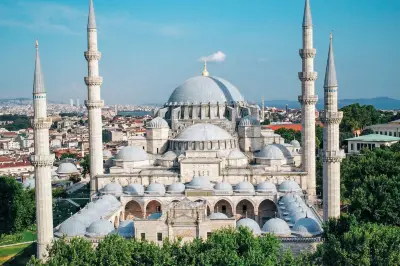
The station is very close to the Blue Mosque. From afar, we could already see its blue dome. Six minarets stand like six guards or six rockets around the mosque, but in most pictures, only four are visible. They symbolize the six pillars of Islamic faith. The Blue Mosque, also known as the Sultan Ahmet Mosque, is built of stone and decorated with blue and white tiles inside, hence the name. There are also 260 small colored windows, Turkish calligraphy, and fine carpets decorating the interior — holy, serene, elegant, and beautiful. The mosque is open only to believers during fixed prayer times; at other times it can be visited, but women must wear headscarves.
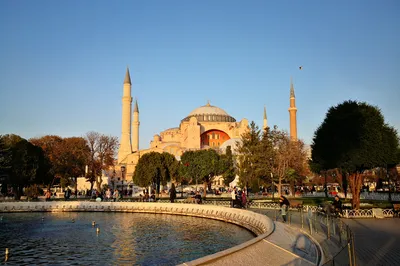
Across from the mosque is the even more famous sanctuary of Eastern Orthodoxy, Catholicism, and Islam — the Hagia Sophia. For 1,000 years after its construction in 537 AD, it was the largest church in the world. It is a masterpiece of Byzantine architecture. The church's holy relics were removed by other sects, and its decorations were covered with plaster. In 1935, it was restored to its original appearance and turned into a museum, but in 2020, it was converted back into a mosque. Seeing the long queue, you know you've arrived at the Hagia Sophia. The entrance requirements are stricter than at the Blue Mosque — there is security screening. Inside the church, it is overwhelming: a 55-meter-high dome surrounded by a ring of windows, colorful stained glass on the walls, walls with both images of the Virgin Mary and Christ and Islamic golden calligraphy decorations. Every wall, window, and door is meticulously decorated. The church's carpets are thick; everyone silently sits on the blue carpet, a position that better allows looking up at the dome. At the center of the dome is Islamic calligraphy, beneath which are exquisite patterns. Ring-shaped crystal chandeliers hang from the ceiling, adding a modern and fashionable atmosphere to the ancient and solemn hall. The women's prayer area is in another space, with few tourists, separated from the main hall by a low wall. The walls here are covered with marble in various natural patterns, simpler compared to the main hall. The light is dim and it is very quiet. Female worshippers in black robes and hijabs recite scriptures in different spots.
The back door of Hagia Sophia faces the old imperial palace — Topkapi Palace. This was once the residence and main dwelling of the Ottoman sultans, and is one of the world's top ten palaces. Built in 1459, it has four courtyards and could accommodate 4,000 people at once. It is built on a hill overlooking the Sea of Marmara, and the sea-facing part still has faint traces of a Great Wall-like defensive wall.
First Courtyard: Visit the band's rehearsal room and bath.
Second Courtyard: White monument, council hall, behind which is the Tower of Justice, as well as the museum and harem.
Third Courtyard: To the left is the Audience Hall, to the right the library, treasury, and mosque.
Fourth Courtyard: Palace and entertainment area.
Topkapi Palace's tallest building is the Tower of Justice; other buildings are mainly domed, connected by arcades.
Leaving Topkapi Palace and following the crowd, you soon reach the Basilica Cistern. Built in 532 AD to avoid water shortages caused by drought and war, this underground reservoir could hold 100,000 cubic meters of water. And this is just one of Istanbul's underground cisterns. Amazingly, it is not just an ordinary reservoir but also a palace with great artistic flair. 336 marble columns, each 8 meters high, support the palace. These columns are not simple — both ends are carved with fine decorations, and the palace has a vaulted design, very refined. These columns are said to have been transported from temple ruins. The most famous are two columns with the head of Medusa pressed beneath one — one head is upside down, the other sideways. Another column is covered with eyes, keeping a constant watch over the cistern. Moisture from the ground condenses on the dome and falls back into the pool, creating an ethereal sound. Combined with the dim red light and the many shadows among the mist, the cistern is shrouded in mystery.
We visited the Grand Bazaar, just a few stops from the cistern. This market is not unfamiliar — it resembles our small commodity wholesale markets, full of dazzling items yet nothing unique. The day before, we ate authentic Turkish food at the local fast-food restaurant Tarihi Saltenahmet Köftecisi opposite the Blue Mosque: steak, grilled peppers, yogurt, soup — very affordable. Today, we had grilled fish at a restaurant under the bridge — expensive but with a unique seaside view.
The Princes' Islands on the Sea of Marmara were our itinerary for the second day. There are four islands; we got off on the third, took a tourist minibus around the island. Few residents and tourists; people live leisurely here. There are no cars on the island — only electric golf carts as the most modern transport. At noon, we had lunch by the seaside restaurant with the sea breeze. After lunch, we took another ferry to the largest of the Princes' Islands — the fourth island. The fourth island, with a completely different style from the third, was lively. Under the scorching sun, we queued for a special car to tour the island — we ended up waiting an hour. Many people but few cars; poor coordination, but no one complained, just waited silently. The roads on the island are narrow, with people and cars sharing the space. A female driver shouted at pedestrians blocking the way, and those who were scolded responded with apologetic smiles — a very harmonious scene. She even chatted with someone on the roadside while driving — work is not just for making a living but also a part of enjoying life. Twenty minutes later, we returned to the starting point, had a freshly squeezed orange juice or homemade ice cream by the road, and watched seagulls fly along the coast. In the afternoon, the return ferry became crowded; locals brought pets, bicycles, and all kinds of packages back from the island. White clouds dotted the sky, blue sea and sky, in the distance the TV tower, the Blue Mosque, and the new palace were clearly visible. Most striking was the huge Turkish flag on the mountain. In Turkey, the flag is everywhere — even a few days later, during a jumping island tour in Fethiye, a young man jumped from a cliff into the sea and raised the flag high when coming out. This love for the flag is heartfelt.
On the fifth day, we flew to Izmir. The rest of the trip was comfortable — all self-driving.
Car rental was relatively expensive: Avis Izmir pickup and Antalya drop-off, Chevrolet SUV, 8 days over 10,000 RMB.
There were no other customers at Avis in Izmir airport. We had booked a car on the Avis website, but the store didn't confirm, so we had to switch cars; the paperwork took over 30 minutes. We got the car, turned on navigation, and headed straight to Alacati. The expressway had few cars and was free; we got off after about an hour. Passing through Cesme, we took a detour to this seaside town. The beach here is fine for swimming.
The small town of Alacati consists mostly of homestays; restaurant signs are inconspicuous. Houses are packed together, each with flowers at the entrance. Communication was not smooth; the owner wasn't there, so the caretaker phoned the owner to carefully check our information. There were only eight rooms, and we were the only Chinese, so obviously the owner wasn't experienced. The room was very simple — the cheapest of our trip. Stepping out, we found various restaurants and chose the most popular fast food wrap — it was indeed delicious. As darkness fell, the quiet streets suddenly came alive; colored lights were hung high, and townspeople gathered in restaurants and bars. The alleys crisscrossed; the narrow roads were filled with tables from shops, and people moved around them. At the end of an alley was a mosque, seemingly a dividing line; lights and people disappeared beyond it.
Not far from the mosque, a large and atmospheric restaurant was hidden but overlooked by tourists. No noise here — we sipped drinks and watched various cats darting around the restaurant. When they saw food, dogs also came, but they seemed well-behaved, never grabbing food themselves, just wandering around you as if idly. If the food given was to their liking, they would allow a pat. However, they were not considerate with each other. Turkey is famously a cat-loving country. When you use an ATM, cats might stand on top and watch you. When the sun shines on a windowsill, they lie there for a nap. The funniest was a kitten in our hotel yard, very friendly to people. I don't know how it offended a big cat from another yard; the big cat made terrifying sounds when it saw the kitten, sometimes hiding behind flowerpots to ambush it. When caught, the kitten cried pitifully. I ran over to separate them. The kitten understood my kindness, ran into my room, jumped onto the bed to hide from the older cat. When offered food, it would immediately bring its paw to its nose to sniff, but usually didn't eat. Through the window, I saw the angry older cat pacing back and forth. When it heard the angry howls outside, the kitten curled up under the covers. But I could only protect it for that morning; I don't know how it is now.
At dawn, the alleys returned to their original state; the previous day's bustle seemed like a dream.
Ephesus is an ancient city, a two-hour drive from Alacati. Navigation brought us accurately to the hotel. The hotel gate was closed, with a sign saying to call for check-in — confusing. We parked and waited at the gate. Someone came and said this wasn't the right hotel — we needed to go further. But the name was correct — what was going on? Just as we were puzzled, a man drove up to give us directions. We followed him through winding alleys to another hotel with the same name. The hotel was well-equipped, the room beautiful, with a mini pool. The manager was busy and enthusiastic, making us feel at home.
Ephesus is near Selçuk, built by Athenians in the 10th century BC, one of the five great Roman cities. It thrived through maritime trade. The ruins stretch 2 km, but only part has been excavated. Many details are similar to Pompeii: chariot grooves, baths, brothels, music halls. The best-preserved is the Library of Celsus, which once held 12,000 books. The ancient Greek poet Homer, the thinker Aristotle, and other great scholars once studied and lectured here. The Temple of Artemis was in Ephesus, one of the Seven Wonders of the Ancient World, but after being burned down, only a few columns remain. The world's earliest flush toilets can be clearly seen here.
In the paid archaeological museum, the public bath of the Athenians is completely presented — wall paintings, mosaics, and fireplaces are clearly visible.
We stayed near the ruins of the Basilica of St. John, a 10-minute walk away. Built in the 6th century, the Basilica of St. John was once the largest church in the Eastern Roman Empire. It is said that St. John came to Ephesus twice: once with St. Mary, and the second time in 95 AD just before his death when he wrote the Gospel. To commemorate John, believers built a church over his tomb, which became a pilgrimage site. Behind the church, the Ayasoluk Castle is relatively well-preserved, offering a view of Selçuk. At night, the old city's streetlights are dim, only restaurants are brightly lit.
The road to Pamukkale resembles ordinary Chinese countryside: plots of farmland, simple villages, and uneven paths. We stayed at Venus Hotel, the best value of the entire trip — a suite with a living room for 862 RMB, the same price as a standard room in Ephesus. Only a 10-minute drive from Pamukkale. Here I finally had authentic Chinese food. Turkish cuisine is delicious, so Chinese people, who like to open restaurants all over the world, rarely operate in Turkey.
Pamukkale is highly recognizable: huge white travertines covering the terraces. Areas without water are milky white; where hot springs flow and rocks are low, a pool of green water appears on the travertines. We drove directly to the top, saving us the climb. Walking downhill to see the views was supposed to be enjoyable, but walking barefoot on the travertines was a challenge. Logically, the daily tread of so many tourists would wear the rocks smooth, but constantly emerging magma redeposits on the rocks. Every day, nature and humans play this game. The further down we went, the fewer people, the whiter the rocks, the greener the hot spring water. Those with more endurance see the beauty others miss at the bottom — earned by stamina. This place, like snow but not snow, is so unique.
To find the city of Troy, we returned to Pamukkale in the evening. It was completely silent, with only the ruins of Hierapolis standing on the hillside. Following the light, we went back to the afternoon spot; Pamukkale had turned gray, and lights below twinkled like stars. In the early morning, before the tourists arrived, we came again to Pamukkale from a different angle, looking up. The sun had just risen, and after a night of self-cleaning, Pamukkale was even purer white.
Fethiye is famous for paragliding. From 2,000 meters above, overlooking Turkey's turquoise Dead Sea, suddenly a turn, a steep descent — seeking fun in the thrill. Different colored paragliders float in the sky, adding a unique scene to the Dead Sea.
Island hopping is another Fethiye specialty. Departing by boat at 10 am, we visited different islands for swimming, diving, or walking. The water here is like jelly — crystal clear and buoyant. We raced with fish in the sea, watched sailors do high platform dives. Free lunch was provided on the boat, and we danced with bubbles.
In the evening, we went to the fish market to pick a sea fish and have it cooked on the spot. We listened to cheerful Turkish neighbors singing heartily with the small band — this city can drive away worries!
Driving along Turkey's most beautiful coastal road, D400, from Fethiye to Antalya, the advantage of a counterclockwise route became clear: unobstructed scenery all the way, from flatlands to winding mountain roads, the clear and pure sea views captured fully. The most beautiful part was at the bend on the Kas section. The beauty of the Sea of Marmara seen from the Princes' Islands is complemented by the Turkish buildings on land. From the high-altitude god's-eye view of Fethiye, the Dead Sea is a giant blue sapphire. From Kas, the Mediterranean Sea surrounded by mountains — blue is its main tone, from far to near dividing into deep blue, azure, light blue, blue-green, and sandy white. Speedboats cut elegant curves across the light blue water from the white sandy beach before heading to the azure, like white patterns on blue silk. The white Kaputaş Beach is listed as one of the most beautiful beaches in the world.
The homestay here resembles Cesme — the car winding through narrow, steep slopes. The homestay looks small, with a public parking area in a relatively open space. The three-story building is charming; the host showed us around. The suite had a small living room, decorated with care. The large rooftop terrace was both a dining area and a perfect viewing spot. Leaving the homestay, we went down a steep slope to the coastal restaurant, which is also a beach. Instead of sand, we lay on the restaurant's beach chairs, listening to music with the sea breeze. In the evening, we went up to the terrace at sunset. The sky was divided into patches by white ribbon-like clouds. The sun, tired, had lost its dazzling light and set behind the mountain we had passed, leaving a red afterglow that scattered onto the ruins of the music hall. Before we knew it, the moon had quietly risen. After the red faded, the stars became the main attraction. Lying on the terrace sofa watching the stars was the most enjoyable thing.
The last stop of the trip was Antalya. After a three-hour drive from Kas, we drove directly to the Antalya Museum. The museum's exterior is unremarkable, but inside it displays statues of ancient Greek and Roman gods, known as the "Pantheon." Each statue has a different pose, fine clothing, and is equipped with a Chinese audio guide for a detailed understanding of the artifacts' meaning. Also exhibited are noble stone sarcophagi decorated with mythological reliefs. These artifacts all come from tombs in three ancient civilization regions of Antalya, with high archaeological and artistic value.
We stayed in an apartment in the old town, adjacent to a residential area and a mosque. Opening the curtain, we could see the balcony of a neighboring house. We were woken up at 5 am by the call to prayer. This hotel also had a 10-meter small pool, but it was only for decoration. The streets were busy; we walked to the city center for grilled meat, which was noticeably cheaper than elsewhere. The next day, we visited Aspendos, the best-preserved Roman theater in existence. Built in the 2nd century AD, this ancient theater still hosts concerts today. At the top of the seating area is a corridor with rows of arched doors that not only provide support but also allow sound to reverberate, creating a stereo effect. The designer of Beijing's Bird's Nest Stadium also referenced this ancient theater when arranging exit passages. The tickets back then were also interesting — for example, animal bones carved into cats and dogs, or metal and leather — different materials representing different seat classes. Behind the theater is the hill of the ancient city of Aspendos, whose ruins are incomplete, but offer a full view of the ancient theater.
Antalya is a coastal city, but we hadn't seen the sea in two days. We drove into the busiest part of the city, parked in an underground parking lot, bought ordinary but delicious ice cream, and strolled along the coast. This area is probably the most romantic part of Antalya: the sea on one side, restaurants on the other. It was still early for dinner, so we wandered through the city's alleys and came across a beautiful mosque. It was already closing time, and we were the last visitors. Inside, there was actually an archaeological site; the mosque was built over it. Each restaurant here serves different cuisines. We chose a seafood restaurant and ordered a huge seafood platter recommended by the owner. On our last day in Turkey, we decided to visit a shopping mall. The top floor of the mall had a food court with entirely local flavors, with a wide variety of dishes displayed buffet-style; you pick dishes onto a plate and pay at the cashier. Without realizing, we took a lot of food — it was very affordable.
Impressions of traveling in Turkey: many attractions, rich historical sites, and friendly Turkish people. On our last day, when walking from Terminal 2 to Terminal 1 of Antalya airport — a distance of 2 km — there was no bus or taxi, so we had to walk. Halfway there, a minibus on the opposite side of the road stopped and signaled us to get on. We ran over; the driver didn't speak our language, but simply said "1" and we understood. He offered us bottled water, and when we tried to tip him at the destination, he refused. He was a true hero. Throughout the trip, we asked many locals for directions or help, and each person warmly assisted. This 14-day itinerary was relatively relaxed; adding Cappadocia and Ankara would be a bit tight — those must-see places will be for the next trip.