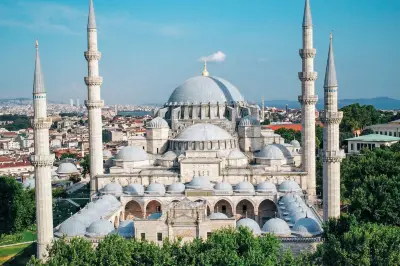
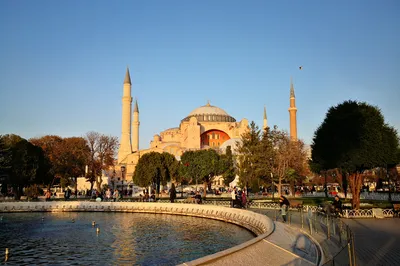
Exploring the Bosphorus Strait in Istanbul, Turkey
This article introduces the main attractions and experiences of my trip to Turkey, including what I saw, heard, and a large collection of high-definition photos.
Day 1: Bosphorus Strait Cruise
Day 2: Dolmabahçe Palace
Turkey is a country spanning two continents, Asia and Europe. It borders the Black Sea to the north, the Mediterranean Sea to the south, Syria and Iraq to the southeast, the Aegean Sea to the west, and Greece and Bulgaria to the west, sharing borders with Georgia, Armenia, Azerbaijan, and Iran to the east. Turkey's geographical location and geopolitical strategic significance are extremely important, serving as a crossroads connecting Europe and Asia.
My trip to Turkey was very rich in content, and this travelogue mainly focuses on the exploration of the Bosphorus Strait in Istanbul.
As for how beautiful it is, I'll let the pictures below tell you...
Day 1: Bosphorus Strait Cruise
In the morning, I took a bus to the Bosphorus Strait to participate in a Bosphorus Strait cruise.
Arriving at the shore of the Bosphorus Strait.
The scenery along the shore of the old city is incredibly beautiful.
This is the ferry terminal.
Arriving at the old city port near the Golden Horn: Eminönü. All tourists cruising the Bosphorus Strait board at Eminönü Pier, where there are many visitors and diverse boats.
The Bosphorus Strait, also known as the Istanbul Strait, connects the Black Sea to the north and the Sea of Marmara and the Mediterranean to the south, dividing Turkey into the Asian and European parts. This 31-kilometer-long sea area, where natural scenery complements historical sites, has become one of Turkey's tourist destinations. The common way to explore the Bosphorus Strait is by taking a cruise. Sailing here, you can enjoy the views on both sides, cross bridges, overlook the cityscape, and see the sea and sky merge, a truly enjoyable experience.
Eminönü Pier is located on the Asian side of the Bosphorus Strait, right next to the Yeni Mosque, also known as the New Mosque. The Yeni Mosque stands at the southern end of the Galata Bridge, adjacent to the Golden Horn, and is set off by the Süleymaniye Mosque and the Blue Mosque in the distance, making it appear huge and pristine white.
From the Galata Bridge, the Yeni Mosque can be clearly seen.
The cruise ship departs from the pier.
Standing on the cruise ship, I first take a look at the Galata Bridge.
The Galata Bridge is considered a representative structure of Istanbul. 160 years ago, this bridge was the city's lifeline, originally built of wood, then stone, and later concrete. The current Galata Bridge is the fifth in history, completed in 1994. The bridge is 490 meters long and can be opened in the middle to allow ships to pass. Over more than 160 years, it has transformed from a wooden bridge to a stone bridge, and now to a concrete one. The bridge has two levels: the upper level is a road bridge with crowds of people fishing along the railing; the lower level features Turkish specialty restaurants, with the aroma of grilled fish wafting through the air, tempting passersby.
The cruise continues, and along the way, I see many historical sites on both sides of the strait, as well as many modern high-rise buildings. The most common sights are mosques from various eras.
Dolmabahçe Palace
To the south of Dolmabahçe Palace is the Dolmabahçe Mosque.
Next to the Dolmabahçe Mosque, the red building is Rampart Park.
Çırağan Palace, a former Ottoman imperial palace, has been converted into a five-star Kempinski hotel.
Luxury hotel: Four Seasons Hotel Istanbul at the Bosphorus.
Ortaköy Mosque by the Bosphorus Bridge.
The Bosphorus Bridge, construction began in 1968 and, after five years of meticulous work, opened to traffic in 1973. The bridge is 1,560 meters long, earning praise for its grand scale and exquisite structure.
After crossing the bridge, a large orange-red Turkish Coast Guard ship is moored by the shore.
Kuleli Military Academy
On the European shore downstream to the west of the second Bosphorus Bridge stands Rumeli Fortress, while across the way lies the even older Anadolu Fortress. Unfortunately, our cruise didn't go that far.
The cruise turns around to head back, and in the distance, I see the Maiden's Tower. The cruise didn't approach it for a closer look, which was a pity.
Returning to the European side's cruise pier, Beşiktaş (near the New Palace), so after disembarking, I can conveniently visit Dolmabahçe Palace.
Day 2: Dolmabahçe Palace
After the Bosphorus Strait cruise activity, I headed to Dolmabahçe Palace and arrived at the parking lot in front of the palace.
Walking to Dolmabahçe Palace, the red building is Rampart Park.
Ahead is the entrance to Dolmabahçe Palace.
This is the ticket office for visiting Dolmabahçe Palace. The entrance fee is 100 Turkish lira per person, which includes the total ticket price for visiting the Selamlık and Harem sections.
Before entering, there is a clock tower built between 1890 and 1894.
Ahead is the Imperial Gate of Dolmabahçe Palace.
Ahead is the door of Dolmabahçe Palace.
Entering, there is a beautiful garden.
The flowers and trees in the garden are well cared for, and a Baroque-style clock tower stands in the garden. It is speculated that this clock tower also served a watchtower function in its time.
Passing through the garden, you reach Dolmabahçe Palace.
Dolmabahçe Palace was built in the mid-19th century. It is said that after the 31st Sultan of the Ottoman Empire, Abdülmecid I, visited Europe, he felt that the old palace in the Eastern style was too rustic and simple, so he ordered the reclamation of land from the sea to build this new palace. Construction of Dolmabahçe Palace began in 1843 and was completed in 1856. The construction cost a total of 5 million Ottoman gold pounds, equivalent to 35 tons of gold. 14 tons of gold were used to make gold leaf to decorate the palace ceilings.
Dolmabahçe Palace is located in the new district of Istanbul, commonly known as the New Palace of the Ottoman Empire. It sits on the European shore of the strait, stretching 600 meters along the Bosphorus. The palace is grand in scale, with luxurious interior decoration, and the gardens, fountains, stone lions, and carvings are all grand, revealing the splendor and wealth of the once-prosperous Ottoman Empire.
The square in front of Dolmabahçe Palace.
In a corner of the garden is a free public restroom.
This is a side gate of the palace courtyard.
Visiting the palace mainly consists of two major parts: the Ceremonial Hall, the Harem, and the Concubines' Quarters, with a total of 285 rooms, 43 halls, and 6 Turkish baths, truly a masterpiece of exquisite beauty.
The interior design is stunning (photography is not allowed).
The Imperial Gate of Dolmabahçe Palace rises high above two floors of the basement. The exterior walls use local stone and marble, the interior walls use brick, and the floors use parquet. It adopts a European design style with Neo-Baroque features, typical of the mid-19th century Ottoman Empire.
Turkish elementary school students taking a group photo on the steps of the Imperial Gate.
After exiting through the Imperial Gate, the exit leads to the famous Water Gate, which is the palace's pier on the Bosphorus. In the past, foreign envoys would arrive by boat here to enter the palace and meet the Sultan.
Dolmabahçe Palace has several gates.
The Water Gate from the Imperial Gate is the most popular among tourists. Everyone takes photos here as a souvenir.
Stepping out of the Water Gate, you can enjoy the beautiful view of the Bosphorus Strait.
Turkish elementary school students are very friendly to Chinese people, often saying 'Hello.'
Continuing to the Harem and Concubines' Quarters behind Dolmabahçe Palace.
In front of the Harem and Concubines' Quarters, there are restaurants and cafes for visitors.
Entering to tour the Harem and Concubines' Quarters.
It took two hours to complete the visit to Dolmabahçe Palace, which was a bit rushed. There wasn't enough time to carefully examine the rooms and halls; much of it was a quick glance.
Thus ends the exploration of the Bosphorus Strait in Istanbul. This travelogue does not use excessive text; it mainly focuses on pictures because the scenery here reflects the face of Turkey. It is my personal perspective on beauty. I hope that readers can share in this experience. I also hope my travelogue will be helpful to those planning a trip to Turkey, allowing them to appreciate the Bosphorus Strait scenery in Istanbul.
Thank you for your appreciation!