8-Day Japan Tour
Finally, after a complicated approval process, we’re off to Japan! On an all-inclusive 8-day tour with Tōei Holidays, yes, here we go! Our flight departed at 8:00 a.m. on May 13. Local time around 11 a.m. we landed at Toyama Airport. The airport is tiny, and customs was a bit of a hassle — fingerprints and photos. Luckily, there weren’t many people, so we got through quickly. Our tour bus could seat about 40, big and spotless. Our driver was an elderly gentleman, impeccably neat and friendly, greeting us as soon as we saw him.
Our first stop: the Gassho-zukuri village. These communities live deep in the mountains, and their houses are built entirely by hand without a single nail. Truly amazing. When one family builds a house, everyone in the village comes to help. Very few Chinese tours include this spot. We visited the village chief’s home — a very old wooden house. The chief sat by the hearth in traditional clothing and explained the village’s history, the structure of the houses, and the principles behind them. After the talk, he performed a traditional local dance and the Kokiriko folk song. As the old, plaintive notes of the local instrument filled the air, the chief danced, and everyone scrambled with cameras and phones to record it. On the ground floor there’s a tiny shop — basically one salesperson looking after two counters full of local Japanese knick-knacks. We were all excited and stopped to browse. Leaving the chief’s house, I have to mention the restroom — so clean, with a little vase of flowers as decoration. Our guide said very few people maintain it; everyone is just so careful that it stays well-kept. Near the entrance there’s a small sundry shop decorated in perfect harmony. We bought a matcha ice cream — rich, milky, and delicious.
Next, we went to the famous Kenrokuen Garden. Due to time constraints, we only glimpsed a tiny corner. Lots of students and local company employees were there, probably on school trips or company outings. Kenrokuen is like a giant bonsai creation — every spot meticulously arranged and impeccably pruned. You can get a great photo from any angle. After leaving the garden, we walked down Higashi Chaya District. By then it was getting dark and a little rainy, so the streets felt quiet, but the shops on both sides were open as usual. I checked out a few accessory shops — they were so creative, with paper hair ornaments and curtains, truly exquisite. Since there weren’t any geisha passing by, I consoled myself by taking a picture of the teahouse entrance. Hehe…
In the evening, we went to Nagamachi Samurai District — a former samurai residence, I think? Since we couldn’t go inside, we just looked at the exterior. It sits on a very quiet little street, fairly large, with mustard-yellow walls enclosing the old compound. So serene. Dinner was a set meal. The oily fish sashimi was incredible — it just melted in my mouth. We checked into our hotel in Kanazawa; the room was compact but very clean.
On our first night in Japan, everything felt novel. I went out for a stroll and found that the food streets stay open until 10 p.m., but department stores close at 8. We saw sashimi and set meals heavily discounted in the evening. But since we’d already eaten way too much, I just swallowed my saliva and walked away. Everything looked so fresh — my mouth was watering intensely.
Day two: hotel breakfast buffet, a mix of Japanese and Western — bread, rice, miso soup, vegetables, fruit, milk, juice — wonderfully abundant. We drove to Kyoto to see the renowned Kinkaku-ji (Golden Pavilion). The entrance was bustling with tour groups and locals alike. We came across several groups of schoolchildren on study trips, led by teachers, visiting in an orderly fashion. Having just returned from Wutai Mountain, gold wasn’t that thrilling for me. I had another ice cream — this one a bit too sweet…
Around noon we arrived at the Nishijin Kimono Center. Wow — more kids there, and loads of tour groups. The center sells all things kimono-related, and you can even rent one for around 3,600 yen a day. Models showcased many beautiful kimono sets. We snapped photos madly. Lunch was arranged at a restaurant next door. Afterwards, we visited Heian Shrine. We washed our hands at the water basin at the gate — maybe for good luck? This is an imperial shrine, backed by a hill. Many areas aren’t open to the public. Plenty of Japanese visitors; you could also get a fortune. The surrounding scenery was lovely, with locals occasionally walking their dogs. Seems the Japanese really love their dogs too.
In the evening we headed to a large shopping mall to eat, passing through a local bar district along the way. It looked a bit like stilt houses built right by the river, so pretty. Everyone seemed very relaxed. Dinner was a Chinese buffet — with a Japanese twist, haha. After that, we checked into our hotel in central Osaka. Oh, here too the department stores close at 8, but the nightlife options are plentiful. At night we saw an all-you-can-eat buffet that only cost 1,500 yen after 11 p.m. Too bad we were stuffed, so we could only sigh with regret. The people of Osaka are indeed fashionable — everywhere you see glamorous men and women with flawless makeup. The central streets crisscross in every direction, and the underground is a maze. I hit a pharmacy and picked up some things. The shopkeeper was very polite. My roommate was fascinated by the kimono-style pajamas — cue another photo frenzy.
Day three: after the breakfast buffet, we went to Osaka Castle. We didn’t go up to the main keep, but the grounds were gorgeous with a wide moat. Lots of tour groups. I couldn’t imagine — they’ve actually buried items underground to be unearthed 500 years later for future generations. Interesting. I spotted a charming old gentleman with his parrot, relaxing leisurely. And dogs of all kinds — a feast for the eyes. No cherry blossoms, but we did see the trees.
After that, we headed to the famous Dotonbori and Shinsaibashi area. Wow — a hub of fashionistas, tour groups, and locals all mixed together. The drugstores were packed, the food joints crowded, electronics stores jammed. Such vibrant energy. No amount of time is enough; I’m a shopaholic. I wanted to explore more… but no luck. They reined us in. Next time, I’m shopping to my heart’s content. Only 1.5 hours… not enough… We had a sushi set at a Japanese restaurant. Delicious, but to keep shopping, we finished in 15 minutes.
Next, we went to Toshodai-ji Temple in Nara — a rather distinctive stop, not typically on Chinese group tours. The ancient architecture is beautiful. I highly recommend the yuzu and citrus fruit wine they sell there. So tasty, a local specialty. After leaving Nara, I never saw it again anywhere else. 1,470 yen. I should note — the temple houses a very old wooden statue. Finally, we visited Nara Park. Oh, what a wonderful place. So many deer, completely unafraid of people, begging for crackers. The Todaiji Temple there was also alive with worshippers and visitors. Lots of groups too. For dinner, we had a DIY barbecue. Oh, pretty good — the meat lovers thought so. We checked into an airport hotel, quite new, by the sea. The breakfast buffet the next morning was average.
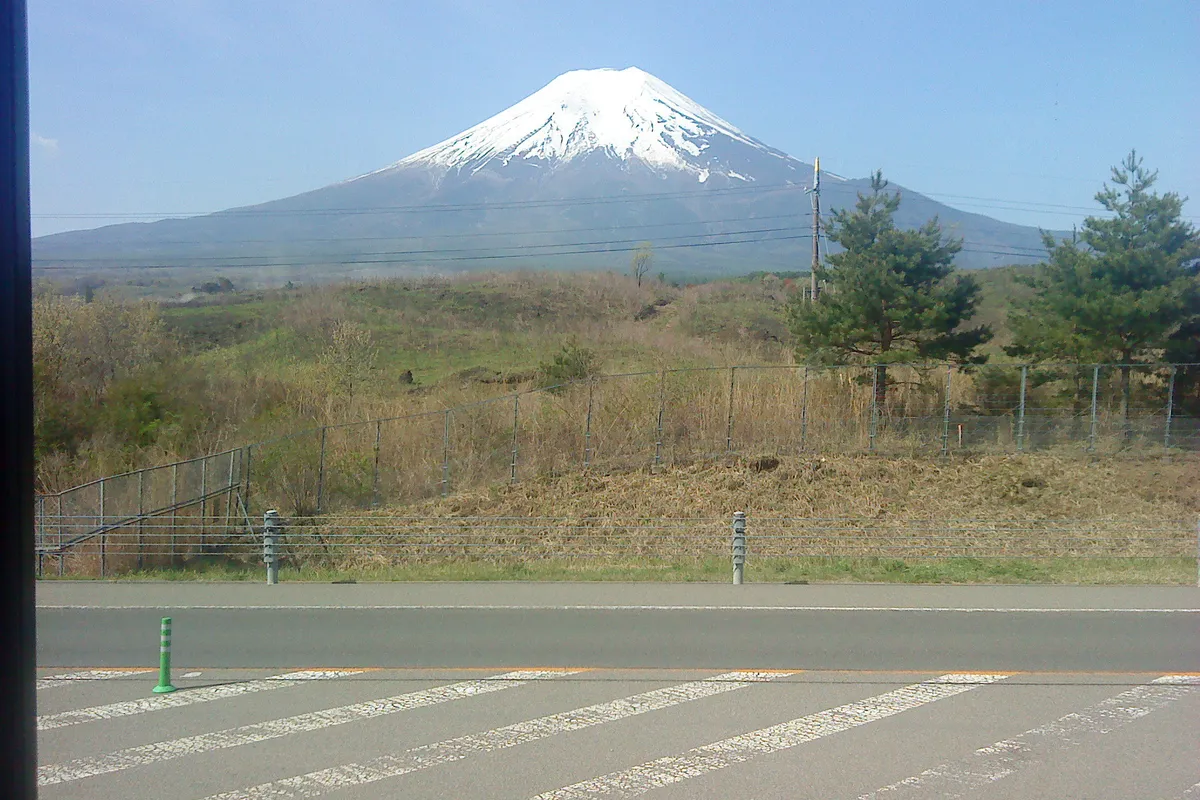
Day four: in the morning we stopped at Heiwa Park, said to offer a full view of Mount Fuji — but there was fog that day, so we didn’t see it. Lots of tour groups; clearly a famous spot. Driving through the mountains, the scenery on both sides was stunning. Next, we went to Owakudani, where the sulfur smell was overwhelming. They sell black eggs cooked in the sulfurous water — 500 yen for 50 eggs, said to add seven years to your life for each one. No thanks. An aerial transport line hauls baskets of eggs to the sulfurous water. Crowds from Europe, America, Korea, and Japan. So lively. My roommate fell in love with the Hello Kitty at the shop entrance and kept snapping pictures. Lunch at a restaurant near Mount Fuji, swarming with tour groups. Then we went to Lake Ashi, a lake of deep significance to Japanese people. The water was crystal clear, and the carp would swim right up to visitors, totally unafraid.
Rushing all the way, we finally entered the Mount Fuji scenic area at 5 p.m. Lucky for us, we could go up to the highest point accessible, the 5th Station. Honestly, Mount Fuji is best admired from afar. Up close, it’s just like that. But since it was past 5 and the sun was about to set, we saw the sunset glow reflecting on a sea of clouds above Mount Fuji — a different kind of wonderful. Totally worth it. However, the wind was strong and it was freezing. Within 30 minutes I was numb with cold. Smart local Japanese people parked their cars and stayed inside to watch the sunset. Clever — but we had a big bus, so no such luck.
In the evening, we checked into a hot spring hotel right by Lake Kawaguchi in Hakone. One word: beautiful. Much larger than the business hotels we stayed in earlier, with our window facing Mount Fuji directly. At night, Mount Fuji looked enchanting and mysterious lit up. The great thing about a hot spring hotel is you can wander everywhere wearing the yukata robe. Yay! Having a buffet dinner in our yukata was such a treat — great variety, I loved it. After dinner, we strolled around and discovered the whole area is full of these hot spring hotels. Then we soaked in the onsen, following Japanese customs: wash thoroughly, then soak in the big bath. They also had a small open-air bath, relaxing while gazing at Lake Kawaguchi across the way — I suppose this is what happiness feels like. Another big perk: many brands stock their products in the bath area for you to try, and if you like something, you can buy it at the hotel shop.
Day five: early morning, we captured the reflection of Mount Fuji on Lake Kawaguchi. Beauty, just one word. After the breakfast buffet, we set off for Yokohama to see 21st Century Port, Yamashita Park, and Chinatown. Lunch in Chinatown was Chinese, round-table style. In the afternoon, we visited the Imperial Palace’s Nijubashi Bridge. The sun was blazing, super hot. Imagining the poor emperor who can’t just come and go freely — I silently sighed that being an emperor isn’t so easy. Then we went to the famous Senso-ji Temple, a packed marketplace. A must-see for many tour groups, a bit like our City God Temple. We bought ningyo-yaki, snapped a few photos, but time was far too short again. We’ll return next time. In the evening, we went to Tokyo. As the sun set, we had a buffet at a spot overlooking Tokyo Bay and Rainbow Bridge. We ran into another student group — haha, we keep bumping into them. We stayed in Odaiba that night, with a view of Tokyo Tower. The area seemed lively, but we were too tired to go out, so I have no idea.
Day six: after a hearty breakfast, we headed to Akihabara, Tokyo’s electronics district. Then we visited the Tokyo Metropolitan Government Building in Shinjuku. My roommate discovered a super fun thing — you could put your photo into a doll keychain. Next, we explored the glitziest shopping street, the Shinjuku district, lined with luxury brands, like Huaihai Road in Shanghai. Pedestrians were in smart suits, and occasionally you’d spot an elegant lady in an expensive kimono. FANCL had a promotion going on, and everyone bought a lot. In the evening, we checked into a hot spring hotel in Kurobe Tateyama, Nagano — a family-run place with just a few staff, but everything was orderly. Along the way, we caught glimpses of late-blooming cherry blossoms — not many, but so beautiful. When we saw our rooms, we all squealed with delight. The Japanese-style room was spacious, tastefully arranged, and lovely. I’ll use the word beautiful — it really was, with a view straight onto an apple orchard full of pretty white blossoms. Set against the green valley, it was breathtaking. At dinner, everyone showed up in yukata. The table was set with a multi-course dinner served on about 13 small dishes, a riot of colors — so appetizing, and it really tasted wonderful. After dinner, we went for a walk and took more photos of the Japanese-style inn. Soaking in the onsen, I noticed that because it’s in the countryside, the outdoor bath was quite large, planted with flowers and shrubs, a picturesque garden scene. Very beautiful.
Day seven: early morning, we had a set breakfast — it was my first time eating a full Japanese breakfast, and it tasted pretty good. After a hot spring soak, refreshed, we snapped some photos of the late cherry blossoms and set off to see the Tateyama snow corridor. This is a unique experience, rarely organized by Chinese group tours. We bundled up in thick layers and headed to Tateyama. We switched transportation six times. First, a bus to Kurobe Dam — the reservoir water was a brilliant green, shining against the snow-white mountains. The weather wasn’t great; heavy rain started. We took a few photos at a couple of scenic spots and then went for lunch. After lunch, we reached the entrance to the snow wall. Oof, that rain! My Arc’teryx jacket passed the test with flying colors. My advice: if you encounter weather like this, cover up completely. Umbrellas are useless — rain in a storm doesn’t fall straight; it hits you at a 70- to 80-degree angle. Only waterproof shell clothing works. After the snow wall, it was all downhill. The mountainside was covered in lush vegetation, and it took about 50 minutes to reach the bottom. We took a cable car down to the Toyama side. In Tateyama, you must buy the Hoshizora Milk Almonds — incredibly tasty. But they only accept cash, no cards. ¥1,050. Definitely get them; you won’t find them anywhere else. In the evening, we had a barbecue buffet and stayed in the center of Toyama, right across from the Toyama History Museum. The local nightlife around there was quite lively, with a bustling bar street.
Day eight: we swung by a large supermarket in the morning for a last round of shopping, then headed straight to the airport. Security was strict — I’d advise checking everything you can to save hassle. The duty-free shop at the airport is small, but good for a few last-minute souvenirs. The lunch on the return flight was decent. In the afternoon, we arrived back home sweet home.
(fushishan)
(spahotel)


