Taking Brother Guang to See the World: A Slow Journey through Kansai, a Sweet Date with Sakura
Goethe said: "People love to travel not to reach the destination, but to enjoy the various pleasures along the way."
The world is a book, and those who do not travel read only one page. I want to read the whole book.
Every trip is unique, and every encounter with a destination is fate.
My love for cherry blossoms has been long-standing, but if it weren't for missing the cherry blossoms at Yuantouzhu last year, perhaps this pink date with Kansai wouldn't have happened. Often, the fate of travel comes from an offhand joke or an unfortunate miss.
After failing to get a friend to join the trip, I decisively went with the same travel group from the Singapore trip. Japan's cherry blossom season is even more intense than the Chinese New Year, so booking flights and hotels in advance is a must. I placed my order on Ctrip two months ahead—neither too early nor too late. If you want to experience some distinctive Japanese-style hotels, it's recommended to book half a year in advance. I had heard that hotel rooms in Japan are generally small. I initially wanted to try local guesthouses, but considering bringing a child, I chose relatively convenient hotels.
1. Booking flights and hotels.
This time, I booked the flights and hotels before even starting the visa application—so confident about the visa, and indeed, nothing unexpected happened. I booked a flight+hotel package on Ctrip, including round-trip tickets, three nights in Osaka, and three nights in Kyoto. The round-trip ticket per person was less than 3500 RMB. For Japan during cherry blossom season, I think this price is acceptable, especially with ANA, which gave each person two 28kg luggage allowances, so no worries about overweight. The flight times were also very good, and I was happy to depart from Hangzhou.
The hotel choice was mainly based on convenience for travel. In Osaka, I chose the Dotonbori Hotel, located near Shinsaibashi and Dotonbori. In addition to the famous shopping area, there are Daimaru, Takashimaya, Bic Camera, etc., all within a few minutes' walk. It's also very convenient for transportation—a five-minute walk to Namba Station. I want to especially praise the hotel service; it was truly warm. Every night after 10:30, they offer free ramen, and the lobby has free coffee and massage chairs. The drinks in the fridge were all free, and they replenished them daily. They also offer bicycle rentals and free kimono experiences. I would choose this hotel again next time. In Kyoto, I chose the Granvia Hotel, which also excels in location—opposite Kyoto Station, the largest transportation hub. The station houses Isetan department store, and passing through the station you can see Kyoto Tower and bus stops. Don Quijote is right next door. It's a major stop integrating shopping, dining, and transportation. Getting to the airport is super convenient—there's an airport bus stop right in front of the hotel, and tickets can be purchased from the machine next door.
2. Visa application. I had heard that applying for a Japanese visa was troublesome, requiring deposit certificates, income statements, etc. But later, a friend recommended an agency that required very simple materials—just a passport. That was perfect for me; nobody knows how hard it is to get an income certificate from our workplace. After submitting the materials, the visa was issued smoothly in eight working days, and the service was surprisingly good.
3. Buying a local SIM card. I generally don't like renting a portable Wi-Fi (EGG). Although sharing one EGG among several people saves money, everyone has to be in the same location to use it together. If we get separated, we can't contact each other. I prefer buying a local SIM card—not expensive, around 40+ RMB for 7 days of unlimited data, but it only works for internet, not calls. With WeChat voice calls, phone calls aren't that important.
4. Buying a local transportation card. Before going, I heard that Japan's transportation is complicated—JR, private railways, Kintetsu, trams, etc.—it made my head spin. There are also various money-saving one-day passes, two-day passes, and combo tickets sold online that dazzled me. But after going, I found it wasn't as complicated as imagined. Since I only stayed in the Kansai area, one ICOCA card handled everything. This card is very useful: it works on the Nankai Electric Railway from the airport to the city, JR from Osaka to Kyoto, Kintetsu from Kyoto to Nara, subways and buses within Kansai. You can also use it to shop at convenience stores. You can recharge it at subway stations, airports, and convenience stores. The deposit is 500 yen, and when you return the card, they deduct about 220 yen handling fee and refund the balance. Note that this card doesn't offer discounts; for discounts, you need to research various passes and tickets. You can buy the card in China or locally at airports and subway stations. The child ICOCA card can only be obtained locally with a passport.
5. Download useful apps and various shopping coupons.
First, a navigation app: Google Maps was the one I used most in Kansai. Someone recommended the Japan Transit Planner, but I didn't use it much. Google Maps is handy and reliable for finding directions. You can download both as backup. Second, a translation app: Japanese people's English is not great, so a translation app solves problems for those who don't understand Japanese. For shopping at Kansai Airport duty-free, I recommend ordering through the official Kansai Airport duty-free website. You pre-order products online and pick them up at the airport, with a small discount. It's especially good for those who don't have much time for shopping at the airport. Many shopping malls and drugstores in Osaka offer discounts with coupons, so search for various coupons on Ctrip and save them on your phone. When shopping, ask whether you can use coupons, as some counter staff won't remind you. At Daimaru's POLA counter, no one told me; later, a Decorte counter lady asked if I had a coupon, which is how I learned about the discount.
Itinerary: (March 30 – April 5)
March 30: Hangzhou → Osaka, stay in Osaka
March 31: Osaka: Osaka Castle Park, Kaiyukan, Tempozan Ferris Wheel, stay in Osaka
April 1: Osaka: Dotonbori/Shinsaibashi area, Tsutenkaku area, stay in Osaka
April 2: Osaka → Kyoto: Fushimi Inari, Keage Incline, stay in Kyoto
April 3: Kyoto → Nara: Nara Park, Kasuga Taisha, Todai-ji, stay in Kyoto
April 4: Kyoto: Kiyomizu-dera, Ninenzaka/Sannenzaka, Gion, stay in Kyoto
April 5: Osaka → Hangzhou
Regarding the order of visiting Kyoto and Osaka: the two places are very close. Osaka is closer to Kansai Airport—about an hour, while Kyoto is about 1.5 hours. Considering we arrived on an evening flight and wanted to check in early, we arranged Osaka first, then Kyoto. Personally, I think doing Kyoto first and then Osaka, with shopping at the end in Osaka, is also reasonable, so you don't have to drag heavy suitcases on the subway while changing hotels. Nara is about the same distance from both, so you can choose based on your itinerary. I chose to visit Nara while staying in Kyoto because the Granvia Hotel offers direct access to Nara without transfers.
Day 1: Hangzhou Xiaoshan Airport → Osaka Kansai Airport
Since we had a family and a lot of luggage, we drove to Xiaoshan Airport. The flight was at 16:25, so the day wasn't too rushed, and there were no delays. ANA's service was indeed good; they gave a small gift to the child, and the in-flight meal was better than domestic airlines. However, whether due to weather or the pilot's skill, I felt a bit dizzy during landing. Immigration went surprisingly smoothly—I had expected long lines during cherry blossom season, but there were none. Regarding transportation from the airport to the hotel, I initially planned to book a shuttle. Initially, a private car from the airport to Osaka city was about 500 RMB, but by the time I decided to book, it had risen to 600-700, so I gave up. After researching online, I found that the Nankai Electric Railway goes directly to Namba. We took the express train with reserved seats: 1270 yen/adult, half price for children. For three adults and one child, it came to about 270 RMB, much cheaper than a shuttle. There were also cheaper non-reserved seat options, about 900 yen, with only about 10 more minutes of travel time. After landing, it was raining in Osaka—the only day we used rain gear. After arriving at Namba Station, it was about a 10-minute walk to Dotonbori Hotel. The hotel was easy to find; following Google Maps, you'll see four statues at the entrance. We checked in smoothly around 10 p.m.
Nankai Electric Railway ticket
Prominent sign at Dotonbori Hotel entrance
Day 2: Morning: Osaka Castle Park; Afternoon: Kaiyukan; Evening: Tempozan Ferris Wheel.
Osaka Castle Park during cherry blossom season is truly beautiful. Due to weather, the cherry blossoms bloomed late this year, and with cold air during our visit, only about 50% had bloomed. Yet it was already stunning; one can imagine how intoxicating it would be at full bloom. Since it was a weekend, many locals were enjoying hanami. I noticed that Japanese people particularly like to lay out picnic mats under the cherry trees, bringing various delicious foods, and some even brought musical instruments, creating an atmosphere that made you want to join.
Passing by Osaka Museum of History
Cherry blossoms in front of the castle keep hadn't bloomed yet
Brother Guang feeding pigeons at Osaka Castle Park
Picnic under cherry trees
Kaiyukan is in the Tempozan area, which is great for families—Kaiyukan, Legoland Discovery Center, and after that, you can take the ferris wheel to see the night view of Osaka Castle. Kaiyukan admission: adults 2300 yen, children 600 yen. Osaka's Kaiyukan is said to be one of the largest indoor aquariums in the world, themed around the Pacific Rim volcanic belt and life zones, recreating the natural ecological environments of different regions around the Pacific. Compared to Singapore's SEA Aquarium, I prefer Osaka's for its higher interactivity. On the second floor, there's a touch pool where you can pet marine life up close. Brother Guang happily touched his favorite stingrays and small sharks. I always think aquariums are healing places that calm a restless heart. Personally, I liked the large cylindrical tank imitating the Pacific Ocean—the deep blue was especially soothing. After finishing at Kaiyukan, it was almost 6 p.m., too late for Legoland, so we went straight to the ferris wheel. The ferris wheel had the same price for adults and children, 700 yen per person. Some cabins were fully transparent—glass floors included—but those cost extra. Considering Mr. Wang's mild acrophobia, we chose a regular cabin. A full rotation took about 15 minutes, offering a slow view of the lit-up Osaka Castle and Osaka Port. I like to go up high in every city to see the night view, even if they are similar; I still want to experience the different nightscapes.
Tempozan Ferris Wheel
Night view from the ferris wheel
Day 3: Shopping day: Morning at Daimaru, Dotonbori, Shinsaibashi; lunch at Kani Doraku; afternoon at Bic Camera, Tsutenkaku; dinner at Kushikatsu Daruma (original).
Today's itinerary basically covered all shopping lists—both personal and for others. Dotonbori and Shinsaibashi are probably the liveliest areas in all of Osaka, much like Myeongdong in Korea, full of Chinese tourists, with many shops and eateries. Today really highlighted the advantage of my hotel location: department stores and drugstores are all very close, allowing me to send purchases back to the hotel before continuing shopping. At noon, we had lunch at the famous Kani Doraku. I booked online from China through their official website, so we went straight in without queuing. It's recommended to book directly on the official site rather than through third parties who charge booking fees per person. Dotonbori Street, short as it is, has three Kani Doraku outlets, showing its popularity. I originally wanted to book the main store, but it was full, so I booked the middle outlet for 14:00. In reality, we arrived at 13:30 and were seated without waiting. The full crab meal was a novelty but not extraordinary; after all, internet-famous restaurants aren't always reliable. We ordered three sets for our group but still felt hungry—portions were too small. After lunch, we headed to Tsutenkaku, famous for appearing in Detective Conan. On the way, we passed Bic Camera and went in to shop again. My mother finally got her rice cooker. Just as we took the subway to Tsutenkaku, the sky changed—thunder and lightning. We took shelter in a takoyaki shop under Tsutenkaku. Soon, the rain stopped and the sun came out. Japan's oceanic climate is quite unpredictable; the weather forecast is basically unreliable, and going out depends on luck. We were quite lucky.
During our three nights in Osaka, every night after Brother Guang fell asleep, Mr. Wang would drag me out for walks and shopping. I'd shiver in the cold night air of the island country. Afterwards, we'd have a late-night snack and beer. The nightlife around Shinsaibashi is rich. One night, we went to the popular Isomaru Suisan—the grilled crab shell was delicious.
Scene matching the manga perfectly
Popular Isomaru Suisan
Day 4: Osaka → Kyoto: Morning Fushimi Inari, afternoon Keage Incline.
To get from Namba to Kyoto, we transferred to JR at Shin-Osaka Station. The transfer was convenient. JR trains have three types: Special Rapid, Rapid, and Local, taking 30, 45, and 60 minutes respectively, all the same price—540 yen per person—only differing in stops; the fastest stops only once. Upon reaching the hotel, we were told check-in was after 3 p.m., so we left our luggage and went out. First stop: Fushimi Inari Taisha. Famous places mean crowds, especially during cherry blossom season—comparable to Chinese National Day or Spring Festival. It was packed. When we arrived, it drizzled a bit, then cleared up. Fushimi Inari enshrines the Inari deity, the god of agriculture and commerce, worshipped for good harvests and business prosperity. It is one of the most popular shrines in Kyoto. The Senbon Torii (thousands of vermilion torii gates) and fox statues are its symbols. When we entered the torii tunnel, the sun came out, and light filtering through the faded crimson pillars created a spectacular play of light and shadow—perfect for great photos. Unfortunately, my photography skills were limited; the photos didn't do justice to the real scene. Then we chose a relatively less crowded cherry blossom spot, Keage Incline, only to find that any spot associated with cherry blossoms is crowded. Keage Incline is an old railway track lined with cherry trees—a beautiful spot for photos if not crowded, especially at full bloom. When we went, it was about 60-70% in bloom. As soon as we exited the subway, the row of cherry trees across the street was stunning. Transportation: take the subway to Keage Station.
Our beautiful lady posing better than me
The proud little fox
A rare quiet corner
Kyoto Tower during the day
Kyoto Tower at night
Day 5: Nara: Kimono dressing and feeding deer
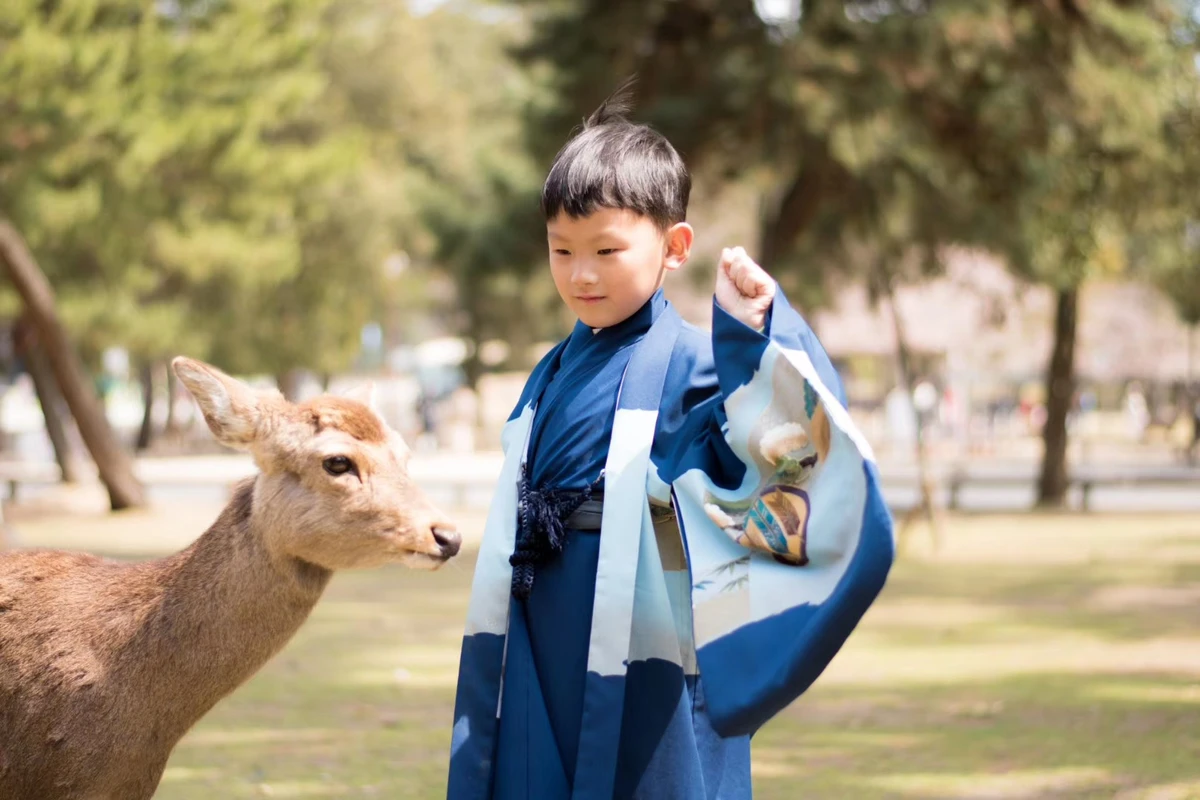
Kimono dressing is a must-do experience in Japan. I chose Nara over Kyoto because Nara is less crowded. I found a shop online and made a reservation in China. The shop owner was from Shandong, very nice, and no deposit was required. From Kyoto, it's very convenient to take the Kintetsu Nara Line from Kyoto Station. JR also goes to Nara, but Kintetsu Nara Station is closer to Nara Park. Like Nankai, Kintetsu has Express and Limited Express options—choose based on your needs. We tapped our ICOCA cards and boarded a Limited Express, but the conductor came to ask us to pay a seat fee. So, ICOCA cards only work for Express trains; Limited Express requires a ticket purchased at the counter. Now about Nara's deer: most of the time, they are gentle. If you don't show deer crackers, they ignore you—absolute realists. Once they see crackers, they follow you eagerly; if you don't give them, they nudge your bottom, bite your clothes, and act cute. They also like to bully children. One naughty deer inexplicably ran over and kicked Brother Guang. Brother Guang chased it, but it ran away quickly—very funny. Deer crackers cost 150 yen per bag. Nara Park is large, with a beautiful lawn where local elementary school children were on a field trip. Combined with the deer and cherry trees, the scene was breathtaking, but I was too busy enjoying it to take photos. Kasuga Taisha and Todai-ji are also near Nara Park, all worth visiting together. After seeing many shrines, they start to look similar; visiting one or two is enough. I heard Himuro Shrine had beautiful cherry blossoms, but it was a bit far, so we skipped it. Since we brought a child, we didn't visit many spots; we went with the flow, believing there will be another chance.
Brother Guang playing with deer
A rare group photo of everyone on this trip
Day 6: Kyoto day trip: Kiyomizu-dera, Ninenzaka/Sannenzaka, Gion area.
Today was a bus day. Taking local public transportation in different cities is a fun experience. To get to Kiyomizu-dera, take city bus 206 or 100 from Kyoto Station bus terminal to Kiyomizumichi stop. Actually, I prefer Ninenzaka/Sannenzaka over Kiyomizu-dera—it's a place to stroll slowly and savor, with a bohemian vibe. There are many unique shops along the way. When it's not crowded, you can browse each shop; when crowded, you can only skim. But Japan seems to never have a quiet season any time of year. People wearing kimonos become a beautiful sight in this area. Many people choose to rent kimonos here, so wearing one feels natural. On the contrary, those of us not in kimonos felt a bit out of place. Passing through residential areas, we saw detached two-story houses, each with the owner's name on the gate, little flowers or potted plants in front, all very tidy—exactly the kind of housing I envy. We walked at a leisurely pace, stopping to enjoy the flowers and take photos, savoring the last moments of leisure in Kansai.
The bus we took, route 206
Ninenzaka/Sannenzaka
Ninenzaka/Sannenzaka
Ninenzaka/Sannenzaka
The weeping cherry at Ninenzaka was exceptionally beautiful
Day 7: Kansai Airport → Hangzhou Xiaoshan Airport
Time to go home. At the machine next to the hotel, we bought tickets for the Kansai Airport limousine bus. The bus stop is right at the hotel entrance—so convenient. Adult fare: 2550 yen, child: 1250 yen. Our flight was at 14:55, so we left plenty of time for the airport. Good thing I had ordered cosmetics online for airport pickup, saving time and effort. At the airport, we only bought food—but I underestimated the purchasing power of the Chinese; even buying chocolate required a long queue. OMG. The flight didn't delay; we returned home on time.
This trip didn't focus much on food. Most of the time, we ate wherever we happened to be, without deliberately seeking out good food. So we missed out on Kobe beef, kaiseki cuisine, and other local specialties I had wanted to try. But isn't every trip full of regrets? Looking forward to the next trip with my girlfriends. Byebye, sakura.
First impressions of Japan:
1. A refined country that likes to do things to the extreme. Vehicles on the road are always spotless; locals dress meticulously. When a bus stops, the left side leans down to make boarding easier. Trains and subways have women-only cars. Public restrooms play music to cover embarrassing sounds. There's so much more; you can only feel the extreme attention to detail by going there.
2. A service-oriented country. Perhaps due to being a tourist destination, or something deeply rooted in their culture, service is genuinely attentive. On the contrary, Chinese staff were sometimes rude. So it's truly ingrained, not changed by living in another country.
Tips:
1. On the first night, after Brother Guang fell asleep, Mr. Wang and I went out late to find food. In China, we usually just bring phones. After eating and drinking, when it was time to pay, I asked, "Alipay OK?" "No, just cash." So Mr. Wang had to scurry back to the hotel to get cash. Although many shopping malls, drugstores, and stations in Japan now accept Alipay, some small shops still require cash, so it's good to have some yen.
2. One night we went for kaiten sushi. Mr. Wang loves wasabi. He couldn't find any on the table, so he asked the waiter, who said they didn't have it. Not convinced, he asked the chef, but still no wasabi. Mr. Wang angrily declared that sushi from China tastes better. After returning, I looked it up: most Japanese use fresh wasabi root, not the toothpaste-like wasabi common in China. Japanese wasabi is also less pungent and easier to eat.
Other tips not mentioned above:
1. Time difference: Japan is one hour ahead of China.
2. Power sockets are the same as in China, but voltage is 110V. Some small appliances may need a transformer.
3. English is not widely spoken in Japan, but Japanese kanji share many similarities with Chinese characters, so understanding by context is often accurate.
4. It's considered bad form to stand side by side on an escalator; always leave one side open for people in a hurry (common in many countries).
5. On buses, generally board from the rear and exit from the front. Buses are either flat-fare or zone-fare. For flat-fare (display: white numbers on orange or blue background), tap ICOCA only when exiting; fare is 230 yen. For zone-fare (white numbers on black background), tap both when boarding and exiting; fare varies by distance.
6. Shops close early in Japan; try to do tax-free shopping before 9 p.m.
7. Bring a coin purse; Japanese coins are plentiful.
I used to believe
that parting is for a better reunion.
As I grow older, I realize
not all partings lead to reunions.
Until we meet again.


