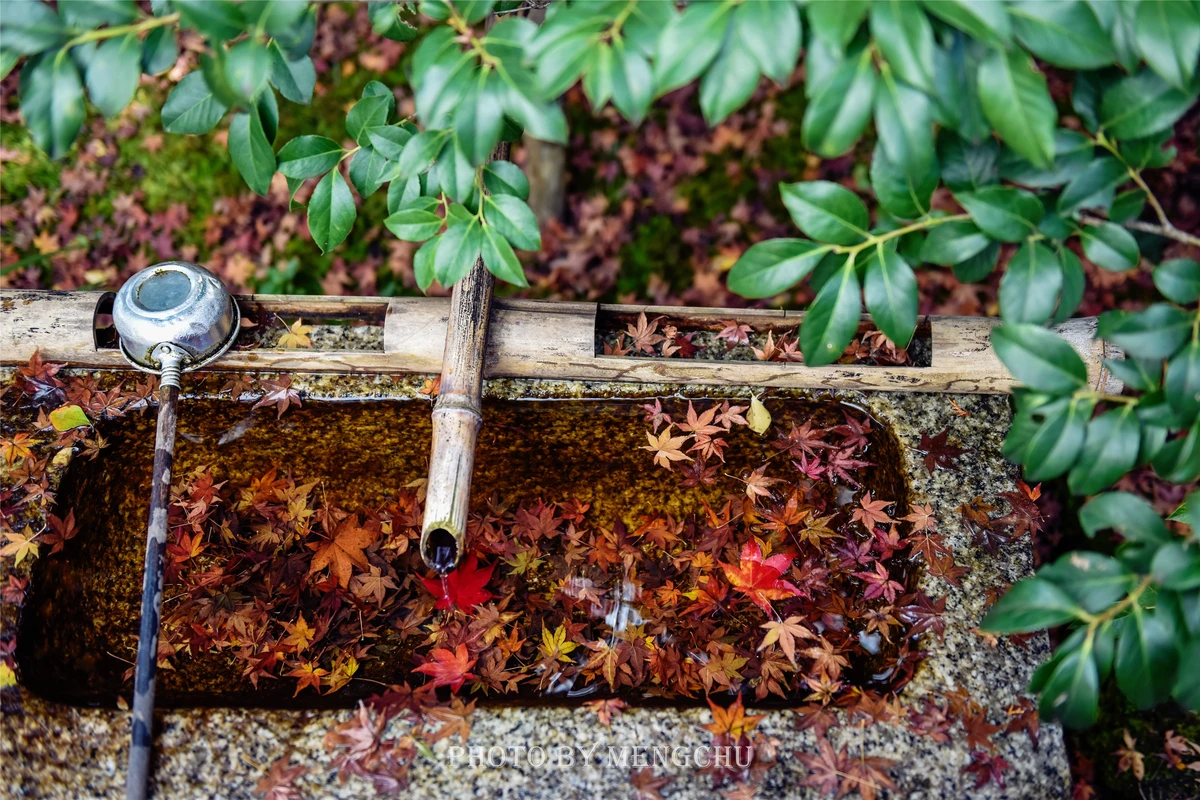
Late Autumn in Kansai: A Rendezvous with the Crimson Leaves – Kyoto, Himeji, Uji, Nara, Drunk on the Splendor of Fall Colors
This was a long-anticipated yet completely spontaneous trip to Kansai...
The maple leaves of Kyoto had indeed been on my mind for a long time. We had agreed at the beginning of the year to go admire the autumn foliage, but it took my sister-like friend and me ages to finally sync our schedules.
Speaking of my beautiful sister, I can't help but add a few words.
We are actually childhood friends forged in iron—our bond dates back before our earliest memories. We were carried by adults to meet each other while still in swaddling clothes, ran wild together in the courtyard as kids, and were in the same class all through elementary and junior high. We never ran out of things to talk about and witnessed each other's most embarrassing moments. At noon, we'd only reluctantly part when the grown-ups would shout from upstairs, 'Lunch is ready!' In high school and college, we went from being in different classes to different countries. In an era before the internet was widespread, looking forward to each other's letters was a joy.
Though it's a pity we didn't end up marrying in the same city—probably she disliked the smog of the imperial capital, and I couldn't grasp the soft dialect of the magic city—our sisterly bond never faded.
Our last trip to Angkor was three years ago. In those three years, we've both been promoted to 'queen mothers.' After posing with our cameras all day, we'd each hold our phones at night to video call our little princesses.
Life is just that simple and beautiful. I hope our two little ones can also become best friends, growing up happily together and witnessing each other's joys and sorrows.
Back to the main story: since neither of us was visiting Kyoto for the first time, we didn't plan to hit the typical attractions or make any detailed itinerary. We just discussed our favorite temples in advance.
Once in Kyoto, we decided each day's outing based on the weather and our mood. We strolled and photographed at a leisurely pace, or sometimes just paused in one spot until three or four waves of tourists had passed. Often, by the time we finished exploring a temple, the day had already grown dark.
That was fine, too. Wandering around idly suits an ancient city like Kyoto best.
However, we didn't catch the best of the maple leaves—not because we were late, but because Kyoto's leaves had turned early this year.
After my sister returned home, I continued on my own to Himeji, Uji, and Nara. South of Kyoto, the maple leaves were just perfectly red. The scenery was beautiful, but it lacked the relaxed joy of two companions.
Indeed, when it comes to travel, what matters is not just the scenery, but who you share the journey with...
Along with 'hanami' (cherry blossom viewing) in spring, 'momijigari' (autumn leaf hunting) is a quintessential national autumn pastime in Japan.
The sensitive and delicate Japanese have always been keen on lamenting spring's passing and grieving autumn's arrival, finding endless reflections in the shifts of seasons. Naturally, they wouldn't overlook the rich autumnal allure of 'red leaves.' While autumn foliage isn't unique to Japan, the country has long been widely planted with deciduous tree species that change color in autumn. Thanks to the significant temperature swings between day and night, the leaves display exceptionally beautiful hues. To seek out this beauty, the Japanese will specially venture into mountains or forests to view the leaves, a practice called 'momijigari' in Japanese. Though written with the character for 'hunt,' it's not about hunting but rather about searching out—Japanese liken holding and admiring the leaves in hand to hunting. Until around the 16th century, 'momijigari' was solely a pleasure of the nobility. But by the 17th century, ordinary citizens also began going out to enjoy the autumn leaves, and so it gradually became a nationwide autumn celebration.
For spring 'hanami,' every Japanese city has its own charm, and cherry blossoms, with their light and ethereal beauty, blend seamlessly with any backdrop. But when it comes to autumn's 'momijigari,' with its rich and intense palette, only temples and shrines seem to truly complement it. Kyoto, with its saying 'a temple every three steps, a shrine every seven,' is the undisputed mecca for 'momijigari.' As is well known, Kyoto, with over 1,200 years of history, was originally named Heian-kyo. For more than a millennium after its establishment, it remained Japan's capital. It wasn't until after the Meiji Restoration, when the capital was moved to Edo—today's Tokyo—that its past glory was frozen in this ancient city. Before the move to Heian-kyo, Japan's capital was Heijo-kyo, today's Nara; and for a period in between, the capital was moved to Naniwa, today's Osaka. So, when it comes to ancient architecture, in terms of both quantity and history, probably no place in Japan dares to vie with Kansai.
- Kansai Autumn Leaf Timings
The viewing season for autumn leaves in Kansai is typically from mid-November to early December, varying a bit each year depending on the climate. Before you go, keep an eye on the official fall foliage forecasts! Generally, the lower the temperature, the later the maples turn red. If the leaves in the city have already started to fall, try your luck in the suburbs or mountains—they might be at their peak!
- Kansai Cities for Leaf Viewing
Several cities within about an hour's train ride of Kyoto in the Kansai region—Osaka, Himeji, Uji, Nara—are all worth a day trip.
Osaka, as the modern center of Kansai, has a cityscape of towering buildings that somewhat lacks charm. Only Osaka Castle Park in the city center remains resplendent in both spring and autumn. Better scenery can be found by venturing into the suburbs; Minoh Park and Katsuo-ji Temple in Minoh City offer rare and beautiful views, though access isn't the most convenient.
The white tenshukaku (castle keep) of Himeji Castle had lingered in my thoughts for far too long. But to be fair, Himeji Castle is planted full of cherry trees rather than maples, making it actually more suitable for cherry blossom season. The adjacent Koko-en Garden, however, is perfect for 'momijigari,' though it's simply a lovely Japanese-style garden and not particularly worth a special trip. As for Shosha-zan Engyo-ji Temple—well, I won't even mention it. Despite being one of the filming locations for 'The Assassin,' the twists and turns of the journey there will definitely make you balk!
Uji is arguably the best city for autumn leaf viewing. Whether it's the national treasure Byodo-in Temple, the Koto-zaka slope outside Kosho-ji Temple, or Uji Shrine and Uji-gami Shrine, even the new Tale of Genji Museum, everything is set off splendidly by the maple leaves, leaving one full of goodwill for this quiet little city.
Nara, with a history even longer than Kyoto's, is an absolute treasure of a city. It never disappoints whether for 'hanami' or 'momijigari.' Every visit to Nara yields new discoveries, and every time leaves you wanting more. Beyond the free-roaming deer, the many temples with their timeless, rustic qualities transport you back to old Japan.
If time is short, focusing on Kyoto alone suffices for 'momijigari.' With its countless temples, widespread maple plantings, and exquisitely landscaped gardens, you could view leaves from morning to night for a whole week and still not see them all. So this guide primarily focuses on autumn leaf viewing in Kyoto.
- Kyoto Autumn Leaf Viewing Guide
It is said that Kyoto was originally modeled after Chang'an and Luoyang from the flourishing Tang Dynasty. To this day, Kyoto still preserves a traditional district division, centered on 'Raku' and split into five areas: Rakusai, Rakuchu, Rakuhoku, Rakuto, and Rakunan. In Japanese, there is a special term for 'going to Kyoto,' written in kanji as '上洛,' which interestingly echoes the Chinese '上京' (going to the capital).
Arashiyama: You can skip Arashiyama for cherry blossoms, but when it comes to Kyoto's autumn leaves, Arashiyama must be on the list. Amid the swaying bamboo groves of Arashiyama hide not only many gardens and ancient temples but also the romantic, retro Sagano Romantic Train. During maple season, taking the train through the mountains to admire the sea of red covering the slopes is so popular that tickets sell out fast. Tenryu-ji Temple and Jojakko-ji Temple are both very famous leaf-viewing spots, and Okochi Sanso Villa is surprisingly pleasant for a leisurely stroll. As long as you're in Arashiyama, there's no need to seek out specific sights; just wandering around yields beautiful scenery.
Hogon-in Temple: Open to the public only in spring and autumn, Hogon-in is celebrated for its strolling garden, where the history-steeped garden pairs flawlessly with the supremely beautiful autumn leaves. This is the only temple in Arashiyama where you can view illuminated night leaves, though missing the garden's daytime beauty is a pity, and returning to the city can be quite late.
Daikaku-ji Temple: A bit far from Arashiyama (over a 20-minute walk), Daikaku-ji remains relatively quiet even in maple season. You can copy sutras here to calm the mind, and the garden pond has its own unique charm. However, the temple mainly features pine trees, with relatively few maples, so going solely for the autumn leaves might not be worth the effort.
Kinkaku-ji Temple & Philosopher's Path: A must-visit in Kyoto! If you haven't been to Kinkaku-ji, you might as well say you haven't been to Kyoto. The maple leaves at Kinkaku-ji are just average, honestly, but the golden pavilion pairs far better with the golden maple hues than with cherry blossoms! The Philosopher's Path was a surprise—I never expected this cherry-blossom-famous streamside path to also be planted with so many maple trees, creating stunning reflections on the water.
Shimogamo Shrine: Though located in Rakuchu and not large, Shimogamo Shrine uniquely boasts a vast primeval forest just outside, Tadasu-no-mori. Besides maples, many other deciduous trees change color in autumn, making it perfect for a fall walk.
Kitano Tenmangu Shrine: This is the head shrine for all Kitano Tenmangu shrines across Japan—students praying for academic success should not miss it. During maple season, the Momiji-en garden at the historic Odoi site opens to the public, featuring 350 maple trees. From the Uguisu-bashi bridge, you can admire the leaves reflected in the stream; in the evening, a special illumination show adds a romantic touch.
Kyoto Gyoen (Imperial Palace Park): The former backyard of the emperor's family is stunning in both maple and cherry blossom seasons! However, the garden is so vast that exploring it can be tiring on the feet.
Nijo-jo Castle: Nijo-jo doesn't have a huge number of maple trees. If it's your first time in Kyoto, it's worth a visit; if you're just on a mission to see maple leaves, you can completely skip it.
Kifune Shrine: Starting from the torii gate, follow the lantern-lined steps to the shrine—the maple leaves on both sides are gorgeous. Looking down from the shrine, you can also admire the rainbow-like autumn colors in the valley.
Ruriko-in Temple: Often called a 'photo trick,' Ruriko-in's stunning mirror reflections come from a table with a reflective mat. Still, the scenery is indeed lovely, and it opens to the public only in spring and autumn. Just be prepared for long queues.
Sekizan-zen-in Temple: A historic Kyoto sanctuary for autumn leaves, the approach on both sides is roofed with blazing leaves, creating a breathtaking 'maple tunnel.' The temple also has a winter-flowering cherry variety called 'kanzakura,' making the rare sight of cherry blossoms dancing alongside maple leaves possible.
Kamonniku Shrine: The long approach from the torii gate to the main hall is lined with maple trees, making it ideal for a late-autumn stroll. This relatively minor shrine offers a rare sense of tranquility.
Shogen-an Temple: The round 'window of enlightenment' and square 'window of delusion' forming the famous circle-and-square windows are mesmerizing in every season. As a Zen temple, Shogen-an's pervasive Zen atmosphere adds a unique Japanese aesthetic to leaf viewing.
Hosen-in Temple: The broad veranda resembles a painting, with pillars framing the view like picture frames. Gazing from inside at the 'framed garden,' the green bamboo and red maple leaves create an intoxicating interplay of colors.
Sanzen-in Temple: Towering ancient trees, babbling streams, a moss-covered garden, and layers of maple leaves in shades from deep to light. Leaves scatter on the mossy carpet of Yusei-en, where red, yellow, and green collide to form a beautiful landscape painting.
Kiyomizu-dera Temple: Another must-visit in Kyoto! Despite the inevitable crowds, the maple scenery is beautiful, especially the iconic Kiyomizu Stage framed by a sea of red—truly spectacular!
Eikan-do Temple: Small bridges over flowing water, autumn leaves reflected in the Hojo Pond. Nicknamed 'Maple Eikan-do,' which says it all about the view! With over 3,000 maple trees, the red is absolutely dazzling. Nighttime illuminations are held here too, with equally leg-numbing queues.
Kodai-ji Temple: Renowned for its gardens and karesansui (dry landscape), it is most famous for its night illuminations, with red leaves mirrored in the water. The most delightful surprise is the 'Night Parade of One Hundred Demons' light show in the karesansui garden—utterly breathtaking! I watched it three times and still wanted more!
Shoren-in Temple: An elegant and refined temple with exquisitely crafted gardens; it's sparsely touristed and beautiful, well worth a visit. The nighttime illumination here is highly recommended, with soft blue light adorning the garden with an elegant mystique.
Chion-in Temple: In autumn, maples cluster densely, and the slanting afternoon sun casts tree shadows on the massive Sanmon gate, creating mottled patterns full of ancient charm. Chion-in also has seven mysteries to explore. The night maple views here are lovely too.
Nanzen-ji Temple: Also famed for its garden maple scenery, Nanzen-ji is a Kyoto leaf-viewing mecca. Interestingly, while Nanzen-ji itself is free, many of its small sub-temples charge separate admission. If you're unwilling to pay, you'll only be able to photograph from outside the walls of these lovely gardens.
Tofuku-ji Temple: The Tsuten-kyo Bridge linking the main hall with the Kaisan-do features dozens of golden-yellow trident maples, earning the name 'Tsuten Momiji' (Heavenly Passage Red Leaves). It definitely ranks among the top three leaf-viewing spots in Kyoto! Of course, maple season brings massive crowds, but Tofuku-ji also has some separate-fee sub-temples that are beautiful and very tranquil—worth a visit.
Daigo-ji Temple: It's strange how rarely this appears in autumn leaf guides—perhaps only because its cherry blossoms are so stunning? Actually, the Kyoto maple photo that captivated me most came from Daigo-ji: the Benten-do hall reflected in Benten-ike Pond amid fiery leaves, a scene straight out of a poem or painting!
To-ji Temple: To-ji is not large, but its five-story pagoda is the tallest in Japan. This elegant wooden structure is highly photogenic whether framed by cherry blossoms or maple leaves. To-ji also offers night illuminations; do check out the pagoda under the night sky.
Sennyu-ji Temple: A relatively low-key temple, referred to as the 'Imperial Temple' because many royal family members are buried here. The Unryu-in sub-temple deep within sees even fewer visitors; viewing the elegant maple scenery through its windows carries a unique Zen quality.
Fushimi Inari Taisha Shrine: The thousands of vermilion torii gates are stunning and impressive! However, it's not particularly suited for maple viewing. If it's your first time in Kyoto, go ahead and visit; if you're specifically chasing autumn leaves, you can safely skip it!
Feeling dizzy from all these famous leaf-viewing spots? It's actually simple. If it's your first visit to Kyoto, pick the must-see landmarks (Kinkaku-ji, Kiyomizu-dera, Fushimi Inari Taisha) and the most popular maple destinations (Arashiyama, Tofuku-ji, Eikan-do, etc.). Places notorious for long queues like Ruriko-in and Shogen-an can be skipped. If you're on your Nth trip to Kyoto, then seek out the peaceful, scenic, and lesser-known temples! In Kyoto during maple season, every shrine and temple is beautiful and won't disappoint!
For real-time updates on the autumn leaves, you can check a website (leave a comment if you need the link) that updates leaf status and photos every three days, making it easy to 'hunt' the most beautiful foliage!
I've lost count of how many times I've been to Japan, let alone Osaka. Everything was familiar territory. The only difference this time was heading straight from Kansai International Airport to Kyoto for the first time. Fortunately, the JR Kansai Airport Limited Express 'Haruka' is very convenient, reaching Kyoto Station in 75 minutes at a one-way fare of 3,290 yen. Another option is the limousine bus from the airport, taking 95 minutes at a one-way fare of 2,500 yen. I recommend buying the JR West Pass Kansai 1-Day Pass for just 2,300 yen, which also includes a Keihan Electric Railway One-Day Pass and a Kyoto Subway One-Day Pass—a total bargain even if you only use it for one trip!
The hotel I stayed at this time was Rinn Nijo Castle, next to Nijo-jo Castle, a five-minute walk from Nijojo-Mae Station. It's a small hotel somewhat like a family inn, with a simple Japanese-style frontage that feels very welcoming. Kyoto hotels during maple season are shockingly expensive; securing a 17-square-meter twin room for 799 yuan per night was quite lucky. The sister from Shanghai and the sister from Beijing finally met at this little Kyoto inn, chattering nonstop like in our younger days as we stepped out into the cool Kyoto night to find food.
For the first meal in Kyoto, a sense of ceremony is important! So we chose a kaiseki restaurant by the Kamogawa River that I had long been nostalgic for—the most authentic Kyo-kaiseki. Let's go!
GANKO Takasegawa Nijo-en is my favorite kaiseki restaurant in Kyoto, probably due to an unforgettable coincidence during my first visit.
On my first trip to Japan, I was traveling with my parents. The cherry blossom season itinerary was packed. I still remember my dad, exhausted and hungry after walking all day, throwing a tantrum like a kid, plopping down on the steps of Heian Shrine and grumbling, 'I'm not walking anymore! Can't walk anymore! If you don't feed me, I'm not sightseeing any further!' So Candy and I quickly searched online for nearby restaurants and stumbled upon this GANKO. Seeing the always-full reviews, we called with faint hope and luckily got a reservation! That evening's sunset was magnificent, with cherry blossoms and a sky full of rosy clouds. Our family of four trudged wearily toward the restaurant while cheering Dad on: 'Come on! Just five more minutes!' That memory is a particularly heartwarming one for me. Finally seated on tatami in a traditional room, watching the stream gurgle through the garden while savoring exquisite kaiseki cuisine—such a meal after such a day was truly unforgettable.
GANKO has several branches in Japan, mostly in Kansai with a few in Tokyo, popular for its high-value Kyo-kaiseki cuisine. But this Takasegawa Nijo-en branch near the Kyoto Imperial Palace is the most beautiful, bar none. The restaurant's garden is full of character. First built as a villa for wealthy merchant Suminokura Ryoi in the Keicho era (1611), it later passed through various owners during the Meiji era—Yamagata Aritomo, the third Bank of Japan governor Kawada Koichiro, and Abe Ichitaro—before becoming GANKO's garden-style Japanese cuisine restaurant. Nijo-en's architecture encapsulates the essence of Kyoto culture, with its traditional garden scenery completely captivating. The Takase River, a canal off the Kamogawa, flows right through the garden, creating a uniquely refined charm found nowhere else.
Takasegawa Nijo-en serves authentic washoku (Japanese cuisine). Both lunch and dinner offer value sets suitable for regular tourists as well as premium kaiseki for business entertaining. The restaurant regularly schedules geisha performances; since the schedule is not fixed, check the official website for dates. Viewing a maiko performance requires advance booking. Although I've missed the performances on my visits, I once encountered a geisha after a show—her every gesture was breathtaking.
After dinner, it's lovely to stroll through the garden. Unlike the crowded temple gardens, this place is elegant and peaceful, with maples filling the garden, a 250-year-old red plum tree, and the largest stone lantern in Japan—the Azumaya-doro. Although a fine rain was falling and the night lighting wasn't ideal, I could still feel the storied history of this century-old garden.
Address: 484-6 Higashi-Ikejiri-cho, Nakagyo-ku, Kyoto-shi, Kyoto-fu
Access: 4-minute walk from Kyoto Shiyakusho-mae Station (subway); 7-minute walk from Sanjo Station (Keihan Railway)
Hours: 11:30–21:30
Average cost: 4,000 yen (you can visit the garden for free without dining; menu prices exclude Japanese consumption tax and 10% service charge)
The first day of Kyoto's maple season began with a fine drizzle, initially a bit disappointing, but it unexpectedly revealed a different kind of beauty. The rain-moistened scenery—red leaves, moss, stone lanterns, wooden lattice windows, roof tiles—all gained a dewy, ethereal quality, even more charming than under a bright blue sky.
First thing in the morning, we went straight to Ruriko-in Temple, where a long queue had already formed just after opening. Perhaps it's a case of higher expectations leading to greater disappointment. Ruriko-in was indeed beautiful, but not as beautiful as I had imagined, nor as stunning as in my photos. No wonder it's often called a 'photo trick' destination.
In the afternoon, the rain continued, so we decided to shop in Gion. We passed a lovely homeware store and fell in love with it, reluctant to leave. We were lucky to meet the owner/designer and his adorable Shar Pei dog, and were invited to see his private studio and new products—the unexpected surprises during travel are always the most memorable.
As evening approached and the rain let up, we visited a small, unassuming temple nearby—Shoden Eigen-in. We were the only visitors in the entire temple, tiptoeing carefully so as not to disturb its tranquility.
For dinner, we had conveyor-belt sushi at CHOJIRO Shijo Kiyamachi near Shijo. This highly rated spot offers not only a regular menu but also seasonal specials using local ingredients. Each piece of sushi is carefully hand-made by professional chefs on the spot, keeping the casual vibe of a conveyor-belt sushi joint while maintaining the chefs' meticulous attention to ingredients. Delicious sushi, freshly grilled saikyo-yaki, freshly fried tempura, paired with smooth Japanese sake... this is the down-to-earth charm of this thousand-year-old capital.
Located in Yase, north of Kyoto, this area of intertwined mountain scenery and gorges has been a favored retreat for nobles and warriors since the Heian period. And Ruriko-in Temple, standing in such a serene place, naturally became a renowned yet hidden temple. Because it only opens to the public for limited periods in spring and autumn, its exclusivity has paradoxically made it an 'internet-famous spot.' Not only is its admission among the priciest in Kyoto, but the queue time is also one of the longest.
We visited this legendary ancient temple early in the morning amid a light drizzle. Getting off the train at Yase-Hieizanguchi Station, we walked along the clear stream of the Takano River, crossed a small bridge, and the rustic, unadorned mountain gate came into view. The vast temple grounds cover nearly 40,000 square meters, with several buildings covering nearly 800 square meters, all masterfully designed to borrow from the natural scenery. The garden is widely planted with trees: in spring, from budding green to lush foliage, with century-old asebi shrubs bearing cute white urn-shaped flowers; in autumn, brilliant red unfolds layer by layer, making it one of Kyoto's most famous maple-viewing spots.
Although we arrived right at opening time, we still had to queue in the rain for half an hour before entering. The stepped approach is lined on both sides with over a hundred species of maple, their splendid and colorful leaves dazzling the eyes even before stepping inside. Crossing a stone bridge, we saw red carp swimming happily in the pond below. At the end of the bridge stood the elegant entrance hall built in the traditional tea-house style.
The study is the heart of Ruriko-in's architecture. A large desk sits in the center of the second floor, and the wooden lattice windows cannot contain the fiery autumn colors of the garden, which reflect on the desk's mirror-like surface—this is Ruriko-in's most classic photo angle. Personally, I preferred the maple reflections on the gleaming wooden floor; after all, when everyone shoots the same angle, it becomes a bit dull. It's better to calm your mind by copying sutras nearby. If only it were less noisy—sitting quietly at the maple-reflecting desk, listening to the last chirps of autumn cicadas, the patter of raindrops, and the rustle of falling leaves—that would be Ruriko-in at its finest!
The beauty of Ruriko-in's gardens is often overlooked. I preferred their names over the views. The main garden, 'Ruri-tei' (Lapis Garden), is a tiny courtyard completely covered in green, with a thin stream meandering through the moss in an elegant curve—the name 'Ruri' (lapis lazuli) perfectly captures its lush, translucent green. The grander Garyu-tei (Lying Dragon Garden) is a pond garden expressing the motif of a flying dragon through the flow of water and arrangement of stones. Standing there, admiring the garden, the rippling pond, fish swishing their tails, raindrops clinging to maple leaves, I gradually felt my whole heart settle.
Although Ruriko-in is often criticized as a 'photo trick,' I disagree. Its beauty requires quiet appreciation, which is unfortunately drowned out by noise and burdened with too many expectations—still, it's a shame...
Address: 55 Togano-o, Sakyo-ku, Kyoto-shi, Kyoto-fu
Access: From Demachiyanagi Station, take the Eizan Electric Railway (toward Yase-Hieizanguchi) to Yase-Hieizanguchi Station, 5-minute walk; or from Kokusaikaikan Station (subway), take the Kyoto City Bus (toward Ohara/Kodeishi) to Yase-ekimae, 7-minute walk.
Admission: 2,000 yen
Gion seems to have become synonymous with Kyoto. If you haven't been to Gion, it's almost like never having been to Kyoto.
Gion isn't a single park but refers to the area from Yasaka Shrine and the Kamogawa River to Higashioji-dori. It's Kyoto's most famous geisha district and has been the city's most bustling entertainment quarter since ancient times.
The name 'Gion' (pronounced like 'gee-own') derives from 'Gion Shoja,' the short name for the Buddhist 'Jetavana Grove.' Since Yasaka Shrine enshrines Gozu Tenno, the guardian deity of Jetavana, Yasaka Shrine is also called 'Gion-sha.' Over time, the district in front of it became known as 'Gion,' and the annual festival held at Yasaka Shrine each July is called 'Gion Matsuri.'
Gion's fame, however, comes from its role as a 'flower town' (entertainment district). It's said that the Edo shogunate permitted tea houses to operate here starting in 1665, giving it over 300 years of history. At its peak in the early 19th century, Gion was home to over 3,000 geisha. Today, many of the old tea houses, restaurants, and geisha lodgings remain. In 1999, the Japanese government designated it a Historic Landscape Preservation District. The traditional wooden machiya townhouses, taxed based on street-facing width, are narrow but deep—frontages of just 5-6 meters but extending over 20 meters deep. The Shirakawa Canal meanders through this tranquil neighborhood, lined with willows and home to many high-end restaurants and tea houses, some overlooking the canal.
During the day, Gion is quiet, especially in the rain, which dampens the cobblestone streets. Many restaurants and bars haven't opened yet, and tea houses and small shops hang subtle 'Open' signs. Wandering around and discovering a few intriguing shops gives a real 'treasure hunt' thrill. The district truly comes alive at night, with softly glowing lanterns, gentle light filtering through paper screens, bustling crowds, and neon signs—a lively scene unchanged for over a century.
The most iconic spot in Gion is Hanami-koji Street, which runs north-south about one kilometer through the district. Strolling along this oldest 'flower street' in Japan, admiring the old-style buildings on both sides, you'll occasionally see women in kimono hurrying past in twos and threes—a uniquely evocative sight. If you're lucky, you might spot maiko and geisha in the evening rushing to appointments at tea houses. Even international brands like Leica and Hermès can't resist Gion's charm, opening unconventional boutique stores here.
Access: The closest station is Gion-Shijo Station on the Keihan Railway. The area from the Kamogawa River west of the station to Yasaka Shrine east of it, along Shijo-dori and its north-south environs, is Gion.
It's hard to imagine such a quiet little temple hidden deep within the bustling Gion. Shoden Eigen-in is the result of merging Shoden-in and Eigen-an, two temples with centuries of history. Due to their obscurity, they underwent many twists and even faced abandonment, only surviving through the persistent efforts of generations of abbots.
The tea house 'Jo-an' was built by Oda Yuraku, the younger brother of Oda Nobunaga. It is steeped in the distinctive aesthetics of a feudal lord and tea master, attracting many tea lovers. Also worth seeing are the painted sliding doors in the Bodai-sho (memorial hall). Each room's fusuma partitions are meticulously painted with seasonal landscapes: 'Listening to Snow' depicting Kyoto in winter, 'Autumn Atmosphere' with maple-clad mountains, or 'Herons and Lotus' portraying rustic joys—all showcase superb artistry and lofty artistic conception.
Though small and rustic, the temple still receives local visitors. They simply kneel on the veranda, silently admiring the maples in the garden. Not a word is spoken; even the sound of a shutter seems jarring. Silently appreciating this simple courtyard brimming with autumn colors—that is the highest realm of 'momijigari.'
Address: 586 Komatsu-cho, 4-chome, Yamato-oji-dori Shijo-sagaru, Higashiyama-ku, Kyoto-shi, Kyoto-fu
Access: 5-minute walk east from Exit 1 of Gion-Shijo Station (Keihan Railway); 7-minute walk east from Kawaramachi Station (Hankyu Railway); or a 5-minute walk from the Higashiyama Yasui or Shijo Keihan-mae bus stops (city bus/Keihan Bus).
Admission: 500 yen
I had planned to head straight to Arashiyama early in the morning, but got waylaid by Shinsenen Garden. It was right next to my accommodation—an inconspicuous stone torii gate that, once entered, revealed a hidden world.
On the south side of Nijo Castle, Shinsenen was originally an imperial garden within the Heian-kyo palace. It is considered one of the first gardens in Kyoto and is quite large for Rakuchu. Centered on a pond named Shinsen (sacred spring), water covers two-thirds of the garden. The pond features a central island, with eastern and western halls and a fishing pavilion built over the water, connected by covered bridges. Beyond lie streams and forest. Heian-era emperors and nobles loved disporting here, and legend says the folk hero Minamoto no Yoshitsune met his beautiful lover Shizuka Gozen right here.
Shinsenen venerates Zennyo Ryuo, a dragon king dwelling in India, making it a rain-prayer site in Kyoto. To the left of Zennyo Ryuo Shrine is a small bridge of wood, arching like a rainbow in vivid red. The garden has no crowds, only ducks waddling leisurely and well-fed plump carp in the pond—a lovely spot for a stroll.
The Arashiyama trip is practically a maple-season staple, though the Sagano Romantic Train left me a bit underwhelmed. However, Jojakko-ji Temple had some perfectly red maples. Tourists tend to congregate at the bamboo grove and Tenryu-ji, giving Jojakko-ji at most a cursory glance, and easily missing its unique, charming little scenes.
The real surprise was Okochi Sanso Villa. Its generic name nearly made me skip it, but it turned out to be a hidden gem. The garden has a certain refined elegance—a winding path leading to secluded spots, mountain light delighting the birds, and a profound silence. This is it, nothing more.
In the evening, we went to Kodai-ji Temple for the night illuminations. The maples glowed like fire in the night, dreamily beautiful, but the 'Night Parade of One Hundred Demons' light show surpassed everything.
A day feasting on beautiful scenery, with only two bowls of soba noodles in Arashiyama and a late-night snack at Gyoza no Ohsho after seeing the night maples. With views like these, food hardly mattered...
For the nobility of a thousand years ago, the charm of 'momijigari' was inseparable from Arashiyama in northern Kyoto, a popular scenic destination since ancient times.
From the 8th century onward, nobles built holiday villas in Arashiyama, amusing themselves among the rice paddies and bamboo groves while admiring the multicolored leaves. Today, gazing across from Togetsu-kyo Bridge, the scene remains as beautiful as ever: mountainsides blanketed in layered hues, waterfalls and valleys adorned with red leaves. You can still visit the former noble villas, most of which have become small temples. Tang poet Bai Juyi once wrote, 'Warm wine among the woods on burning red leaves'; this poem later reached Japan, and it's said that nobles imitated him, holding banquets, drinking, and composing waka poems while viewing the leaves. They also boated on the river to enjoy the scenery; today, visitors can take a boat ride on the Hozu-gawa River in Arashiyama, reliving that ancient mood.
One thing we moderns have over the ancients is the Sagano Romantic Train, which winds through Arashiyama's breathtaking natural scenery. This 7.3-kilometer scenic railway along the Hozu Gorge, connecting Sagano and Kameoka countryside, opened in 1899. The vintage train features wooden benches, with one open-air car and four enclosed cars. Riding this retro diesel train at a leisurely pace through Kyoto's most beautiful landscapes, you can see ethereal pink cherry blossoms in spring, lush mountain greenery in summer, and fiery red leaves across the mountains in autumn. During its brief winter operation, the train passes through a silver world blanketed in powder snow.
The romantic rail journey lasts about 25 minutes, with occasional brief stops where you can open the windows to take photos. You can ride the train back to enjoy views from the other side, or take a different route—down the Hozu-gawa River by boat back to Kyoto. Shuttle buses connect Torokko Kameoka Station to the boat dock near Togetsu-kyo Bridge, where you can continue your Arashiyama visit. Honestly, the Sagano Romantic Train somewhat disappointed me—the scenery was certainly worthy, but too many trees along the track made it hard to photograph the views. Yet, thinking about it, this short railway that traverses mountains and rivers was laid before the 20th century—quite remarkable.
Though Arashiyama has its beauty in every season, the bamboo path leading to Sagano forever claims the spotlight. The Arashiyama Bamboo Grove path in Sagano Village west of Kyoto is flanked by impossibly tall bamboo stalks—an awe-inspiring sight. The path is short, but enough to soak in the bamboo's beauty, with dappled light and shadow playing on the ground, almost magical. The only pity is that it's always packed with tourists from around the world; beautiful as it is, the sense of tranquility is greatly diminished.
Actually, there's no need to hit the crowded spots. Just wandering around Arashiyama, beauty is everywhere. There are ancient temples hidden deep in bamboo groves, elegant gardens borrowing Arashiyama's scenery, and simple farmhouses with closed doors that can't conceal the riot of red leaves in their yards. Maples interspersed with bamboo form Arashiyama's loveliest autumn scene; persimmons and tangerines are ripe, hanging on trees; stepping on thick fallen leaves, time seems to blur with the crackling sound.
A thousand years ago, a thousand years later—beyond the city's bustle, Arashiyama's cherry blossoms bloom and maple leaves fall year after year, as if its beauty is eternal.
Sagano Romantic Train
Access: From Kyoto Station, take the JR Sagano Line to Torokko Saga Station, then walk to Saga-Arashiyama Station.
Operation: March 1–December 29, closed Wednesdays; 9:00–17:00, 8 round trips daily. Seating limited; reservations essential during cherry blossom and maple seasons.
Fare: Adults 620 yen, children 310 yen
Among the many ancient temples in Arashiyama, Jojakko-ji Temple is like a refined hermit living secluded in the mountains—tranquil and elegant. Compared to the bustling Tenryu-ji, its intoxicating autumn colors possess a more 'come if you will' nonchalance.
Jojakko-ji was originally the private mountain villa 'Shigure-tei' of Heian-era noble Fujiwara no Teika, later converted into a Nichiren Buddhist temple in the late 16th century. 'Jojakko' derives from Buddhist scripture, meaning the Pure Land where Amida Buddha dwells—an ideal Buddhist realm. For visitors, the temple is renowned for its tahoto pagoda and autumn maple leaves.
Built along the slope of Mount Ogura, during maple season the temple feels like walking through a colorful tunnel of interwoven red and golden ginkgo. From the tahoto pagoda up high, you can gaze out at mountains, water, pagoda, and a sea of red leaves—Kyoto's beauty unfolds before your eyes.
The temple's mountain gate stands at the foot, with 'Jojakko-ji' inscribed on the plaque, plain and unadorned, quietly separating the temple's scenery from the outside world's noise. Next to the gate, an ancient, towering maple tree displays leaves transitioning from pale yellow to deep crimson, entwining an enchanting autumn mood.
Facing the gate is the Niomon Gate, built in the 14th century and one of the temple's oldest structures, its heavy thatched roof already covered in moss. As you climb the stone steps of the approach, the slopes on both sides are densely planted with red maples, their branches spreading outward thickly, giving a feeling of being enveloped by layer upon layer of maple leaves. The colors are incredibly rich, from green to golden to vermilion to deep red, complemented by a thick moss carpet blanketing the slopes—a tapestry so vivid it's like an oil painting. Moving through, changing views, amid the dappled tree shadows, all is filled with lovely autumn ambiance.
The garden before the main hall has a quiet beauty, with stone lanterns perfectly complementing the maple leaves in a distinctly Japanese style. Jojakko-ji exudes a unique elegance; every wooden window grille, water basin, paper lantern, and eave corner composes its own scene.
Continuing up the stone path, you reach the tahoto pagoda on higher ground. Built in 1620, this pagoda is designated an Important Cultural Property and features the ornate Momoyama architectural style. From the viewing platform above, you can overlook the city, as red maples, green trees, and moss adorn this simple hillside temple in dazzling splendor.
During leaf season, the temple separates the upward and downward paths. The descending route offers equally refreshing scenery, yet you can't help looking back, reluctant to miss a single view, lingering as you depart.
Address: 3 Saga-ogura-cho, Ukyo-ku, Kyoto-shi, Kyoto-fu
Access: 20-minute walk from Arashiyama Station (Keifuku Arashiyama Line); 15-minute walk from Torokko Saga Station (JR Sagano Scenic Railway)
Hours: 9:00–17:00 (last entry 16:30); several sections of the route involve stone stairs but gentle slopes; only one route through the temple, approx. 1–2 hours round trip.
Admission: 500 yen
Okochi Sanso Villa is a unique spot in Arashiyama. It is neither an ancient temple nor built by old nobility, but rather an 'ideal garden' created by a film actor over a lifetime.
Tucked away deep in the bamboo forest, this beautiful garden was the private property of Okochi Denjiro (1898–1962), a famous period-drama actor of early Showa Japan. Captivated by Mount Ogura's scenery, he poured much of his acting earnings into it, personally overseeing everything from material selection to design over the last 30 years of his life. He imbued it with his devout Buddhist faith and the impermanence he witnessed during the Great Kanto Earthquake. His descendants opened the villa to the public.
Different from the solemn beauty of temple gardens, Okochi Sanso integrates garden aesthetics with natural scenery—Arashiyama, Mount Hiei, and the Hozu River all become part of the view. The garden is planted with a wide variety of greenery, with different shades creating a richly layered picture. Each tree has been carefully pruned, and as the seasons change, the plants assume different colors, offering distinct beauty throughout the year. The highest point of the villa is where Okochi once meditated; from here you can overlook Kyoto's finest views, with a feeling of seeing all lesser mountains at a glance. Arriving here, the heart naturally settles. No words are needed; just quietly face yourself and rediscover the beginner's mind of Zen.
Perhaps due to the relatively high admission or because it's not an ancient temple, even during maple season, visitors remain few, but this makes it wonderfully peaceful. Walking through Okochi Sanso feels like stepping into an Edo-period country path in a period film: winding, turning, twisted and secluded. One turn, and the scenery changes dramatically. It's like a maze, yet there's a way out; like an endless footpath, then suddenly a wide open space—Zen-like and intriguing. Every step is an exquisite landscape painting, a sense of wandering through a picture. I happened upon a couple in kimono, perfectly blending into the beautiful scene, and felt inexplicably like I was intruding on the view, so I ended up following their silhouettes with my camera for quite a while.
After roaming the garden, head down to the open-air tea house, where you can sip matcha and nibble sweets, as if retreating to the mountains—a true pleasure.
Address: 8 Saga-ogura Yamada-cho, Ukyo-ku, Kyoto-shi, Kyoto-fu
Access: 5-minute walk from Torokko Saga Station (JR Sagano Scenic Railway)
Hours: 9:00–17:00
Admission: Adults 1,000 yen, elementary/junior high students 500 yen (includes matcha and sweet)
Night viewing of autumn leaves is unique to Japan. Under the lights, red leaves sway, ancient temple bells toll in the evening—a different kind of maple charm.
During maple season in Kyoto, many temples and shrines open for nighttime visits. We chose Kodai-ji Temple firstly because it's conveniently located, so no worries about returning late; and secondly for its breathtaking 'Night Parade of One Hundred Demons' projection show. Consequently, we queued the longest on this entire Japan trip—nearly an hour from ticket purchase to entering the temple.
Kodai-ji was built in 1605 by Nene in memory of her late husband, the brave general Toyotomi Hideyoshi. As his widow, Nene spent her later years here in pious retreat and was buried on the grounds. The main hall displays portraits of Hideyoshi and Nene side by side. The temple's construction was overseen by Hideyoshi's successor Tokugawa Ieyasu, who hired the most renowned architects, painters, and garden designers of the time. Thus, though small, the temple is exquisite and elegant, with buildings terraced along the hillside, several ponds lined with maple trees, hidden wooden walkways, and a bamboo grove. The garden employs a karesansui (dry landscape) design intended to convey the vastness of the ocean.
However, during a nighttime visit to Kodai-ji, following the lit path to view the illuminated maple leaves, you won't see any of these details. A large character '夢' (dream) at the entrance is quite apt, perhaps hinting that the experience ahead will be an unforgettable garden dream. Following the lights, you wind through the temple, passing corridors and pavilions; the surroundings are mystified by night. Under the lights, the maple leaves appear red, yellow, and orange, displaying a different richness from daytime. The most stunning sight is the reflection of the multicolored forest in the calm water of Garyu-ike Pond, like a double-sided mirror—a dreamy combination of color and light where one can't distinguish reality from illusion.
Unlike other nighttime temple visits, Kodai-ji holds special illumination events in spring, summer, and autumn. Naturally, the spring (mid-March to mid-May) cherry blossoms and autumn (late October to early December) maple leaves are featured, but what's truly special is the summer event from August 1–18. Japan has a tradition similar to China's Zhongyuan Festival (Ghost Festival), believing that all sorts of spirits and monsters emerge onto the streets in August. Since 2006, Kodai-ji has annually hosted the 'Night Parade of One Hundred Demons Exhibition,' drawing from Japan's Muromachi-period 'Hyakki Yagyo Emaki' picture scroll. Cleverly using 3D projection mapping, it vividly recreates the scene of a hundred demons parading. This light show also runs during cherry blossom and maple seasons. Staged in the hojo (abbot's quarters) karesansui garden, with the entire garden as the backdrop, various demons roam and appear. Although the performance lasts only three minutes, it is utterly mesmerizing. As someone who owns countless editions of 'Classic of Mountains and Seas' and 'Night Parade of One Hundred Demons' picture books at home, I must have lost my mind—I watched it three times and still couldn't bear to leave. It didn't feel scary; rather, it was like a dreamy, mystical vision.
Address: 526 Shimogawara-cho, Kodai-ji, Higashiyama-ku, Kyoto-shi, Kyoto-fu
Access: From Kyoto Station, take bus 206, or from Gion-Shijo Station, take bus 207, to Higashiyama Yasui stop; 5-minute walk east.
Hours: 9:00–17:00 (gates close 17:30); during special nighttime openings, from sunset to 21:30. The temple doesn't clear out, so you can go in the evening to see both daytime and nighttime Kodai-ji.
Admission: Adults 600 yen, junior/senior high students 250 yen
We had a late and tiring previous day, so this day was planned to be relaxed. We decided to visit only Daigo-ji Temple—but we miscalculated.
I initially thought Daigo-ji was similar in scale to temples near Gion, taking only 2–3 hours to walk around. I didn't expect it to be located far in Rakunan, even more remote than Fushimi Inari Taisha (which I used to think was practically leaving Kyoto—my apologies to it!). A few more stops and we'd have been in Uji... Probably because it's on the outskirts, it could be built much larger. Only then did I realize others typically spend a full day at Daigo-ji! So, our half-day only covered Sanbo-in and Shimo-Daigo. Facing an hour-long uphill walk to Kami-Daigo, we decisively gave up.
Fortunately, we stumbled upon an open-air flea market for the first time in Japan! It lined both sides of the approach to Shimo-Daigo. Not only were local residents selling second-hand treasures, but artisans were offering their handiwork, and there was even home-baked bread and pour-over coffee. It was brimming with everyday local life, instantly boosting my affection for Daigo-ji! So, lunch was solved right there among those heartwarmingly human stalls.
It was almost evening by the time we returned to the city, the main reason being we'd lingered far too long at the flea market... Since my sister was heading back tomorrow, we went shopping around Karasuma-Shijo. Shinkyogoku Shopping Street is always great no matter how many times you go—restaurants, cafes, drugstores, souvenir shops, unique boutiques—all your needs can be met there. For dinner, we had Ichiran Ramen in the shopping arcade; a hot bowl of ramen always soothes the weary traveler's stomach.
Daigo-ji Temple was the very reason I came to Kyoto during maple season—all because of a photo of the red Benten-do hall reflected in the pond, set against the crimson maples, a scene of indescribable beauty.
Although Daigo-ji holds little sway with tour groups and many visitors have never heard of it, it occupies a pivotal position among Japanese Buddhist temples. In 1994, it was inscribed as a World Heritage Site as part of the 'Historic Monuments of Ancient Kyoto.' Founded in 874, it serves as the head temple of the Daigo school of Shingon Buddhism. Embraced by Emperor Daigo, it underwent continuous expansion to reach its current size. Apart from the five-story pagoda, the entire temple was once destroyed by war. In 1598, Toyotomi Hideyoshi reconstructed it under the pretext of a flower-viewing party, restoring its former glory.
I've always felt that Daigo-ji has the most beautiful name among all Kyoto temples. As the Mahaparinirvana Sutra says, 'Daigo' can metaphorically represent the 'ultimate truth' in Buddhism: 'Just as from the cow comes milk, from milk curds, from curds butter, from butter clarified butter, from clarified butter comes the finest essence.' This is the origin of the name Daigo-ji.
Daigo-ji is one of Kyoto's largest temple complexes, occupying the entire Mount Daigo in southeastern Kyoto. It's mainly divided into three areas: Sanbo-in and Shimo-Daigo at the base, and Kami-Daigo on the mountain. The temple grounds contain over 80 halls and pagodas, including Kyoto's oldest five-story pagoda and the Kamakura-period Kondo hall, both designated National Treasures.
Although built because of Emperor Daigo, Daigo-ji flourished under the regent Toyotomi Hideyoshi. At the height of his power, Hideyoshi held the grand 'Daigo no Hanami' (Cherry Viewing at Daigo) here, showcasing his supremacy and making Daigo-ji famous nationwide. Afterwards, it gained lasting renown as Hideyoshi's chosen cherry blossom spot, attracting many visitors. Today, the 'Taiko Hanami Gyoretsu' (Hideyoshi's Flower Viewing Procession) is reenacted on the second Sunday of April each year.
Entering Shimo-Daigo through the Niomon Gate, Sanbo-in is to the left and Reihokan Museum to the right. Sanbo-in is a Momoyama-period shoin-style building and the temple's main living quarters where successive head priests resided. Most of its buildings are designated Important Cultural Properties. The Omote-Shoin, offering a panoramic garden view, is a typical Momoyama structure in shinden-zukuri style. Its walls and sliding doors feature colored paintings by Edo-period masters Ishida Yutei and Kano Sanraku, registered as National Treasures. To protect the Omote-Shoin, photography indoors is forbidden, and you must remove shoes. The Sanbo-in garden, a Special Historic Site and Special Place of Scenic Beauty, was personally designed by Hideyoshi for the 'Daigo no Hanami' and still retains Momoyama-era opulence.
The garden design is full of meaning: the pond contains Turtle and Crane islands, symbolizing tranquility and dynamism respectively; the three rocks of Kamo in the dry landscape represent the rapids, stagnation, and splash of the Kamo River; by the pond stands the tea house 'Chinryu-tei' and the famous 'Fujito-ishi' rock once owned by rulers.
Particularly noteworthy is Sanbo-in's Kara-mon gate, also called the Chokushi-mon (Imperial Envoy Gate). Because Sanbo-in was headed by imperial princes who became priests, this gate was specially built to receive imperial envoys. Originally coated in black lacquer, its huge crests of chrysanthemum and paulownia were embellished with gold leaf—a design fully displaying Momoyama flamboyance.
The Reihokan Museum houses over 40,000 national treasures and important cultural properties—sculptures, paintings, crafts, ancient documents—and with uncounted cultural assets, the temple's treasures total 100,000 items. Among them are National Treasures like the colored silk painting of the Five Great Ones and Monju Crossing the Sea. The museum is open to the public only in spring and autumn.
Passing through the Niomon Gate rebuilt by Toyotomi Hideyori, you see the sprawling Shimo-garan (lower temple complex). It contains the National Treasure Kondo hall, along with other halls such as Seiryu-gu Shrine, Soshi-do, Fudo-do, Daikodo, Nyonin-do, and Benten-do. But historically, nothing at Daigo-ji compares to the five-story pagoda.
The five-story pagoda, a National Treasure, was built to pray for Emperor Daigo. Initiated in 936 by his first son, Emperor Suzaku, and completed in 951 by his second son, Emperor Murakami, it is the oldest surviving wooden structure in Kyoto. Standing about 38 meters tall, its spire accounts for roughly 13 meters, or one-third of the height, lending a sense of stability. The murals inside are considered the forerunner of Japanese esoteric Buddhist painting and are independently designated a National Treasure.
The visual highlight of Shimo-garan is the 'Rinsen' area around the Daikodo pond—Shimo-Daigo's most brilliant maple spot. Here, Benten-do hall enshrines Benzaiten, the goddess of music and knowledge, one of the Seven Gods of Fortune. In late autumn, the fiery Benten-do and the red bridge in front reflect together on the water's surface, intermingling with the red maple leaves. Although I arrived a bit late and the leaves had begun to fall, it was still breathtakingly beautiful! Cherry trees are also planted around Benten-do, promising another kind of beauty in spring. It's said that after his cherry blossom party, Hideyoshi eagerly anticipated an autumn 'Daigo Red Leaf Viewing Party,' but sadly, that summer marked the end of his 62-year life. Perhaps Daigo-ji's autumn leaves are a gift left behind for posterity.
Sanbo-in and Shimo-Daigo are easily accessible, hence always bustling; by contrast, Kami-Daigo atop Mount Daigo is farther and harder to reach—a strenuous one-hour hike uphill—thus secluded, quiet, and idyllic. Although I regretfully missed it this time, it leaves a reason to return, perhaps in cherry blossom season to witness the splendor of 'Hana no Daigo' (Flower Daigo).
Address: 22 Daigo-Higashioji-cho, Fushimi-ku, Kyoto-shi, Kyoto-fu
Access: 5-minute walk from Daigo Station (Subway Tozai Line); or take the Keihan Yamashina Express bus from JR Kyoto Station to Daigo Station.
Hours: 9:00–17:00 (Mar 1–first Sun of Dec); 9:00–16:30 (day after first Sun of Dec–end of Feb); ticket sales end 1 hour before closing; last entry to each site 30 minutes before closing.
Admission: Combined ticket for Sanbo-in, Reihokan, and Shimo Garan: Spring/Autumn (Mar 20–May 15, Oct 15–Dec 10): adults 1,500 yen, junior/senior high 1,000 yen; Off-peak: adults 800 yen, junior/senior high 600 yen. Kami-Daigo hiking fee: adults 600 yen (500 yen with combined ticket), junior/senior high 400 yen (300 yen with combined ticket).
Today was a day of farewells.
My sister had an evening flight back to Shanghai, so we had some time in the morning. We could only explore nearby, so we visited Shoren-in Temple, a beautiful and uncrowded spot. Despite being in Gion and during maple season, there weren't many tourists—perhaps everyone was waiting for the evening illumination. Shoren-in is indeed small and elegant; one circuit takes just over an hour, but the scenery is worth it.
After saying goodbye to my sister, I went to Tofuku-ji alone. It was a somewhat random choice, because it's often said that among Kyoto's beauties, 'sakura at Daigo, momiji at Tofuku,' and I wanted to see why Tofuku-ji's maple leaves are so highly esteemed. The saying proved true: Tofuku-ji's maples were as dense and brilliant as crimson clouds. Yet what left a deeper impression on me were the various karesansui gardens. Still, even the best scenery feels lonely without someone to share it with.
While writing this travelogue, I pulled out Tofuku-ji's brochure, and two maple leaves fluttered out. I remembered how, feeling listless and alone that day, I'd looked down and collected some beautifully formed, richly colored fallen leaves, tucking them into the brochure. Now, these two leaves have become the warmest souvenir of my Japan trip. Because of loneliness, I found warmth—life always has such twists and turns; it's rather interesting.
In the evening, I dragged my luggage to Osaka. For the next few days, I planned to base myself in Osaka and take day trips to other cities in Kansai. The hotel I found in Osaka was a new discovery, with a rather long name: Super Hotel Lohas Honmachi Subwayline Yotsubashi Exit 24. It offers amazing value! Right at Honmachi subway station, just a few stops from Osaka Station or Dotonbori, with a convenience store next door. The hotel is new, clean, and even has a hot spring! Getting to soak in a hot spring every day in Osaka alone earns it a perfect score!
Among Kyoto's many temples, Shoren-in lives up to its name, evoking a sense of purity and nobility—a delightful, tranquil temple.
Shoren-in, along with Sanzen-in and Myohoin, is considered one of the three Monzeki temples of the Tendai sect. Yet it has a profound connection with Japan's imperial family. In the late Heian period, Emperor Toba took refuge with the 12th abbot Gyogen Daisojo of Shoren-bo, installing his seventh son as a disciple. He built temple quarters in Kyoto modeled after the Imperial Palace, renaming Shoren-bo to Shoren-in, and began serving as its head priest. Thereafter, successive head priests were almost all imperial princes until the Meiji era. During a great fire at the Imperial Palace in the Edo period, Shoren-in even served as a temporary palace for the imperial family. Consequently, Shoren-in's buildings—such as the Shin-den, Kogosho, and Kacho-den—exude an imperial elegance.
What I loved most, though, was Shoren-in's mountain gate. Two enormous camphor trees towered like giant hands sheltering the small gate, conveying an overwhelming sense of strength. The maple leaves beside the gate, set against the deep green backdrop of the camphor trees, added a playful touch of charm.
Upon entering Shoren-in, you first encounter the Kacho-den hall. Its sliding screens are painted with red, blue, yellow, and white lotuses, connecting the walls and merging the rooms with the garden scenery. This is the 'Lotus Trilogy' fusuma paintings by Kimura Eiki, themed 'Blue Illusion,' 'Hymn of Life,' and 'Pure Land of Bliss'—a total of 60 panels. The superb artistry, bold style, and magnificent colors are truly admirable.
Compared to the understated main hall, Shoren-in's gardens are famously beautiful. The main garden is said to be the work of the Muromachi-era landscape artist Soami. Borrowing Mount Kurita as backdrop, it's a tranquil pond-stroll garden centered on Ryushin-ike Pond. The Kirishima-no-niwa garden to the north, famous for its azaleas, was designed by Edo-period tea master Kobori Enshu.
Because few tourists linger here, one can savor a rare sense of peace in a maple-season garden. No noise, no rush—just quietly enjoying the unique interplay of light and shadow on the changing maple leaves, stone basins, and moss.
Address: 69-1 Sanjobo-cho, Awataguchi, Higashiyama-ku, Kyoto-shi, Kyoto-fu
Access: 3-minute walk from Shrine Road bus stop (city bus); 5-minute walk from Higashiyama Station (Subway Tozai Line)
Hours: 9:00–17:00 (last admission 16:30); nighttime illuminations in spring and autumn.
Admission: Adults 500 yen, junior high students 400 yen, elementary students 200 yen
Tofuku-ji is one of Kyoto's Five Great Zen Temples. Though not far from the famous Fushimi Inari Taisha with its thousands of torii gates, it isn't a mass-tourism spot. Only in autumn do crowds flock here for the maple leaves, their peak transforming the Tsuten-kyo Bridge into a fiery spectacle that lingers in memory.
This historic temple began construction in 1236, intended to create a grand monastery in Kyoto resembling those in Nara. Thus, it took characters from Nara's Todai-ji and Kofuku-ji to form its name, and in 1239, Tofuku-ji—Kyoto's largest Zen temple—was completed. Although ravaged by wars over the centuries, repeated reconstructions have preserved the imposing scale of a medieval Zen monastery, and many sub-temples and structures within the complex survived undamaged, standing to this day.
Tofuku-ji contains 25 sub-temples. The oldest surviving structure is the Sanmon gate, a designated National Treasure and the temple's most distinctive feature, called a 'characteristic of Buddhist temples.' Built in the Daibutsu architectural style, it stands two stories and 22 meters tall, ranking among the greatest old Zen temple gates. Just east of Sanmon is the Tosu, a lavatory dating from the Muromachi period (14th century), uniquely designated an Important Cultural Property in Japan.
The 'burning Tsuten-kyo' spectacle that draws autumn crowds occurs in a narrow valley between the Buddha hall and the Kaisan-do. Planted thickly with trident maples brought from China during the Song Dynasty, their layered leaves almost conceal the valley's stream. Three bridges span it: Engetsu-kyo, Tsuten-kyo, and Gaun-kyo from east to west. For the view, the central Tsuten-kyo is best, offering a vista as if standing amid a blazing sea of fire—an unforgettable, extraordinary scene.
Yet, setting aside the maples, Tofuku-ji's true highlight is its unique karesansui gardens, mostly designed by the master Mirei Shigemori.
The Hojo (abbot's quarters) garden is a main feature. The hojo is surrounded by several gardens: the South Garden in front features four symbolic stone islands ('Eishu,' 'Horai,' 'Koryo,' and 'Hojo') amidst raked gravel representing the 'Eight Seas,' with five mossy sacred mountains in the west corner. Compared to the South Garden's bold style, the West Garden is softer, with moss and azaleas trimmed in a checkerboard pattern, dignified yet elegant. The East Garden uses seven cylindrical stones arranged on a moss field to symbolize the Big Dipper. The most famous North Garden, with its interlocking blocks of moss and stone, breaks from the typical serene temple garden with a touch of whimsy.
Behind the North Garden is a viewing platform offering a magnificent view of Tsuten-kyo Bridge and the valley.
The Hojo garden is open year-round for a fee. However, the Ryogin-an sub-temple's hojo, a National Treasure, is only open at certain times—some luck is needed to see the oldest surviving hojo building in Japan.
Ryogin-an, one of Tofuku-ji's many sub-temples, features precious old shoin and palace-style architecture. Its National Treasure hojo was built in the early Muromachi period. But the real must-see is its 1964 garden, also a masterpiece by Mirei Shigemori. The South Garden ('Mu-no-niwa,' Garden of Nothingness) is a simple arrangement of white sand without any plants. The East Garden ('Furi-no-niwa,' Garden of Inseparability) is based on a childhood story of the national master. Most astonishing is the West Garden ('Ryu-no-niwa,' Dragon Garden), where a central blue rock represents the dragon's head, encircling blue rocks its coiling spine, white and black sand the clouds, and a bamboo fence lightning. It depicts a dragon rising from the sea to the heavens, exuding overwhelming grandeur. Among all the temples and dry gardens I've visited across Japan, none surpasses this. I sincerely urge you: if you visit Tofuku-ji and Ryogin-an happens to be open, don't begrudge the few hundred yen admission fee—the visual impact is worth every penny!
Similarly limited in opening, the adjacent Sokushu-in sub-temple's ticket feels less worthwhile. Originally the Kujo family's villa 'Getsurin-den,' it was converted to a temple in 1387 in memory of a Satsuma domain lord. The ancient garden, a favorite of painters, features beautiful maples, green moss, and richly colored coralberry.
The hill behind also holds a story: at the end of the shogunate, Saigo Takamori, one of the three heroes of the Meiji Restoration, hid in the 'Saishin-tei' tea house to plot against the shogunate. He shelled pursuing shogunate forces from the hilltop, eventually achieving the Restoration. The hill hosts a stele inscribed by Saigo for fallen Satsuma soldiers and many tombs of imperial loyalists. To be honest, the garden is charming but tiny, and the hill is practically a cemetery. I was terrified, alone in the forest, and whenever I met elderly mourners I had to check for shadows—what a 'thrilling' way to spend the admission fee...
Address: 15-778 Honmachi, Higashiyama-ku, Kyoto-shi, Kyoto-fu
Access: 10-minute walk from Tofuku-ji Station (JR Nara Line or Keihan Main Line)
Hours: Apr 1–Oct 31: 9:00–16:30 (last entry 16:00); Nov 1–Dec 1: 8:30–16:30 (last entry 16:00); Dec 2–Mar 31: 9:00–16:00 (last entry 15:30)
Admission: Tsuten-kyo & Kaisan-do: adults 400 yen, children 300 yen; Hojo Garden: adults 400 yen, children 300 yen
Today was all about Himeji.
Himeji was a place I'd long yearned to visit, all because of its tenshukaku, as graceful as a white heron.
Himeji Castle is truly beautiful from every angle; I never tired of gazing at it. But its overwhelming fame makes the rest of Himeji City seem lacking in interesting spots—and indeed, that's the case.
Next door to Himeji Castle is Koko-en Garden, built in 1992—a newly constructed garden designed to create an integrated tourism experience. While undeniably beautiful, especially in maple season, and stunning with the majestic castle as backdrop, it feels a bit soulless without historical depth.
The city's other attractions are mostly museums and art galleries, which I assumed wouldn't be that exciting. Then, in a lapse of judgment, I thought, since I had half a day left, why not visit Shosha-zan Engyo-ji Temple, famous as a filming location for 'The Assassin'? After all, it's a highly recommended Himeji spot. In hindsight, I was so naive... First, I took a nearly hour-long bus ride from Himeji Castle. There were almost no tourists on the bus, which kept winding through residential neighborhoods, making me repeatedly think I'd boarded the wrong bus. When I finally reached the base, I had to buy a cable car ticket to go up the mountain, otherwise it would be an hour's hike. The cable car also had virtually no tourists. I thought Engyo-ji would be right at the top, but after getting off, I just kept walking uphill on a mountain path that seemed endless, growing more frightened the higher I climbed. After all this rigmarole, the sky was starting to darken. There wasn't a single soul on the path. Birds echoed in the forest, something rustled in the bushes, and the path was lined with statues of Jizo (guardian deity of children). Chills ran down my spine, and I quickened my pace, just hoping the temple buildings would appear soon—or at least another human figure to give me courage! I endured the most agonizing half-hour of my life before finally glimpsing a wooden temple. Beautiful as it was, it didn't seem that beautiful compared to all the fear along the way. After visiting the main hall (Mani-den), I went to the training hall just in time to see a young monk closing all the doors and windows, saying to me in Japanese-accented English, 'Close! Close!' I was literally on the verge of tears... The worst part? I still had to walk that ghastly, terrifying mountain path for half an hour to get back down! Thank goodness I caught the last cable car down and the last bus back to the city, or I'd have ended up spending the night on that desolate mountain...
In summary, it was a deeply unpleasant experience that still makes me shudder every time I recall the fear, helplessness, and panic on that mountain path. The journey is simply too convoluted: bus + cable car + uphill walk each way requires at least an hour and a half. Plus, the combined cost of bus, cable car, and admission is steep. So, unless you've got time to kill, I strongly advise against going. (If I'd seen someone describe it this thoroughly while planning, I'd have avoided it like the plague!)
By the time I got back to my Osaka hotel, it was almost 9 p.m. I bought chicken legs and skewers from the convenience store downstairs, devoured them almost vengefully, and then soaked in the hot spring to calm my nerves, finally feeling human again.
It just goes to show: even in Japan, a girl traveling alone needs to be careful about choosing destinations!
Himeji Castle had long captured my heart. Though I've forgotten where I first saw a picture of it, its dynamic grace, spreading like white feathers, left an indelible impression—love at first sight, you could say.
Its beauty indeed captures the heart instantly. With 600 years of history, this tenshukaku's pristine white plaster walls and elegantly curving eaves resemble a white heron taking flight, earning it the nickname 'Shirasagi-jo' (White Heron Castle). It is not only one of Japan's 12 original surviving castles, but also joins Kumamoto Castle and Matsumoto Castle as one of the three greatest castles. Moreover, having miraculously escaped wartime bombings and other disasters, it is remarkably well-preserved and known as Japan's finest castle. In December 1993, alongside Nara's Horyu-ji, it became one of Japan's first UNESCO World Heritage sites. Today, Himeji Castle is a symbol of the city and often appears in historical dramas and films, sometimes standing in for the lost Edo Castle.
Construction of Himeji Castle began in 1346. Its strategic location was chosen for defending the western approaches of Kyoto. The warlord Toyotomi Hideyoshi, who nearly unified Japan, built the first fortifications in the 15th century, laying the groundwork for the current castle. Most of the existing structures were erected in the early 17th century, comprising over 80 buildings with highly developed defensive systems and ingenious protective devices, interconnected by maze-like winding paths. Japan's defensive architecture reached its zenith during this period. The well-preserved wooden structures and outer fortifications exhibit great aesthetic value while embodying the sophistication and strategic defense skills of Japanese castle architecture. Himeji Castle is the finest surviving example of early 17th-century castle architecture, with eight structures, including the main keep, designated National Treasures and the remaining 74 designated Important Cultural Properties.
I had actually visited many Japanese tenshukaku before Himeji. Many people find them all similar and stop after seeing one; I, however, have a peculiar obsession with them, finding it fascinating to study the ingenious layouts conceived by their builders.
Perched atop Himeyama hill, the 32-meter-tall tenshukaku is a 'renritsu-shiki' (linked style) keep, arranged in a triple spiral. It consists of the main keep (daitenshu) and three smaller keeps (kotenshu). The main keep employs a 'yotsubako-bikijoro' structure—seven stories visible (six above ground, one basement) with two wooden pillars running through all floors.
The interior is a labyrinth of pillars and twisting passages designed for defense—to impede and confuse invaders. Climbing the stairs to the top floor, the spaces become progressively smaller and less ornate, with just a few signs explaining key architectural and defensive features. The top floor houses a small shrine and an observation point offering panoramic views of Himeji and its surroundings, evoking the shogun's ambition to rule.
The gates retain traces of mechanisms for dropping stones on approaching enemies. Even if foes successfully breached the castle, they'd find themselves trapped in extremely narrow passages. Walls have loopholes for firearms and windows for hurling rocks. The inner courtyard includes a kitchen designed to withstand siege by maintaining supplies. It feels like every tactic from ancient military manuals was employed here.
After the main keep, take a turn around the Nishi-no-maru (West Bailey) garden, which offers graceful views of the keep. The garden is planted with cherry trees; in spring, pale pink blossoms against the white castle must be an exquisite sight.
Himeji Castle's history includes a beautiful woman who lived life on her own terms in a war-torn era: Princess Sen, granddaughter of Tokugawa Ieyasu. Her love story with the son of a retainer is deeply moving. Nishi-no-maru is where they spent their happy married years. The outer corridor here, known as the 'Hyakken-roka' (Hundred-Pillar Corridor), forms a kind of secluded rear garden. This 240-meter-long corridor features over 20 rooms that once housed Princess Sen's ladies-in-waiting. Her own resting room, called the Kesho Yagura (Makeup Tower), is a bright, spacious tatami room with gorgeous, colorful paintings of flowers and birds on the walls. Walking in bare feet on the wooden floorboards along the long, quiet corridor, the soft light makes you feel as if stepping into history. Through windows on the northwest side, you can see Koko-en Garden opposite, adding a touch of elegance to the dignified fortress.
Address: 68 Honmachi, Himeji-shi, Hyogo-ken
Access: 60 min by Shinkansen from JR Kyoto Station, or 45 min from JR Shin-Osaka Station; 15-min walk from JR Himeji Station, or take a bus to Himeji-jo Otemon-mae stop, then 5-min walk.
Hours: Apr 27–Aug 31: 9:00–18:00 (last entry 17:00); Sep 1–Apr 26: 9:00–17:00 (last entry 16:00); closed Dec 29–30.
Admission: Adults 1,000 yen, combined ticket with Koko-en 1,040 yen; children (high school & under) 300 yen, combined ticket 360 yen.
Koko-en Garden, built on the former west residence site of Himeji Castle, is a Japanese garden with the castle as its backdrop. It was created in 1992 to commemorate the centennial of Himeji City's municipal organization, named after the nearby Edo-period school 'Koko-do.'
The area was once the site of samurai houses and roads; today, it is crafted into nine distinct gardens: the Residence Garden, Seedling Garden, Tea Garden, Flat Landscape Garden, Summer Tree Garden, Pine Garden, Bamboo Garden, Flower Garden, and Hill-and-Pond Garden—each embodying the beauty of Japan's four seasons. With the majestic White Heron Castle in view, the garden's modern landscape techniques recreate an ambiance steeped in Edo-period history.
Autumn suits Koko-en perfectly, its gardens spectacularly beautiful. Vast swathes of red maple leaves blaze in the afternoon sun, reflected on the pond's surface. Schools of colorful koi weave through the reflections like a living painting. Each garden has its own style and character: pavilions, small bridges, streams, every rock, every plant—like a series of oversized bonsai, comfortable and refined. Each gate you pass leads to a new exploration, with different details but the same meticulous care.
Though it lacks deep history, it offers intoxicating beauty. Far from the crowds, without noisy tour groups, just the quiet afternoon sun spilling over the pond, over high and low walls, along winding paths. Take your time strolling, savoring the ancient charm of autumn.
Address: 68 Honmachi, Himeji-shi, Hyogo-ken
Access: 60 min by Shinkansen from JR Kyoto Station, 45 min from JR Shin-Osaka Station; 15-min walk from JR Himeji Station, or bus to Himeji-jo Otemon-mae, then 5-min walk.
Hours: Apr 27–Aug 31: 9:00–18:00 (last entry 17:00); Sep 1–Apr 26: 9:00–17:00 (last entry 16:00); closed Dec 29–30.
Admission: Adults 300 yen, combined ticket with Himeji Castle 1,040 yen; children (high school & under) 150 yen, combined ticket 360 yen.
At the northern edge of Himeji City, on Mount Shosha, lies Engyo-ji Temple, a Tendai Buddhist monastery founded in 966. Known as 'the Mount Hiei of the West,' it was once visited by cloistered emperors and Emperor Go-Daigo. This secluded, history-saturated temple frequently appears in films and TV, a long list including the familiar titles 'The Last Samurai' and 'The Assassin.'
Mount Shosha is a genuine, densely forested mountain, requiring a cable car to reach its midsection. Engyo-ji sits on the mountain's front face, with multiple buildings scattered through the woods.
After alighting from the cable car, the path to the mountain gate is shaded by towering, dark green cedar trees, creating an atmosphere of total isolation from the world. Flanking the path are 33 statues of Kannon (Guanyin), representing 33 Kannon pilgrimage sites in Kansai. Walking alone on this seemingly endless ancient approach can feel rather eerie.
Beyond the Niomon Gate, it's still a long walk. As you push ahead along the gloomy, forested path, you finally feel sunlight on your face. Looking up, the dark, massive Mani-den hall presses down like a mountain, imposing a powerful visual shock. This wooden stage-like temple is built into Mount Shosha's steep slope using the 'kake-zukuri' (overhanging) technique, with huge timbers mortised and fixed on sloped pillars. Though it looks top-heavy and precarious, this creates an enormous visual impact that leaves you awestruck. Unfortunately, the original Mani-den burned down in 1921; the current building was reconstructed over a decade in traditional style. This is also a famous Kansai maple-viewing spot, with fiery leaves reaching onto the stage platform and the open Tang-style doors seemingly inviting the full autumn mood inside. Such romantic, ancient atmosphere explains why the location repeatedly appears in films and TV.
Continuing another 5-minute walk along the mountain path, another cluster of old buildings emerges in the forest—the temple's 'Three Halls.' Dating from the mid-Muromachi period, the Daikodo (Great Lecture Hall), Jikido (Refectory), and Jogyodo (Hall of Constant Practice) are collectively called the 'San-no-do.' The Daikodo is for sermons and meditation, one of the few buildings here exposing bare wood. The Jikido serves as living and eating quarters for monks and displays important temple artifacts. The Jogyodo is the temple's exercise hall. Sadly, I arrived too late; I could only watch a young monk unhurriedly closing the doors and windows one by one, unable to enter and see the treasures, which was a bit disappointing.
Address: 2968 Shosha, Himeji-shi, Hyogo-ken
Access: From JR Himeji Station, 15-min walk to Shinki Bus terminal, about 25 min to Shosha Ropeway bus terminal; take ropeway from base to summit station, then about 20-min walk to Mani-den.
Hours: 8:30–17:00 (winter), 8:30–18:00 (spring to autumn)
Admission: 500 yen, or 1,000 yen (including shuttle bus)
Today was Uji.
Uji is known for tea, and Uji itself is like tea—requiring slow, careful savoring to fall in love with its subtle, tranquil quality, until you can't let go.
Perhaps it was the perfect weather, or maybe the magnificent sunset. Before visiting Uji, my impression was simply 'matcha'; after visiting, Byodo-in and the Tale of Genji also became keywords. Even the tea-scented Omotesando approach, the rushing Uji River, and the less famous maple leaves at Kosho-ji Temple all became unforgettable memories! Uji even surpassed Himeji and Nara as the Kansai city outside Kyoto I most want to revisit!
The Uji River rushes on ceaselessly, transcending a thousand years.
The Heian-period nobility saw the Uji River's natural beauty as solace for the soul, turning the area into an idyllic utopia. Writers enchanted by its natural charm made it the stage for love stories. Meanwhile, the unique climate along the Uji River nurtured the distinctive Uji tea culture. Uji seamlessly blends splendid natural scenery, Japanese cultural traditions, and the delicate fragrance of Uji tea, flowing onward eternally.
Since ancient times, Uji has held political importance. After the Uji Bridge was built in the mid-7th century, it served as a vital waterway link between Nara, Kyoto, and Shiga. In the Heian period, it housed the villas of the powerful Fujiwara clan at the height of their glory. Byodo-in's Phoenix Hall, intended to manifest the Pure Land paradise on earth, brought the opulent courtly culture into full bloom. It also became world-famous as the setting for the 'Uji Chapters,' the final part of 'The Tale of Genji.' Entering the Edo period, notable temples like Kosho-ji and the Chinese-style Obaku-san Manpuku-ji were built, playing a significant role in the development of Zen, the tea ceremony, and other symbols of Japanese culture.
This scenic riverside town has been a stage for warfare at times and a cultural center at others, following Japan's historical footsteps. Even today, you can feel the spirit of those eras, as if passing through a time tunnel inviting you back to experience history and culture. Strolling through Uji, rich in historic sites, you can cross the Uji Bridge with its cypress railings and bronze ornaments. As the main bridge spanning the Uji River and one of Japan's three ancient bridges, it has been repeatedly destroyed and rebuilt; today's version follows traditional design, completed in 1996. You can admire the riverside maple scenery; even the embankments here were ordered built by Toyotomi Hideyoshi, hence known as the 'Taiko Embankment.' You can pleasantly boat on the river, and in the evenings watch cormorant fishing. At the elegant Uji Bridge's end stands a statue of Murasaki Shikibu, the legendary authoress who over a thousand years ago wrote 'The Tale of Genji,' portraying Heian aristocratic life and the loves and hatreds of Prince Genji and his many lovers, creating the most important literary work in Japanese history.
Today, Uji is globally known as Japan's 'home of tea.' As early as the 7th century BC, Buddhist monks brought green tea from China to Japan, initially grinding it to powder to drink during long meditation to ward off drowsiness. Later, the powder became hugely popular among the aristocratic class and gradually a more common beverage. Thanks to its unique geographical position, river mist rising from the Uji River shrouds the valley, protecting the tea plants' tender buds from frost and keeping them delicate and soft. Consequently, Uji became one of the first regions in Japan to cultivate green tea, and Uji tea became synonymous with green tea itself.
On the first Sunday of every October, a Uji Tea Festival is held at Kosho-ji Temple. Monks present a ritual tea bowl before statues of the monks Eisai, Myoe, and the tea master Sen no Rikyu, praying for the prosperity of the tea industry—it is thanks to them that Uji became a center for green tea. Along the Uji River, Tsuen Tea House is Japan's oldest tea shop, founded in 1160 and now run by the 24th generation. They serve delicious green tea desserts and dango dumplings, making it a perfect rest stop. To experience tea-making firsthand, you can join a workshop at Fukujuen Uji Tea Factory to learn how to process tea and grind matcha to perfect fineness, and sample different teas. Across the river, the newly opened Asahiyaki Pottery Studio lets you try your hand at making ceramics.
But what I love most in Uji is the tea-scented Omotesando leading to Byodo-in. This 300-meter approach is Uji's liveliest street, flanked by venerable tea shops dating from the Muromachi period, exquisite wagashi sweet shops, and a dazzling array of Uji specialties. Whatever you taste—ice cream, sweets, even soba noodles—carries the unique fragrance of green or roasted tea. Carefully select some famous Uji green tea as souvenirs, or find a cherished tea bowl as a keepsake to capture Uji's romantic, tea-scented charm.
Think of a Japanese temple—which one comes to mind? Kinkaku-ji? Kiyomizu-dera? Senso-ji? But once you've visited Byodo-in in Uji, you'll realize it's the most unique of all!
Anyone who's been to Japan knows that banknotes feature people, while coins feature flowers and plants. The sole exception is the 10-yen coin, which depicts Byodo-in's Phoenix Hall on the reverse! And the back of the 10,000-yen note features the phoenix statue from Byodo-in! Such an honor is arguably unmatched even by Mount Fuji!
Consider Byodo-in's status in Japanese religion: there are over 70,000 temples in Japan (mind you, convenience stores number just over 50,000). Of these, only 13 have established their own sects, with the supreme temple of each sect known as the 'Sohonzan' or 'Daihonzan.' Thus, there are only about a dozen temples in Japan truly recognized as 'Sohonzan.' So why is Byodo-in's status even higher? Because it is one of only two temples in Japan that transcend sectarianism (the other being Zenko-ji in Shinshu)! Byodo-in is the most famous non-sectarian temple in Japan, currently jointly administered by the Tendai and Jodo sects but not belonging to any denomination.
Be it architecture, garden, treasures, or overall atmosphere, from every angle, Byodo-in is the most beautiful temple in Japan, bar none! If you wish to know whether paradise exists in this world, go visit Byodo-in!
Byodo-in was originally a villa of the powerful Fujiwara clan. In 1052, the then-Kanpaku (regent, equivalent to 'chancellor') Fujiwara no Yorimichi converted it into a Buddhist temple, which has been handed down to this day. At the time, Mappo (Latter Day of the Law) thought and Pure Land faith deeply permeated the aristocracy and clergy. Widespread across all classes was the wish for rebirth in the Pure Land of Amida Buddha. Thus, the following year, Yorimichi constructed the Amida-do Hall, enshrining a six-meter-tall seated Amida Nyorai statue crafted by the finest Heian-period sculptors, lavishly resplendent. It was later renamed 'Phoenix Hall.'
Built during the Heian period, Byodo-in's garden is Japan's oldest existing Pure Land-style borrowed scenery garden. As a Buddhist devotee, Yorimichi designed the temple as an earthly representation of the Pure Land, skillfully integrating Buddhist concepts—the fragrant seas, Mount Sumeru, the golden city—with architecture and landscape. Centered on Aji-ike Pond, the Phoenix Hall appears to float on water, borrowing the clear stream of the Uji River and the distant Mount Asahi to perfectly realize the Pure Land paradise the Heian nobility yearned for.
Byodo-in's most sublime image is undoubtedly the Phoenix Hall standing on the central island, its magnificent form reflected in the water like a palace floating on the jeweled pond of paradise—ethereal and graceful. The Phoenix Hall unites architectural, artistic, craft, and sculptural national treasures. Its form retains echoes of Tang-dynasty Buddhist architecture seen in Dunhuang murals, striving for radiant joy in form and color. The central hall, flanked by wing corridors stacked with bracket sets and soaring eaves, with phoenix ornaments adorning the main ridge, resembles a phoenix spreading its wings in flight—a classic of ancient architecture. At each end of the main ridge sits a revered gilt bronze phoenix. The doors and eaves are embellished with various bronze fittings. Inside the hall enshrined is the Amida statue; the interior is decorated with gold leaf, jewels, and the like, with paintings on the walls depicting the eight phases of Shakyamuni's life and the nine levels of rebirth in paradise, along with celestial beings making offerings in the clouds. Gazing at the Phoenix Hall from the eastern shore, you can glimpse the Amida image through the windows—this scene is nothing short of the Western Pure Land manifested.
At its founding, Byodo-in boasted many buildings across spacious grounds, but war reduced most to ashes. Only the Phoenix Hall, Kannon-do Hall, and the bell tower survive. For better preservation, most items on display in the garden are replicas. The original temple bell, the phoenix roof ornaments, the 26 Unchu Kuyo Bosatsu (celestial Bodhisattva) statues, and various treasures no longer housed in the main hall are carefully conserved in the newly built museum, Hoshokan.
The Unchu Kuyo Bosatsu statues are absolutely stunning artistic treasures! Originally suspended from the beams high inside the hall, they were positioned north and south, 26 on each side, appearing to fly around the Amida statue in praise. Each is surrounded by a halo, some riding clouds, some with hands in prayer, some forming mudras, some playing musical instruments—feet on swirling clouds, robes billowing, in endlessly varied and graceful poses. The craftsmanship is extraordinarily refined, the postures breathtakingly beautiful, the movements natural and flowing. Originally colored, they vividly outlined the magnificent world within the Phoenix Hall.
Maple season is a wonderful time to visit Byodo-in. The grounds are planted with over 200 maple trees, making every snapshot a picturesque scene. The brilliant red enhances the Phoenix Hall's splendor even more; surely not even the Western Pure Land could boast such beauty!
Address: 116 Uji Renge, Uji-shi, Kyoto-fu
Access: 10-minute walk from Uji Station (JR Nara Line or Keihan Uji Line)
Hours: Garden 8:30–17:00 (last entry 17:15); Phoenix Hall interior 9:30–16:10 (groups of 40 every 20 min); Hoshokan Museum 9:00–17:00 (last entry 16:45)
Admission: Adults 600 yen, junior/senior high 400 yen, elementary 300 yen
Kosho-ji Temple is the primary training temple for the Soto school of Zen. Not particularly famous in Kansai, it is a quiet temple with Tang-dynasty architectural resonance, its seven-hall compound solemn and full of character.
Kosho-ji is famous for its approach. The long path leading from the Uji River up to the mountain gate is bordered by flowing streams on both sides, their sound reminiscent of a koto (Japanese harp), hence its name 'Koto-zaka' (Harp Slope). Each autumn, the fiery maple leaves and golden ginkgo along the slope drift and scatter in the wind, as if laying a red carpet on the approach, making it a well-known spot for autumn leaf viewing.
Address: 27-1 Uji Yamada, Uji-shi, Kyoto-fu
Access: 10-minute walk from Uji Station (JR Nara Line or Keihan Uji Line)
Hours: 9:00–17:00 (last entry 16:30)
Admission: Garden free; building interior 600 yen; zazen (meditation) experience 500 yen; sutra copying 1,000 yen
Built in the late Heian period, Ujigami Shrine is the oldest surviving shrine in Japan and the other World Heritage site in Uji besides Byodo-in.
Before the Meiji period, Ujigami Shrine and the adjacent Uji Shrine were collectively called 'Rikyu Kamisha' (the Upper Shrine of the Detached Palace). The shrine's main hall is nearly contemporary with Byodo-in's Phoenix Hall. The three inner sanctuaries are aligned side-by-side, sharing a bark-thatched roof. Their most distinctive feature is the asymmetrical gable roof, whose curving design not only conveys welcome but also offers shelter to visitors. The central sanctuary enshrines Emperor Ojin, flanked by his sons, Prince Uji no Wakiiratsuko and Emperor Nintoku.
There's a story worth telling: according to historical records, Prince Uji no Wakiiratsuko was deeply favored by his father, Emperor Ojin, and named crown prince. But after their father's death, he wished to cede the throne to his elder brother, Emperor Nintoku. The brothers' mutual deference left the throne vacant for three years. Finally, to resolve the succession, Prince Uji no Wakiiratsuko chose to take his own life in Uji. The shrine was built near the site of Emperor Ojin's detached palace, Kirihara-no-hitsugi-no-miya, where the prince spent his final days, thus enshrining him.
Ujigami Shrine has a special connection with rabbits. According to legend, a rabbit guided Prince Uji no Wakiiratsuko, so the rabbit is regarded as a divine messenger. The shrine's chozuya (water ablution basin) is designed in the shape of a rabbit. The worship hall of Ujigami Shrine is also an Important Cultural Property, built in the early Kamakura period in the shinden-zukuri style, with uniquely fine and gorgeous eaves employing the 'shikorobuki' technique.
Within the shrine is a spring called 'Kirihara-sui,' one of Uji's seven famous waters. It still gushes abundantly today, the only one of those ancient springs still flowing.
Probably overshadowed by the nearby, much more famous Byodo-in, this shrine sees few tourists. Leisurely strolling around, sipping the sweet, cold Kirihara water, you can quietly soak in Uji's serene atmosphere.
Address: 59 Uji Yamada, Uji-shi, Kyoto-fu
Access: 10-minute walk from Uji Station (JR Nara Line or Keihan Uji Line)
Hours: 9:00–16:30
I remember reading 'The Tale of Genji' around junior high, treating it as an incomprehensible world classic. The complex character relationships baffled me, and I felt sad for Lady Murasaki's meek love and life in captivity—other details have long since faded.
Supposedly, Murasaki Shikibu wrote the world-shaking 'The Tale of Genji' around 1000 AD, mid-Heian period. As the world's first novel, it predates Dante's 'Divine Comedy' by over 300 years. Though hailed as Japan's 'Dream of the Red Chamber,' it was written over 700 years earlier. Of the 54 chapters, the first 41 follow the protagonist Hikaru Genji, depicting love stories amid splendid court life and his gradually tragic decline. In contrast, the final ten chapters focus on the tangled, sorrowful love between Genji's son, grandson, and three princesses. Because Uji was then favored as a villa retreat for the nobility, the main setting was moved there, earning them the name 'Uji Chapters.' Uji City has always valued this literary connection, leading to the creation of the Tale of Genji Museum.
The museum utilizes modern multimedia and audiovisual effects, clearly and simply introducing the 'Uji Chapters' with vivid, high-resolution images, allowing deeper appreciation of the tale's charm while savoring Heian-era culture. The collection includes abundant Genji-related materials and a model of the opulent Rokujo-in estate symbolizing Genji's glory.
This modestly sized museum can be circled in two minutes if rushed, but a careful observer might find a couple of hours too short. A screening room alternately shows two films—'Ukifune' and 'Hashihime'—each 20 minutes long, directed by different directors, presenting the sad love stories of the Uji Chapters from different angles. Take the time to settle in and enter the Heian world of 'The Tale of Genji.'
The museum's courtyard also features stunning maple leaves, their reflections dappled on white walls and floor-to-ceiling windows, unlocking a different kind of beauty where modern architecture meets autumn foliage.
Address: 45-26 Uji Higashiuchi, Uji-shi, Kyoto-fu
Access: 10-minute walk from Uji Station (JR Nara Line or Keihan Uji Line)
Hours: 9:00–17:00 (last entry 16:30)
Admission: Adults 500 yen, elementary/junior high students 250 yen
Today was Nara.
Last time I came to Nara during cherry blossom season, I was chased all over by deer demanding shika senbei (deer crackers), and even got bitten on the backside by one that got angry after failing to snatch a cracker. Despite that, I still really like this vibrant, thousand-year-old ancient capital. But that previous hurried trip only allowed me to see Todai-ji Temple, far from doing justice to a city even older than Kyoto. So, with time this trip, I returned to Nara to tackle more temples.
Upon leaving JR Nara Station, my first stop was naturally the tourist information center for maps. One of the staff, an elderly lady with excellent English, and I chatted a bit longer than usual. She said she'd lived abroad for many years, returning to her roots now to contribute. No wonder we communicated smoothly—otherwise even the most fluent Japanese-accented English would've been beyond me.
On her recommendation, I first headed to Kofuku-ji Temple, then to a very niche Japanese garden—Yoshiki-en. Afterward, I passed by Todai-ji without entering, climbed Mount Wakakusa to see Nigatsu-do Hall, then followed the mountain path to visit Kasuga Taisha Shrine. Seeing there was still time, I ventured farther to Toshodai-ji Temple to see the architectural treasures left by the great master Ganjin (Jianzhen) for Japan, and also visited the nearly tourist-free Yakushi-ji Temple along the way. It was quite an extensive circuit! Yet I still didn't feel fully satisfied. Nara's ancient capital aura is too captivating. Next time, I want to see Mount Wakakusa in spring, the first World Heritage site in Japan, Horyu-ji Temple, and the ruins of Heijo Palace—the original blueprint for Kyoto... So many yearnings remain, which will be reasons for the next trip!
By the time I returned to Osaka, it was already dark. I sometimes marvel at my superhuman endurance when traveling—I still detoured to Kuromon Market for seafood. A foodie's persistence can be a frightening thing!


