A 10-Day, 9-Night In-Depth Experience in Osaka, Kyoto, and Tokyo – Seizing the Chance to Visit the Dreamland of My Childhood
In the fifth grade of elementary school, I stumbled upon a magazine from a classmate that shaped my lifelong hobby—Electronic Games Software. From then on, I bought every major gaming magazine on the market, such as Game Console Practical Techniques and Computer Games & Electronic Games, without fail. These magazines brought so much joy to my otherwise dull school life. I remember that at the end of each month, on my way home from school, I would eagerly stop by the newsstand to ask if the new issue had arrived. If I managed to get one, that was genuine happiness. I never just read a magazine once and tossed it aside; instead, I would flip through it repeatedly over the following month until the next issue came out. Then I would carefully store the old ones and occasionally take them out to read again. This shows just how deeply I loved games.
Game magazines opened a new world for me as a child. They taught me that the console my parents bought me was called the "Family Computer" (FC for short), an 8-bit system developed by Nintendo in Japan. The first game I played, "Mushroom Stomping," was also a Nintendo title, and its real name was Super Mario Bros. From the FC onward, the gaming market became increasingly vibrant, with major companies like SEGA, Sony, and Microsoft successively launching their own next-generation consoles. Although I never owned any console before the PlayStation, I could still rattle off details about all kinds of games through the magazines. This was not only a source of fun for me but also something I took great pride in.
Among the many game companies, Nintendo always maintained unparalleled creativity. Mario games endured through the ages. As an elementary school student, I idolized figures like Nintendo president Hiroshi Yamauchi and game producer Shigeru Miyamoto, treating these older men as my heroes. I even naively thought that when I grew up, I might one day work at Nintendo.
Later, Electronic Games Software gradually declined, and I switched my allegiance to Game Console Practical Techniques. It was in this magazine that I first heard about the holy land of gaming—Akihabara in Japan. In an era of rampant piracy, limited purchasing channels, and plenty of unscrupulous merchants, reading the magazine's descriptions of Akihabara and its vast array of game stores made me silently resolve to visit there one day.
Also because of my love for games, I chose to major in Japanese in college. My simple thought at the time was that I wanted to understand the stories in games when playing. During college, I watched my first Japanese drama, Densha Otoko, which deepened my longing for Akihabara. After graduation, I started working at a Japanese company. Although I had been to Japan on business trips several times, the tight schedules never allowed me to wander freely. So I always thought that as a hardcore game enthusiast, I must eventually make a trip to my dreamland.
On the eve of the 2024 Spring Festival, my mind kept replaying the above memories. Recalling the goals I set as a child, I decided to take a spontaneous trip. Of course, being middle-aged with a family and responsibilities, I couldn't be too willful. I had to use the excuse of "traveling with the family" to fulfill my own dream on the side. Since the decision was made hastily, my wife's expired passport couldn't be renewed in time. Unfortunately, she had to stay behind, and I took my mother and daughter instead.
Logging onto the Japanese Embassy's website, I found addresses of travel agencies that handle visa applications on behalf of applicants. According to a classmate working at the embassy, it's best to choose a mid-to-large agency from the list—neither too large nor too small. Different agencies have different requirements for supporting documents when applying for a visa. The most common and simplest is to provide tax payment certificates. The next is to provide bank deposit certificates. For a single-entry visa, you need a deposit certificate of 200,000 yuan. One crucial point: the deposit does not need to be frozen; make sure to clarify this with the bank.
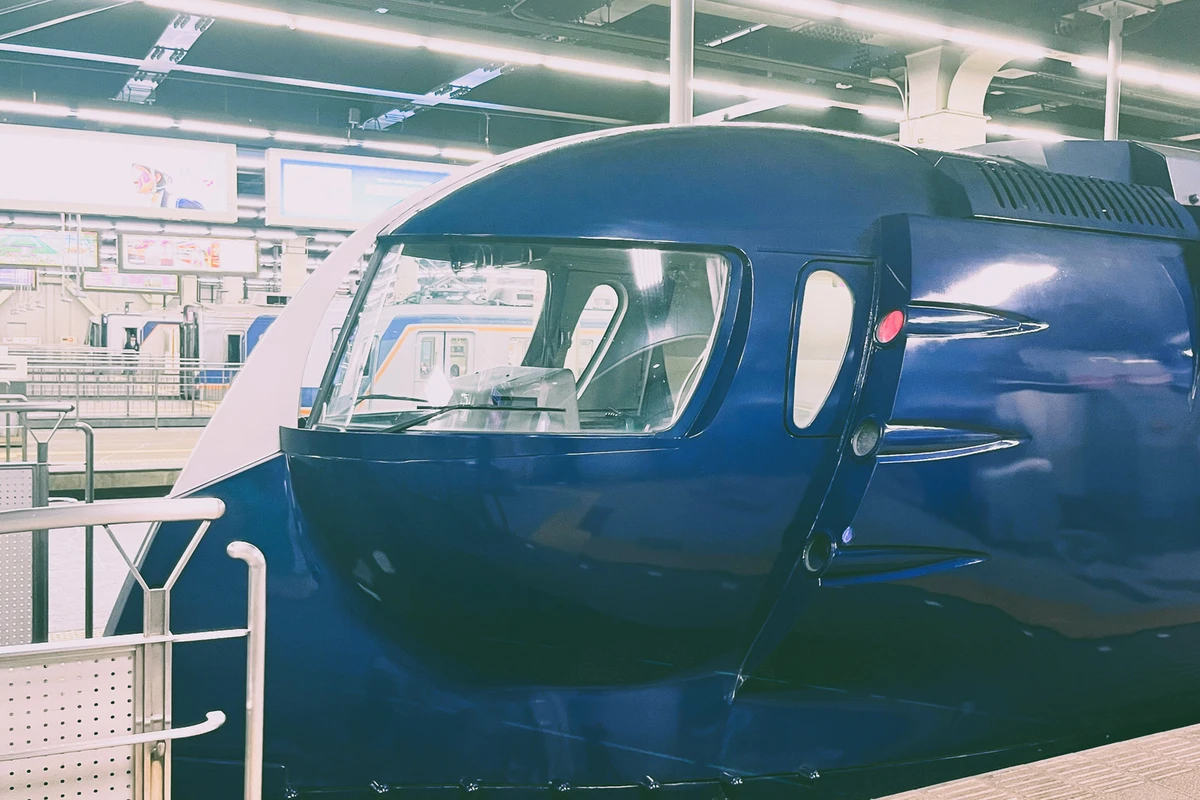
Flights from Tianjin to Osaka are very limited. The only suitable one is the 8:05 AM flight. Arriving at the airport 1.5 hours early is enough time. The plane took off on time and landed at Kansai International Airport at 11:45 local time. Taking the train from the airport to downtown Osaka is the most economical and convenient option. We chose the stylish Nankai Rapi:t, which is the prototype of the Nankai Ninja in the anime Tetsuwan Atom. The train has a tough-looking front end and large oval windows that offer a wide view, making the scenery outside look even more beautiful than through ordinary windows. After exiting customs at the airport, turn left, go up the stairs marked with railway signs, and follow the signs to easily find the ticket counter. The automatic ticket machines have a Chinese language option. If you're unsure how to buy tickets, you can also go to the manned counter, where staff who speak Chinese are available. Just tell them where you want to go, and they will inform you of the route. Tell them you want to take the Nankai Rapi:t, and you can get the tickets.
Our destination was Shinsaibashi. We needed to take the Nankai Rapi:t to Namba Station, then transfer to the subway to Shinsaibashi Station. Alternatively, a taxi is also an option, costing about 3,000 yen, which is acceptable.
We chose the Hotel Nikko Osaka in Shinsaibashi, which is located right above Shinsaibashi Station. You can go down to the subway without leaving the building. On the B1 floor, there is a "Gourmet Corridor" with many restaurants. Opposite the hotel are PARCO and Daimaru department stores. Walking down the alley beside the stores leads to the Shinsaibashi shopping street, which is full of drugstores, izakayas, restaurants, and more. Behind the hotel are FamilyMart and 7-Eleven convenience stores, as well as restaurants and bars. The restaurants there are less crowded, so you probably won't have to wait in line. In short, the hotel's location is extremely convenient.
The hotel was booked on Ctrip. If the hotel information mentions "Chinese Welcome," it means the staff can speak Chinese. Even if you don't speak Japanese, don't worry—the hotel staff are friendly and will answer your questions in detail. They can even help you reserve seats at famous restaurants. Breakfast is served in two places: a Western buffet on the second floor and a Japanese buffet on the third floor. Since I've eaten Western food quite often, I chose the Japanese buffet on the third floor throughout our stay. My daughter loved the Japanese-style breakfast there; it was truly delicious and a very authentic Japanese buffet.
We arrived at the hotel around 2:00 PM. Since check-in was after 3:00 PM, we stored our luggage and went out to find food. Surprisingly, even in such a busy area, restaurants closed at 2:00 PM. We couldn't find any open restaurants, so we ended up eating at a café on the B1 floor. The food was mediocre and not very tasty.
At Universal Studios Japan in Osaka, what attracted me most was "Super Nintendo World," which is unique to this location worldwide. It's very popular, and to enter this area, you need a timed entry ticket in addition to the park admission. If you don't buy the timed entry ticket in advance on Ctrip, you'll have to queue up on-site by scanning a QR code. According to guides, getting one on-site requires arriving very early, which isn't realistic for someone like me who loves to sleep in. So I bought a 7-Item Express Pass on Ctrip. This express pass does not include park admission, so you must purchase a separate ticket. The express pass includes timed entry to both "Super Nintendo World" and "Harry Potter and the Forbidden Journey." I bought it for a fixed time; just show up at the designated time, and it's very convenient.
I think the rides at Universal Studios Japan are generally thrilling (except for the two in Super Nintendo World). They aren't very suitable for timid girls like my daughter. After experiencing just "Despicable Me: Minion Mayhem," she didn't dare to go on any other rides. What a waste of my express pass!
For "Despicable Me: Minion Mayhem," you first enter a closed room where Minions on screen explain the precautions and story background. I recall the story being something about how those who pass the challenge won't be turned into Minions. After listening, you go through automatic doors to board seats designed like spaceships, and the game begins. A huge dome screen plays scenes reminiscent of a roller coaster, with Minions bouncing around mischievously. The seats tilt forward, sideways, or shake in sync with the visuals, making it feel immersive and quite thrilling. However, if you focus too much, you might feel dizzy.
At the scheduled time, we finally entered Super Nintendo World. Before entering, you must buy an interactive Power-Up Band; otherwise, there's very little to do in this area. There are only two major rides: Mario Kart: Koopa's Challenge and Yoshi's Adventure. These are relatively mild, especially Yoshi's Adventure, where you slowly ride a track around the area. Apart from taking photos, it has no entertainment value.
If you have the band and download the USJ app, collecting coins and finding keys in the area becomes the main activity. I don't know how visitors who aren't fans of Mario games feel, but players like me thoroughly enjoy it. It feels like you've stepped into the game and are completing tasks assigned by it. Coins can be used to rank against other players in the system. After finding three keys, you can enter Bowser's Castle to rescue the Golden Mushroom. This mini-game lets you become Mario, eating Super Mushrooms, shooting fireballs, and defeating hordes of incoming turtles.
The app's map marks all mission points. My daughter and I followed the map to complete as many tasks as possible, including hitting bricks, stomping turtles, and using binoculars to find hidden characters. Treating it like a game made it very fun.
By the way, the USJ app cannot be accessed using the network signal from China's domestic carriers with global roaming; you must buy a SoftBank data SIM card on Taobao in advance.
Leaving Super Nintendo World, we headed straight to the Harry Potter area. Our first task was to buy a wand for my daughter, a die-hard Harry Potter fan. After purchasing it, we started visiting each spot on the map to perform magic. The magic was difficult; even with both of us trying, we only succeeded in three. But it fulfilled my daughter's wish to become a witch. I must also recommend the Butterbeer—it's refreshingly cool. It tastes like kvass topped with milk foam. No matter how long the line, you should definitely try it.
Back from Universal Studios Japan, we had Japanese grilled meat for dinner. Japanese grilling really saves charcoal! Just touch the meat to the fire, and it's almost raw inside but tastes excellent. The quality of the meat itself is superb, with no gamey smell. Beer is charged per liter, and the beer tap is right inside the private room—you can pour your own, very convenient. That said, eating too much raw meat can be greasy. Even now, while writing this article, my daughter and I don't want to mention grilled meat again.
Today we slept in, had breakfast, and then started a walking tour of Shinsaibashi and Dotonbori, including Kuromon Market. These shopping streets are all connected. Our main goal today was to ride the Ferris wheel at Don Quijote in Dotonbori. This Ferris wheel is unusual—it's oblong, shaped like a running track. It's built inside a building in the bustling area, with half of it extending out. We arrived early; the Ferris wheel starts operating at 2:00 PM, so we used the time to wander. The Dotonbori shopping street runs along both sides of a river. Occasionally, sightseeing boats pass by, and some outgoing people on the boats and on shore wave to each other. The street is lined with shops, especially takoyaki and kushikatsu places, each with long queues. We weren't in the mood to try them.
Walking along, I felt uplifted, but my stomach was getting hungrier. We happened upon a Kani Doraku branch with no line outside. Taking a chance, we asked and found there were seats. We had to go in for a feast. The waitress who served us could originally speak Chinese, but since I spoke Japanese first, she didn't reveal it. During conversation, I sensed she might speak Chinese. When I asked, she denied it at first, but later admitted she had played table tennis for a team in Changchun. Quite cunning.
On her recommendation, we ordered two types: sashimi and hot pot. As it turned out, she didn't mislead us. The crab leg sashimi retained the natural sweetness of deep-sea crab, while the clear broth hot pot further extracted the crab's umami. The crab roe, served as a side, was steamed and then we made it into sushi with freshly ground wasabi. The taste reminded me of a line from Ge You in If You Are the One: "Fishy, but penetrating!"
After satisfying our taste buds, it was nearly 2:00 PM, so we headed back to the Ferris wheel. The entrance was on the third floor of the department store, and the queue stretched from the third floor down to the first. Fortunately, it moved quickly—about 20 minutes later, we reached the entrance. As the Ferris wheel slowly rose, we overlooked the entire Dotonbori area. I felt that Japanese architecture has a unique beauty—a sense of order amidst the chaos, with colorful giant signs adding vibrant scenery to the monotonous gray city. The 20-minute ride wasn't long, but I recommend it to visitors staying nearby, to see the city from a different angle.
Satisfied, we returned to the hotel for a nap. In the evening, we went to Tsutenkaku to see the night view. From the subway station to Tsutenkaku, we passed through the Shinsekai shopping street. This street felt like a big night market, with a mix of people. Adult gacha machines were blatantly placed on the roadside, young Japanese guys hung out in groups, and drunkards staggered through the streets, knocking over rows of bicycles. Since I had my child with me, my impression wasn't good. But if I were going to drink with friends, my impression would likely be the opposite.
We had dinner in Shinsekai, trying Osaka's famous kushikatsu (deep-fried skewers). You dip the skewers in batter and breadcrumbs yourself and fry them. This style was novel, and both adults and children enjoyed it. The taste, however, wasn't particularly memorable—just average.
Osaka Castle is probably the most famous landmark in Osaka. The area around it has been turned into a park, dotted with a few historical relics. Like any tourist attraction, they enclose random things and call them historic sites—for example, fencing off a tree root and claiming it's the remains of a tree where a famous monk hung his robe. This is just like certain mountains in China where they dig a hole and claim it's where an immortal hid!
Crossing the bridge over the moat, we entered the inner citadel. Inside, there's a building that serves as a shopping venue. I recall they sell a kind of "raw meat ice cream" there—ice cream topped with two slices of raw beef. Quite bizarre, so we didn't dare try it.
The main building, the keep (Tenshukaku), like the Yellow Crane Tower in China, is a modern concrete structure. It has both an elevator and staircases. The elevator goes from the top floor downward, while the stairs go from the first floor upward. The keep has eight floors. The first floor has shops and a small theater. The second floor offers samurai costume try-ons and photos. The third and fourth floors display the era of Toyotomi Hideyoshi. The fifth floor shows screen paintings of the Summer Siege of Osaka. There is no sixth floor. The seventh floor is interesting, using 3D imaging to show historical events. The eighth floor is the observation deck, offering a panoramic view of Osaka Castle.
After returning from Osaka Castle, we went to the Nintendo Shop in Umeda Daimaru. This was my second pilgrimage stop. The merchandise was dazzling. I bought a Zelda amiibo and some cute but useless trinkets, fulfilling my wish. That entire floor in Daimaru is dedicated to anime. Besides Nintendo, there are also Capcom, Pokémon, One Piece, and more. Fans of anime and manga would be thrilled.
We had lunch at Daimaru. Missing Chinese food, we specifically chose a Chinese restaurant called "Qing Ming" (Greenish Platter). I don't remember the other restaurants, only this one because I was curious about its eerie name. I discussed it with the waitress. She was very serious and even called her boss to ask. Their intention was "green platter," but I still think the name sounds ominous. The food was, of course, adapted to local tastes but delicious. I especially enjoyed the Mapo Tofu, which I thought was better than what I've had in China—it basically matched the description from Cooking Master Boy. They also served it on a hot plate, which I think is essential for Mapo Tofu.
In the evening, I went out alone for a stroll. The Shinsaibashi shopping street was like a different world compared to daytime. Clubs and host bars were all open, with touts in rough Japanese shouting outside. The ground was littered with trash, cigarette butts, and stains—everything! Passing by a pachinko parlor, loud music blasted out, filling my ears with machine sounds. The daytime politeness and rule-following were almost gone. Young people in eccentric clothes loitered in groups on the streets. Red traffic lights had lost their authority, and jaywalkers were common. To me, this felt more normal, more down-to-earth.
Today we had a reservation at Osaka Aquarium Kaiyukan at 3:30 PM. After checking out in the morning, we had some time to briefly explore PARCO, which also has an anime floor featuring Ghibli, Godzilla, Crayon Shin-chan, and more. It was worth a browse.
At noon, we specifically sought out ramen. We found a small alley shop, but the ramen was really salty! The flavor was very strong, and my daughter's soy sauce ramen was also too heavy, completely ruining her love for Japanese ramen (she usually loves noodles).
The aquarium isn't far from Universal Studios Japan. Taking the subway from Shinsaibashi requires a transfer and a long walk. My daughter is lazy when it comes to walking, so we splurged on a taxi, costing about 6,000 yen.
The aquarium's layout is unique. In the center is the main tank called the "Aqua Tower," which showcases the Pacific Ocean environment. The stars of the main tank are two whale sharks named "Yu" and "Kai." Surrounding it are several smaller tanks displaying marine ecosystems from rainforests, Antarctica, the Seto Inland Sea, and more. If you're willing to spend a few thousand yen, you can go to the top of the main tank near the entrance and stand on a platform overlooking the water, clearly seeing the whale sharks' back patterns. Staff will explain how to tell them apart. Exiting the top of the main tank, you follow a spiral path descending around the main tank, with both the main tank and smaller tanks showing different views from the surface to the bottom—a layout I've never seen at other aquariums. At first, I thought it was just one big tank to look at from top to bottom, and I thought the Japanese were just as good at fooling people. But as we went deeper, my impression changed dramatically. I've never seen a tank that so closely resembles natural seabed scenery. The aquarium boldly placed fish of vastly different sizes and habits in the same environment. The small fish, prompted by the environment, formed circular schools that you'd only see in the ocean. Particularly when we reached the middle to lower part of the tank, the schooling was awe-inspiring, making you feel like you were underwater. Moreover, large whale sharks and manta rays gliding overhead gave a sense of pressure that ordinary exhibits can't match—like if you were diving and suddenly encountered them, frozen still as they slowly passed.
The aquarium left the deepest impression on me during this trip. For me, it was the most interesting experience in Osaka, far surpassing the joy from Universal Studios Japan.
Returning from the aquarium, we had a simple dinner and then set off for Kyoto. From Shinsaibashi Station, we took the subway to Shin-Osaka Station, then transferred to the Shinkansen for a 15-minute ride. By the way, this was my first time on the Shinkansen. When I was a student, I'd heard adults boast about how amazing the Shinkansen was. Perhaps back then, compared to China's green trains, it was like alien technology. But now, in terms of speed, noise level, and smoothness, the Shinkansen simply can't compare with China's bullet trains.
We arrived at Kyoto Station without incident and took a taxi to our hotel, Oyado Nagocho (御宿石长). It's located in an alley filled with traditional buildings. It's a very traditional Japanese inn, once the residence of a famous Japanese figure. The rooms have tatami mats, and staff come in the morning to fold the futons and after dinner to lay them out. I chose this hotel for that authentic Japanese experience. The only downside is that dining nearby isn't convenient. Only in the evening do the surrounding izakayas open, and they're quite hidden. We discovered several small eateries around the hotel just before leaving.
On the day we arrived, not knowing the area, my daughter spotted an Italian-style bistro across the alley and we went in. The shop was tiny, with only three tables and a single owner. When we entered, two elderly ladies were chatting animatedly, and the carefully lit candles on the tables flickered as the door opened. The traditional menu was all in katakana transliterations, so we had no idea what anything was. We had to rely on the owner's recommendations. Luckily, he didn't overcharge us. Though the flavors weren't to our liking, the portions and price were reasonable.
Let me first mention the amazing breakfast setting. We were the only guests in the large room, feeling like honored guests in a samurai's home from ancient times. Breakfast was served at a pre-arranged time, specially prepared by the inn. It was a standard Japanese breakfast, except the miso soup was too sweet for my taste. Other dishes were quite good.
Compared to Osaka, Kyoto's subway system is inconvenient. There are lines, but not many, requiring transfers or long walks. So during our days in Kyoto, we mostly took taxis.
We took a taxi to Kiyomizudera Temple. The temple is built on a hillside. It had just rained, and the air was fresh with a hint of earth. The entire complex isn't large, with architecture very similar to Chinese temples from the Tang and Song dynasties. Following the main path uphill, you can tour it quickly. The real highlight today was the streets outside the temple—Ninenzaka and Sannenzaka. They are antique, just like the pictures I've seen in travel brochures of old Japan. Tourists dressed in kimono added to the atmosphere. The streets are lined with shops selling mainly Kyo-gashi (Kyoto-style sweets), which make great souvenirs. But check the expiration dates; they have very short shelf lives and might expire before you return to China. We tried some local specialties, and the most impressive was matcha ice cream. You could really taste the tea fragrance. While not stunning, it was the right experience in the right place.
In the afternoon, we returned to the hotel for a brief rest, then headed to Nishiki Market for food. The selection was dazzling, not cheap but high quality. At the entrance, an old grandmother was selling grilled seafood, with a sign that said, "Our stuff is different from others." I highly recommend her scallop—it was exceptionally fresh. Also, the grilled baby cuttlefish were all red and cute. Further in, many stalls sold fried food. We chose a busy one to sample. The oysters were plump and juicy, the prawns sweet. Next to the stall, they sold cup sake. I would have loved to buy a cup to go with the food, but my daughter wouldn't let me drink.
Today I felt unwell, catching a cold. I decided to rest at the hotel and took the opportunity to share my personal reflections on the past few days.
First, online in China, people often complain about the commercialization of domestic tourist attractions and how buildings like the Yellow Crane Tower are reconstructed. Japan is the same. Historical sites here are equally commercialized. Kiyomizudera and Osaka Castle are similarly modern reconstructions. Museum exhibits are often ordinary. For example, the Tokyo National Museum, which we visited later, had roof tiles from Beijing's hutongs on display as artifacts, and the most exquisite antiques actually originated from China. I can say that the Palace Museum in China alone easily outclasses all Japanese antiques and historical sites.
Second, I often hear that the Japanese have higher quality than Chinese people. But my feeling is that it's exhausting—not a matter of habit, but a kind of social pressure. For instance, standing on the right side of an escalator—is it really necessary? In China, if you're in a hurry, you can say "excuse me" and walk up while others move aside, right? I think it's just a difference in national conditions and culture; we shouldn't belittle ourselves for not standing on the right. In my view, the Japanese are also confined by this social pressure, and they themselves feel oppressed and want to break free. At night, Japanese people jaywalk, drop cigarette butts, and litter too.
Every country develops its own social order based on its culture, customs, and national conditions. Each has its advantages and disadvantages, but both are the best fit for the local environment and should be accepted by the locals.
From Kyoto Station, it's about 2 hours to Tokyo by Shinkansen. The Shinkansen ticket office has Chinese-speaking staff at the two counters at the far end. The staff will speak English first; ignore it and speak Chinese directly—they'll switch to Chinese.
We checked into Vessel Inn in Shinjuku, Tokyo, located above Takadanobaba Station, making travel convenient. The hotel is right on a shopping street with affordable food, cheaper than in tourist areas. Surprisingly, there was even Chinese food like Yang Guofu Malatang, Chuanchuanxiang, and roujiamo, but they were expensive. The three of us had roujiamo and spent 190 RMB!
My daughter didn't want to go out, so I went to my dreamland—Akihabara—alone. The advantage of going alone is that I could browse at leisure. If I had come here 20 years ago, I think I would have been overjoyed. But standing on this street now, I wasn't that excited.
The buildings were covered with iconic anime billboards. Under the billboards, every few meters, maids from maid cafés were soliciting customers. Most shops sold figurines. I picked a second-hand game store and browsed seriously. There were many old game cartridges in excellent condition, as well as GBA, SMS, and FC consoles in pristine shape. Before coming to Japan, I had wanted to buy a mint-condition GBA and SFC to make up for childhood regrets. But now, I felt that buying them would be useless, so I gave up. This taught me that you should do things when the time is right; after that, even if you make up for it, the feeling isn't the same.
The Tokyo National Museum houses artifacts from many countries. Chinese artifacts occupy a significant portion and are the finest in the museum. Based on the exhibits, Chinese culture historically far surpassed other East Asian countries. When China was already using bronze and pottery, Korea was still using earthenware.
The Japanese exhibits also offered a glimpse of foreign culture. Exaggerated samurai helmets, exquisite swords, strangely shaped coffins like alien creatures, and colorful ancient court robes all captured my daughter's and my attention. By the way, my daughter and I share a love for visiting museums—it's a harmonious point.
The most shocking exhibit was an Egyptian mummy. I brought my face close to see its black skull and deep eye sockets. Looking closely, I felt a bit scared, as if it might suddenly sit up and press its face against mine. The strangest thing was that both my mother and I felt the mummy's chest seemed to rise and fall like breathing—probably psychological.
After leaving the museum, since I had told my daughter yesterday that Akihabara has many crane game shops, which greatly sparked her interest, we had to go to Akihabara again. Japan is the birthplace of crane games, but they are really rigged! The claws were so loose—after spending 6,000 yen, we barely got anything good. After playing, I bought a razor for my dad, and we returned to the hotel.
One uneventful day, we returned to China smoothly. Only one thing to emphasize: arrive at the airport at least 3 hours early because the queues are very long.
From my travels over the years, trips don't always bring surprises and joy. The best moments often stay in photos or on social media. But as long as you find one or two highlights, the trip is worthwhile. For example, on the plane, I saw Mount Fuji, which I didn't get to visit.
Travel Journal Table of Contents:
1. Day 1: First Stop: Osaka
2. Day 2: Universal Studios Japan Osaka
3. Day 3: Dotonbori Ferris Wheel & Kani Doraku Crab
4. Day 4: Osaka Castle
5. Day 5: Osaka Aquarium Kaiyukan & Check-in Kyoto
6. Day 6: Kiyomizudera, Ninenzaka & Sannenzaka
7. Day 7: Rest Day
8. Day 8: Move to Tokyo & Explore Akihabara Alone
9. Day 9: Tokyo National Museum & Akihabara Again
10. Day 10: Return Trip
Travel Information:
Hotel Index | Strategy Index | Ticket Index | Website Navigation | Travel Index | Cruise Index | Corporate Travel Index | Join Cooperation | Alliance Distribution | Friendship Links | Corporate Gift Card Procurement | Insurance Agent | Agent Cooperation | Hotel Membership | Destination & Scenic Cooperation | More Partnership Opportunities
About Ctrip:
About Ctrip | Ctrip Hot Topics | Contact Us | Careers | User Agreement | Privacy Policy | Business License | Security Center | Ctrip Content Center | Intellectual Property | Trip.com Group Algorithm Explanation


