Kyoto, Stunning Time
As a first trip to Japan, most people first think of bustling Tokyo, international Osaka, or the winter resort Hokkaido. Like them, I initially assumed Kyoto was just a transfer point between Kanto and Kansai on our seven-day-six-night itinerary, so I didn't have high expectations. Visiting in winter, without the cherry blossoms of spring or the autumn foliage, and even the Sagano Romantic Train shut down, what could we do in Kyoto? But after visiting Tokyo, Hakone, Kyoto, Nara, and Osaka, my family unanimously agreed that Kyoto had the most charm and best embodied Japan's traditional character. Without further ado, let's get to the point.
Upon arriving in Kyoto, a visit to Arashiyama is a must. Arashiyama is a scenic natural area in the western suburbs of Kyoto, including the area around Togetsukyo Bridge and Sagano. Its cherry blossoms and maple leaves are famous, and the beautiful Sagano Bamboo Grove exudes Kyoto's unique allure. Additionally, the Arashiyama area is dotted with many renowned temples and shrines. The most famous attraction here is the steam locomotive, the Sagano Romantic Train, which offers a romantic way to tour Arashiyama and the Hozugawa Gorge. However, when we arrived, we were told it was temporarily suspended. With elderly and children in tow, I had no choice but to opt for another mode of transport: a boat ride down the river.
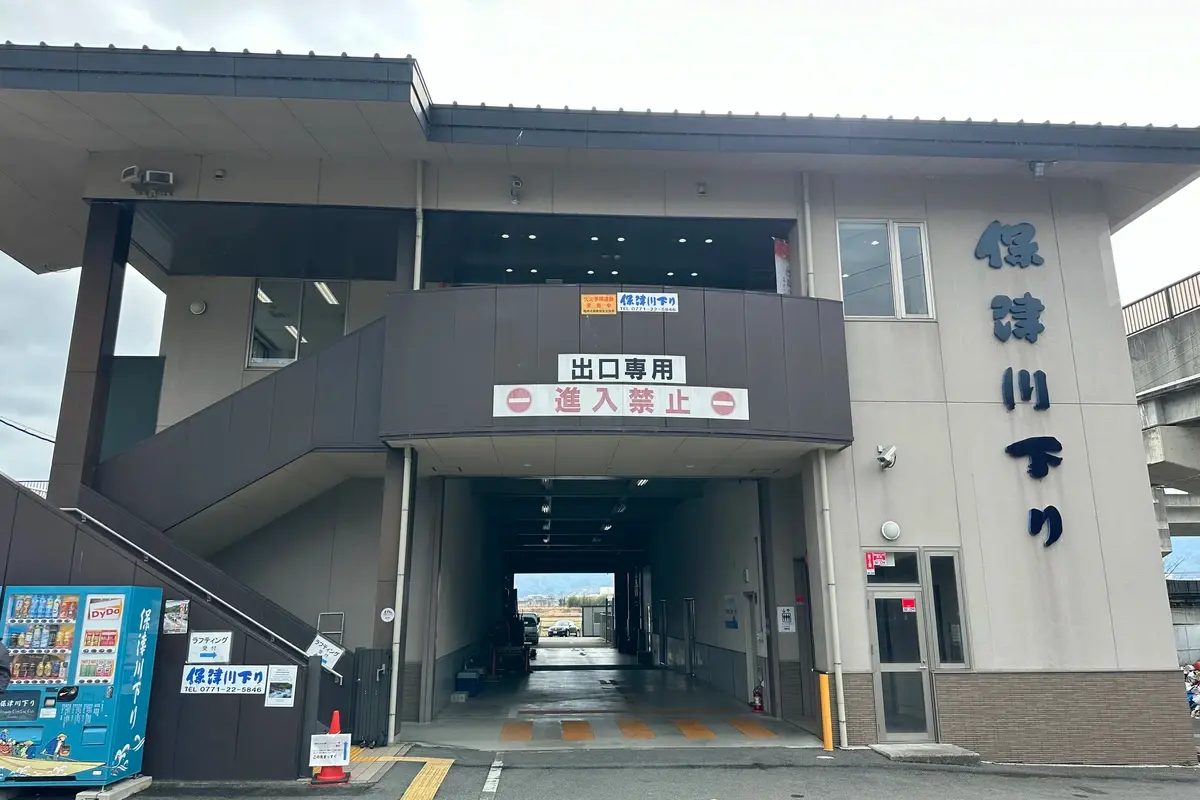
Rafting in Japan in winter was unexpected. During the off-season, there are few tourists, and only four boats run daily. After patiently waiting for over an hour, we finally boarded a boat departing from the Hozugawa River. Once on board, the boatman introduced his team in broken English: the captain—the steersman, the first crewman—the pole man, and himself—the sculler. He then asked about each passenger. There were 15 passengers in total—only one Japanese, accompanying her Taiwanese boyfriend; the rest were from around the world. After a simple and humorous icebreaker from the boatman, our wooden boat set off downstream.
After passing Hozu Bridge, the current alternated between slow and swift. When slow, we could admire the beautiful scenery on both banks. The trees on the hillsides were lush green, densely packed, growing upward in rows. Their straight trunks, over ten meters tall, had no branches or leaves until the top, where the crowns sat like hats. On the riverbanks, various colored stones dotted the landscape. The boatman would occasionally point to one and use simple English words to describe its shape—indeed very lifelike. Wild ducks, egrets, mandarin ducks, and other waterfowl inhabited the river, swimming or foraging—some in groups, some alone in contemplation. As our wooden boat passed, they skimmed across the water, creating a peaceful natural scene. Delighted, I picked up my phone to capture the beauty, but the boatman warned of rapids. Just as the boat seemed about to hit a rock on one side, before we could scream, he used his pole to adjust our direction. In an instant, the boat passed through the gap between rocks on either side and rushed downstream with the rapids. Water splashed, and the tourists cheered and laughed, the sound echoing through the gorge.
Thus we drifted downstream, enjoying the scenery while chatting and laughing. The boatman occasionally performed his unique skills: twirling the pole, walking a tightrope on the gunwale, dipping the pole into the water and smoothly catching it again. Soon the rafting trip came to an end. After passing the last rapid, the water gradually widened and calmed. In the distance, we saw a bridge spanning the river. The boatman said it was Togetsukyo Bridge, visited by Premier Zhou Enlai. Realizing we were about to disembark, I eagerly asked the boatman if I could try sculling. He gladly agreed and taught me and my son the technique. After a few tries, I realized it was no easy task—no wonder they were sweating despite the cold winter. Good times are always fleeting. As the boat docked, everyone reluctantly disembarked, saying goodbye to the boatmen.
After getting off, a light drizzle began. We followed the crowd to Togetsukyo Bridge. At the intersection ahead was a traditional Japanese shopping street lined with shops offering snacks, souvenirs, and various fashionable items. It resembled Tokyo's Asakusa, but the street was slightly wider, less crowded, and had a more subdued commercial atmosphere. The food also had more Kyoto character, such as matcha-flavored cold treats and various tofu dishes. In the misty rain, women in kimono holding umbrellas became the highlight of the street, and occasionally a rickshaw passed by, making us feel as if we had traveled back to Kyoto's streets decades ago.
We walked on and reached the Sagano Bamboo Grove path. The bamboo was tall and dense, and the air in the grove was fresh despite the rain. However, to be honest, this bamboo grove pales in comparison to those in Sichuan or Jiangsu-Zhejiang regions of China. Passing through the grove, we could reach the back gate of Tenryu-ji Temple. Since our itinerary for the following days was full of temples and shrines, we skipped it.
Pressed for time, we reluctantly left Arashiyama and took a bus to our next stop: Kinkaku-ji. Its official name is Rokuon-ji, but because the main hall's outer walls are entirely covered in gold leaf, it is commonly called the Golden Pavilion. Built in 1397, it was originally the villa of Shogun Ashikaga Yoshimitsu (the model for the shogun in the anime *Clever Ikkyu*). *Clever Ikkyu* was a cartoon that accompanied our generation's childhood, so I already felt a strange fondness for Kinkaku-ji before visiting. Another unique feature: when we bought tickets, we received not a standard admission ticket but a paper talisman with blessings.
Kinkaku-ji is surrounded by a pond. It is said that the garden centered on the pavilion represents the Pure Land of Ultimate Bliss, and the pond, called Kyōko-chi, reflects the golden pavilion, creating a representative Kyoto scene. The rain continued unabated, pattering on the pond, causing ripples. The Golden Pavilion in the rain appeared even more charming and distinctive. I couldn't help sighing: Shogun Ashikaga Yoshimitsu must have been happy living here!
The rain intensified, so we hurriedly concluded our visit to Kinkaku-ji and took a taxi to Kanidouraku for a delicious feast, the highlight of the day—our daughter's birthday banquet. The family sat together enjoying crab cuisine, experiencing Japanese food culture, full of joy. To the tune of the birthday song, we finished a handmade Japanese birthday cake, marking a perfect day in Kyoto.
Japanese food is closely tied to its geography and culture. Japan has limited ingredients, unlike China's vast array of cuisines and dishes. With simple cooking methods, exquisite plating, and restrained use of ingredients, Japanese cuisine maximally preserves the original flavors of ingredients while maintaining a cultural habit of resource conservation. In Kyoto, one must of course try the local specialties. Whether on Arashiyama's shopping street or the slopes before Kiyomizu-dera (Ninenzaka and Sannenzaka), various local delicacies gather. Strolling and snacking, the only regret is having only one stomach.
Kyoto's most famous dish is tofu. The tofu here is extremely smooth. Fried tofu can be mistaken for fish cake, and it has a cheese filling that oozes out—no wonder the line is so long.
Tofu udon: A pure vegetarian dish. The tofu soup is pure and slightly sweet, paired with chewy udon noodles—smooth and not greasy.
It is said that matcha originated in Kyoto. Various desserts, cold drinks, and even the tea served with meals are matcha-flavored.
Additionally, we enjoyed Kanidouraku in Kyoto. From the dining atmosphere to the taste, everything was excellent. Using various cooking methods, every part of the crab was turned into a delicacy, accompanied by side dishes, served course by course with a sense of ceremony.
Kanidouraku offers set meals at various prices—about 200–600 RMB per person. Though a bit pricey, it's worth experiencing once.
Due to time constraints, this Kyoto trip was largely a superficial visit; we didn't get to savor it fully. Also, since we came in winter, we missed the cherry blossom-adorned beauty of Kyoto. Every trip brings gains and some regrets, but regrets are reasons and expectations to return. I hope to visit again when spring blossoms, to slowly appreciate Kyoto, which has flowed through a thousand years, and enjoy its blooming flowers and ancient temples, Arashiyama's romantic scenery, Gion's traditional arts, and the street's folk culture. Regardless, this short Kyoto trip was still the surprise of our entire Japan journey—stunning time.
Travelogue Directory: 1, I. Preface 2, II. Selected Itinerary 3, III. Special Cuisine 4, IV. Special Decor 5, V. Afterword Travel Info Hotel Index Guide Index Air Ticket Index Website Navigation Travel Index Cruise Index Corporate Travel Index Alliance Cooperation Distribution Alliance Friendship Links Corporate Gift Card Purchase Insurance Procurement Agency Cooperation Hotel Franchise Destination and Scenic Area Cooperation More Alliance Cooperation About Ctrip About Ctrip Ctrip Hot Topics Contact Us Careers User Agreement Privacy Policy Business License Security Center Ctrip Content Center Intellectual Property Trip.com Group Algorithm Disclosure


