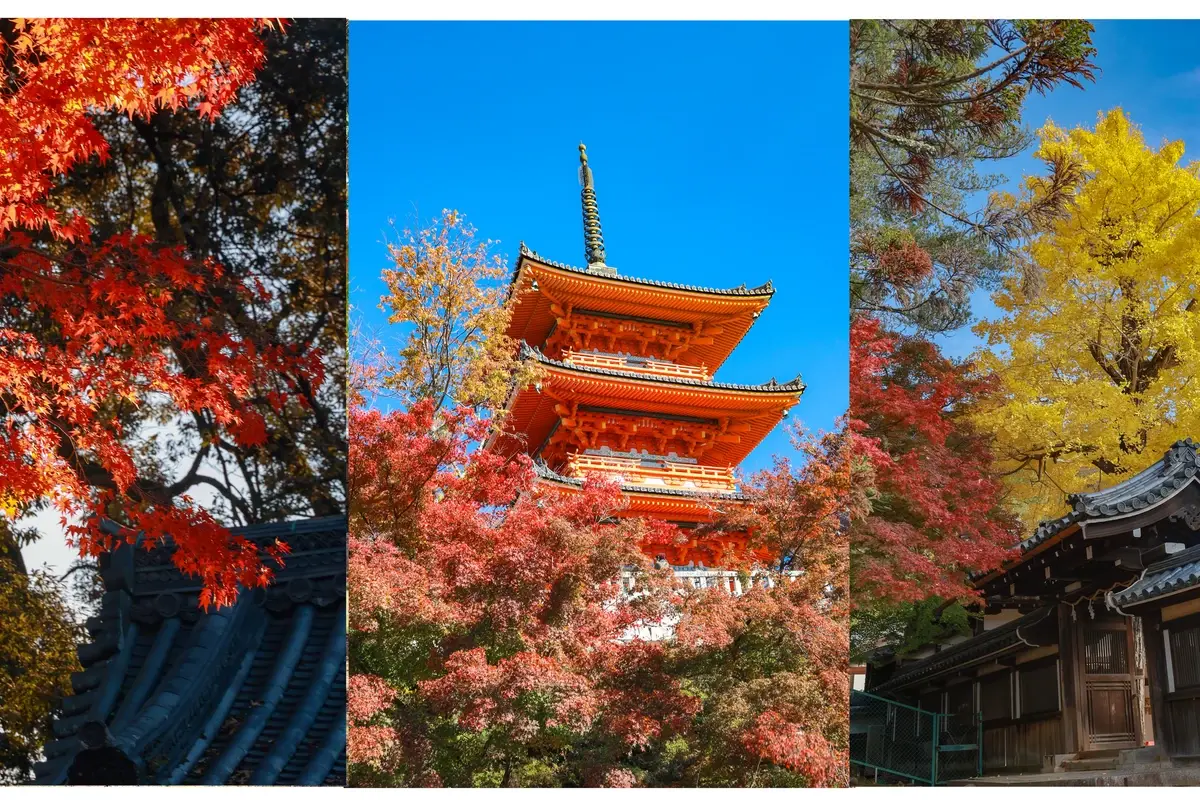
Family Trip to Kansai with a Child: Navigating Autumn Leaves without Getting Lost (8 Days, 7 Nights)
After the pandemic ended, tourism to Japan began to heat up again. Although I had long obtained a visa, I had never been motivated to go until autumn arrived. My wife mentioned wanting to take our grandson to see the maple leaves in Japan, so we began preparations for the trip.
Japan simplified visa procedures to attract tourists, and the issuance rate is high. Applying for a visa directly at the embassy is actually not difficult. Third-party visa agents can complete the process without leaving home, offering one-year and five-year options as needed. There is also an electronic visa available now, but the five-year visa costs more. It is important to note that before setting off after obtaining the visa, you need to apply for a “VJW” (Visit Japan Web) on your phone or PC. This is an online service for immigration procedures (immigration inspection, customs declaration) and tax-free purchase information. Fill in personal details, travel dates, accommodation, and customs information as required, and save the QR code (you must present this upon entry, remember!). This way, you don’t need to fill out paper forms when entering the country, shortening clearance time.
Transportation: Transportation costs in Japan are relatively high. Options include taxis, chartered cars, rail transit, and buses, generally in descending order of cost. First, chartered car: from Kansai Airport to accommodation near Kinkaku-ji in Kyoto costs about 1,000 RMB. Second, taxi: about 7 km costs around 200 RMB. Third, rail transit: fares vary by company and are based on distance. Fourth, buses in Kyoto: most are 230 yen, boarding at the rear door and alighting at the front, paying upon exit. For longer distances, the fare is based on distance, and you swipe the card when boarding and tap again when alighting. According to Japanese transport regulations, large luggage is not allowed on Kyoto city buses, so it’s best to choose accommodation near a subway station.
The rail transit in Kyoto seems quite complicated. The Kansai rail system is operated by several private companies, the largest being JR West. On the same line, different trains may have different fares and carriages (e.g., women-only cars), which is not user-friendly for first-time visitors to Kansai. You need to carefully identify the train you need based on navigation, and at transfer stations, pay special attention to the platform where your train departs. Although most Chinese characters in Japanese are understandable, it can be confusing at first. However, rail transit has advantages: for short distances, fares start at 190 yen, which can be cheaper than buses, and some tourist spots have announcements in Chinese. Transfers usually happen within the station (except at Umeda Station). Payment methods for public transport include JR West Rail Pass, single-ride tickets, one-day passes (the Osaka One-Day Pass also covers admission to some attractions), and HURUKA tickets. The most convenient for tourists is the Suica card (in Kansai, it’s the Icoca card), which can be used on most trains and buses. The Icoca card is a rechargeable card that can also be used at convenience stores for purchases. You can recharge and check the balance at any convenience store. The card costs 500 yen (deposit), which can be refunded at the counter or machine before returning home. The card works throughout Kansai, but there are exceptions, such as some buses in Kobe that do not accept Icoca, requiring cash.
Tip: When refunding the Icoca card, if there is money left, a 200 yen fee is deducted. If the balance is zero, the deposit is refunded without charge. How to zero out the balance? On the last train ride to the airport, have the card balance less than the fare; at the exit, use the fare adjustment machine to pay the difference, and then the card balance becomes zero.
Accommodation: It is crucial to choose accommodation as close to a train station as possible. First, for convenience, especially when carrying luggage and not able to take the bus. Second, to save time on outings. Third, staying in a traditional Japanese inn (ryokan) or a rental house gives a strong cultural experience, especially if there are convenience stores, fresh food shops, and restaurants nearby, allowing you to cook or eat locally. Staying near a commercial center is also a good choice, convenient for shopping and travel.
Food: Food is an integral part of the trip. Beef, eel, seafood, sushi, ramen, and set meals are available. Unlike in China, meals are individual portions. Even in places like Nara Park, there are good restaurants. You don’t need to download a Japanese dining app; Dianping (大众点评) works. However, popular restaurants may require reservations or waiting in line. Cooking your own food is much cheaper; local milk is especially affordable, with 900 ml costing around 10 RMB or even less.
Travel plan: This maple-viewing trip focused on Kyoto, the heart of maple leaf spots. Considering the child’s interests, we added Nara, changed plans to include Kobe, and included Osaka. Kyoto has over a thousand temples and countless maple-viewing spots. Based on recommendations from social media, we initially chose major sites supplemented by smaller nearby ones. Many famous spots in Kyoto require advance reservations, sometimes over a month in advance. Sentō Gosho, Katsura Rikyū, and Shugakuin Rikyū were already fully booked. The highly hyped Rurikō-in we lost interest in due to negative online reviews. Fortunately, our daughter-in-law reserved Enkō-ji, so not all was lost. We later booked Murin-an but had to give it up due to itinerary changes. Plans often change. In Kyoto, we truly felt “half exotic, half ancient.” Whether it’s famous maple spots like Kiyomizu-dera, Tōfuku-ji, Ryōan-ji, Eikan-dō, Enkō-ji, or Sanzen-in, or iconic sites like Fushimi Inari Taisha and Kinkaku-ji, even the reconstructed ones preserve original craftsmanship and style, faintly reflecting Tang and Sui dynasty culture. The origin of these cultures has gradually been replaced by later buildings, making one sigh, as Zhou Zuoren lamented, that these ancient relics exist abroad. Surrounded by maple leaves, it’s hard to distinguish whether the focus is on leaf-viewing or temple-visiting. Nara, Osaka, and the unexpected addition of Kobe brought much joy and impressions, which will be mentioned individually later.
Other notes: Besides transportation, you’ll need cash for entrance fees, but most shops and restaurants accept Alipay, so you don’t need to carry too much cash. Bring a power bank and bank card (ICBC UnionPay cards are said to have better rates). The temperature in Kansai is similar to Shanghai, and indoor heating is strong. Japan’s voltage is 100V, but modern appliances are usually 100-240V, no converter needed, but the plug must be flat two-prong; if you have a three-prong or round plug, you need an adapter. Google Maps is crucial for independent travel; after comparing iPhone Maps, Amap, and Baidu Maps, Google Maps provides the most comprehensive information for location, transfers, fares, and times. It also offers multiple transportation options based on time, cost, and number of transfers, and you can check on the map whether you’re on the right route.
Day 1: Smooth entry, smooth check-in, rainy visit to Ryōan-ji
The plane arrived on time at Kansai Airport. We followed the crowd to immigration, presented our pre-downloaded VJW QR code, handed over passports and QR codes, and with minimal conversation, we went through fingerprinting and face recognition. After picking up luggage, we scanned the QR code at a machine and passed through a sealed area to smoothly enter. Our plane stopped at Terminal 2; we took the shuttle to Terminal 1 to find Icoca card machines and buy cards. Our son had already arrived and bought Icoca cards for us, so we contacted the chartered car driver and headed straight to our Kyoto accommodation.
To buy an Icoca card, you can switch to Chinese menus, follow steps, and pay 2,000 yen (500 yen deposit refundable). Refunds are handled at the red machine on the right. About two hours later, we arrived at our lodging. Japanese hotels and guesthouses generally allow check-in at 4 PM and check-out at 10 AM, far less convenient than in China. Fortunately, we contacted the host in advance and were allowed to leave luggage. Actually, when we entered the room with the password, it was already ready. It seems the Japanese can be a bit rigid. We had to go with the flow; we needed to eat and proceed with the plan. We left our luggage and went out. It started raining; after lunch, the rain got heavier. We decided to skip Kinkaku-ji and instead visit the slightly farther Ryōan-ji. It was our first bus ride in Japan, a bit confusing at first, but we quickly got used to it.
Ryōan-ji is a niche but highly respected temple. “Niche” because it has far fewer visitors than Kinkaku-ji or Kiyomizu-dera, allowing for careful appreciation. “Highly respected” because its famous rock garden is an abstract aesthetic masterpiece of Japanese gardens, designated a UNESCO World Heritage site. It is highly recommended. Visiting Ryōan-ji in the rain was delightful, not self-mocking. The colors of the leaves were more vivid in the rain. Sitting in the rock garden, watching rain fall on the eaves and the garden, the Zen atmosphere was exceptionally thick. Many people sat in meditation, lost in thought. The rock garden uses fine gravel and raked patterns, with rocks placed to mimic a miniature landscape symbolizing “dry mountains and water,” creating a calming effect with static elements. The scene enhanced this effect. Taking off shoes to enter the building eliminated footsteps; sitting under the eaves, we only heard the sound of rain hitting the roof and leaves, feeling like entering another world. The heavy rain wet our camera and lens; later we found water spots on the photos, but the view was far better than any picture. Truly worthwhile. Over an hour passed quickly; we left reluctantly as dusk fell.
Day 2: Nara’s deer, visiting ancient sites on autumn leaves
According to plan, we aimed to circle Nara Park, but worried about our grandson walking too much. Fortunately, our son accompanied us, and we completed the entire route: Nara Park – Kōfuku-ji – Kasuga Taisha – Mt. Wakakusa – Nigatsu-dō – Tōdai-ji – Kyoto. The highlight was the deer throughout Nara Park, making the walk less tiring. We took a bus, then subway, then another train for about an hour to reach Nara. First stop: Kōfuku-ji. It has four notable structures: the five-story pagoda, three-story pagoda, North Octagonal Hall, and East Golden Hall. Since we had many spots to cover and a long route, we didn’t search for specific pagodas; instead, we went to the first deer gathering area to feed them. This area had many people. After feeding, we moved on.
Next was Nara National Museum (no photography inside). There were stalls selling deer crackers and sweet potatoes for feeding. The small shops and guesthouses along the road were also photogenic. At the crossroad, there were two directions: one to Kasuga Taisha and one to Tōdai-ji. We first headed to Kasuga Taisha, walking through a forest with beautiful scenery, and saw the first deer with long antlers. Mt. Kasuga is considered sacred, and logging has been banned for centuries, so the primeval forest, along with the shrine, is a cultural heritage site. The gnarled roots of camphor and maple trees were exposed, and the trees were thick. In the Manyō Botanical Garden (500 yen admission), we saw stone lanterns; Kasuga Taisha has over 3,000 stone and hanging lanterns, a unique feature. The garden, named after the Manyōshū, contains over 250 species of plants, with wisteria being a highlight.
Locals believe deer are messengers of the Shinto gods, regarded as sacred. Deer roamed freely, nodding for food or strolling lazily, a harmonious scene. The main hall of Kasuga Taisha, enclosed by an irregular quadrangular corridor, features vermilion lacquer, white walls, and cypress bark roofs, with bronze lanterns hanging everywhere, spectacular when lit during the lantern festival. The outer area is free; the main hall costs 500 yen. For photos, just the outer area suffices; for deeper cultural understanding, enter.
We walked north for about 1 km to the foot of Mt. Wakakusa, passing several restaurants near Mizuya Shrine, including the highly rated Mizuya Chaya on Dianping. Steps lead to the foot of Mt. Wakakusa, where a grassy slope is enclosed; admission 150 yen. The slope felt equally fun, with more deer gathering near visitors. Opposite the road, a row of low houses blended with the slope, creating a relaxing environment. Fewer people, more deer, close interactions, and beautiful nature made it very worthwhile.
From the foot of Mt. Wakakusa, we reached the southern entrance of Tōdai-ji. A small shrine complex with a torii gate; the largest is Temman-gu, considered the guardian shrine of Tōdai-ji. Outside the gate, a beautiful old ginkgo tree. Further ahead is Hokke-dō, Sange-dō, and Nigatsu-dō. Nigatsu-dō is built halfway up the hill; from its hall, you can overlook Nara city and Nara Park. It was constructed for the Second Month Service, and its lanterns are distinctive. Soon we reached Tōdai-ji. The Great Buddha Hall remains the largest wooden building in the world, housing a giant Buddha statue. The Nandaimon Gate is a fine example of Song Dynasty architecture in Japan; the plaque reads “Daihōgon-ji,” but because it’s east of Heijō-kyō, it’s called Tōdai-ji. Worth seeing.
Day 3: Crowds at Kiyomizu-dera, maple leaves at Tsūten-kyō, sunset at Kinkaku-ji
Despite constant crowds at Kiyomizu-dera and Fushimi Inari Taisha, we couldn’t skip them due to their fame. We aimed to arrive at Kiyomizu-dera before the peak, so we left at 8 AM, took a bus to Gion (the typical route is to enjoy sunset and illuminations at Kiyomizu-dera, then walk along Ninenzaka and Sannenzaka to Gion in the evening). Hanamikoji Street wasn’t crowded but was peaceful, with characteristic tea houses with curtains. Passing Yasaka Shrine, we couldn’t resist a quick look. Yasaka Shrine, dedicated to the guardian deity of Heian-kyō and other gods, is famous for its festivals; the shrine looks especially impressive at night under lantern light.
We continued along narrow alleys, spotting Yasaka Pagoda atop low houses. At the next intersection, a ginkgo avenue led to Kōdai-ji, built in memory of Toyotomi Hideyoshi, famous for its nighttime maple viewing. Then we reached the bustling Ninenzaka and Sannenzaka slopes, with many century-old shops. The stories of Japanese artisans kneading sushi for decades likely originate here. Wooden houses line both sides; the view is beautiful when lit at night. We merged into the crowd and climbed up, forgetting fatigue until reaching Kiyomizu-dera’s gate.
Kiyomizu-dera, on Otowa Mountain, is a top attraction. The main hall is built on a platform supported by massive pillars; the deck is the most crowded spot, offering panoramic views of Kyoto city, also the iconic view. Below the deck, maple leaves covered the hills. The best photo spot for the main hall is the veranda of Okunoin. Despite the crowds, it’s worth waiting for a gap. The Otowa Waterfall, from which Kiyomizu-dera gets its name, has three streams symbolizing longevity, health, and wisdom. You queue to drink.
From Kiyomizu-dera to Fushimi Inari Taisha is four subway stops, then a walk through a level crossing. The crossing reminded me of childhood; such crossings are rare in Shanghai now, all replaced by grade separation. Japan’s railroads were built earlier, so level crossings remain. The frequent raising and lowering of barriers is a sight.
Fushimi Inari Taisha is the head shrine of all Inari shrines. The deity Inari is associated with agriculture and commerce, and worshippers pray for harvest, business success, and traffic safety. Foxes are considered messengers; statues are at the gate and torii. Temples in Japan originate from China and India, enshrining Buddha or Kannon, while shrines belong to native Shinto, enshrining natural spirits. Shrine entrances have red or orange torii, consisting of two pillars, a top lintel, and a tie beam, separating the sacred realm from the mundane. Senbon Torii (thousands of torii) are donated by businesses and individuals in gratitude; each has the donor’s name and year engraved. The torii stretch for several kilometers up Mt. Inari, creating dreamlike light effects. The torii tunnels are a major Instagram spot. It takes about 3.5 hours to walk the full circuit; as you go higher, crowds thin. Take photos where it’s less crowded, then head back.
From Fushimi Inari, a 1 km walk along a small path leads to Tōfuku-ji. The name combines “Tō” from Tōdai-ji and “Fuku” from Kōfuku-ji, hoping to surpass them. It has four distinctive gardens (ticketed). In autumn, the Tsūten-kyō Bridge area is a premier maple-viewing spot. The normally free area charges 1,000 yen per person, but entering, we were stunned by the maple leaves, earning its reputation as “Kyoto’s number one maple-viewing spot.” Since it was early in the color change, greens, yellows, and reds created a beautiful world. Steps descending were enveloped by a canopy of leaves, the stream below looking red. Beauty made us linger, so staff constantly urged people to keep moving to avoid congestion. The Tsūten-kyō bridge is the best viewpoint; from the covered bridge, we saw layered colors under Ryōu-kyō bridge, truly the best in Kyoto.
Leaving Tsūten-kyō, our minds still elevated, we skipped other temple spots and rushed to Kinkaku-ji to catch sunset with our son before his return. Passing Kamo River, we hopped across stepping stones and enjoyed the river scenery.
I first knew Kinkaku-ji from the anime “Ikkyū-san.” Kinkaku-ji, also known as Rokuon-ji, was a 14th-century shogun’s villa turned temple upon his death. The golden pavilion was rebuilt in 1955 and designated a UNESCO site. The three-story structure covered in gold leaf is not tacky; set by a pond, surrounded by lush trees, with an island in the lake, its reflection in water under sunlight is stunning.
Day 4: Enkō-ji full of garden leaves, Sanzen-in with ancient trees
Among our reserved sites, we visited Enkō-ji. From the station, we passed through a residential area to a secluded spot. Founded by Tokugawa Ieyasu in 1601, Enkō-ji is a Rinzai temple. It’s famous for its garden full of autumn leaves, which can be viewed from the temple veranda. Only small groups are allowed at a time. Entering the garden, we saw several rock gardens with more geometric patterns than Ryōan-ji, with moss and greenery. Leaves and temple buildings made it unique. Visitors silently moved aside for photo opportunities. Arriving early is essential. Behind the temple, the garden and hill are also full of maple leaves; a short walk around is enough.
The back garden is lush with trees, vibrant in autumn.
We chose Sanzen-in over Kifune Shrine, hoping for better maple views. We took bus 17 (with two routes, one stopping at International Conference Center). It’s like a long-distance bus; fares vary by stop, so you tap on boarding and tap off. We met a group who had just visited Rurikō-in. Rurikō-in requires reservations and charges about 100 RMB just to photograph the reflection in a lacquered table, which we skipped. The bus terminated at Sanzen-in, then a pleasant uphill walk.
Sanzen-in is a Tendai temple, founded in 1118, enshrining Amitabha. From the veranda, you see trimmed boxwood shrubs and stone stupas, creating a Zen atmosphere. Enjoy matcha and sweets here while admiring the view. Cherry blossoms in April, azaleas in May, hydrangeas in July, and maple with ancient trees in autumn, plus moss-covered grounds, make it very pleasant. The corner near the building is the most scenic spot and busiest.
The rear hill offers a wonderful view of the lawn, maple, walls, and visitors. Large maple trees are impressive. A vermilion wooden bridge stands out. Stone statues of smiling Buddha are unique local features. After Sanzen-in, further ahead are Hōkō-in, Shōrin-in, and Hōsen-in, quiet and worth visiting if time permits.
Day 5: Autumn leaves at Eikan-dō and Nanzen-ji, yellow leaves at Kyoto Imperial Palace and Keizō-in
Due to changes, we altered the plan, skipping Murin-an (already reserved for the next day) and moving up visits to Eikan-dō and Nanzen-ji. We took a bus to Eikan-dō early. Located at the western foot of Mt. Wakakusa, originally a noble’s villa, donated to a monk in 853 and later became the head temple of the Jodo Shu Seizan Zenrinji school. Eikan-dō is renowned for maples; the 1,000 yen ticket indicates its value. Weekend crowds were heavy; we queued for tickets. The paths inside are lined with maples; many buildings are connected by covered corridors, said to be magical when lit at night. We bypassed the crowded corridors and didn’t view the Amida statue, but just walking around the garden, we felt the charm of red leaves. A large koi pond, central island, and red maple-covered courtyards were stunning.
From Eikan-dō, a short walk leads to Nanzen-ji, founded in 1291. As the first emperor to convert to Zen, he issued a personal prayer, making the position of Nanzen-ji abbot the highest among Zen masters, surpassing schools. Nanzen-ji is not only for autumn leaves but also a Zen cultural landmark, featuring the Meiji-era Suirokaku aqueduct (built in 1890 to bring water from Lake Biwa to Kyoto).
From Nanzen-ji, we took a bus to Nishiki Market, “Kyoto’s kitchen,” a broad shopping street. After lunch there, we went to the Kyoto Imperial Palace. Several routes available. When the capital moved from Nara to Kyoto, the palace was the emperor’s residence. Sentō Gosho, the retired emperor’s palace, requires reservations over a month in advance; we missed it. The grounds have tall trees, including several magnificent ginkgo trees.
Before returning, we made a stop at Keizō-in, a small temple famous for its towering ginkgo tree.
Day 6: Changed to Kobe’s Mt. Rokko and Meriken Park night view
Early morning we rushed to Osaka to meet our daughter-in-law, who arrived late, and decided to take the child to Kobe. Subway and bus took over two hours to Maya Cable Car; we took the cable car up, then a bus to Rokko Farm. The farm is a natural playground for families: feeding sheep, seeing cows and ponies. Lunch at the mountain restaurant had great views. Afternoon sheep races attracted children. We sat on the grass, basking in the sun. Then we took a bus to the top of Mt. Rokko for a view of Kobe’s coast; it’s the best night view spot.
In the evening, we visited Meriken Park. Originally a foreign port, the port opened after the US forced Japan to sign treaties in the late Edo period. This led to Western culture: Kobe had Japan’s first coffee shop, first golf course, first soda, first jazz band. The park was built for the 120th anniversary of Kobe’s port opening. Today, the red Kobe Port Tower and Kobe Maritime Museum form one of Kobe’s best scenic areas.
Day 7: Shopping at Shinsaibashi, pigeon feeding at Osaka Castle Park
Waking up, we walked to nearby Shinsaibashi. In the early morning, the shopping street was less crowded, but people were preparing for the day: stocking up or cleaning, and white-collar workers rushing to work. The Glico Running Man sign is still prominent; it’s been there since 1935, though you might not remember what they sell.
Morning at Osaka Castle Park. The castle tower is an icon of Osaka. The park is great for ginkgo viewing and a must-visit. Kids love feeding pigeons, which are abundant. Beside the castle tower is the Time Capsule, containing advanced products of its time, opened every 100 years to assess conditions and serve as a reference for future generations.
Day 8: Touring the aquarium with the child, ending the Kansai trip happily
In the early morning, we walked along Osaka’s streets, dawn dyeing the river red.
We took the subway to Tempozan Harbor Village, home to the Kaiyukan Aquarium, built in 1990 and one of the world’s largest. Its centerpiece is a 9-meter-deep tank with a giant whale shark. Escalators go to the 8th floor, then a spiral walkway down, viewing various marine animals, with stamp stations for kids.
After the aquarium, lunch at the adjacent Tempozan Market, offering various cuisines. The nearby Legoland Discovery Center is also a hit with kids. There’s also the Tempozan Ferris Wheel for a view of Osaka Port.
Time was running short; we hurried to the airport and flew back to Shanghai.


