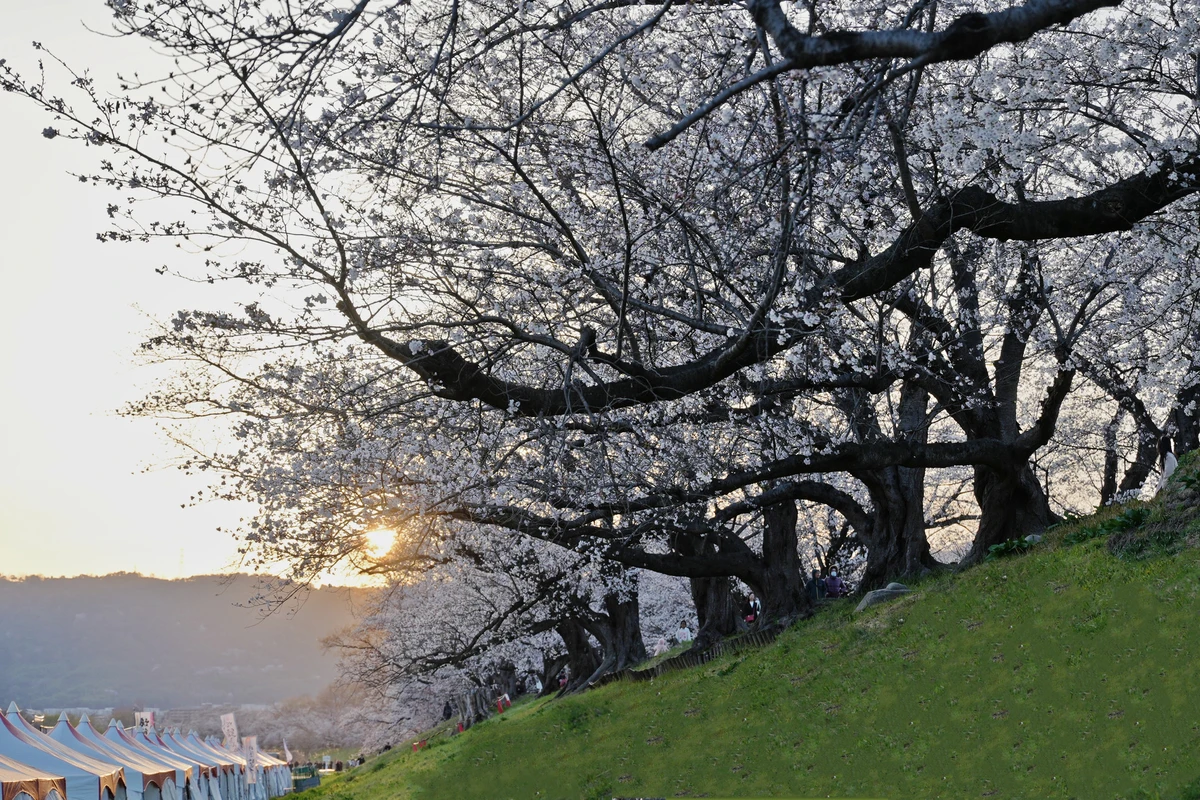
A Cherry Blossom Journey: 5 Days 4 Nights in Kyoto and Shiga
Returning to Kansai after almost a decade, I’d long since covered all the mainstream attractions and routes. This time, the goal was clear: cherry blossoms. It was a big gamble—limited leave and the cherry blossom season’s soaring airfare and accommodation prices made a spontaneous trip impossible. Before departure, I was refreshing cherry blossom front reports and forecasts obsessively. In the end, everything aligned: manageable crowds, flowers in full bloom, and perfect weather.
This route is relatively niche and not ideal for first-timers, but if you’re chasing cherry blossoms, it might be worth a look.
**Flights & Hotel Bookings**
I’d decided early to combine the trip with the Qingming holiday, so I started watching flights and hotels months ahead. I underestimated the power of sakura season. Fares to and from Kansai surged as dates approached (I even snagged a ticket card during Singles’ Day but couldn’t redeem—still bitter). Hotels in Kyoto, even guesthouses (booked three months out), doubled in price. After the second forecast (back then, forecasts were wildly off), I couldn’t bear the climb any longer and booked accommodation in Otsu, just next to Kyoto. I even switched flights to go in and out of Nagoya instead (similar travel time, and bypassed the expo crowds at Kansai Airport). The whole itinerary changed, and I added Lake Biwa, which turned out to be unforgettable—clearly, a blessing in hindsight.
**Itinerary Routes**
【DAY 1】 Shanghai → Nagoya Chubu Centrair Airport → Otsu
【DAY 2】 Otsu → Uji → Fushimi Jikkokubune & Sanjukkokubune → Sewaritei → Kyoto → Otsu
【DAY 3】 Otsu → Lake Biwa Canal → Daigo-ji → Yamashina Canal → Otsu
【DAY 4】 Otsu → Mii-dera → Omihachiman → Nagoya
【DAY 5】 Nagoya → Shanghai
The original plan and the actual trip ended up worlds apart (more on that later). I fine-tuned daily, chasing blossoms. Keep in mind: Japanese forecast sites show bloom stages—30%, 50%, 70%, full bloom (mainly using Weathernews and real-time reports on Xiaohongshu). The on-the-ground feel can differ. Full bloom is stunning, but crowds are heavier. Even 50% is lovely; at 70%, just go. Don’t obsess over full bloom. Also, refer to posters at stations along local railways showing the day’s bloom status at nearby spots. Keihan Electric Railway, for instance, posts them at major stations—great for last-minute adjustments.
· Nagoya Airport → Kyoto → Otsu:
We landed around mealtime. To get to Otsu, we’d need to go through Nagoya city, then shinkansen, then JR. We grabbed a bite at the airport. I was curious about kishimen (wide-flat noodles) and tried Yondaime Kenzaburō Miya Kishimen right there. The two varieties I wanted most were sold out, so we just had whatever was available.
Nagoya Airport → Nagoya 40 min, Nagoya → Kyoto 34 min, Kyoto → Otsu 10 min.
From the airport to Nagoya, we used a limited express and Suica—no problem. Nagoya to Kyoto was shinkansen; we bought non-reserved seat tickets. All went smoothly until Otsu station. Exiting the Kyoto shinkansen gate, it connects directly to the JR Otsu line. To keep the Nagoya–Kyoto shinkansen ticket as a souvenir, we went through a manned gate, explained, and were waved through without tapping Suica onto the JR line. Then, arriving at Otsu, we had to explain again and pay the fare, and the staff kept our shinkansen ticket “for internal settlement,” they said. We were left bewildered. Maybe we should have bought a through ticket Nagoya–Otsu plus a separate express surcharge for the shinkansen segment? But doesn’t a non-reserved shinkansen ticket include both? Too complex. We gave up. On the way back, a similar mess happened. At least communication worked, but the ticketing logic remains a mystery.
A day of major schedule changes. Forecasts showed Otsu and the canal area’s blossoms were still in bud or at 30%. Xiaohongshu buzz warned that Sewaritei would have weekend crowd control measures—even locals anticipated massive crowds. Sure enough, on the weekend they opened a market (and reportedly charged entry), and the photos showed a sea of people. Even the images gave me a headache.
We slept in and left around noon, finding an onigiri shop. The place only made rice balls, and its Tabelog rating wasn’t low. Curious, we went. The tiny shop had few seats, mostly neighborhood regulars plus takeout customers. We queued about half an hour. They make each onigiri to order behind the counter. The standout was the soy-marinated egg yolk rice ball (卵黄しょうゆ漬): a raw yolk cured whole, runny and savory-sweet, a perfect bite. If you love tamago kake gohan, don’t miss it.
The rice balls were substantial, with fillings customizable, not just garnishes. Every bite was packed; the rice almost became the wrapper. Two filled me up completely. Chatting with the staff when paying, I learned that mainland Chinese tourists rarely visit Otsu, and guests from Hong Kong and Taiwan are also uncommon. Tourists usually head straight to Mii-dera and leave without lingering for food or slow moments.
After the satisfying meal, with time to spare, I took a detour with my friend to Fushimi Inari and Uji, partly to revisit Byodoin that I’d missed ten years ago. JR to Kyoto then change to Uji took about 40 minutes, passing Fushimi Inari. When the doors opened and a flood of people disembarked, I instantly dropped the idea. Crowded Fushimi Inari... hard pass.
Byodoin isn’t large. Entry to the Phoenix Hall interior requires a separate ticket and queue. The next available slot was almost an hour later. With later plans in mind, we skipped it.
After wandering the garden and the Hōshōkan museum, we headed to Nakamura Tokichi. Ten years ago at the main branch (near Uji station), I had their bizarre (?) matcha noodles and was keen to have my friend try them. Unfortunately, maybe because this was the Byodoin branch or because the lunch menu had ended, I couldn’t find them. Only sweets and drinks were available, so we just tasted the matcha. As always, Nakamura Tokichi isn’t overly sweet. The Byodoin branch has a lovely view of the Uji River. I find Uji River more serene and leisurely than the Kamo River.
We strolled along the Uji River, crossed Uji Bridge, and walked to the Keihan Electric Railway station (cue a thousand complaints about Hibike! Euphonium). The train ride took about 15 minutes. If you’re just viewing blossoms and not taking the boat, don’t navigate to the boat pier; the popular photos seen on Xiaohongshu weren’t taken there. Set your pin to Kyōbashi. Before even reaching the bridge, we could see photographers with their long lenses set up. Luck was on our side when someone offered us their spot and whispered that all boat services had ended for the day. If you want a shot of blossoms with a boat, you can pack up. (I’d already planned to come after boat hours to avoid crowds.) The kind man was doing a sunset time-lapse and would stay longer. Thanks to him, with my 70mm lens, I could actually get a clean shot.
As more people gathered on the bridge, I felt uneasy and returned the spot to the photographer. With sunset still a while off, we went down and walked along the river. It was a completely different feeling beneath the trees. Few people were on the paths on either bank; everyone strolled peacefully under the canopy. If you’re daring, you can go down the slope and stand almost at water level. With gentle breezes and ripples, a short stay wasn’t enough to soak in all the tranquility.
We turned back in time to board the Keihan train to Sewaritei. Just a 10-minute ride, then a 700-meter walk, about 10 minutes. Getting lost was impossible—everyone was either coming from or heading to Sewaritei. Even near sunset, the entrance had plenty of people. Go deeper; the scenery is similar but crowds thin out. With a weekend market coming, workers were setting up tents.
Sewaritei has become a Xiaohongshu sensation, and we saw many arranged photoshoots. But the area is spacious and the path long. Deep inside, with the setting sun, capturing an empty scene was entirely possible.
As daylight faded, we planned to head back to Kyoto for dinner. Halfway, my friend got hungry. Yet there were almost no shops nearby (the ones in front of the station closed early), and even the convenience store was far. If you plan to eat near Sewaritei, think twice. We lucked out finding a teppanyaki place en route to FamilyMart. After ordering, we realized it seemed exclusively frequented by regulars.
While waiting, I browsed through the day’s photos. The owner chatted idly with customers. When the regulars left, as introverts, we felt a little awkward. Thankfully, the owner seemed to sense it and retreated to the kitchen after serving all our dishes.
We didn’t make it back to Kyoto for dinner, but I still wanted to see the city’s blossoms. Taking the Keihan line to Sanjo, after getting used to the quiet countryside, the city crowds were jarring. The night cherry blossoms along Takase River were beautiful, but the hordes were overwhelming. We started walking, exchanged a glance, and immediately turned back. “The countryside suits me better,” I blurted. My friend replied, “Indeed.” We laughed. And after that, I was grateful we’d eaten near Sewaritei; otherwise, hungry in those crowds, dinner would’ve been far away back in Otsu.
We weaved with and against the crowd toward Maruyama Park. It felt like Kyoto hadn’t changed in a decade. My memories were fuzzy, but the atmosphere remained.
Maruyama Park as the last stop was inspired by Xiaohongshu. Images of the giant illuminated sakura were impressive. Up close, I realized it was actually a cluster of cherry trees, layered beautifully, creating the illusion of a single enormous tree from afar. Truly stunning. Under cool lighting, there was an ethereal, cold beauty, complemented perfectly by the moonlight. Staring too long almost felt hypnotic (or maybe I’ve seen too many films).
Maruyama Park merges with Yasaka Shrine, and together they set up night stalls for the season. Open-air seats under the blossoms, food stands lining the paths, goldfish scooping, shooting games—everything evoked anime festival scenes. Lively and full of local life. Seeing those stereotypical festival images come alive was surreal, yet real.
Another day of major schedule changes.
Originally, after swapping with the previous day’s plan, we’d explore Otsu and the foot of Mount Hiei. But real-time reports and forecasts still showed only 30% bloom, so we pivoted again. Then my friend asked last night, “Are we really not visiting a single attraction?” So I caved. For relatively lesser-known Kyoto spots that also offered cherry blossoms, Daigo-ji topped the list. I overhauled the route again.
We slept in again, heading out near noon to a noodle shop I’d pre-selected. With a Tabelog score of 3.5, it ranked high near Otsu station. The tiny shop was easy to miss. We bought meal tickets from the machine and grabbed counter seats. Surprisingly good! I’m used to salty Japanese ramen, but this was not salty at all. Their most popular, Ōmi Shio-tori-men, was almost refreshing, aromatic. Normally not a soup drinker, I took several sips. The chashu was well seasoned too. Highly recommended.
Just as we were leaving, the girl next to us stopped us. She’d overheard our Chinese and said she rarely met Chinese tourists in Otsu. She asked if we’d share a taxi to MIHO Museum. Unfortunately, our schedule didn’t align (honestly, because the museum’s cherry blossoms weren’t open yet and I wasn’t too keen). We declined her gracious invite. She then told us the canal’s blossoms were beautiful, already lovely when she visited yesterday.
Wait. The real-time report last night said Otsu’s Lake Biwa Canal was at 50%. How could it be already beautiful? My friend and I exchanged looks. We decided to get some dango first, sit down, and reconsider changing plans to see the canal.
Not far from the noodle shop was a long-established confectionery boasting “Sweets Presented to the Emperor.” Don’t want to miss that. The storefront was small but deep, with upstairs seating. After ordering, we sat near the entrance debating our itinerary. Soon, the dango and ice cream arrived. The dango was sublime—fine, soft, not chewy like usual, not dense like mochi paste, with just the right sweetness. Possibly made fresh that day. So good that we bought a box to take back as a midnight snack. But just half a day later, the texture was vastly different. Still tasty, but the magic was gone. Good as a souvenir? Think twice. Shelf life is only two days; best enjoyed in the shop. The same shop has a tinier branch behind Mii-dera, perfect for resting while enjoying the temple’s scenery.
Satisfied, we decided to check out the Lake Biwa Canal on foot, about 700 meters away, a 10-minute walk. En route, a small local park caught our eye. An ordinary neighborhood pocket park with slides and swings, a few cherry blossom petals drifting in the breeze. Not full bloom, but wonderfully peaceful.
After playing a bit, we continued toward the canal. Just past Mii-dera Station on the Keihan main line, we turned a corner and gasped. A grand sweep of blossoms linking the hillsides—not overly dense, but the sheer expanse was stunning from afar. A good sign! One more day of sunshine and it’d hit 70%. Full of hope for the next day, we backtracked and caught a train to Daigo-ji.
The ride from Mii-dera to Daigo-ji wasn’t long: six stops on the Keihan line (16 min) to Yamashina, then five stops on the Kyoto subway (12 min) to Daigo. But then a 1 km, 15-minute walk from the station—and it’s uphill. There’s a bus, and staff guide you at the exit (predictably for crowds), but we didn’t want to wait and walked. If you dislike walking, just take the bus.
Long before seeing the Daigo-ji sign, we spotted cherry blossoms spilling over the walls. This famous spot, with flowers at full bloom, was a double whammy. Gorgeous, and crowded.
Daigo-ji is divided into three areas: Sanbō-in, Reihōkan, and Garan. The main path connects them. A board at Sanbō-in’s entrance shows bloom status for each zone. During sakura season, each zone costs ¥800, or a common ticket for ¥1,800. “Since we’re here,” we decided to see them all. Tickets can be bought at any entrance. Seeing the shortest queue at Garan, we started there. Garan is the largest, with depth. Blossoms cluster around the five-story pagoda and the bell tower; a weeping cherry behind the pagoda bloomed nicely, and there were far fewer people than at Sanbō-in. At the far end is Benten Pond, lovelier in autumn. The mix of blossoms, rock formations, and artificial hill felt a bit messy. A teahouse by the pond had a queue snaking to the back gate. I lost all curiosity and exited through the back, looping around to the main path.
Sanbō-in’s entrance features a row of weeping cherries, the most famous at Daigo-ji. The largest tree is supported by props. Most people crowd near the entrance to photograph, but actually, after touring the garden, the view of the weeping cherries from the exit area is less obstructed—though foot traffic is constant, making it hard to linger. Behind the garden, there’s a large grove with food trucks and outdoor seating; fewer blossoms here and different varieties.
The path to Reihōkan had the densest Somei Yoshino in Daigo-ji. Though marked at 50%, it was already stunning, with branches almost blocking the sky. Inside Reihōkan, there’s another large weeping cherry, but not as dense as Sanbō-in’s. Beautiful still, but the narrow single path made the crowd experience less pleasant.
After Daigo-ji, with time to spare, we took the subway back to Yamashina. Far fewer people, mostly locals—very tranquil. A 800-meter, 10-minute walk from the station along a path dotted with blossoms led to Yamashina Canal. Here, cherry blossoms mingled with rape blossoms along both banks. The late-day weather was dull, yet it was still gorgeous. During the day, there are likely canal boat tours heading all the way to Lake Biwa Canal. Book online in advance; tickets are popular.
Another day of blossom bliss done, we returned to Otsu for dinner at an izakaya. The menu featured Ōmi beef and local ingredients from Shiga and Lake Biwa. Knowing we had a specialty Ōmi beef restaurant planned for the next day, we ordered other dishes—all quite good. The most curious item, red konnyaku (赤こんにゃく), was surprisingly bland. Konnyaku is supposed to be tasteless; my expectations were misplaced. Worth noting: the complimentary starter (付き出し) was takenoko-ni with wing tips, surprisingly good. I ate it with delight, only to find at check-out it cost ¥500 per person. Okay, less impressive, but for a table charge, it was still a thoughtful touch, not a careless offering.
We trimmed the day’s plan, but leisure reigned.
A sudden downpour before bed worried me about the blossoms. But morning sunshine was back. Checking real-time reports, temperatures hadn’t risen enough in Omihachiman and Hikone Castle, leaving blooms barely at 30%. We regretfully scrapped those, packed, and headed to Mii-dera.
I’d feared rain would knock petals off, but instead, the storm seemed to spur them on. The Lake Biwa Canal blossoms looked denser than the day before, and predictably, more visitors appeared—still nothing like the city. If you get off at Mii-dera Station on the Keihan line, walk about 500 meters to the canal’s end, passing a bridge: that’s the classic photo spot. The Otsu canal boat boarding point is here too. For shots with a boat, check sailing times. But a maintenance barge is often docked, and with narrow waterways, adding a tour boat would clutter the frame.
At the canal’s end, following a gravel path, you reach Mii-dera. I didn’t expect the temple (¥600) to start with a long uphill stone staircase without handrails—thankfully uncrowded. The paid photo spot, Kangetsu-dai, is at the top: ¥3,000 for 5 minutes per group (up to 6 people). Maybe because blossoms on the hill that day weren’t full, only a few people were there. You can buy on the spot. Seeing it wasn’t full bloom, we passed on paying.
Kangetsu-dai isn’t enclosed. A viewing platform on one side offers panoramic city views. If tall enough, you can stand on a block and glimpse the tabletop of the stage (my friend said he could clearly see it). From stairs behind, a telephoto lens gives a near-eye-level view, albeit different—just watch for crowds.
Other cherry trees in Mii-dera were sparse and scattered. Passing the main hall, Kondō, and the bell tower (Mii no Banshō, one of the Eight Views of Omi; the bell tolls you hear mostly come from here; you can pay to go inside and strike it—yes, through a small sliding door you actually crawl into; we circled looking for an entrance puzzled), we reached another gate. The parking lot and roadside signs actually had denser blossoms.
We walked back along the canal. With time to spare, we wandered further. From a distance, photographers were camped on a bridge, waiting for a train to pass for that perfect shot. Trains came about every 10 minutes in one direction, so about every 5 minutes total. Worth the short wait. While waiting, we chatted with fellow Chinese blossom chasers. Everyone agreed Lake Biwa draws relatively few tourists (especially Chinese), a far cry from major sights. The experience is so much better.
We fetched our luggage, with time before the next train. I wanted to stroll along Lake Biwa in the fine weather. No crowds, no city noise—just gentle walks. Sitting by the shore, the quiet was enough. Someone was even fishing. Fishermen are everywhere.
Boarding the JR train to Omihachiman, although the blossoms there weren’t blooming and we wouldn’t linger, we still wanted a meal—Ōmi beef not to be missed. I’d pre-selected a specialty shop: Tiffany, with a Tabelog score of 3.65, about 200 meters from the JR station. But the restaurant entrance was on the second floor, unconnected to the first, which sold raw meat and fried items. The croquettes and curry croquettes were praiseworthy; the wagyu croquette was less harmonious—crust and meat separate, but the meat was a whole chunk, so you could just eat that.
Back to the second-floor restaurant: not connected, so we lugged our suitcases up. The first-floor staff didn’t assist (there are lockers at the Omihachiman JR station tourist center, but we didn’t bother for just a meal). Luckily, our bags were light. The restaurant was a standard Western-style setup. After storing luggage and ordering, we took a window seat. We regretted that the Ōmi beef hamburg lunch set was sold out, then a server came over: a customer had just returned one, did we want it? Absolutely! Luck seemed to smile on this trip. We ordered different Ōmi beef sets to sample. The meat quality was superb (personally, I felt it surpassed Kobe beef—sorry, different preparations, hard to compare). Each cooking style had its own charm. Worth a try. The bread was better than rice, fragrant, and you could ask for more. The accompanying butter elevated it. Sides, though, were ordinary. After-meal tea/coffee came with creamer pods—unexpected. The tea was a bit astringent, a slightly disappointing finish.
Fed and happy, we retrieved our bags and headed to Nagoya. No direct train; we’d change at Maibara station. Another ticketing puzzle: we naively tapped Suica at Omihachiman and boarded. At Maibara, hoping maybe we just needed a limited express surcharge or to exit and buy a shinkansen ticket, we faced the same issue as on arrival. At the shinkansen gate, we had to visit the ticket office again. Their solution: cancel the Suica entry record from Omihachiman and issue a new ticket Omihachiman–Nagoya (basic fare) plus a Maibara–Nagoya shinkansen non-reserved seat ticket. I was baffled. I wanted them to simply process an exit at Maibara so we could buy a Maibara–Nagoya shinkansen ticket ourselves, but communication seemed too hard.
As luck would have it, near Nagoya, an unexplained incident caused further delays. Our hotel was right near the station, so we dropped luggage and rested. Nagoya Station area isn’t as shopper-friendly as Sakae (maybe poor timing), and with evening turning rainy, we ate nearby.
We passed Akakara with no queue. Not very hungry, we ordered casually. The grill and hot pot share the same stove. Uninterested in grilled meat from the menu, we asked the staff to remove the grill grate and just use the pot. The pot’s spiciness goes from 0–10. We chose the most popular level 3, and it already had a kick (so there is spicy food in Japan!). Sweet-spicy, mild. The red miso base was unique, hard to describe but tasty. Tofu and fried tofu soaked up the broth nicely. However, the offal was better in a Kyushu motsunabe.
Return day. Our flight was after 7 p.m., so half a day was left for shopping.
Checked out, stored luggage, and headed to Sakae. If you’re using Nagoya as a base for regional travel, I recommend staying near Sakae—much better for shopping.
After browsing and buying, past peak lunch hours, we saw Yabaton without a queue (Matsuzakaya branch; neighboring Houraiken had a long line). With no other cravings, we settled. Unexpectedly, the miso pork cutlet reminded me of old Shanghai-style Worcestershire sauce. The iron plate version was saltier. At least we tried both. Portions were large; two could easily share one.
Post-meal, we fetched luggage, repacked, and caught the limited express to the airport. Before boarding, I couldn’t resist trying Yamachan’s chicken wings, just to avoid regrets. Bad move. The wings (maybe airport quality) were dry, the skin heavily coated in pepper—salty and easily choked on. The meat inside was bland. What a flop for the final meal.
I became a cherry blossom aristocrat by accident. Though I missed the petal snow, I did my best, and the weather gods smiled. We won the gamble, saw enough. Next time, maybe autumn leaves.
Travelogue Contents
1.【Preparations & Itinerary】
2.【DAY 1】Shanghai – Nagoya Chubu Centrair Airport – Otsu
3.【DAY 2】Otsu – Uji – Fushimi Jikkokubune & Sanjukkokubune – Sewaritei – Kyoto – Otsu
4.【DAY 3】Otsu – Lake Biwa Canal – Daigo-ji – Yamashina Canal – Otsu
5.【DAY 4】Otsu – Mii-dera – Omihachiman – Nagoya
6.【DAY 5】Nagoya – Shanghai
Travel Information
Hotel Index
Guide Index
Air Ticket Index
Website Navigation
Travel Index
Cruise Index
Corporate Travel Index
Join Cooperation
Distribution Alliance
Friendly Links
Corporate Gift Card Procurement
Insurance Agency
Agency Cooperation
Hotel Join
Destination and Scenic Spot Cooperation
More Cooperation
About Ctrip
About Ctrip
Ctrip Highlights
Contact Us
Careers
User Agreement
Privacy Policy
Business License
Security Center
Ctrip Content Center
Intellectual Property
Trip.com Group
Algorithm Disclosure


