Episode 2125: Stained Glass Windows in Cathedrals, Amiens, Chartres, Westminster
[Huang's Grand Architecture Encyclopedia] [Huang Jianbo's Wind-Chasing Shadow] [Global Beauty-Seeking Legacy Records] Jumbo Heritage List © Epic Adventure of Jumbo Huang
No deception to the dead, no burden to the living, no shame to the future.
Episode 2125: Stained Glass Windows in Cathedrals, Amiens, Chartres, Westminster
© Source: "Huang's Grand Architecture Encyclopedia" and "Huang Jianbo's Wind-Chasing Shadow"
Jumbo Huang Notes: Image-Text copyright reserved to Jumbo Huang)
With bright and vivid colors, exquisite religious patterns, and narrative storylines, stained glass windows have long been a source of spiritual elevation and enlightenment. Stained glass is a decorative architectural element, commonly found in churches, installed on building walls. It is also common in Islamic mosques. The principle is that when sunlight shines through the glass, it creates a dazzling effect. In the age of electric lighting, the colored light emitted from within the church at night is even more magnificent. Early stained glass windows often depicted biblical stories, moving believers through the combination of light and imagery. Local legends and myths from the church's location also entered into the themes. In modern times, stained glass windows appear not only in churches but also in many ordinary buildings. In China, many trendy young people choose to use vintage stained glass in home decoration.
The earliest glass making is found in Egypt. The British Museum still holds a blue glass bottle from ancient Egypt dated to 1500 BC. During the Roman Republic era, glass production was already widespread in the West. Chinese archaeology has discovered glassware in the tomb of Prince Jing of Zhongshan in Hebei Province that already exhibited glass-like effects. Glass itself is made from raw materials such as silica, alkali, and lime fired at high temperatures. The colors of stained glass are typically produced by adding different metal oxides during the manufacturing process. However, the colors of stained glass can also be applied after the glass is made. The theoretical strength and hardness of glass are high, but it exhibits high hardness and low strength in practice, and is very fragile. This is because glass has a high viscosity, and when cooling, its atoms arrange slowly toward stress equilibrium positions, far slower than the cooling rate, causing significant internal stress. Glass thicker than 2 mm that is not annealed to relieve stress may shatter on its own without being touched. Today, we have developed physical tempering processes: heating glass to a certain temperature, then uniformly and rapidly cooling both sides. Because of the enormous stress, when tempered glass is damaged, the released stress (an internal force generated between parts of an object due to external deformation, resisting the external cause and trying to restore the object from its deformed position to its original position) causes the glass to break into small pieces without sharp edges. Tempered glass is actually a type of prestressed glass. To improve glass strength, chemical or physical methods are used to create compressive stress on the glass surface. When the glass bears external force, it first offsets the surface stress, thereby increasing load-bearing capacity, enhancing wind pressure resistance, thermal shock resistance, and impact resistance. Glass is an amorphous inorganic non-metallic material, typically made from various inorganic minerals (such as quartz sand, borax, boric acid, barite, barium carbonate, limestone, feldspar, soda ash, etc.) as main raw materials, with a small amount of auxiliary materials added. Its main components are silicon dioxide and other oxides. The chemical composition of ordinary glass is Na2SiO3, CaSiO3, SiO2, or Na2O·CaO·6SiO2, etc., mainly consisting of silicate double salts, an amorphous solid with irregular structure. Stained glass is not tempered glass, but if well-made, its lifespan is not necessarily shorter than tempered glass. Although people think tempered glass has a long life, it can spontaneously explode. Nowadays, we can produce laminated glass and insulated tempered glass, but they all have service lives.
Starting from the 10th century AD, glass factories in the West were widely established in areas rich in silica. During the semi-molten state of glassmaking, metal oxides were added to change the color. For example, adding copper oxide produces green; adding cobalt oxide turns the glass blue, complementary to light yellow, making it colorless; adding gold produces red; adding selenium gives a light rose color, complementary to light green, neutralizing to colorless glass. There are many types of glass techniques:
- Cylinder glass: Widely used in ancient stained glass window making. A bottle-shaped core was made from clay or stone, then coated with molten glass. After achieving uniform thickness, the core was removed and the glass repeatedly flattened.
- Crown glass: A process widely used for civilian glass materials after the 16th century. Molten glass was blown into a bottle-shaped mold, rotated to distribute the liquid evenly by centrifugal force, then the mold was removed after solidification. This method produced glass of appropriate thickness for windows and other uses.
- Table glass: Widely used in modern times. Molten glass is poured onto a flat mold table. The intense interaction between the hot glass and the cooled metal mold creates thick, varied textures. Although sometimes called "Cathedral glass," it is not ancient but a modern commercial mass-production product.
- Flashed glass: A deep red glass made by taking colorless glass produced by the core method and, in a semi-molten state, dipping it into another mold containing red glass solution, giving the product a red outer layer. This deep red glass is very expensive. It can produce uneven, varied red glass, gem-colored glass patterns. The red outer layer can be engraved to expose the transparent inner glass, creating lively variations. In the late Middle Ages, this method was used for the color of saints' robes in windows, but it was only widely adopted in folk crafts in the late Victorian era and after the 20th century.
The theme and pattern of a window are determined, such as a saint or patron deity. Related text of the depicted theme may also appear in the window design. The surrounding space is filled with appropriate patterns by the actual designer. The design is drawn to actual scale on a lime board. This board is later used to determine glass sizes and to cut and assemble the glass. Small windows may have only two large openings (one on each side) with a small opening above. In major Western cathedrals, the east and west windows (commonly called the "Great East Window" and "Great West Window") can have seven or more main openings. The full-scale lime board is cut into different small units. The designer chooses the preferred technique and available materials to determine the visual effect of the finished product. After the specified colored glass is made, it is accurately cut according to the lime board specifications. Detailed patterns like human hair are painted on the glass from the inside after the glass is made. The paint includes lead powder, copper powder, etc., with vinegar, wine, etc., as solvents. The small glass pieces are assembled into grooved lead frames, then the large frames are welded together, and a greasy substance is applied to the glass surface to protect against wind and rain and to fix it. During the Baroque and Gothic periods, large cathedrals also needed to bind these frames to large iron columns with copper wire, then fixed to the building.
Stained glass window themes are extremely rich. The production of stained glass windows requires high aesthetic design and technical craftsmanship, especially for large windows that can be over ten or dozens of meters high, demanding high material and technical standards. The installation of windows is not to allow people inside the building to see outside; therefore, windows, especially large ones, actually serve the function of a "wall"—a translucent wall, similar to modern skyscrapers using tempered glass instead of exterior walls. Window patterns may feature specific figures or geometric designs. Figure designs generally include biblical stories, saintly miracles, local patron saint legends, literary and historical stories, etc. In modern buildings, windows outside churches also have many themes. For example, windows in university lecture halls may focus on science and art, while windows in parliament may include national emblems, royal coats of arms, or constituency emblems.
During the religious reform movements prevalent in the 16th century, especially Protestant ideas, any visual representation of God and saints was strongly opposed, seeing the decoration of sacred themes as a manifestation of human arrogance and superstition. This led to the destruction of many medieval religious artworks. This was most severe in England after Henry VIII broke with the Roman Catholic Church. Large numbers of church sculptures and stained glass windows in England and Scotland were smashed, and the craft of stained glass windows was even discontinued in England for over three hundred years. Most church windows seen in England today are restorations from after the 19th century. However, on the European continent, especially in Italy, Germany, and France, the craft of stained glass windows continued to develop and achieved more refined results. During the French Revolution, many stained glass windows were also smashed. After the maturity of the Industrial Revolution in the 19th century, Britain rekindled a fervor for the art of the Gothic period. At that time, Catholics in Protestant areas no longer had intense quarrels with the new Christians. Many churches were restored or newly built, decoration was valued, and the demand for stained glass windows greatly increased. Britain mechanized mass production of glass products for civilian and building materials, even exporting to the United States, with success. After the 20th century, Gothic architecture was replaced by new artistic trends, and many notable window manufacturers from the 19th century disappeared. World War II led to the destruction of many European churches, and reconstruction and restoration created new demand for window materials. West German artists led the trend in this current, developing new styles. At this time, window themes became more diverse; secular themes and mass production became trends. Some Western institutions even offered specialized courses to study and produce stained glass windows. An example is a project at Florida State University, which, in addition to studying windows, also produced the world's largest secular-themed stained glass window for a baseball stadium in the state. Contemporary stained glass window components are mainly produced in the United States, the United Kingdom, France, Germany, Russia, and Poland.
Many churches around the world have installed exquisite stained glass. Among the larger ones: Toledo Cathedral in Spain, Liverpool Anglican Cathedral in the UK, St. Martin's Church in Brampton, UK, Cuenca Cathedral in Spain, Italy, Israel, and some large cathedrals in the United States also have stained glass windows. Due to space limitations, I will now introduce only a few typical churches with extensive stained glass windows.
Notre-Dame Cathedral of Chartres, also known as Chartres Cathedral, is located in the city of Chartres, about 70 kilometers southwest of Paris. According to legend, the Virgin Mary manifested here, and the cathedral preserves the tunic worn by Mary at the birth of Jesus. Chartres thus became an important Catholic pilgrimage site in Western Europe. It was inscribed on the UNESCO World Heritage List on October 26, 1979, at the 3rd session of the World Heritage Committee. Chartres Cathedral was originally built in the basilica style. From the 8th to the 12th century, the Chartres church suffered several fires. After a great fire on September 7, 1020, under Bishop Fulbert, a Romanesque cathedral with a wooden roof was rebuilt on the same site, replacing the original basilica. On the night of June 10, 1194, a great fire destroyed most of Chartres Cathedral, but a cleric found from the ruins the tunic of the Virgin Mary, which Charlemagne had brought from Constantinople and given to Chartres Cathedral. This inspired confidence and enthusiasm for rebuilding. By 1220, the new main building was completed. The construction process faced many difficulties. Bishop Renault wanted large windows to increase light for a solemn religious space, but this required making walls and pillars thinner, risking roof collapse. The architect challenged the Romanesque round arch by elongating it into a pointed arch, and referenced the flying buttresses of the famous Notre-Dame de Paris, successfully raising the height and enlarging the windows. This problem solved, the issue of transporting stone emerged. Many famous large cathedrals were built near rivers, such as Notre-Dame de Paris on an island in the Seine, where stone could be transported by water. But Chartres' rivers were narrow and small, impossible for transport. Overland transport would likely bankrupt the construction budget due to high costs. Just as the plan was about to be shelved, a stone quarry was discovered a few miles away, solving the problem. In 1594, King Henry IV of France was crowned here. Chartres Cathedral is 114.6 meters high (the south tower, built earlier, is about 105 meters high), with an area of 5,940 square meters, a western portal width of 47.5 meters, and a maximum rose window diameter of 13.4 meters. It is the first fully mature Gothic cathedral, a masterpiece of the high point of French Gothic architecture. Its architectural structure and plan became models for subsequent cathedrals. The western facade has three portals, with a sculpted representation of Jesus Christ on the tympanum, known as the "Royal Portal," a classic of early Gothic stone carving. The northern portal features sculptures of the Virgin Mary and figures from the Old Testament, while the southern transept portal reliefs depict the life of Christ. Thus Chartres Cathedral is called the "Bible of Stone." Above the portals are three tall windows, symbolizing the Catholic concept of the Trinity. The rose window is a traditional symbol of the Virgin Mary. Above it, twelve delicate arcades, and within the rose window twelve small round and pinecone-shaped openwork decorations, symbolize the twelve apostles of Jesus. The two western spires show notable differences: the south tower, built between 1145 and 1170, is a transition from late Romanesque to Gothic, relatively plain; the north tower, completed in 1507, has more carvings and is slimmer, typical Gothic style. The cathedral contains over 170 stained glass windows, of which more than 100 from the 12th and 13th centuries are fully preserved. These stained glass windows depict biblical stories, painting over 4,000 Byzantine-style figures, vivid and lifelike. Some of the northern rose windows were donated by Queen Blanche, mother of Louis IX. Many artists have depicted the cathedral in their works: one famous painting is "Chartres Cathedral" (1830) by Jean-Baptiste-Camille Corot (held in the Louvre). Charles Fournier des Ormes and François Alexandre Pernot painted the great fire of June 4, 1836, in 1836 and 1837 respectively; their works are now in the church's sacristy and the Chartres Museum of Fine Arts. Maurice Utrillo painted it between 1912 and 1914 (private collection), and Antoon Kruysen between 1957 and 1960 (Chartres Museum of Fine Arts). Henri Villain painted the interior in 1936 and 1938.
France has another cathedral that extensively uses stained glass windows: the famous Amiens Cathedral. It is the largest cathedral in France, located in the center of the Picardy region, in the city of Amiens, Somme department, about 100 kilometers north of Paris. It is a representative work of the peak of Gothic architecture. Amiens Cathedral was originally built in 1152, but after being struck by lightning in 1218 and destroyed, reconstruction began in 1220. The south tower (62 m high) was completed in 1366, and the north tower (67 m high) in 1406. Amiens Cathedral is famous for its sculptures depicting religious themes. The central portal features the "Last Judgment"; the north portal martyrs; the south portal the life of the Virgin Mary. These sculptures are called the "Bible of Amiens," masterpieces of sculptural art. The magnificent stained glass windows are also a feature of Amiens Cathedral.
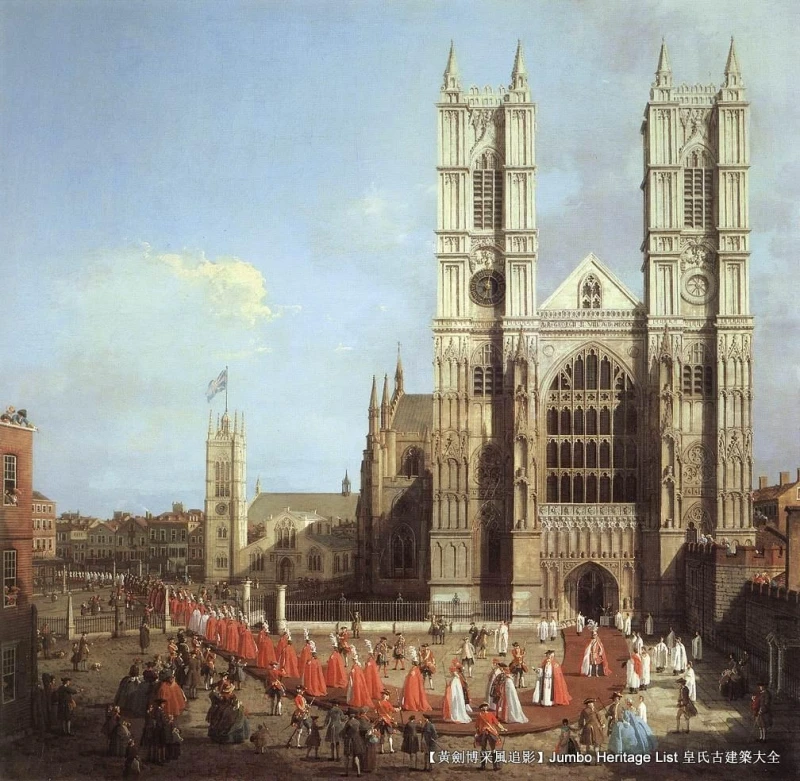
Besides France, some churches in England also use stained glass extensively, such as the Collegiate Church of Saint Peter at Westminster, commonly known as Westminster Abbey. Located in the City of Westminster, London, it is a large Gothic church that has been the site of burials and coronations for British monarchs (from England, to Great Britain, and the Commonwealth). It briefly served as a cathedral from 1546 to 1556, and is now a Royal Peculiar. Due to its grand scale, it is often translated as "Westminster Abbey" or "Westminster Cathedral" in Chinese. However, according to the official division of the Church of England, after 1560 Westminster Abbey no longer holds the status of a true cathedral (the seat of a bishop). (The London Diocese cathedral is St Paul's Cathedral; the primatial see of the Church of England is Canterbury Cathedral.) Legend says that Westminster Abbey was built during the reign of King Sæberht of Essex, originally on a small island in the Thames. Between 1045 and 1065, it was rebuilt by order of Edward the Confessor. The Saxon king had vowed to go on pilgrimage but did not keep his promise; the Pope ordered Edward to rebuild Westminster Abbey as penance. The abbey was first built for Benedictine monks, completed on December 28, 1065. It was rebuilt again between 1245 and 1517. The first phase was organized by Henry III, but most of the work was done under Richard III by the architect Henry Yevele. In 1503, Henry VII had a chapel built. After Henry VIII broke with Rome, the abbey was taken under royal control in 1534 and dissolved in 1540. During this period, funds originally allocated to Westminster Abbey were transferred to St Paul's Cathedral. Under Queen Mary I, the abbey briefly reopened, but in 1559, Elizabeth I closed it again. In 1579, Elizabeth I reopened Westminster Abbey, stipulating direct royal control and changing its constitution from a monastery to a collegiate church of canons. Henceforth, the head of Westminster Abbey was no longer a bishop but a dean appointed by the king. Until the 19th century, Westminster Abbey was the most important academic center outside Oxford and Cambridge. The first third of the Old Testament and the last half of the New Testament of the King James Version were translated here into English. In 1066, Harold II was crowned here, the first king to be crowned in the abbey. On Christmas Day the same year, William the Conqueror was also crowned here. Subsequently, all English monarchs (except Edward V and Edward VIII) were crowned in Westminster Abbey. Most British monarchs were crowned by the Archbishop of Canterbury, with a few exceptions: Harold II and William the Conqueror were crowned by the Archbishop of York; Edward II by the Bishop of Winchester because the Archbishop of Canterbury was not in England; Mary I by the Bishop of Winchester because the Archbishop of Canterbury was a Protestant; Elizabeth I by the Bishop of Carlisle because the senior bishops were Catholics and refused to crown a Protestant queen; William III and Mary II by the Bishop of London because the Archbishop of Canterbury refused to recognize the new sovereign. Between 1300 and 1301, the Coronation Stone was placed in the Coronation Chair, known as the "St Edward's Chair." All coronations after 1308 used this chair. Henry III rebuilt Westminster Abbey in honor of Edward and had his body buried there. Henry III himself was also buried in the abbey. Thereafter, most English monarchs were buried here (though from Henry VIII and Charles I onward, most monarchs were buried at Windsor). Besides monarchs, nobles could be buried in chapels, while monks and those associated with the church were buried in the cloisters. In 1400, Geoffrey Chaucer was buried in the south transept, and poets could be buried around Chaucer (now called "Poets' Corner"). Gradually, burial or erection of monuments in Westminster Abbey became an honor. Today, the abbey contains the burials of many English nobles, poets, generals, politicians, scientists, etc. Oliver Cromwell was buried in Westminster Abbey after his death, but later Charles II ordered his body exhumed. There is also a statue of William Shakespeare in Westminster Abbey, but Shakespeare is buried in his hometown, not in the abbey. Above the west doorway of Westminster Abbey, since 1998, ten statues of Christian martyrs have been placed. They come from around the world, not ancient saints, but modern believers martyred during the 20th century.
Jumbo Huang Notes: The term stained glass refers to coloured glass as a material and to works created from it. Throughout its thousand-year history, the term has been applied almost exclusively to the windows of churches and other significant religious buildings. Although traditionally made in flat panels and used as windows, the creations of modern stained glass artists also include three-dimensional structures and sculpture. Modern vernacular usage has often extended the term "stained glass" to include domestic lead light and objets d'art created from foil glasswork exemplified in the famous lamps of Louis Comfort Tiffany.As a material stained glass is glass that has been coloured by adding metallic salts during its manufacture, and usually then further decorating it in various ways. The coloured glass is crafted into stained glass windows in which small pieces of glass are arranged to form patterns or pictures, held together (traditionally) by strips of lead and supported by a rigid frame. Painted details and yellow stain are often used to enhance the design. The term stained glass is also applied to windows in enamelled glass in which the colours have been painted onto the glass and then fused to the glass in a kiln; very often this technique is only applied to parts of a window.The Cathedral Basilica of Our Lady of Amiens (French: Basilique Cathédrale Notre-Dame d'Amiens), or simply Amiens Cathedral, is a Roman Catholic church. The cathedral is the seat of the Bishop of Amiens. It is situated on a slight ridge overlooking the River Somme in Amiens, the administrative capital of the Picardy region of France, some 120 kilometres (75 miles) north of Paris.The cathedral was built almost entirely between 1220 and c. 1270, a remarkably short period of time for a Gothic cathedral, giving it an unusual unity of style. Amiens is a classic example of the High Gothic style of Gothic architecture. It also has some features of the later Rayonnant style in the enlarged high windows of the choir added in the mid-1250s.Westminster Abbey, formally titled the Collegiate Church of Saint Peter at Westminster, is a large, mainly Gothic abbey church in the City of Westminster, London, England, just to the west of the Palace of Westminster
Episode 2126: The Kushan Empire Spreads Buddhism Eastward, The Great Yuezhi and King Kanishka


