Freud Museum: One of London's Most Charming and Historically Significant Museums
In Maresfield Gardens, London, stands a beautiful and scholarly building, one of London's 'hidden gems': the Freud Museum London.
Image source: Freud Museum London
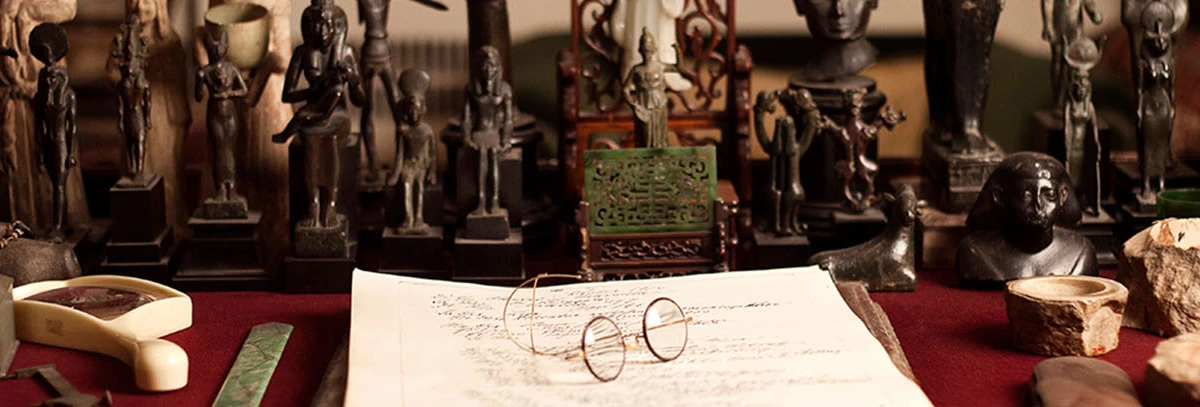
As the final residence of the father of psychoanalysis, Sigmund Freud, and the warm home of his youngest daughter, Anna Freud, this museum—one of London's most charming and historically significant—showcases fragments of the lives and collections of these two great individuals. It is an ideal place to learn about Freud's life and academic work, and to view over 2,000 artifacts from Greece, Rome, Egypt, and the East.
Sigmund Freud
Born in 1856 into a Jewish family in the Austro-Hungarian Empire, Freud was the world-renowned Austrian psychiatrist, psychologist, and founder of the psychoanalytic school. He earned his medical doctorate in 1881; formally introduced the concept of psychoanalysis in 1895; published The Interpretation of Dreams in 1899, which is considered the formal establishment of psychoanalytic psychology; and founded the International Psychoanalytical Association in 1919, marking the final formation of the psychoanalytic school.
Image source: Freud Museum London
He opened new frontiers in the study of the unconscious, advanced dynamic psychology, personality psychology, and abnormal psychology, laid a new foundation for the modern medical model, and provided an important theoretical pillar for 20th-century Western humanities.
Freud Museum London
Opened to the public in 1986, the museum is filled with memories of Anna Freud. Every corner retains its original appearance and layout, presenting the most authentic lifestyle of the Freuds.
Sigmund Freud's Study: This fully preserved study includes Freud's psychoanalytic couch—where his patients were invited to lie down and say whatever came to mind; his antique collection—over 2,000 objects filling display cabinets and the desk where Freud often worked until dawn, serving as companions and inspiration during his work; and his book collection—more than 1,600 books lined on shelves against the wall, interspersed with several famous pictures.
Image source: Freud Museum London
Dining Room: Adjacent to the study, the dining room features 18th-century Austrian painted country furniture and displays several paintings from Freud's collection, as well as photographs of Freud's Vienna apartment taken by Edmund Engelman.
Image source: Freud Museum London
Landing: A portrait of Freud, a family tree outlining his background and life and work, and the 'Wolf Man painting'—a gift from Sergei Pankejeff, one of Freud's most famous patients, depicting his childhood nightmare—imbue this small space with artistic flair.
Image source: Freud Museum London
Anna Freud's Room: This room, where Anna lived for 44 years, portrays various aspects of her work and personality through her psychoanalytic couch and personal memorabilia, and records her pioneering developments in psychoanalytic research, particularly in child psychology.
Image source: Freud Museum London
Garden: Both Sigmund and Anna loved gardens, so this meticulously maintained garden is also one of the museum's attractions.
Image source: Freud Museum London
Moreover, the Freud Museum leads the way in curating cutting-edge art in small museums, hosting exhibitions by many top British and international artists—well worth a visit.
Museum address: 20 Maresfield Gardens, London, NW3 5SX
Opening hours: Wednesday, Saturday, Sunday 10:30 – 17:00
Admission: £14, free entry with The London Pass


