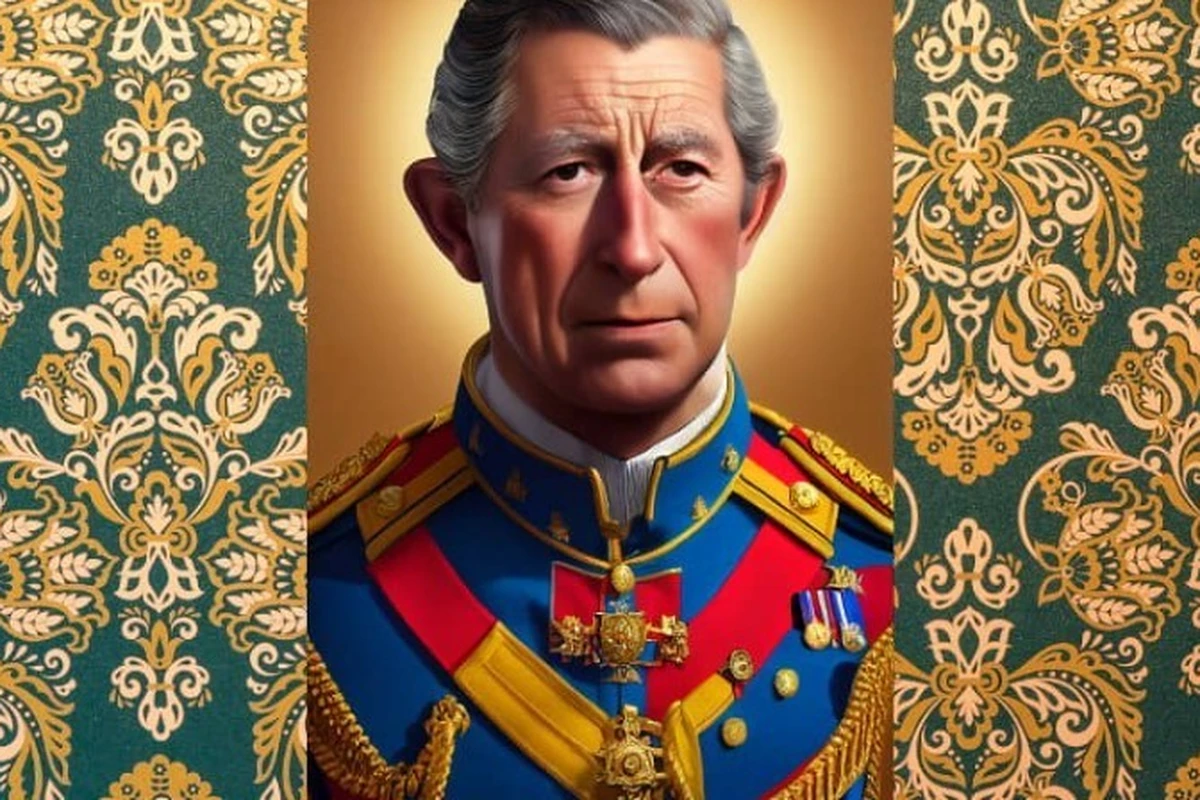
Coronation of King Charles III | Three Days of Non-Stop Celebrations
The coronation of King Charles III of the United Kingdom is scheduled for May 6, with celebrations lasting three consecutive days. Queen Consort Camilla will also be crowned. According to the itinerary released by Buckingham Palace, the coronation ceremony will begin in the morning on May 6. Charles III and Camilla will depart from Buckingham Palace, and after the ceremony, they will return to Buckingham Palace and appear on the balcony with other members of the royal family to greet the crowd. The religiously rich coronation ceremony will be held at Westminster Abbey according to centuries-old tradition, presided over by the Archbishop of Canterbury, the head of the Church of England.
Today, Little Travel City will introduce you to the British royal coronation ceremony. Continue reading!
· About King Charles III
· The British Royal Coronation Ceremony and Items You Must Know
· The Exclusive Royal Emblem for Charles III
· Camilla Crowned Together, Controversial Diamond 'Koh-i-Noor' Removed from Crown
· Highlights of the British Royal Coronation Activities
· What Else Can You Do in London?
Charles III served in the Royal Navy and Air Force.
Born in 1948, Charles III is 73 years old this year and is the eldest son of the late Queen Elizabeth II and Prince Philip, Duke of Edinburgh. He officially became the heir apparent at the age of 21, served in the Royal Navy and Air Force, and often carried out official duties on behalf of the Queen. He succeeded to the throne on September 8, 2022, becoming the oldest monarch to ascend the throne in British history.
On September 8, 2022, Buckingham Palace announced the death of the Queen. As per tradition, the Queen's eldest son, Prince Charles, officially succeeded as King of the United Kingdom, with his wife Camilla as Queen Consort. Later that day, in the obituary issued from the Prime Minister's official residence, Prime Minister Liz Truss first used his title 'Charles III', officially confirming the name 'Charles III'. The next day, Charles III returned to London from Scotland and received a warm welcome from the crowd at Buckingham Palace.
During his time as Prince of Wales, Charles's past romantic relationships were always a focus of the British media. Charles III's first wife was Princess Diana. When they married, 750 million people worldwide watched the luxurious royal wedding on television. Princess Diana was one of the most beloved princesses in British history, and her clothing styles were often imitated by British women. However, because Charles continued his relationship with his old flame Camilla, their marriage quickly hit the rocks. On August 28, 1996, they officially divorced, ending a 15-year marriage. During their marriage, they had two sons, Prince William and Prince Harry, with joint custody.
On July 29, 1981, Charles III married his first wife, Diana.
On August 31, 1997, Diana died in a car accident. The relationship between Camilla and Charles gradually came to light, and they appeared together in public on several occasions. However, due to religious and traditional issues, whether they could marry was a controversial topic. It was not until February 10, 2005, that they officially married, but after the marriage, Camilla did not use the title 'Her Royal Highness The Princess of Wales' but instead used the titles 'Her Royal Highness The Duchess of Cornwall' (in England) and 'Her Royal Highness The Duchess of Rothesay' (in Scotland). After Charles ascended the throne as King of the United Kingdom, Camilla might have only been able to use the title 'Her Royal Highness The Princess Consort' rather than 'Her Majesty The Queen'.
On February 10, 2005, Charles III married his second wife, Camilla.
In February 2022, Queen Elizabeth II expressed her wish that Camilla would become Queen Consort after Charles succeeded, which was seen as the Queen and the British royal family accepting Camilla's marriage and setting the tone for any future controversy. On September 8, 2022, after the death of Elizabeth II, the obituary issued by Buckingham Palace referred to Charles and Camilla as 'The King and The Queen Consort', indicating that Camilla's title at that time should be Queen Consort of the United Kingdom.
Buckingham Palace announced that the coronation of King Charles III would take place on Saturday, May 6, at Westminster Abbey in London.
Strictly speaking, Charles III automatically became the British monarch upon the death of his mother, Queen Elizabeth, but the grand coronation ceremony represents the traditional transmission and succession. The coronation ceremony of Charles III is codenamed 'Operation Golden Orb'. The Archbishop of Canterbury will preside over the anointing, blessing, and consecration of King Charles at Westminster Abbey. The coronation of Queen Elizabeth II lasted nearly three hours, but royal sources indicate that the coronation of Charles III will be more streamlined, with fewer guests in attendance.
Elizabeth II was officially crowned Queen of the United Kingdom at the age of 27.
When Queen Elizabeth was crowned, the then 4-year-old Charles III was also present to witness it.
After centuries, the British royal coronation ceremony still retains many core elements. For example, the monarch usually sits in the 14th-century King Edward's Chair and wears the 17th-century solid gold St Edward's Crown. The king will also make a solemn oath during the coronation ceremony, making a lifelong commitment to the people.
In the traditional coronation ceremony, the king is presented with the crown, the Sovereign's Orb, the sceptre, and so on. These jewels are important symbols of the monarchy.
The Imperial State Crown was made for the coronation of King George VI in 1937, replacing the crown made for Queen Victoria.
The Imperial State Crown is worn at the end of the coronation ceremony and during processions; it is the most exquisite crown and used on the most occasions. The crown is set with the famous Cullinan II diamond, a 317.4-carat cushion-cut diamond that is the second largest diamond cut from the Cullinan diamond. The crown is also set with small sapphires on the top and in the middle, said to come from the ring of the medieval king Edward the Confessor.
The monarch will leave Westminster Abbey wearing the crown after the coronation ceremony.
The Sovereign's Orb symbolizes the Christian world, with a cross mounted on a globe.
The Sovereign's Orb, also known as the Royal Orb, the Imperial Orb, or the 'King's Apple', represents the material world. Holding the orb symbolizes the power to rule the world, with the creative and controlling power of life. During the coronation ceremony, the orb is placed in the monarch's right hand. Then it is placed on the high altar before the coronation.
The orb is made of gold and set with 365 diamonds, as well as pearls, rubies, sapphires, emeralds, and a large amethyst. At the coronation, the orb is handed to the king's right hand, and then the king places it on the altar. The orb is a symbol of the king's authority, and the tradition of the king accepting the orb dates back to Roman times.
The Sovereign's Sceptre with Cross was made for the coronation of Charles II in 1661 and has been used at every coronation since.
The Sceptre with Cross is a symbol of power. During the coronation ceremony, the sceptre must be held with a glove, reminding the king to use his power wisely. The sceptre is set with the famous Cullinan I diamond, also known as the 'Star of Africa I'. This teardrop-shaped diamond is the largest cut diamond in the world, weighing over 530 carats.
The Holy Ampulla and Spoon represent the most sacred part of the entire ceremony.
The Holy Ampulla and the Spoon are vessels used to hold the 'holy oil' in Christian ceremonies. The true protagonist of the ceremony is the holy oil itself. In the British royal understanding, the holy oil carries the will of God. The ampulla, designed in the shape of an eagle, when pouring the holy oil, represents the will of God descending from heaven. The spoon is worth mentioning: it is the only piece of royal regalia confirmed to have been made in the 12th century. After Charles I was executed, the spoon was fortunately well preserved by a buyer and was later re-presented to the king after the restoration of Charles II.
This emblem was designed by Apple's former Chief Design Officer, Jony Ive, and mainly consists of the red, white, and blue colors of the Union Jack, featuring the rose of England, the thistle of Scotland, the daffodil of Wales, and the shamrock of Northern Ireland. The designer's inspiration came from King Charles's love for the earth and nature, as well as his deep concern for the natural world, stating that the emblem expresses the joyful optimism of spring and celebrates the beginning of the new Carolean era in Britain. It also aims to convey meanings of elegance, gentleness, and humility, highlighting the importance of the coronation ceremony.
The Koh-i-Noor diamond on Queen Mary's Crown has always been controversial.
Buckingham Palace announced that Queen Consort Camilla will wear Queen Mary's Crown during King Charles III's coronation ceremony, but the crown will be modified to remove the controversial Koh-i-Noor diamond. The crown was commissioned by Queen Mary, consort of King George V, for the coronation in 1911.
This 105-carat diamond originated in India and has changed hands several times, passing through Pakistan, Iran, Afghanistan, and other regions, with its ownership always controversial. A spokesperson for the Bharatiya Janata Party of Indian Prime Minister Narendra Modi recently said it 'brings back painful memories of colonial history'. Buckingham Palace stated that, for reasons of sustainability and efficiency, Her Majesty the Queen chose Queen Mary's Crown, marking the first time in modern history that an existing crown has been used for the coronation of a king's consort, rather than making a new crown. However, four of the eight removable arches on the consort's crown will be removed to create a new impression different from that of Queen Mary's time.
In this process, the Gold State Coach is undoubtedly the most eye-catching! The history of this carriage can be traced back to 1762, when it was specially built for the travel of the British king and queen. Since 1821, it has been used for every coronation. This huge carriage is 7 meters long, 3.6 meters high, and weighs 4 tons, requiring eight horses to pull it. Due to its age and weight, it can only be used at walking speed.
The historic Gold State Coach always attracts attention whenever it goes on the street.
The carriage is actually made of gilded wood, which is a thin layer of gold leaf applied to the wood. The interior is lined and padded with velvet and satin. It also features magnificent painted panels of Roman gods and goddesses. It is adorned with gilded sculptures, including three cherubs on the roof representing England, Scotland, and Ireland. Above each wheel is a large sculpture of a triton.
Coronation Big Lunch
Communities across the UK will be encouraged to host food-sharing events and neighborhood-friendly leisure, charity, or exchange activities.
Coronation Concert
On May 7, a coronation concert planned and executed by the BBC will be held at Windsor Castle. In addition to live broadcast, thousands of tickets will be available by lottery.
The concert lineup includes world-class symphony orchestras, dancers, internationally renowned musicians, and a 'Coronation Choir' specially formed for the coronation celebrations. Choir members are selected from community choirs and amateur singers across the UK, including refugees, healthcare workers, LGBTQ+ individuals, the hearing impaired, and others. On the same day, there will be a 'Coronation Big Lunch', where communities across the UK will be encouraged to host food-sharing events and neighborhood-friendly leisure, charity, or exchange activities.
The Big Help Out
On May 8, the public will be invited to participate in charity activities, volunteer, and engage in community affairs.
Coronation Weekend Series Activities
Aimed at uniting the member states of the Commonwealth and communities, families, and interpersonal bonds across the UK. In addition to the 'Coronation Weekend' from May 6 to 8, there will be other activities in 2023 to celebrate the coronation of Charles III and Camilla.
London is a world-famous tourist destination, with many attractions and landmarks worth exploring, from magnificent palaces and castles to solemn churches, countless in number. While participating in and witnessing historic moments, you can also visit some famous sites in London to better understand the city.
King Charles's coronation ceremony will be held at Westminster Abbey. Since William I was crowned here in 1066, all subsequent English coronations have been held at Westminster Abbey. In addition, numerous royal weddings, funerals, national celebrations, and commemorative events have also taken place here.
Westminster Abbey is located on the north bank of the River Thames in London. It is the largest Gothic building in the world and the highest-status church in the UK, a church dedicated to the royal family. Besides royal family members, many great figures from various fields in Britain are also buried here. Hence it is known as the 'Honour of the Spire'; to have a place here after death is the highest honor.
Kensington Palace is located on the west side of Kensington Gardens in the Royal Borough of Kensington and Chelsea, London. It is a royal palace and the former residence of Princess Diana and the current residence of Prince William and his wife. Some rooms in Kensington Palace are open to the public, including the room where Queen Victoria was christened, the royal costume collection from 1760 to the present, Queen Mary's wedding dress, Queen Elizabeth II's casual wear and formal dresses, and of course, many gorgeous accessories. In addition, the King's Gallery preserves exquisite 17th-century paintings.
Main attractions at Kensington Palace include the Queen's Apartments, the Queen's Staircase, the Queen's Gallery, the Queen's Wardrobe, and the King's Gallery. There are also extensive gardens and the world-famous Orangery, an ideal place for a leisurely afternoon tea.
Wisley Garden is one of the gardens managed by the Royal Horticultural Society (RHS) of the UK, attracting over a million visitors each year. Wisley Garden is located in Surrey, on the western outskirts of London, and was established in 1904. It currently covers an area of about 97 hectares. Wisley Garden features dozens of attractions, including the Rock Garden, Glasshouse, Rose Garden, Walled Garden, Vegetable Garden, Seven Acres Garden, Herb Garden, and Battleston Hill. The Rose Garden and the advanced Glasshouse are the most famous here. The garden displays over 30,000 species of plants, earning it the nickname 'Encyclopedia of English Gardens'.
Hampton Court Palace is located in southwest London and was the royal residence of the Tudor and Stuart dynasties. Since the 18th century, Hampton Court Palace has no longer served as a residence for the British royal family. Hampton Court Palace was built in 1514 for Cardinal Thomas Wolsey, who was one of King Henry VIII's favorite ministers. When Thomas Wolsey fell from power, Henry VIII took the palace for himself and expanded it. Hampton Court Palace has 1,280 rooms, splendid interior decoration, and extraordinary garden art, hence it is called the 'Versailles of England' and is a model of Tudor palace architecture. Worth visiting in the palace include the State Apartments, the Great Hall, the various rooms within the palace, typical English gardens, and the famous maze in the gardens.
Take the London Hop-On Hop-Off Bus Tour to visit London's popular attractions and better understand the city. The bus also offers audio guides in English, French, German, Italian, and Spanish. Popular attractions include the Tower of London, Westminster Abbey, Tower Bridge, Buckingham Palace, Trafalgar Square, and more.
If any images infringe copyright, please inform us!
Travelogue Directory
1. About King Charles III
2. The British Royal Coronation Ceremony and Items You Must Know
3. Camilla Crowned Together, Controversial Diamond 'Koh-i-Noor' Removed from Crown
4. Highlights of the British Royal Coronation Celebration Activities
5. Westminster Abbey
6. Kensington Palace
7. Royal Horticultural Society Wisley Garden
8. Hampton Court Palace
9. London Hop-On Hop-Off Bus Tour (1-Day Ticket)
Travel Information
Hotel Index
Guide Index
Flight Index
Website Navigation
Travel Index
Cruise Index
Corporate Travel Index
Franchise Cooperation
Distribution Alliance
Friendship Links
Corporate Gift Card Procurement
Insurance Agent
Agent Cooperation
Hotel Franchise
Destination and Scenic Spot Cooperation
More Franchise Cooperation
About Ctrip
About Ctrip
Ctrip Hot Topics
Contact Us
Careers
User Agreement
Privacy Policy
Business License
Security Center
Ctrip Content Center
Intellectual Property
Trip.com Group Algorithm Disclosure


