A Berliner’s Guide to Berlin!!! Complete Berlin Guide (Transportation)
Arrived in Berlin in early 2018 to pursue a master’s degree, and graduated and returned to China in early 2021. Three years of life in Berlin turned my feelings for the city from dislike (finding it had a defeated-nation oppression) to turning from black to fan.
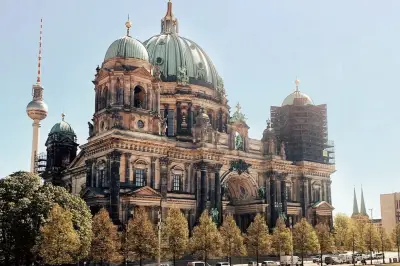
Berlin is huge; although I didn’t manage to cover every corner in three years, I gained a deep understanding of the city. Berlin is a very diverse city, unlike other German cities. It’s both rustic and modern, with modern architecture like the Sony Center and historic buildings like the Berliner Dom. Berlin is also very open—almost any behavior here is accepted. Among classmates, there’s a joke: “Even if you run naked on the streets of Berlin, you definitely won’t be seen as a freak” (though none of us tried it). Berlin is even more a city of passion; it has the most nightclubs in all of Europe, offering every visitor a completely unique experience.
One could say Berlin is one of the most worthwhile cities in Germany to visit. This article will introduce every aspect of Berlin in detail, giving you a comprehensive understanding of the city. It is divided into four parts: Transportation, Attractions, Food & Shopping, and Nightclubs. In the Transportation section, I’ll introduce Berlin’s major train stations and tips for using public transport, plus self-driving and parking guides. In Attractions, I’ll cover the main sights and some off-the-beaten-path spots, and suggest suitable itineraries. In Food, I’ll recommend several Chinese restaurants, German restaurants, and some Vietnamese restaurants. In Nightclubs, I’ll recommend clubs of different grades for different enthusiasts.
Berlin’s public transportation is well-developed. The most common means are the U-Bahn (subway), S-Bahn (overground light rail), bus, and trams in eastern Berlin. Between large stations, there are also slow regional trains (RB/RE) and even high-speed trains (ICE/IC). If you need to go from one major train station to another, a slow train is often the best choice, though it runs less frequently than U-Bahn or S-Bahn. For checking transport info, you can use Google Maps or the DB Navigator app.
First, let’s introduce Berlin’s major train stations.
Berlin Hauptbahnhof (Berlin Central Station)
As the name suggests, it’s the largest and most important station in Berlin, located in the city center near famous sights like Brandenburg Gate and the Reichstag Building. Transportation is very convenient; almost all ICE high-speed trains and RB regional trains pass through here. Additionally, many S-Bahn lines (S3, S5, S7, S9) and U-Bahn line U5 stop here, along with countless buses. Most people arriving by train from other cities get off here. Train tickets to Berlin Hauptbahnhof often say “Berlin hbf (tief).” Don’t be confused by “tief”; it means “deep” in German because the main station has multiple levels, with train platforms on the lowest level, hence the addition. All S-Bahn platforms are on the top floor; the U-Bahn entrance is from the side (I don’t remember exactly, but signs are clear). The station is large, so allow enough time for transfers. Generally, allow at least 10 minutes walking time to switch between U-Bahn and S-Bahn.
If you get hungry while waiting, no worries—the station has McDonald’s, various German traditional bakeries (not very tasty), and I recommend HANS IM GLÜCK, a hamburger restaurant with great taste, right inside the station. There’s also REWE (a large supermarket), Müller (drugstore with cosmetics), and MediaMarkt (electronics). Many souvenir shops sell Berlin-themed gifts like Berlin Bear plush toys, Berlin Bear gummy candies, and Hertha BSC fan merchandise. The restroom is hard to find; if you have a tight transfer, try to hold it—missing a train because of the toilet isn’t worth it. Most public toilets in Germany charge a fee; the one in the main station costs 70 cents and gives you a 50-cent voucher usable in most station shops. Use the toilet before shopping. Also, the restroom has very poor cellular reception (almost none).
Berlin-Spandau Bahnhof (Spandau Station)
I lived in Spandau for about two years, so I’m familiar with Spandau Station and will describe it in detail. On the map, Spandau Station seems far from the city center, on the western edge, but transportation is still convenient. It’s the second busiest station in Berlin, with many ICE trains stopping daily. Several RB/RE regional trains run to the city center every hour; the slow train takes only 8 minutes to Berlin Zoologischer Garten, S-Bahn takes 23 minutes, U-Bahn about half an hour, and driving about 30 minutes. Because it’s away from the center, hotels and Airbnb tend to be cheaper. It’s near the Olympiastadion (home of Hertha BSC), so it’s a good choice for football fans.
For long-term residents, Spandau is also nice: rents are relatively low, and daily life is convenient. Right next to Spandau Station is the Spandau Arcaden shopping mall, which has a Netto discount supermarket and a huge Real hypermarket (similar to Carrefour or Sam’s Club in China), plus stores like Foot Locker and Pandora, and a high-end fitness center with a spa.
However, Spandau Station doesn’t have many restaurants—just a few bakeries. Within 100 meters outside, there are several Döner kebab shops; for under 5 euros you can get a kebab stuffed with meat, a good option for hungry travelers.
Berlin Zoologischer Garten Bahnhof (Zoo Station)
Berlin Zoo Station is located in western Berlin’s city center, in Charlottenburg, near the Berlin Zoo, KaDeWe (Germany’s largest luxury department store, a shopping paradise), and many restaurants. It’s one of the main city stations, served by many RB, S-Bahn, U-Bahn, and bus lines. Outside the station square, you’ll find Starbucks, Curry 36 (famous Berlin currywurst), and Risa (German Turkish KFC).
Berlin Ostbahnhof (East Station)
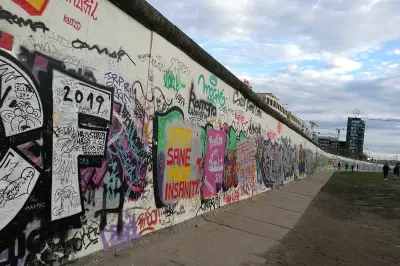
Berlin East Station is in the eastern part of the city, and some ICE trains stop there, but far fewer than at the main station or Spandau. It’s close to the East Side Gallery and Warschauer Straße, the nightlife strip. For those coming specifically for Berlin’s nightlife, this area is a good choice. However, because of its proximity to Warschauer Straße, there are more people from Turkish backgrounds, and the area is relatively less safe—be careful if you pass through.
Berlin’s urban public transport network is very extensive, with four main modes (bus, S-Bahn, U-Bahn, tram) connecting every part of the city. I won’t go into details, but here are some tips:
1. Google Maps and DB Navigator are essential apps for transport in Germany. DB App provides more detailed transfer times and platform numbers, but search keywords are usually for stations; searching for a specific address might be inaccurate. Google Maps shows full route maps but less precise timings and no platform numbers. For first-time visitors, use both: DB App for long-distance transfers between major stations, Google Maps for local destinations. You can also buy electronic tickets directly on DB Navigator, saving time—something Google Maps can’t do.
2. At U-Bahn, S-Bahn, and tram stops, there are ticket machines. Remember to buy a ticket before boarding. Paper tickets (single, day passes, etc.) must be validated before travel by inserting into a validation machine (you’ll hear a click) to be valid. Otherwise, if inspectors board, you could be fined 60 euros for traveling without a valid ticket. Validation machines are at every station. On buses, you can buy tickets from the driver (there’s a machine beside each driver) and then validate the ticket on the bus’s validation machine. You can also purchase all types of tickets (U-Bahn, S-Bahn, bus, train) on DB Navigator, which opens as an e-ticket in the app and doesn’t need validation. But note: tickets bought in the app are valid immediately for 120 minutes, so don’t buy too early.
3. German public transport doesn’t require ticket inspection before boarding, so don’t hesitate. Random inspections occur; if caught without a ticket, you face a heavy fine. Always buy a ticket, validate it, then board.
4. For route choices, I recommend ordering: slow train (RB/RE) > S-Bahn > U-Bahn > bus. Slow trains run only between major stations, less frequent but fast and with fewer stops. S-Bahn is above ground, offering views, with fewer stops than U-Bahn. U-Bahn is underground with many stops, no air conditioning (stuffy in summer), and no mobile signal underground (not just no 4G—no signal at all).
5. Berlin public transport is relatively expensive. A single ticket costs 1-2 euros (about 1-2 EUR). For multiple rides, buy a day pass (Tagesticket). It’s valid for unlimited rides within its validity period. For groups, consider a group ticket (Gruppenticket, up to 5 people; very cheap per person). Berlin has fare zones A, B, C. Make sure your ticket covers the zones you need. For tourists, AB is usually enough; don’t buy C. Below is a zone map (AB and BC). The main station (HBF), ZOB (long-distance bus station), and both airports (Berlin-Brandenburg and Schönefeld) are in AB. Tourists rarely need C except when going to Potsdam Palace.
6. S-Bahn and U-Bahn stations don’t have route maps everywhere like in China. Usually only one small map at the entrance can be easily missed, so you might board the wrong direction. If that happens, don’t panic—get off at the next stop and take the next train. A single ticket is valid for 120 minutes after validation. To avoid mistakes, use DB App, which shows the platform number (Gl.).
7. Transfers are common. With a single ticket, you don’t need to worry; it remains valid for 120 minutes.
8. Buying tickets is an art. Evaluate your needs before purchasing. Buy according to usage!
Latest fare summary (as of writing):
Short-distance ticket (Kurzstrecke): €2 (note: S-Bahn/U-Bahn max 3 stations, transfer allowed; bus/tram 6 stations, no transfer)
Single ticket (Einzelfahrschein): AB €3, BC €3.5, ABC €3.8
4-trip ticket (4-Fahrten-Karte): AB €9.4, BC €12.6, ABC €13.8
1-day pass (1 person) (Tagesticket): AB €8.8, BC €9.2, ABC €10 (valid 24h after validation)
1-day pass (up to 5 people) (Tagesticket für Kleingruppe): AB €25.5, BC €26, ABC €26.5 (max 5 people together)
7-day pass (1 person): AB €36, BC €37, ABC €43 (valid until midnight on day 7)
Also available: Berlin WelcomeCard (2 to 6 days), includes transport card for that period and discounts at some attractions.
Now, different from other travel notes, this seasoned Berliner gives advice on driving in Berlin!
Berlin’s public transport is excellent, but driving is as challenging as in big Chinese cities—difficult parking, expensive, and traffic jams. However, compared to Beijing, Shanghai, Guangzhou, or Shenzhen, Berlin is much better. Driving is easier and more convenient than public transport, though more expensive. For those who can, I recommend it.
First, renting a car. There are many rental companies like Hertz, Europcar, Sixt with many pick-up/drop-off points, plus many small local agencies. You don’t have to go to the airport or train station. Legally, Chinese drivers need an international driving permit and a notarized translation from the embassy, but rental companies usually only require a translation; I’ve never been asked for a notarized document. But be careful: if you’re stopped by police for a violation or accident and lack the proper documents, it could be serious. German traffic rules are strict—study them online before driving, especially right-of-way (right-before-left), pedestrian rights, speed limits.
Parking is difficult. Most spots are paid by the hour. Covered garages are more expensive than open lots; street parking is cheapest. Unlike China, there are no parking attendants; you must buy a ticket from a machine (Parkschein-Automat). After parking, look for the machine and check if parked cars have a ticket displayed (usually under the windshield). The parking ticket system is annoying: no mobile payment, no card, most machines only accept coins (especially 2€, 1€, 50c, 20c, 10c). Estimate your needed time; extra time isn’t refunded; if you exceed, you risk a fine. Sometimes kind drivers leave a long-remaining ticket in the machine’s slot—check it before buying. Street parking costs €1-€1.2/hour; on Friedrichstraße it’s €3/hour. Tips: The parking lot in front of TU Berlin (near Zoo Station in city center west) is free. In residential areas with a 30 km/h speed limit, roadside parking is often free. I used to live in Spandau; a T-junction: on the side near Spandau Station, parking costs €1/hour; across the junction it’s free. Berlin is considerate: usually in the evening, weekends, and holidays, street parking is free (the machine displays free hours).
For short stops (within 15 minutes), use a parking disc (Parkscheibe) placed under the windshield, set to your arrival time. Police often overlook slight overtime. In places with time limits (like supermarket entrances), also use the disc.
Buying a parking ticket relies on honesty, but police patrol and fine those without tickets. Always check if it’s free and remember to buy a ticket.
Filling gas in Germany is self-service. Don’t wait for an attendant—other drivers will honk. Using the pump is simple: turn off engine, open fuel cap, insert nozzle. There’s a lock on the nozzle; it stops automatically when full. After refueling, go inside to pay, tell the cashier the pump number.
P.S. Car-sharing apps require prior approval, usually valid for European licenses; Chinese licenses may or may not work—try yourself. If rejected, skip this section.
One thing: car-sharing is amazing!
Car-sharing is very developed and useful in Berlin. Many apps offer it. I recommend: DriveNow (mostly BMW), Car2go (mostly Mercedes), miles-mobility, Sixt. Cars are generally new. Via car-sharing, I’ve driven many mid-to-low-end models of BBA (BMW, Benz, Audi), like Mini, BMW i3, X5, Mercedes GLC—very common. Renting a Mini convertible for a cruise around Berlin is a great experience.
Car-sharing is very convenient: there are more shared cars than taxis; usually within 500 meters you’ll find one. Finding, unlocking, and paying are all in the app, like bike-sharing in China. It’s much cheaper than renting or taking taxis. Pricing is per minute (€0.10-€0.50); for short trips off-peak, 20 minutes can get you far. Also, you can rent by hour or day. Best part: parking and fuel costs are included in the price—you don’t pay extra. It’s pay-as-you-go.
Renting an electric scooter (e-scooter) and zipping through Berlin’s streets is even more fun than driving. E-scooters are as common as shared bikes in Shanghai. With speed limits of 30 km/h in many areas and 50 km/h in the city, e-scooters are the best way to navigate during rush hours. Speeds of 20-30 km/h give you a thrill without missing the scenery—my favorite mode of transport in Berlin! Apps: Circ, Tier, Voi, Lime. Download and register. Pricing usually €1 unlock fee + €0.15-€0.20 per minute. It’s relatively expensive, so only for short trips. Note: German e-scooter regulations are strict—no riding against traffic, no riding on sidewalks, and must use bike lanes if available.
That’s all for the transportation section. If you have questions, leave a comment below; I’ll answer quickly. Next, I’ll update guides on attractions, food & fun—stay tuned.
Travel diary table of contents: 1. Transportation 2. (Train stations) 3. (City public transport) 4. (Self-driving) Travel info: hotel index, guide index, flight index, website navigation, travel index, cruise index, corporate travel index, franchise cooperation, distribution alliance, friendly links, corporate gift card procurement, insurance agency, agency cooperation, hotel franchise, destination & scenic spot cooperation, more franchise cooperation. About Ctrip: Contact us, careers, user agreement, privacy policy, business license, security center, Ctrip content center, intellectual property, Trip.com Group algorithm disclosure.