One Week in Berlin, Germany: A Blend of History and Modernity
First Impressions of Berlin: Transportation and Food
On April 7, just after finishing my trip to Florence, Italy, I found a flight from Pisa to Berlin for only 278 RMB. Being budget-conscious, I decisively took a 1-hour bus ride to Pisa for 128 RMB, kicking off my 'money-saving adventure.' Upon landing in Berlin, a chill mixed with unfamiliarity greeted me—a stark contrast to Florence's warmth. My first impression of this city: it felt a lot like Beijing—vast and grand.
To reach my daughter's place, I opened Google Maps to plan my route and decided to take public transport. First, I hopped on a bus—€3.8, which made me wince a little—then transferred to the subway, paying another €3.8. Only when I met my daughter did I realize that Berlin's buses and subways are operated by the same company: within 2 hours, a single €3.8 ticket allows unlimited transfers between bus and subway. Recalling my 'painful' €76 taxi ride in Venice, this minor mistake became a badge of travel wisdom.
That day, my daughter and I finally reunited and couldn't wait to try Berlin's famous pork knuckle with sauerkraut at a restaurant. Stepping inside, the vintage European decor mingled with the aroma of food, creating a warm atmosphere. The pork knuckle was huge—golden, crispy skin glistening with oil, paired with tangy sauerkraut that cut through the richness. Just looking at it made my mouth water. When the bill came, it was only a little over €30 for the two of us—a pleasant surprise, as I'd expected at least €50!
Reichstag and Brandenburg Gate: Touching the Pulse of History
After a rest day, on April 9, my in-depth exploration of Berlin officially began. First stop: the Reichstag. Unfortunately, online reservations were booked up until April 23, by which time I'd be long gone. With the 'since I'm here anyway' attitude, I arrived at 9 a.m. at the inconspicuous 'Berlin Hall,' near the security entrance, to try my luck on-site. Luck was on my side—I managed to secure a ticket for the 12 p.m. entry! Important note: online reservations need to be made at least 2–3 weeks in advance; for on-site registration, don't forget your passport!
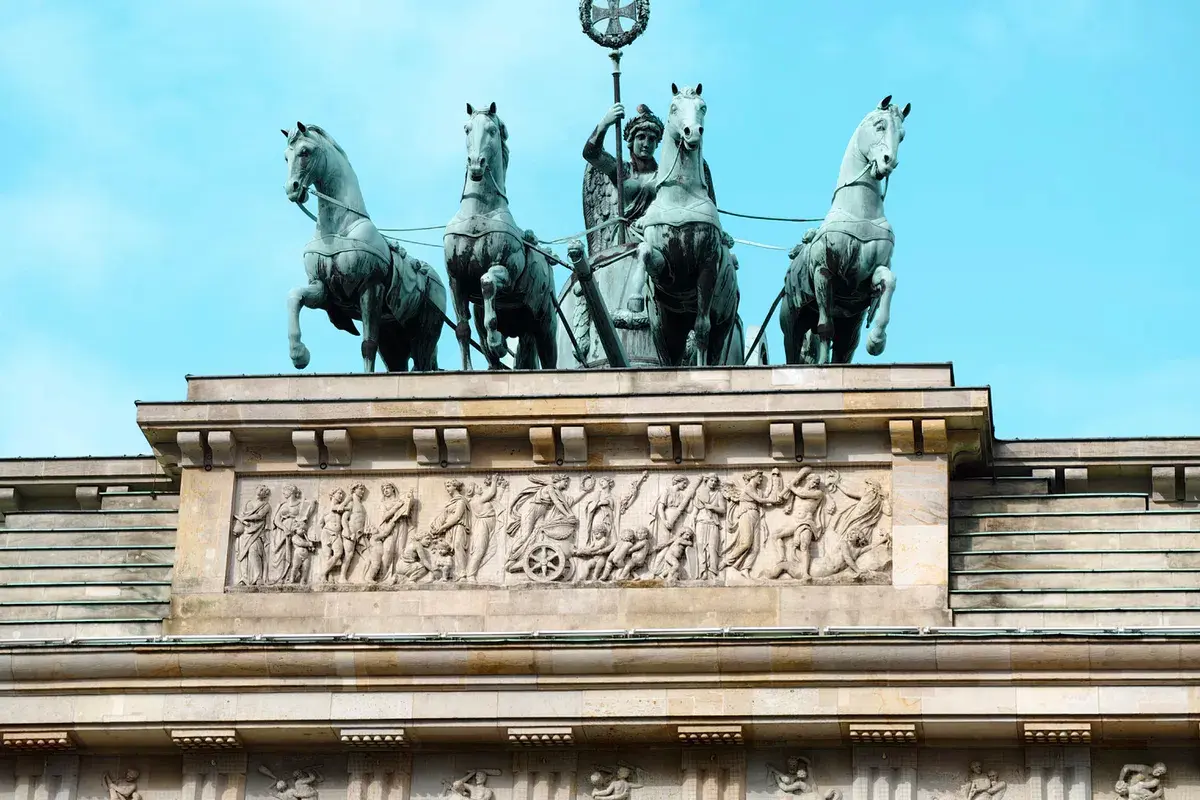
While waiting, I strolled along the street. After 7 or 8 minutes, the majestic Brandenburg Gate appeared before me. At 26 meters high, with 12 Doric columns supporting the Quadriga sculpture of the goddess Victoria driving a four-horse chariot, the olive branch in her hand seemed to express an eternal wish for peace. The four horses, heads held high, pulled the chariot with an imposing aura, guarding the city's glory. Standing in front of the gate, I could almost imagine the scene on November 9, 1989, when the Berlin Wall opened and hundreds of thousands celebrated in jubilation. Watching teachers bring students to visit reminded me of patriotic education back home—the weight of history transcended borders and resonated deeply.
Walking along Unter den Linden, I was dazzled by the beautiful European buildings lining both sides—gift shops, cafés, and restaurants in a row. Suddenly, the solemn Humboldt University appeared. This is where scientific giants like Einstein, Max Planck, and Schrödinger once taught; over 50 Nobel laureates have drawn knowledge here. The strong academic atmosphere seemed to permeate through time. Humboldt's campus is split on both sides of the avenue, but their combined area is surprisingly small, which puzzled me. Later, I chatted with a German young man who spoke Chinese, and he explained that Humboldt University has multiple campuses.
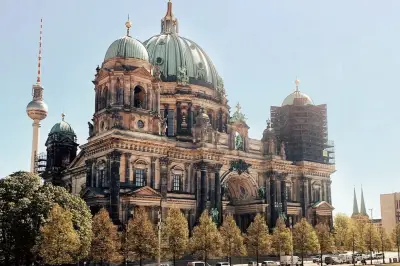
Next to Humboldt University, the Neue Wache memorial house contains the sculpture 'Mother with Her Dead Son.' In its silent yet powerful posture, it conveys the cruelty and ruthlessness of war, making visitors pause for a long time. Finally, I arrived at Berlin Cathedral—magnificent in appearance, but since I had already visited many churches in Italy, I chose to admire its beauty from the outside, feeling its solemnity and sanctity.
At exactly 12 p.m., I returned to the Reichstag, passed security, and entered to visit the dome. After picking up a Chinese audio guide, a wonderful journey began. As I walked, the audio guide automatically detected my location and introduced the famous buildings visible through the glass, along with their historical stories. When I reached the top, the entire panorama of Berlin lay before me—ancient architecture interwoven with modern urban landscapes. History and modernity merged perfectly in that moment, filling me with awe and satisfaction.
East Side Gallery and Jewish Museum: Remembering Historical Wounds
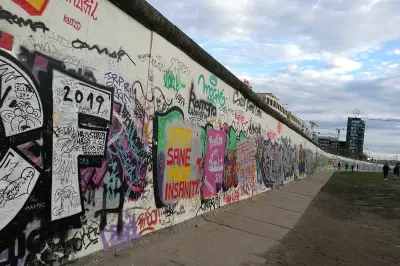
On April 10 at 10 a.m., I visited the East Side Gallery. On this 1.3-kilometer stretch of the Berlin Wall, colorful paintings contrast sharply with the random graffiti on the western side. These works, created by invited artists, each carry deep meaning. The most famous is the 'Brotherly Kiss,' vividly depicting the kiss between Soviet leader Leonid Brezhnev and East German leader Erich Honecker. There is a QR code beneath the painting that offers a 'treasure' of commentary—unfortunately, I only discovered it when leaving. If you come, be sure to scan the code early to listen to the explanations! I had a meal under the cherry blossoms on the large lawn on the western side, accompanied by the gentle flow of the Spree River, Berlin's mother river. The springtime leisure blended with the artistic atmosphere, creating a unique experience.
In the afternoon, I visited the Jewish Museum Berlin. The beige Baroque building looks elegant, but once inside, the space dominated by black, white, and gray tones, along with irregular lines, immediately conveys a heavy, solemn mood—like walking through a labyrinth of memory. In the core exhibition, over 1,000 artifacts—from silver candlesticks of Jewish families to faded photographs of daily life—trace the past and present of German Jews. Especially the path covered with metal discs with faces: each step produced clanging sounds that echoed like historical cries, recreating the pain and despair of Jews during persecution. In the museum's video, dozens of Jews of different ages and backgrounds shared their lives, their acceptance and confusion about Jewish identity and customs. Though I couldn't understand German, the English subtitles allowed me to enter their inner worlds. Before I knew it, closing time arrived. The staff urged me to leave, and I departed reluctantly, feeling that there was so much more to absorb. Again, I remind everyone: when visiting, it's best to wear somber colors like black or gray out of respect for this heavy history.
Museum Island: Immersion in the Palace of Art
On April 11, I purchased a one-day ticket for Museum Island on Ctrip for 187 RMB, embarking on a feast of art. The museums open at 10 a.m., and I queued early, full of anticipation.
First stop: the Bode Museum. Built with donations from Jewish patrons, this art treasure trove captivated me from the entrance. Exquisite sculptures and paintings filled the halls. Statues of the Virgin Mary and baby Jesus varied in expression and seemed lifelike; ornate mirror carvings were masterpieces of craftsmanship. Even though my knowledge of art is limited, I was completely immersed in the beauty of these works. The coin exhibition was extensive, but it didn't interest me much, so I quickly moved on to the next museum.
Second stop: the Panorama Hall of the Pergamon Museum. Unfortunately, the Pergamon Museum itself is under renovation until 2037. But the Panorama Hall more than made up for it! Using digital technology, it reconstructed the ancient Roman festival of the wine god in the city of Pergamon during Emperor Hadrian's reign. The interplay of light and shadow, transitions from day to night, along with sound effects—bustling crowds, birds chirping, blacksmiths hammering, solemn rituals—truly made me feel as if I had traveled back a thousand years to a lively ancient city. The Chinese electronic guide was particularly helpful, allowing me to easily understand every detail. During the visit, an Asian guide mistook me for a Korean and greeted me in Korean. After chatting, I learned that he had settled in Germany 50 years ago. We laughed and exchanged blessings—a warm little episode that added a touch of brightness to my journey.
Third stop: the National Gallery. The exquisite paintings and sculptures by German artists left me in awe. One sentence particularly moved me: 'When you enter this gallery and see these beautiful paintings, they will calm you and reduce your anxiety.' Walking through the halls, feeling the nourishment of art, I indeed felt much more peaceful inside.
Next, I visited the Neues Museum, which houses treasures of Egyptian civilization. The bust of Nefertiti, as the museum's crown jewel, was not allowed to be photographed up close. Fortunately, my phone's camera was up to the task, and I managed to capture a clear image. I had originally planned to visit the Altes Museum, but it was already 4:30 p.m., and it closes at 5 p.m. I recalled what Professor Jiang Xun once said: when appreciating beauty, you don't need to see everything; feeling that it's beautiful in the moment is enough. By then I was also exhausted, so I skipped the Altes Museum with contentment. Again, a reminder: for exhibitions at Museum Island, you need to store your bags. Bring 1 or 2 euro coins for the lockers, which will be returned when you retrieve your bag.
Potsdamer Platz Shopping: Experiencing a Different Vibe
On April 12 afternoon, I went shopping at Potsdamer Platz. The shopping center here is quite similar to those in China, but communication was a challenge—many salespeople didn't speak English, so I had to use gestures and broken phrases, leading to plenty of laughs. On the way, I passed the Memorial to the Murdered Jews of Europe. Walking through it, an oppressive and heavy feeling clung to me, as if the pain of that history was right before my eyes. In front of Potsdamer Platz, a few pieces of the Berlin Wall stood quietly, with many tourists taking photos. They seemed like silent witnesses, telling the story of that unique period.
Charlottenburg Palace: The Solemnity and Luxury of a Prussian Palace
On April 13, I visited Charlottenburg Palace. Despite mixed reviews online, I wanted to see the splendor of a Prussian royal palace for myself. There weren't many tourists, which allowed me to explore at a leisurely pace. Right after buying my ticket, the young German at the front desk spoke to me in fluent Chinese and enthusiastically told me that I could download the Charlottenburg Palace app, which includes detailed Chinese explanations. I guessed that my canvas bag printed with Chinese characters had given me away. He also told me that he studied Chinese at Humboldt University. I felt that Humboldt's Chinese language teaching is quite effective—his pronunciation was standard and accent-free. With the app, visiting became easy and enjoyable. The palace had many rooms, each with a different style, blending German solemnity and precision with the opulence of Baroque and Rococo, creating a strong visual impact with rich colors. According to the audio guide, the palace had suffered extensive damage, and scholars had painstakingly restored it based on surviving furniture and historical records—a testament to the restorers' craftsmanship. The back garden is free to enter. Strolling through, I saw blooming flowers, shady trees, a shimmering lake, swans and various birds living leisurely. It combined careful maintenance with natural rustic charm. I found a spot on the grass, lay down, and basked in the sun—pure bliss.
In the afternoon, I visited the Museum of Decorative Arts. I had expected to see German furniture and decorative art, but it turned out to be mostly paintings, largely on religious themes. Having already seen many such paintings in Italy and at Museum Island, I felt some fatigue and left quickly. I had originally planned to shop, but I discovered that stores in Berlin are closed on weekends. I then truly appreciated how much Germans value leisure and relaxation. I heard there was a flea market nearby and wanted to check it out, but Google Maps showed it closing at 4 p.m. So, with a tinge of regret, I concluded my fulfilling and unforgettable trip to Berlin, Germany.