Deep in Time, Egypt (August 2007, Egypt Trip) Guide
August 20, 2007 -- August 30, 2007
Xiamen -- (flight) -- Guangzhou -- (flight) -- Dubai -- (flight) -- Cairo -- (flight) -- Luxor -- (train) -- Aswan -- (train) -- Cairo -- (train) -- Alexandria -- (train) -- Cairo -- (flight) -- Guangzhou -- (long-distance bus) -- Xiamen
Number of people and costs:
2 people. Airfare 6200 + visa 1100 + Egypt domestic 3000 = 10,300 RMB per person
Egypt time zone +2, daylight saving +3
Individual tourist visa:
Can be obtained in Beijing or Shanghai. The difference is that Beijing only issues one-month individual tourist visas, while Shanghai issues three-month. The length of stay in Egypt (1, 2, or 3 weeks/months) is approved by the Egyptian embassy. If you are in either of these two cities, you can apply in person; total cost is between 500-700 RMB. If you are not in those cities like me, and don't want to spend time and energy on this, just pay a bit more—just hand over your photo and passport and someone will handle everything smoothly; the cost is 1100 RMB, usually taking 7 working days.
Visa extensions can also be done in Cairo at the yellow building opposite the museum, free extension for two months.
Things to prepare:
Wear one set and bring another; Egypt's dry weather will definitely have your laundry dry by morning if washed at night. Personal items, sunglasses, hat or umbrella, sunscreen, portable kettle, travel adapter (two-round-pin type), and so on.
Direct flights from China to Cairo are currently only operated by Egypt Air, but all require a stop in Bangkok, just avoiding the hassle of transferring. Egypt Air operates two routes: Beijing-Cairo and Guangzhou-Cairo. During holidays, Egypt Air often severely overbooks, so it's best to go to the airport early to check in.
There are numerous flights via a third country, such as Bangkok, Dubai, Hong Kong, Doha. Airfare needs to be compared from multiple sources before deciding. My chosen route: Xiamen — Guangzhou — Dubai — Cairo — Guangzhou.
Transit via a third country:
If you are taking a flight via a third country like me, please note: because you only have a visa for the destination country, your luggage will be checked through from the departure airport. That means you don't need to collect your luggage during transit (in fact, since you don't have a transit visa, you won't be allowed to). Don't worry about your luggage; the airline will handle everything. You only need to disembark at the transit point and go through transit procedures within the sterile area. The ideal transit time is 3 hours, minimum no less than 90 minutes.
This time I transferred in Dubai Airport to an Egypt Air flight to Cairo, which was also my first international flight via a third country. I was a bit nervous before departure.
Dubai Airport is said to be world-famous, and the signs inside are very clear. But this trip, I was very disappointed with Dubai Airport—it was completely different from what I imagined. First, there weren't many transit signs; from disembarkation to the transit counter, I only saw two transit signs, and one pointed in the wrong direction. I had to keep asking at information desks. Dubai Airport has three floors: the first is arrivals, the second is all duty-free shops, the third is departures, but the transit counter is on the third-and-a-half floor. What also annoyed me was that China Southern's Guangzhou-Dubai 777 didn't park at a jet bridge; we took a shuttle bus to the arrivals hall. So the first transit sign pointed in a very strange direction that didn't look right. I asked a staff member and found out I had to go back a few meters to a passage. After finding the right direction, I passed through a chaotic and crowded security checkpoint into the sterile area. I thought if we had used a jet bridge, it might not have been so troublesome? After the security checkpoint, there was no sign indicating left or right, so I just followed the crowd. Up to the second floor, I was dumbfounded—it was all shops. This doesn't look like an airport at all; it's like a shopping mall in our city, crowded and bustling. I almost fainted! When I got to the third floor, at least it looked a bit like an airport, with signs. The transit counter arrow pointed upward in a curve—I was confused: isn't the third floor the top? Why go further up? Luckily, there was an information desk nearby. The staff said transit is upstairs. I quickly asked: where are the stairs? The staff pointed not far away: over there! Finally found the way. I rushed to the transit area. Just as I reached the third-and-a-half floor, there was a security checkpoint blocking the way. But people were going out through it, and we needed to go in. I was confused again! I asked the security guard, who was quite nice; he waved his hand and let us in without checking. Inside, several counters were lined up. Half the people were queuing, half were sleeping on the floor. I couldn't figure out why they were sleeping in front of the counters. I rushed to a window and asked; the person inside said counter number two. I immediately went to counter two. The ticket agent was a woman with a good attitude, but the counter was really high—even at 165 cm, I had to stand on tiptoe to talk to her. I emphasized: we have two checked bags. She checked our baggage tags and said: no problem, collect luggage in Cairo. Then she handed over the ticket, boarding pass, and passport. Strangely, she didn't tear off the flight coupon but stapled the flight coupon and boarding pass together. I didn't understand. Anyway, as long as we had the boarding pass, it should be fine. So I turned and left confidently. Passing the previous security checkpoint, my friend asked if we should go through security. I said: never mind, if someone calls us, we'll go; if not, ignore it. I walked straight through, but was called back and had to go through security again. Geez!
After getting the boarding passes, we first found the boarding gate, then wandered around. There were so many duty-free shops with all kinds of goods—even a supermarket inside the airport. But the shopping environment was not good, too noisy and crowded, so we had no desire to shop. And the prices weren't cheaper than in China. So we decided to go to the third floor. But it was also very crowded, with people sleeping everywhere on the floor. It was hard to find an empty seat. We finally found two seats and sat down. A Greek couple next to us kept chatting loudly. I put on my eye mask and pretended not to notice, but my colleague was bothered. According to my colleague, the woman ate a whole large box of Ferrero Rocher chocolates in just one hour. Half an hour before departure, we went to the boarding gate and passed through another security checkpoint into a small waiting room. But Egypt Air's flight was delayed. Nevertheless, Muslim prayers could not be delayed. At 4 a.m. Dubai time, several Muslims began their prostration prayers on time, reciting something we didn't understand. At 5:30 a.m., the Egypt Air flight took off an hour late. The takeoff was smooth—we didn't even feel the plane leave the ground. After that, on all Egypt Air flights, both international and domestic, we enjoyed perfect takeoffs and landings. Their skill is really superb—no Chinese airline can compare!
If you have a long transit in Dubai and you are flying with Emirates, you can apply for a 96-hour visa from the Emirates office in China before departure, costing 20 USD. If you are not on an Emirates flight, you can also apply for a 96-hour entry visa upon arrival at Dubai Airport for 50 USD. For details, please refer to the Emirates website and Dubai Airport website.
Currency exchange at Cairo Airport:
Cairo Airport is really strange. We landed at Terminal 1, but after passing customs, many banks were closed. I asked at the information desk and was told that the currency exchange counter doesn't open until 9 a.m. Seriously? A bank at an airport that closes? We had just arrived in Egypt and were already defeated by the Egyptians. What could we do? Wait. Fortunately, it was only half an hour until 9. We still had a domestic flight to catch, so waiting was fine. At 9, we finally exchanged money: 1 USD = 5.67 EGP.
When leaving Egypt, change money after passing security, to the right of the check-in counters. There are two banks.
Domestic flights in Egypt:
Before going to Egypt, I searched extensively online but found few mentions of Egypt Air's domestic flight prices and conditions. The prices I found on Egypt Air's website were not expensive. To try domestic flights and save time and energy, we bought tickets at the Egypt Air ticket office inside Cairo Airport's Terminal 1 right after arriving. The flight was to Luxor, departing three hours later. The cost was 216 EGP per person (tax included). This price is cheaper than the 60 USD East Express train, and the flight takes only one hour. The aircraft was a comfortable EMB, spacious and comfortable, with only drinks served. Takeoff and landing were, as usual, perfect. Very satisfactory! The downside: because Egypt Air almost monopolizes domestic flights, the ticket office at Cairo Airport was very crowded. I had to cut in line shamelessly. But other ticket offices in the city are quite good, with nice service and a bit of style. It's clear that this is a capable airline.
The place to book tickets and the place to pay and collect tickets are not the same counter. First, you go to the ticket counter to book your itinerary, then go to the finance counter to pay and get the ticket. During this process, there was a quarrel between the passenger in front of me at the finance counter and the staff. I didn't care what they were arguing about; I just said to the staff: give me my ticket first, then you can continue arguing! Luckily, Egyptians are nice to foreigners. The staff quickly printed my ticket and took the money. I was happy when I got the ticket, because I had cut in line shamelessly. Egypt Air uses e-tickets, but theirs are different from China's—they simply print a four-copy paper slip, which is just an itinerary.
Braving Cairo Airport's Domestic Terminal
All Egypt Air flights use Terminal 1 at Cairo Airport. Terminal 1 is divided into two departure halls: Hall 1 for international flights, Hall 2 for domestic flights. After getting our tickets, we went from Hall 1 to Hall 2. But when we followed the signs to Hall 2, something unexpected happened. Still recovering from the chaotic ticket purchase, we stopped at the security checkpoint at the end of the corridor. There were two security gates, and many people were crowding to get through into the waiting area. We mistakenly thought this was the domestic departure hall (in fact, when we walked from Hall 1 arrivals to Hall 1 departures, we had passed Hall 2 and saw the words "Domestic Flights," but we forgot all about it). Seeing so many people trying to push in, we also prepared to go through security. The staff there was blocking the gate tightly because so many people were trying to barge in. I had heard that Egyptians never queue, so I decided to push in with my ticket. To my surprise, our bags went through the X-ray machine, but the staff stopped me firmly. I watched my bags go through while I was blocked. Panic! I frantically asked the staff what was wrong, but he was busy blocking other locals and ignored me. But he was holding our tickets and passports! That was really serious—a huge terror for newcomers in an unfamiliar place. I couldn't care less. Taking advantage of being slim and female, I pushed through directly to grab our bags first, and told my colleague to keep an eye on the tickets and passports in that guy's hand. Two minutes later, I retrieved our bags, tickets, and passports. Then I asked another staff member who looked gentler. He said: Luxor is in Hall 2; you are still in Hall 1. But we followed the signs here—how could we be wrong? The mystery was soon solved: a staff member kindly called a worker to open the "wall" behind. It turned out that this place was right next to Hall 2, but the door was closed. And these two security gates had confused our already blurry minds. Oh, what a false alarm! When we got to Hall 2, there were few people. We smoothly checked in and passed security. Finally, we could catch our breath! Can you imagine how I felt? Just after setting foot in Cairo, we experienced a series of chaos and crowding—both at the ticket office and the departure hall. It was a real mental and physical challenge for first-timers in a foreign country.
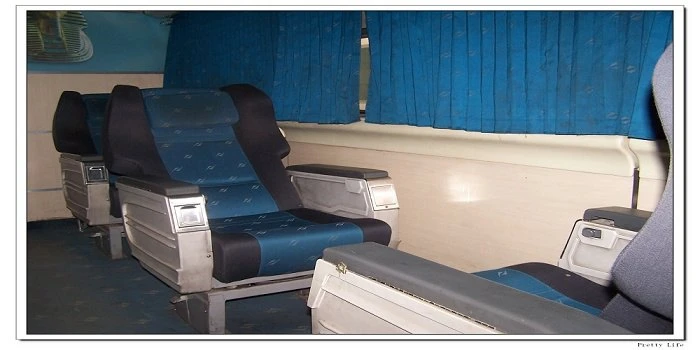
Sold to foreigners are sleeper trains and first or second class carriages on regular trains. For short distances, I think second class is sufficient, because it's not much different from first class, and the price is lower. In first class, the aisle is in the middle, with two seats on one side and one on the other. In second class, there are two seats on each side, slightly smaller. The seat direction can be adjusted.
Cairo to Luxor or Aswan, or the return trip, costs 60 USD per person, with upper and lower berths in a small compartment. Although there is a washbasin, the water flow is like a worm—it's useless and takes up space. The toilet is shared but fairly clean. Meals include dinner and breakfast. The berths are wider than Chinese train berths, relatively comfortable, but I still couldn't sleep well—I had back pain. Personally, the overall value is not high; 60 USD is too expensive! Better to take a plane—faster, cleaner, more comfortable, cheaper, and saves a lot of time.
Regular train tickets are printed on a hard piece of paper; the bottom line has numbers we can understand. From left to right: time, date, seat number, carriage number, train number. Also, the departure and destination stations in English. The platform number is not written on the ticket; you have to ask staff. In Luxor and Aswan, there are only two platform directions: one to Cairo, one to Aswan. Egypt's trains only run north-south, easy to identify. There are also platform signs, so don't worry; just confirm with staff upon arrival. Train delays are not uncommon; be mentally prepared.
When we went from Cairo to Alexandria, we couldn't buy tickets, so we boarded the second-class carriage and paid on the train, but there were no seats, so we stood for about three hours to Alexandria. Many people board first and pay later. If you're afraid of not knowing the situation, you can mingle with locals for courage. The fare paid on board is a bit higher than at the window.
Train stations have security checks. Tickets are checked after the train starts. The train number is not marked on the train itself; you can ask staff.
Security checks and photography:
Almost all scenic spots in Egypt have security checks, some strict, some lax. They say cameras are not allowed in the museum, but I brought mine in smoothly. I also saw people not only bringing cameras in but also taking photos secretly. In the Valley of the Kings tombs and inside temples, photography is forbidden. I took three photos secretly; two turned out okay, but I felt a bit guilty, so I couldn't take anything good.
The metro costs 1 LE per person flat rate, with two lines. The signs inside the metro are clear, so it's easy not to get lost. Of course, you can also ask locals for directions; Egyptians are very hospitable. It's best to ask women or men who look gentle—basically, ask people who seem more educated, and you'll get satisfactory answers. The first and second carriages are for women. It's best to have a bilingual metro map; you can ask me for one, or find it on the Egyptian metro website.
Egyptian taxis:
In most cities, the fare is generally 5 LE per ride. A bit further, 10 LE per ride; bargaining is necessary.
Many taxi drivers don't understand English, which is really annoying. Have the hotel's Arabic name card ready, and ideally Arabic names of all scenic spots and frequently visited places. Egyptians seem to have a habit of sharing taxis; if the first passenger doesn't mind, the driver may pick up other passengers. But if you insist it's not okay, the driver will make the others get off and apologize.
The word "Alibaba" I often heard in Egypt, and later I liked using it. It means something bad. For example, if an item is overpriced, you can say "Alibaba"—it's quite satisfying!
Arabic writing:
Before departure, I studied a few simple Arabic number words, which is very useful for traveling to Arab countries. You can buy quick-reference Arabic language books at bookstores.
Egyptians speak English with a bit of a lisp, making it a bit hard to understand. Anyway, my own English is not great, so we just managed to communicate.
Egyptian elevators:
Compared to those in China, Egyptian elevators are simply primitive—just a wire rope hoisting a doorless elevator up and down. Some have mesh doors; when reaching the desired floor, there is still a gap, and you have to step across. It's terrifying and gives a strong feeling of insecurity. The start and stop are very abrupt, with a weightless sensation. Scary!
Tipping in Egypt:
Egyptians love tips, which is really annoying. But during this trip, I basically didn't pay any tips. Of the eight boxes of cooling balm I brought, only one came back; the rest were given as tips. But we only gave them selectively, not to everyone who asked. Regarding tipping, you can decide for yourself; not everyone needs to be tipped.
Nightlife in Egypt:
This title doesn't refer to the usual activities, but to the strange fact that in every city, there are always countless people and cars on the roads every night, continuing until around 4 a.m. before it gets quieter. Rooms near the street are especially noisy—car horns, police sirens, Muslim broadcasts. I wonder: don't Egyptians need to sleep? Highly puzzled!
Public security in Egypt:
This is a country with strong religious beliefs; places with faith generally have good security, and Egypt is no exception. The public security here is very good, so don't worry.
The Egyptian people:
The vast majority of ordinary Egyptians are friendly, kind, and warm. When you need help, they mostly stop to help, especially those who speak English. During this trip, we received help from ordinary Egyptians many times without expecting anything in return, and we were very touched. For example, a passerby stopped to help us communicate with a taxi driver about where we wanted to go. Two female students pointed out the metro direction. An old man at a roadside stall showed us the correct direction to the hotel. On the train, a family who didn't speak English confirmed the train number and seats for us. In short, when you are in a foreign country, even a small favor that is trivial for locals makes you feel warm and grateful.
But I have to mention some people who specifically target tourists. After their smile, they always expect you to pay a considerable reward. Of course, it's fair to pay when we purchase their services, but when extra fees are repeatedly mentioned, it becomes unpleasant. Travelers should be cautious.
Receipts in Egypt:
Is it only China that has invoices? I never saw such things in India or Egypt—at most, they give receipts, i.e., white slips. I wonder how the Egyptian government collects taxes from these businesses.
Egyptian cuisine:
Food still has nothing to do with me, except for the roast chicken. Every day it's either bread or pizza or pasta. I don't like Egyptian spices very much. In some places, you do have to pay extra tax on meals, as rumored.
Urban traffic in Egypt:
Traffic jams are famous in Cairo. From our hotel room window, we could always see cars stuck in traffic all day. Egyptians drive aggressively but skillfully; they can squeeze through very tight gaps. Despite heavy traffic and high volume, accidents are rare. That's a bit magical.
Entry and exit in Egypt:
On entry, you fill out two forms: one for customs and one for immigration. There are separate forms for individual and group travelers; pay attention. Immigration checks are fairly simple; those with valid visas can pass smoothly. On exit, you fill out one form. You get the departure form and boarding pass from the check-in counter, and the staff will write the flight number on it.
The place we stayed was introduced by a man named Montaser. I had seen his name online before and knew he did business with Chinese tourists. So while waiting for our flight, I called him. He sent someone to pick us up at the airport and arranged a four-star hotel for 30 USD per night. The environment was nice; opening the door, there was a circular balcony with a beautiful view of the Nile within reach. The room decoration was decent. 30 USD was worth it.
At 5 p.m., we took a taxi to Karnak Temple. The fare was 10 LE each way. The taxi had no air conditioning—very hot. Admission was 50 LE. For water, 1.5 liters cost 4 LE per bottle; later we bought it for 3 LE per bottle, and by the time we got to Cairo, it was 2.5 LE.
Dinner was at the hotel: fried chicken cutlet set. The taste was okay, but the rice wasn't good. 36 LE (including service charge).
The next day, we chartered Montaser's car to the West Bank for 110 LE per car, with air conditioning, spacious and comfortable, a Toyota compact. When we saw many people chartering taxis without air conditioning, we felt the 110 pounds was well worth it.
The West Bank attractions are all under the blazing sun. Bring plenty of water, and don't forget your umbrella or hat. Valley of the Kings admission is 70 LE for three tombs; Tutankhamun's tomb costs an additional 100 LE. The small train is 4 LE per person round trip; tickets are sold at a separate window next to the ticket counter. Honestly, to my untrained eye, each tomb looks similar, so we just randomly picked three and skimmed through. Although we are not very interested in history and didn't study the selected tombs carefully, the exquisite murals were still amazing and stunning. Worth a visit.
Hatshepsut's Temple is magnificent, especially the large entrance passage and stairs, giving a strong sense of supreme power. Admission is 30 LE per person.
Lunch was at Pizza Hut. Prices were cheaper than in China. I piled up a lot of salad, but the dressing tasted strange.
Since Montaser couldn't book a cruise for us, we decided to take the train to Aswan that afternoon. First-class ticket: 40 LE. The train was delayed by more than an hour. On the platform, we met several groups of foreigners. In a foreign land, seeing other foreigners always feels heartwarming.
Montaser met us at the train station. Perhaps because he knew we really wanted to take the cruise, he was especially warm. He offered us a very good hotel for 20 USD, with a large window overlooking the beautiful Nile. The hotel environment and facilities were also excellent—great value for money. After we gave up on the cruise, we stayed there for two more nights.
Sailing on the Nile is a must for many tourists, and we were no exception. But it was my first time on a sailboat. When the wind was strong, the boat tilted a lot, and I was a bit scared. However, the scenery on the Nile was beautiful, and I took many good photos on the boat. The cost was 15 LE per person per hour. We booked two hours, but they made us get off early and asked for tips, which was annoying. We gave them two boxes of cooling balm.
Aswan's market is not big, near the train station. The goods are the usual: spices, scarves, belly dance accessories, etc. But the roast chicken was good—10 pounds each, pretty tasty. For us, who had been eating bread every day, it was simply heavenly. I craved it for a long time afterward.
To go to Abu Simbel, you have to join a tour, either short or long. The short tour does not go to Philae Temple, costing 50-55 LE per person; the long tour costs 60-65 LE per person. Departure at 3:30 a.m., assembly at 4 a.m., escorted by police. It's worth mentioning that the hotel's wake-up call was very different from China's. At 3 a.m., the phone rang, and a very gentle male voice said: "Get up, it's already three o'clock." Nothing like the robotic wake-up calls in Chinese hotels, which are unpleasant and can startle sleeping people.
The world-famous Abu Simbel attracts countless visitors. Admission is 80 LE per person, public toilet 1 LE per person. Stay time: 2 hours. After dropping passengers, the bus goes elsewhere to wait. At the agreed time, the driver drives to the parking lot. The site is crowded; it's hard to take photos without people in the frame. But you can go to the observation deck and use zoom to get a few better shots.
Philae Temple impressed me a lot—few people, beautiful scenery. Admission 40 LE per person. Boat ride: 5 LE per person round trip. Everyone in the car shares a boat. The car drops you at the entrance and then goes to the parking lot. Remember the car number; when you return, ask the staff at the entrance to call the car via walkie-talkie. After buying tickets and entering the site, a group of foreigners in our car were very slow and took forever to come in. We found a boat and were bargaining when we heard some bird language. An Egyptian fellow traveler volunteered to negotiate. The two shook hands like old friends (during this trip, I noticed this Egyptian loved shaking hands; he would shake hands with everyone he met, and for closer relationships, even touch noses. It made it seem like they were very familiar—surreal!). Watching them shake hands forever was frustrating. Why shake hands? Just settle the price! They chattered in bird language, then the Egyptian turned to us and said: 10 LE per person. I was shocked—the driver had told us it was only 5 LE per person. I thought having an Egyptian bargain might get us a better deal, but instead we ended up paying more! 5 LE extra! I looked around at the other group members; no one objected. Sigh, I couldn't refuse the Egyptian's face. Grudgingly, I picked the crummiest 20-pound note and gave it to him. Hmph, you win! It seems that sometimes, your own people can be tougher on you. This saying also applies in Egypt.
We didn't go to the Aswan High Dam; admission is 8 LE per person. Those not going wait at the entrance; the bus returns in 20 minutes.
The pizza at the shop in front of Aswan train station was okay, 16 LE enough for two. There are several cafes along the Nile offering casual dining and full meals. The taste is decent, and the environment is pleasant. If you need to kill time, you can go there. Prices are not too high, within acceptable range. We ordered two cups of tea (refillable), one pasta, two orders of French fries, one fried egg, and one serving of ketchup. Total: 32 LE (including service charge). The key point is that the environment is nice, with air conditioning, and you can pass the time waiting for the train. It's a good option. Because the sun in Aswan is so brutal; after checking out at noon with nowhere to go, it's miserable. Finding such a place is great. Our train to Cairo was at 6:20 p.m., costing 60 USD per person. I felt my heart bleeding...
Originally, we had budgeted for a three-night five-star cruise from Luxor to Aswan or vice versa. But the boat Montaser showed us was disappointing, so we decided not to take it, saving a lot of money.
After getting off the train in Cairo, we took the metro to Tahrir Square and found the Paris Hotel easily. That small, shabby hotel asked for 150 LE. The elevator was scary, the room had poor lighting, and the bathroom was tiny. We decided to find a better place. So we went to another hotel we had seen online. For the same price, the hotel environment was very nice, with large windows overlooking the view—which was actually Cairo's perpetual traffic jam. The bathroom was spacious, the room decoration was good, but breakfast was bad. The first room had a broken air conditioner; we changed to another, which was okay.
The Egyptian Museum is a must-visit. Admission is 50 LE per person. The exhibits are numerous and piled everywhere, as if they were free. We are the kind of people who don't appreciate antiques, so many exhibits looked ordinary to us. If these things were on a street stall, I probably wouldn't even glance at them. Sigh, that's me—uneducated and uncultured! The golden death mask is very eye-catching. The craftsmanship from thousands of years ago still dazzles today. Tutankhamun's face is very vivid, especially the lifelike eyes that seem to see into your soul. They are gentle but captivating. Staring at them for a long time gives a sense of time travel. The human-shaped coffins are magnificent, and the various ornaments look mostly heavy. Although they appear luxurious, honestly, they are not as delicate as ancient Chinese ornaments. But they are artifacts from thousands of years ago; their age and preservation alone give them immense value. In short, the collection of the Egyptian Museum is unmatched by ordinary countries. Many artifacts are placed in display cases, but those cases are locked with just a small padlock. I don't know if there is some trick, or if they have so many artifacts that they don't care. Outdoor exhibits are countless. I have little interest in history; in my hasty walk, I probably saw less than one ten-thousandth of the museum's holdings. But even so, we wandered for over two hours. You can get a glimpse of Egypt's vast history!
Visiting the Giza Pyramids is a must in Egypt. For comfort, we spent a lot to charter a Toyota sedan with air conditioning: 120 LE per car (note: this price is only for going to Giza; the other three older pyramids were not included. For all four, it would be 200 LE per car with air conditioning, or 120-150 LE without).
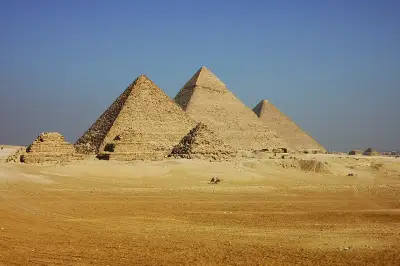
Giza Pyramids admission: 50 LE per person. Security checks require opening bags. Walking along the main avenue, you will see the pyramids of Khufu and others. Cairo's morning weather was awful, with poor visibility, so my photos were bad. I only started taking photos around 10 a.m. when the mist cleared a bit. The Sphinx is heavily weathered, but overall photos still look okay. The Egyptian government should better protect this human civilization. The ancient Egyptians preserved these monuments for thousands of years, but how long can modern people keep them? Perhaps in a few hundred years, people won't be able to see them, and they won't believe that Egypt was once so glorious thousands of years ago.
On the way back from Giza, we asked the driver to take us to the Saladin Citadel, just to see the Mosque of Muhammad Ali, which is said to have eternal lamps. Admission: 40 LE per person. Indeed, the mosque did not disappoint. I took many nice photos there.
Khan el-Khalili market: too many people made me dizzy. The market has many goods, but I couldn't find anything satisfactory because the quality was rough, the haggling difficult, and the crowds overwhelming. I didn't buy anything there.
Tahrir Square and the main train station are only two metro stops apart. Tahrir Square is a lively area; there is a KFC there, but the taste was average—not as good as in China. Rumor has it that they add a tax, but I paid the regular price.
Trains from Cairo to Alexandria run every hour, but seats are tight. I arrived at Ramses Station at 8 a.m. but couldn't get a 9 a.m. ticket; the earliest was 11 a.m. A couple of American tourists also couldn't get tickets, so we decided to board first and buy tickets onboard. But second class had no seats, so we stood all the way to our destination.
Because many Egyptians come to Alexandria, there seems to be no off-season. Hotels are hard to book; we tried several places but they were all full. Be prepared.
The hotel we stayed in also had a view from the window. Many hotels in Alexandria don't have air conditioning, but the Mediterranean breeze is cool enough to make it unnecessary.
Along the coastal road, there are many cafes and restaurants, including KFC, McDonald's, and Pizza Hut.
The Lighthouse ruins: admission 40 LE. It's just a castle inside; the lighthouse collapsed long ago. What a pity, but the scenic area is nice and worth a visit.
The Alexandria Library: admission 10 LE per person. It's no longer just a library; it's a tourist attraction. Many foreign tour groups visit. The interior is terraced and quite modern, with countless computers. With your ticket, you can use the internet for free for one hour. But I think the monitors should be replaced with LCDs; otherwise, people sitting in front get radiation from the computer behind. When I showed my photos, people thought it was a stock exchange. Sigh!
Self-guided travel in Egypt is a bit hard. Because of language issues, it might be even harder than India. Also, many things often exceed your experience, catching you off guard. The lack of order among Egyptians is headache-inducing—everyone rushes in a swarm. I was often defeated, but when in Rome, do as the Romans do. Leveraging my female advantage, I shamelessly cut in line many times.
In terms of preparation, you need to do more thorough research for Egypt than for other places. Before departure, I checked countless online resources and took along a lot of reference materials, which ensured a smooth trip.
Our itinerary was relatively relaxed, and the hotels we stayed in were a bit luxurious. My travel philosophy: when traveling, if conditions permit, I absolutely cannot let myself suffer.
But pain often accompanies joy—as they say, no pain, no gain. When I opened the curtains and the beauty of the Nile filled my eyes, all the hardships vanished.
When traveling abroad, especially in a completely unfamiliar place, others' help is very important. So, dear friends, when you see foreigners in China who need help, please extend a warm hand. A small effort from you can be a huge help to them.
Although we experienced a lot of fatigue in Egypt, it is still a country worth visiting. If you have the chance, please follow us into Egypt, into the depths of time...
Taiwan backpacker forums, Ctrip, Egypt train website, Egypt Air website, Cairo Airport website, Dubai Airport website, Chinese Embassy in Egypt website, Egypt tourism inquiry website, Alamun Forum, various Egypt travel websites
For more pictures and text, please visit:
(Train first class)
(Arabic license plate)
(Aswan market)
(Nile sailboat)