A Four-Day Self-Drive Trip to Yuncheng and Yongji During the 2020 National Day Holiday
A Four-Day Self-Drive Trip to Yuncheng and Yongji During the 2020 National Day Holiday
During the 2020 National Day Golden Week, everyone had been cooped up for far too long and was itching to get out and travel. But since we were bringing two octogenarian family members, and with lingering COVID concerns, we ruled out crowded, queue-filled trendy hotspots; ruled out scaling the heights of famous mountains and scenic wonders; and we couldn’t stay away too long — too much time away from their regular routine and bland diet would affect the elders’ health. In the end, we opted for Yuncheng and Yongji in Shanxi Province, places close to Xi’an, for a leisurely stroll and some tasty food.
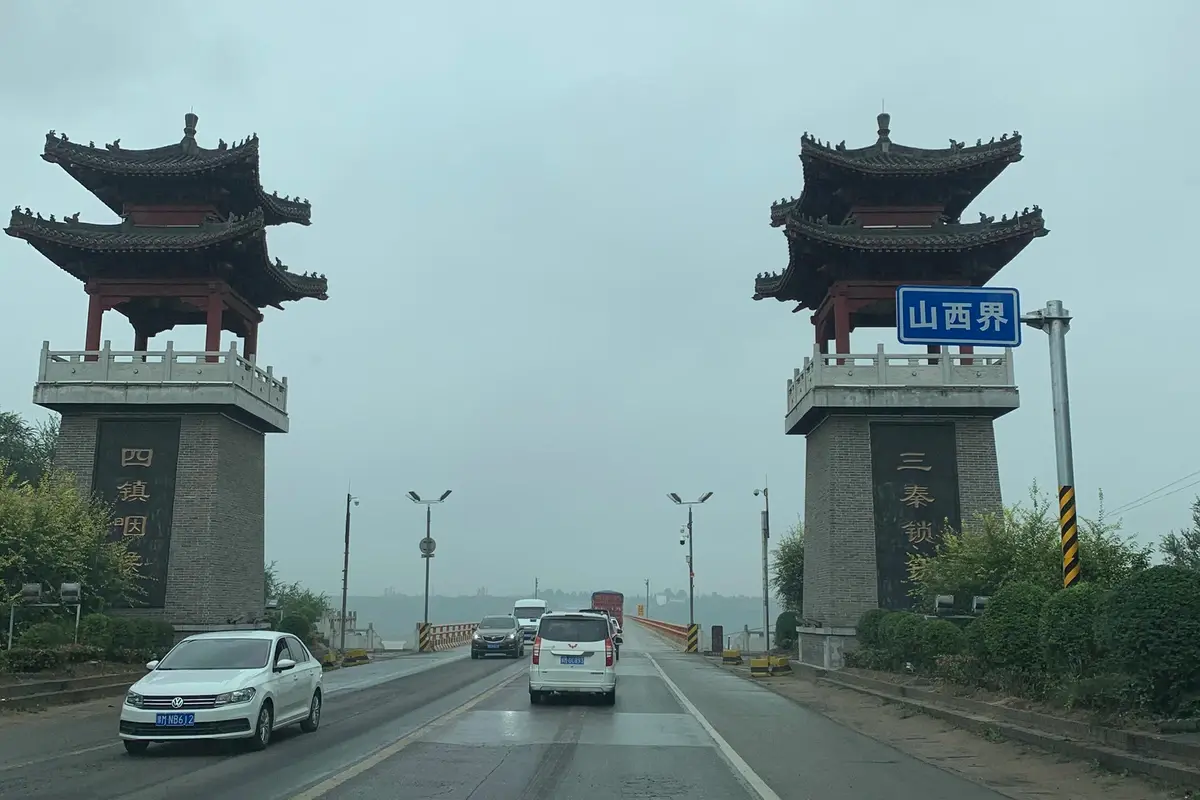
On the morning of October 3rd, we set off from Xi’an at 9 a.m. sharp. Via the Lianhuo Expressway and then the Yunfeng Expressway, we reached Yuncheng, Shanxi, in just over three hours — smooth traffic all the way. As we crossed the bridge at the Shaanxi-Shanxi border, we saw the yellow waters of the Yellow River…
The roads in Yuncheng were wide, with few vehicles or pedestrians. The weather, like Xi’an’s, was overcast, and occasional drizzle drifted down. The place felt a bit desolate, and my heart sank a little. I muttered to myself: Surely it’s not like this the whole time? How are we supposed to enjoy ourselves? Because we had to get the elders their meals on time, we quickly found a large restaurant. As soon as we stepped inside, we saw red lanterns hanging high and a buzz of conversation from groups of diners — finally a festive atmosphere, and my heart warmed up. We ordered kung fu fish, stewed soft cabbage, red-braised pork belly with spare ribs, honey-glazed sweet potato, and saozi shanyao mingedou (a local noodle dish). Since the temperature outside had been chilly, the elders had steaming bowls of shanyao mingedou and kept saying how delicious it was! This shanyao mingedou is like Shaanxi’s hui mashi — a hearty soup with vegetables, meat, and noodles. It really shows that “Shaanxi and Shanxi are one family,” with similar eating habits. The kung fu fish was actually red-braised Yellow River carp, stewed so tender that even the bones melted — the elders ate it with ease.
After lunch, we checked into our pre-booked Hanting Hotel. After a rest, we drove to the nearby Lanshangen · Yuncheng Impression. Built into the hillside, it covers a vast area and features a street of food and folk craft workshops, a horse-racing track, a children’s playground… and a large section of unfinished construction. Everything looked very familiar; it turns out it’s a tourism project co-developed with Shaanxi’s Yuanjia Village, a new leisure spot for Yuncheng locals. The elders enjoyed blowing a rooster-shaped sugar candy on the folk street; they were delighted and kept playing with it. But if you bring elders here, it’s best to bring a wheelchair, because the leisure area is huge and the terrain rises gradually — walking the whole way is just too tiring for them.
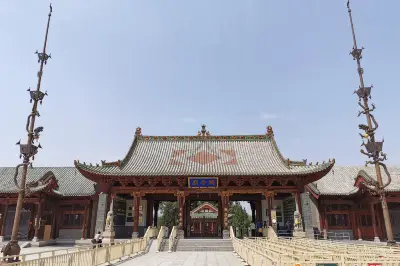
Because the elders are devout Buddhists, the next morning we headed to the Great Buddha Temple in Jixian County, north of Yuncheng. It took about an hour and forty minutes by car. The temple was first built in the second year of the Jin dynasty’s Huangtong era — 1142 AD — and now houses a large painted clay sculpture of the Buddha, 20 meters high and 6.8 meters wide, one of the foremost works of its kind in the country. Perched on high ground, the temple faces south, backed by a cliff. The gate is unassuming yet ancient and dignified. The weather today was clear and sunny, and the elders said it was the Buddha’s blessing!
The old folks slowly climbed the steps and paid their respects with great devotion. In front of the Mahavira Hall, a weathered couplet gave us pause for thought:
The first line: See it and do it, do it and let it go — when it’s gone, what is there to be undone?
The second line: Wisdom comes from awakening, awakening comes from freedom — life arises, yet there is no arising.
With wonder and musings, we left the temple and found a scissor-cut noodle restaurant for lunch. When in Shanxi, eat noodles! Ah, so scissor-cut noodles are basically “hui mashi” again… this time “lamb soup hui mashi.” After lunch, we bought local Jixian date — tiny, thin-skinned, plump, and very sweet. I’d never seen such small red dates before, but nowadays Xinjiang jujubes have conquered the whole country. Even in Xi’an it’s hard to find Shaanbei dates; it’s all Xinjiang ones. Full and content, our musings faded, and we prepared to head to the Li Family Compound. The biggest surprise and delight — and regret — of this trip was the Li Family Compound. From the Great Buddha Temple to the compound was just an hour’s drive, and the Hubao Expressway was nearly empty, road conditions excellent, the weather fine; my husband drove happily and relaxed.
Around 4 p.m. we reached the Li Family Compound parking lot. There were still plenty of cars, suggesting how busy it must have been during the day! I congratulated myself for not arriving earlier — and immediately had to eat my words. We bought two adult tickets for 120 yuan total and queued to enter the compound through its towering gatehouse.
This was my first visit to a Shanxi mansion. I had always heard about these famed compounds — Qiao Family Compound, Wang Family Compound. As soon as I entered the Li Family Compound, which is on a par with those, I was captivated by the architecture. Exquisite wood, stone, and brick carvings adorn every corner; the walls, courtyards, and garden walls are all meticulously crafted. Stories behind them were too many to take in, too many to see. Throughout, I had to support the elders in and out of courtyards, listen closely to the guide, touch the artifacts, and catch the late afternoon light on the buildings — so breathtakingly beautiful it swept me away. I had to hurry to snap photos and capture that perfect moment, breaking a sweat on this late autumn day... Just as we were fully engrossed, someone suddenly announced: “Visitors, we’re closing soon!” Oh my god, how could they be closing this early? It turns out the compound closes at 6 p.m., and at 5:30 they start hurrying visitors out. I looked back over my shoulder with every step, reluctantly leaving, gazing at the buildings bathed in the last rays of sunset, thinking: I’ll see you next time!
The plan for day three was to visit Pujiu Temple, the Yellow River Iron Oxen (Pujindu Site Museum), and Guanque Tower in Yongji — also the route back to Xi’an. These three sites are close together and usually toured in one go. Tickets for each were 60 yuan per person, parking 10 yuan per visit. We lingered longest and were most impressed by the four magnificent, sturdy, endearingly clumsy-looking iron oxen. Touching their dark, solid spines and looking into their innocent bell-sized eyes while listening to the guide, my thoughts drifted back over a thousand years to the flourishing Tang dynasty. The Pujin Iron Bridge and its great iron oxen, iron figures, iron mountains, and iron pillars were built with the might of the entire nation, using nearly four-fifths of the country’s iron output — how glorious they must have been! The bridge was the vital transport hub from the capital Chang’an to areas east of the Yellow River, and the salt and iron from He dong were indispensable resources for Chang’an. It must have been bustling with traffic. But times change, the sea becomes mulberry fields; the Yellow River flooded, changed course, and the great iron oxen were buried beneath its silt…
Pujiu Temple and Guanque Tower are both reconstructions. The overall environment is clean, orderly, and well managed. The Iron Oxen Museum, however, urgently needs improvements; the buildings and trees feel neglected, and the restroom conditions are terrible. The new Guanque Tower, built in Tang style, has four eaves and three stories, soaring 73.9 meters high. Climbing up for a distant view, I couldn’t help but recite that timeless poem: “The sun beyond the mountains glows; the Yellow River seawards flows. You can enjoy a grander sight, by climbing to a greater height!”
Not wanting my husband to drive late into the night, we stayed overnight at Fenglingdu. What an evocative, distinctive name! Situated at the junction of three provinces, with a unique location and convenient transport, it should be well developed by now — yet it felt as if time had stopped here, frozen in the 1980s or 90s. In town, there was an old vinegar workshop, still furnished with old-style wooden cabinets with glass fronts, clean and tidy, intensely nostalgic. It felt like returning to a shop from my childhood. The owner warmly invited us to see his vinegar-making workshop and let us taste his homemade white rice vinegar and lemon vinegar — both quite good, so we bought two barrels to take home.
Not far from Fenglingdu is the newly developed “Tongguan Yellow River Scenic Area.” Here we learned about the materials and methods used to build ancient city walls, visited the ruins of an anti-Japanese war blockhouse, ate Yellow River catfish and drank catfish soup, and bought Tongguan pickles — something the elders had yearned for decades. In those years of scarcity, the pickles from here were a delicious treat with rice. Standing by the Yellow River, one elder exclaimed, “This is the closest I’ve ever been to the Yellow River!” It made us chuckle, reminding us of a few years ago when we went mountain stargazing; the elder looked up at the star-filled sky and blurted a gem: “Wow, I haven’t seen the Big Dipper in eighty years!”
To sum up the experience of traveling with elders to Yuncheng and Yongji during the National Day holiday: bring extra clothes. It’s farther north than Xi’an, with a bigger temperature swing between day and night. The scenic areas are mostly open and windy, so it feels noticeably cooler than in Xi’an.
Our homeland’s landscapes are as lovely as paintings, and Chinese civilization is passed down from generation to generation. Every trip brings new experiences and new gains.