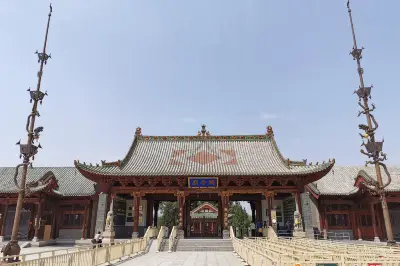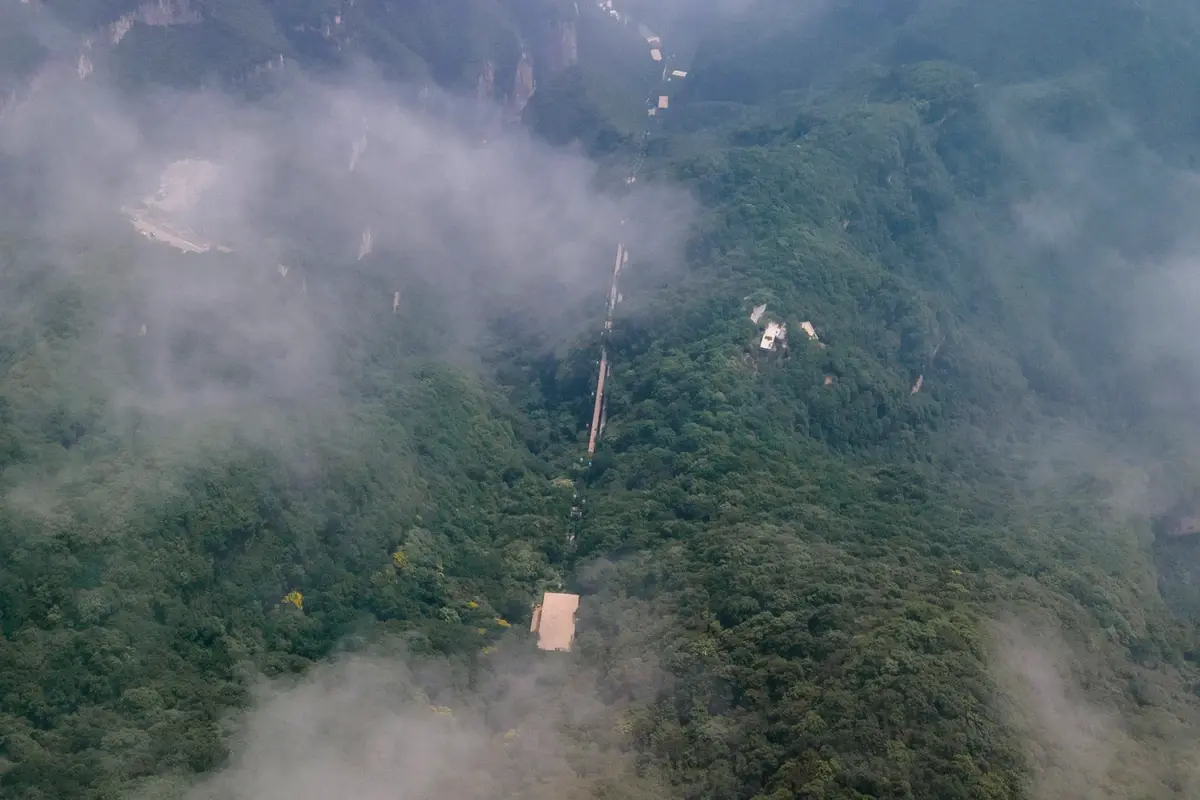
A Weekend Getaway to Shanxi: Discover a Hidden Gem with Breathtaking Wonders
"Xiangning's lofty ridges, the ancient Kunlun; southward they break off Lüliang, skirting the Fen River's edge."
[Yunqiu Mountain] is a picturesque paradise, an idyllic retreat with stunning natural scenery and rich cultural heritage—perfect for a leisurely escape. Many know the ancient city of Pingyao in Jinzhong, but few realize that in the neighboring southwestern Shanxi lies a hidden gem like Yunqiu Mountain in Linfen. As one of Shanxi's nine 5A-level scenic spots and the highest peak in southwestern Shanxi, Yunqiu Mountain's beauty truly reveals itself only after you've experienced it firsthand!
Yunqiu Mountain boasts abundant tourist resources and was developed quite early. It's not only convenient in transportation but also well-equipped with facilities. The mountain base is right off the highway, and for self-driving visitors coming from the surrounding area, it's just a dozen kilometers from the expressway exit to the scenic area entrance. Even for someone like me traveling all the way from Xi'an, it's only about two hours door to door. Visitors from farther away needn't worry either—Yunqiu Mountain sits right between Linfen Airport and Yuncheng Airport, and it's not far from the Houma West high-speed railway station or the Yuncheng high-speed rail station. Transportation is definitely not a concern.
The scenic Yuhuang Peak (Jade Emperor Peak) is the highest point in southwestern Shanxi and also the place where Laozi stayed during his wanderings across the land.
"Goji berries in beer, tonic soups before clubbing"—today's young urbanites live a paradoxical life, wanting to stay healthy on one hand while constantly hurting themselves on the other. So I took a long weekend off and came to Yunqiu Mountain for a wellness retreat. After all, the mountain boasts a forest coverage rate of 89% and a negative oxygen ion concentration of up to 25,000 per cubic centimeter. It's acclaimed as an "ultra-clean area, a natural oxygen bar, and a sanctuary for health"—an ideal place to dispel fatigue and cleanse the body of stale energy.
As the ancients said: "Live off the mountains or the seas, depending on where you dwell." Beyond the scenery, Yunqiu Mountain's cuisine is a highlight of any trip. The mountain's generous gifts allow you to enjoy healthy, sumptuous, and delicious meals in the forest. In particular, the handmade tofu and decorative flower buns are rare delicacies you simply can't get in the city. Many dishes may look very vegetarian, but the taste is superb. And the best part? The prices are incredibly reasonable—you can eat very well for about 40 yuan per person. The local prices are genuinely fair.
Accommodation in the mountains is equally excellent. While Yunqiu Mountain exudes an ethereal fairy-like atmosphere, its lodging standards can rival those of first-tier cities. This time I stayed at the [Kangjiaping Ancient Village Guesthouse]. When I first heard the name, I mistakenly thought it was a rustic farmhouse. Only upon arrival did I find it to be a high-end resort cluster. The standalone cottage I stayed in was actually designed and built by an American, blending classical and contemporary art in its decor—I absolutely loved it.
"Scenery like a painting, as idyllic as a hidden paradise"—that was my summary after my first visit. So, how should one explore Yunqiu Mountain? Read on and I'll share the details.
The scenic area is well planned so that you mostly don't have to backtrack, and you can cover all the highlights in two days. For office workers with only a weekend off, leaving Friday afternoon and returning Sunday evening is just perfect. This was exactly my itinerary:
D1: Xi'an – Linfen – Yunqiu Mountain – shuttle bus to Kangjiaping – check into guesthouse
D2: Back-mountain entrance – Yuhuang Peak cable car – Earth God Temple – Yuhuang Peak – Yuanyang Bridge – Yunqiu Mountain Ice Cave – shuttle to visitor center for a meal – shuttle back to Kangjiaping for the night
D3: Shuttle to front mountain – Ta'erpo Ancient Village – enjoy folk performances – visitor center – Houma West high-speed rail station – return trip
Travel is delightful but can also be tiring, especially the pre-trip planning and preparation, which is often the most exhausting and bothersome part. So I'd like to share my experience here in the hope that you'll have an even more enjoyable time when visiting Yunqiu Mountain.
1. Long sleeves and long pants: Although summer usually means heat across China, two situations in the mountains call for this gear. One is rainy or windy weather, which can cause temperatures to drop significantly. The other is the signature Ice Cave—if you're sensitive to cold, you can wear these to stay warm there.
2. Thermos: Mountain climbing consumes a lot of energy, and a thermos of hot water becomes very important. Sipping hot water when tired helps relieve fatigue and replenish lost fluids. Plus, the mountain air is cooler, so hot water helps fend off the chill.
3. Photography equipment: Yunqiu Mountain features expansive landscapes, so bring a wide-angle and a telephoto lens if possible. Aerial photography is also a must—the perspective from above is entirely different.
Everyone's needs and departure points differ, so I've tried to list the most commonly needed items. Suggestions for anything I've missed are welcome.
Mountain hiking is very energy-intensive, so good rest is the best guarantee of a great travel experience. In my opinion, Kangjiaping offers the best accommodation environment in all of Yunqiu Mountain.
Generally, Yunqiu Mountain can be divided into three parts: "ancient villages, stunning scenery, and ice caves." This time I first visited the back-mountain area, specifically [Kangjiaping Ancient Village]. This ancient settlement has a history of over a thousand years, embraced by green trees and a tranquil environment. Its unique rustic charm from Yunqiu Mountain, combined with old-style dwellings, makes it an excellent choice for both photography and experiencing local customs. Truly, every corner of the village is scenic. Walking here, it feels as if time slows down—ideal for enjoying a weekend.
The entire ancient village covers a vast area and takes a few hours to explore fully. At the village entrance there's a green lawn with camping tents and a large windmill, now a popular photo spot on social media. Don't miss it when you come!
Beyond these beautiful ancient village surroundings and folk culture, Kangjiaping also boasts the largest "guesthouse cluster" in Yunqiu Mountain and is even considered one of the better-developed areas for rustic lodging in all of Shanxi. There are many distinctive guesthouses to choose from. The room I stayed in was designed and built by an American, and the standalone cottage offered an excellent experience down to every little detail.
Importantly, transportation in Kangjiaping is very convenient. Scenic shuttle buses go directly from the visitor center to the village parking lot, so even if you're not staying here, as long as you've bought a ticket, you can get here quickly.
The thousand-year-old dwellings, themed guesthouses, rich folk culture, and beautiful natural scenery—these are what attract me to the ancient village of Kangjiaping. Walking through the narrow alleys between the houses gives a special feeling, as if stepping back through a millennium of history to savor the area's deep cultural heritage. And since it's located right at the mountain entrance, why not make the most of it, right?
As I mentioned earlier, [Yuhuang Peak] is the highest point in the Yunqiu Mountain scenic area and, together with the Ice Cave, is called one of the "two wonders of the mountain." Climbing Yuhuang Peak not only offers a panoramic view of Yunqiu Mountain's many sights but also gives you a high chance of witnessing a sea of clouds. The swirling mists sweep right through the pavilion at the top, giving visitors a sensation of walking on clouds—truly magical.
Yuhuang Peak sits over 1,600 meters above sea level. You can get up there by hiking or taking the cable car. The hike offers more varied scenery along the way, including cliffside boardwalks and a windmill trail, but it is indeed exhausting, especially for families with children or elderly members. So I highly recommend taking the cable car. This cable car takes just about ten minutes to whisk you right up to the area below Yuhuang Peak—very convenient and quick.
However, there is also a Zushi Peak cable car at the entrance, and the two are very close together. Be sure to check carefully when buying tickets and boarding to avoid going up the wrong peak. Remember, there's still quite a long walk from Zushi Peak to Yuhuang Peak!
The ride up passes through several mountain passes, and each ridge reveals a surprise vista. A trip on the cable car is a scenic journey in itself—great value!
After getting off the cable car, you still have to walk a few hundred meters on stone steps, but thanks to the lush forest, the walk isn't tiring at all. Instead, the cool breezes are very pleasant. Along the way you'll pass an Earth God Temple; if you're interested, you can stop by to pay respects—locals say it's quite efficacious.
Honestly, for urbanites in a sub-health state, moderate mountain climbing is excellent exercise, especially in a place like Yunqiu Mountain, where the negative oxygen ions are off the charts and the air is unbelievably fresh—definitely worth the walk.
Back to [Yuhuang Peak]: this pavilion structure sits atop the highest ridge of Yunqiu Mountain's Shenlong Ridge, at an altitude of 1,629 meters. The first thing you see upon arrival is a photo marker that reads, "You've walked 2,799 meters"—indicating the distance from the back-mountain path up. Of course, if you took the cable car like me, the actual distance covered on foot is much shorter. Below it, it says "Altitude 1,629m," which is the height of Yuhuang Peak. Whether you hiked up or took the cable car, since you're here, you've got to snap a commemorative photo, right? Ha ha!
The actual area of Yuhuang Peak isn't large, probably just a few hundred square meters in total. The central feature is this pavilion, which according to historical records was first built during the Song and Yuan dynasties, giving it a history of nearly a thousand years.
The structure has three floors and stands a flight of steps above the platform, likely symbolizing closeness to heaven in Taoist belief. Upon ascending, this indeed seems true: the first floor is living quarters for the resident Taoist priests; the second floor houses the Star Hall and the Beamless Hall, enshrining various celestial deities. You can see the incense offerings are quite abundant, with the burner outside constantly alight.
The highest point is the [Jade Emperor Pavilion]. Why highlight this? Because it is the absolute highest spot in all of Yunqiu Mountain. Aside from aerial photography, no other viewpoint offers such a panorama. Here you can truly experience the visual feast of "all other mountains dwarfed beneath your eyes."
In the distance, shrouded in mist, is Zushi Peak, the second-highest summit in Yunqiu Mountain. The aerial shot of Zushi Peak shows off its elegant architecture.
Moreover, the architectural artistry of the Jade Emperor Pavilion itself is exquisite. Surrounding it are white marble balustrades, and the flying eaves are carved with various intricate motifs in vibrant colors—truly beautiful to behold.
It happened to be the [Windmill Festival] at Yunqiu Mountain during my visit, so walking along the mountain trails, you'd see countless windmills of all sizes hanging along the path. The colorful windmills spinning in the breeze made for a lovely sight, lifting your spirits as you walk.
Even the walkways on the ground were painted in all sorts of colors—so cute and charming!
Of course, the most enchanting is still Yunqiu Mountain's natural scenery. Over the 1.6-kilometer trail between Yuhuang Peak and the Glass Bridge, you'll encounter a variety of natural landscapes. The mountain views are truly captivating, and I didn't feel tired at all; instead, I kept snapping photos with my camera! Ha ha ha!
There are many trails like this in Yunqiu Mountain, so if you have plenty of time, I'd personally suggest staying here for about a week, heading up the mountain each morning for a walk. It will surely refresh you and improve your health.
Yunqiu Mountain has many thrilling recreational activities, and [Yuanyang Bridge] is one of them. This glass skywalk, perched on the mountain's midsection, sits right between the two core attractions of Yuhuang Peak and the Ice Cave. Taking the glass bridge saves about 600 meters of mountain trail and leads directly to the Ice Cave area. A project that offers both scenery and energy savings is naturally popular, making it a famous hotspot in Yunqiu Mountain.
Many might not know that Yuanyang Bridge spans 219 meters in length and has a vertical height of 195 meters, making it the longest and highest [fully transparent high-altitude glass bridge] in Shanxi Province right now.
Yuanyang Bridge is suspended between two giant peaks of Yunqiu Mountain, with sheer cliffs on either side and a deep rift valley cutting through the middle. On a clear day, standing on the glass bridge, you can see all the way down into the gorge below, as if walking on air—very thrilling. But I prefer it when the mist rolls in: then the bridge seems to float among the clouds, like a "bridge in the sky," a truly magical experience.
Additionally, Yuanyang Bridge was built with top-notch technology, both domestic and international. The deck is broad and the structure stable, so every photo you take on it looks stunning.
Nearby, there's also a "cliff swing" that gives you a completely different feeling when you swing out. Thrill-seekers, don't miss it!
Among all the sights on my Yunqiu Mountain trip, perhaps none left a deeper impression than the [Yunqiu Mountain Ice Cave]. It truly felt like a "divine wonder"!
According to official information, the [Yunqiu Mountain Ice Cave Group] is one of the world's three great ice cave wonders and the largest natural ice cave group found in China so far. That means if you want to see ice caves in China, this is the best place to come, underscoring its high status in tourism.
The ice cave in Yunqiu Mountain belongs to the category of "geothermal negative anomaly ice caves with the most complex cooling mechanisms." To this day, no authoritative expert worldwide has been able to explain its formation, so many regard it as a "miracle." Actually, once you experience it yourself, you'll likely be as amazed as I was. Why? Because one second you're outside in over 30-degree heat, and the next you step into the ice cave and it's an extreme cold of minus 10 degrees Celsius. Such a drastic shift is truly incredible.
And the Yunqiu Mountain ice cave has ice 365 days a year, unlike some underground ice caves elsewhere that are seasonal. This makes the Yunqiu Mountain Ice Cave Group the natural ice cave with the most scientific and scenic value. Especially when visiting in summer, buying a themed ice pop and then cooling off inside the cave—it's pure bliss!
The ice cave group consists of 16 caves, and currently open is Yunqiu Mountain No. 1 Ice Cave Group. The walkable trail inside is 199 meters long in total. The widest point is 12 meters, the highest 15 meters, and the narrowest spot requires you to bend over and pass through single file. All four walls are covered in ice, with icicles, ice stalactites, and ice crystal flowers everywhere—a natural fairy tale world. There's no need for artificial embellishment; every snapshot looks enchantingly dreamlike.
Because the temperature inside the cave is extremely low, be sure to grab a free cup of hot tea provided by the scenic area when you exit—it'll warm you up and help prevent catching a cold.
After emerging from the ice cave, two more exciting activities await you right outside. The first is the [Zipline Glider]. Yunqiu Mountain's glider is the kind that's suspended on a rope, different from the ones you often see flying freely in the sky. As the first cable-suspended glider in North China, this zip line is 490 meters long and takes nearly a full minute to cross.
On this type of zipline, passengers are harnessed below the glider and slide down the cable at high speed—so you'll notice parachutes are used above for slowing down, which is a unique sight in itself. Thrill-lovers definitely shouldn't miss this.
About fifty meters below the glider landing point is another popular attraction, the [Dry Ski Slope]. Here, a colorful slide for snow tubes has been built on a slope. Thanks to its steep incline, fast speed, and vibrant good looks, it has won unanimous praise from visitors.
I stood there for about ten minutes and saw a continuous stream of people taking rides, one after another lined up to play—a testament to its popularity. What's more, the price is very affordable—only 30 yuan per ride. So I'm strongly recommending it to you here.
Below the rainbow slide there's also a [Water Zip Line]. This one stretches 220 meters; you swoop down from a height and skim over the water—very thrilling. And the landing point is where you catch the shuttle bus, so you save a bit of a walk. You get to have fun while saving time and energy.
Ta'erpo Ancient Village is located in the front mountain area of Yunqiu Mountain, spread out along a stream in a long, narrow strip. It's filled with all kinds of distinctive dwellings and covers a huge area overall. With its special folk wedding performances and blacksmith workshop experiences, it's incredibly engaging.
In particular, the village's over 60 ancient cave dwellings are hailed as a "living fossil of Shanxi residential architecture," and you'll need a good half-day to explore everything. It's no exaggeration to say that Ta'erpo Ancient Village is one of the most worthwhile stops in Yunqiu Mountain and even in the entire Linfen area.
The original residents have moved out, and now the village is staffed by professionally trained personnel, so you needn't have any concerns when visiting. The service professionalism is on point, including the guesthouse butlers—everything about the food, drink, entertainment, accommodation, and travel during your trip runs smoothly.
Another highlight is that dining in the village is genuinely very cheap. A bowl of congee costs only 3 yuan, a lotus leaf bun is also 3 yuan, and most snack prices are within 10 yuan. A few people sharing can eat very well for about 20 yuan each. Of course, if you want a big feast, it will be relatively pricier, like the special "Yunqiu Mountain Water Banquet," but even that costs only 108 yuan for a portion that easily feeds four. Keep in mind this is a 5A-level scenic spot and a thousand-year-old ancient village—isn't that a great deal?
There are also characteristic old dwellings, traditional tea houses, flower bun workshops, and other small photo-worthy spots. If you have time, I suggest strolling around at leisure: sip a bowl of special herbal tea, taste a time-honored flatbread, and try your hand at making a flower bun yourself. It will definitely be a memorable Shanxi experience.
Ta'erpo Ancient Village is indeed a wonderfully reasonable place to visit. Admission to the village is included in the Yunqiu Mountain main ticket. Currently, the Yunqiu Mountain scenic area is open with free admission, so you don't need to buy a separate ticket for here. Compared to paying just 20 yuan for a shuttle bus to explore this beautiful ancient village, isn't that fantastic?
On a trip to a rustic ancient village like this, besides admiring the architecture and sampling delicious food, the most important thing is to experience the "folk culture." So, when you come to Ta'erpo, there's one spectacular performance you must not miss: the daily afternoon [Ta'erpo Wedding Procession]. This immersive show brings the audience right into the story, letting you join in completing the wedding festivities. By participating, you gain a more direct understanding and experience of the folk customs of the Yunqiu Mountain area. It's wonderfully entertaining—you can feel the audience's appreciation from the continuous applause and cheers.
The wedding ceremony in Ta'erpo differs from other regions. The local unique worship of fertility culture gives rise to a one-of-a-kind marriage ritual. Watching the whole ceremony was both entertaining and educational. The performers depict a complete local wedding process, including not only the matchmaker escorting the bride and the emcee directing events but even a segment of parents giving advice—very realistic, giving it full marks. Brilliant!
As the saying goes, "among all instruments, the suona is king." In this show, you can also deeply appreciate the charm of traditional instruments. Besides excellent suona playing, the veteran artists on site perform on the erhu, guqin, and gongs and drums just as wonderfully. These traditional cultural elements make for a great experience and are definitely worth your time.
After the newlyweds are successfully escorted to the bridal chamber, there's the "chamber teasing" segment. Of course, this is not rowdy mischief but a ritual led by an elder following proper customs, which is very interesting to watch.
After everything concludes and you step outside, there will be singing and dancing performances in the square. I must say, these mountain folks are truly gifted. Although they haven't received formal vocal training, they possess natural, beautiful voices, and their folk songs are really delightful to listen to!
The short two-day trip came to an end here, but my fondness for [Yunqiu Mountain] has only just begun. This truly is a great place: beautiful mountains, beautiful waters, and beautiful people. Even though it's a 5A scenic spot, prices are low, the scenery is lovely, and transportation is convenient. The overall travel experience ranks among the top of Shanxi's many attractions. Although my schedule was very tight this time and I couldn't settle down to fully savor Yunqiu Mountain's charm, I'm still happy to give it a five-star review. I also hope that next time I can stay a few more days. That gives me a little regret and an excuse to return.
I love traveling and don't want a settled life to make me dull. Thank you, Yunqiu Mountain, for your wonderful scenery. Looking forward to our next encounter!
Travelogue Contents
1. About This Trip
2. Itinerary
3. Pre-Trip Preparations
4. Kangjiaping: The Unique Charm of Staying in a Thousand-Year-Old Village
5. Riding the Yuhuang Peak Cable Car: A Scenic Climb
6. Reaching Yuhuang Peak: Savoring the Grand View of All Mountains Below
7. Mountain Trails: Embracing Nature's Charm
8. Yuanyang Bridge: Thrills Amidst a Romantic Love Story
9. Yunqiu Mountain Ice Cave: A "Divine Wonder" Left by Nature
10. Recreational Activities: Thrills with a Scenic Backdrop
11. Mysterious Ta'erpo: An Ancient Village with Over 2,000 Years of History
12. Ta'erpo Wedding Culture Experience: Unique Folk Customs That Truly Impress
13. Farewell to Yunqiu Mountain: Until We Meet Again in Splendid Scenery
Travel Tips
Hotel Index
Guide Index
Flight Index
Site Navigation
Travel Index
Cruise Index
Corporate Travel Index
Partnerships
Affiliate Program
Friendly Links
Corporate Gift Cards
Insurance Agency
Agent Cooperation
Hotel Affiliates
Destination & Scenic Spot Cooperation
More Partnerships
About Ctrip
About Ctrip
Ctrip Highlights
Contact Us
Careers
User Agreement
Privacy Policy
Business License
Security Center
Ctrip Content Center
Intellectual Property
Trip.com Group Algorithm Disclosure