Guan Gong’s Hometown, Shanxi’s Fortune: Shanxi Daily Full-Page Feature on Yuncheng’s Glowing Cultural Relics and the Enchanting Eight Hedong Scenes
Shanxi Daily, September 8, 2022, Page 8
Yuncheng is a magical land. The Yellow River flows eastward from here, and it is the place first called “China.” Nestled in the bend of the Yellow River, Yuncheng, known in ancient times as “Hedong,” is a vital cradle of Chinese civilization. It boasts 102 nationally protected cultural heritage sites, ranking first among prefecture-level cities nationwide.
The beauty of Yuncheng also lies in its nature. The mighty forces of nature have endowed Yuncheng with unique gifts: the Zhongtiao Mountain Range stretches across the region, offering ever-changing scenery; the ancient salt lake extends for miles, shimmering in a rainbow of colors; the gentle slopes and fertile lands of Emei Ridge are fragrant with blossoms and fruits; the Yellow River moistens the entire territory, creating scenic spots everywhere.
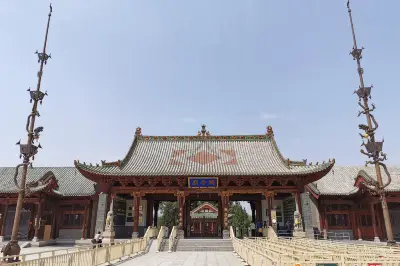
In recent years, Yuncheng has vigorously developed its cultural tourism industry, continuously advancing high-quality growth and building itself into a renowned travel destination. The rich natural resources and historical relics of the Hedong region are bursting with new vitality. On September 25, 2021, to boost cultural tourism, Yuncheng launched the “Eight Hedong Scenes” selection, focusing on classic natural and cultural landmarks. The final eight most representative scenes were: Salt Lake’s Dazzling Colors (Yuncheng Salt Lake), Ancestral Temple’s Soaring Dragon (Xiezhou Guandi Temple), Stork Tower’s Panoramic View (Stork Tower), Emperor Shun’s Cypresses in Gentle Breeze (Emperor Shun Mausoleum), Yongle Palace’s Chaoyuan Murals (Yongle Palace), Pujiu Temple’s Toad Echo (Pujiu Temple), Jade Pillar Peak among Rosy Clouds (Wulao Peak), and Xihoudu Sacred Fire (Xihoudu Site).
The concept of ‘Eight Scenes’ is a traditional Chinese convention for evaluating landscapes and a reflection of a region’s natural features and cultural heritage. The selection of the Eight Hedong Scenes is an innovative effort to infuse contemporary significance into outstanding traditional Chinese culture, showcasing Yuncheng’s profound cultural depth, promoting its abundant tourism resources, building development synergy, and enhancing the influence of all-for-one tourism in Yuncheng.
The “Eight Hedong Scenes” are treasured memories for Yuncheng people and must-visit destinations for travelers.
Morning glow reflects on the verdant ridges, the gentle landscape shifts like a painting. The salt lake transforms into a kaleidoscope of colors, a place of unique natural beauty since ancient times.
The Salt Lake’s seven colors stretch to the horizon, endless treasures converge in Hedong. Yuncheng Salt Lake, also known as “Gu Chi” (the character “盬” is a specific ancient term for this salt lake), is one of the world’s three major sodium sulfate inland salt lakes and has significantly influenced Chinese civilization. Algae and brine shrimp breeding in the lake cause the water to shift through a spectrum of hues—a giant palette overflowing with vibrant, saturated pigments in splendid variety.
Ancient cypress trees stand majestic with sweeping canopies, their emerald branches transforming into a green dragon. The martial temple that guards the people thrives in spring and autumn, its ancestral hall enduring through ages.
With loyal heart and courageous spirit, he aided the Shu Han kingdom; his sincerity and valor are recorded in heroic tales. Temples to Lord Guan are found across China, but the Guandi Temple in Xiezhou, Lord Guan’s hometown, is honored as the “Origin of Martial Temples.” In front of the Spring and Autumn Pavilion within the temple, the canopies of four cypress trees naturally intertwine, resembling a soaring green dragon. It is said that Lord Guan is the incarnation of a green dragon, and this natural spectacle at the ancestral temple echoes the legend, astonishing every visitor.
Climb high to look out from Stork Tower, where Yellow River waves surge like a painted scroll. To see a thousand miles of the vicissitudes below, the sunset clouds illuminate Shun’s ancient capital and the autumn splendor of Jin.
The sun beyond the mountains glows; the Yellow River seaward flows. You can enjoy a grander sight by climbing to a greater height. Stork Tower, famed for the poem “On the Stork Tower,” is renowned far and wide as one of China’s four great towers. It has always been a prime vantage point: standing in Shanxi and gazing toward Shaanxi, you see the graceful Zhongtiao Mountains ahead and the mighty river rushing below; at dawn, watch the sunrise over the eastern hills; at dusk, savor the crimson sky. If you wish to rise higher in life, you must ascend Yuncheng’s Stork Tower.
Ancient trees stand deep and dark, dragon-shaped cypresses rise straight; the forest of Shun’s mausoleum is lush and filled with wonders. The sage’s influence spreads like a gentle breeze after his passing, inspiring hopes for future generations’ success.
The millennia-old Emperor Shun Mausoleum, with its ancient cypresses, promotes virtue and filial piety. Located on Mingtiao Hill in the Yanhu District, the mausoleum features well-ordered architecture and shady greenery. Among the buildings grow groups of old cypresses, displaying fantastical shapes: naturally formed “Dragon Cypresses,” intertwined “Husband and Wife Cypresses,” and “Ancestor-Descendant Cypresses” where elders shelter the young. These ancient trees naturally embody Emperor Shun’s spirit of “virtuous rule for a thousand years, filial piety across the world.”
The Chaoyuan mural has been handed down through ages, with countless lifelike figures. Its masterful artistry radiates splendor, the palace mural’s colors vividly capturing the Daoist immortals.
Once they revered Lü Dongbin, and the mural remains intact today. The Yongle Palace murals are a treasure of ancient Chinese wall painting. The “Chaoyuan Tu” (Worshiping the Primeval Lord) in the Sanqing Hall is the most spectacular, portraying 290 Daoist deities paying homage to the Celestial Worthy of Primordial Beginning. The composition is grand, the brushwork vivid and expressive, the colors rich and brilliant; every figure is spirited, with no two expressions or postures alike. It represents the pinnacle of Yuan Dynasty Daoist mural art and is the largest ancient Chinese figure painting.
Sunset glow filters through dense shade, the lovely scenery creates an elegant realm. Stones tapped echo like toad calls far and wide, ripples of culture spread beside Yingying Pagoda.
May all lovers in the world be united. Pujiu Temple is where the famous tale “The Romance of the Western Chamber” took place, making the temple renowned worldwide. Its stupa, thanks to the story, is called Yingying Pagoda. The pagoda has a unique structure that creates an echo: when you strike a stone on the ground near it, a clear, melodious sound—like a frog’s croak—is reflected from the tower. “Pujiu’s Toad Sound” is one of Yongji’s ancient eight scenes. Visitors all tap stones below the pagoda to experience this marvelous echo.
Five elders became immortals, Jade Pillar Peak stands majestic, rosy clouds and mist stretch across the sky. Amid pine soughing, streams, and waterfalls, one lingers, recalling the legendary bestowal of the River Map and the Luo Writing upon emperors.
To the south, the Daoist Wulao Peak; to the north, the Buddhist Wutai Mountain. The scenic Wulao Peak in Yongji is named after the legend that five elders once taught the “Hetu” and “Luoshu” to ancient emperors here. Comprising five lofty peaks, it offers pine winds and cloud seas, cascading streams and waterfalls, bizarre rocks and crags—a new vista at every step. The main summit, Jade Pillar Peak, rises a thousand feet sheer, often wreathed in clouds and mist, its summit seeming to be lifted by rosy clouds, like a fairyland on earth.
The Xihoudu site carries the torch of civilization, the sacred fire passed down worldwide. Believing in the descendants of the dragon who opened pictorial realms, one traverses time to a brilliant landscape.
At wind-whipped Fengling Ferry, the Xihoudu sacred fire illuminates civilization. The Xihoudu Site is the oldest known Paleolithic site in China and the earliest evidence of human use of fire in the country. The sacred flame for the 2nd Youth Games of the People’s Republic of China was lit here. Today, the Xihoudu Site has been transformed into a Sacred Fire Park. It features a strikingly designed main space that brings in sunlight through a narrow “sky-light” opening, blending historical depth with modern design. It has become a trendy photo spot popular among visitors.