Spring Outing Along the Yellow River: A Journey Immersed in History and Culture – 2024 Qingming Festival Travelogue
At the intersection of mid-spring and late spring, the air was thick with spring’s embrace, and all living things burst with vibrant energy. Another Qingming Festival arrived, and I embarked on a 2,837-kilometer self-driving journey across three provinces—Shanxi, Henan, and Shaanxi—tracing the banks of the Yellow River, immersing myself in history and culture, admiring scenic and humanistic beauty, and capturing precious moments along the way.
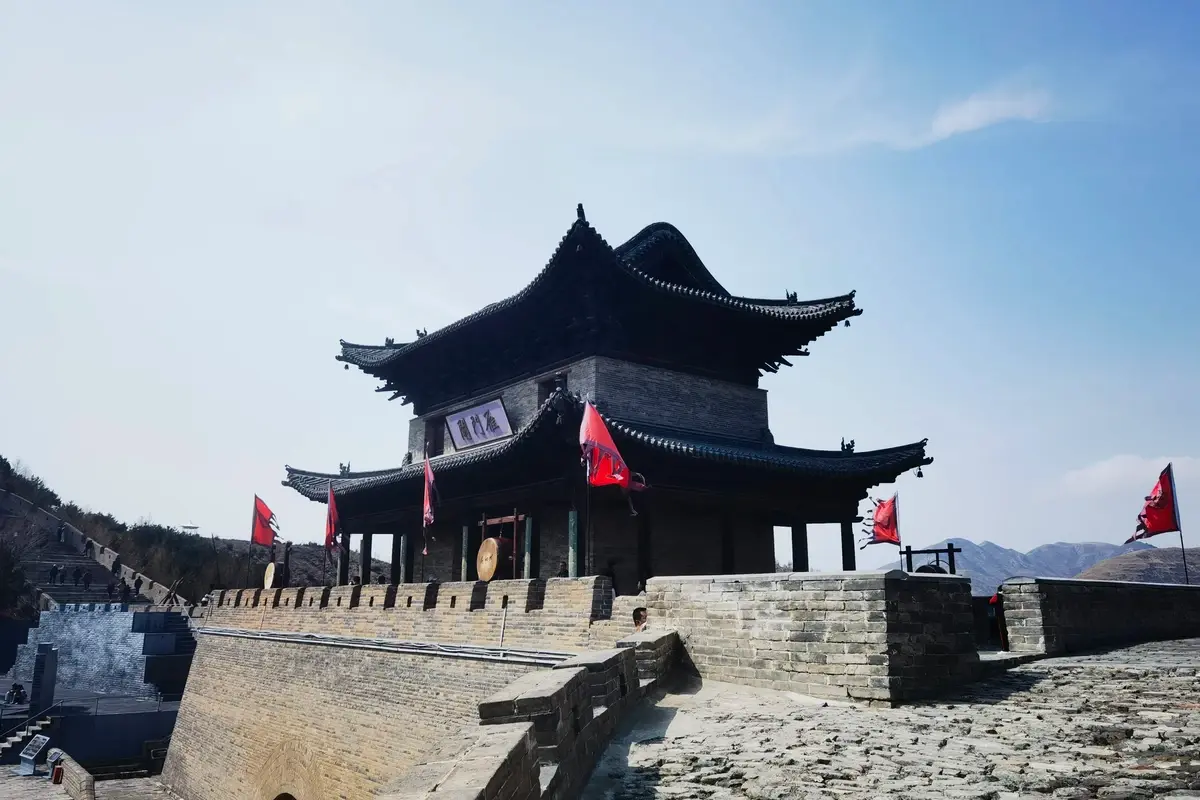
Day 1 (April 4). Departed Beijing at 6:45, driving along the G5 Beijing-Kunming Expressway, G95 Lailai Expressway, G18 Rongwu Expressway, G59 Linghe Expressway, G55 Erenhot-Guangzhou Expressway, and then onto the Er-Xian Line, covering 423.3 km in 5 hours and 35 minutes, with stops at Yixian and Lingqiu service areas. Arrived at Yanmen Pass in Xinzhou City, Shanxi Province, at 12:20. Renowned for its perilous terrain and hailed as the "Number One Pass under Heaven," it holds the saying, "Among the nine great passes, Yanmen Pass is the foremost." Together with Ningwu Pass and Pianguan Pass, it forms the "Three Outer Passes," and it is a crucial gateway along the Great Wall.
Departed Yanmen Pass at 14:50, driving along the G55 Erenhot-Guangzhou Expressway for 308.6 km in 4 hours and 30 minutes, with rest stops at Duncun, Taiyuan East, and Taigu service areas. Arrived in Wuxiang County, Changzhi City, Shanxi Province, at 19:20 and stayed overnight.
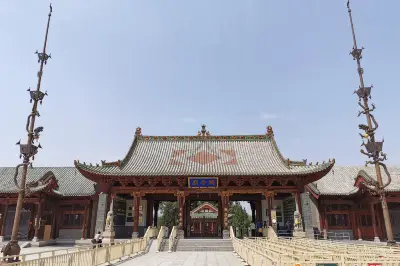
Day 2 (April 5). Set off at 9:30, driving along the G55 Erenhot-Guangzhou Expressway, Jincheng Ring Expressway, and G5512 Jincheng-Yuncheng Expressway for 208.7 km in 3 hours and 20 minutes, with stops at Xiangyuan and Gaoping service areas. Reached Jincheng City, Shanxi Province, at 12:50 to visit Guoyu Ancient City, a "Famous Historical and Cultural Village of China" and a castle-like settlement at the foot of the Taihang Mountains. Dubbed by the late master of ancient architecture Luo Zhewen as a "treasure of Chinese folk dwellings" and called the "Number One Village in China," it is a remarkable walled village.
A short walk of 300 meters from Guoyu Ancient City led to the House of the Huangcheng Chancellor, praised by experts as the "premier grand residence of cultural giants in northern China" and a rare castle-like official mansion complex from the Ming and Qing dynasties.
After the visit, departed at 15:50, driving 36.1 km in 50 minutes, and arrived in downtown Jincheng at 16:40 to stay overnight.
Day 3 (April 6). Left at 8:00, driving along the G55 Erenhot-Guangzhou Expressway and G3511 Heze-Baotou Expressway for 99.7 km in 1 hour and 46 minutes, stopping at Jiyuan South service area. Arrived in Jiyuan City, Henan Province, at 9:46 to visit Xiaolangdi of the Yellow River, honored as a "National Water Conservancy Scenic Area" and a "National AAAA-Level Tourist Attraction."
Departed Xiaolangdi at 11:05, taking the Jiyuan-Luoyang Expressway and G30 Lianyungang-Khorgas Expressway for 159.8 km in 2 hours and 20 minutes, with a stop at Mianchi West service area. Arrived in Sanmenxia City, Henan Province, at 13:25 to see the Sanmenxia Water Control Project on the middle-lower reaches of the Yellow River, the first large-scale water conservancy project built on the river after the founding of the People's Republic of China.
Left the Sanmenxia Water Control Project at 15:20, driving along the G30 Lianyungang-Khorgas Expressway, a ring expressway connector, and then the Third Ring Road for 256.7 km in 5 hours and 45 minutes, with stops at Lingbao and the Shaanxi-Henan border Lintong service areas. Arrived in Xi'an, Shaanxi Province, at 21:05. One of China's Four Great Ancient Capitals and also one of the world's Four Great Ancient Capitals, Xi'an boasts the greatest number and longest duration of dynastic capitals in Chinese history and is one of the most influential capital cities.
After checking into the hotel and taking a short rest, I walked to the Grand Tang Dynasty Ever-Bright City Pedestrian Street, a landmark of Xi'an and a large-scale Tang-style architectural complex centered around elements of Tang culture, the only one of its kind in the country.
Day 4 (April 7). Departed at 8:20, driving 49.9 km in 1 hour and 10 minutes, arriving at the Lintong District of Xi'an at 9:30 to visit the Mausoleum of the First Qin Emperor Terracotta Warriors, a UNESCO World Heritage site hailed as one of the "top ten rare treasures of ancient tombs worldwide" and known as the "Eighth Wonder of the World."
Left the Terracotta Warriors at 11:40, driving 9.5 km in 16 minutes, reaching the Lishan Scenic Area at 11:56 to explore the hills and scenery, and visit Huaqing Palace. Built against the slopes of Mount Li, this imperial retreat of Tang Dynasty emperors is a classical northern garden with over a thousand years of history, standing alongside the Summer Palace, Old Summer Palace, and Chengde Mountain Resort as one of China's Four Great Royal Gardens.
Headed back from Huaqing Palace at 14:08, but heavy expressway traffic congestion caused a 2-hour-15-minute return to downtown Xi'an.
As night fell, I ascended the Yongning Gate tower on the Xi'an City Wall and checked out the iconic Xi'an Bell Tower.
In the evening, at the Big Wild Goose Pagoda Cultural and Leisure Scenic Area, I enjoyed the colorful night lights and watched the grand musical fountain show.
Day 5 (April 8). Departed the hotel at 8:00, driving along the Xi'an Ring Expressway and G30 Lianyungang-Khorgas Expressway, then turning onto National Highway 521 for a total of 183.9 km in 2 hours and 30 minutes, with a stop at Huashan service area. Arrived in Yongji City, Yuncheng City, Shanxi Province, at 10:30 to visit the Stork Tower, one of the Four Great Towers of ancient China and the only Tang Dynasty-style building restored using Tang Dynasty colored painting techniques.
The Stork Tower is a high-platform cross-shaped hip-and-gable roof pavilion, divided into a base and the main tower body, reaching a total height of 73.9 meters—the tallest among the Four Great Towers—and is considered one of the most exquisite replica towers in China.
Departed Stork Tower at 11:45, driving 5.8 km via the Wan-Guan Line in 13 minutes to reach Pujiu Temple, the setting of the famous Chinese historical drama "Romance of the Western Chamber." Within the temple stands a square brick pagoda originally named the Sarira Stupa but commonly known as Yingying Pagoda. It is one of China's four surviving echo-architecture structures, alongside the Echo Wall of the Temple of Heaven in Beijing, Baolun Temple Pagoda in Henan, and the "Stone Qin" inside the Great Buddha Temple in Tongnan District, Chongqing. It is also counted among the world's six great pagodas, together with the Nodding Pagoda in Shan State, Myanmar; the Music Tower in Szolnok, Hungary; the Perfume Tower in Marrakech, Morocco; the Cloche Tower in Paris, France; and the Leaning Tower of Pisa in Italy.
Left Pujiu Temple at 12:50, driving 93.73 km via the Yuncheng and Hubei Expressways in 1 hour and 5 minutes, arriving in Wanrong County, Yuncheng City, at 13:55 to explore the Li Family Courtyard. Along with the Qiao Family Courtyard and the Wang Family Courtyard, it is known as one of the "Three Tilian Lotuses of Shanxi Merchants," with the saying: "The Qiao are known for fame, the Wang for their courtyards, and the Li for their charity." The overall architecture is a vertical-shaft, wealth-gathering Shanxi-style courtyard house, while also incorporating Anhui-style building features, blending the two distinctive northern and southern Chinese architectural styles. Some courtyards exhibit "Gothic" architectural elements.
Departed the Li Family Courtyard at 16:00, driving along the Hubei and G5 Beijing-Kunming Expressways, then onto Binhe West Road in Taiyuan, covering 391.7 km in 4 hours and 20 minutes, with stops at Linfen and Pingyao service areas. Arrived in Taiyuan City, Shanxi Province, at 20:20 and stayed overnight.
Day 6 (April 9). Set off at 8:30, first stopping at Ninghua Wang Fu Yiyuanqing to purchase aged vinegar, then drove 486.1 km along the G55 Erenhot-Guangzhou, G5 Beijing-Kunming, G20 Qingdao-Yinchuan, and G4 Beijing-Hong Kong-Macau Expressways, with breaks at Jingxing North, Wangdu, and Zhuozhou service areas. The journey took 7 hours, and I arrived home at 16:00.