Revisiting Shanxi (3)
After leaving Yongle Palace, we immediately rushed to the next stop, Guangrenwang Temple. According to the national cultural relics census, China has three and a half extant Tang Dynasty wooden structures, and three of them are in Shanxi. On our last trip to Wutai Mountain, we visited Nanchan Temple and Foguang Temple. This time in Ruicheng, we checked off the last one—Guangrenwang Temple.
It sits on a small hill in Longquan Village, not far from Yongle Palace, and was originally built by the village as a Dragon King Temple to pray for rain. Opposite it is a stage, three bays wide and three bays deep—from above, it looks like a perfectly square box. Compared with the two magnificent Tang Dynasty structures at Wutai Mountain, you'd hardly sense any Tang flavor here.
But it is indeed a Tang Dynasty building. Though its structure is simple, it has all the hallmarks of Tang architecture: the bracket sets (dougong) are roughly in a 1:2 proportion to the columns; the flat beams have forked struts; there are no pupaifang (tie beams), the lan'e (architrave) doesn't protrude, and there are no intermediary bracket sets between columns. Most importantly, behind the temple stands a stele inscribed with 'Record of Longquan' dated the third year of the Yuanhe era of the Tang Dynasty (AD 808), which fully documents the temple’s origin and construction process—a veritable birth certificate.
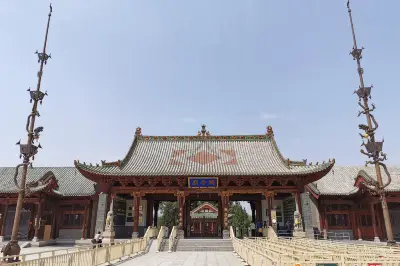
But this little temple is really tiny—less than fifteen minutes and we were done. After lunch, we went to the City God Temple (Chenghuang Miao). Inside, a local opera called Pu Opera was being performed, but sadly we couldn't understand it, so we went back to admiring the ancient architecture.
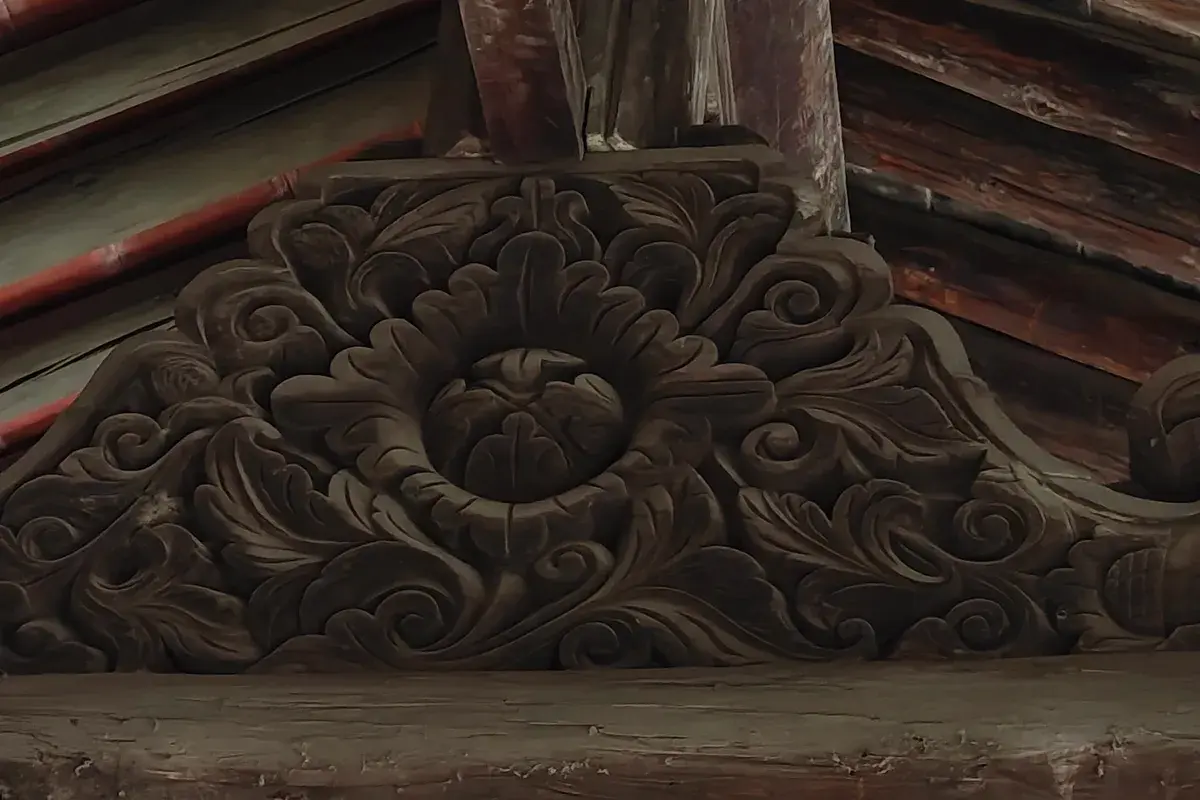
Seeing the massive beams, I could roughly guess this was a Yuan Dynasty structure, because only in the Yuan would they place raw logs so simply and directly, with some beams even irregular in shape. The murals inside the main hall were also from the Qing Dynasty. There were no barriers; you can get really close to admire them. I can only sigh: Shanxi's cultural relics are just too abundant. These Yuan Dynasty buildings and Qing Dynasty murals—if they were taken to Guangdong, they'd be worshipped as national treasures. But here, they're just left lying around, as if at a street stall, for you to pick and choose.