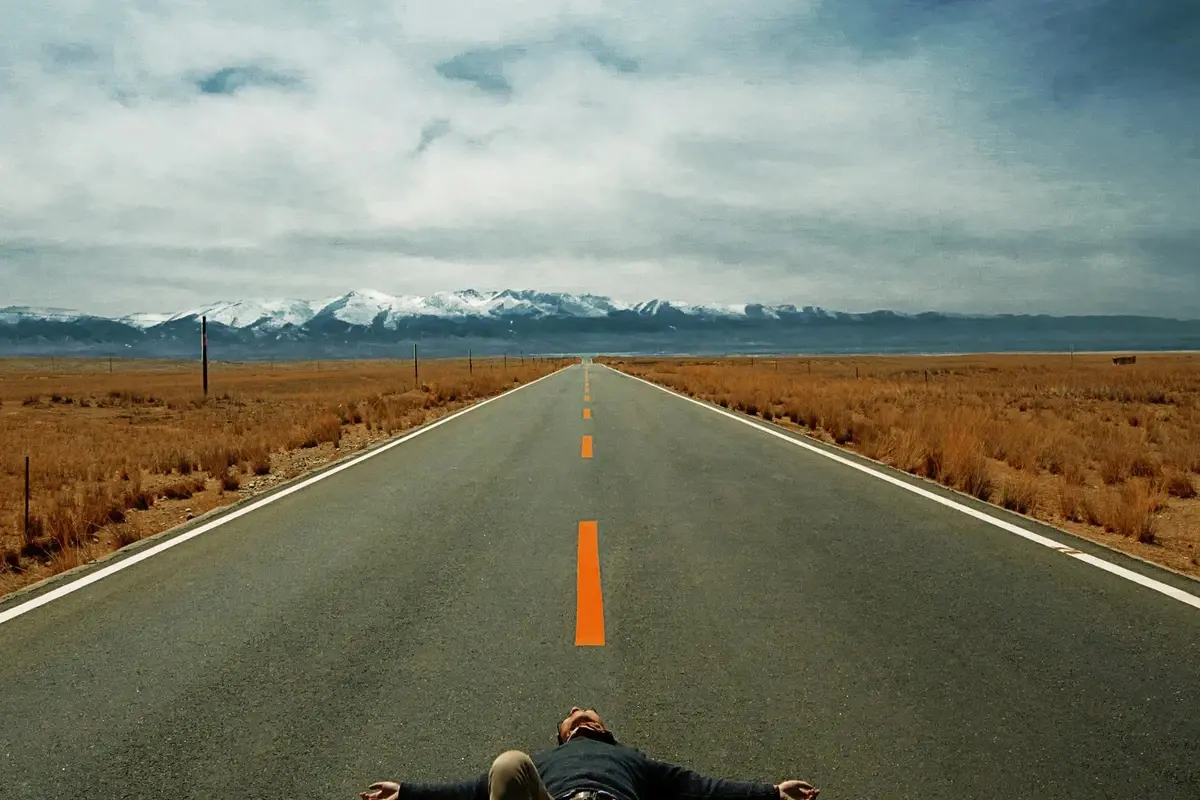
5-Day Joyful Trip to Dunhuang and Qinghai Lake NOCH_YANG
It hasn't been just a short while that I've been thinking about the Northwest. After brewing for over half a year, I finally seized the opportunity. Before departure, one should prepare all the basic essentials to bring. Secondly, various moisturizing products suitable for the local area are needed because the climate there is very dry. I went in April, and these days the sandstorms are severe, so friends who bring digital products must wrap them in plastic wrap when going out in Dunhuang, as the sand there is too fine. Whether in Dunhuang or Qinghai Lake, if you plan to stay overnight, be sure to bring thick clothes because the temperature difference between day and night can reach nearly 20 degrees Celsius. Friends who like my travel notes or photos can follow my Weibo: @NOCHYANG. Alright, let's go with me!
The plane ticket was booked a week ago, and I chose the flight from Chengdu to Dunhuang via Lanzhou. Since the flight stops at Lanzhou Zhongchuan Airport, I spent the whole morning on the plane.
Dunhuang International Youth Hostel has standard double rooms, quadruple rooms, and six-bed rooms. The standard room seems to be around ¥180, and the quadruple or six-bed rooms seem to be around ¥40-50. I have a poor memory. The hostel environment is acceptable, and the insulation is good, but the service attitude is a bit stingy. Anyway, you get what you pay for. Maybe if I stayed in a double room, the attitude might be better.
Mingsha Mountain is located at the northern foot of Mingsha Mountain, seven kilometers south of Dunhuang City, Gansu Province, covering an area of about 200 square kilometers. It starts from the top of the Mogao Caves in the east and connects to the Danghe Reservoir in the west. The entire mountain is made of fine rice-grained yellow sand. Mingsha Mountain has two peculiarities: if you slide down from the top, the sand under your feet will whir; the footprints left by people climbing the sand mountain during the day will disappear completely by the next day. Crescent Moon Spring, known as Shajing in ancient times and commonly called Yaoquan, has been one of the "Eight Scenic Spots of Dunhuang" since the Han Dynasty, earning the name "Moon Spring Dawn Clear." Crescent Moon Spring is nearly 100 meters long from north to south and about 25 meters wide from east to west. The spring is deeper in the east and shallower in the west, with a maximum depth of about 5 meters. It is shaped like a crescent moon, hence the name, and is known as the "No. 1 Spring in the Desert." Source: Baidu Baike. 120 yuan per person, half price of 60 yuan per person with a student ID.
After the sun set, we arrived at Dunhuang Villa, not far from the Mingsha Mountain scenic area. The hotel has a strong desert characteristics. Our group of six enjoyed a candlelight dinner on the city wall. There were seven courses in total, costing only 300 yuan with star-level treatment. Not bad. Even on a windy and sandy day, the night view of Dunhuang is still so beautiful. Under the moonlight, the distant Mingsha Mountain was faintly visible.
At Shazhou Night Market, the local mutton dry pot and sour lamb tripe are a bit expensive but very distinctive. Be sure to drink Apricot Peel Water, a specialty of Dunhuang.
At 12 noon, a minibus organized by Dunhuang International Youth Hostel departed for the western route attractions. There were more than fifty people, and the round-trip fare was 85 yuan per person. The route from Dunhuang city: Film and Television City (ticket ¥50) — Western Thousand Buddha Caves (ticket ¥30) — Yumen Pass and Han Great Wall (ticket ¥40) — Yardang Geological Park (ticket ¥70).
In addition to the film "Dunhuang," more than twenty Chinese and foreign films and TV dramas have been shot here, including "Fengshen Bang," "Fury of the Sword," "New Dragon Gate Inn," "Night Talk of Dunhuang," "Prince of Shazhou," "Mirage," etc. It has become a major tourist attraction in Dunhuang. The Dunhuang Ancient City is located on the south side of the road from Dunhuang to Yangguan. Source: Baidu Baike.
The Western Thousand Buddha Caves are named because they are located west of the Mogao Caves (commonly known as the Thousand Buddha Caves) in Dunhuang, about 35 kilometers from Dunhuang city. They were excavated on the cliffs of the Danghe River bank and are an important part of Dunhuang art. According to Dunhuang manuscripts stored in Paris, the excavation time of the Western Thousand Buddha Caves should be earlier than that of the Mogao Caves, or at least contemporaneous. Photography is not allowed inside the caves, so I only took a picture of the outer wall. Source: Baidu Baike.
Yumen Pass was established when Emperor Wu of Han opened the Western Regions road and set up the four commanderies of Hexi. It got its name because jade from the Western Regions was imported through this pass. During the Han Dynasty, it was the gateway to the Western Regions. The site is now in Xiaofangpan City, northwest of Dunhuang, Gansu. During the Yuanding or Yuanfeng period (116–105 BC), the Great Wall from Jiuquan to Yumen was built, and Yumen Pass was presumably established at the same time. Source: Baidu Baike.
In addition to the main line of the Han Great Wall from Jiandunzi to Mamitu in the northern part of Dunhuang, there are also branch lines from Yumen Pass to Yangguan, from Yangguan to Danghekou, and from Mamitu to Wanyandun. With over two thousand years of time and wind and sand erosion, part of the Great Wall has been leveled, but most of it remains. Among them, the section near Danggu Sui west of Yumen Pass is well-preserved, with a base width of 3 meters, a remaining height of 3 meters, and a top width of 1 meter. It is the best-preserved section of the Han Great Wall in China today. Source: Baidu Baike.
Dunhuang Yardang National Geopark is currently the largest, most maturely developed, and most ornamental yardang landform community in Asia. It is often called "Dunhuang Yardang Ghost City" or "Sanlongsha Yardang Group." The park is located 184 kilometers west of Dunhuang city, covering an area of 398 square kilometers. It is mainly a yardang landform formed by wind erosion. It belongs to the ancient Lop Nur area. Films such as "Hero," "The Legend of Tianyun," and "The Monkey King" were shot here. Source: Baidu Baike.
My companion from Mingsha Mountain, Dandan, treated us to free food and drinks at the bar she runs. She is very nice. After that night, I knew she is a true wanderer who travels for the sake of traveling (let's use this term for now). Friends going to Dunhuang must visit her bar. It has a unique style and character. Address: Dunhuang Shazhou Night Market Pedestrian Street.
Mogao Caves, commonly known as the Thousand Buddha Caves, are hailed as one of the most valuable cultural discoveries of the 20th century. Located in Dunhuang at the western end of the Hexi Corridor, they are famous for their exquisite murals and sculptures. They were first built during the Former Qin period of the Sixteen Kingdoms and underwent construction through the Sixteen Kingdoms, Northern Dynasties, Sui, Tang, Five Dynasties, Western Xia, Yuan, and other dynasties, forming a huge scale. There are 492 existing caves, 45,000 square meters of murals, and 2,415 painted clay sculptures, making it the largest and richest Buddhist art sanctuary in the world. The Library Cave discovered in modern times contains over 50,000 ancient artifacts, giving rise to the study of Dunhuang studies, which specializes in the scriptures and art of Dunhuang. Source: Baidu Baike. Visiting the Mogao Caves is absolutely necessary; the pinnacle of painting art and Buddhist civilization at that time are all expressed through various murals. It is the most recommended attraction in Dunhuang, where you can learn a great deal.
Since I didn't make it to the last bus from Dunhuang to Xining at 12 noon after visiting the Mogao Caves in the morning, I mustered up the courage to buy a train ticket from 7 pm to 9 am the next day (¥145) and it was "hard seat." There were many Muslims and Xinjiang people on the train. I felt that taking documentary-style photos on this train might cause public anger, so I put away my camera. Sitting opposite me was a dark-skinned uncle. Through casual chat, I learned that this "uncle" was actually only in his early thirties, a dark-skinned guy from Lanzhou doing small business in Dunhuang. He has a wife and two children at home. Perhaps life is hard, so he looks like he's around 40. I chatted with him for a long time. He looked dark and a bit fierce, but he was actually a simple and hardworking person. At 1 am, I finally couldn't bear the hard seat all night. After searching back and forth, I finally got a hard sleeper berth on the third attempt and paid the conductor (over ¥70). I spent my first night on a train with the clattering sound.
Xining Hengyu International Youth Hostel is right next to the famous Xining attraction "Ma Bufang's Former Residence." I bought a lower bunk in a four-bed room for ¥50.
After arriving at the Xining hostel, I met two friends, one from Shaanxi and one from Northeast China. Each of us contributed ¥200, total ¥600, to charter a car for a one-day small loop around the lake. The route passed through the Sun and Moon Pavilion, Erlang Sword, Sand Island, and Dangar Ancient City. Sun and Moon Pavilion costs 40 yuan per person to see two pavilions, which is really a rip-off. We didn't go; we could see them from the car. Along the way, Tibetan herders lead yaks for tourists to ride and sell things like wolf fangs. Don't buy them; you can bargain for yak rides under 10 yuan. As for wolf fangs, don't be fooled; they're mostly dog teeth.
In the picture, there is a thin, deep blue area that is Qinghai Lake. It looks close, but it's actually still 20-30 kilometers away. It felt like we were almost in heaven; I was so excited, so excited. When we reached the lakeshore, the driver said locals call this area Yilangjian because the scenery at Erlang Sword is no different, and Erlang Sword charges ¥100 for tickets. This place is right next to Erlang Sword but is a Tibetan area. The Tibetans also charge ¥50, but if someone can speak the local dialect, you can bargain down to ¥20 per person. Our driver could. The pier and that building are actually a WC, but the worst part is that the Tibetans not only charge money but also charge 2 yuan per visit. In the city, I could use the toilet four times for that amount. Ha ha.
Sand Island is located in the northeast part of Qinghai Lake, within Haiyan County. It is the largest island in the lake, quite like a crescent-shaped sand island. Sand Island is a major scenic spot in the Qinghai Lake National Key Scenic Area. It is formed by sandbars protruding from the water surface and accumulated by wind and sand, just like a crescent-shaped sand dune floating on the water, a major wonder in the lake. Source: Baidu Baike.
Dangar Ancient City was first built during the Hongwu period of the Ming Dynasty, with a history of over 600 years. Since the Western Han Dynasty, it gradually became an important town for the integration of business, military, religion, and folk culture. Source: Baidu Baike.
At 11 pm, I took a flight from Xining back to Chengdu. Tragically, I was too rushed because I had to go to work the next morning. This Northwest trip also came to an end. It's a pity I didn't go to Chaka Salt Lake. If nothing unexpected happens, I'll go to Qinghai again this summer vacation with many friends' hopes, during the season of rapeseed flowers, and wait at Chaka Salt Lake for rain. Why wait for rain? Google it. Hehe! Friends who like my travel notes or photos can follow my Weibo: @NOCHYANG


