Silk Road Splendor: An 8-Day Journey on the Gansu-Qinghai Loop
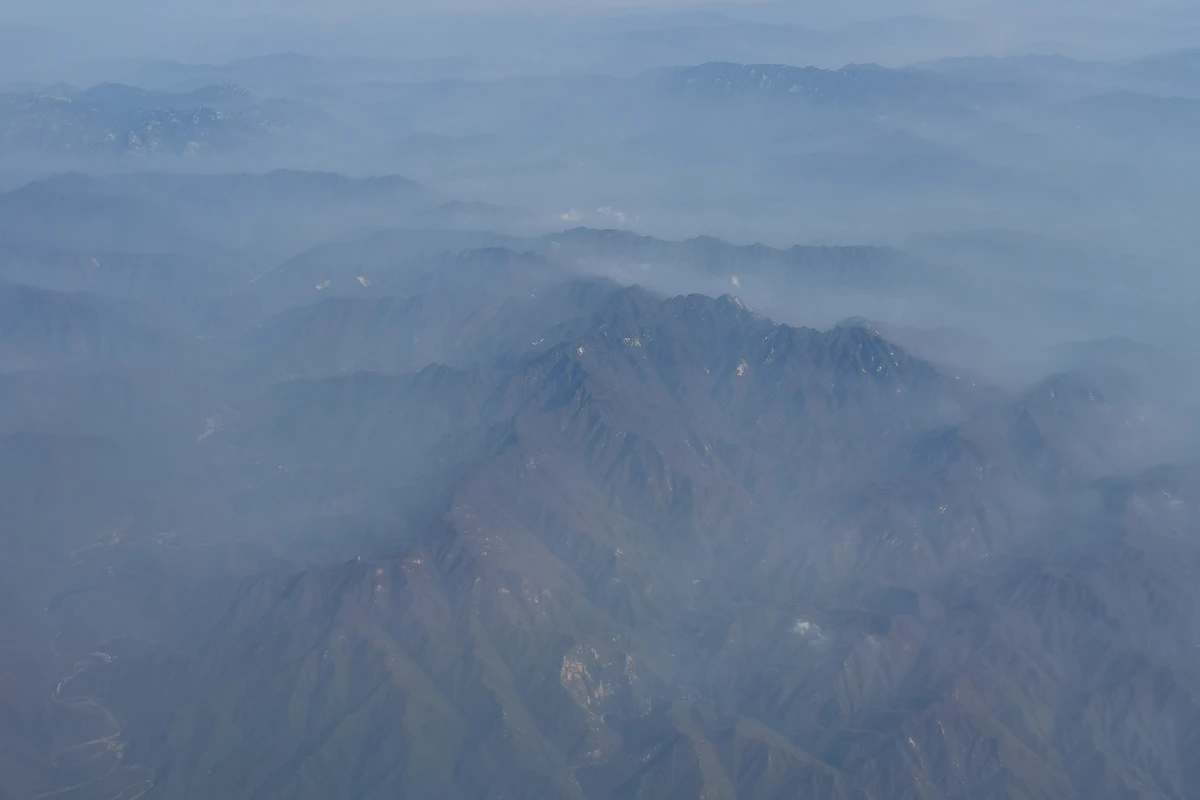
On April 9th, a few colleagues and I embarked on an eight-day journey along the Silk Road Splendor loop through Gansu and Qinghai provinces. We first gathered in Xiangyang and took a 9:20 am flight from Xiangyang to Lanzhou. Shortly after takeoff, through the window, I saw the undulating, lush green Qinling Mountains. Speaking of which, the mountains in our Jingmen area are also part of the Qinling range. After the plane passed Xi'an, through the white clouds we could see that the ground was mostly loess soil—yellowish-brown, largely devoid of vegetation, with exposed land carved into thousands of ravines by water erosion. There was little green and few lakes. At that moment, our feelings were completely different; it foreshadowed that the main color of our journey for the next week would be this yellowish-brown earth tone.
After nearly two hours of flight, we arrived at Lanzhou Zhongchuan Airport, which is over 2,000 meters above sea level. Upon reaching Lanzhou, we dropped our luggage at the hotel and went for lunch. We found a restaurant where the owner and staff were very enthusiastic. Our excitement for the trip was instantly ignited by the northwest-style lamb chops and braised pig trotters, and we couldn't help but drink a bit more alcohol.
Whenever I visit a new city, I always go to the local museum—it's the best way to quickly understand a city's past and future. I must say, the Gansu Provincial Museum has some real treasures. We saw the famous Bronze Flying Horse (Galloping Horse Treading on a Flying Swallow), which is also the symbol of China's tourism—a national treasure of course. This bronze galloping horse, robust and lifelike, has a bird or swallow beneath its hoof, but there are various opinions on what it is.
The pottery bottle with a human-shaped mouth is the cutest artifact in the museum. Made of fine red clay with black painted designs, the human-shaped mouth is vividly carved—neat bangs, hair reaching the neck, well-groomed, with a straight nose, small mouth, regular features, and small holes in the ears for hanging ornaments, like a girl in a floral dress, very adorable.
A glass lotus-shaped cup, like a blue water lily, caught my attention. It is also a national treasure of the Gansu Provincial Museum, dating back to the Yuan Dynasty. Some say it originated from Central Asia, others say it is a Chinese-style glassware made from Islamic glass materials. It is very small and exquisite, and I really wanted to take it home for tea. The Gansu Provincial Museum has so many treasures—red clay pottery, jade, bronze wares, etc.—that I won't list them all.
Leaving the museum, we immediately took a taxi to Lanzhou's popular photo spot—the Yellow River Iron Bridge. Standing on Baita Mountain at the bridgehead, we saw the Yellow River, rushing down from the Tibetan Plateau, flowing through Lanzhou city. The river is not wide but the current is swift, completely different from the Yangtze River in Hubei. The iron bridge over the river is very Western-style—a result of the Industrial Revolution brought by Europeans to China a century ago, and also a fruit of the Qing government's Westernization Movement. It was the first iron bridge built over the Yellow River. I think its completion must have had an indescribable impact on the minds of the backward and ignorant Chinese people at that time. A country can only progress if it is open, inclusive, and willing to learn. Now, China has become a construction powerhouse, building bridges and roads overseas.
The most famous scenic spot in Lanzhou city is Baita Mountain Park. At the top, there is a white pagoda, pure white, tall and elegant, somewhat distinctive, but the overall landscape of the park is ordinary, with difficult greenery, and its infrastructure management is not as good as Jingmen's Longquan Park, so I won't say more.
At night in Lanzhou, the air is filled with the smell of roasted lamb and beef, mixed with the fragrance of cumin. A local recommended we try a barbecue place called Nature Barbecue. At the entrance, a young barbecue chef was swaying his arms rhythmically to music, singing, while lamb skewers turned over charcoal fire, sizzling with oil—so tempting! Soon, the young man brought us lamb skewers, lamb kidneys, grilled leeks, etc. Biting into a lamb skewer, it was perfectly balanced between fat and lean, not greasy, not oily, not gamey—truly delicious. I couldn't control my inner excitement and ended up drinking a few more glasses. Alas! For someone trying to lose weight, this is a crime!
Because of the time difference, at six in the morning, there were not many people on the streets of Lanzhou. I went for a slow run to feel the rhythm of this ancient city. Buildings like the Lanzhou Railway Bureau and the Yellow River Theater passed before my eyes. Soon I reached Dongfanghong Square, which should be the center of Lanzhou. Department stores like Guofang and the towering Hongyun Jinmao building indicate that although it is not as prosperous as Beijing, Shanghai, Guangzhou, or Shenzhen, this central city in the northwest has a strong urban atmosphere. I didn't want to eat breakfast at the hotel. On my slow run back, I found a noodle shop called Ma'er Sa and ordered a bowl of beef noodles for 8 yuan. Seeing there weren't many beef pieces, I added a small bowl of beef for 9 yuan per 100 grams. That gave me the authentic Lanzhou flavor—the pulled noodles were chewy, the broth was savory, and the beef was pleasantly firm. Delicious!
At 7:30, we met our guide and driver and officially embarked on the Gansu-Qinghai loop tour. On a bus carrying over 30 people, there were travelers from Nanjing in Jiangsu, Zhejiang, Shandong, and Hunan—families with children, elderly couples, and friends traveling together.
On the first day, we were to cross the Daban Mountain Pass and reach Qilian County in Qinghai to visit Zhuor Mountain. Oh my! The drive was nearly 9 hours—a huge challenge physically and mentally. As the bus steadily moved forward, the scenery outside the window kept changing. Entering the high mountain area, the temperature dropped, and it started snowing. As the bus turned a corner, someone exclaimed: "Snow mountain!" I looked up and indeed saw a snow mountain! It was the first time in my life I saw a snow mountain—sacred and majestic. Along the way, we saw yaks, sheep, and Tibetan houses. Thanks to good government policies, they have been supported to settle down.
Finally, we reached the Daban Mountain Pass, which is 3,961 meters above sea level. We had some altitude sickness. The mountains on both sides and the road were already deeply covered in snow—a vast white expanse. We saw a reservoir frozen over, and a river turned into a white icy stream. Trucks, buses, and cars slowly spiraled along the mountain road, making us tense. However, our bus driver, Master Huo, is a local who is accustomed to such road conditions and is quite experienced. After nearly an hour of winding, we successfully crossed the Daban Mountain Pass. On the first day, we learned about the unpredictable weather and complex terrain of the northwest.
We finally made it to Zhuor Mountain in Qilian County. This has become a popular scenic spot on Douyin in the past two years, with snow mountains, forests, grasslands, and Danxia landforms—known as the "Little Switzerland of the East." I've never been to Switzerland, but I feel proud that our country has such diverse natural landscapes. We slowly climbed up along the wooden walkway, with broad views and changing scenery at every step—every casual shot was like a blockbuster. At this moment, I really didn't want to go home—just wanted to stay here as a cowherd, living an isolated life. Across the way, the Qilian snow mountains undulated continuously, especially the distant "king of mountains"—Amidongsuo Niuxin Mountain, sacred and majestic, like an old man with deep eyes silently watching us. Soon, the sky darkened and it began to snow heavily, with dark clouds immediately covering the old man's solemn and stern gaze. The weather here is really like a child's temper—changing in an instant!
We stayed overnight in Qilian County Town at the foot of Zhuor Mountain. This small town is not large, with clean and orderly streets. The permanent population is only about 20,000, including Han, Tibetan, Mongol, Hui, and other ethnic groups. In the evening, we strolled on the snow-covered streets and found a restaurant run by a Hui family. The young Hui man and his mother greeted us with warm smiles and were very hospitable. They recommended their specialty: large plate chicken. Indeed, when the large plate chicken was brought to the table, it almost took up the entire surface—very hearty. Although we couldn't drink alcohol out of respect for their customs, we still enjoyed our meal happily. Just as we finished eating, the young man's father returned. The old man was also friendly and chatted with us. He told us that his ancestors had always lived here, but his father worked in Xinjiang, so he grew up there too, and later returned to his hometown to marry and have children. He said this place is their root, and they could never leave. We were moved by this family's optimistic and warm attitude towards life. We wished them happiness and health!
On the morning of the 11th, we left the beautiful Qilian county town and, under the watch of the Qilian snow mountains, crossed the Hexi Corridor. The Hexi Corridor lies between the Qilian Mountains and the Heli Mountains, about 1,000 kilometers long, a flat alluvial plain running from northwest to southeast—a smooth road and the main passage from China's interior to the Western Regions. In ancient times, the Han envoy Zhang Qian traveled through this corridor to the Western Regions, was captured by the Xiongnu, forced into slavery, escaped several times, and continued westward to reach what is now Uzbekistan. He brought a broader vision to the Han Empire, opened the north-south routes from the Han Dynasty to the Western Regions, and established the famous "Silk Road." Thereafter, economic and cultural exchanges between the Han Dynasty and the Western Regions flourished: fine horses like the Tianma and blood-sweating horses were introduced to the Central Plains; grapes, walnuts, alfalfa, pomegranates, carrots, carpets, and gems were brought to the interior, enriching the economic life of the Han people. The Han introduced iron casting, canal digging, well drilling techniques, silk fabrics, and metal tools to the Western Regions, promoting their economic development. The Hexi Corridor became a corridor for economic, cultural, and political exchanges between China and the West, an influence that continues to this day.
While the vehicle stopped for refueling and a break, I walked into a roadside field to take a look. At this season, the farmland was still frozen, with ice, but the soil was fertile, nourished by snowmelt. Today, the Hexi Corridor is the granary of the northwest!
Soon we arrived at Zhangye City, an important node in the Hexi Corridor. According to the guide, the Zhangye Colorful Danxia Geopark is the city's tourism business card. It became known to the world because director Zhang Yimou filmed "A Simple Noodle Story" (Three Guns) and "The Great Wall" here. Zhang Yimou was originally a cinematographer, so he is very sensitive to colors. Indeed, the Colorful Danxia features red, yellow, white, green, and blue—red as fire, yellow as gold—with interwoven layers, steep cliffs, majestic scale, peculiar shapes, and brilliant colors—a masterpiece of nature, spectacular. We took a sightseeing bus and traveled through it, as if passing through burning flames. The red and yellow land had little vegetation; places once rarely visited by humans are now hot tourist spots—truly "living by the mountain." Unfortunately, the weather wasn't great today—it was overcast and gray. If we had come after rain and clear skies, it would have been a spectacular sight with intense colors!
After marveling at the amazing Danxia landforms, our next stop was the western end of the Hexi Corridor, also the westernmost starting point of the Great Wall—Jiayuguan. Six hundred years of Jiayuguan, weathered with age, stands solemnly facing the vast Gobi and the solemn Qilian Mountains, full of vicissitudes. The cavalry that once fought here, the merchants traveling north and south, have all faded away with time, leaving behind this solitary fortress.
"At a hundred feet, the stern pass marks the western sky; thousands of miles, the traveler stops his horse's tread." When Lin Zexu, convicted for banning opium, passed through Jiayuguan on his way to exile in Xinjiang, he wrote this poem. I believe his heart was complex and pained. Later, Zuo Zongtang, who served as the Governor-General of Shaanxi and Gansu, on his western campaign to Ili, revitalized the pass and inscribed the plaque "The First Grand Pass Under Heaven." At age 68, he ordered his soldiers to carry his coffin out of Jiayuguan, determined to fight and recover the western territories, writing the most significant chapter in China's modern territorial history.
At that time, the trend of world development had shifted to the West. The Qing Dynasty was beset with internal and external troubles. Lin Zexu and Zuo Zongtang were loyal to a dynasty that was already tottering. They could not rest easy; personal advancement or retreat, honor or disgrace, were no longer worth worrying about. Facing the surging tide of history, Lin Zexu, loyal and patriotic, and Zuo Zongtang, enthusiastic about Western affairs, could not save the crumbling dynasty. They watched as the distant drums and warhorses' neighs were swallowed by the torrent of global development.
Today, Jiayuguan is a modern industrial city. When I went for a morning run, I smelled the aroma of burning coking coal—strong and rich. It shows that this city of 200,000 people is not large, but industries like steel, chemicals, thermal power, and nuclear are developed. According to the guide, Jiayuguan's economy ranks second in Gansu Province, making it a sub-central city in the province.
Dunhuang is located at the mysterious westernmost end of the Hexi Corridor, with Yumen Pass, Yang Pass, and even more, the Mogao Caves—a spiritual and cultural sanctuary. Before coming, I imagined countless scenes and what surprises it would bring. Driving through tens of kilometers of Gobi desert, we finally reached the Mogao Caves in Dunhuang. This is a proud tourist attraction, with a daily limit of 6,000 visitors and strict cultural relic management regulations. Following the guide's instructions, we entered one cave after another, seeing exquisite murals and colorful clay Buddha statues in various poses. These murals and Buddha statues contain enormous information, revealing scenes of ancient people's lives and their spiritual outlook.
Historically, the Mogao Caves in Dunhuang were tragic: thousands of scrolls were looted, exquisite murals were damaged by foreign powers. Standing before the millennium-old Mogao Caves, we could vaguely sense the sadness of history. In 1900, the Taoist monk Wang Yuanlu discovered the "Library Cave," which contained over 40,000 manuscripts, documents, and artifacts. In 1907 and 1914, the British explorer Aurel Stein, upon hearing the news, twice plundered over 10,000 manuscripts and artifacts. In 1908, the Frenchman Paul Pelliot selected the finest manuscripts from the Library Cave, taking about 5,000 pieces. Later, Japanese, Russians, and Americans also plundered countless scriptures and artifacts. This was a tremendous cultural catastrophe. However, it is a great fortune that these scriptures and artifacts, though not in their motherland, have been properly preserved in foreign lands.
In the evening, the guide arranged for us to watch "Again Dunhuang," which once again broadened our horizons. Director Wang Chaoge's immersive performance brought us into the deeply buried history. Upon entering the venue, the first act had no seating; there were stages built in the middle and on both sides, allowing the audience to walk and watch in the gaps. The choreography and lighting effects were so visually striking that it felt as if we were in the midst of history, witnessing those glorious scenes firsthand! Under the staff's guidance, we entered a second venue for the second act, which mainly depicted Taoist Wang Yuanlu's actions regarding the Mogao Caves and his profound remorse. The third act took place in a small room, where several ladies, like reincarnations of the mural figures, dressed in red, with powdered faces, exuded charm. Finally, we entered the auditorium for the last act, which narrated the thousand-year history of the Mogao Caves and the Silk Road, along the storylines of related historical figures. The exquisite lighting and stage effects fully rendered the atmosphere, magnificent and grand, yet in an instant, we felt the vicissitudes of history.
A turn of the head spans a thousand years. One after another, figures and stories tell the long history and recount the rise and fall of Dunhuang. The graceful figures of the flying apsaras dance to the melody of history, singing the long song of Dunhuang's prosperity and decline.
The visual feast in Dunhuang left us thoroughly delighted. In the evening, the guide arranged another feast for our taste buds: a very characteristic Dunhuang desert roasted whole lamb. At a local farmhouse, the waiters brought the whole lamb to the table and began a very ceremonial lamb-opening ritual. The boss was truly eloquent, humorous, and witty, keeping all the diners eagerly waiting. The whole lamb was placed on a small wooden cart that could rotate. They spun the cart, and when the cart head stopped, whoever it pointed to had to drink three cups of auspicious wine. The lamb-opening ritual was simple and lively, bringing the atmosphere to a climax. Then the waiters cut the whole lamb into pieces for easy eating. The whole lamb was roasted in an earthen kiln over fruitwood branches for 3-4 hours, resulting in crispy skin, tender meat, not gamey or greasy, with a natural fruity aroma—truly delicious. The taste of this roasted whole lamb was completely different from the lamb skewers we had in Lanzhou a few days earlier. Due to geographical limitations, the roasted whole lamb in Jingmen could never have this flavor.
The Mingsha Mountain (Singing Sand Mountain) in Dunhuang is a scenic spot with a very immersive experience. We gave up riding camels and climbed the desert peak on foot. Although our legs were tired and our shoes were full of sand, we personally experienced the difficulty of traveling on the ancient Silk Road, and the feeling of helplessness and fear in the vast desert. At one corner of the desert, the Crescent Moon Spring (Yueyaquan) is small but extremely precious in the desert. The oasis formed around the spring is truly a life-saving haven for travelers in the desert. Water is so precious here. Silently, I wrote the word "Zhanghe" (a river near my hometown) on a sand dune.
Leaving Dunhuang, we embarked on the journey across the Qaidam Basin. The bus moved quietly through the arid desert over 3,000 meters above sea level. Outside the window, there was no sign of life. Under the blue sky, white clouds seemed closer to us. On both sides of the road, we only saw gravel, sandy soil, and a few low-lying meadows. Rows of wind turbines stood alone, turning. Tornadoes that appeared from time to time added a solemn, desolate, and oppressive atmosphere to this uninhabited area.
After enduring nearly 5 hours of crossing, we arrived at the online-famous spot—Dachaidan Emerald Lake. The movie "A Little Red Flower" was filmed here. This is an abandoned salt mining lake with pools of varying sizes, shapes, and depths. The high-concentration brine in the salt pools contains different mineral concentrations, creating a colorful emerald green scene under sunlight. Blue sky, white clouds, snow mountains, grasslands, and the emerald lake—all in view—my mood instantly brightened. Standing by the lake, I couldn't help but open my throat and shout, releasing all the emotions and unhappiness from my past life in that moment. I think this is why modern city dwellers love to come to the highlands to see snow mountains, grasslands, and ice lakes!
In the evening, we stayed in Delingha, the capital of the Haixi Mongolian and Tibetan Autonomous Prefecture. The poet Haizi's line "Sister, tonight I am in Delingha" adds a touch of artistic atmosphere to this city. Crossing the Olympic Square in Delingha, we saw a few Tibetan women dancing a Tibetan-style square dance. Their passionate and unrestrained dance moves had more artistic beauty than the square dances we have in the interior. A few Tibetan children were playing basketball, wearing only short sleeves in sub-zero temperatures, sweating profusely. This is a beautiful, peaceful, harmonious, and united small city.
Leaving Delingha, we hurried to the famous Chaka Salt Lake. Also an abandoned salt field, it unexpectedly became an internet-famous attraction. We didn't take the scenic train but chose to walk quietly along the lake. The weather was somewhat overcast, with a bit of wind, so there was no legendary reflection of the perfect mirror effect. However, the distant snow mountains and grasslands, the pure white salt crystals underfoot, and the seagulls flying before our eyes made us feel happy.
On the way to Qinghai Lake, we saw yaks up close—fierce-looking but calm and peaceful. We couldn't resist buying a few bags of dried yak meat from roadside vendors and put them in our luggage to share with family and friends back home.
Qinghai Lake, at an altitude of 3,196 meters, is truly large, worthy of being China's largest inland saltwater lake. Standing by the deep blue lake, it felt like being by the real sea—endless before our eyes. To the east, the sun and moon snow mountains were faintly visible. The wind was strong and cold, around 4°C. The lovely elves at the dock—seagulls—small but unyielding to the wind and waves, flew forward against the wind, commendable spirit. I was focusing on filming the little seagulls with my phone when suddenly a sandstorm swept in with huge waves, soaking me completely. Ha! After so many days of travel, I finally got drenched at Qinghai Lake. With my whole body freezing cold, I had to go back to the bus early to change clothes and rest.
The next day at 6:30, I got up and strolled by the lake. Lucky enough to catch the sunrise. The sun bravely jumped out between the snow mountains and dark clouds, instantly bathing the lake in golden light, shimmering with ripples—very spectacular. Even my cold face felt a little warmth. The sun rises, starting a new day; the sun sets, preparing for a new day to come—such a cycle.
Leaving Qinghai Lake, we headed to Xining to visit a famous Tibetan Buddhist monastery—Tar Temple (Kumbum Monastery). The temple has three treasures: butter sculptures, murals, and applique embroidery. Seeing them in person, they were truly spectacular, and I was moved by the devotion of the believers. Tar Temple has many taboos: no photography inside the halls, and women cannot wear skirts. We walked silently among the temple halls, watching Tibetan believers turn prayer wheels and prostrate in devotion. I cannot fully understand the significance of religion for people; I could only observe from the side, silently watching them, not disturbing them, and wishing them happiness and health, which I think is the most basic wish of all religions!
Leaving Tar Temple, this journey was about to end. We returned to Lanzhou Zhongchuan Airport, bid farewell to our guide Miss Yang and driver Master Huo. I must say that Miss Yang, beautiful and professional, was very dedicated. She arranged the entire trip very reasonably and shared a lot of knowledge about the northwest with us. It was evident that she loved her hometown very much, had read many books, and done her homework.
Sitting on the return flight, looking out the window at the yellowish-brown loess land, my mind raced with thoughts. By then, I had forgotten the fatigue of the journey and the altitude reaction. All the scenic spots along the way, the people and things from various places, passed before my eyes like film frames. The magnificent northwest, its long history, profound culture, and diverse ethnic customs brought us endless spiritual enjoyment. Snow mountains, grasslands, lakes, Gobi deserts, sand dunes, and other natural landscapes gave us a completely new visual experience. I marveled at the foresight and persistence of our ancestors, who did not allow this beautiful and fertile land to leave us. I felt deeply about our country's vast territory and abundant resources, with the northwest becoming a rear support for China's development. The ancient "Silk Road" proved in history that the more open, the more confident. Now the "Belt and Road" initiative will fill the northwest with hope, and this land where East and West meet will become even more prosperous and beautiful.
Back home, I couldn't wait to share the joy of the trip with my family. I told my son: Life requires traveling far; learn while journeying. In the future, I will take you to the northwest, to Xinjiang, to Tibet, to more distant places in our motherland.


