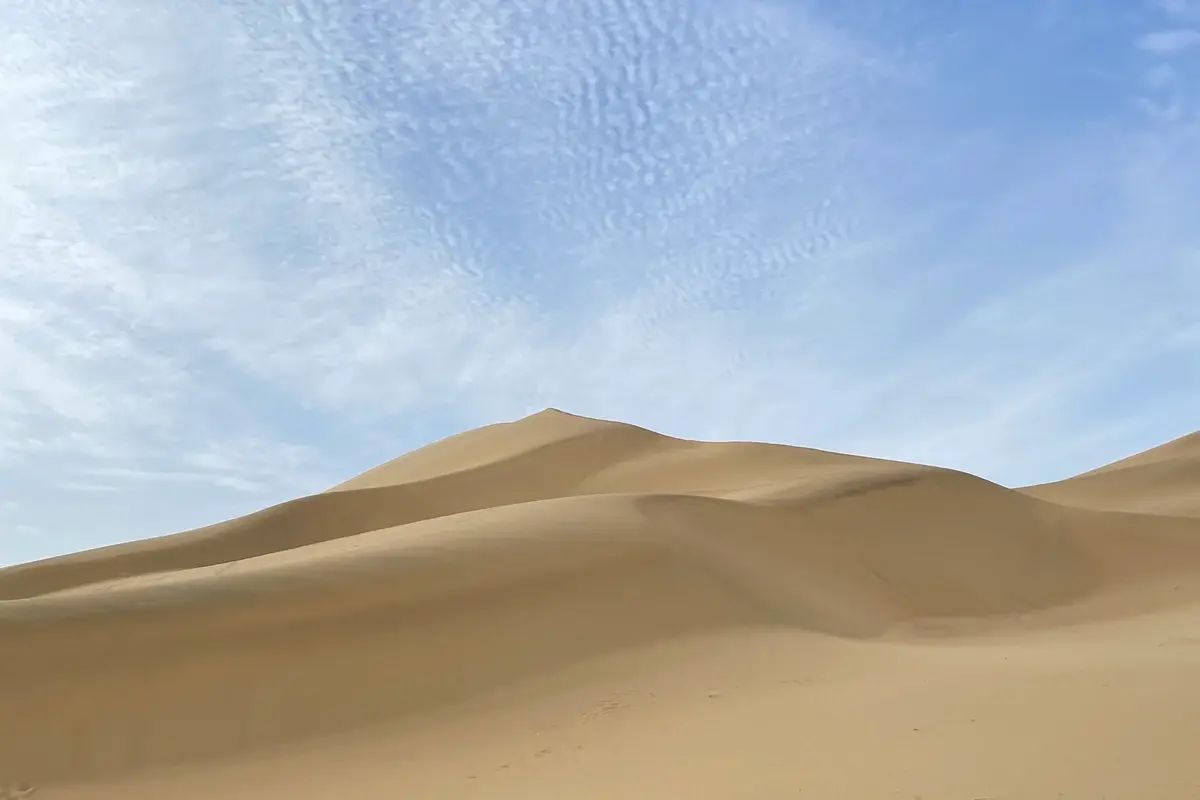
2022 My Mom and I's Journey to the Hexi Corridor: Gansu and Qinghai
DAY 1: From Chengdu North to Zhangye (15:50 - 10:27 the next day, K452)
DAY 2: Giant Buddha Temple, Rainbow Danxia, Ganzhou Night Market
DAY 3: Shandan Military Horse Farm, From Zhangye West to Jiayuguan South (18:10 - 19:46, D8891)
DAY 4: Fortress, Hanging Great Wall, Underground Valley Museum, First Pier under Heaven
DAY 5: From Jiayuguan to Dunhuang (01:49 - 05:54, Y667), Crescent Moon Spring, Desert Camping
DAY 6: Crescent Moon Spring, Mogao Caves, 'Again See Dunhuang' Show, Shazhou Night Market
DAY 7: Crescent Moon Spring, Dunhuang Museum, Fly from Dunhuang to Xining Caojiabu (19:44 - 20:55, Sichuan Airlines 3U8210)
DAY 8: Quanji River in Gangcha County, Salt Culture Museum, Chaka Salt Lake
DAY 9: Fly from Xining Caojiabu back to Chengdu (08:57 - 10:23, China Eastern MU2237)
DAY 1: July 7
Today we set off! After getting the nucleic acid test, we took the subway to Chengdu North Station. Chengdu was so hot! As soon as we stepped out, the heat was unbearable, over 40 degrees, and very humid. It was so hot and stuffy that our cat collapsed on the floor!
After 30 minutes on the subway, we arrived at Chengdu North Station. We bought soft sleeper tickets on a green train, departing at 15:50 and arriving at Zhangye Station the next day at 10:27!
I suggest everyone be careful when carrying luggage up and down stairs, as it's easy to scrape your ankle. My ankle got scraped by the suitcase!
DAY 2: July 8
We arrived at Zhangye around 10am, rested a bit at the hotel, had lunch, and then went to the Giant Buddha Temple. I recommend reading the book 'Hexi Corridor: Gansu' as it helps to better understand Gansu! (No photography allowed inside the hall).
I learned that the temple was built in 1098 AD and is a Buddhist holy site. The indoor reclining Buddha Nirvana statue is 34.5 meters long, painted in gold and colors, vivid and lifelike—it looks awake when you look at it, and as if it would sleep if you called. Behind the reclining Buddha are the Ten Great Disciples, and on both sides are the Eighteen Arhats. The sutra library houses over 6,000 volumes of Buddhist scriptures bestowed by Emperor Yingzong of Ming, some written in gold and silver powder, well preserved, and are rare treasures of Buddhism.
The Giant Buddha Temple was the state temple of the Western Xia Kingdom, built in the first year of the Yong'an era of Emperor Chongzong of Western Xia, which is 1098 AD, over 900 years ago. Its name has changed several times, once called 'Kashyapa Tathagata Temple', 'Baojue Temple', 'Hongren Temple', etc. Because of the famous indoor giant reclining Buddha statue, locals call it 'Reclining Buddha Temple' or 'Giant Buddha Temple'. It is one of the four remaining imperial temples in China and a national key cultural relic protection unit.
Although the temperature in Gansu was also over 30 degrees, it didn't feel as hot as Chengdu because the northwest is dry, so it still felt cool.
Lunch was pepper-mouth chicken, a large bowl containing pepper-mouth chicken, onions, and cold noodles, quite tasty.
After the Giant Buddha Temple, we took a 30-minute bus ride to the Rainbow Danxia. I learned that the Rainbow Danxia is located in Linze County and Sunan County, Zhangye City, Gansu Province, covering an area of 50 square kilometers. It is China's only area where Danxia landform and colorful hilly landscape are highly combined. The Rainbow Danxia is a 5A-level national tourist attraction and a UNESCO Global Geopark. It is one of 'China's Most Beautiful Seven Danxia', 'Unique, Dangerous, Exquisite, Beautiful as Painting – China's Six Most Extraordinary Landforms', and one of the 'World's Top Ten Magical Geographical Wonders', primarily formed by Cretaceous 'red beds' from 135 million to 65 million years ago, thick conglomerate and sandstone shaped by tectonic movements, water flow, and wind erosion.
In my eyes, nature's craftsmanship is breathtaking and magnificently beautiful! Finally, you can try the hot air balloon, though a bit expensive at 200 yuan per person. Looking far from high altitude gives a unique flavor!
In the northwest, it gets dark quite late. At past 8pm, the crimson sun was still leisurely wandering westward, riding on clouds turned orange-red, ready to rest below the mountain. Meanwhile, the mirror-like full moon had already been lifted into the sky by the distant blue mountains. At 9pm we went to Ganzhou Night Market, crowded with people. All kinds of snacks were delicious and not expensive. The only problem was when it was time to take a taxi back to the hotel, we found it impossible to get one. Mom and I had to hold hands and walk all the way back to the hotel.
DAY 3: July 9
In the morning, we took a bus for over two hours to reach Shandan Military Horse Farm, about 180 km from the city. It was founded in 121 BC by the Western Han Dynasty's Piaoqi General Huo Qubing, and has a history of over 2,140 years, making it the oldest single organization in the world. The farm covers an area of 2,195 square kilometers (slightly larger than two Hong Kong SARs), making it the oldest royal horse farm in the world, and once the largest in Asia and second largest in the world. After the dissolution of the Soviet Don River horse farm, it took the world's first place. Since its establishment in September 1949, Shandan Military Horse Farm was under military management for nearly 50 years. It is the largest horse breeding base in Asia and also a major grain, oil, and meat production base for our military.
In the second year of the Yuanshou era of Emperor Wu of Han (121 BC), General Huo Qubing led ten thousand cavalry out of Longxi, passed through Yanzhi Mountain and Hanyang (Damaying) Great Grassland, all the way to the west end of Qilian Mountains. He defeated the Xiongnu tribes occupying Yanzhi Mountain and Damaying Grassland. The defeated Xiongnu looked back and sang a poignant song: 'Lost my Qilian Mountains, my livestock no longer thrive; lost my Yanzhi Mountains, my women lose their color.' A contemporary poet described the Qilian Mountains: 'White snow for thousands of miles, bright moon in the sky; heart like ice in a jade pot, body like a guest in the Jade Pool; too lazy to attend the Queen Mother's feast, how to keep the appointment with Magu? Green Girl and White Lady, who can surpass their beauty?' Between the two mountains lies the Damaying Grassland, with blue sky and white snow, gentle breeze on the face, cattle and sheep moving, and horses galloping.
Here you can indeed see the scene of thousands of horses galloping, around 8am and 3-4pm. The endless prairie of the horse farm, sometimes flat, sometimes undulating, is incredibly beautiful. A camera simply cannot record what the eyes see. We rode horses galloping, fresh breezes with the scent of grass flowing across our faces, even plump marmots were mercilessly left behind. So we followed the Qilian Mountains, along the Luan Bird Lake all the way. We passed many Great Wall ruins and suddenly discovered a castle-like earthen structure. It turned out to be the Luan Bird City ruins. In 1968, when constructing the West River Reservoir in Yongchang County, a Han Dynasty city ruin was discovered, located at the western grassland Dahabatan Shangfang Zhai in Yongchang County, on the high terrace west of the reservoir, north of the Qilian snow peaks, south corresponding to Luan Bird Mountain, Luan Bird Gully, and Pingqiang Gully and ancient beacon towers. To the west is the Shandan Military Horse Farm within Yongchang County, to the north are two half gorges with misty clouds. This newly discovered ancient city ruin is about 70 km northeast of Yongchang County seat. The city walls have weathered over time, oriented from northwest to southeast, 220 meters long from north to south, 120 meters wide from east to west, built with rammed earth, layers 8-15 cm thick, remaining height 4-6 meters. The site has many ash layers and animal bones, unearthed artifacts include stone mortars, pottery jars, Wuzhu coins, bronze buttons, iron plows, and a large number of Han Dynasty remains. There is also a piece of iron bell fragment with inscriptions, heavily rusted and illegible. According to archaeological experts, this newly discovered Han city ruin matches most historical records and was identified as the site of the Han Luan Bird County ancient city. (I forgot to take photos!)
Oh yes, today we hired a private car to the horse farm. The driver was an uncle from Northeast China, very interesting. Along the way, he not only explained local customs but also chatted with Mom about life, the starry universe, stories of the Northeast, and his Douyin account. He talked about everything under the sun, very humorous and cute. Mom said we must help him promote!
Finally, I suggest everyone pay attention to sun protection. The back of my hand suffered because I forgot to apply sunscreen!
18:10 to 19:46, from Zhangye West to Jiayuguan South!
DAY 4: July 10
We set off at 8am, took a 15-minute bus ride to reach the Fortress. Jiayuguan Fortress is located 6 km southwest of Jiayuguan city center, in the narrowest part of the valley, on the highest terrain of Jiayuguan Mountain. The fortress walls extend across the desert and Gobi: north 8 km to the Hanging Great Wall on Black Mountain, south 7 km to the First Pier under Heaven. It is the western master of the Ming Great Wall, historically the first strategic pass of the Hexi Corridor. The fortress was first built in the 5th year of Hongwu era (1372) and took 168 years (1372-1539) to complete as a full pass. It is the most majestic and well-preserved among thousands of passes along the Ming Great Wall.
Standing on this great fortress, a sense of respect and strong national pride naturally arises.
Jiayuguan consists of inner and outer cities, known as 'The First Majestic Pass under Heaven'. It is located in northwest China, northwest Gansu, and central Hexi Corridor. East to Jiuquan Suzhou District, southeast 650 km to Lanzhou, northwest to Jiuquan Yumen City, northwest 650 km to Hami in Xinjiang, south against Qilian Mountains bordering Zhangye Sunan Yugur Autonomous County, north leaning on Black Mountain bordering Jiuquan Jinta County. The central part is the western edge of the Jiuquan oasis. Jiayuguan was a key point on the ancient Silk Road and the western starting point of the Ming Great Wall.
There is an internet-famous person inside the fortress. I couldn't miss the chance to join the fun. I queued, wrote my name, and he asked: 'Where are you from? What business do you have in the Western Regions?' After I answered, he wrote a 'Guanzhao' (passport). He has a special skill: no matter where the guest is from, he can speak with them in their hometown dialect.
After the fortress, we went to the Hanging Great Wall. It is located about 11 km from downtown Jiayuguan, about 7 km from Jiayuguan Fortress. Built on a ridge at about 45 degrees, it looks like hanging upside down in the air, hence the name 'Hanging Great Wall'. It is the northward extension of the Jiayuguan Fortress and an important part of the ancient military defense system. Built in the 18th year of Jiajing era (1539), it was made of gravel and loess found locally. Only 750 meters remain, restored by a local private party in 1987, consisting of pathways, crenellated walls, and watchtowers. Two more watchtowers were added at both ends, making three in total. The Hanging Great Wall is the last section of the Great Wall entering Jiayuguan, known as the end of the Great Wall. We climbed up quickly, reaching the top. On Black Mountain, many tourists had placed stones in various patterns, so I left my own stone pattern too. Can you see it?
The last stop was the Underground Valley Museum to see the 'First Pier under Heaven'. The Great Wall First Pier, also known as Taolai River Pier, is the southernmost watchtower of the western Great Wall of Jiayuguan, also the westernmost watchtower of the Ming Great Wall. It was supervised by Li Han, a military officer from Suzhou in the 18th year of Jiajing (1539), 7.5 km north of the fortress, standing on a cliff about 56 meters high by the Taolai River. Famous Great Wall expert Luo Zhewen once poetically praised its majesty: 'Jiayuguan, majestic and perilous beyond painting; watchtowers face each other from afar; Great Wall stretches connecting passes and mountains; even a monkey's arm would find it hard to climb.' Among the tens of thousands of watchtowers along the Ming Great Wall stretching over 10,000 li, the First Pier of Jiayuguan and the 'Old Dragon Head' at Shanhaiguan on the Bohai coast correspond to each other, forming the head and tail of the Chinese Great Wall 'dragon', earning the reputation of the Chinese nation's 'dragon'. Although the First Pier is now severely weathered, it played an extremely important role here, contributing to resisting the Xiongnu. Mom said history is far from us, but we must view it, understand it, and feel it with a historical perspective.
For lunch, we had beef noodles near the hotel. Special note: ordering a bowl of beef noodles usually only yields very few tiny beef particles. If you really want beef noodles, you need to order extra meat. Mom and I ordered a bowl of beef soup noodles with extra meat, dry-tossed cold noodles, and a small side dish. They were good. In the afternoon we rested at the hotel because we had to prepare for catching the train early the next morning. (Jiayuguan surprisingly has two Fantawild Theme Parks: one themed on Bear Brothers and one on the Silk Road. Reviews are decent. Kids with time and interest can check them out.)
DAY 5: July 11
Our train was supposed to depart at 01:49, but when we arrived a little after 1am, we found it delayed to around 3:10. Luckily our hotel was very close, so we went back for a nap. At 2:30 we went to the train station again and found the train delayed further to 4:18. So we waited in the station. The station was full of people, not feeling like midnight at all. I found a spot and continued watching my 'The Great Qin Empire', haha, not bad! Finally the train departed at 4:46. As soon as we got on, we fell asleep, not bothered by the rumbling of the train. We arrived at Dunhuang around 9am. After getting off, we waited in a long queue for nucleic acid tests, nearly an hour before leaving the station to the hotel. Continued sleeping at the hotel… Got up at 3pm to eat the lunch Mom ordered as delivery. Mom said accepting various changes during travel is one of the rewards of traveling.
At 4pm we took a taxi to Crescent Moon Spring. Mom always has a way. She took me through the market at the entrance and rented a set of 'Flying Apsaras' costume that satisfied me completely. After bargaining, we agreed on 150 yuan for two days' rental. Mingsha Mountain and Crescent Moon Spring are located 5 km south of Dunhuang city, covering an area of 3.12 million square kilometers, including Mingsha Mountain, which stretches over 40 km east-west, about 20 km north-south, with the main peak at 1715 m elevation. Crescent Moon Spring is surrounded by Mingsha Mountain. Main attractions include Crescent Moon Spring and Mingsha Mountain. Crescent Moon Spring gets its name because its shape resembles a crescent moon. Mingsha Mountain, 5 km south of Dunhuang, is named for the sound of sand moving. It is composed of flowing sand in five colors: red, yellow, green, white, and black.
In historical records and poems, Crescent Moon Spring has always been described as clear water rippling, fish swimming, and lush plants, complementing Mingsha Mountain. Locals talk about three treasures: iron-back fish, seven-star grass, and five-colored sand. Until 1960, the spring water didn't change much, with a maximum depth of 9 meters and a lake area of 22.5 mu (about 1.5 hectares). In the mid-1970s, local land reclamation and irrigation pumping, along with vegetation destruction in recent years, caused a sharp drop in Dunhuang's groundwater level, thus drastically lowering the water level of Crescent Moon Spring. The lowest water level was in 1985, when the average depth was only 0.7 to 0.8 meters. Due to lack of water, the spring bed became dry and walkable, and the spring formed two separate pools instead of a crescent shape. This raised concerns about whether Crescent Moon Spring would disappear. Since then, Dunhuang city has taken various measures to replenish the spring. From 2000, emergency measures were taken to divert river water to recharge the spring, temporarily saving it from drying up.
After changing into the costume, Mom and I toured the Crescent Moon Spring area briefly. The goal today was to understand the routes and activities. Since the ticket can be used for three days, we planned to enjoy it thoroughly the next two days. We needed to wait at the Crescent Moon Spring entrance at 6:30 pm for a ride to desert camping.
At the camping base, we quickly put on shoe covers, rode sand buggies to a location in the middle of the desert (specific name unknown), and joined a large group of people from all over the country. We rode sand buggies, sandboarded, watched the sunset, had a hotpot buffet, raised glasses together, and immersed ourselves in a small song-and-dance party. Finally, everyone circled a bonfire and watched fireworks… So much fun!!!
At 10 pm we returned to our tents to rest. Tonight, countless stars were dimmed by the bright full moon, truly 'the moon is bright and the stars are few'! Mom and I put on our jackets and took photos under the moonlight. Unfortunately, Mom's photography skills are not great; photos taken in moonlight and light were all blurry… The happy and fulfilling day ended when we lay down in our tent. Eagerly looking forward to tomorrow.
DAY 6: July 12
Woke up at 6am but missed the sunrise; it was already bright. Peeking out, the quiet desert was still waiting, and we were about to start a beautiful day!
We took a bus back to Crescent Moon Spring scenic area. Today I continued playing the 'Flying Apsaras'. The first activity was riding a camel: 100 yuan per person, 40-50 minutes. Each camel driver led a group of 7-8 passengers, each riding their own camel, forming a long line. Lines of camel caravans went up and down Mingsha Mountain, looking very spectacular from afar. The sound of camel bells was pleasant. It reminded me of a show I watched with Mom in Xi'an, 'Legend of the Camel Bell', about the hardships of ancient people traveling the Silk Road on camels. The camel driver offered photo services for a tip of 20 yuan per person, unlimited shots.
Do you know how Crescent Moon Spring was formed?
There are three explanations. First, it is considered a section of the ancient Danghe River. Many years ago, the Danghe River changed course, most of the ancient channel was buried by drifting sand. But because the Crescent Moon Spring area was relatively low-lying, it escaped burial, and underground springs emerged, forming a lake. This lake has been continuously replenished by underground flow, so it never dries up. Second, it is thought to be a fault seepage spring. On the south side of Crescent Moon Spring, there is an east-west fault. The upper wall raises the aquifer, and when the lower wall drops to the nearby water table, the groundwater flows out to form the spring. Third, it is explained as a wind-erosion lake. The original wind-erosion depression, as wind erosion intensified, when eroded to the depth of the water table, formed a spring lake inside the crescent-shaped sand dune.
Do you know why Crescent Moon Spring is not buried by desert sand?
First, its unique geographical location: it lies in a low-lying area, providing favorable space for water storage and movement. Moreover, Crescent Moon Spring itself is not actually a lake but a section of the Danghe River. Later, when the river changed course, it became an isolated lake. However, the abundant underground flow from the Danghe River still continuously supplies the spring, maintaining dynamic water balance. Also, the underlying stratum of Crescent Moon Spring is relatively dense, so vertical exchange is weak; groundwater moves mainly horizontally, providing good natural conditions for water storage and renewal. Second, the surrounding sand mountains. The surrounding sand mountains are high, the hollow curves into a crescent shape corresponding to the spring. Moreover, the terrain of the surrounding sand mountains is high in the south and north, low in the middle. Combined with wind entering from the east, according to aerodynamic principles, when wind blows into the basin, it goes upward. Under wind force, sand particles also roll up along the mountain ridges and sand surfaces. Sand sliding down from the mountain is also sent back to the other side of the ridge. Thus, almost no sand is blown into the spring. This is the main reason why Crescent Moon Spring is not buried even during strong winds, and the sand mountains always maintain a blade-like shape.
How can a qualified 'Flying Apsaras' not have photos? Mom dressed up as a horse rider and took many many photos of me!
Lunch was at a KFC inside the Crescent Moon Spring scenic area: a burger, fries, and two chicken wings, which made me very satisfied. We left Crescent Moon Spring and went to the highlight attraction in Dunhuang – Mogao Caves. So amazing! I was truly amazed by the exquisite craftsmanship and the power of faith of the ancients. However, why did a foreign religion like Buddhism become so popular in China? Tickets for Mogao Caves must be purchased ten days in advance on WeChat. It's best to get a normal ticket, which includes two movies introducing the past and present stories of the Mogao Caves, very worth watching. Then follow the guide to visit eight grottoes.
Mogao Caves, commonly known as the Thousand Buddha Caves, are located in Dunhuang at the western end of the Hexi Corridor. They were first built during the reign of Emperor Xuanzhao of Former Qin (Fu Jian), and later expanded through the Northern Dynasties, Sui, Tang, Five Dynasties and Ten Kingdoms, Western Xia, Yuan, etc., forming a huge scale: 735 caves, 45,000 square meters of murals, and 2,415 painted clay sculptures, making it the largest and richest Buddhist art site in the world.
According to the 'Stele of Li Kerang's Restoration of Mogao Caves' from the Tang Dynasty, in the 2nd year of the Jianyuan era (366 AD), the monk Le Zun passed by this mountain and suddenly saw a golden light shining like thousands of Buddhas, so he opened the first cave on the cliff. Later, Master Faliang continued to build caves for meditation, calling it 'Mogao Cave', meaning 'high place in the desert'. Later, because 'Mo' had the same sound as 'Mo' (meaning 'none'), the name changed to 'Mogao'. Another explanation is that in Buddhism, building Buddhist caves has immeasurable merit; 'Mo' means 'impossible' or 'none', so Mogao means there is no higher achievement than building a Buddhist cave. During the Northern Wei, Western Wei, and Northern Zhou, rulers believed in Buddhism, and cave construction gained support from nobles, developing rapidly. In the Sui and Tang dynasties, with the prosperity of the Silk Road, Mogao flourished. During Wu Zetian's reign, there were over a thousand caves. After the An Lushan Rebellion, Dunhuang was occupied by Tubo and then the Guiyi Army, but the statue-making activities were not greatly affected. In the Northern Song, Western Xia, and Yuan dynasties, Mogao gradually declined, with mainly renovation of existing caves and very few new ones. The Maitreya Great Buddha was from the ninth century. After the Yuan dynasty, Dunhuang stopped opening new caves, gradually falling into neglect. In the 7th year of Jiajing (1528), Jiayuguan Pass was closed, making Dunhuang a border pastoral area. In the 57th year of Kangxi (1718), Xinjiang was pacified. In the first year of Yongzheng (1723), Shazhou Prefecture was established in Dunhuang. In the third year (1725), it was changed to Shazhou Wei, and people were moved from various Gansu regions to Dunhuang for farming, rebuilding Shazhou city. In the 25th year of Qianlong (1760), Shazhou Wei was changed to Dunhuang County, and the economy began to recover. Mogao Caves began to attract attention. In the 26th year of Guangxu (1900), the world-shaking Library Cave was discovered. Unfortunately, under the corrupt late Qing government and Western powers' invasion, shortly after the discovery, Western explorers such as Aurel Stein (British), Paul Pelliot (French), Zuicho Tachibana (Japanese), and Sergei Oldenburg (Russian) came to Dunhuang and obtained a large number of Library Cave artifacts through unfair means, plundering most of them. The majority were scattered and are now held in numerous public and private collections in Britain, France, Russia, Japan, etc., with only a small portion remaining in China. This was an unprecedented catastrophe in Chinese cultural history.
Nearby there is a 1:1 replica museum of the Mogao Caves, worth a visit, very good!
After a simple dinner, we watched an immersive performance – 'Again See Dunhuang'. It uses epic brush to pass on Silk Road culture and Dunhuang history, artistically displaying the spirit of 'Belt and Road' openness, inclusiveness, cooperation, and win-win. But it's a bit expensive, 318 yuan per ticket.
After the show, it was already 9:30 pm. The sky in the northwest gets dark really late; it was still bright. We rushed to Shazhou Night Market. I highly recommend a sweet embryo milk tea from a shop called 'Mo Fang Xia'. It is a local specialty milk tea, tasty, cheap, and big. A 2-liter cup costs only 13 yuan as a group-buy price. Then we had donkey meat flatbread, 25 yuan each, stuffed with pure donkey meat, very fragrant! Mom and I shared one. Although we were full, I insisted on having hand-grabbed lamb and tomato with sugar, also delicious… I'm worried I'll become a big fat girl, haha!
DAY 7: July 13
Today we went to Crescent Moon Spring again early. We hired a guide for 100 yuan per session, about 40 minutes. I learned a lot more! Finally, I climbed to the top of Mingsha Mountain alone, played in the sand, and sandboarded – so fun…
For lunch we had roasted lamb chops and scrambled eggs with sand onions, delicious but a bit tough. Recommended! Oh, and Dunhuang watermelons were especially good. I ate two plates myself.
From the restaurant, we walked to Dunhuang Museum. Guided tour: 10 people, 100 yuan, quite worthwhile. There is also an audio guide: rental 20 yuan, deposit 200 yuan. I recommend the first option, but need to call ahead to reserve. Dunhuang Museum is at 1390 Mingshan North Road, Dunhuang, Jiuquan City, Gansu Province, with a building area of 7,500 square meters. It is a comprehensive museum divided into eight units, focusing on Dunhuang's historical importance and evolution. After the museum, we returned to the hotel because we had a flight to Xining today. (We originally planned to go to Lanzhou, but due to the epidemic there, we changed to Xining. The flight was scheduled around 3:20 pm but delayed to 7:44 pm. It took 1 hour 15 minutes to reach Xining. Then we queued for nucleic acid tests at the airport.)
DAY 8: July 14
Today we joined a day trip to Qinghai Lake. We got on the tour bus at 5:30 am. It was spacious and comfortable.
First stop: about 1.5 km west of Heima Town to watch the migration of Huang fish (Gymnocypris przewalskii, a national second-class protected animal). Huang fish are in the carp family, genus Gymnocypris. They are long, slightly flat, with a conical head, rounded blunt snout, large subterminal mouth shaped like a horseshoe. Upper jaw slightly protrudes, lower jaw without sharp horny edge. Lower lip thin and underdeveloped, divided into left and right lobes; the post-labial groove is interrupted and far apart; no barbels. Body naked, with 3-4 irregular rows of scales above the pectoral fin base below the lateral line; each side of anus and anal fin has a row of large scales extending forward to the pelvic fin base; between pelvic fin and pectoral fin midline there are traces of degenerated scales. Lateral line straight, front part degenerated into a skin fold, back part even less distinct. Dorsal fin has a developed hard spine with serrated back edge. Body back yellowish brown or grayish brown, belly light yellow or grayish white, with large irregular dark blotches on sides; all fins have a light red tone. During the breeding season, males have white granular nuptial tubercles on the snout, anal fin, caudal fin, and rear part of body. From May to August each year, Huang fish migrate. Quanji River in Gangcha County, Haibei Prefecture, is the best spot to watch their migration. During migration, Huang fish swim upstream into freshwater rivers to spawn, and the young return later. The riverbed is crowded with shoals of Huang fish, orderly swimming upstream, creating a spectacular sight of 'half river clear water, half river fish'. The tour guide explained local Tibetan people's life, beliefs, and burial customs in detail. They believe in Tibetan Buddhism all their lives, do not eat anything that flies in the sky or swims in the water, and after death choose to return to nature.
After 1.5 hours by bus, we arrived at Chaka Salt Lake. First, we visited the Salt Culture Museum to learn about the history of lake salt and its production methods. Then we took a speedboat (90 yuan per person) to the center of the salt lake to take photos.
Chaka Salt Lake is located at 9 Yanhu Road, Chaka Town, Wulan County, Haixi Mongol and Tibetan Autonomous Prefecture, Qinghai Province. 'Chaka' is Tibetan meaning 'salt pond', Mongolian 'Dabsun Nuur' meaning 'sea of green salt'. The average elevation of Chaka Salt Lake is 3,059 meters, lake area 154 sq km, scenic area 30 sq km. It was an important station on the ancient Silk Road, at the junction of National Highway 109 and 315. East to provincial capital Xining 298 km, west to Delingha 200 km, known as the east gate of the Qaidam Basin. Surrounded by snow mountains, the calm lake surface reflects the beautiful sky, earning the nickname 'Mirror of the Sky in China'. Walking on the lake feels like walking on clouds. Water reflects sky, sky meets earth, walking between, like in a painting. Chaka Salt Lake has beautiful scenery in all seasons: spring clouds low in the sky reflected in the lake, making it hard to tell which is whiter; summer waves sparkling like emerald; autumn dry lake surface crystal clear and flat; winter desolate and challenging.
After taking tourist photos, we took the 'Spirited Away' style train (50 yuan per person) back, licking a sea salt ice cream (15 yuan), quite pleasant. Finally, we ended our visit at the Genghis Khan salt sculpture.
On the way back, after a good nap, we chatted and laughed with the nine members of the tour group and arrived in Xining. We decided to have dinner at a famous barbecue restaurant in Xining. The nine companions came from four families: two from Guangdong, one from Fujian. Everyone was friendly, helping each other, and learning about each other. Xining was just one stop for these three families; they would later go to Xinjiang, Tibet, and Inner Mongolia respectively. After dinner, Mom and the other ladies exchanged WeChat and set up a group, saying goodbye and hoping to meet again. After dinner, Mom and I walked back to the hotel. The Chengdong District we stayed in is where Hui people gather. I saw many aunties in headscarves, vaguely understanding something.
Another early day, groggily boarding the flight from Xining Caojiabu back home!
Trip ended! Back home! Back to pet the cat!
2022.07


