A Quality 9-Day Independent Tour of France and Spain
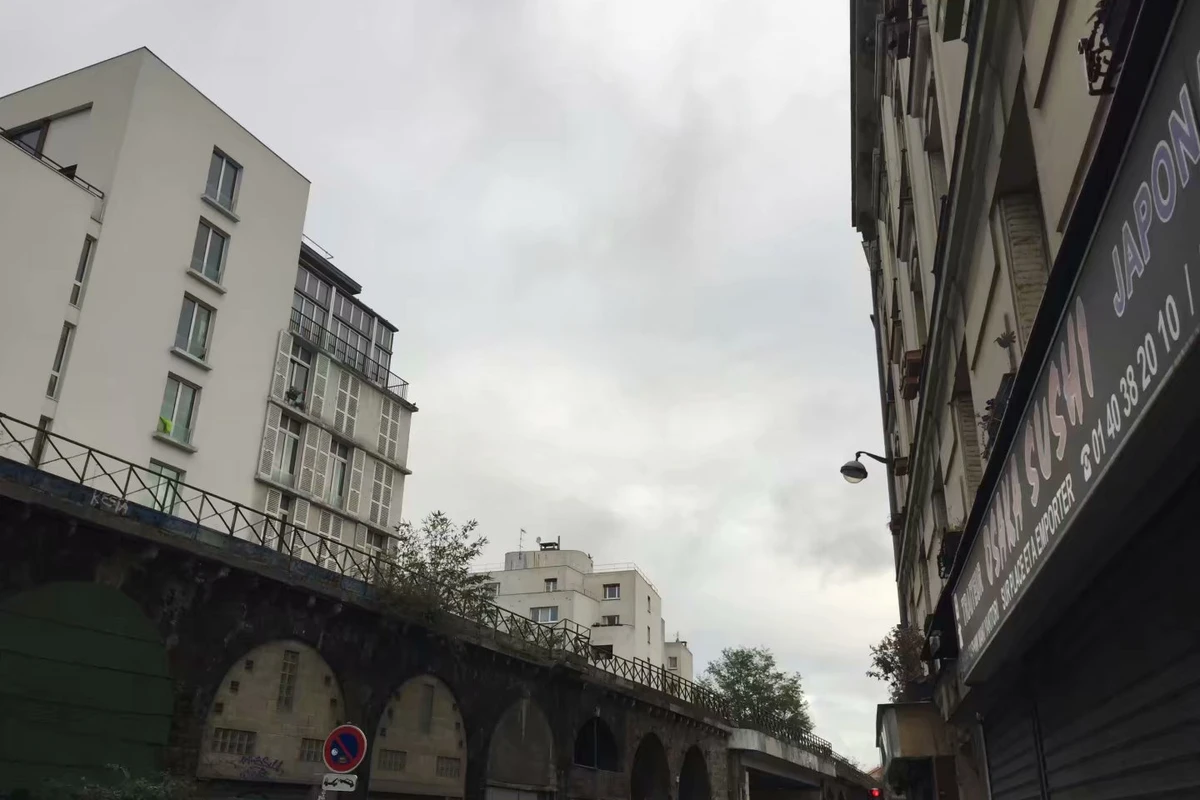
By late October, Paris was already very cold, with temperatures around 9-17°C, and the weather was unpredictable. After getting off the plane at 8 a.m., the sky was still dark outside. I thought it was cloudy, but later I realized that in winter, France doesn't get light until after 8:30 a.m., and daylight hours are very short. The photos from that first morning were all gray, accompanied by light rain. I started worrying that rain would follow us and ruin the trip. But as it turned out, good karma matters—I chuckled to myself, as we ended up with great weather afterward. Here, I won't complain about France's baffling metro transit lines. If you don't get it wrong once or twice, you really can't understand its design. Even asking locals, you're quite likely to take the wrong train. Unlike other European countries, perhaps due to local pride, very few French people speak English. Even among young locals, the chance of meeting someone who speaks English is very slim. Now let me explain Paris transport: Their so-called metro lines are called Metro (older train lines, mainly in the city center) and RER (newer, longer lines that run through the city to the suburbs, with newer facilities and more comfort). The difference is that they're operated by different companies, but it doesn't affect use when you buy a metro pass. In Europe, metro tickets work on metro, tram, and bus, just with time limits. According to your itinerary, buy the appropriate single tickets, day passes, weekly passes, or even travel packages (including some attraction entry).
About accommodation, I suggest not staying in the ridiculously expensive city center. When planning, I followed a local friend's advice—stay in the suburbs. France's transport network is very dense, so even if you stay in the suburbs, as long as you don't get lost and make a few transfers, it's just over an hour to reach downtown sights. Make sure to read reviews on Ctrip; only book through Ctrip if reviews are high. Since Paris's safety situation is a bit chaotic, I advise against going cheap or seeking novelty by choosing budget youth hostels or homestays. If your budget isn't too tight, I recommend staying in large chain hotels; they usually include breakfast, which saves money, and breakfasts typically have very fresh squeezed orange juice and croissants, standard Western breakfast fare. The cost of living in Paris is truly linked to art—in a word: high! A simple example: when you want to eat a simple lunch at a local restaurant—a pasta or pizza—it's over 100 RMB and you still don't feel full. Let alone French cuisine; without a minimum of 2000 per person, you can't truly savor authentic, pricey local dishes. Even as a foodie, I had to hold back. To experience local life, I chose a very economical and practical way to handle three meals a day. Like supermarkets back home, Paris is full of Carrefours, and each time I went straight to the fruit and salad section, as well as the prepared foods section.
The sky was gray. As a southern girl used to warmth, I immediately felt uncomfortable; my clothes underestimated the local damp chill. As soon as I got off the plane, I felt a cool breeze; everyone was wearing coats, while I was thinly dressed. After navigating the confusing transport, I reached the hotel. I could only leisurely stroll around, find the nearest supermarket and somewhere to eat, and then search on Ctrip for restaurants with good reviews and value.
The first day's itinerary was relatively light. Due to the Paris hotel's absurd rule, I couldn't check in until after noon; otherwise, I'd have to pay an extra 200 RMB. I lingered around the hotel until noon. The hotel I chose this time was quite nice, with a canal in front and squares on both sides filled with morning exercisers. People were jogging in shorts and T-shirts, or walking their dogs, instantly giving me a sense of the locals' relaxed lifestyle. After successfully checking in, after an hour of freshening up and rest, we officially kicked off Paris in a mad dash. From our 9th arrondissement, we took the metro with two transfers to reach the famous romantic landmark—the Eiffel Tower. Before coming, I'd heard that many couples come here to show off their love or propose. Perhaps that's why it carries an extra touch of romance. Actually arriving, I didn't see the so-called romantic scenes or feel the romantic atmosphere. I was simply in awe of this historic structure. As its silhouette loomed closer from the metro, my excitement slowly awakened. Step by step, I was conquered by this iconic landmark. Many people sit in the square all day, waiting for nightfall when the tower is adorned with colorful lights, even more enchanting. Wandering on, we came to Pont d'Iéna, one of Paris's most famous bridges because it sits right in front of the Eiffel Tower. This bridge connects to the left bank of the Seine. From here, you can enjoy a beautiful view of Trocadéro Square.
In Paris, the Louvre is not to be missed; it felt like a dream come true. So people must have dreams—what if they come true?! Every trip, I plan a museum visit. Its countless treasures can't be detailed one by one. Personally, I recommend visiting the Egyptian collection, which houses the most Egyptian artifacts and mummies outside the Egyptian Museum in Cairo. The Renaissance paintings and Roman sculptures are basically what we've seen in art textbooks, so you can tour as if greeting old friends. During the visit, I highly recommend renting an audio guide—a magical little device for €5. It's useful, as it can locate your position and explain exhibits, helpful for those unfamiliar with Western art. The minor drawback: the audio guide is only in English, not Chinese, so it tests your listening skills. Not wanting to waste the €5, I'd stop and listen carefully before moving on. Since the venue is huge, I suggest at least three hours, otherwise it's just a cursory glance. Outside the Louvre, there's a garden with very pleasant scenery; you can sit quietly, enjoy the view with a rich coffee and a cake—I could probably spend all day spacing out there. You can also continue outward to the banks of the Seine; the scenery on both sides is charming. I never plan a fixed route; wandering around a city, you can discover unique beauty and perhaps meet different people and experiences!
Many Paris attractions are quite similar or just worth a photo op to say you've been there. The Arc de Triomphe, which we checked off, is one such spot. It's just a giant arch standing on a major city-center avenue, commemorating Napoleon's victories. If you're only casually curious, you can skip it. But if you're deeply interested in European history, you must check it off, climb to the top of the arch to overlook the beauty of central Paris, and appreciate how proud its builder must have been. The city center of Paris isn't actually very large; if you're fit, you can navigate from there to the Champs-Élysées, and along the way you'll basically grasp the architectural style of Paris and its so-called fashion vibe. Maybe I didn't go to upscale areas or white-collar hubs; ordinary folks' outfits are really quite plain, though men tend to appear more fashionable than women, with snug sweaters and checkered scarves—a stylish, fail-safe combination. The Champs-Élysées is a must-visit shopping district for Chinese tour groups of wealthy shoppers. Galeries Lafayette and Printemps are high-end, luxurious agglomerations of first-tier luxury brands. The malls are resplendent, and every store has Chinese-speaking staff specially servicing our countrymen. Of course, if you're like me, just testing products, the staff ignore you completely, fawning instead over those wealthy aunties who grab several items and head straight to the register. But it's not as cheap as rumored; French perfume, for example, is outrageously expensive, worse than prices I find in Hong Kong.
Since our time in Paris was limited, I could only pick representative spots near the city center. Today, I decided to brave the drizzle and head to the highest point in Paris—Montmartre. The alleys and stairways crisscross here, full of romantic charm; it's a lovers' paradise. The film "Amélie" was shot here. The Wall of Love, the Place du Tertre, and the Sacré-Cœur Basilica attract many tourists. In front of Sacré-Cœur, you can overlook bustling Paris and also enter the church to join locals in worship or prayer. This basilica isn't grand or magnificent; compared to Italy's Florence Cathedral, it's quite shabby, yet it doesn't dampen the enthusiasm of devout believers. What struck me most was the dim lighting inside, solemn and awe-inspiring—no wonder confession must take place in those small rooms. I'm somewhat atheist, regarding Christian culture as an observer, but I still felt a bit resistant to the church's interior atmosphere. After a brief rest, we headed to the next check-in point. In this entire travelogue, I haven't planned routes for you, because that depends on where you're actually staying. Just download a local metro app. Most attractions have metro stations, and you can navigate on foot to find them. For wealthy travelers, you can take a taxi, an outrageously expensive option but hassle-free! Young folks, walking more helps you sleep at night and adjust to jet lag faster!
In Paris, with so many attractions, my sister and I chose those we felt were representative and not repetitive. The Palais Garnier opera house is a landmark brimming with artistic atmosphere; you can look up the specific metro station. Alighting from the metro, you see two gilded sculptures. European buildings are generally not very tall, so these two sculptures can guide you back. Having never attended a live opera, I naturally wanted to soak up some artistic 'bacteria' (culture). Unfortunately, no performance was on that day, so we could only sit outside, take photos, and call it a visit. In movies, people always sit on some steps with a coffee, chatting—there's an instant sense of immersion. However, the weather wasn't great that day, and the drizzle dampened our pretense vibe. This city always has a certain charm; the monotonous streetscapes and environment never felt enough or boring, as if I'd made it my home. Some friends get homesick after a week away, but I always feel the holiday is too short, nearly time to go home, wishing time could freeze in this leisurely moment. My friend said, planning a trip is a short-term goal; in your alone days, enjoy this carefree, go-as-you-please spirit! Paris, if there's a chance, I'll come again, because I haven't yet experienced the romance for two~~~~
After three days in Paris, experiencing early winter's chill and drizzle, just as we'd adapted to the climate, we moved on to warmer Spain. Here's a little tip: when buying plane tickets, note that France has two airports in opposite directions. Large international flights usually use Charles de Gaulle Airport, while EU flights use Orly Airport; their scales are worlds apart. Don't overlook airport logistics, or you might easily delay your trip or take the wrong route. For flights in Europe, you must arrive at least three hours early to be safe. Language is also a barrier, taking up much time and energy. I'm always lucky when traveling: when lost, perhaps because of my harmless Asian face, many kind-hearted people took the initiative to guide us, and we had pleasant chats. After some hassle, we finally arrived excitedly in Spain, but immigration faced extremely strict airport security! My sister, a total upbeat hip-hop type, was stunned. She'd forgotten a yogurt in her bag, spotted by security; they forcefully rechecked our bags without letting us touch them, and made me drink the yogurt on the spot to enter the country—refusing wasn't an option. After finally getting out of the airport at dusk, we hastily took an airport shuttle to our booked hotel to rest.
Booking hotels is my forte—never failed. This time, the hotel was comfortable and cozy. The elderly landlord was very enthusiastic, introducing local attractions with a heavy accent. Seeing us two youngsters, he seemed endlessly worried, especially warning us to watch our valuables. After a look around the room, I was very satisfied; the bed was incredibly comfortable, carrying a scent of sunshine. After a night's rest, we were fully recharged the next day and embarked on the craziest walking spree ever. I'd noticed from planning that every classic spot was about 2 km away—no problem for fitness folk like us—so there was no need for public transport; we'd return at night with swollen legs. First off, Spain's cost of living is similar to domestic cities. I must exclaim it's not as stupidly expensive as Paris; you can freely eat, drink, and have fun without penny-pinching. After three days of frugality, we were in heaven, able to have a fresh Western breakfast, full of energy. Barcelona is a coastal city, so seafood is a highlight; everywhere you see signs for Spanish paella. I must emphasize: the rice in paella is never fully cooked—a bit al dente is authentic. So you can tell the waiter to cook the rice longer, making it more suitable for our Chinese stomachs. With all the walking, I stopped being picky about undercooked rice and just wolfed it down.
Barcelona is the hometown of modern architect Gaudí and the origin of European modern architectural development. Every blade of grass and every tree makes you feel their integration and harmony with art. Compared to Paris, the streets here are cleaner and tidier, the buildings more European in style, and each neighborhood has a different character, giving you the illusion of being in different countries. At every stop, we'd pause for a few minutes to enjoy the scenery. It was my first deep love for architecture—I realized that besides natural landscapes, the beauty of architecture created by human intelligence can also leave you in awe.
The Basilica of the Sagrada Familia, Barcelona's most famous landmark, began construction in 1882. Gaudí took over in 1883 and worked on it until his death in 1926, leaving this unfinished masterpiece to Barcelona. This church, after over a century of construction and still incomplete, is now the city's most visited attraction. This temple, infused with Gaudí's devout passion, displays his genius everywhere: skillful use of geometry, references to natural elements, and mastery of light make the church seem so advanced and unique. Standing in the nave, you feel as if at the center of the universe—solemn, spectacular, and flowing with architectural beauty. I highly recommend buying tickets to climb the 170-meter tower, especially at sunset, when you can overlook Barcelona's panoramic cityscape bathed in gorgeous light. Gaudí himself described this building: 'I am not able to complete this temple, but there is nothing to regret. I will grow old, but others will continue. What needs to be preserved forever is the spirit of this work, and its life comes from those who pass it on generation after generation, because of them, it will exist and be reincarnated.'
Casa Milà is the last private residence designed by Gaudí, often called La Pedrera (Catalan for 'the Quarry'). Its three wavy facades, twisted iron balconies, and large windows are eye-catching. In 1986, it was purchased by Caixa de Catalunya bank and renovated at great expense. Now the ground floor hosts exhibitions for the bank's foundation. The sixth floor, top floor, and rooftop terrace are open to visitors. The rooftop chimneys are very distinctive; from the terrace, you can overlook parts of the city and gaze at the Sagrada Familia in the distance.
Gaudí gave all the colors of his life to Casa Batlló, his most fully realized modernist work from his mature period. Its interior design follows Gaudí's consistent style: no straight lines or angles, only soft waves and curves. A door, a handle, a chair—curves fit the body's contours, and every detail evokes endless wonder. From the ground floor, you reach the second-floor hall via an elegant wooden staircase specifically designed by Gaudí for this house. The handrail's finial is exceptionally delicate, with thin metal ribbons encircling an orange glass sphere. The ceiling of the hall is flat and glossy, swirling outward, and through the large windows that can open up and down, you see Passeig de Gràcia.
The light well is inspired by the deep sea; to create a gentle light gradient, Gaudí used 15,000 blue tiles in five shades, darker the higher you go, as if sinking from the glittering surface into the abyss. Contrasting with the colorful decor of other floors, the attic walls are pure white, with catenary arches forming the basic structure, reminiscent of giant animal ribs and having temperature regulation for the building. Casa Batlló was born from a design competition in Barcelona, and Gaudí drew inspiration from the legend of Saint George slaying the dragon to save the princess. The large bay windows and small decorative columns on the second floor recall the dragon's teeth; the roof's tilework resembles the dragon's scaly body, the arched roof its spine, and the tall cross-shaped tower the sword plunged into the dragon. Another nature-inspired design is the spiral staircase leading to the roof. Gaudí loved such naturally rhythmic curves, giving the rooftop terrace a special style; the chimneys and ventilation ducts are covered in shattered ceramic mosaics, a concrete display of his unique artistic style.
La Rambla is the 'Avenue of Wanderers' as described by Yu Qiuyu. It's perhaps Spain's most vibrant street, gathering performance artists and tourists from around the world. By day, it's a paradise for street art and cuisine (the famous La Boqueria market sits on its side); after midnight, it transforms into a playground for Barcelona's nightlife (especially the Raval area to the west, lined with various themed bars).
La Rambla also connects Plaça de Catalunya to the Mediterranean Bay. Under the Mediterranean's unbeatable sunshine, strolling along La Rambla to the beach gives you a tangible taste of Barcelona's color and joy! If the crowds are too much, you can duck into any appealing side alley, exploring the historic Gothic Quarter to the east or the Raval area to the west, favored by hipsters (often with their dogs in tow). Just remember to watch your wallet and valuables.
Along the way, you can enter La Boqueria Market, always called Barcelona's most beautiful 'market,' because all the fruits and vegetables are treated like artworks—from color coordination to display layouts, vendors showcase their aesthetics and creativity. Even selling eggs, they dress up the stall like a farm. It's also the most comprehensive place for ingredients, from Sichuan peppercorns to Indian nutmeg. Here I finally found Spanish ham, bought a small slice to try—hmm, I didn't like the taste much, like a foot odor. In this market, you can find your favorite specialty foods as souvenirs to take home.
From Plaça d'Espanya, you can take bus 150 to Montjuïc Castle. Perched on Montjuïc hill, its rooftop viewpoint offers Mediterranean sea views and Barcelona cityscapes. Tickets are €5, with discounts for under 27s. The castle isn't large; once a prison, it's now a museum. Its main draw is the panoramic view of Barcelona. On the way, you can pass the Fundació Joan Miró, Olympic Square, and many other attractions. If time allows, take the bus up and walk down slowly, visiting spots along the way. Many locals come to stroll, picnic—the scenery is quite nice. In the evening, you can enjoy the Magic Fountain's night view in front of the Museu Nacional d'Art de Catalunya, but be mindful of crowds and your belongings. Coincidentally, it was my birthday that day. After a rest on the hill, I planned to find a good restaurant downhill to celebrate. By the sea, of course, I had to treat myself to a seafood feast.
On the last day, we took the earliest flight back to Paris, spent one final day there, and after recharging, returned to our home country. The whole trip was very relaxed and flexible, so we got ample rest; jet lag was practically nonexistent. That last day in Paris, we stayed at an airport hotel, which had the advantage of free shuttle buses to the airport and to a nearby shopping mall. With a bit of cash left, I planned one more nice dinner to cap off the trip perfectly. In this gourmet capital, it didn't disappoint—I randomly picked a restaurant in the mall, and the food was high-standard. After happily enjoying the meal, we continued shopping for some special snacks to take home. Those flying out of Charles de Gaulle Airport must arrive at least 2-3 hours early, because the airport is huge—the internal shuttle takes about 20 minutes just to loop around. If you take the wrong direction or go to the wrong gate, the back-and-forth hassle can easily cause delays. I nearly made such a blunder, but luckily, a helpful ground staff member got me on board on time.
Travelogue Contents 1. First Impressions 2. Day 1: Arrival in Paris & Half-Day Eiffel Tower Tour 3. Day 2: Louvre – Arc de Triomphe 4. Day 3: Montmartre – Sacré-Cœur – Palais Garnier 5. Day 4: Barcelona 6. Day 5: Sagrada Familia 7. Day 6: Casa Milà – Casa Batlló 8. Day 7: La Rambla – La Boqueria Market – Plaça de Catalunya 9. Day 8: Half-Day Montjuïc Hill Tour 10. Day 9: Return to Paris Travel Information Hotel Index Strategy Index Flight Index Website Navigation Travel Index Cruise Index Corporate Travel Index Join Us Cooperation Distribution Alliance Friendly Links Corporate Gift Cards Insurance Agents Agent Cooperation Hotel Joining Destination & Scenic Spot Cooperation More Collaboration About Trip.com Group About Trip.com Hot Topics Contact Us Careers User Agreement Privacy Policy Business License Security Center Content Center Intellectual Property Algorithm Disclosure


