A Dream Journey Across Borders
A Dream Journey Across Borders
Europe, ancient and full of charm, possesses a long and dramatic history. It has witnessed the rise and fall of countless empires, the clash and fusion of cultures, and the breakthroughs of science and technology, telling stories where the old intertwines with the new. For many years, countless symbols of Europe have lingered in my mind like a haunting dream—the Louvre, the Arc de Triomphe, the Eiffel Tower, the Blue Danube, the Vienna Musikverein, the Leaning Tower of Pisa, the Colosseum, the water city of Venice, the Prague Spring, Gloomy Sunday in Budapest, and so on. To have this chance to set foot on this European continent steeped in history and romantic allure, and to embark on a 15-day splendid journey across 12 countries, was a long-cherished wish we had eagerly awaited.
In one’s later years, the ideal state to pursue is: living healthily, keeping busy in an orderly way, playing unrestrainedly, spending time fulfillingly, and smiling brilliantly. As long as our mindset stays young, life will always be beautiful. And travel lets us explore mountains and rivers, observe heaven and earth, meet different people, and search for our true selves, experiencing alternative lifestyles and encountering a brand-new version of ourselves. Though this European trip was decided somewhat hastily, the thought of soon immersing ourselves in exotic scenery and experiencing the local customs and flavors of Europe—with one unique panorama after another about to unfold before our eyes—made us utterly impatient to begin. Full of anticipation, we finally departed on October 8, flying directly from Beijing to Paris.
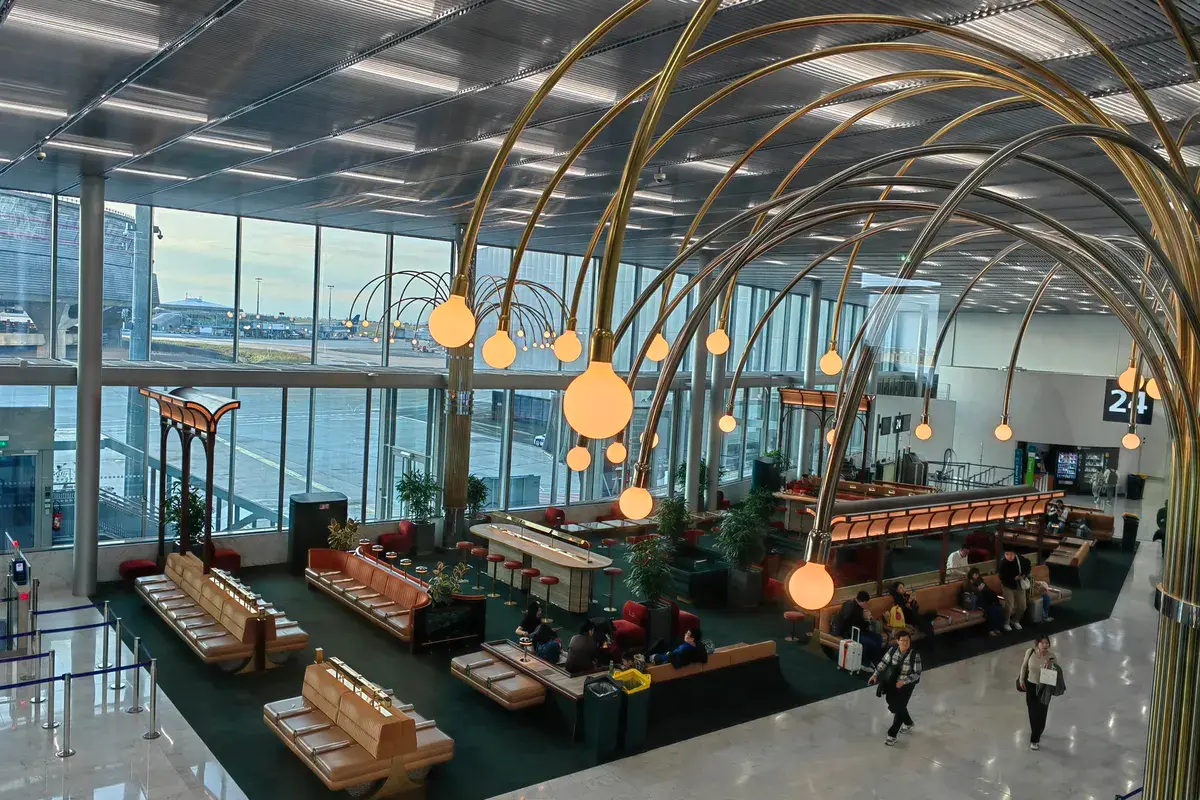
At Beijing Capital Airport, we boarded an Air China flight. After nearly ten hours in the air, we arrived in Paris—the romantic fashion capital of France—at 18:40 local time. A private car picked us up, and we stayed overnight in Paris.
After breakfast, we drove to visit the renowned landmarks of the “City of Flowers.”
Paris, France’s “City of Flowers,” is celebrated for its rich historical relics and romantic atmosphere. The twelve avenues of the Champs-Élysées radiate in all directions from Place Charles de Gaulle. The majestic, magnificent Arc de Triomphe stands proudly on the roundabout at the center of Place Charles de Gaulle. Place de la Concorde features green-bronze statues and beautiful fountains; at its center stands an obelisk from the ancient Egyptian Temple of the Sun. The French call this grand square “the most beautiful square in the world.”
The Seine River winds through the city like a blue silk ribbon. We took a cruise, admiring the well-spaced buildings and enchanting scenery on both banks. The world-famous Eiffel Tower, Hôtel de Ville, Louvre Museum, Notre-Dame Cathedral… passed before our eyes one after another, overwhelmingly beautiful. Gazing up at the Eiffel Tower—this iron giant—we were instantly awed by its grandeur and scale. After disembarking, we entered the Louvre.
The Louvre, ranking first among the world’s four great museums, is a globally celebrated temple of art and a treasure house, a palace of countless treasures renowned worldwide. It is famous for its vast collection of classical paintings and sculptures, and is one of the most precious buildings from the French Renaissance. Following the audio guide, as we toured, we sought out the three treasures of the Louvre: the Mona Lisa, Venus de Milo, and Winged Victory. Da Vinci’s Mona Lisa, with her mysterious smile, drew countless visitors to pause and admire. The Venus de Milo statue, with its elegant posture and incomplete beauty, let us feel the boundless charm of art. The marble sculpture Winged Victory of Samothrace, created around 200 BC, showcases the superb level of ancient Greek sculpture and represents the pinnacle of Hellenistic art.
Next, we visited Notre-Dame Cathedral, still under restoration. Completed in 1345 after more than 180 years of construction, Notre-Dame is the world’s first fully Gothic church. The carving art and painting art of the building itself, along with the numerous artistic treasures housed inside, hold high historical and cultural value. It is a symbol of Paris and a sacred site of Christianity, the mainstream world religion.
After dinner, we enjoyed the splendid night view of the Eiffel Tower from the viewing platform of the Palais de Chaillot.
After breakfast, we drove to visit the Palace of Versailles. The Palace of Versailles and its gardens are outstanding representatives of French classical architecture and one of the world’s five great palaces (alongside China’s Forbidden City, France’s Versailles, Britain’s Buckingham Palace, the United States’ White House, and Russia’s Kremlin). Its enormous scale makes it one of the largest palatial complexes on earth, with the Hall of Mirrors, the Royal Chapel, and the King’s Apartments as its core highlights.
The history of Versailles began in 1624 with a hunting lodge built by Louis XIII. Under Louis XIV, it was expanded into a political center, becoming the seat of the French court and government from 1682 onward. Through modifications under Louis XV and Louis XVI, the palace gradually developed its unique style, with a classical façade and Baroque interiors. The central palace area is exemplified by the Hall of Mirrors and the Royal Chapel; the palace still preserves the most complete scenes of 17th–18th century royal life in France.
We stayed overnight in a French border town.
After breakfast, we drove to Les Diablerets and took a gondola (360-degree panoramic gondola) up to Glacier 3000. We crossed Peak Walk, the world’s first suspension bridge connecting two peaks, to reach the summit of Tissot Peak. Standing there, we could gaze upon Switzerland’s three most famous peaks: Mont Blanc, the Matterhorn, and Jungfrau. The snowy landscape made us feel as if we were in an icy kingdom. Distant mountain ranges rolled on, shimmering silver under the sunlight.
Descending, we arrived at Interlaken, a Swiss town surrounded by the Alps, like a fairy-tale world. The lake water was crystal clear, reflecting the surrounding mountains and white clouds—so beautiful it took our breath away. Through the bus window, the Swiss countryside revealed herds of cattle and sheep grazing leisurely on the grass, wooden houses scattered harmoniously among the hills, and curling smoke rising from chimneys, composing a lovely pastoral painting. The air was fresh and delightful, as if making all worries vanish.
We boarded Switzerland’s famous panoramic train—the Golden Pass—heading to Sarnen. The Golden Pass connects some of Switzerland’s most beautiful lakes, including Lake Geneva, Lake Thun, Lake Brienz, and Lake Lucerne, with captivating scenery outside the window. However, because dusk had fallen, we missed this breathtaking view, which was a slight regret.
We stayed overnight in Lucerne.
After breakfast, we toured downtown Lucerne and visited the Lion Monument, designed by Danish sculptor Bertel Thorvaldsen, a stone figure carved into a whole cliff face.
Lucerne’s most famous landmark is the Chapel Bridge, also called the Church Bridge. This symbol of Lucerne, built in 1333, is Europe’s oldest covered wooden bridge. Its gable panels are painted with 120 religious historical paintings, and along the way you can view scenes depicting the Black Death. The 200-meter-long bridge crosses the Reuss River. Strolling along it at dusk, one can still feel Lucerne’s romantic medieval atmosphere. Today, it is an indispensable element on Lucerne postcards. Every early summer, the outside of the bridge is planted with geraniums.
Afterward, we drove to one of Europe’s few miniature countries, Liechtenstein. Situated on a key north-south thoroughfare, bordered by Switzerland to the west and Austria to the east, it covers only 160 square kilometers. Its beautiful natural scenery, the unique charm of a “miniature nation,” the princely art collections, and alpine ski slopes are its calling cards. We took a sightseeing mini-train that toured the entire country in about half an hour.
Then we went to Füssen to admire the Swan Lake, from where we could glimpse in the distance the fairy-tale Neuschwanstein Castle and Hohenschwangau Castle.
For the first time in my life, I passed through four countries in one day: breakfast in Switzerland, morning sightseeing in Lucerne and Liechtenstein, lunch in Austria, afternoon in Füssen, Germany, and dinner with roast pork knuckle and Munich beer.
We stayed overnight in Munich.
After breakfast, we drove to Prague.
Prague, the capital of the Czech Republic, is a city filled with medieval charm. The grand architecture and long history of Prague Castle gave us a sense of the city’s depth. On Charles Bridge, statues stand in great numbers, each with a moving story. In Old Town Square, the hourly show of the Astronomical Clock drew the gaze of many tourists.
Prague Castle, perched on a hill above the Vltava River, is the Czech Republic’s fortress. In the 9th century, a Prague prince built a castle on the Vltava hill. The castle exhibits a diversity of architectural styles, from ancient Romanesque foundations to post-modern wartime additions, every era having left its mark to some degree. It is one of the Czech Republic’s most attractive tourist destinations. Once the palace of emperors and kings, today the castle is where the Czech president holds welcome ceremonies for visiting foreign heads of state and receives letters of credence from ambassadors. Standing atop the castle and gazing over Prague, we enjoyed a panoramic view. The complex contains three courtyards, several old lanes, galleries, gardens, and the Czech Republic’s largest Gothic church—St. Vitus Cathedral (construction started in 1344).
Golden Lane (Zlatá ulička) is one of Prague Castle’s most famous spots. Situated between St. George’s Basilica and the Toy Museum, it is a shopping street for handicrafts, as bustling as Charles Bridge. During the 16th century under the Holy Roman Empire, many goldsmiths lived here, hence the cobbled lane’s name. The lane is small, with tiny, colorful buildings, like dwellings of elves in a fairy-tale kingdom. House number 22, a water-blue house, was Kafka’s residence over a century ago; today it is a small bookshop.
We visited a must-see in Prague—the romantic Charles Bridge. Its 30 Baroque statues turn an ordinary stone bridge into an artwork that draws countless visitors. Prague is a city of many bridges amid beautiful scenery. The shimmering Vltava River winds through the city, and 18 bridges span the water, connecting the Gothic, Baroque, and Renaissance buildings on both banks. Among them, Charles Bridge is the first bridge Prague’s citizens built over the Vltava, with a history of 650 years. Its long history and architectural art make it one of Prague’s most famous historic sites.
We viewed the exterior of St. Vitus Cathedral, the venue for coronations of emperors throughout history, hailed as an “architectural treasure,” with an interior as splendid as its exterior. Without this cathedral, Prague Castle would lose much of its luster.
The Vltava is the mother river of the Czech Republic, originating in the forests of southwestern Bohemia. The second symphonic poem in Má vlast (My Homeland) depicts its picturesque scenery. The beautiful Vltava divides Prague into two, with the Old Town and New Town on the east bank, and the Lesser Town on the west. More than ten bridges, ancient or modern, connect the two sides. Among them, Charles Bridge linking the Old Town and Lesser Town is decorated on both sides with various sculptures and reliefs, celebrated as “Europe’s open-air gallery of Baroque statues.” We strolled along the Vltava embankment, enjoying the medieval cityscape. While feeding pigeons, we encountered a little Prague internet celebrity—the “beaver.”
After breakfast, we drove to Vienna.
Austria, a country full of musical ambience, enchanted me. The Musikverein in Vienna is a temple of music. I fantasized about listening to a wonderful concert here and feeling the magic of music, but due to the itinerary, that remained unrealized. In downtown Vienna we visited the City Hall, a very grand Neo-Gothic building and the seat of the mayor and city council.
We viewed the gilded statue of Johann Strauss, the “Waltz King” who is the pride of Austrians. We also saw the Vienna State Opera, a world-renowned Renaissance-style building, and the exterior of the Vienna Musikverein.
In the afternoon, we visited Schönbrunn Palace. Its name derives from a legend that Emperor Matthias discovered a beautiful spring there in 1612. A masterpiece of Baroque architecture, it was the imperial palace of the Holy Roman Empire, the Austrian Empire, the Austro-Hungarian Empire, and the House of Habsburg—and also the favorite residence of Empress Sisi. In 1762, six-year-old Mozart played the piano here for the first time before the empress. Schönbrunn Palace and its gardens were inscribed on the UNESCO World Heritage List in 1996.
We stayed overnight in Vienna.
After breakfast, we drove to Bratislava.
We visited the Old Town Square of Bratislava. The famous statue “Man at Work,” also called Čumil or the “peeper,” is quite interesting. This bronze statue, only 50 centimeters tall, lies close to the ground; a passerby might miss it if not paying attention. The statue depicts a sewer worker wearing a cap, emerging from a manhole and resting on the rim, watching pedestrians passing by. Some joke that he looks like a “lecher,” peeping at women’s legs.
The “Double Movement” monument sits in the middle of an old street. As the guide explained, during the Austro-Hungarian rule of Hungary (1867–1918), the Hungarian people rose in resistance; at that time Slovakia belonged to Hungary, and Slovaks also rebelled against Hungarian rule. This monument commemorates that history.
The sculpture “Crazy Mathematician” in Bratislava, Slovakia, is located on a street and shows a mathematician in a humorous style. The sculpture presents a mathematician in a top hat, holding his hat, his face exaggerated as if immersed in the world of mathematics. Its inspiration comes from the unique Slovak interpretation of mathematical culture, conveying devotion to mathematical study through exaggerated body language and humor. Situated on a street in Bratislava’s Old Town, it serves as a city landmark and is often used as a photo spot by tourists and citizens.
Roland Fountain, located in the main square of Bratislava’s Old Town, was built around 1572 as a kind of old-style firefighting device. Nearby stand a statue of a Napoleonic soldier and the French embassy.
We saw the Presidential Palace of Slovakia, also known as Grassalkovich Palace, a Rococo-style building in the capital Bratislava. It has two floors and a white façade that is very elegant and grand.
Bratislava Castle is one of the prominent buildings in Bratislava, the capital of the Slovak Republic. Situated on a hill beside the Danube River, it is a square-shaped building somewhat resembling a large bed with four canopy poles.
In the afternoon, we drove to downtown Budapest.
We visited Budapest’s famous Matthias Church, located on Castle Hill. This Neo-Gothic church features a highly artistic southern spire bell tower, and the magnificent vaulted ceiling is worth savoring.
We saw the Chain Bridge, also called Széchenyi Chain Bridge, named after its sponsor but commonly known as the Chain Bridge because of its iron-chain construction. It is a bridge spanning the Danube, linking Buda and Pest, and is a symbol and landmark of the unified city.
We visited the romantic white Fisherman’s Bastion on the Buda side of Castle Hill. Built in 1905, the site was originally a fish market, and later fishermen built this bastion to protect their interests, hence the name. The Fisherman’s Bastion offers beautiful surroundings and splendid views; from here one can overlook the whole city of Budapest. Today, it is an important spot for evening strolls for Budapest residents, especially favored by couples. Along with the Hungarian Parliament Building and the State Opera House, it is considered one of Hungary’s three most stunning architectural works, and it also serves as a lookout for views of the Danube and the Pest side.
We took a boat evening cruise on the Danube, enjoying the charming scenery on both banks. The Danube, Margaret Island, the Chain Bridge, the Hungarian Parliament Building, and Gellért Hill all came into view. At night, the Fisherman’s Bastion held its own unique charm, with everything looking particularly enchanting under special lighting. The tranquil Danube, the magnificent Parliament Building, the dreamy Fisherman’s Bastion—to stand among them was like stepping into a frozen painting of history. Széchenyi István Square, the Hungarian Academy of Sciences, and the Four Seasons Hotel building were all splendid. As night fell on this romantic place, the Chain Bridge was filled with a romantic and artistic atmosphere; under the light and shadows, the bridge appeared dappled and hazy. This is hailed as one of Budapest’s most romantic spots, and the famous movie Gloomy Sunday was filmed here multiple times.
We stayed overnight in Budapest.
After breakfast, we drove to Zagreb, the capital of Croatia.
We toured Zagreb’s city center: Zagreb is divided into Upper Town and Lower Town. The Upper Town is the old quarter, where the city’s main attractions are found—a great place to experience Zagreb’s historical progression. Ban Jelačić Square is the central square, featuring a statue of Ban Josip Jelačić, Croatia’s first governor. Most of the surrounding buildings date from the 19th century, displaying various architectural styles from Biedermeier to Art Nouveau and Postmodernism.
We stayed overnight in Zagreb.
After breakfast, we drove to Ljubljana, the capital of Slovenia.
We explored Ljubljana’s city center: Ljubljana Town Hall is the current seat of the municipal government. Its main building is the work of the famous 15th-century architect Peter Bezlaj; in 1719, side wings were added. Today, the Town Hall houses four exhibition halls, mainly featuring exhibitions on the city’s development history, international city cooperation, and various art displays.
Triple Bridge, also called Tromostovje, built in the 13th century, is a landmark of Ljubljana, crossing the Ljubljanica River. Architect Jože Plečnik added pedestrian side bridges to the original structure, creating the present triple bridge arrangement. The main bridge is Baroque in style, while the side bridges are Plečnik’s modern design, embodying the concept of separating pedestrians and vehicles. Twenty stone gargoyles are carved on the bridge piers; on rainy days, some of them seep water, adding mystery. Triple Bridge is a must-visit spot in Ljubljana, ranking alongside Ljubljana Castle and Lake Bled as one of Slovenia’s popular landmarks. The bridge leads to the Central Market, linking the historic area with the modern commercial district.
City Square is Ljubljana’s central square, not very large, with the Baroque Robba Fountain built in 1751 in the middle. The obelisk-style column base features three sets of exquisite marble statues, said to represent the three rivers of Slovenia: the Sava, Krka, and Ljubljanica.
In the afternoon, we drove to Bled.
Lake Bled is Slovenia’s famous lake, formed about over ten thousand years ago by glacial geological movement of the Alps, thus known as the “ice lake.” Surrounded by mountains, the scenery is like a fairyland, and the church on the island appears like a mirage, truly wonderful. The green forests around the lake, the mirror-like surface, and the dreamlike reflection of the snowy Alps make up Lake Bled’s enchanting natural beauty, earning it the nickname “the eye of the mountain.”
At the heart of the lake lies a small island rising 40 meters above the water, with a Baroque church still exuding an ancient, mysterious aura. Legend has it that the church belfry once held three large bells. One fell into the lake. On moonlit, breezy nights, people standing by the lake can faintly hear its tolling.
There is also a beautiful legend about Lake Bled: In the 16th century, a wealthy young couple came from afar to travel here and were enchanted by the region’s landscapes, settling down. Devout Christians, they used their savings to repair the dilapidated church and lived a happy, sweet life. But soon, to resist the massive invasion of the Ottoman Turks, the husband was conscripted and went off to defend his homeland. Yet, for years after he left, no word came from him. Despite this, the wife firmly believed he would keep his promise and return to beautiful Lake Bled, waiting silently and missing him bitterly.
Nine years later, definite news arrived that he had died in battle. Heartbroken, the wife sold all their property and had a large bell cast, donating it to the island church to express her grief and bless all who, like her husband, fought “for a good life.” But as the bell was being loaded onto a boat for transport to the island, a sudden gale overturned the vessel, causing the bell to sink to the bottom. To this day, people say they can still faintly hear the bell from the lakebed. Of course, the sinking is only a legend, but the protagonist truly existed. Later, the devoted wife left the Bled region and eventually died in Rome, Italy. Today, a 178-kilogram bell hangs in the island church, donated by the archbishop after the wife’s death. Because of this beautiful legend, young visitors, especially couples, never forget to ring the bell and make a wish, praying for everlasting love.
Bled Castle sits atop a cliff on the lakeshore, perched on a 100-meter-high precipice. It offers a wide view overlooking the entire lake. The castle’s reflection in the water and Bled Island create a charming scene.
We drove to the Italian town of Udine.
We stayed overnight in Udine.
After breakfast, we drove to Venice, Italy’s water city.
Venice is a very unique city; you step out your door onto water and use canals as streets. Apart from buildings and squares, there is almost no land in sight. Venice has no roads, no cars, no traffic lights—only winding waterways, boats coming and going, and over 400 bridges in different styles. Boats are the essential means of transport for Venetians.
We boarded a public ferry to visit this gradually sinking ancient maritime capital. We visited St. Mark’s Basilica, known as the Church of Gold, located in St. Mark’s Square. Adjacent to the Doge’s Palace, St. Mark’s was built in 828, rebuilt in the 11th century after a fire. Originally built to house the relics of St. Mark, it later held treasures looted from various countries during the Crusades. It was once the largest church in medieval Europe and is a treasure trove of fine art.
We toured St. Mark’s Square, a Venetian landmark and venue for many Venetian festivals. In the square, pigeons freely flew among the crowd; people strolled and took photos, soaking in the city’s unique charm.
We saw the Bridge of Sighs, connecting the Doge’s Palace to its prison next door. A Baroque-style stone bridge on the side of the palace, it is one of Venice’s most famous bridges. This enclosed arch bridge has only small windows to look through from inside. One end was the court, the other the prison. Prisoners on their way to execution would cross this bridge and sigh at their impending end, hence the name. Today, because of the film A Little Romance, the bridge has shed its mournful aura; you can also call it the “Sunset Bridge.” It is the bridge where the fugitive protagonists pledge their love at sunset in the movie.
We took a gondola ride. A gondola is a distinctive Venetian narrow boat, with its slim hull and flat bottom perfectly suited to Venice’s narrow, shallow canals. The prow leans slightly to the left to counterbalance the oar’s weight, preventing the gondola from spinning in circles. By a law passed in 1562, all gondolas are painted black to prevent displays of wealth. Only on special occasions can they be decorated as flower boats. This lithe, uniquely shaped craft has a history of over a thousand years, once the daily transport of lagoon dwellers.
For lunch, we had an Italian specialty, squid-ink pasta.
We drove to the city of Ferrara.
Ferrara is a historic city in northeastern Italy’s Emilia-Romagna region, founded between the 6th and 7th centuries BC. Its location at the junction of the lower Po Valley and the delta made it an important medieval trading hub. The perpendicular axis city plan designed by Biagio Rossetti in 1492 pioneered modern urban design, and the city still preserves intact fortifications and medieval building complexes. As a Renaissance art center, Ferrara attracted many great masters during the reign of the Este family, creating a unique cityscape blending humanism and natural modification. In 1995, “Ferrara, City of the Renaissance, and its Po Delta” was inscribed as a UNESCO World Heritage site, recognizing it as the birthplace of modern urban planning. Modern Ferrara balances cultural heritage protection with ecological development; in 1908, Italy’s first bicycle lane was built here, and now a network covers the whole city, with a third of residents using bicycles as their primary transport.
We stayed overnight in Bologna.
After breakfast, we drove to Cinque Terre, located along the coast of the province of La Spezia, Italy.
We explored Cinque Terre, a string of five small, exquisitely colorful villages. Perched on cliffs overlooking the Mediterranean, the pastel houses seem to sprout from the rocks—vibrant, charming, simple, and lovely. It is an outstanding example of how humans can shape and modify their environment without destroying the natural landscape. Besides its beauty, it is also known for excellent olive oil and highly acclaimed Pasito wine.
We drove to Pisa to visit Piazza dei Miracoli, located in the northwest corner of Pisa. This square is the highlight of any visit to Pisa, with four major buildings—Pisa Cathedral, the Baptistery, the Leaning Tower of Pisa, and the Camposanto—all considered artistic masterpieces in architectural history. The square is one of the centers of medieval artistic excellence. The Cathedral, begun in the 12th century, is a masterpiece of Romanesque architecture, while its interior mosaics mix Byzantine influences, creating its unique “Pisan Romanesque” style. Opposite the Cathedral stands the Baptistery, blending Romanesque and Gothic styles. A spiral staircase inside leads to an upper gallery for viewing; the cylindrical structure, double dome, and white marble create beautiful acoustics inside.
The Leaning Tower of Pisa is the bell tower of the cathedral complex. In its early stages, the tower tilted an average of one millimeter per year, and construction was halted at one point; restoration work has continued to this day. A miracle of world architectural history, the leaning tower is famous not only for “leaning but not falling” but also as a wonder of building.
Beside the cathedral, the rectangular building is the Camposanto, a cemetery. Inside, beautifully carved tombstones, sculptures, and frescoes on the gallery walls are worth seeing. Moreover, on the large lawn of Piazza dei Miracoli there is a visitor rest area where you can take all kinds of photos with the Leaning Tower and buy souvenirs and snacks.
After breakfast, we drove to Florence.
Italy is the birthplace of the European Renaissance, giving rise to numerous geniuses like Dante, Leonardo da Vinci, and Michelangelo. As heir to classical culture, Italy’s economic prosperity provided conditions for artistic and intellectual development. Dante, Petrarch, and Boccaccio—the “Three Crowns of the Renaissance”—advanced humanist thought through literature. Leonardo, Michelangelo, and Raphael, known as the High Renaissance masters, represented the pinnacle of art: Leonardo’s Mona Lisa, Michelangelo’s sculptures, and Raphael’s The School of Athens are timeless classics. Florence, called the “Athens of Italy,” gathered a great many talented artists and scholars, becoming the heart of the Renaissance.
In Florence, we visited the red-domed Cathedral of Santa Maria del Fiore, the third largest church in the world. Its Gates of Paradise, ten panels of reliefs depicting narratives from the Old Testament, are a highlight.
The Gates of Paradise are on the east side of the Baptistery of San Giovanni. The great Renaissance sculptor Michelangelo greatly admired these reliefs. The designer, Lorenzo Ghiberti, was only 23 when commissioned for the baptistery doors; by the time the project was completed, he was 73. He recast the bronze panels again and again until he felt the reliefs were perfectly beautiful. In 1456, the gilded bronze doors were installed on the east side of the Baptistery, recording stories from the Old Testament.
At Piazza della Signoria, we saw the 13th-century fortress-like Palazzo Vecchio (now the city hall) together with the whole square forming an open-air sculpture museum. Lifelike stone and bronze statues, such as the replica of Michelangelo’s David, are familiar to all.
We drove to Civita di Bagnoregio, the “city in the sky.” Miyazaki’s film Castle in the Sky was inspired by this real Italian hill town. The cathedral there, built in the 13th century in Renaissance style, has several broken columns in front indicating a more ornate earlier church; we visited the 16th-century renovated version. Vaulted walls, railings, and underground passages continually evoke fantasies of a medieval setting. The view from the hilltop is beautiful.
We stayed overnight in a small town near Rome.
After breakfast, we drove to Rome.
Rome, this ancient city, bears too many historical memories. Called the “Eternal City,” it shines like a brilliant pearl, exuding unique charm and attracting countless people to explore.
Entering Rome feels like stepping into a vivid historical painting. The Colosseum, this imposing building, is a symbol of ancient Roman civilization. Gazing at it, one can almost hear the shouts of spectators and the clashes of gladiators from over two thousand years ago. Its massive bulk and exquisite construction skills never fail to amaze at the wisdom and courage of the ancients. Once a stage for blood and glory, it is now the best place to experience the splendor of ancient Rome.
The Roman Forum, adjacent to the Colosseum, was once the city’s center. Though now only ruins remain, the crumbling walls and columns speak of past magnificence. Walking through it, you see the remains of ancient temples and palaces, as if traveling back to the prosperous days of the Roman Empire. The Arch of Constantine, the most complete and famous triumphal arch in Rome, is a testament to that glory. Its exquisite reliefs and grand presence inspire awe for the might of the Roman Empire.
Rome is not only a witness to history but also a temple of art. St. Peter’s Basilica in the Vatican, the world’s grandest church, gathers masterpieces of many Renaissance masters. Michelangelo’s Pietà, Bernini’s bronze Baldachin and the Chair of St. Peter—each is an artistic treasure. The interior decoration is magnificent and solemn, the dome towering into the sky, sunlight streaming through stained glass, creating a sacred atmosphere. From the dome’s observation deck, you can overlook a panoramic view of Vatican City and Rome, refreshing to the heart.
Rome’s romance is fully embodied at the Spanish Steps. Made famous by the film Roman Holiday, the image of Audrey Hepburn seems to merge with the square, becoming synonymous with romance. By the “Barcaccia” fountain, tourists imitate Hepburn, sitting on the steps and eating ice cream, enjoying leisurely moments. The Spanish Steps area is also the chicest commercial center, where Rome’s most famous shops are located—a paradise for shoppers.
The Trevi Fountain, also known as the Wishing Well, is one of Rome’s most famous fountains. The theme is the god Neptune returning victorious from battle, with lifelike sculptures of human figures and clear water reflecting each other beautifully. Legend says that if you stand with your back to the fountain, toss a coin over your left shoulder with your right hand, you can make a wish that will come true. Thus, every day, countless visitors toss coins and make their heartfelt wishes.
After lunch, we drove to Rome’s international airport, processed tax refunds, and then boarded an Air China flight back to Beijing.
At 12:55 Beijing time, we arrived smoothly in Beijing, ending a pleasant journey.
The 15-day European trip ended with fatigue and joy. We had rushed through 12 EU countries, preliminarily appreciating the unique charm of each, and experiencing different cultures, different landscapes, and different local customs. This European journey recorded many irreproducible moments of life, leaving behind many ephemeral beauties. I believe this trip will become a precious memory in my life, inspiring me to keep moving forward and explore more unknown worlds. As I boarded the plane home, my heart was full of reluctance. This farewell is for a better reunion. I look forward to stepping onto this magical land again, continuing this enchanting dream journey.
Special thanks to Xiaozhuang from the group for leading us through every sight with professionalism and patience, making the unknown journey reassuring. Thanks also to my traveling companions; your laughter and cheerful voices all along the way, and our mutual help, turned this time from just a tour into an unforgettable memory. This journey together, I’m grateful to have you all! Let’s meet again in the wide world!
Travel Itinerary Contents
1. Day 1 (October 8) Beijing – Paris
2. Day 2 (October 9) Paris
3. Day 3 (October 10) Paris
4. Day 4 (October 11) Glacier 3000, Interlaken
5. Day 5 (October 12) Lucerne, Liechtenstein, Munich
6. Day 6 (October 13) Prague
7. Day 7 (October 14) Vienna
8. Day 8 (October 15) Bratislava, Budapest
9. Day 9 (October 16) Zagreb
10. Day 10 (October 17) Ljubljana – Bled – Udine
11. Day 11 (October 18) Venice, Ferrara
12. Day 12 (October 19) La Spezia – Pisa
13. Day 13 (October 20) Florence
14. Day 14 (October 21) Rome
15. Day 15 (October 22) Beijing
Travel Information
Hotel Index
Guide Index
Air Ticket Index
Website Navigation
Travel Index
Cruise Index
Corporate Travel Index
Affiliate Cooperation
Distribution Alliance
Friendship Links
Corporate Gift Card Procurement
Insurance Agency
Agency Cooperation
Hotel Partnerships
Destination & Scenic Spot Cooperation
More Partnership Cooperation
About Ctrip
About Ctrip
Ctrip Highlights
Contact Us
Careers
User Agreement
Privacy Policy
Business License
Security Center
Ctrip Content Center
Intellectual Property
Trip.com Group Algorithm Disclosure


