The Mighty Xiao Y Takes You to Experience the Winter Snow and Summer Flowers of Hokkaido.
Hokkaido is truly a place worth visiting multiple times—vast and sparsely populated, with beautiful scenery and fresh air. For Beijingers who have long lived under the haze of the imperial capital, Hokkaido's summer flowers, winter snow, and fresh air are truly precious. After reading many travel notes, the most recommended are the summer flower fields of Furano and the snowy white landscapes in winter. So in summer, my husband and I had a romantic trip together, and the travel experience was excellent. The following winter, we took our child to Hokkaido to play in the snow. Below is some information I've painstakingly compiled—not really a guide, but a way to commemorate the wonderful times during the trips.
Because friends kept asking me for travel tips, I'll write in detail about the preparations before the trip. I'm really too lazy to type, but I still suggest everyone read multiple travel notes for guides.
1. Visa: It can be handled through travel agencies or Ctrip. I have a five-year multiple-entry visa. You can apply for a single-entry one, or get a three-year multiple-entry visa so you can buy tickets as soon as there are special fares and fly off without waiting half a month for the visa to come through.
2. Japanese yen: Exchange it in advance at Bank of China. I exchanged about 1,000 RMB per person per day. Hokkaido is not as developed as Tokyo or Osaka; Alipay and WeChat Pay are not widely accepted, so cash is most convenient. If you go to big cities, you don't need to bring much yen; in Osaka, Kyoto, and Tokyo, Alipay and WeChat Pay are everywhere.
3. Internet: You can't do without internet in Japan—you need it for maps and information. I used to use phone cards or rent a mobile Wi-Fi online, which is convenient to pick up at the airport. Recently, I found that China Mobile offers direct international roaming; once in Japan, just turn on mobile data and it works, and you can also call back to China. Just dial 10086 to set it up.
4. Power: Japan's voltage is lower than in China, so buying a power converter is necessary. Apple phone chargers can be used directly.
5. Transportation: Within the city, buses and subways are the main modes; between cities, take the JR (which is a train). You can buy single tickets or purchase a Suica card (a transit card); just tap on and off, and it doesn't cost much more than buying a day pass. You can recharge at convenience stores and stations. JR tickets in Japan are quite expensive, so you can buy a multi-day pass in China, which is more cost-effective. Then exchange it for a physical ticket in Japan. Note that in Japan, you board the bus from the back and get off from the front. When abroad, remember to queue and don't embarrass the Chinese people. Before the trip, download Google Maps in China; Baidu Maps also works, but it's good to have both apps ready. It's reassuring. To go somewhere, just search on Baidu Maps—it's the same as in China, very convenient. At the station, don't rush in; the large screen shows the train timetable. Check the platform for your destination and the corresponding time—the train that arrives at that time is the one you need to take. Japanese trains are very punctual. If you're taking the 1:30 train, the train that arrives a few minutes early is yours; if it's a few minutes late, the train on the same platform might be going somewhere else. Be sure to check the platform number and departure time.
6. Airfare: There is a direct flight from Beijing to New Chitose Airport on Air China, but the ticket price is relatively high. Alternatively, you can buy a connecting flight via Tokyo, saving one to two thousand yuan, but it takes up a whole day. Start looking for tickets three months in advance. Buying early is cheaper.
7. Accommodation: You can choose between hotels and guesthouses in Japan. I really don't recommend staying in youth hostels or capsule hotels. After all, we're on vacation. If you don't rest well, you'll have no energy the next day. Japanese hotels are safe, offer good service, and are located in convenient areas, but they are expensive and the rooms are very small. If a family of several people is traveling together, you can book a guesthouse on Airbnb. A one-bedroom or two-bedroom unit can accommodate several people and costs one to two thousand less per night than a hotel. You can also cook.
Alright, let's get to the main text. First of all, Hokkaido is located in the northernmost part of Japan, vast and sparsely populated. It is rich in corn, sweet potatoes, and fruits—enjoy them while you're there. The prices are also terribly expensive; a slice of melon costs 25 RMB, and my husband didn't even dare to buy it. Because its latitude is similar to China's Northeast, the rice produced here is incredibly delicious. Thanks to the maritime climate, winters are not too cold—unlike the Northeast, where temperatures drop to minus tens of degrees. So in winter, you don't need to dress too heavily; it's perfect for dressing up nicely and taking photos. In summer, July and August, the temperature is only around twenty-something degrees Celsius—a great place to escape the heat. Hokkaido is large, so you can't cover it all in one trip. Check the map; for a first-time visit to Hokkaido, focus on the green central Hokkaido area in the map below. Otherwise, the itinerary will be too long, tiring, expensive, and you won't enjoy anything.
The following itinerary starts from Beijing flying to New Chitose Airport, then about 40 minutes to Sapporo, staying in Sapporo. Using Sapporo as a base, we will make radial trips to Lake Toya, Otaru, Furano, Hoshino Resorts, and other areas.
Let's talk about New Chitose Airport. After clearing customs and picking up luggage, follow the JR signs. Walk toward the passenger service center on the right-hand side of the JR ticket gate—it's a bit hard to find. See the picture below. The staff includes some who speak Chinese, and you can pay by card or cash. If you bought a JR pass, exchange it for physical tickets here. For which trains you need to take over the next few days, how many people, where to where, and the train numbers—print them out in advance in China. Hand them to the staff, and they will issue the tickets, which is very convenient. The tickets are in traditional Chinese characters, so even if you don't understand Japanese, you can read them. The staff will put the tickets into different envelopes according to the date—the Japanese service is meticulous.
Why buy tickets as soon as you get off the plane? Because these popular trains have non-reserved and reserved seats. With a non-reserved seat ticket, you can sit anywhere, but the first time we went to Hoshino Resort, the non-reserved seats were full, and our child had to stand for over an hour. The train was heated, and he almost got carsick. So it's reassuring to buy tickets for the following days in advance. Of course, if it's not during summer or winter break, buying a non-reserved seat usually guarantees a seat. If you can't find the service center at the airport, you can also buy tickets at the passenger service center at Sapporo Station.
1. Sapporo: Use your Suica card to enter the JR station at the airport. It takes about 35 minutes to reach Sapporo Station. There is a passenger service center at the north exit of Sapporo Station, selling various day tours, tickets, admission tickets, and other travel-related items. The staff includes some who speak Chinese, and they are extremely patient and enthusiastic—compared to domestic service, you'll feel pleasantly surprised. This Sapporo Station is like Kyoto Station—it's a hub for shopping, dining, and transportation. Subways, buses, and Shinkansen connect here. Malls and restaurants are also here, and hotels are clustered around the station. So when I'm in Japan, I always stay near the station wherever I go. It's so convenient. The station platform is called "某某馬尺" in Japanese. Another bustling area in Sapporo is Susukino. We once stayed in a guesthouse there. In winter, it's convenient to stroll through Odori Park at night and go shopping and dining. In summer, there is a beer street, which is very lively.
There are a few places in Sapporo that are worth visiting. The ESTA building on the left side of the south exit of Sapporo Station is a shopping paradise. It has anime merchandise, drugstore items, clothing, shoes, hats, and small electronics. It's extremely comprehensive. The top floor has a famous Ramen Street. Also on the same floor, there is a revolving sushi restaurant worth trying—it's different from sushi restaurants in China. After you order, the food will be delivered to you on a small train-like conveyor belt shaped like a Shinkansen. Families with children should definitely experience this.
Some netizens also recommended Tanukikoji Shopping Street, but personally, I didn't find much to buy there. However, at the end of Tanukikoji, there is the Nijo Market, which is great for shopping. They have hairy crab, scallops, and sea urchin. It's incredibly fresh and delicious. You can have them cooked on the spot. I saw that fresh scallops are not the red ones you see in Japanese restaurants; live ones are white and black with pointed shells.
I especially like this old man at a bear-themed shop. His Chinese is limited, but his English is quite fluent. He looks so cheerful, this old man.
There's also the Shiroi Koibito Park, which is a must-visit for Chinese tourists. It's a bit far from the city center, but still worth going to. The factory is designed like a garden, where you can enjoy various desserts and ice cream on-site, and they sell various candies. The European-style architecture is very distinctive. You can take the subway to get there.
For city attractions, I recommend the less crowded Hokkaido University. It's really large, like a big park. I went there both in summer and winter, experiencing the strong academic atmosphere. There are plenty of plants and beautiful scenery. It's suitable for couples to hold hands and stroll. If you have kids, maybe skip it—we walked around the campus for a long time. It's about a ten-minute walk from the north exit of Sapporo Station, so it's not far.
2. After sightseeing in central Sapporo, you can explore nearby places. The closest is Otaru, about half an hour by train. It's a small seaside town famous for several shops selling sweets and glass ("blow glass") products, crowded with Chinese tourists. There's also an abandoned warehouse. The town is small, and half a day is enough to see it. I think the most classic part is the journey from Sapporo to Otaru—there is a section where the train runs along the coast. Whether in winter or summer, sitting on the train and looking out at the sea is very romantic. You can also get off at a small station called "Asari" to take some photos by the sea. It's full of young Chinese girls posing for pictures.
3. If you want to experience Japanese hot springs near Sapporo, the Jozankei area, about an hour and a half by car from central Sapporo, is the best choice. There are many famous Japanese hot spring hotels here, with breakfast and dinner included. You can take a chartered car directly from the airport, or take a bus from the north exit of Sapporo Station. This time, we booked the Jozankei View Hotel through Ctrip, including breakfast and dinner buffets. My husband, son, mother-in-law, and I stayed in a Japanese-style room for four people. It cost only about two thousand RMB per night, which is really cheap by Japanese standards. The hot spring was incredibly comfortable. There is a bus from the hotel entrance back to central Sapporo, or you can reserve the hotel's own bus in advance.
4. Furano and Biei areas:
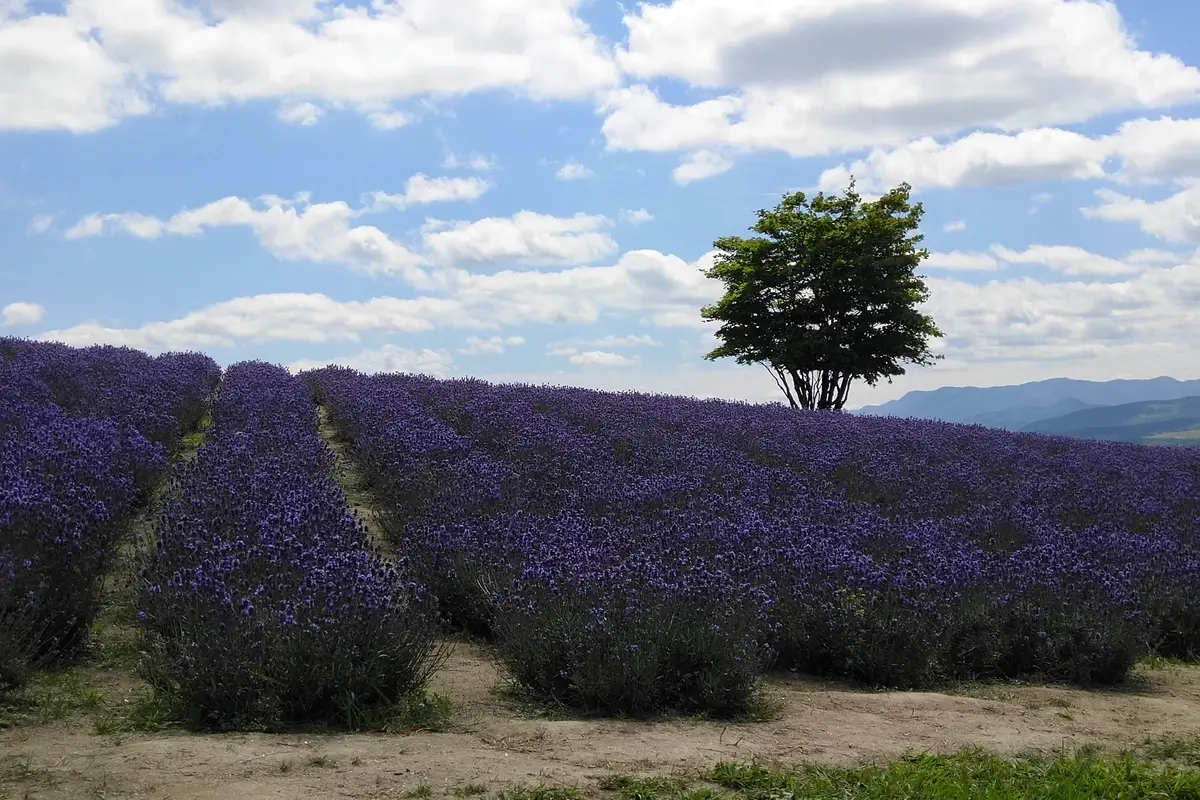
In summer, you must go to Furano to see the flowers. The local farmers have planted many lavender gardens; some are free, some charge an entrance fee, and you can enjoy flowers and meals. Be sure to try the melon and lavender soda. The adjacent Biei area features vast rolling hills planted with various crops, one patch after another, in different colors, like a patchwork quilt. Therefore, you can rent a bicycle at Biei Station and ride around. The famous "Patchwork Road" is named after this. From Sapporo, take the JR Limited Express to Furano, about an hour and a half. In summer, there is a one-day ticket for Furano, Biei, and Sapporo, which is very cost-effective. You can buy it at the aforementioned Sapporo North Passenger Service Center. If you're lucky, you can get the Lavender Express train, which has a special feel. For a day trip, you can go from Sapporo and back, but most people stay overnight in a guesthouse in Furano or Biei and play for two days to fully enjoy it. Alternatively, you can stay one night in the second-largest city, Asahikawa, which is convenient for visiting Asahiyama Zoo the next day. The first time we went in summer, we chartered a car from Sapporo heading north, passing through Furano, and then playing in the Biei area. Biei has several distinctive trees: the "Seven Stars Tree" and the "Parent-Child Tree." We stopped to take photos and enjoy the scenery. In the evening, the car dropped us off at a hotel near Asahikawa Station, making it convenient to visit the zoo the next day. Hotels in Asahikawa are much cheaper than in Sapporo. At night, we strolled around the city center with few Chinese tourists—a quiet and cozy small city. It was very nice to explore.
(I don't have the stamina to bike around Biei; I'd only recommend it if you have plenty of time, are fit, and can read maps. I'm overweight, hate heat, and have poor stamina, so I chose to charter a car.)
The picture above shows the Parent-Child Tree—the two sides are the parents, and the small tree in the middle is the child. Haha. It's hard to see clearly. There's also a Seven Stars Tree, iconic from the Seven Stars cigarette brand—can't find the photo. That day, we enjoyed beautiful scenery along the way, truly immersed in the sea of flowers. If I had more energy, I would have really wanted to rent a bicycle and enjoy it slowly.
5. Asahiyama Zoo:
This small zoo is most famous for its winter penguin walk. Twice a day, staff take the penguins along a designated route in the zoo. Be sure to check the times and arrive early to secure a good spot. We arrived half an hour early and almost couldn't get in. Luckily, there were four Japanese elementary school students who knelt on the ground to avoid blocking others, so our family could stand behind them and see the little penguins. Meanwhile, the nearby Chinese tourists kept pushing and crowding, which I found extremely disgusting. The quality of our compatriots still needs improvement. Although the zoo is small, its user-friendly layout ensures you don't walk unnecessary paths. Each exhibit allows you to enter and get up close to the animals from different angles. There are also scheduled times for animal talks and interactions. I used to think Beijing Zoo was large and had a lot to see, but there you are always far from the animals. At Asahiyama Zoo, they really make the zoo experience captivating and unforgettable.
Asahiyama Zoo has a one-day JR package from Sapporo, which includes a round-trip JR Limited Express ticket between Sapporo and Asahikawa, zoo admission, and a bus ticket from Asahikawa Station to the zoo entrance. You can buy it at the service centers in Sapporo Station and the airport. The one-way trip from Sapporo to Asahikawa takes about an hour and a half. From the north exit of Asahikawa Station, take bus number 6 to the zoo entrance, about 40 minutes. In winter, pay attention to the train schedule and make sure it aligns with the penguin walk times.
If you're lucky, you can catch the Asahiyama Zoo special train, where you can take photos with staff dressed in animal costumes—ideal for families with children.
6. Lake Toya Fireworks:
In summer, we took the JR from the airport to Minami-Chitose Station, then transferred to a limited express for about an hour and a half to Lake Toya Station. There are many hot spring hotels along the lake, most of which include breakfast and dinner. This type of accommodation (with dinner, breakfast, and one night's stay) is called "ippaku ryoushoku." In summer, there is a fireworks display over Lake Toya. I thought it would be grand, but it only lasted about ten minutes or so—the scale wasn't huge. However, since children in Beijing haven't seen fireworks for many years during the Spring Festival, watching the fireworks for two nights was very satisfying. We stayed at the Manseikaku Hot Spring Hotel, booked through Ctrip, a long-established Japanese hotel. The meals were good, the bed was comfortable, and the room provided Japanese yukata (casual kimono). Wearing the yukata to dinner and strolling by the lake was very pleasant. We could watch the evening fireworks from the hotel room. The hotel's hot spring was superb—we soaked twice a day, and it was amazing. When soaking in a Japanese hot spring, you first wash in the bathing area, sitting on a shower stool. The hotel provided toiletries from POLA or horse oil, which were fantastic—they left the skin smooth. After washing, you soak in the hot spring pool. Soaking really relaxes the muscles and joints, washing away all fatigue. During the day, you can also take a bus to Mount Usu for a distant view, or visit the Bear Ranch and buy some local specialty products. The horse oil series products are very moisturizing. We stayed two nights. After checking out, we took the hotel's bus back to central Sapporo. It took a little over two hours to reach Sapporo, with a break at a rest area. Remember to reserve the bus when you check in.
Some of my friends joined a one-day tour from Sapporo that visited Lake Toya, Mount Usu, and the Bear Ranch together. But I think if you come to the Lake Toya area and don't soak in the hot springs or watch the fireworks, you might as well not come at all.
7. Hoshino Resort:
We stayed there twice with our child, and there's really a lot to cover. I'll write a separate travelogue about it. For family vacations, Hoshino Resort is a must—it's so much fun. Two nights are not enough. But the price is really steep! Haha!
Finally, let's talk about New Chitose Airport, which everyone visits when leaving Hokkaido. It's also a hub for shopping and dining. If you want to buy Otaru glassware, various sweets, drugstore items, etc., all in one place, you can do so at the airport. You can also experience the Doraemon-themed area—how could we post-80s people miss it? So arrive at the airport four hours early. Take one last stroll, do some shopping, and make sure you leave no regrets for the trip.


