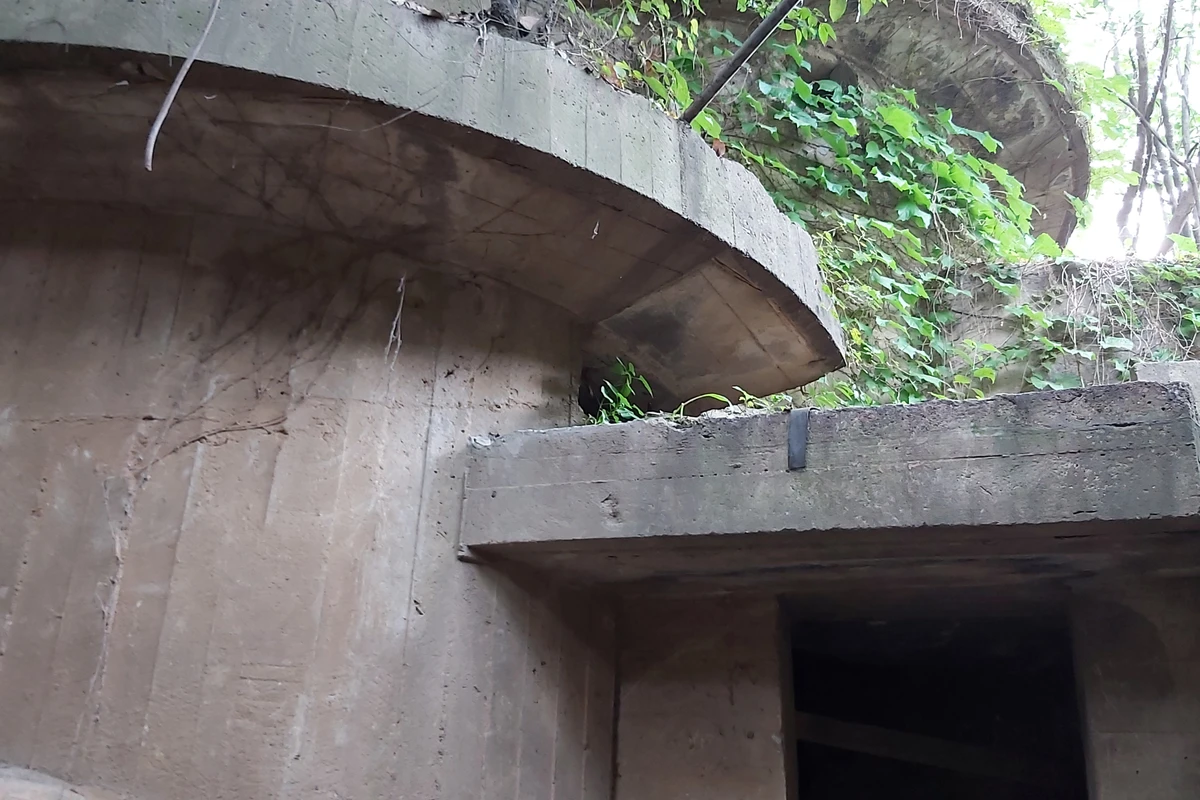
On the 71st Anniversary of the Liberation of Shanghai, A Survey of 45 Pillboxes Scattered Across Central Shanghai
On the 71st Anniversary of the Liberation of Shanghai, A Survey of 45 Pillboxes Scattered Across Central Shanghai
Over 18 days starting from May 7, I visited seven districts—Xuhui (3), Minhang (2), Changning (4), Hongkou (6), Yangpu (3), Pudong (10), and Baoshan (17)—examining over forty surviving pillboxes in Shanghai. These structures have witnessed the Battle of Shanghai, the War of Resistance, the Battle for Shanghai, and the era of 'anti-revisionism.' Their construction dates span the Japanese occupation, the Kuomintang period, and post-liberation times.
A Survey of Pillboxes Scattered Across Shanghai
1. Xuhui District (3 pillboxes)
This pillbox stands in the heart of the city, yet goes unnoticed by most. Its precise location is inside the street garden at the corner of Qinzhou Road and Tianlin East Road (south side of Tianlin East Road, east side of Qinzhou Road), right beside the Puhuitang River.
Spotting this sign means you're close to finding it.
The next pillbox is just a one-minute walk to the left after entering the east gate of Kangjian Park.
The following pillbox is located at No. 10 Dongping Road, Xuhui District.
After checking, I realized it's not actually a pillbox, but merely a hideout.
2. Minhang District (2 pillboxes)
This pillbox is inside the Minhang Cultural Park.
This one is very hidden, known to few. Even when you pass right by it, you might not notice it. It is located at the Lianhua South Road Bridge in Minhang District, on the north side of the bridge, near the Luoxiu Road side to the south.
3. Changning District (4 pillboxes)
This pillbox is inside Lane 996, Hongqiao Road (Changhong Residential Community).
The next pillbox sits in a corner of the courtyard outside the ground-floor apartment of No. 89, Lane 996, Hongqiao Road (Changhong Residential Community).
This one is at the entrance of No. 64, Lane 1829, Hongqiao Road, Changning District.
This pillbox is on a public green space within the residential compound of Lane 377, Honggu Road, Changning District.
4. Hongkou District (6 pillboxes)
This pillbox is to the right of the entrance of No. 38, Lane 4, Changzhong Road.
The next one is north of the 1876 Old Station Creative Park, west of the Songhu Railway, south of Jiangwan Station on the Songhu Line.
At 1933 Old Millfun in Hongkou District, beside the tall red chimney to the north, there's a pillbox whose exterior has been rendered with cement. It should also be counted among those inside the Inner Ring. Unfortunately, its construction date and purpose, and who built it, remain unknown.
Behind the shop at No. 21 Dalian West Road, and at the entrance of No. 8, Lane 270, Xingfu Village on Siping Road, stands the largest pillbox I've seen so far (estimated area about 70 square meters).
This pillbox is at the entrance of No. 7, Lane 510, Wenshui East Road.
This one is to the left of No. 21, Guangling First Village.
5. Yangpu District (3 pillboxes)
This pillbox is at the entrance of No. 50, Fengcheng Third Village, Yangpu District.
At the front of the courtyard (outside the wall) of No. 110, Section 2, Fengcheng Second Village, opposite No. 81, directly across from the trash bins and behind the notice board, this pillbox has been disguised and remodeled, making it hard for outsiders to recognize.
This pillbox stands beside house numbers 47–48, Lane 50, Tieling Road.
6. Pudong New Area (10 pillboxes)
This pillbox is along the green belt of Biyun Sports and Leisure Center, beside Yanggao Road, in Pudong New Area.
The next pillbox is on the opposite side of Yanggao Road from the Biyun Sports and Leisure Center.
Another one is next to the Decathlon store in the Biyun Sports and Leisure Center.
This pillbox is hidden deep within the green belt along Yanggao Road at the Biyun Sports and Leisure Center.
This one is inside the bicycle shed of Lane 501, Lancun Road, corresponding to a corner of the courtyard of the ground-floor unit at No. 8 of that lane.
This pillbox stands right outside the courtyard of No. 616 in Weifang Sixth Village, directly facing the door of No. 612.
This pillbox is on the sidewalk right in front of No. 1527 Pudong South Road (street-facing).
This pillbox is at No. 7, Lane 420, Eshan Road, Pudong.
This pillbox is on the street-facing sidewalk at No. 96 Miaopu Road, Pudong.
This pillbox sits on a green strip at the entrance of No. 8, Jingxi First Village, Yangjing Town, Pudong.
7. Baoshan District (17 pillboxes)
This pillbox is within the Baosteel Shancun Residential Community in Baoshan District.
This one is at the intersection of Jiangyang North Road and Taihe Road—strictly speaking, it's on Taihe Road, west of Jiangyang North Road.
This pillbox is at the corner of Jiangyang North Road (west side) and Tiecheng Road, north of the Jiangyang North Road Agricultural Wholesale Market.
This one is inside Yanghang Middle School in Baoshan District.
This pillbox is in Miaohang Park, Baoshan District.
This pillbox is in Gonghe Park, Baoshan District.
This pillbox is in Sitang Park, Baoshan District.
This pillbox is at the end of Aihui Road, right by the Wenzaobang River.
This pillbox is west of the Wenzaobang Bridge on Gonghe New Road, on the southern bank of the river.
This pillbox is east of the Meipu River Bridge on Tiefeng Road, on the southern bank of the Meipu River.
This pillbox is in the woods along the tracks inside No. 8, Lane 1081, Jiangyang North Road.
This pillbox is in the 13th Team of Sitang Village, Baoshan District.
This pillbox is inside the factory of Huayi Packaging Co., Ltd. at No. 3366 Baoyang Road, Baoshan District.
This pillbox is also inside the Huayi Packaging Co., Ltd. at No. 3366 Baoyang Road.
This pillbox is 10 meters southwest of No. 1788 Baoyang Road, Baoshan District.
This pillbox is at the intersection of Baotaihe Road and Tieyi Road.
This pillbox is at the corner of Fuchang Road and Taihe West Road.
The remaining pillboxes in Shanghai fall into three categories: military facilities, cultural relics, and abandoned ones. By construction period, some were built by the Japanese, some before liberation, and some after liberation.
Old FU
First draft, May 27, 2020


