Shanghai Off the Beaten Path: Visiting the City’s Most Artistic Private Museum
Shanghai is a sprawling metropolis with countless museums, but if you're after something truly off the beaten track, this private museum is an absolute must. Taihui Life Culture Park, the city’s largest private museum, houses countless treasures, gorgeous landscaped gardens, and authentic Huizhou-style ancient buildings — it’s Shanghai’s most artistically infused museum. Follow me and let’s delve into this enigmatic museum together.
Taihui Life Culture Park is a place steeped in artistic atmosphere. The museum building alone covers around 20,000 square metres, while the entire park spans over 60 mu (about 4 hectares). Inside you’ll find more than 40,000 rare artefacts and exhibits, including antique curios, calligraphy, paintings, sculptures, contemporary art, stone carvings, historical architecture and more. Wandering here feels like immersing yourself in an ocean of art.
The moment you arrive at Taihui Life Culture Park, you’ll be drawn in by the simple yet imposing Chinese-style entrance gate. One glance is enough to take in the enchanting landscape of hills and water just beyond it.
At the entrance, the main building directly ahead houses the museum itself, with the eastern-style garden lying in front. Off to one side stands a classic Huizhou-style building — simply exquisite. You’d never expect such a place to exist in this industrial zone; once you step inside, it feels like you’ve been transported to an entirely different world of beauty.
Entering the lobby, the whole space is bright and airy. A large screen in front plays captivating stories about tea — so beautifully shot that my friends and I were completely mesmerised. Mingyue Tea Culture is one of the museum’s highlights.
Although we hadn’t yet visited the main collection, the lobby alone left us in awe. Even its corners are adorned with refined art pieces, each one a delight.
A bloodstone carving vividly depicts scenes from ancient daily life — so lifelike you can almost hear the bustle.
The museum’s layout follows a loop design, with a sunlit central courtyard that showcases a classic Chinese landscape — though the space is large, look closely and you’ll notice antique objects dotted everywhere, a testament to the owner’s thoughtfulness.
Old stone tables and chairs sit in the courtyard, making it a perfect spot for sipping tea and chatting, and soaking up a sense of carefree ease.
Exquisite Architecture and Gardens
Heading back outside to the ancient structures — these are among the park’s most important collections: six impeccably preserved Huizhou-style buildings. Carefully arranged alongside water features and landscaping, they whisk you away to an Anhui village, a vision of Chinese beauty that had us all beaming with delight. If you come dressed in Hanfu or a qipao for photos, it couldn’t be more fitting.
These Huizhou-style buildings have been wonderfully preserved and still exude their timeless charm today.
The Shanghai School Gallery was the first exhibition we visited. The space is incredibly spacious, with large-scale paintings displayed in glass cabinets. The gallery showcases classic works by masters of the Shanghai School from the late Qing dynasty to the present day, reflecting the succession and evolution of traditional Chinese painting in the region. The Shanghai School built upon the culture of Jiangnan and Wu-Yue, incorporating Western influences to create a distinctive artistic identity. Through this gallery, you gain a deeper understanding of Haipai (Shanghai-style) culture. The “Shanghai School” was a movement that established its own lineage from the 19th to early 20th century, and has had a profound impact on Chinese art history.
“Buddha Image” is a birthday tribute by Feng Zikai, featuring the solemn figure of Amitābha and pine trees symbolising longevity.
“Peaches of Longevity” was painted by Xie Zhiguang, an artist born in Yuyao who later worked at the Shanghai Chinese Painting Academy.
“Meticulous Figure Painting” — this exquisite piece had us savouring every detail. The lively scene is depicted with such intensity it almost unfolds before your eyes. Created by Huang Shanshou, it portrays classical maidens with a balanced composition that is rich yet never stiff.
Paintings aren’t limited to paper — they appear equally on fan surfaces and other objects, delicate and beautiful.
“Folk Customs” by Shi Dawei blends traditional techniques with Western methods; the figures are sensitively rendered, their personalities vividly expressed.
“Various Scholars” by Zhang Guiming.
“Lotus Pond” painted by Han Tianheng, exuding a neoclassical flair.
The Mingyue Tea Museum is one of the most important halls. From the outside it doesn’t look drastically different, but as we delved deeper, layer upon layer of surprises drew constant praise. The museum is divided into areas for tea utensils and tea-leaf displays, and is the most comprehensive and richly endowed tea museum in Shanghai. It houses a vast collection of tea paraphernalia, extremely precious tea varieties, and the “Top Ten Intangible Cultural Heritage Handmade Teas”. Here you can fully appreciate the millennia-old heritage, evolution, reform and innovation of Chinese tea culture.
On the entrance wall, an elegant lady in a small boat glides through a lotus pond — classical, graceful. This is “Tea Fairy” Bao Lili, China’s Tea Culture Ambassador and the designated Tea Fairy at both the Shanghai and Milan World Expos. She is also the founder of Mingyue Culture, dedicated to helping more people understand and deeply explore tea culture.
Inside the exhibition hall there are mobile “tea booths”. These cháliáo were special tea-drinking rooms in the Ming and Qing dynasties, designed to create a refined, intimate setting. The simple elegance of these antique-style tea rooms made us itch to sit down and try.
The tea utensils are exquisite and refined, inviting you to repeatedly savour their beauty.
The visitor route then leads you through tea processing. From tea’s discovery to how people first handled the leaves, to the gradual spread of the tea-drinking habit from the Bashu region after the Qin dynasty unified China. By the Western Han period, tea had become an elegant pastime of the royal court.
Exquisite court tea sets, made entirely of gilded metal, are supremely noble.
The collection isn’t limited to Chinese artefacts; Japanese matcha utensils are also featured. Here we also learned about the arts of whisking and boiling tea.
When I passed through one gallery into another, an old Chinese-style structure inside the hall took my breath away. Hanging above it was the plaque inscribed “Rui Gong” — “Rui Gong Tian Chao” was the imperial plaque bestowed upon the Che Shun Hao tea company. This plaque signifies heritage and legacy.
The pavilion houses a display of aged Pu’er tea, designed with the Ancient Tea Horse Road as inspiration.
The Tea Fairy has catalogued all her rare aged Pu’er collections according to three significant historical stages: Hao-grade, Yin-grade, and Qizi Bing (seven-sons cake) teas.
The central tea warehouse of the Mingyue Tea Museum has the slogan “Tea has life” at the door, perfectly conveying our philosophy towards tea storage. The central warehouse on the second floor stores a large quantity of ancient-tree tea. Beyond its storage function, it can also host seated meditation for up to 50 people and other quiet events. As soon as you arrive here, you feel your heart settle into deep calm.
Speaking of tea tasting, it’s an absolute must during your visit to Taihui Life Culture Park. There are many tea rooms in different styles — some lined with old books, some opulent, some as graceful as a modest maiden — but all offer a moment of leisurely tranquillity.
On the top floor there’s an elegant VIP tea lounge; just by looking at its décor you can see it’s more sumptuous. The rooftop also boasts a lovely landscape garden, though in summer it was too hot to linger.
Inside the Huizhou-style building, the “Rui Gong” space presents classic Hui-style architecture; stepping in from the scorching heat, you instantly feel a refreshing coolness.
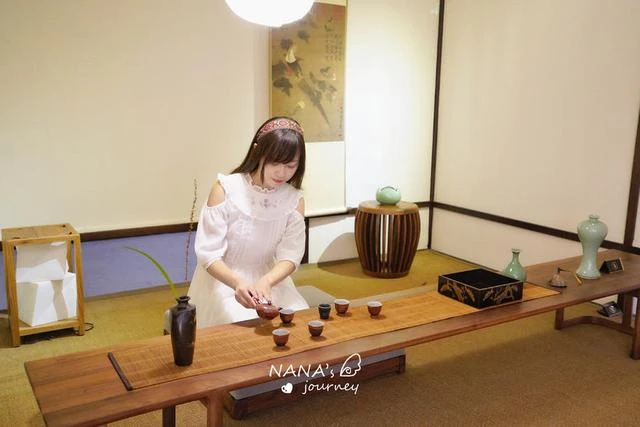
Here we tasted tea prepared by the tea artisan — Yunnan ancient-tree Pu’er called “Awakening”. The tea was rich and fragrant, and quietly sipping while chatting was the most wonderful thing on that blazing summer afternoon.
Watching the tea artisan brew was itself an artistic delight.
The Crystal Gallery, situated on the second floor of the Mingyue Tea Museum, features small rooms housing meticulously displayed exhibits. Every piece here is the exquisite work of acclaimed Chinese master artisans, offering each visitor a magnificent crystal appreciation experience.
Many crystal carvings depict Buddhist images, using the material’s inherent clarity to express the Buddhist concept of “emptiness and purity”. At the entrance, several crystal Buddhas are crafted from rutilated quartz.
Under the hands of famous Chinese sculptors, the spirituality and essence of crystal seem to leap before your eyes — so lifelike it’s as if they possess a vivid life force, perfectly showcasing the purity and vitality of crystal.
Rose quartz, one of the most common varieties, is turned into works of great beauty with a warm, gentle hue.
The painstaking polishing of a precious crystal is not about showing off skill, but about bringing out the light of the crystal’s own life, attaining the ultimate state of “the Way follows nature; heaven and humankind unite as one.”
The Sculpture Gallery provided me with much amusement. It exhibits over 80 works created by three generations of Chinese sculptors. Many of the sculptures at the entrance revolve around a revolutionary theme, stirring a sense of fervour.
The latter part of the gallery displays modern and contemporary sculptures, covering both social realism and abstract expressionism.
The sculptures, both large and small, capture expressions and movements so accurately they could be real.
In the gallery, lighting casts shadows on the sculptures, creating layered, three-dimensional effects.
I was told that this sculpture is by Ren Zhe, who happens to be a teacher of Yi Yangqianxi; I never knew the young star could sculpt — truly admirable.
There’s a sculpture symbolising the origin of life.
The most astonishing is the wall-mounted sculpture: from each angle you see a different image of this woman — sometimes she seems to gaze at you, sometimes she seems to brush past. Absolutely magical!
The Jade Gallery, next door, brings together classic works of the most influential contemporary jade-carving masters.
The exhibits mainly feature high-end jadeite ornaments, using lavish materials and extraordinary craftsmanship. They have a strong contemporary feel and originality, representing the pinnacle of modern jade carving art.
Again, many jade pieces depict Bodhisattvas, embodying many auspicious wishes.
There are also exquisitely carved jadeite cabbages, with two charming jade rabbits that are utterly adorable.
Watercolour paintings are not only the simplest tool for spreading painting knowledge, but also the most convenient medium for artists when drafting their compositions. As an independent art form, it has its own history and aesthetic value.
The Watercolour Gallery presents works covering cityscapes, rural scenery, scenes of production and construction, etc., reflecting the features of each era and tracing the historical trajectories of development and change across the country.
The beauty of autumn leaves in a mountain hollow is painted so vividly it feels like we’re witnessing a glorious autumn scene before our very eyes.
A town on the inner river — the serene beauty of a Jiangnan water village.
Harvest — the bounty of autumn, the most beautiful of seasons.
Opposite the tea museum is the Oil Painting Gallery. It doesn’t have a huge number of works, but the themed exhibition “Extraordinary Years” is truly impressive — a special show marking the 91st anniversary of the founding of the People’s Liberation Army.
We studied each painting closely, slowly re-reading history. Through these artworks, one can truly cherish the arduous years of revolution, feel the hardships of war, and relearn the Red Army’s spirit of the Long March.
“The Good Eighth Company on Nanjing Road” is another notable piece.
Right at the museum entrance is the creative arts and crafts shop. After finishing our tour of all the galleries and still lost in reverie, we stopped by to browse the cultural products. The exquisite artworks here are all for sale — if something catches your eye, you might just take a piece or two home.
The shop mainly centres around the Mingyue culture theme, offering many precious tea sets and tea leaves of breathtaking beauty.
There are also lovely ceramics and utensils displayed on every shelf.
It even includes delicate Japanese fabrics sourced from Japan (the obi sashes of kimono).
Another corner of the shop is a tastefully arranged clothing area, full of Chinese-inspired ancient-style garments where understated, elegant colours dominate.
The park’s cuisine is another highlight. The graceful setting and authentic local Shanghai dishes will make your taste buds dance. Braised pork belly, slow-cooked in Shanghai’s distinctive thick soy sauce and a touch of sugar — incredibly flavoursome.
Today, local cuisine also incorporates some chilli elements, making dishes even more refined and delicious.
Butterfly-cut shrimp with garlic — a dish that requires skill; this is the season when seafood is at its plumpest, so simply steaming it brings out the sweetness.
Similarly, seasonal swimming crabs, prepared with scallion oil, couldn’t be more perfect.
Stir-fried razor clams are also at their peak right now — meaty, clean, with a satisfyingly chewy texture.
Salty pork with cabbage, drizzled with a concentrated broth and topped with cured pork for balanced flavour.
Egg yolk tofu — the tofu and egg yolk sauce combine to create a savoury, silky mouthfeel that I absolutely love.
River fish, slow-cooked until rich and nutritious; summer is actually a great season for nourishing food too.
This fine meal, using the freshest seasonal ingredients, made the entire summer feel wonderful. I never expected a museum visit would also lead to such a culinary encounter.
The museum operates its own hotel under a membership system. The guest rooms are steeped in Chinese style — elegant, warm, almost like coming home. The culture park also offers great privacy and a very peaceful stay; I highly recommend spending a night here to fully savour the experience.
Outside the rooms, there are Chinese-style common areas for relaxing or receiving guests.
Taihui Life Culture Park is located at No. 89 Yuanshun Road, Pudong New Area, Shanghai. 1. Take Metro Line 2, transfer to Line 16, get off at Wild Animal Park Station, then take a taxi. 2. It’s a 20-minute taxi ride from Shanghai Pudong International Airport. 3. Self-drive.
Ticket for visiting Taihui Life’s ten themed museums: 100 yuan per person. Other study-tour itineraries are also available.


