Shanghai in Summer: Bookmark These Unmissable Spots
The Bund's chimes ring out punctually, blending with the boat whistles on the Huangpu River, waking the towering skyscrapers of Lujiazui, stirring the life and bustle in the Shikumen lanes, rousing the dreams and ambitions of workers starting a new day, as the bustling Nanjing Road stages a panorama of life's myriad faces... And some have been up all night—the neon lights flickering from moonlit brightness to starlit dimness, telling stories from the city's other side. Some adore its refined elegance, cutting-edge fashion, and stylish living. Others cherish its preserved traditional charm, traveling through history, touching the inherent culture that bridges past and future. But what most love is its ever-ongoing vitality, always displaying change in the most trendy and novel ways, while persisting with its own constants amid transformation. This city, full of magic, is nicknamed the 'Magic City.' As a traveler living in Shanghai, I've now called it home for thirteen years. It has harbored my youth and dreams, and I've witnessed its familiar and alien changes at breakneck speed. From the old 'Shili Yangchang' that every visitor used to flock to, to the Expo Park drawing endless check-ins from around the world, to the eye-catching Disney—through a professional traveler's lens, this must-visit list for Shanghai truly needs constant updating, always offering new creativity. Today I recommend several destinations ideal for this summer vacation; some are the latest Instagram-worthy spots, others are traditional classics. Once you go, you'll know.
Shanghai Songcheng: The Most Complete Shanghai Story, a Grand Stage of Joy
I've been long acquainted with the 'Qian Gu Qing' series of performances! Ever since I was first blown away by the 'Songcheng Qian Gu Qing' in Hangzhou six years ago, I've made it a point to catch every new 'Qian Gu Qing' show in any city. The magnificent lighting effects, ever-changing stage sets, lavish costumes, and the heartfelt dedication of every performer... The Qian Gu Qing delivers an imaginative audio-visual feast, a moment of shared emotion between stage and audience. No wonder it's hailed as a 'performance one must see in a lifetime.' The most captivating part is its 'change and constancy.' In each city, the show retains its core performance style and quality while fully integrating local culture and history, presented in a way that resonates deeply with locals. Some say, 'One show is the history of a city itself.' That's why, after watching it in Hangzhou, I still yearned to see it in Changsha, Lijiang, Sanya, Guilin, and Shanghai. Discovering that Songcheng had settled in Shanghai, I, as a Qian Gu Qing devotee, simply had to visit. Shanghai Songcheng is located in the Shanghai Expo area, once the workshops of the Shanghai No. 3 Steel Plant, which became the Expo Performance Stage during the World Expo. Now, it's transformed into a playground of laughter and joy.
Here's a 2.5-minute video guide to help you get a better idea!
The glorious days and tenacious spirit of Shanghai's steelworkers are woven into the stage story of 'Shanghai Qian Gu Qing.' Even though I've seen over ten performances, I was full of anticipation for the Shanghai version, eager to see what kind of spark would fly between Qian Gu Qing and this city I've lived in for over a decade.
As the main show at Shanghai Songcheng, the 'Shanghai Qian Gu Qing' performance is the foremost highlight. Let me share my own photos of the stage, in performance order. Act 1: Tracing the Origin of Shen and Hu – This act tells the story behind Shanghai's name 'Shen City,' recreating how Lord Chunshen of the Warring States period dredged the Huangpu River, turning the tide. Huang Xie, a famed nobleman known as Lord Chunshen, found the then-unnamed river plagued by siltation, high riverbed, and frequent floods. He led the people to dredge it, built embankments, and brought its benefits to the community. In gratitude, they not only built temples to him but also renamed the river Chun Shen Jiang, shortened to Shen Jiang, and later 'Shen' became an alternative name for Shanghai.
The stage is set with poetic beauty, blending real and virtual sceneries with light effects and dance, as if guiding us through the mists of time to trace those historical clouds.
Act 2: 1921 – Every city has its own character. 'Shanghai Qian Gu Qing' extols the era-defining responsibilities of several generations of Shanghainese and the spiritual core of this great city, as a tribute to the centennial of the Party. The act recreates the backdrop around the First National Congress, retelling the story of the working class, led by the Party, fighting oppressors a century ago. In the '1921' segment, Qiaoqiao experiences the joy of meeting her lover and the heartbreak of eternal separation, witnesses the solemn birth of the Communist Party of China, and beholds an epoch-making event in Chinese history.
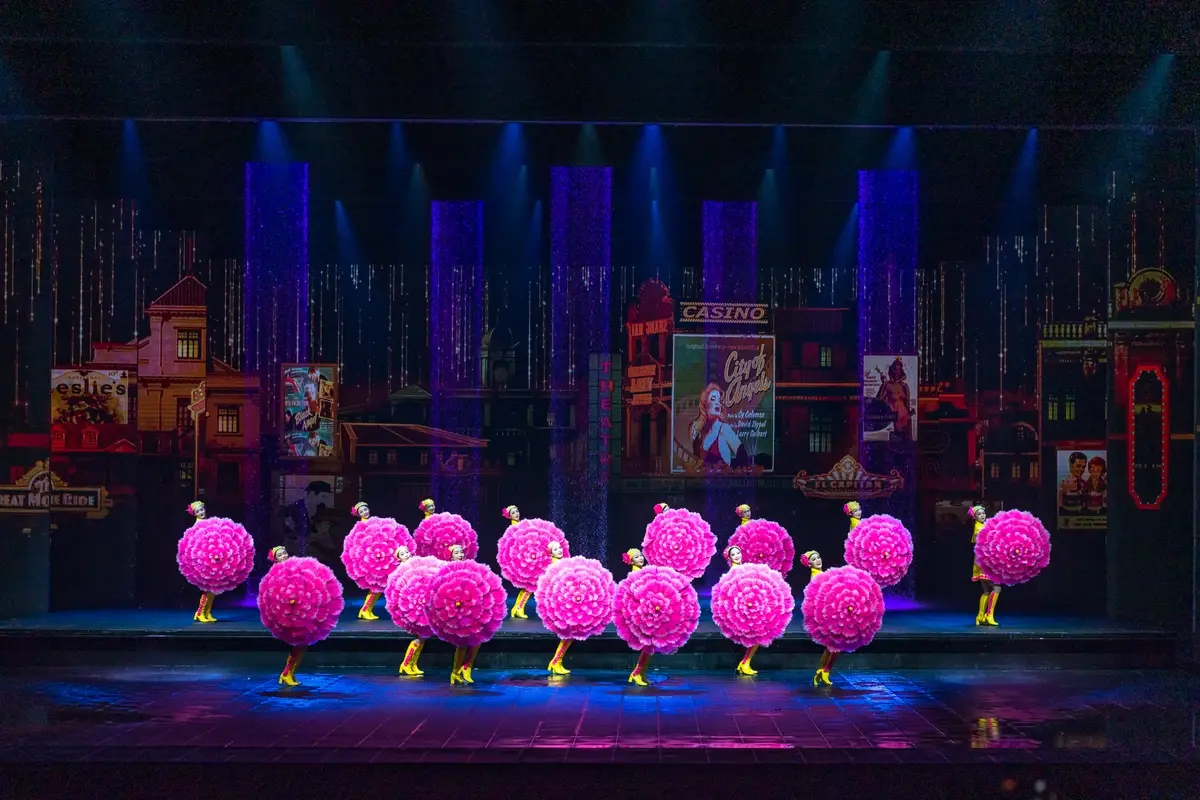
Act 3: The Golden Age – The 'Golden Age' of Shanghai is a world of undercurrents in the Shili Yangchang. Amid the jaunty rhythms and music lies endless intrigue and rivalry. The melodies and dances of the Bailemen bear the imprint of that era in this city.
And my favorite signature act: the acrobatic display under a canopy of light and stars. A scroll-like starry projection envelops the stage and audience, turning dancers' graceful figures into silhouettes that imprint on every viewer's eyes and heart. The beauty of light and the beauty of the body merge so harmoniously before your eyes.
Blending acrobatics and ballet, this part lasts only the duration of one song, but it's absolutely, breathtakingly brilliant—you dare not blink for fear of missing the tiniest detail.
Act 4: Shanghai Families – 'Shanghai Families' draws from the old longtang lanes closest to Shanghainese daily life. Through the perspective of an ordinary Shanghai family, it vividly portrays the half-century transformation of the city, using the small to reflect the large.
When the once storm-tossed Qiaoqiao grows old, surrounded by children and grandchildren, she spends a lifetime watching over Shanghai's passage of time. The story shifts from grand epochs to the tenderness within a family.
Qiaoqiao's three children each dedicate their youth to the wave of New China's construction. The family witnesses and participates in Shanghai's and China's monumental changes: sent-down youth, supporting third-line construction, spearheading industrialization... Shanghai contributes its strength to the nation's development, and every laborer gives their youth and passion. The show especially recreates the fervent labor scenes of the steel plant—a tribute not just to the era and its workers, but also to the very space that was once the Shanghai No. 3 Steel Plant, later becoming the Expo Performance Stage, and now Shanghai Songcheng, embodying spiritual heritage right on the stage. Time and space merge here.
Amid hawkers' cries, wandering peddlers who stir the childhood memories of old Shanghai residents in those longtang appear beneath the stage, weaving through the audience as if taking everyone back to their younger days. Finale: 'The Wind Comes from the Sea' – Artists from faraway South America ignite the entire venue with surging passion and vibrant rhythms!
From one person's name to a city's name, from a city to each of its individuals; from the dredging of a river to the soaring of a dragon, from the smoke of battle to dazzling lights... One hour is too short; you're so immersed that by the time you come back to your senses, it's over, leaving your heart trembling yet endlessly moved. This Qian Gu Qing telling of Shanghai's story has carved out its own style. It's worth seeing for anyone who has ever poured emotions and youth into this city. Previous Songcheng parks were sprawling complexes, taking ages to traverse between zones; Shanghai Songcheng, however, folds various entertainment areas into a castle-like structure. With each step, you move through a time tunnel—one moment you're on the terrifying 'Ghost Ship' or in 'Strange Tales from a Chinese Studio' fright, the next second you've traveled back to old Shanghai, and then suddenly you're in a foreign land bustling with merchants. If I must recommend another must-see show included with the ticket, it's the 5D large-scale experiential drama 'The Great Earthquake'—absolutely stunning. The entire stage employs 5D high-tech to recreate the devastating scene of the 5.12 Wenchuan Earthquake: mountains crumble, buildings collapse, the whole theater and thousands of seats shudder violently, and 3,000 tons of water cascade down in an instant... Real stories and touching images show how the Chinese nation united as one in boundless love, facing the disaster head-on. At the start, audience members are recruited to join the performance, experiencing firsthand the heart-wrenching moments of a great rescue.
It opens on a picture of happiness: a couple taking wedding photos, a mother with her child, a tour group visiting cheerfully... Suddenly the earth trembles, and all the actors freeze in that instant.
PLA soldiers, firefighters, nurses—racing against time, moving against the direction of danger.
Especially the soldiers, who with love gave strength to the nation, using their shoulders to prop up the hope of life.
If you've been to other Songcheng parks, you'll be familiar with 'The Great Earthquake' performance. Some lucky audience members can play actors, join the relief efforts, and even receive a participation certificate afterward. Another recommendation is the ballet at the Cliff Theater, splendidly using the Huangpu River view as a backdrop, seamlessly merging the graceful stage with the urban landscape. The 'little swans' on the Sky Mirror deliver a delightful artistic feast.
No amusement park is complete without projects loved by all sorts of little ones. The 'WA Dinosaur' show is a favorite for toddlers, with exciting performances and interactive segments for kids. Meanwhile, bubble shows, magic tricks in the jungle, and interactions with cute little parrots keep the little monsters thoroughly entertained, all eager to jump on stage. If you're bringing children, don't miss the performances at Elf Valley, Bird Show Theater, and Forest Theater.
Tianjie isn't just for kids; it's a marketplace for gifts, where you might unexpectedly brush past a Western Region beauty. At designated times, the entire street comes alive with parade performances. Besides Tianjie, don't forget to explore Chuanjie, Mohuanjie, Qian Gu Qing Street, and more.
For the braver souls, you can even dine inside the 'Ghost Ship.' Whether that whets your appetite or kills it, I can't say—if you try it, you must tell me how it goes.
Songcheng has a daily program schedule, so after arriving, you can catch smaller shows. Some have only one performance per day, others multiple; plan according to your interests and time.
How could summer be complete without water fun?
Apart from the main show 'Qian Gu Qing,' the parent-child show 'WA Dinosaur,' and the meal-included show 'Passionate Samba' are absolutely fantastic! The latter includes a three-course Western meal. You can flexibly choose the time; entering in the evening is great value and lets you experience the essence. This place suits family trips, girls' getaways, couple outings, and even single folks have shows to enjoy. Don't you want to check it out?
TIPS:
Park Address: No. 1750, Shibo Avenue, Shanghai (formerly the Expo Performance Stage)
Opening Hours: Monday to Friday 10:00-22:00, Saturday to Sunday 09:30-22:00. Follow Songcheng Tourism's official account, find 'Shanghai Songcheng' in the ticket center under purchase tickets, and buy in advance for discounts—some pretty significant! Just make sure to select the performance time when placing your order!
Taihui Life Cultural Park: Slow Down, Savor Life
If scenic spots interpret the relationship between humans and nature, museums build a bridge between the self and the inner heart. Shanghai has many museums, numerous public ones that lay out the nation's history and heritage two-dimensionally before visitors, stirring awe. Today, I want to recommend a private museum—it spreads out the collector's inner world and aesthetic philosophy before kindred spirits, like an intimate chat over tea with old friends. Taihui Life Cultural Park is Shanghai's largest private museum, a vast space converted from a factory, covering over 20,000 square meters.
Passing under the plaque written by the renowned scholar Yu Qiuyu, the urban clamor of the Magic City is shut outside. The entire cultural park, renovated from an old factory, features rockery waterfalls, winding streams, and sculpted landscapes, evoking the secluded charm of a Jiangnan garden.
Beyond the winding paths lies even more hidden treasure. In the four corners of the original factory, eight fully intact old houses have been relocated wholesale from places like Anhui and Jiangxi. They bring the essence of traditional culture across thousands of miles and through the ages. The classic Hui-style architecture and the modern factory buildings blend seamlessly, complementing each other. They appropriately present the core of Chinese traditional culture—the ancients' subtle, refined, and serene lifestyle—to a modern audience. No wonder this place is hailed as a model of factory transformation.
As Sumeru contains the world, so the Vajra contains the cosmos. The heart of Taihui Life Cultural Park is the Jingang (Vajra) Museum. 'Jingang,' a Buddhist term, in Mahayana scriptures refers to that which cannot be destroyed or replaced. Such an auspicious blessing appropriately names a museum housing world-class treasures. It holds over 40,000 rare artworks: antiques, calligraphy, painting, contemporary art, stone carvings, ancient architecture, and more. These are categorized into ten exhibition halls: Tea Museum, Oil Painting Hall, Shanghai School Painting Hall, Watercolor Hall, Glass Art Hall, Sculpture Hall, Crystal Museum, Ancient Stone Carving Hall, Jade Museum, and Temporary Exhibition Hall, regularly hosting themed and special exhibitions as well as master showcases. Tea Museum: Fragrant tea legacy infused with the soul of water. Crystal Museum: Sparkling purity, hearts of clarity. Shanghai School Painting Hall: Do you know the worlds within the masters' brushstrokes? Oil Painting Hall: The artistic charm transformed from the poetry of great leaders. Jade Museum: Natural beauty awaiting masterful craftsmanship. Sculpture Hall: Art that strikes directly at the heart. Tea Ceremony: The dancing spirits in the hands of the Tea Fairy – 'One leaf, falling into water, changes the taste of water, and from that, tea is born.' Touring each hall leaves one thirsting, especially after seeing the Tea Museum with its rich stores of fermented tea leaves and the gene banks of hundreds of tea mountains. So, join me in the tea room, and watch how these agile tea leaves, in the hands of the legendary Tea Fairy, transform into intoxicating fragrance.
As you visit the museum, you'll discover tea elements everywhere. This magical leaf seems to be the soul of this place. Boiling water enters the pot, and the curled leaves spring to life like revived sprites, infusing nature's aromatic essence into the water, then releasing it into the air—inhaling it, you forget all vulgar cares. Sip gently the amber tea soup; warmth flows down your throat, every pore from deep within seems permeated with fragrance. Mundane thoughts are cleansed, as if Zen music hums in your ears. As the tea aroma fades, what dawns on you is this attitude of casual retreat, hidden amidst the city's hustle. When the rapid urban rhythm forces us to let go of so much, it also loads us with more. Perhaps those who attend to their inner selves, treat themselves well, and live more deliberately are the ones to whom life offers its most comfortable moments.
More TIPS:
1. Ticket: Entry to Jingang Museum is 100 yuan/person; discounts available on OTA platforms when booking online in advance. Besides museum visits, there are occasional study programs and meditation activities; interested visitors are advised to check the official website.
2. Free Admission Policy: a. Children 6 years old (inclusive) or under 1.2m (inclusive) for free. b. Seniors 70 (inclusive) and above with ID free. c. Retired veteran cadres with retirement certificate free. d. Disabled persons with disability certificate free.
3. Opening Hours: 9:30-17:30 (Tuesday to Sunday)
4. Transportation: Self-driving recommended. By public transport, take subway Line 16 to Wild Animal Park Station, then taxi.
China Maritime Museum: Catch the Wind, Break the Waves
With 'maritime' as its theme and 'museum' its foundation, the Shanghai China Maritime Museum is absolutely a great place to visit. You and your kids can learn about navigation history, vessels, navigation and ports, maritime affairs and safety, seafarers, and military navigation across six main halls, plus two special exhibition areas on fishing and maritime sports and leisure—enough to keep you occupied from opening till closing.
Upon entering, you'll be immediately drawn to the museum's treasure: a huge replica of a Ming Dynasty wooden ship. With its sails, it stands at least three stories tall. Such a giant couldn't possibly have been brought inside, so it was built together with the museum. The craftsmanship is exquisite, and unlike many decorative exhibits, visitors can actually board the ship for a close look. There's also a video area detailing how this behemoth was constructed.
The three-story Sails Hall mainly showcases navigation technology.
And a children's handicraft exhibition booth, where volunteers from Tongji University's maritime studies program not only taught my child how to make an ocean drift bottle but also imparted fascinating marine knowledge. Using syringes to crush small glass beads into fluffy fibers, then layering them in colors of the sea—dark blue, light green, transparent—and adding matching tiny shells and starfish.
Of the six exhibition halls, we loved the Navigation and Port Hall on the second floor best. It displays the marine environment, various instruments and technical data that have ensured safe navigation through history, including terrestrial, celestial, and radio navigation. It also showcases plenty of relics and objects reflecting ports and waterways. Simple models help visitors understand busy marine operations.
The Waterside Platform on the first floor is an outdoor experience zone where children can enjoy the fun of small OP sailboats. The 10-minute OP sailing experience jointly offered by China Maritime Museum and Hansail Yacht Club is hugely popular with kids; during the Life Festival it was even free—an opportunity not to be missed.
The museum frequently hosts temporary exhibitions with varying themes; sometimes these are wonderfully impressive and worth looking forward to!
More Practical Info:
Tickets: Adults 50 yuan; students (primary to university) with ID 25 yuan; seniors 60+ with valid ID 10 yuan; children under 1.4m (must be accompanied by parent) free.
Opening Hours: 9:00-16:00 (last entry 15:30); closed Mondays except public holidays.
Transport:
Metro: Line 16 to Dishui Lake Station, then bus 1096.
Self-drive: Outer Ring S20 (toward Pudong Airport) → S2 Expressway (toward Donghai Bridge) → Dishui Lake exit to China Maritime Museum.
Baoyan Paradise: A Carnival with the Kids
Baoyan Paradise has several branches in Shanghai and Suzhou, but this trip took us to its flagship on Dushi Road in Minhang District. Designed as a whole new immersive indoor theme park for Chinese visitors, it's also the first indoor constant-temperature water park in the Magic City. Spanning five floors and 20,000 square meters, one day from opening to closing simply isn't enough to enjoy everything.
The castle-like exterior of Baoyan Paradise instantly transports you to a fairy-tale world. On the first floor, an area features 5D, 7D, and 9D cinemas with morning and afternoon showtimes, which are said to be amazing. However, my daughter wasn't interested—probably more appealing to boys—because the moment she saw all the slides, she went wild. Even at only five years old, she's incredibly brave, daring even the near 90-degree vertical slide.
On the second floor, the most irresistible attraction is the sea of balls. My daughter had never seen so many balls and excitedly buried herself in them. Actually, not only was she thrilled, I couldn't control my own excitement either.
The third and fourth floors are open to form the park's core area: the constant-temperature water park. After changing into swimsuits, my daughter, always up for challenging projects, headed for the spiral slide that suited her thrill-seeking. Each slide has a staff member guiding children on the correct way to go down, ensuring their safety. The excitement level varies by slide, and many adults scream as they come down, while some kids absolutely love the thrill.
The rainbow slide is much lower than the spiral one, making it more suitable for younger children. The Lake Discovery area has many cute water-spraying fixtures. After getting tired from playing, you can take your child to enjoy parent-child sauna sessions, then have a comfortable bath.
The fifth floor is the rooftop outdoor zone, Brave the Jurassic, with several animatronic dinosaurs that move and roar, incredibly lifelike. The outdoor climbing path is long and fun. The grass-sledding area requires parental accompaniment.
With the blazing summer sun, you no longer need to worry about where to take the kids. Not hot, not sunny, fun, and engaging—that's Baoyan Paradise. More practical info (flagship store): Store address: No. 11, Lane 3825, Dushi Road, Minhang District; Business hours: 10:30-19:30 (Mon-Fri, water park opens 12:00-17:00), 9:30-20:30 (Sat-Sun, water park opens 11:00-19:00); Ticket: 398 yuan (one adult + one child), 498 yuan (two adults + one child). Top up 5000 yuan for 40% discount (160 yuan for one adult + one child, 200 yuan for two adults + one child). Warm reminders: 1. For some attractions, long sleeves and long pants plus socks are required for safety. 2. Swimsuit mandatory in the pools. 3. After buying tickets, re-entry is unlimited that day; just remember to get a wristband from staff as proof. 4. Various experience activities and shows are available—plan your time accordingly.
Peace Hotel: A Hotel, a City's History
When it comes to where to stay, I must recommend the place that best embodies old Shanghai's former glory—the Peace Hotel. Once hailed as 'the Number One Edifice in the Far East,' it sits on the banks of the Huangpu River, at the junction of the Bund and Nanjing Road. Its huge green copper pyramidal roof is a striking part of the Bund's skyline, the most prominent landmark there. Wong Kar-wai's upcoming film 'Blossoms' opens with the Peace Hotel.
The hotel was created by Sir Victor Sassoon, born into an aristocratic Jewish-British family and exceptionally well-educated. After his left foot was disabled while serving in the Royal Air Force during WWI, he came to the eastern colonies, first Bombay, then Shanghai, gradually taking over the Sassoon family business. In 1924, he inherited the family company and became its head, finally relocating to Shanghai in 1931 to establish the business's foundation.
The most luxurious accommodation is the Sassoon Presidential Suite. Beyond that, the most famous are the nine Nation Suites, each at 178 square meters, honoring the cultural styles of different countries: Indian, British, Chinese, American, French, Italian, Spanish, Japanese, and German.
Over the decades, these suites have hosted countless VIPs, diplomats, explorers, travelers, local or expatriate aristocrats, celebrities, savants, artists, stars—elites from all over the world gathered here. The Cathay Hotel, as it was then known, was acclaimed as 'the Number One Edifice in the Far East,' the pinnacle of luxury and art. The Sassoon Presidential Suite and the nine Nation Suites reflect Sir Sassoon's international vision of the 1930s, embracing all diversity.
Today, besides the physical restoration, the aristocratic lifestyle has also been revived. Come to the Peace Hotel, transcend time, and savor the elegance of another era, a taste of the extraordinary. As a tourist city, Shanghai has so, so many fun places. What I love are those destinations that align with the city's character and history, using a courtyard or a building to reflect the entire city's essence. Among these heartfelt recommendations, is there one you like? Why not add it to your travel bookmarks? In this sprawling metropolis, perhaps we might chance upon each other at one of these shared favorite spots.


