This 'People-Savvy' Hunk Cooks Home-Style Food, and Stars Can’t Get Enough!
[ Homemade ]
Stars are probably the people farthest from a home-cooked meal.
Spotlight bakes designer labels scorching hot,
schedules leave no room to breathe.
Only they really know
that a meal belongs in the belly,
not on center stage.
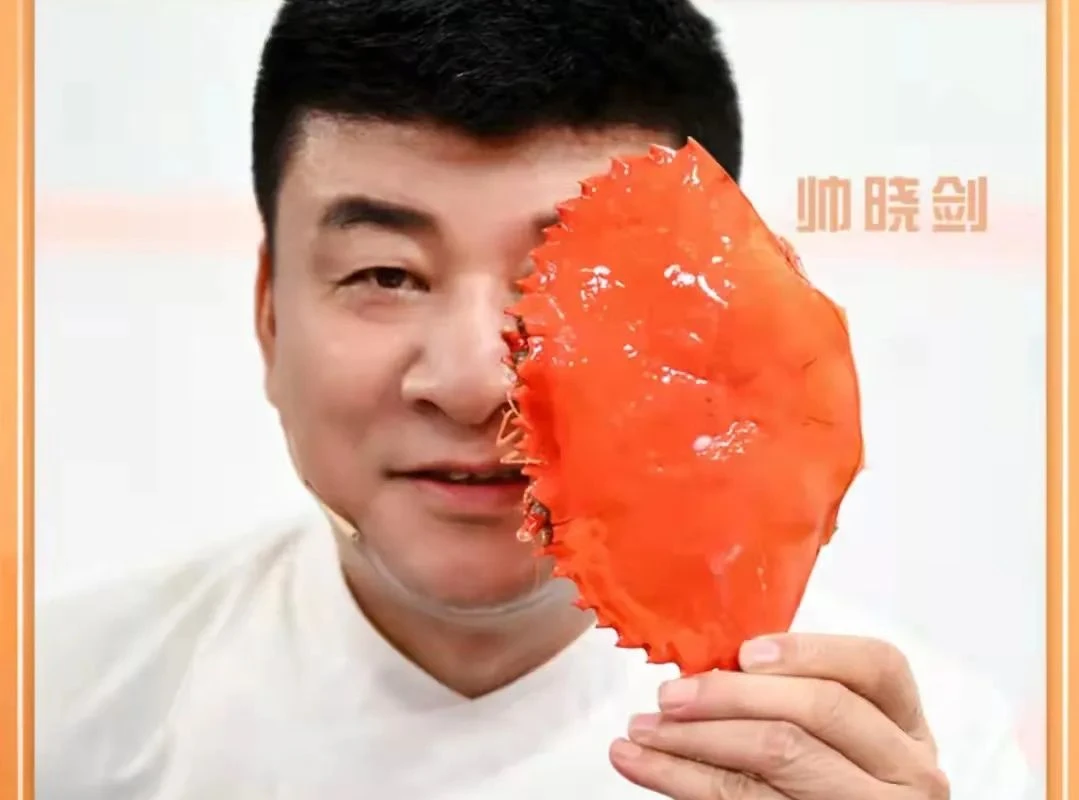
The handsome chap is called Shuai Xiaojian. That surname is a gift – it carries a natural sense of stage presence. Shout it from afar, and eyes from every direction swing your way. It suits his star-chef identity perfectly.
Though quite a few say he resembles Ken Takakura, I’m not having it. In his fans’ hearts, Shuai Ge makes your mouth water far more – and he wins over both men and women!
Shuai Ge, with that divinely guided ladle
When talk turns to screen heartthrob Wang Yaoqing, Shuai Ge says, "He’s especially fond of red-braised pork and zha cai chicken." After someone shares a meal with him, Shuai Ge always thoughtfully remembers – he wants to treat you like family. No wonder his star clientele chase him all the way to Shanghai.
Ask about this "star magnet" quality and he demurs: "Celebrities pay close attention to their figures and don’t eat huge amounts. Even on TV shows, what they ate used to be less refined – keeping in shape matters most."
I got to talk with Shuai Ge up close on the Zhejiang TV set of *Delicious Food is Hard to Find*. Every dish the crew made on site went through votes from stars and expert judges. In the end, roughly sixty percent of the advancing menus came from his own hands! Given the limits of the set kitchen and backstage team, hitting 80% of a dish’s full color, aroma and taste would already be a miracle. But faced with Shuai Ge’s hands that turn ordinary into extraordinary, every guest present was secretly drooling over every plate.
One dish served live, "Fleeting Fragrance," stole countless hearts. His take on it: Hexiangu mushroom is a unique sun-loving fungus, soft in texture. Its aroma releases fully in high heat over a short time, turning crisp and fragrant. To maximize the intensity of that flavor in minimal time, "I used a siphon coffee pot. The base was clear chicken broth. Once it boiled, the siphon action pushed the broth up into the upper chamber holding the mushroom, keeping the temperature above 90°C, letting the fungus steep completely. After one minute, I removed the heat and the broth flowed back down naturally." The whole process feels like giving the mushroom a hot spring – all the essence stays in the soup. Twist open the globe, pour out the liquid and drink. A cloud of aroma; my mouth filled with pure, sweet, umami-rich delicacy.
Half my brain was lost in drooling; the other half was thinking this all connects to Shuai Ge’s resume. He’s executive chef of Shanghai Nelaishi Yacht Club, a master of Chinese cuisine who for years has overseen tables of the elite. His skills were always rock-solid.
Sometimes I joke that reciting his titles is a tougher act than learning the comic cross-talk classic "Reel Off Dish Names." Years ago, he was culinary advisor for *Chef Nic*, chief advisor for *MasterChef China*, winner of the 2012 World Culinary King title at *Feast on the Sea* USA, and named one of China’s F&B BEST50 Power Players. For six straight years he appeared on Shanghai TV’s prime show *Gourmet King Board* and on *Walking Delicacies*. More than having run through China’s finest ingredients and dishes, he knows inside out the people who have themselves "run through China’s finest ingredients and dishes." A tough test like *Delicious Food is Hard to Find* is just a little spring-sword dance for him.
Too many celebrities independently fall in love with the refined homestyle taste Shuai Ge creates. But his philosophy differs from the "top-tier" we might imagine.
The philosophy, the aesthetic – it reminds me of craft philosophy master Yanagi Sōetsu. Many restaurants chase a sense of "high-class," but Shuai Ge insists on setting the table where the spirit feels at home: *home*. Yanagi said those who truly appreciate an object must touch it with their own hands; once you embrace a utensil, an intimate warmth arises – the moment you let go, that sensation disappears. Tea people understand such tenderness through the touch of lips on a cup.
After removing their makeup, celebrities are flesh-and-blood humans who need comforting by good food. No lofty pedestal; it’s all about approachability. This "warm closeness" is the emotional heart of culinary beauty.
One early winter noon, fresh off the plane with the taste of overnight coffee still in my mouth and exhaustion clinging to me, my very first thought was: go eat at "Shuai Shuai’s Exquisite Homestyle Cuisine" – and order the "celebrity same style"!
Shuai Ge had come to the shop early to greet guests. He arranged everything thoughtfully for friends who’d come because of his reputation. I saw smiles blooming naturally, the familiar way he addressed each guest; I saw him day after day giving his all, leaving beautiful memories in the hearts of so many.
"What I cook is really simple – it’s Shanghai food. Meng Meiqi likes it, and so does Karen Mok. To protect her voice, Karen avoids pepper, but she comes regularly for Shanghainese dishes like red-braised pork and eel shreds. She skips the drunken crab though – alcohol affects her singing." Talking, he makes stars sound just like old neighbours, regular customers in the neighbourhood.
"And Jiang Wen, Wu Ge, they have a special fondness for classic Shanghainese home cooking. Cai Xukun, and young star Chen Linong, they basically love everything. Mint roast chicken, snowflake beef – those are favourites of Dee Hsu and the gang."
Any stiff, buttoned-up tension from high-end dining dissolves here. In this place, ordinary people and stars alike are looked after by Shuai Ge’s wonderful food.
The secret of elevated homestyle cooking: "authenticity"
Another meaning of "shuai" – handsome – is being dependable. In the industry, Shuai Ge is a real "big brother" who has helped many friends along. "This year, when the Shanghai Michelin awards were announced, there were no Shanghai restaurants among the three- or two-star entries. Maybe One Star went to Lao Zheng Xing, but the significance was more about protecting old heritage brands. Some might just say, ‘Sure, give one, it’s just a formality.’ But these past few years, Shanghai cuisine has really lagged behind. It feels quite painful; Shanghai doesn’t have truly great shops. That’s something we local Shanghainese need to reflect deeply on." Saying this, I caught a resolute glint in his eyes.
In fact, Shuai Ge’s own parents were educated youths who went from Shanghai to Xinjiang. His family lived with a touch more refinement than the average home. "My mum doesn’t eat lamb, so lamb never entered our house. My uncle used to take me to nice restaurants. My grandma worked as a cook in the Xinchang Road electric appliance factory canteen. When I was little, my uncle’s restaurant often had things like kao fu and mooncakes. There weren’t abundant ingredients back then, but my parents had been comfortable growing up and the food they made carried that Shanghai taste."
From a young age, Shuai Ge was deeply interested in food – an influence steeped in the warmth of family. His uncle was also a famous Shanghai chef who really understood good eating.
"In the past, we focused on pure taste, clean methods, winning through quality ingredients – no waste. That still holds today, but we’re striving for greater depth. Shanghai cuisine isn’t about luxury ingredients; there’s no seafood originally – most comes via Ningbo, river produce is lower-end stuff. So you have to keep raising the essence through understanding of ingredients and flavour. That’s authenticity, not forcing things together." And he has always been someone who puts that raising of Shanghai cooking into practice.
Shanghai is a city that embraces all comers, yet in Shuai Ge’s heart the Shanghai of today differs subtly from the vibrant, blooming landscape of 1927. "So many talented people from outside come to Shanghai and open food businesses. How you define Shanghai cuisine – that’s where Shanghainese people get a say. Whether successful outsiders like it is another matter. Some love it; some think Huaiyang cuisine is too understated and that Shanghai food is one-dimensional. But I still guard this little plot of land in my heart."
These days, when I visit a restaurant, what I yearn for most is reassurance and sincerity you can taste. After filming *Delicious Food is Hard to Find*, I became a true-blue fan of Shuai Ge’s authenticity. His technical prowess, ability to adapt, and command of regional flavour profiles may come across onstage in a single minute, but what you taste on the tongue is decades of consistent, wholehearted sincerity.
At Shuai Shuai’s Exquisite Homestyle Cuisine, the walls are covered with photos of celebrities – all of them come for a taste they love. I think my state of mind is no different from theirs right now. Just relax and enjoy; any landmines on the palate have been safely disarmed by “authenticity.”
People say "win others over with virtue" – but here, winning others over with authenticity is the rule. He loves helping people, rooted in his own story. "I relied on good friends to help me, too. I want to pass on positive energy, to give others more opportunities." Shuai Ge vividly remembers his own fighting spirit in youth. He started cooking for a living, and at nineteen he led a team to run a kitchen. "At that time, it was all about responsibility. I was afraid of not having authority, so I put in more time than anyone else – learning like mad."
The “study” behind homestyle cooking also comes from grounded travelling. Unlike promising new chefs who adopt a "copy-and-paste" approach from tourism, Shuai Ge would stay long in a place, meet many people, cook many dishes. The reason his food can "accurately hit the taste buds" even when cooking for "countless first-rate diners" is those years of deep, immersive study of regional cuisines.
"Every place has different produce. The biggest reward comes from walking among delicious things, going out to see local ingredients, and let it all steep into you," as he puts it.
In the Jiangsu-Zhejiang chef circle, everyone knows that twenty years ago the best ingredients came from farming families living by the waters of the Hangzhou-Jiaxing-Huzhou Plain, and then stretching southward all the way into southern Zhejiang – treasure everywhere. Back then, those genuine original flavours have slowly been blurred by commercialization. Massive reproduction of ingredients and dishes made in-depth learning much harder.
"When I was young and hunting ingredients, I’d covered a lot of ground. My career path meant intense learning. At the end of 1991, I went to Huzhou for three years, living and working, then Anji, Changxing, Deqing, Wukang, Quzhou, Jinhua, Wenzhou… that line I explored deeply. At that time, I’d just finished learning Cantonese cuisine and I ran a seasoning shop; I took good dishes with me. Huzhou’s old dishes – Huzhou people are brilliant with fish, eels, river delicacies; it was fascinating."
In the crucible of the kitchen stove, Shuai Ge would test whether the word-of-mouth claims about great ingredients held true, and quickly pinpoint a unique approach to selecting his own materials. "Zhejiang people insist the best big spotted silver carp comes from Qiandao Lake; Jiangsu people claim the best is from Tianmu Lake. There’s actually a place called Nanwan Lake near Wuhan with few tourists, where the fish is superb. You only really know this stuff when you’ve travelled. There are many such examples."
My eyes widened. "Oh, so that’s how it is."
Shuai Ge, a little embarrassed, kept working in the kitchen and murmured modestly, "Back then, I had some small insights into ingredients."
China’s northern treasures concentrate in the northeast, while in the south stretching to Yunnan, there are countless scattered pockets of original flavour in the central heartlands. In 1999, Shuai Ge spent three years in the northeast – "Harbin, Dalian, Mudanjiang…" "Two places left a deep impression. First, the Red Yao people in Guangxi’s Guilin – they love sour flavours, sour duck, fruit pickles, too. I would make their sour-water pickles. In the Longji rice terraces below, that Red Yao community; their pork is the most delicious I’ve eaten across Yungui and Hunan. I even use their cured pork in my own shop! In Yuxi’s Yiliang in Yunnan, I went to the source of authentic Yunnan roast duck. Across Yunnan, I tracked down mushrooms – ganba fungus, matsutake – wonderful produce! Near Tongguan in Shaanxi, close to Henan, the catfish from the Yellow River at Old Bai’s place is excellent. Every region has good ingredients; these are the ones I remember most clearly."
Hearing this rich food exploration makes your mouth water just listening!
So it’s no wonder Shuai Ge has razor-sharp clarity about the refined dishes favoured by ultra-high-net-worth individuals, and exactly which regional people suit which flavours. All his unique understanding gets packed into one simple statement: "Eating is really simple – it’s just about sharing something tasty with friends. One, clean environment; two, good ingredients; three, nothing too heavy – a bit healthier."
"I used to be a bit lost. What’s innovation? Now I understand. A lot of dishes need to find their roots. Among four thousand dishes, maybe no more than eight hundred are the ones customers truly love. The idea that ‘if it’s not expensive, it’s not high-end’ is a misunderstanding. I often get together with friends and enjoy flavourful things. I’ve seen many examples around me: plenty of members choose opulence for business needs, but the bosses themselves – like at listed firms Leyard, Weichai Power, Suning.com – they actually prefer coming here. When good friends eat, there’s no fuss, no pressure, the cost stays low, and a pocket of money meant for one meal buys you three. Nowadays, apart from business banqueting, high-net-worth clients rarely go to very expensive places on their own dime. Here at Shuai Shuai’s Exquisite Homestyle Cuisine, the average spend is only 200 yuan per person. For the higher end, one goes to the Nelaishi Yacht Club and it’s 1,500 per person."
Using the same main ingredient, Shuai Ge can express the "name card of Shanghai" in the most delicate details. The fatty part of red-braised pork gets degreased, leaving a wine-scented, crisp-tender bite.
For his smoked fish, he forgoes the overused sea bass in favour of flounder from a cleaner water environment. Carrots are pickled with plum sugar – even the childhood-loathing flavour becomes a delightful surprise.
Salt-field prawns, "apple loofah," Taizhou tofu – all are his personal stash of deliciousness gathered from roaming the big wide world. This kind of "ingredient curiosity" turns nearly every dish into a breakout star.
The drunken razor clams here are a breed apart: the clam becomes "amber," crowned by a delectable jelly of its own savory juice – a feast for the eyes as much as the mouth!
Yanagi Sōetsu said that a meal, a cup, a chair reveal their charm only when with their owner; the deeper such beauty, the shorter the distance to us. He said, "A good meal and fine utensils seduce with love. Being in this mundane world, it’s wondrous to draw so close to beauty with our unwashed bodies."
Stars and ordinary folk alike – life is just 76,000 meals, nine tonnes of food. Every meal is a precious daily ritual. The best state, surely, is naturally warm; good food is like family, like a true friend. Perhaps Shuai Ge simply understood this earlier than most chefs.
Shuai Xiaojian: Since 2011, Executive Chef of Shanghai Nelaishi Yacht Club. Chinese Culinary Master, college diploma in hotel management. Convener of the "Olive China Restaurant Awards." 2017 China F&B BEST50 Power Figure, 2018 China Restaurant Awards Outstanding Contribution Award, 2018 Golden Diamond Outstanding Chef Award. TV food programme guest. Chief advisor and final judge for *MasterChef China*. 2012 World Culinary King champion at *Feast on the Sea* USA. Regular guest on Shanghai TV’s *Gourmet King Board* and *Walking Delicacies* from 2010 to 2016. Programmes include: Zhejiang TV *Wonderful Life*, Guangdong TV *Hi, Roommate*, Anhui TV *Heartbeat Flavor*, Tencent Video *Nian Wei Fun*, Jiangsu TV *Fresh Chef Masters* (food advisor), Nicholas Tse’s *Chef Nic* (food advisor), *Perfect Restaurant* (food advisor). Columnist for *Shanghai Weekly Radio & TV*. 2019 Chief Taste Officer for Zhejiang TV’s *Familiar Taste*. Chief advisor for Jiangsu TV’s *Taste Through Time*. Guest chef on Zhejiang TV’s *Delicious Food is Hard to Find*. Chief advisor for iQIYI food documentary *Spice Talk*. Brand story spokesperson for Haitian Oyster Sauce TVC, and brand ambassador for Shibazi kitchen knives.
What homestyle dish do you love best?
A purely powerful force.
Food Bless You!
Advisor, China International Gourmet Expo
Producer of *Tables Like Gods*


