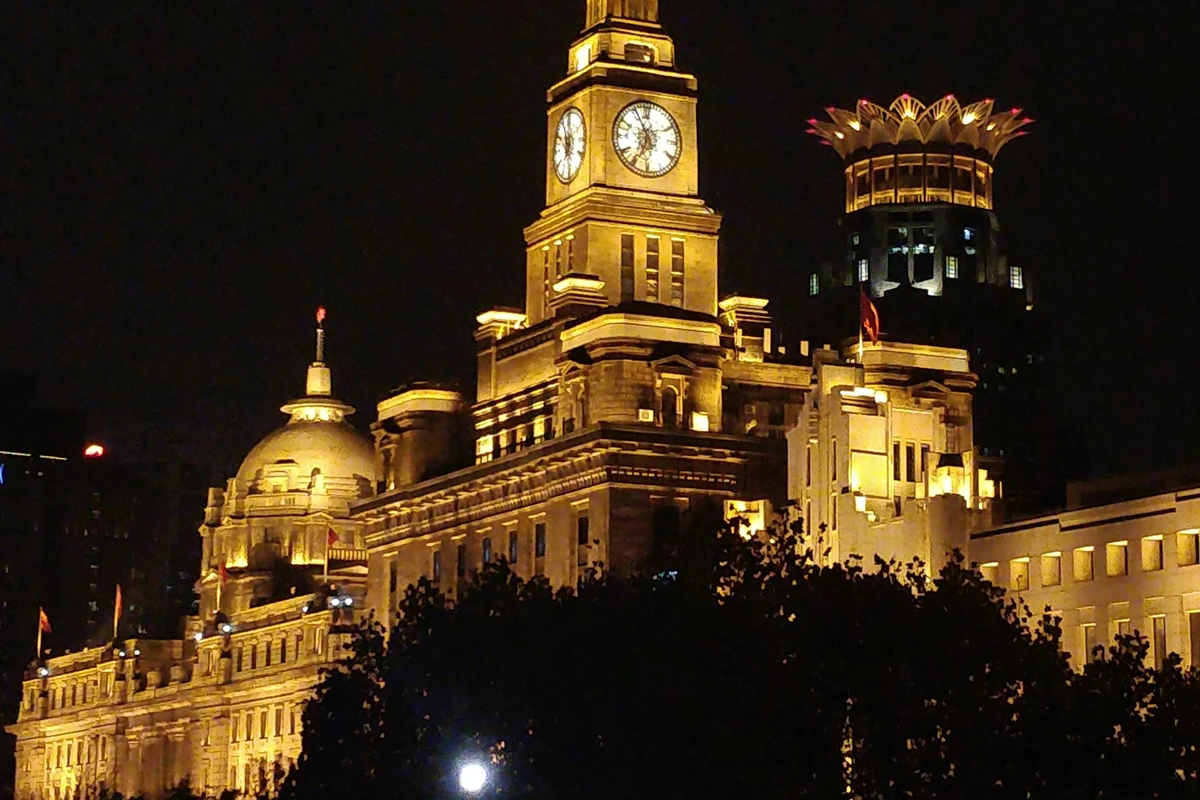
Shanghai Michelin
After three years of pandemic, Shanghai's industries were in shambles, yet its Michelin-starred restaurants thrived. Even under lockdown, tables were fully booked and hard to come by. During several return trips to Shanghai, with time on my hands, I seized the chance to tick off more than half of them. Here are my casual notes, to share with fellow food lovers.
They say food is the paramount necessity of the people, yet the restaurant industry is like no other. When it comes to fine dining, there's often no single standard, leaving one at a loss. Every country and region is full of self-proclaimed authorities, and no one concedes to another. Fortunately, someone set up three comparable dimensions long ago: 1) quality of ingredients; 2) cooking technique and distinctiveness; 3) consistency, without playing favorites depending on the diner. For nearly a century, Michelin has anonymously inspected restaurants multiple times a year, evaluated the cuisine, and provided guides, setting a benchmark for the international food scene and earning global renown.
Though it originated in pre-war France and gradually spread to Germany, Italy, the UK, and the Netherlands, the Michelin Guide only truly broke out of Western Europe into the wider world after the millennium: the U.S. in 2005, Japan in 2007, Hong Kong and Macau in 2008. In 2017, it finally arrived on the Chinese mainland, showering its first stars upon Shanghai. Today, it covers 116 starred establishments across Shanghai, Guangzhou, Beijing, and Chengdu. Compared to the 600-plus in France, 400-plus in Japan, and over 300 in Germany and Italy, and over 200 in Spain/Portugal, the USA, and the UK/Ireland, the mainland is indeed less dazzling; yet it's already on par with Switzerland, the Netherlands, and Belgium/Luxembourg. And it far surpasses the remaining 20-odd European and Southeast Asian countries in Michelin's fold, especially recent entrants like Canada and Russia. It can also, for now, smirk at those still blank spots like Australia and New Zealand.
Of the hundred-plus starred restaurants on the Chinese mainland, Shanghai accounts for nearly half. Yet, the old Shanghai brands that have been household names since childhood are nowhere to be found on the list. Think of Xing Hua Lou, Wang Bao He, Mei Long Zhen, Guan Sheng Yuan, Gong De Lin, Lv Bo Lang, Xin Ya, Yangzhou Restaurant; plus Red House, Kaiser, De Da Western Food; and the various Chinese and Western dining rooms inside the Shanghai Mansion, Jin Jiang Hotel, Peace Hotel, and Park Hotel—none made the cut, except for Lao Zheng Xing on Si Ma Road.
Digging into the reasons, the biggest shortcoming is probably consistency, closely tied to the capriciousness of Chinese thinking. So, earning a star in China is no easy feat, even just one Michelin star: "a very good restaurant in its category." For instance, Shanghainese restaurants like the century-old Lao Zheng Xing are a dime a dozen on both sides of the Huangpu. Dishes like oil-braised shrimp and stir-fried eel paste not only use similar ingredients but are prepared in broadly the same way. Thus, most of the awardees of one star, whatever their cuisine, are models of meticulousness and precision. Some are set in the buildings on the Bund, like Yi Dao or Yu Wai Tan; some nestle inside luxury hotels, like Yi Long Court or Yong Fu; and some have spared no expense in renovating old villas, like the "Fu" namesake on Yuyuan Road. Dining there, reminiscing about old Shanghai, feels like entering another era.
That said, among the one-star restaurants in Shanghai, there are still plenty of delightful surprises. For instance, the crab meat rice and wild rice stem with shredded eel at Ren He Guan, the must-try ice-roasted three-layer pork and spare ribs with Chencun rice noodle rolls at Lei Garden, and the signature truffle beef cheek at Mi Shanghai. And the Gold Medal Braised Pork at Nanlu Zheli combines color, aroma, and taste with geometry: rolled into a pyramid shape to catch the eye, with cuts along the folds to make it easy to eat. Equally captivating are the abalone puff, black truffle sesame balls, and cherry foie gras at No.3 Whampoa Club. The last can also be found at Lu Yuan and elsewhere, but the Whampoa Club does it with exceptional flair. Picture a rosy, pearl-like sphere wreathed in mist. Pleasing to the eye and palate, you can't help but applaud—even though it's not authentic fatty goose liver, just a mousse made from duck liver.
As for the very small number of two-star establishments, they wear the halo of "excellent cooking, worth a detour." But after trying them, the difference from one-star seems quite small. Prices are higher, but at least you can mostly order à la carte, like at Imperial Treasure at the northern end of the Bund. This feels more liberating than overseas, where they often force a set menu on you. Especially at Xi Yue No.8 on Ru Nan Road, the custard buns and such are remarkable value, deserving repeated visits. As a prime location for Michelin stars, Shanghai chefs' exquisite craftsmanship surpasses even the cuisine's hometowns. Consider the smoked cod and truffle wagyu gift box at Ji Pin Xuan, even if the price-to-quality ratio isn't ideal.
However, the place that can truly push exquisite craftsmanship to the extreme is the three-star restaurant: "exceptional cuisine, worth a special journey." Pity that we Shanghainese are more than refined but less than creative; both three-star venues are run by Westerners. Look across the whole mainland, only the capital boasts two homegrown three-stars—though neither is Beijing cuisine. For diners whose goal is to get full, these eateries that treat food as fine art are hardly a good choice. Cooking here has become artistic creation, and the diner's stomach is the final destination of the work. Take Taian Table, tucked away in a small alley in Changning and helmed by a German chef. Not only do you need to reserve months in advance, but seats are maddeningly hard to get. On the day, you sit around an open kitchen, slowly spending several hours over a dozen or so fixed courses, each just a bite or two. You must chew slowly, guided by the server's soft-spoken explanations. Otherwise, from looks alone, you'd never guess what species the dish really came from.
It's worth noting that one of the two three-star winners, Paul Pairet, while charging nearly a thousand bucks per head at his mysterious Ultraviolet, simultaneously runs a more down-to-earth French bistro averaging under a hundred dollars on the sixth floor of No.18 on the Bund, south of the Peace Hotel. He also operates Polux, a casual spot just off Huaihai Road in Xintiandi, averaging only 200-300 RMB per person. The latter has earned a Michelin "Bib Gourmand"—delicious but not pricey, though starless. Meanwhile, on the third and first floors of the same No.18 on the Bund, you'll find the two-star French restaurant, patisserie, and tea salon of Joël Robuchon, the legendary chef with the most stars in history. Sitting in that resplendent hall by the Huangpu, savoring cakes embossed with elegant nameplates, it feels like being on the banks of the Seine.
In contrast, Guangzhou's Michelin scene, just one year younger, is somewhat disappointing. Not only is the three-star tier absent, but the numbers lag far behind, even though Cantonese cuisine is highly revered in Shanghai. Jade Hall Spring Warmth, nestled within the White Swan Hotel on Shamian Island and long hailed as the best in Yangcheng, is stuck at a mere one star. Yet the place is often packed, with lines stretching out. Across the river, Wisca is far too common, lacking refinement. At the City Hall Mansion in Tianhe, Peninsula's dim sum is better than its banquets. And Jiang, the sole two-star in earlier years, goes for innovative dishes—some pleasant surprises, but the value is a bit lacking. The newly promoted two-star Imperial Treasure near Zhujiang New Town is standard and unremarkable.
Clearly, Michelin's greatest strength as a dining benchmark is its anonymous inspections several times a year. Any sign of customer dissatisfaction, and the star is stripped—like a certain restaurant on the Bund a few years back, and another this year. This is the very method that maintains quality and reputation, allowing us to dine with confidence and empty our wallets for superb food, while also transforming a tire company into the unlikeliest ultimate arbiter of the culinary world.
1. Gold Medal Braised Pork at Nanlu Zheli
2. Cherry Foie Gras at No.3 Whampoa Club
3. Imperial Treasure at the northern end of the Bund
4. The "artwork" at Taian Table
5. The tea salon of Joël Robuchon at No.18 on the Bund
6–7. Masterpieces from the Joël Robuchon patisserie
8–11. Shanghai Mansion, Peace Hotel, Park Hotel
12–13. The first New Year's Eve after Shanghai reopened
14. Jade Hall Spring Warmth at White Swan Hotel, Guangzhou
Appendix: Selected Shanghai Michelin-Starred Restaurants, Addresses, and Reference Average Prices (most add 10% service charge)
3* Ultraviolet by Paul Pairet, creative cuisine, 6/F, No.18 Zhongshan Dong Yi Road, =¥5,500/person
3* Taian Table, creative cuisine, No.161, Lane 465 Zhenning Road, =¥2,500/person, 8+2~4 set menu
2* L'atelier de Joël Robuchon, French, tea salon, No.18 Zhongshan Dong Yi Road, =¥1,800/person
2* Xin Rong Ji, Taizhou cuisine, No.170 Nanyang Road, =¥1,500/person
2* Bo Li Xuan, Cantonese, 3/F, General Chamber of Commerce Building, Lane 108 North Shanxi Road, =¥1,100/person
2* Ji Pin Xuan, Cantonese, No.55 South Wulumuqi Road, =¥1,000/person
2* Imperial Treasure, Cantonese, No.99 East Beijing Road, =¥450/person
2* Xi Yue No.8, Cantonese, No.63 Runan Street, =¥250/person
1* Yong Fu, Ningbo cuisine, Jin Jiang Hotel, No.59 South Maoming Road, =¥900/person
1* Sheng Yong Xing, Beijing cuisine, 5/F, No.20 Guangdong Road, =¥830/person
1* Ming Ge, Cantonese, No.333 Shenhong Road, =¥800/person
1* Yu Wai Tan, Fujian cuisine, No.600 Zhongshan Dong Er Road, =¥700/person
1* Yong Yi Ting, Shanghainese, No.111 South Pudong Road, =¥690/person
1* Fu 1088, Shanghainese, No.375 Zhenning Road, =¥660/person
1* Jia Quan Qi Fu, Cantonese, No.1515 West Nanjing Road, =¥630/person
1* Lu Cai, Shandong cuisine, Room 207, 2/F, Huanyu Hui, Lane 838 South Huangpi Road, =¥600/person
1* Xin Rong Ji, Taizhou cuisine, No.688 West Nanjing Road, =¥580/person
1* Cheng Long Hang Crab Palace, Shanghainese, No.216 Jiujiang Road, =¥550/person
1* Yi Dao, Huaiyang cuisine, No.31-91 East Beijing Road, =¥540/person
1* Yi Long Court, Cantonese, 2/F, Peninsula Hotel, No.32 Zhongshan Dong Yi Road, =¥450/person
1* Da Dong, contemporary cuisine, 6/F, IAPM Mall, No.999 Middle Huaihai Road, =¥440/person
1* Fu 1039, Shanghainese, No.1039 Yuyuan Road, =¥400/person
1* No.3 Whampoa Club, Cantonese, 5/F, No.3 Zhongshan Dong Yi Road, =¥400/person
1* Lei Garden, Cantonese, 4/F, IAPM Mall, No.999 Middle Huaihai Road, =¥380/person
1* Lei Garden, Cantonese, 3/F, IFC Mall, No.8 Century Avenue, =¥370/person
1* Lu Yuan, Huaiyang cuisine, 9/F, Lujiazui Centre, No.899 South Pudong Road, =¥370/person
1* Mi Shanghai, Shanghainese, 6/F, No.1108 Meihua Road, =¥350/person
1* Nanlu Zheli, Hangzhou cuisine, No.216 Middle Sichuan Road, =¥280/person, (lost star 2023)
1* Ren He Guan, Shanghainese, No.407 Zhaojiabang Road, =¥200/person
1* Lao Zheng Xing, Shanghainese, No.556 Fuzhou Road, =¥160/person
0* Polux by Paul Pairet, French, No.5, Lane 181 Taicang Road, =¥200/person
Selected Guangzhou Michelin-Starred Restaurants, Addresses, and Reference Average Prices:
2* Jiang, Cantonese, 3/F, Mandarin Oriental Hotel, No.389 Tianhe Road, =¥630/person
2* Imperial Treasure, Cantonese, 5/F, Tianhui Plaza, No.222 Xingmin Road, =¥430/person
1* Jade Hall Spring Warmth, Cantonese, White Swan Hotel, No.1 South Shamian Street, =¥400/person
1* Wisca, Cantonese, No.172 Binjiang West Road, Haizhu District, =¥200/person
1* Peninsula, Cantonese, City Hall Mansion, No.189 Tianhe North Road, =¥150/person


