Early Summer: Seeking the Dreamlike Changshu Yushan in Jiangnan — A Complete Guide to Safe Travel
Changshu Yushan, a city you won't want to leave once you arrive.
Suzhou's Changshu Yushan was my travel destination this time. It was my first visit, but it didn't feel unfamiliar. I often read articles about Changshu Yushan online, saw many photos and wonderful videos of its beautiful scenery and delicious food, which deeply attracted me...
During this 3-day, 2-night in-depth trip, with my camera and a photographer's eye, I discovered the subtle, easily overlooked and forgotten beauty of this city... To help you [unlock] every aspect of traveling to Changshu Yushan during this special period, I'm sharing my finds—I've planted the seed, welcome to come reap the harvest!
We've walked many paths and seen many sights. But when we look back, we often find that what we were really seeking was our original self. Stay true to your original heart, and you will achieve your goal! This pandemic also made us re-examine our pasts at home, accumulate energy... and then set out again!
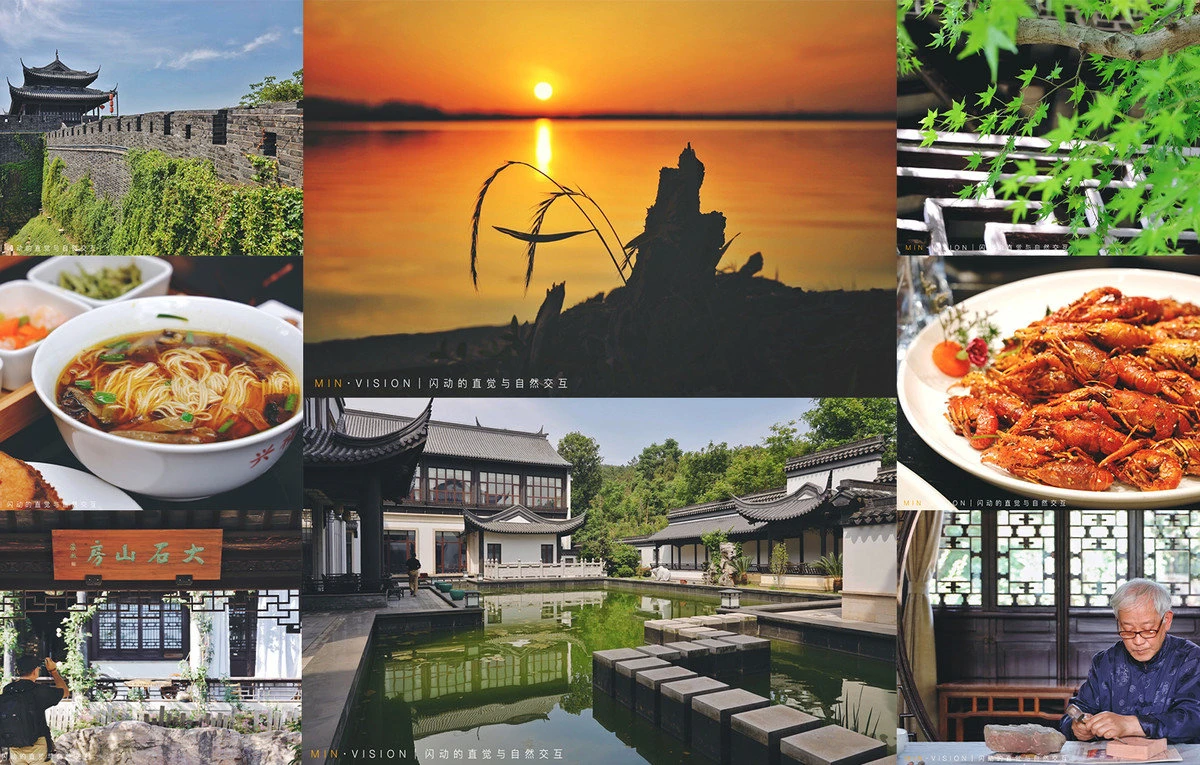
The beauty of sunset or sunrise is a chance encounter! A destined gift! At first sight of Changshu Yushan, this sunset touched my heart and rekindled my passion for travel! A single blade of grass, a tree—they can all serve as foregrounds to present an elegant Jiangnan charm. Falling in love with this city only takes a second!
"Jade-like leaves adorn a slender tree, ten thousand green silk ribbons hang down." The tranquil lake surface, the soft willow branches drooping like ten thousand gently swaying green ribbons... In the Jiangnan sunset glow, a picture of natural harmony and beauty is outlined!
Shooting location: Chuanyue Bridge. From both on and under the bridge, you can capture different beautiful views. The lake is very calm at dawn and at night, making reflection shots exceptionally beautiful! If using a drone, you can use Chuanyue Bridge as the foreground.
[Unlock] Poetic dwelling: enjoying a peaceful and elegant stay experience
Wandering in Yushan, embracing nature, you'll find it hard to tear yourself away, wanting to stay a few more days to really explore this city, live like a local, and feel the charm of a slow pace. I've learned that hotels and B&Bs in Yushan have developed rapidly in recent years, each with a distinct style. Below, I'll introduce a few representative ones for your reference. (Check-in requires showing the Suzhou Code, a green health code, and undergoing temperature checks.)
Recommended accommodation (1) Changshu Yueshanxuan Holiday & Leisure Hotel
This is the first and only boutique hotel in Changshu with a Chinese cultural temperament, set against the backdrop of Wu culture and themed on Yushan culture—the top choice for quality living and business travel.
Hotel address: No. 88, Heding, Yushan Forest Farm, Changshu (West extension of Huanghe Road)
A hotel's theme and style are reflected in the instant impression you get when entering the lobby! Right in front, the design element in the shape of tea leaves is striking. The openwork screen with a treasure lattice pattern, filled with tea sets and ancient porcelain, and the tea art area all add to the Jiangnan character.
The hotel's central area showcases a Jiangnan classical garden design: long corridors, pavilions, ponds, and paths. The entire property is surrounded by tea mountains and bamboo groves, with beautiful scenery, the crisp chirping of birds, and wafts of tea fragrance... It's truly a natural oxygen bar! Who wouldn't yearn for such a life?!
The hotel has only 33 rooms, and this scarcity makes it all the more precious. Reservations are necessary. The rooms feature Chinese-style design with five-star standard amenities. From the window seats, you can enjoy a panoramic view of the tea plantation.
It's very close to Yushan Park. Wake up early for a run in the park, then return to the hotel for a hot shower and a hearty breakfast... Travel is about spiritual relaxation, and choosing the right hotel matters a lot!
Recommended accommodation (2) Rixie Linxi B&B
A perfect renovation of an old Jiangnan building, it's said that the owner opened it especially for his wife—the little story of this B&B has made many women on site envious... The B&B is in the architectural style of Wuyue culture, themed around the Eighteen Scenic Spots of Yushan and everyday life, unique and distinctive! Green tiles and white walls, lush greenery—everywhere is a view, showing the owner's dedication.
B&B address: No. 21, Jiankang Lane, Changshu
The B&B has two floors. Tea drinking with friends is a key Jiangnan feature. In the lobby, several tea sitting areas are designed, complete with exquisite tea sets. Tasting tea is not only about the aroma; beautiful tea sets are the icing on the cake, elevating the tea experience.
The small terrace on the second floor is a great spot to watch the sunrise and sunset. Brew a pot of good tea, gather a few friends, and chat cheerfully... The matching decorations are high-end B&B style. Staying here feels like being at home, yet even better—very comfortable!
Compared to hotels, B&Bs offer more of a human touch, more attentive service, and a personalized stay. They are a product of upgraded consumer demand. Rixie Linxi B&B has eleven themed rooms, large and small. Located in the city center, it's especially favored by young people, surrounded by attractions and with very convenient transportation.
The design of "Rixie Linxi" B&B won the Best New Refinement Award in the 2018 "Yearning for Nature—First China New Refined B&B Design Competition".
Recommended accommodation (3) Baowu Shanghu Village
Baowu Shanghu Village is a park-style hotel integrating multi-functional training, leisure, and vacation. It's surrounded by verdant scenery, hills, and water, with pleasing views. In addition to the main building, Shangjin Building, used for training, conferences, and seminars, there is also Shanghu Yuan, which combines accommodation, dining, and fitness.
Hotel address: No. 29, Chunhui Road, Changshu
Baowu Village also has a gym with professional trainers, a heated swimming pool, a basketball court built to competition standards, badminton courts, outdoor tennis courts, and more, allowing guests to enjoy a relaxing rhythm of life after work. The overall planning is meticulous.
For exclusive views of flowers and mountains, you can choose "Changshu Hexiangyuan Hotel"; for a family of three on a city trip, consider "Changshu Jinhai Huali Jia Hotel"; there are also themed hotels and converted former residences of scholars, offering plenty of options.
In Changshu's tourism slogan, there's a phrase: "Come to Changshu often" (chang lai chang shu). Why? To capture your heart, of course, they first capture your—your—your stomach! Beggar's chicken, hairy crabs, panxiang cakes, plum blossom cakes, mushroom oil noodles, duck blood glutinous rice, Wang Si osmanthus wine... The special delicacies here are countless. Let me scout ahead and taste them for you.
Domestic tourist attractions are gradually reopening, but with the pandemic still present, when you arrive at a destination, plan your time wisely. If you're in a group, don't wander off to other parts of the city alone for sightseeing or dining. Keep your guard up! This is being responsible for yourself and others, reducing unnecessary cross-contact, and it's every citizen's duty!
Recommended restaurant (1) Xingfu Wangyue Lou Old Noodle House
In the morning, a bowl of noodles and a cup of tea—this is how you start living like a Changshu local. How many years has this old noodle house been around? Actually, the owner isn't sure either. They just know that mushroom oil noodles were originally a vegetarian dish for monks in the temple, and later, as pilgrims spread it to the public with various toppings added, it became a local specialty.
Restaurant address: No. 146, Silu Street, Changshu
At first glance, the atmosphere is a bit like Heming Tea House in Chengdu's People's Park, popular with both locals and tourists. It has become one of Changshu's iconic landmarks—largely because the noodles here are truly delicious! Mushroom oil noodles have been rated as one of the "Top Ten Noodles in Suzhou" by experts and food critics.
Noodles are available as single bowls or in set meals, with vegetarian or meat options. As a tourist afraid of missing out, I had to choose a set (which includes pork cutlet, deep-fried black carp pieces, bamboo shoots, toon buds, shrimp, etc.). The "topping" for this noodle is the authentic Matsutake mushroom (xùn) from Yushan, a wild edible fungus that grows on the roots of pine trees.
A bowl of noodles is very filling and a bit oily, but don't worry—a cup of green tea after the meal is just right... I tasted it myself; it's genuinely good, but I'd say what I enjoyed even more was the ambiance and a sense of local nostalgia, the taste of childhood...
Inside the noodle house, there's a small museum about mushroom oil noodles. I suggest you check it out before eating to learn about its past and present, to understand the culinary culture of Changshu Yushan. Only after appreciating the culture can you truly savor the bowl of noodles!
Recommended restaurant (2) Qingfeng Xiaoyuan (Cool Breeze Courtyard)
Some people enjoy the bustling atmosphere of Xingfu Wangyue Lou Old Noodle House, while others prefer the rustic tranquility, birdsong, and floral fragrance of the countryside. At Qingfeng Xiaoyuan, you can still get authentic mushroom oil noodles. A health trail leads there, taking you through green trees and tea gardens—a lung-cleansing walk.
Restaurant address: No. 1, Chenjiawu, Sanfeng Management Area, Yushan North Road
Qingfeng Xiaoyuan can seat over 200 guests. It's a farm-to-table style restaurant with many returning customers, especially on weekends from surrounding self-driving trips. Here, you don't need to order yourself; the owner will arrange a table of dishes based on the number of people and your taste preferences, all with excellent color, aroma, and flavor. During this season, you can also enjoy fresh loquats.
Freshness, cleanliness, and affordability—such elegantly presented dishes in a rural village are a hallmark of Jiangnan... Suzhou cuisine tends to be sweet and savory. Yushan's dishes lean more toward the savory side, and the sweetness is just right, also suiting northern palates.
Recommended restaurant (3) Wangyutai Hushan Banquet Hall
A restaurant by Shanghu Lake with an open-air terrace offering views of Chuanyue Bridge. Perfect for banquets and family gatherings.
Changshu's smoked fish is a signature dish. The whole smoked fish is cut into chunks, each deeply seasoned, with crispy and tender meat, rich in nutrients. According to the Ming Dynasty book Songshi Yangsheng Bu, it's prepared by "processing the fish into large pieces, lightly salting, burning rice husks, smoking until dry; or lightly salting, oil-frying, sun-drying, and then smoking."
Restaurant address: Beside Chuanyue Bridge, Changshu
Lobster with fox nut seeds (qianshi). Fox nuts, known scientifically as Euryale ferox, are an aquatic plant. The early bud resembles a chicken's head, hence the name "chicken head rice" (jī tóu mǐ), and the peeled kernels are called "chicken head rice." It's known as "water ginseng" and is highly nutritious.
Recommended restaurant (4) 9019·Jiuling Yijiu
First, let me say this is a very chic restaurant. The window display has a nostalgic feel, and the dishes are creatively presented. This restaurant is run by the owner of the Rixie Linxi B&B mentioned above. It embodies modern, innovative thinking and is popular among young people.
Restaurant address: No. 90, Lizha Road, East Xiangjiang Road, Changshu
Dishes like drunken crab with hua diao wine, Xuyi crayfish, and grouper... I sampled many local specialties, but not only those. Steamed dishes are also a highlight, along with beggar's chicken, fermented rice cakes, plum blossom cakes, osmanthus chestnuts, and more. I'll save those for my next trip to Changshu...
Changshu Yushan has long been famous! Its natural scenery is fresh and beautiful, with a profound historical culture. Ming Dynasty poet Shen Xuan wrote of Changshu: "Seven streams flow into the sea; ten miles of green hills half encircle the city." This praise for his hometown has been passed down through the ages. When traveling, eating and sleeping well come first, and I've already unlocked those details for you above... So, where can you go that's different from the usual attractions? As someone who prefers the road less traveled, I scouted places myself and am sharing them with you—save them quickly.
Experience recommendation (1) Yushan Ecological Walking Trail
The Yushan Ecological Walking Trail loops around Yushan, with Zhenhai Tower as its landmark entrance. It winds through hills, valleys, water cliffs, islets, jungles, watersides, flower beds, and grasslands, completely blending into the natural landscape and offering walkers varied visual experiences and leisure enjoyment.
This time, I walked a short section from Yushan South Road to Fucheng Gate. The trail is paved with a rubber surface, the scenery is beautiful, and there are many maple trees along the way—I bet it's even more stunning in autumn! At intervals, there are cultural display boards so you can learn about Changshu Yushan's culture and local customs while resting.
Experience recommendation (2) Qixi Liushui Coffee Bar
After entering the South Gate of Yushan City Wall Scenic Area, you'll see very clear directional signs. A short climb brings you to a coffee bar (also serving tea) with two floors. The owner is a beautiful woman who plays the guqin very well and is very hospitable, introducing visitors to all aspects of Changshu Yushan and exchanging travel anecdotes.
The more you travel, the more you develop your own style. Rushing through sights is one way; another is to set aside half a day for must-see attractions, then stop at a quiet, elegant spot, order a coffee or a pot of tea, and linger for the entire afternoon. You'll discover and absorb much more about the city.
Experience recommendation (3) Yushanmen Ancient City Wall
After leaving the coffee bar, follow the city wall steps all the way up to Yushanmen Gate Tower. In southern Jiangsu, most ancient city walls and towers were built across water; this is the only one built against a mountain. It stretches 1,400 meters and is known as the "Little Great Wall of Jiangnan." As you look back along the way, you can overlook the beautiful urban landscape of Changshu Yushan.
Descend the wall at East Gate. Looking up at Yushanmen Gate Tower, it's majestic! The ancient Changshu city wall, with over 1,700 years of history, has left countless legendary stories for later generations...
Ticket price: 30 yuan/person
Experience recommendation (4) Yushan Park
Yushan Park was first built in 1931. It has a wide variety of plants and many visitors. Main attractions include Yiqing Tower and Juanyun Stone. The park is dotted with pavilions, winding bridges, and features typical Jiangnan garden characteristics. It's open to the public for free. Right inside the entrance, you'll see Yiqing Garden, a tea room that has been included in the Suzhou Garden Directory.
After exiting Yiqing Garden, turn right to continue exploring. Pavilions, terraces, small bridges, and flowing streams... People are thoroughly enjoying themselves! Various musical instruments play in rhythmic harmony, filling the park with a joyful atmosphere—a snapshot of daily life for the locals of Changshu Yushan!
Experience recommendation (5) Yan Garden
Yan Garden is tucked away in Xinfeng Lane, Changshu's old town. It's an extremely characteristic Jiangnan garden. Though it covers only about 0.6 acres, its layout is well-ordered and compact, truly revealing a world within a small space!
The Yan Valley is a yellow stone rockery built by the famous Jiangnan rockery master Ge Yuliang at the request of Jiang Yinpei. Modeled on the Sword Gate of Yushan and using local yellow stones, the rockery captures the essence of distant mountains while displaying distinct stone textures, making the artificial mountain appear natural and integrated.
Walking through the corridor deeper inside reveals hidden wonders, highlighting Yan Garden's rockery-centric appeal. Observe the intricate Seventy-Two Stone Monkeys and other vivid formations. Exploring Yan Garden feels like entering a maze of stacked stones. Its layout is ingenious and unique, complemented by the renowned Sixteen Scenic Spots of Yan Garden.
In a corner of Yan Garden stands the Bingling Gong Temple Opera Stage, added in 1794 (Qing Dynasty, Qianlong era). In 1860, when Taiping troops occupied Changshu, they destroyed the temple but renovated the stage and even performed dramas there to inspire the soldiers.
Lacework is familiar to many Changshu locals. I quietly visited Xie Yueyue, a representative inheritor of Changshu's intangible cultural heritage lacework technique. Teacher Xie displayed some of her lace creations from recent years—very exquisite! She also introduced the origin and development of lacework. In my memory, as a child, I saw this kind of lacework covering tables and sofas at home; it truly influenced a generation.
Ticket price: 10 yuan/person
Experience recommendation (6) Zeng-Zhao Garden
Zeng Garden, originally Xu Kuo Yuan, was the former residence of Zeng Pu, a late Qing and early Republic novelist and publisher, author of Nie Hai Hua. During the Tongzhi and Guangxu reigns, Zeng Pu's father, Zeng Zhizhuan, resigned from office and returned to his hometown. He built the garden starting in 1883 on part of the site of the "Small Wangchuan" garden originally created by Qian Dai, a supervisory censor during the Wanli period of the Ming Dynasty. It was completed in 1894, over 120 years ago.
Zeng Garden is praised for being "half city, half wilderness; half mountain, half water." The garden is divided into southern and northern zones. The southern zone is a Jiangnan courtyard layout with main buildings like "Gui Geng Ke Du Lu" (Return to Plowing and Study Retreat), "Yu Hui Cao Tang" (Pleasant Sunshine Grass Hall), "Jun Zi Chang Sheng Shi" (Gentlemen's Longevity Room), and "Shou Er Kang Shi" (Health and Longevity Room).
The northern zone is a rear garden centered on a pond, surrounded by pavilions and rockeries. In the main pond, thousands of lotus leaves bloom, earning it the reputation of "Lotus World." It was a famous spot in the ancient city for enjoying lotuses and is celebrated as "Zeng Garden Lotus Fragrance," one of the Eighteen Scenic Spots of Yushan. Every year, tourists flock here to admire the lotuses.
Zhao Garden, less than 1.5 acres, is adjacent to Zeng Garden. During the Tongzhi and Guangxu reigns of the Qing, the garden came into the hands of Zhao Liewen, a native of Changzhou who resigned and lived in Changshu, later becoming a prefect. He, together with his wife Deng Jiaxiang (daughter of Deng Tingzhen) and his brother-in-law Deng Jiazhen, renovated the garden, then called "Zhao Garden," "Zhao Wu Garden," or "Zhao Hu Garden."
"Neng Jing Ju" (Able to Be Tranquil Residence) on the north side of the pond is the main hall of Zhao Garden, a hip-and-gable building. During the Republic period, Zhao Garden was purchased by Sheng Xuanhuai of Changzhou and served as a branch of Changzhou's Tianning Temple, named "Ning Jing Lian She." In 2004, Zhao Garden was restored.
At Neng Jing Ju, I met Zong Hongxing, a representative inheritor of Changshu's intangible cultural heritage Yushan ochre inkstone. I consulted Teacher Hong about the history and craftsmanship of Yushan ochre inkstones.
Ochre is a natural mineral pigment, one of the main pigments in Chinese painting. According to historical records, Yushan's ochre has a fine texture and rich color, making it an ideal pigment for traditional Chinese painting. It is produced in Changshu, Jiangsu.
The great Yuan Dynasty painter Huang Gongwang, one of the "Four Masters of the Yuan Dynasty," holds an important place in Chinese art history. His masterpiece Dwelling in the Fuchun Mountains is called "the Orchid Pavilion of painting." He studied Yushan ochre in depth and pioneered "light crimson landscape painting," which dominated Chinese art for centuries. Thus, Yushan's ochre contributed to Huang Gongwang's brilliant career. Using the ochre inkstone is simple: grind it with water to produce ochre, then add glue to make a superior pigment. Over the centuries, great painters have cherished Yushan ochre as a precious pigment.
Ticket price: 30 yuan/person
Experience recommendation (7) Guqin Art Museum
Inside the Yushan School Guqin Art Museum is a great figure: Zhu Xi, a national-level representative inheritor of the guqin art (Yushan School). He carries on the Yushan tradition of "pure, subtle, distant, and profound; broad and peaceful." His qin style is naturally effortless, possessing both the demeanor of the Wei and Jin dynasties and the mood of Song Dynasty ci poetry. His expressive, varied, and free-spirited playing has elevated the Yushan qin style to a new height, winning him wide acclaim in today's qin circles.
Experience recommendation (8) Fengxi Culture and Art Center
Let every woman own a cheongsam from the Fengxi brand—this is the founder's vision. Fengxi clothing was launched in 1998. Rooted in profound Chinese heritage, it blends inspiration from Western court art and Japanese kimonos, uniting classical and modern aesthetics to create a classic yet romantic style. The garments exude an elegant French sentiment.
The Fengxi Culture and Art Center is a cultural-tourism integration enterprise that combines "cultural roots exploration, creative sourcing, and hands-on experience." The center is divided into several zones. Entering it is like walking into a cheongsam museum, telling the history, culture, and evolution of the qipao from multiple perspectives. Further inside are a tea lounge, a reception area, classified display areas for qipaos and jewelry, experience zones, and more, allowing every visitor to get a full picture of Fengxi.
Only through experience can you gain deeper insight and find a qipao that truly suits you. This business philosophy is in step with the times! It's a shopping style people enjoy! The cheongsam indeed beautifully showcases a woman's elegance, but different figures yield different effects. The purpose of trying it on first is also to better alter and redesign, creating a unique qipao tailored to the customer.
Making a pankou (decorative knot button) is also a fun experience. It looks simple but isn't that easy to do—it requires some logical thinking, a deft touch, and patience! A finished pankou can be pinned onto a qipao, a jacket, or a backpack, adding a strong decorative touch! You're guaranteed to draw plenty of admiring glances!
Experience recommendation (9) Changshu Shanghu Golf Course
Designed by Nelson & Haworth and completed in 2011, Shanghu Golf Course is Changshu's only 18-hole, par-72 championship course. With excellent turf quality and top-notch service, it has won a good reputation among guests. Many golf enthusiasts and professional players come here to practice daily. The course has hosted Suzhou area tournaments like the Suzhou Golf Championship and the Suzhou Junior Golf Tour for three consecutive years.
Experience recommendation (10) Shanghu Scenic Area
The first thing you see is the visitor center square of Changshu Yushan Cultural Tourism Resort. It's spacious and well-designed! As far as the eye can see, signs for various multi-purpose service areas are clear, and facilities are very complete! It makes you eager to start exploring right away.
Entering the visitor center, of course, you first show your Suzhou Code and have your temperature checked for pandemic safety. The design featuring the words "A City of Mountains and Waters, A Leisurely Life" further highlights the area's deep cultural and eco-tourism character, immersing visitors instantly in a rich resort atmosphere.
Shanghu Scenic Area is said to be named after Jiang Taigong, who secluded himself here and fished in the late Shang Dynasty. "A City of Mountains and Waters"—the water is Shanghu Lake. Cross the Longevity Bridge to officially enter the area. The bridge is 48 meters long and 12 meters wide, with a collection of 139 different "shou" (longevity) character designs in the middle—a must-check-in spot, so don't miss it!
With such a beautiful lake, there's naturally a boat ride. Take a boat to enjoy the wonderful scenery of Shanghu from another perspective!
Shanghu has a water forest—nearly 200,000 square meters of ecological wetland. Walking along the boardwalk, you can see all sorts of water birds flying freely through the forest. It's a great spot for bird photography (requiring a lens of 800mm or longer). You can also take a raft and slowly drift into the forest for up-close encounters with the birds.
As the pandemic gradually subsides, domestic tourist attractions are reopening one after another. Every day, there are many people traveling together like this. This group of handsome men and beautiful women came from Shanghai especially to have fun. The joyful smiles on their faces say it all! Indeed, after being cooped up for months, everyone needs to get out and reconnect with normal life!
Once again, I must applaud the scenic area's signboards, always appearing at key turning points! Individual visitors won't get lost or waste time due to missing a sign.
Ticket price: peak season 80 yuan/person, off-season 60 yuan/person
Experience recommendation (11) Nansuyuan Cultural and Creative Space
Based on Jiangnan culture with Yushan as its core element, Nansuyuan Cultural and Creative Space is a platform that regularly hosts sharing sessions and creative markets. The courtyard design is beautiful, and facilities in each functional area are well-equipped. It's truly a place of calm, a space that inspires creativity. Here, everyone can find a lifestyle they enjoy. If you have the chance to visit Changshu Yushan, do drop by—the tea at Nansuyuan is also very good.
I learned that Nansuyuan covers about 2,000 square meters, with approximately 1,800 square meters of outdoor space and 400 square meters indoors. It includes a multifunctional meeting room, three tea reception rooms, two studios, five distinctive outdoor cultural-creative spaces, and a lotus pond pavilion landscape area.
When it comes to traveling these days, I believe everyone's primary concerns are transportation conditions and safety precautions on public transport! This 3-day, 2-night trip to Suzhou's Changshu Yushan was my first long journey after the pandemic eased. Frankly, I was a bit anxious and packed all kinds of protective items early on... extra medical masks, disposable gloves, disinfecting wipes, etc.
The disinfection and protection measures at the high-speed rail station were very good, and people's awareness of prevention was strong. Everyone wore masks. Whether walking around or queuing to enter the station, people consciously kept a safe distance, and temperatures were checked upon entry.
After arriving at Suzhou North Station, exiting was orderly. On platforms and inside the station, staff were busy ensuring the safety of travelers amid the pandemic. Being well-protected has become a norm for travel.
Outbound: G107 Beijing South Station 08:15 — Suzhou North Station 13:19
Return: G146 Suzhou North Station 15:20 — Beijing South Station 20:48
What are the protective measures on the high-speed train?
1. Only certain seats are sold: the window seat in a three-seat row, the aisle seat in a three-seat row, and the window seat in a two-seat row. The remaining seats are left empty. So each three-seat block seats at most two people (with the middle seat vacant), and a two-seat block seats only one.
2. Inside the carriages and restrooms, staff spray disinfectant at regular intervals.
How to eat on the high-speed train
During the pandemic, the dining car is temporarily closed. Passengers must eat at their assigned seats. In-seat meal delivery is available.
During this period, there have been many reports on the impact of the pandemic on the tourism industry, with some well-known travel platforms stepping back. From an industry perspective, it's a survival-of-the-fittest consolidation. Those that have managed to hold on are always the large, diversified platform companies. Everyone's work should have a Plan B, so that no sudden event can affect your original quality of life.
Although this long journey was a bit nerve-wracking, it was actually very safe throughout. Most importantly, everyone conscientiously wore masks, kept their distance, and willingly cooperated with green code checks and temperature screenings... Even at shared tables, we used serving chopsticks! Hotels and rooms had intensified disinfection efforts, giving greater peace of mind!
Travel has long been a way of life for everyone, and it's hard to break that norm easily. So, with strong national support, the post-pandemic tourism industry will surely see wave after wave of renewed enthusiasm. Relax, keep your mask on, and await the return of everything being well!


