A Taste of Tongli: Don't Say It Fails to Enchant — My Very Life Is Here in Jiangnan
Text and photos by Ying Zhigang
If Tongli is a cup of tea, it’s the mellow sweetness that remains after the essence has condensed, like white tea, with a quiet joy all its own.
White tea, aged long, releases a deep fragrance. Polished and enriched by time, it grows ever smoother, much like every brick and tile of this ancient town, each recording the shifts of ages and swirling with lingering charm.
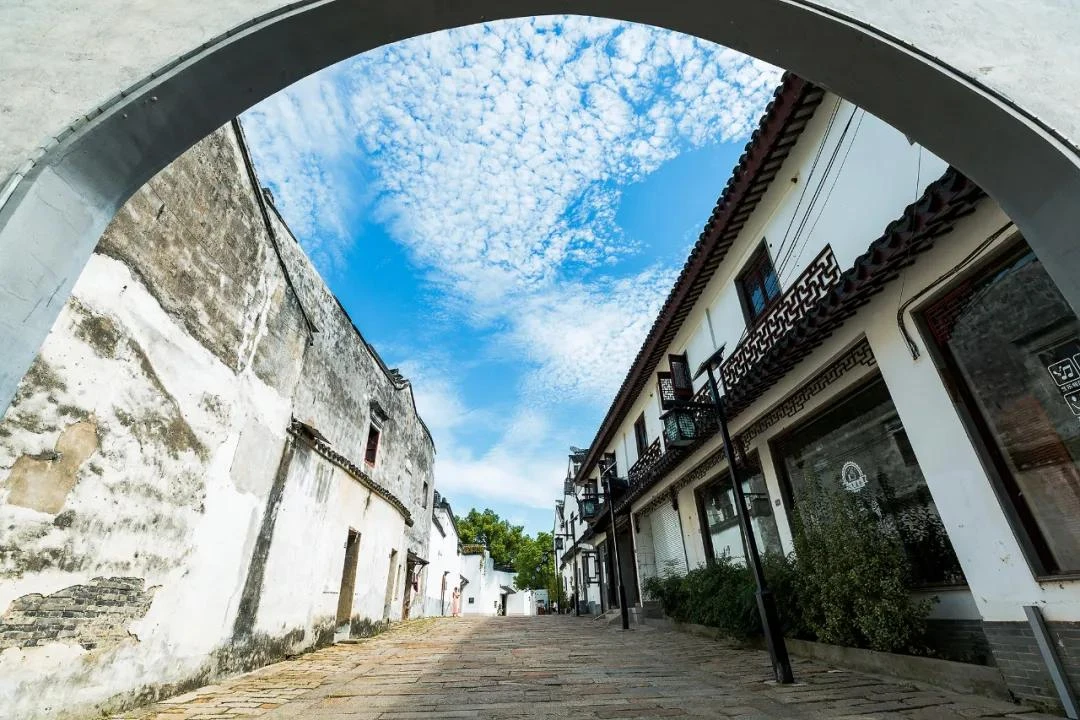
As you cross through the bustling crowds and step into Tongli Ancient Town with leisurely, unhurried steps, no matter how time presses, you can stroll at ease, taking in building after building of white walls and dark tiles, steeped in the warmth of everyday life.
In Tongli, a beautiful morning begins by awakening the taste buds.
Nobody living on this land is without a love for pastries. Osmanthus cake, gorgon fruit cake, mixed nut and honey cake, lard rice cake…
In the early morning, at Laijun Dim Sum Shop, steamers billowing with mist produce an array of pastries. That soft, glutinous, slightly sweet and chewy texture is Tongli’s reward for the busy day ahead.
The most famous, yet most “by chance,” specialty of Laijun Dim Sum Shop is Min Cake, a Wujiang District intangible cultural heritage item that resembles green rice balls.
Min Cake is dark jade green, glossy and smooth, and carries a faint herbal fragrance when you bite into it. It has over 500 years of history in Tongli, and during the Qing Dynasty it was listed as a tribute to the imperial court, once presented to Empress Dowager Cixi.
To make Min Cake, the Min herb is ground into juice, then kneaded with glutinous rice flour to form the skin. The filling is made of red bean paste, walnut kernels, pine nuts, and sweetened pork fat, shaped like a mooncake, and then steamed.
To explain this to me, shop owner Zhao Laijun specially pulled up a Min plant.
This herb, green on top and white underneath—known in traditional Chinese medicine as “heaven-blue earth-white herb”—is actually ramie. It is sweet and cold in nature, non-toxic, and contains components like caffeotannic acid, carotene, protein, and carbohydrates, with medicinal properties such as clearing heat, detoxifying, reducing inflammation, stopping bleeding, and calming the fetus.
Zhao Laijun said that this herb is becoming harder and harder to find, and only the tender tips in May and June can be used to make Min Cake, so tasting this delicacy really depends on fate.
After breakfast, you might take a walk at the former Lize Girls' School. This was a pioneering place for the education of young ladies in the early Republic of China, founded in 1906 by Ren Chuanxin, the second-generation owner of the World Cultural Heritage site, Tuisi Garden, right within its grounds.
Today, it has been transformed into the Blossom Hill boutique hotel, consisting of two parts: the Ancient Style Garden and the Lize Girls' School building. Its interior design is inspired by “a young lady’s coming-of-age journey,” offering an experience that transcends eras, with light and shadow reflecting the distinctive blend of Chinese and Western styles of the Republican period.
Stepping on flagstone steps, passing through the narrow lane outside the north wall of Tuisi Garden, the century-old school gate with its water-struck brick lines and six-pillar, eight-shaped design stands quietly before you, untouched by time. The arched pillar corridor, the long balcony edged with white plaster balustrades, and the light pouring into the spacious, bright interior—all are at once grand and delicate, elegant and upright.
The guest rooms are adorned with sunny yellow, academic blue, maidenly mauve, and innocent off-white soft fabrics, complemented by light-colored rattan weavings, bringing out the unique grace of “a Lize girl.”
At Duoduo's Bread Tree, the hotel’s own café brand, pick a cozy seat, order their signature stovetop-brewed milk tea, and casually take an interesting book from the shelf.
Outside the window is exactly that historic “Hexagonal Pavilion” and a wisteria trellis, with a view so full it captures the eye. At this moment, you, too, become a lovely scene in someone else’s gaze.
Capture the beautiful scenery with your camera, bring back a heap of souvenirs hunted through the lanes, and record intriguing stories in your journal. All these count as the joys and rituals of travel, don’t they?
Leaving Blossom Hill and stepping into Tuisi Garden, you’ll find a tiny cultural and creative shop. Though small, it is absolutely stunning.
Every item here draws inspiration from the windows, pavilions, scenes, peaks, leaves, and fish of Tuisi Garden. Taking home a few small trinkets is like bringing back the poetic Jiangnan of apricot blossoms, misty rain, little bridges, and flowing streams.
Special recommendation: Maple Leaf Button Brooch
A single red leaf carries thoughts of lovesickness; countless mountains and rivers are always tied with affection. In the southwest corner of the inner garden is the Osmanthus Hall, where sweet-scented osmanthus trees grow in the courtyard. In autumn, the fragrance drifts, and sipping tea while admiring the flowers here creates the autumn scene of “golden wind and jade dew” in the garden.
Popular during the Ming and Qing dynasties, this was an ornament worn on the right lapel of the ancients’ clothing. After the hit TV dramas “Story of Yanxi Palace” and “Ruyi’s Royal Love in the Palace,” people have developed a new aesthetic for these lapel pendants, giving them more decorative and appreciative value. Hanging one on a bag or a hand fan, paired with tassels, adds an extra touch of elegance.
Also known as palace fans or round silk fans, these are traditional Chinese Han handicrafts and artworks, symbolizing reunion, friendliness, and good fortune. Incorporating elements of Tuisi Garden’s scenery gives them an even more distinctive charm.
During a trip, only beautiful views and good food should never be let down. When visiting Tongli Ancient Town, how can you not sample the treats at Lin Family Shop?
Meat mooncakes, gorgon fruit cake, green rice balls, fermented rice cakes, osmanthus rice cake, gorgon seeds, malt cookies, Tuisi cakes, osmanthus–soybean candy, and sole-shaped crispy pastries—every type of pastry fills the shop’s cabinets. Just catching the aroma makes your mouth water endlessly.
Apart from their outrageously delicious meat mooncakes, I must especially recommend the traditional Tongli tea snack, “Sole-shaped Crisp,” shaped like the sole of a sock.
The “Sole-shaped Crisp” owes its popularity to carefully selected ingredients and exquisite craftsmanship.
When making the dough, shortening must be layered and kneaded repeatedly five or six times until completely uniform, so that the baked pastry layers are so thin they’re transparent and taste crisp and delicate.
The filling is equally meticulously prepared. For instance, the salt used in the spiced salt version must be roasted in a wok until mature, then rolled fine with a rolling pin, and the scallions must be pounded into a paste to prevent the pastry from tearing or leaking.
During baking, the pastry chef must keep constant watch by the oven, eyes on the hearth, until the pastry takes on a bright sheen and gives off a delicate fragrance—only then can it be taken out.
After this round of strolling and nibbling, it’s time for dinner. I recommend you head to Wine Jar Rice Bucket. The restaurant’s name sounds like a gathering place for heroes who eat meat in big bites and drink wine in big gulps.
The eatery is built beside the water, with antique-style decor reminiscent of the Tongfu Inn from the wuxia comedy “My Own Swordsman.” Oil-paper umbrellas hang from the ceiling, the walls are plastered with notes left by diners, and upstairs, the private rooms face directly onto the river.
The “Three Whites of Tai Lake” are made with the freshest ingredients, the soy-braised snails are deeply flavorful, add a clay pot of chicken broth with mussels and tofu, and wash it all down with a sip of the owner’s complimentary homemade rice wine—this meal is guaranteed to leave you wholly content.
The most distinctive dish at Wine Jar Rice Bucket is the Zhuangyuan Trotter (Top Scholar Trotter).
Legend has it that in the fourth year of the Chunyou era of the Song Dynasty, the top scholar Wei Ruxian from Tongli was especially fond of braised pork knuckle, hence the name “Zhuangyuan Trotter.”
The pork knuckle, cooked in rich soy sauce, glistens red. It melts in your mouth with a soft, sweet, and glutinous texture, rich but not greasy. Whenever Tongli locals host a feast, this dish is always on the table.
By the Guangxu period of the Qing Dynasty, Ren Lansheng, the master of Tuisi Garden, out of admiration for Scholar Wei, specially hired a renowned chef to prepare “Zhuangyuan Trotter” as the main course for family banquets. Top Scholar Hong Jun and his concubine Sai Jinhua were famously among the honored guests.
Alternatively, you can also try Cheng’en Hall Courtyard Private Kitchen, hidden deep in a narrow alley. Its seclusion adds an extra touch of refined pleasure in seeking serenity among the lanes.
The owner jokes that this is the only dead-end alley in Tongli. Yet, as they say, good wine needs no bush; when I went, every seat was taken.
The whole courtyard is filled with antique charm, dotted with various plants, and there’s even a small swing and a fish pond.
The owner is extremely warm, and his attire is quite artistic, giving him the air of a well-read scholar.
Tongli stir-fries, eight-treasure duck, braised wild rice stems, and house special fragrant trotter—it’s hard to stop the chopsticks.
The house’s secret eight-treasure duck is a dish strongly recommended by many food lovers.
Eight-treasure duck is a famous traditional specialty of the Suzhou region. A whole duck is split open along the back, stuffed with glutinous rice, bamboo shoots, and other ingredients, then placed in a large bowl, sealed with cellophane, and steamed. The duck emerges plump and succulent, with its original juices preserved. Upon serving, it’s topped with shrimp and green peas cooked in the duck’s steaming juices, filling the entire room with fragrance.
As night deepens and the town’s bustle fades away, all around becomes still and quiet. It’s time to rest.
If your spirits are still high, I recommend you stay overnight at Jian Yuan (Simple Garden).
Jian Yuan’s architecture dates from the Ming and Qing dynasties. Small yet exquisite, and delicately wrought, its courtyard is formed by a pond and two rivulets, creating four mini-scenes: “Zen Spring of Origin,” “Shallow Stream Reflects Moon,” “Floating Boat Joyful Zither,” and “Maple Rock Cascade.”
Sit quietly, sip tea, and chat, gaze upon the poetic courtyard and the koi swimming leisurely, surrounded by houses of black tiles and white walls; you can’t help but sigh, “This life is in Jiangnan; I wish only for a lifetime of peace.”
The comfortable, minimalist guest room decor incorporates Chinese aesthetics. All the furniture is crafted from black walnut, and light muslin curtains float gently on the canopy bed, adding to the cozy romance.
The owner laughs, “The bed I sleep on is worth only a few thousand yuan, but every bed in the guest rooms costs more than ten thousand.”
And the large, transparent glass wall allows you to watch the town’s canal flow slowly by while lying in bed, sweeping away all the fatigue of travel and filling your eyes with the tranquil beauty of time at ease.
This is Tongli Ancient Town—dancing lightly in everyone’s heart, like a scholar standing at the gate of his home, quietly waiting, waiting for that woman of grace, at the end of the long alley, to cast a soft, brilliant smile.
All the romance of Jiangnan is right here, within this little world.


