Travel with You: How to Explore Suzhou on a Budget, Hit Top Landmarks (with Detailed Food, Accommodation & Transport Guide)
While international travel may be restricted, why not take a trip to a nearby city? Explore different urban lifestyles, unlock new ways to play. Enjoy a summer of freedom—go travel now!
First stop: Suzhou, Whisper of Jiangnan.
Suzhou, in the eyes of many, is the epitome of classic Jiangnan charm—ancient elegance, small bridges over flowing streams. It's also seamlessly connected to Shanghai, just half an hour away. Accommodation and other expenses aren't low; sometimes they nearly match metropolitan Shanghai. Suzhou is most famous for its classical gardens, but it's not just gardens—modern and fashionable landmarks also define the city. The old town and the industrial park, one ancient, one modern, are perfectly integrated by a single metro line.
So, how much does it cost to stay comfortably with convenient transport, eat well, hit landmark sights, and have a great time on a budget? As a ‘new Suzhounese’ who has lived here for over 10 years, I’ve tested a 2-day route that lets you easily explore the classic landmarks.
Day 1: Feiman Hotel – Zhongshuge – Gate of the East – Eslite Bookstore – Suzhou cuisine
Day 2: Pingjiang Road – Suzhou Museum – Suzhou True Color Art Museum – Return
Overall, transport is very convenient—most spots are on Metro Line 1, some within walking distance. Only the True Color Art Museum requires a transfer to Line 2 to Guoxiang Station, then a short walk. Cost breakdown: hotel ~300 CNY, Pingjiang Road (free), snacks (50 CNY), Suzhou Museum (free), Zhongshuge (metro 2 CNY), Gate of the East (free), Eslite Bookstore (free), return metro (2 CNY), Suzhou cuisine meal (150 CNY).
Many people might not know this hotel, which isn’t surprising—even I, after all these years in Suzhou, only recently heard of it. When friends visit Suzhou, they often ask me for accommodation tips, and I rarely recommend one. This time, I’m highlighting a special ‘Peace of Mind Hotel’ during these times: Feiman Hotel (Suzhou University Pingjiang Road branch), a mid-to-high-end brand under the BTG Homeinns Group. During the pandemic, BTG Homeinns launched ‘Peace of Mind’ measures, strictly following cleaning protocols, implementing every disinfection step, and even providing free epidemic prevention supplies. Located near Pingjiang Road, it’s very convenient. Even for a nighttime stroll on Pingjiang Road, it’s a great choice.
The overall style is business with a touch of bourgeois charm, from the color palette to the decor, especially the restaurant.
Nowadays, many hotels offer laundry service, but usually for a fee. Feiman Hotel’s laundry room has washers and dryers, available anytime for free. For me, this is a huge perk—even on rainy days, no worries.
Though not large, the hotel has a gym, a book bar, and a balcony. If you don’t feel like going out, staying in is a nice option.
The biggest advantage is its great value and convenient location: close to sights in both Suzhou’s old town and the industrial park, just 2-3 minutes by metro or on foot.
Transport: Metro Line 1 to Xiangmen Station, exit 2, then a 1-2 minute walk.
Nearby attractions: Suzhou University, Guanqian Street, Pingjiang Road (walk all the way to reach Suzhou Museum), and via Line 1 you can get to Gate of the East, Eslite Bookstore, Jinji Lake, and the Ferris wheel.
Food: Pingjiang Road has many Suzhou specialties. On Guanqian Street, must-try time-honored restaurants like Songhelou and Deyuelou (locals apparently prefer the more affordable Pearl Restaurant for Suzhou cuisine).
Prices: 200-300 CNY, depending on the day of the week and room type.
Drop your luggage, cross the bridge and the road, turn left, and walk less than 5 minutes to reach Suzhou’s most famous Pingjiang Road Historic District.
A riverside path, a historic old street—carrying the memories of generations of Suzhou people, known to all. It’s the best-preserved part of Suzhou’s ancient city. Though no longer as rustic as before, it has been improved. Flagstone paths, mottled old walls, small bridges over flowing streams—the Jiangnan charm, the blend of history and reality, still linger…
Here, it’s perfect for a leisurely stroll, pausing to listen to Pingtan (Suzhou storytelling and ballad singing), sipping tea and chatting.
Now, visiting Pingjiang Road at night, you can enjoy the specially created ‘Gusu 8:30’ night scenery.
1. Try the snacks, like Ji Jiao Ga La (chicken feet niche), though I think it’s just okay—fame outweighs taste. Red bean small rice balls (Chixiao Yuanzi), a typical Suzhou snack, sweet, sometimes sprinkled with osmanthus. Also, various Suzhou pastries; plum blossom cake is quite famous, about 5 yuan each.
2. Skip buying trinkets—too expensive and not worth it. In a way, what’s sold here isn’t merchandise, but artistry and Suzhou-style charm.
3. Here you’ll find the Cat Sky City Bookstore (Momokong), the national flagship and the oldest store. It used to be a haven for artsy young people; reportedly many of the interior designs were personally created by the owner.
4. Pingjiang Road gets very crowded on weekends, so consider the timing. I personally prefer sunny days, early morning or late afternoon around 3-4 pm, when the light is beautiful.
5. Stroll at a leisurely pace. Photography lovers can capture many great portraits here.
Walk to the end of Pingjiang Road, a short stroll further, and you reach Suzhou Museum.
Although every city has its own museum, not all are famous or attract crowds. I’m not sure how many museums nationwide are widely known, but Suzhou Museum is definitely one of them.
Like many, I used to have no interest in museums—first, I wasn’t into the history or stories; second, I wasn’t into photography or traveling. An accidental visit opened my eyes to a different world, and over time, as I traveled, I fell in love with Suzhou Museum.
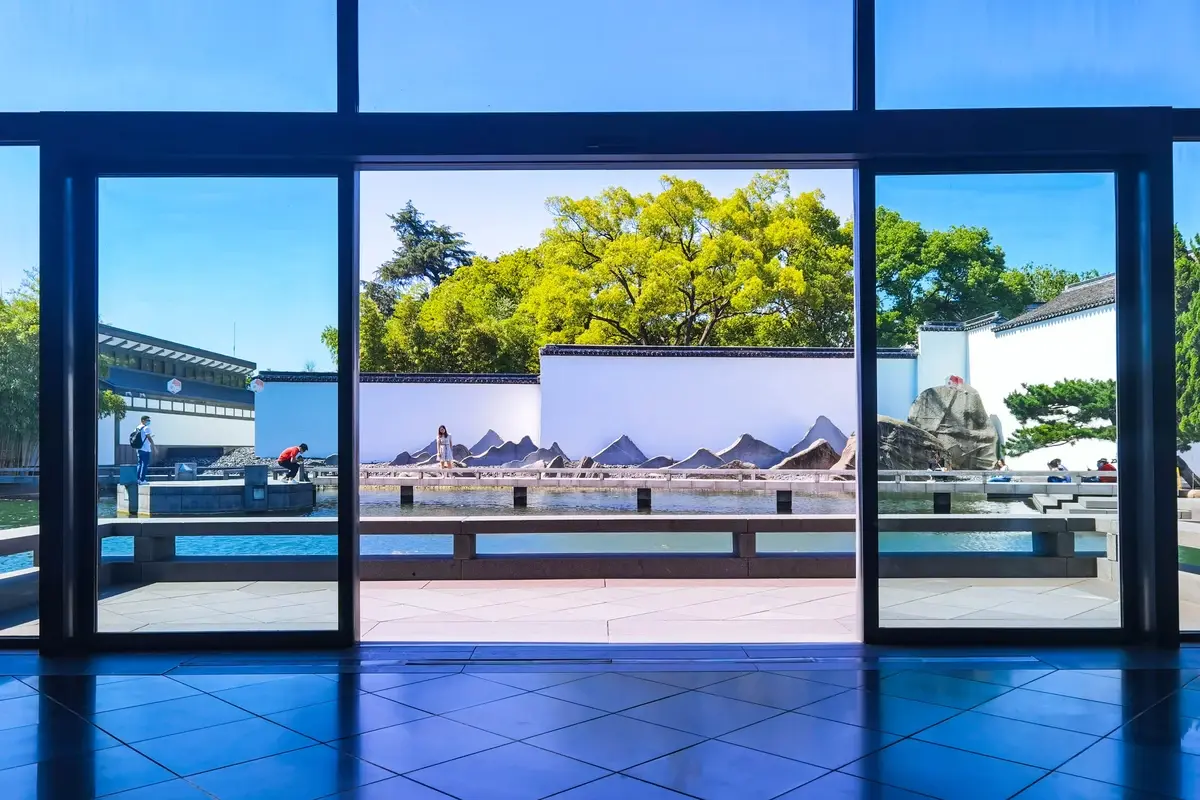
As everyone knows, Suzhou Museum is a masterpiece by world-renowned architect I.M. Pei. The clean lines and structure—even if you don’t understand architecture or design—look pleasing and layered.
Compared to before, one change is occasional night openings (not daily, so check online ahead of time), which are stunning. To the right of the entrance, there’s a creative souvenir shop that’s more interesting than expected. It’s not just shopping; each item is cleverly designed and priced well.
1. Closed on Mondays.
2. Real-name reservation with ID required—don’t forget, or you might be turned away. A friend tried to book three days in advance and couldn’t get in.
3. Avoid holidays; I’ve seen National Day queues stretching hundreds of meters down the street.
4. Keep quiet during the visit, and try to catch a guided tour to eavesdrop on explanations.
5. Bring a light jacket; the air conditioning inside is strong and can be chilly.
Take Metro Line 2 to Xinghai Square, then walk.
Zhongshuge, the famous Instagrammable bookstore, now found in many cities, each with a distinct style. Suzhou’s version features a rainbow gradient, warm and colorful, reflecting the city’s Jiangnan comfort and contemporary vibrancy.
When I wasn’t busy, I used to come every weekend. It’s always packed with book lovers; arrive late and all the seats are gone. Some might say, ‘You come every week, not really to read, right?’ Haha, they’re right—I’m here to take photos. I’ve taken countless shots and still can’t get enough!
Zhongshuge is insanely beautiful, though the entrance is unassuming—yet it’s well-known. Take the escalator to the fourth floor from Xingyue Plaza, and you’ll spot it right at the elevator entrance.
First, a room with bookshelves full of books, then through a door into a crystal palace of shifting colors, dreamlike and ethereal.
Entering the second door is a ‘New Peach Blossom Spring under the Rainbow,’ visually stunning. If I could stay here every day, I’d probably learn faster and more, haha.
No city is without a bookstore. Each book is a window, connecting us across time and space, opening new worlds. In reading, we see others and ourselves. Whether it’s Zhongshuge or Eslite Bookstore, designers simply want to guide us into the palace of knowledge in the most beautiful and comfortable way.
Summer is here—searching for youthful memories among these books must be quite fun. When you leave Zhongshuge, from the left corridor you can see the Gate of the East; follow the path and walk there.
If Pingjiang Road represents the ancient Suzhou, then the Gate of the East is undeniably the icon of modern fashion.
Once a building that almost became a white elephant, seemingly unaffordable and out of reach, it now bridges Suzhou’s past and present, with two very different worlds on either side of the gate.
The most impressive is the night view—drone shots are superb, capturing the prosperity of the industrial park, with glittering lights illuminating another face of Gusu city. (P.S. It’s actually a no-fly zone; I was warned by security once while flying a drone…)
If you come on Friday or Saturday night, there’s a music fountain show, newly renovated and stunningly beautiful. Nearby are Jinji Lake, Suzhou Center, and Ligong Causeway. Whether for sightseeing or shopping, this has become a must-visit destination in Suzhou.
From Gate of the East, take Metro Line 1 to Yuanrong Plaza.
Though called a bookstore, it’s much more. As founder Mr. Wu Ching-yu said, ‘Eslite is a collective creation of this social time-space environment.’ It integrates humanity, art, creativity, and lifestyle—trendy living, aesthetic styles, creative design, humanistic vision…
This is the second branch in mainland China, rumored to be a gift from the Taiwanese boss to his youngest daughter. The world of the wealthy is beyond our mortal understanding (chuckle). Still, Taiwan is famously artsy, so almost every element reflects that influence—innovative architecture, full-blown literary chic, trendy items—blending seamlessly with Suzhou Industrial Park’s modern fashion.
Prices here are a bit high: a simple notebook can cost up to 160 CNY, so two notebooks equal a night in a business room at Feiman Hotel. Besides expensive things, there’s a regular market on the lower ground floor, where you might stumble upon interesting finds.
As you enter, you see the stepped staircase—an absolute Instagram hotspot; no matter when you go, people are posing there.
Climb the stairs to the top floor—the highest level of Eslite, where the roof center is open. On sunny days, sunlight streams through the glass, creating dappled patterns. Walking beneath feels like your own stage, the spotlight on you, a wonderful sense of space.
Coming to Suzhou, how can you miss Suzhou cuisine?
When it comes to traditional brands, classic Suzhou cuisine restaurants like Songhelou and Deyuelou are not cheap per person.
It depends on your definition of good food. If you feel you must check out the time-honored names, choose either.
There’s a Songhelou near Eslite Bookstore; you can go to the Expo Center or the Songhelou Bistro on the B1 of Yuanrong Constellation. They’re in opposite directions but both within walking distance from Eslite.
Although both are Songhelou, they’re completely different styles. Relatively, the Songhelou Bistro is more suited to young people and a bit more affordable.
If you just want to try Suzhou cuisine, I’d recommend Pearl Restaurant (Zhenzhu Fandian). Locals are said to come here. I’ve eaten at both Songhelou and Pearl Restaurant over ten times—the flavors are similar, but Pearl Restaurant is slightly cheaper.
Overall, Suzhou cuisine tends to be sweet, but if you don’t like sweet food, don’t worry; Suzhou is a diverse city with cuisines from all over the country, so you won’t have trouble finding something to enjoy.
After soaking in Jiangnan charm, indulge in some art—Suzhou True Color Art Museum.
Tucked away in an unassuming corner, yet known by more and more people.
The paintings inside are quite abstract, and the environment is great for portraits; it’s set to become a must-visit spot in Suzhou.
Forget the artworks and their meanings—the art museum itself has enough artistic charisma to become an internet sensation.
Free, with real-name registration (one ID per person).
Metro Line 2 to Guoxiang Station, then a 10-minute walk.
Shoes off in some areas, though some visitors ignore this…
You can see it in an hour, or half a day if you take your time with photos.
Nearby, there are other art and flower arranging, tea ceremony spots to explore.
Suzhou, a quintessential Jiangnan city, radiates charm and refined elegance.
They say loving a person leads to loving a city,
but for me,
loving a city means loving everything about it!
Travelogue Contents: 1. Feiman Hotel: High-end boutique, convenient transport 2. Pingjiang Road: Must-visit destination in Suzhou 3. Suzhou Museum: I.M. Pei’s classic 4. Zhongshuge: Instagrammable bookstore, reminiscing youth among books 5. Gate of the East: Big Pants, city landmark 6. Eslite Bookstore: Haven for life lovers and artsy youth 7. Suzhou Cuisine: Healing sweetness 8. Suzhou True Color Art Museum: Immersed in the unknown 9. Postscript
Travel Information, Hotel Index, Travel Guide Index, Air Ticket Index, Website Navigation, Travel Index, Cruise Index, Corporate Travel Index, Join Cooperation, Distribution Alliance, Friendly Links, Corporate Gift Card Purchasing, Insurance Agency, Agent Cooperation, Hotel Partnership, Destination & Scenic Spot Cooperation, More Cooperation... About Ctrip, Ctrip Hot Topics, Contact Us, Careers, User Agreement, Privacy Policy, Business License, Security Center, Ctrip Content Center, Intellectual Property, Trip.com Group Algorithm Disclosure


