Entering the Renowned Shajiabang, Encountering the Misty Jiangnan of My Youthful Dreams
Foreword: Entering the renowned Shajiabang, encountering the misty rain of Jiangnan.
Many long-fabled places, those you once anticipated, in your ordinary life, still arrive as expected. Truly, they are not forgotten, nor hindered by mountains or distance. Today, I finally stepped into Shajiabang, from the sunrise of the north to the evening of Jiangnan, and here I met the misty Jiangnan I yearned for in my youth.
I have a fondness for Jiangnan's small bridges, flowing streams, and houses, memory-filled old streets, and local specialties and cuisine. This time, we came to a condensed version of Jiangnan, called Shajiabang. This is not just a scenic spot name, but also the local place name. It is located southeast of Changshu City in Jiangsu Province, by Yangcheng Lake, and is a 5A-level tourist attraction. Here I experienced Jiangnan's bridges, streams, and homes; of course, the cultural heritage is profound, and it is a delightful place worth savoring slowly. Many know the classic Shajiabang and the character Aqing Sao, but not everyone knows Shajiabang is in Changshu, where the high-speed rail only opened this year.
Shajiabang is not only a national wetland park and one of the hundred classic red tourism scenic areas, among others. The transportation is very convenient. Visitors can enjoy the grand spectacle of the reed marshes, and it is also a venue for large-scale live-action performances, such as 'Let the Bullets Fly,' which stages a thrilling anti-Japanese resistance story. In short, only by experiencing and savoring it in person can you know how satisfying a visit here can be.
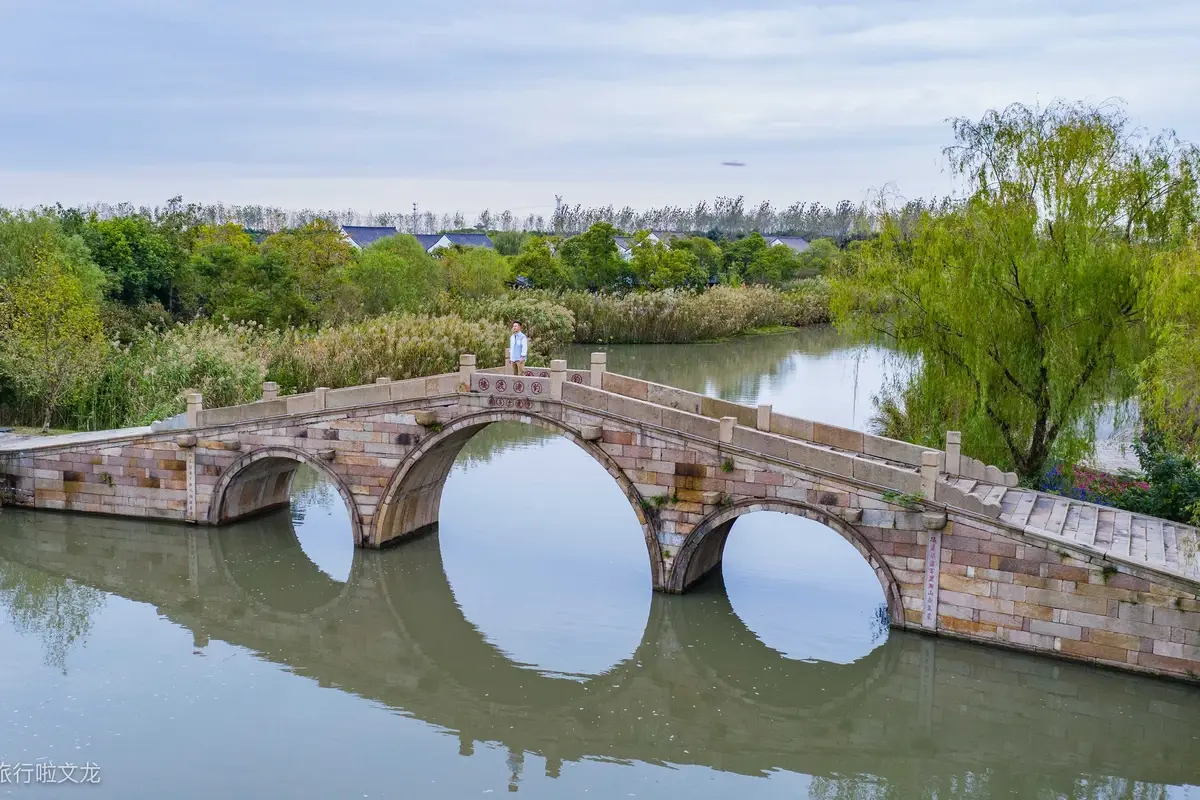
This scenic area is unique, fully utilizing the local green ecological environment, revolutionary history, and folk culture experiences to develop tourism. There is also a great variety of cuisine. It is a distinctive place in the Yangtze River Delta, perfect for leisure vacations. Standing on the stone bridge in Shajiabang, I was overwhelmed with emotion—finally I had the chance to experience such a poetic and picturesque place. I deeply loved this kind of life, and it reminded me of a condensed West Lake; standing on the bridge, I thought of the legendary story of Lady White Snake meeting Xu Xian on the Broken Bridge.
Shajiabang is not only suitable for sightseeing but also for experiencing a way of life, vividly displaying the unique characteristics of Jiangnan. You can explore its stunning scenery on foot or by boat. Just looking at the environment made me fall in love with this special scenic area, and it is truly unforgettable. For example, the History Memorial vividly portrays Shajiabang’s revolutionary martyrs, and the Reed Maze, the centerpiece, lets visitors thrillingly experience the charm of the reed marshes. The film and television base recreates the features of a Jiangnan town, and at Chunlai Tea House, you can listen to opera, sip tea, and enjoy a leisurely life. Immersed in this small town, life slows down, and the mind grows calm.
This scenic area really knows how to use its natural resources to create a tourist zone rich in Jiangnan's pastoral scenery, where you can also taste Jiangnan's hairy crabs and other leisure delicacies. Such a comprehensive tourist area boasts profound cultural and historical heritage, beautiful natural landscapes, and highly praised folk experiences. There's always a habitat one yearns for; Shajiabang is that habitat I yearn for.
This time, we tasted the specialty Yangcheng Lake hairy crab from Suzhou, Jiangsu Province, but not at Yangcheng Lake itself—it was in Shajiabang, Changshu. The crab was extremely authentic, a national geographical indication product of China. Yangcheng Lake in Jiangsu is a freshwater lake, and the crabs cultivated in its waters are of superb quality, deliciously tasting, becoming the most authentic Yangcheng Lake hairy crabs. Their succulent meat makes your mouth water just hearing about them. It's said that female crabs in the ninth lunar month and male crabs in the tenth lunar month are a culinary feast of Jiangnan, and such seasonal delicacies shouldn't be missed. This time, in the tenth lunar month, I finally tasted the male crab.
On October 15, 2020, the 21st Shajiabang Yangcheng Lake Hairy Crab Food Culture Festival and Thousand Crab Feast was held at Hengjing Old Street in Shajiabang Scenic Area, Changshu. The purpose of this feast was to let more people enjoy the most authentic Yangcheng Lake hairy crabs, while also raising the profile of the Shajiabang scenic area.
One of the most famous events, held only once a year, took place amid a continuous drizzle, yet it didn't dampen people's anticipation for the Thousand Crab Feast. Attendees included travelers from various places, leaders of Shajiabang, the general manager of the Jintang City Crab Industry Company, and representatives from the Changshu We-media Alliance—all attracted by the reputation to taste authentic Yangcheng Lake hairy crabs.
This year being special, the Thousand Crab Feast wasn't very large in scale, but the atmosphere was still extremely lively. Various performances and interactive sessions were very entertaining, and lucky participants in the interactions could win live hairy crabs. The 'Aqing Sao' performers, dressed in blue printed cloth garments, performed on stage, holding hairy crabs or small woven baskets, all very distinctive. Some Aqing Saos weaved among the diners, exuding warm hospitality.
During the interactive games, my companion next to me won a robust hairy crab. Before I knew it, we reached my favorite part—eating the crabs. The crab tables were arranged like a long-table banquet, everyone gathered together, dining on the long table covered with a blue printed tablecloth. The star of the Thousand Crab Feast was the hairy crab, but the accompanying dishes were also excellent, beautifully plated. Steamed dumplings and steamed cakes looked small and delicate. The dishes were generally mild, with no chili garnish on vegetables or crayfish, following the local Jiangnan dining habits.
Finally, I tasted the star of the long-table feast, the hairy crab. It was huge, one crab occupying an entire steamer. The flavor was incredibly authentic, with a golden shell and tender, rich meat—truly worthy of Yangcheng Lake’s name. Afterwards, I tried Shajiabang reed root tea, and the tea water could even be used to rinse away the aftertaste of crab. An event combining interactive performances and authentic crab feasting was an extreme stroke of luck to catch, and my taste buds were thoroughly satisfied.
Since my youth, I've loved Jiangnan. Finally, I arrived at Shajiabang in Changshu, Suzhou, and simply decided to stay here. The Jiangnan Luhuawan guesthouse, a single-courtyard house, costs over 5,000 yuan a night—of course I had to experience it. Who would have thought a scenic area would have such a charming B&B like Luhuawan? This guesthouse refreshed my understanding of what a B&B could be; it felt more like a resort. Not only was the environment beautiful, but it also offered a wonderful taste of the good life of Jiangnan people.
Stepping inside, I was deeply captivated by the poetic beauty. The B&B was surrounded by greenery. Compared to the nostalgic atmosphere of Hengjing Old Street, the decor here felt more immersive—you could take a photo just by standing in any corner.
Inside, a strong antique charm pervaded, with warm-toned lighting that created a wonderful ambiance. Several beautiful design details increased my fondness for the place. Some wooden furniture added a retro feel.
My suite number was 8113, and the room name was 'Na Yuan,' carrying a touch of poetry. The suite was not only cozy but also tidy. Outside the window by the washbasin, lush vegetation thrived, and I captured the moment in this beautiful setting.
During the interactive games, my companion next to me won a robust hairy crab. Before I knew it, we reached my favorite part—eating the crabs. The crab tables were arranged like a long-table banquet, everyone gathered together, dining on the long table covered with a blue printed tablecloth. The star of the Thousand Crab Feast was the hairy crab, but the accompanying dishes were also excellent, beautifully plated. Steamed dumplings and steamed cakes looked small and delicate. The dishes were generally mild, with no chili garnish on vegetables or crayfish, following the local Jiangnan dining habits.
Tasting Jiangnan Delicacies
For dinner, we went to the Luyi Resort Hotel restaurant at the entrance of Shajiabang Scenic Area, wanting to try some authentic Jiangnan water town cuisine. A standard table of local Jiangnan dishes cost us 800 yuan. Let's take a look.
Jiangnan is rich in aquatic products, and most locals eat seafood as a staple, with a preference for light flavors, so the meat dishes we had were mostly seafood. For example, the abalone came in a small portion, crispy outside and tender inside, salty with a touch of sweetness, though a bit scant. Another was steamed whitebait, delicate but with many bones. The edamame steamed crab here combined edamame with halved crab, fully absorbing the crab's umami flavor.
The mature crab had a satisfyingly chewy texture, garnished with broccoli. The 'Ao Chicken' we ate was made in a traditional multi-generation 'Ao pot,' evoking the tastes and memories of the town's past—naturally, such foods carry unforgettable memories. The spring water beef hot pot was a novel way to dine, a small hot pot with vegetables and beef that caught everyone's eye and tasted great.
A perfect balance of meat and vegetables. The spicy chicken-head rice was delicious, stir-fried with various coarse grains and cured meat, a seasonal Jiangnan ingredient. A vegetarian dish that tasted like meat was the abalone sauce winter mushroom medallions, satisfying the meat craving and a great choice for dieters. The snow lotus and tremella stew with added chicken-head rice was the only dessert, light, not overly sweet, and nourishing. Jiangnan cuisine truly offered a different flavor; though different from northern eating habits, it was enjoyable and seemed more nutritious.
Definitely Take a Hand-Rowed Boat
In the small town of Shajiabang, bridges and streams, pastoral cottages, and intersecting rivers and lakes make this condensed Jiangnan inseparable from water. The best way to experience the scenery is by boat—it gave me a different feeling, a visual feast on the water with greater aesthetic appeal.
I've tried yachts and rowboats, but nothing beats a hand-rowed boat for leisurely sightseeing. I was lucky to enjoy the views around Shajiabang from one. Many tourists chose this option, and I loved the canopy-covered wooden boat, full of vintage charm. Inside, there was a blue printed vest; wearing it, I felt like a true Jiangnan local for a moment as I set off on my water journey.
Sightseeing on water is completely different from land; it's much more exciting and requires no physical effort. Listening to the boatman's vivid stories of the area's history was fascinating, and a small group could share impressions of the scenery. The boats kept a safe distance from each other. Soon, we entered a narrower channel, surrounded by vibrant reed marshes—a unique and picturesque sight.
We passed through a reed maze, and the boatman told legendary stories of the reed marshes, stirring my patriotism. Indeed, the lake water in Shajiabang is clear, the reed beds vast, and even the design of the pavilions carries a historical feel. The bridges, connecting the two sides, were beautifully designed, and in the narrow waterway, the lush vegetation seemed to lean in, making the embrace of nature incredibly pleasant.
We followed the narrow channel to where the New Fourth Army's rear base once stood, preserved in its original state. The living conditions were harsh, with only thin clothing and simple furniture. It was hard to imagine how they survived such difficulties, which filled me with respect for the anti-Japanese fighters and transported me back to that era. After a pause, we continued our lake tour.
I also tried rowing the hand-rowed boat myself—it felt great—and took a photo with the friendly boatman who shared stories along the way. If you want the boat ride, check the operating hours. Jiangnan truly is a place inseparable from water; sightseeing from the water is even better, and the hand-rowed boat experience was fantastic, giving me a sense of the hardships once endured by the New Fourth Army. This story-filled town makes me want to explore every corner.
Strolling Through Hengjing Old Street, Reminiscing About Nostalgic Jiangnan
Jiangnan, ancient towns, old streets—these have always held an inexplicable charm, longed for and remembered by many travelers. Beyond the beautiful scenery, the most cherished and desired are the ancient lanes, where the culinary memories of time remain unchanged despite the changing years. Even as the world develops rapidly, this pure land stays true to its origins, carrying the dream of Jiangnan. This is an old street in the small town of Shajiabang, where history lingers in every corner, deeply touching your heart.
Deep within the reeds of Shajiabang lies Hengjing Old Street. Walking into it feels like stepping onto a street from the 1940s or 1950s. The houses are weathered, every nook filled with historical presence. Tenacious plants climb onto roofs, untended by locals, creating a unique charm. Today, the old street's appearance is slowly eroding, each brick and tile losing its original shape, yet it reminds us of the once bustling market and that the old street must not be forgotten.
The weather wasn't ideal—it started raining during our visit—but our enthusiasm wasn't dampened. We pressed on with umbrellas. Every bridge, large or small, had its own name, connecting households. The rain added an extra layer of charm, making it a truly misty Jiangnan.
Various small shops line the street, displaying signs that evoke its former prosperity. Jiangnan specialties abound, alongside a blacksmith's shop, a dyeing workshop, and more, vividly recreating the street's past liveliness. Posters on the walls look genuinely vintage, and the blacksmith's shop, with its retro decor, instantly transports you to that bygone era.
After the rain, the old street looked refreshed, the plants even more vibrant. We passed a dyeing workshop—Jiangnan people seem to have a heartfelt fondness for blue, as all the printed fabrics here were blue. I imagine Hengjing Old Street was once a bustling place, and in memory, it has also become a film location for many movies and TV series, such as 'China Wine King' and 'Jasmine Flower,' which were shot here. For the street itself, it represents not only a history we can't return to but also the prosperity of those days. It must not be forgotten or left desolate; despite the passage of time, it remains unchanged, standing as a representative of the old in the new era.


