Zhouzhuang's New Year Flavor: Simple Joys Await
[Preface]
Above there is heaven, below are Suzhou and Hangzhou, and in between lies Zhouzhuang.
I've long dreamed of the Jiangnan water towns, long heard of the Double Bridges of Zhouzhuang, yet never truly experienced what it means to have "a life called Zhouzhuang."
Cultivated by a thousand years of history and culture, Zhouzhuang lies in the heart of the Jiangnan water country, between Shanghai, Hangzhou, and Suzhou. The town is a land of water, surrounded on all sides by rivers; everywhere you go, you need a boat. It has preserved a typical Jiangnan water-town scene, famous both at home and abroad.
Three parts water, two parts bridges, and the remaining half is streets. This is the nine-hundred-year-old water town—Zhouzhuang. Flagstone pathways and waterside old houses transport you straight into ancient Jiangnan, to savor the nine-hundred-year-old water town.
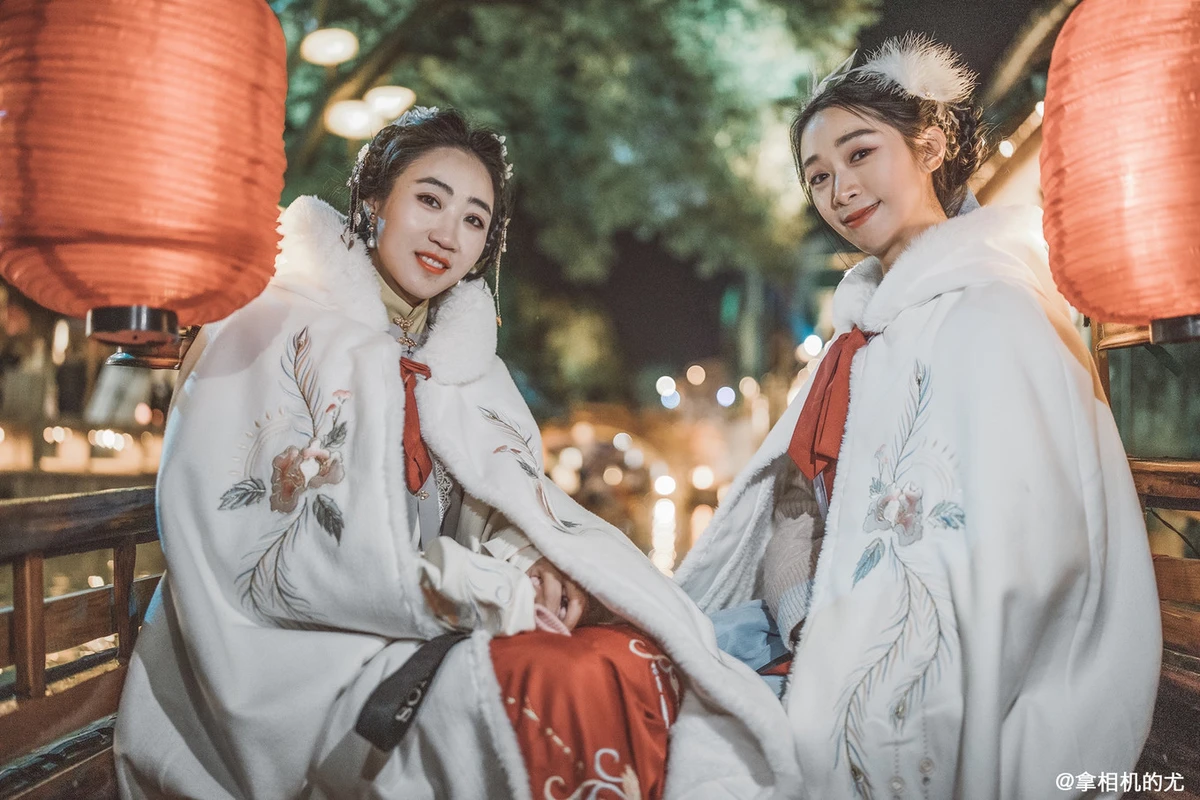
Dressed in Hanfu, I wander through this dreamlike water town, strolling among ancient buildings from the Ming and Qing dynasties. A gentle breeze and a bright moon, shadows scattered, fragrance drifting in the dark.
[I Say Zhouzhuang's Night Is Beautiful, You Say I Am Beautiful]
Zhouzhuang's night is enchanting, every scene a painting. The moon rises over South Lake, oars dip and lanterns glow, starlight twinkling. Ancient bridges, water lanes, old mansions, lantern shadows—all seem draped in colorful silk, unusually moving.
The ancient Double Bridges are not only the oil painting by Chen Yifei; at this moment, they are a lively night scroll. Under the bridges, oars creak, ripples shimmer, and boat shadows sway. Amid the play of light and shadow, I say Zhouzhuang is beautiful, and you say I am beautiful.
In the ancient opera tower, I listen to a night opera. With the beautiful night as a backdrop, I hear a Kunqu aria, the water-polished melody softly sung. Inside and outside the play, it's all life.
People of Zhouzhuang love listening to opera. Shen Wansan and his in-law Gu Aying were both famous Kunqu enthusiasts. In the Clear Wind and Bright Moon · Zhouzhuang Liyuan, enjoy the "ancestor of all operas," Kunqu. Excerpts from the exquisitely scripted "The Story of Washing Silk" and the elegantly melodic "The Peony Pavilion" are the most popular programs here.
Immersed in the opera, time slips by unnoticed. The tenderness of Jiangnan, like flowing water. Light and shadow tell stories; the night writes a long poem.
[Rain Alley, Flower Alley, Pink Blooms Fluttering]
Strolling through Rain Alley and Flower Alley with an oil-paper umbrella, just myself and a cat, countless blossoms carrying endless thoughts. As I walk among flowers and pink petals flutter, I realize how beautiful and serene longing can be.
When you enter the alley, around the corner you'll meet the lilac girl you've thought of countless times.
A window is projected on the wall, flower-branch shadows drifting in the breeze on the closed window, petals fluttering in the wind; candlelight reflects a girl approaching, gently pushing open the window, a cute cat sound asleep. The lilac girl holds a book, one person and one cat, incredibly tranquil amidst the breeze and dancing petals.
Walking among flowers, scenery is born from people. The floral stream drifts, flowing into a colorful sea, blending into the whole environment. In this dreamy night, it feels like entering another time and space—running, laughing, letting the skirt fly, running toward the original self.
Bring an umbrella to Zhouzhuang, and time freezes in this ink-wash Jiangnan Zhouzhuang. This is a light show area with the themes of Flower Alley and Rain Alley stretching from Fuhong Bridge to Zhenfeng Bridge. Walking through it, savor the cultural flavor of water-town life. Light and shadow, installations, and interactive new media blend to light up Zhouzhuang.
A night boat ride may be the "most Zhouzhuang" experience. With the sound of oars and lantern shadows, the ancient town’s distant history and colorful reality both ripple in the water stirred by bamboo poles and wooden oars. On the gentle waves, take in the dreamy night view of the water town. Bays, water lanes, small bridges, old streets, ancient mansions, famous temples—all come into view.
On the swaying boat, groups of visitors pass through the dreamy night of the water town. In a flash, you exchange smiles. Who will you meet in the streets and alleys? The boatwoman sings a soft Wu dialect tune, delicate and clear. In a trance, you can't tell if you're in a play or in a Jiangnan dream. The bamboo pole and wooden oar stir the water, and also pluck the heartstrings.
The moon rises over South Lake, a long bridge lies across the waves, moonlight bright and clear, starlight dotted. This is the most tranquil and poetic life. The moonlight gently entwined with the water, do you feel a "water-shield and perch longing"—the nostalgia for home?
People of Zhouzhuang live by the river, with boats as their horses. In the past, almost every household had a small boat. Large households often had a water-gate on the river side, with a dock below, and mooring pillars beside the dock. Today, taking a creaking oar boat is still the best way to experience water-town life. Amid the misty water hues, you sway into the dreams of Zhouzhuang houses.
Zhang Yimou’s film "Shanghai Triad" (Rocking and Rolling, Rock to Grandma's Bridge) was filmed in Zhouzhuang. Sitting on the boat, we hum the song, savour Grandma's tea, and watch night slowly deepen. In the quiet West Bay, Zhouzhuang’s water-town tour boats and fishing boats are moored. Boats nestle together here, lingering. The scattered lights on the fishing boats cast a hazy beauty, a water-town version of "A Night Mooring by Maple Bridge."
[Zhenfeng Twelve Workshops · Reminiscent of Old Suzhou]
In Zhouzhuang, there is also a street that gathers "masters of all trades"—Zhenfeng Folk Culture Street. It preserves the historical remnants, cultural marks, life flavors, and local sentiments of Zhouzhuang to the greatest extent.
It is represented by the "Zhenfeng Twelve Workshops": the Native Cloth Workshop, Bamboo Weaving Workshop, Yuan Fengshun Wine Workshop, Tofu Workshop, Suzhou Embroidery Art House, Blacksmith Workshop, Brick-making Workshop, Shoe Art Workshop, Nut Carving Workshop, Mat Art Workshop, Barber Workshop, and Incense Workshop. Each craftsman in these workshops is a hidden master.
The grandpa at the Blacksmith Workshop said, "I started forging iron at thirteen, and I've been doing it for seventy years..." Spending a lifetime doing one thing well—how many people still hold to that? I hope those skills slowly fading in time can be preserved and passed on.
The aroma of wine from the Wine Workshop draws us from afar. "A vat of wine, after fermentation and aging, takes four full years before it’s ready to taste." The brewing craft of Yuan Fengshun is a family tradition, begun during the Daoguang reign, its fragrance spanning two hundred years.
In the courtyard, hundreds of cleaned celadon jars are neatly arranged. Vats full of snow-white, fragrant new glutinous rice soak in water. After steeping, steaming, cooling the rice, putting it in vats, fermenting, pressing, clarifying, sterilizing, and sealing in jars—nearly ten traditional family brewing steps—the water-town-flavored "Wansan Yellow Wine" and "October White" are produced. "The white liquor brewed from glutinous rice is clear and delicious; the best taste comes when brewed in the tenth lunar month, hence the name October White."
Continuing along this street in the early morning, the morning light filters in inch by inch. The artisans in the workshops still follow old traditions. Amid the bustle, it seems to recreate the prosperity of a key town outside Suzhou in days gone by.
When tired of strolling, go to Jubinlou Tea House for tea and an opera. This is a Pingtan tea house, facing the water and backing onto the street, with a rustic ambiance. Suzhou Pingtan has a long history and was already popular during the Qianlong period. Jubinlou has a dedicated Pingtan performance stage—two chairs, a table, a three-stringed lute for the storyteller, and a pipa for the accompanist. The performances by young men and women elevate Jubinlou to an artistic realm. A pot of Grandma's tea, a few snacks, family and friends seated around a table, chatting away fatigue while enjoying the Pingtan. Classics like "Jiangnan Is Good," "Daiyu Buries the Flowers," "The Beauty of Taihu Lake," and "Du Shiniang" delight the ear—pure enjoyment.
[Shen’s Hall · The Finest Jiangnan Residence]
In Zhouzhuang, don't miss hearing the story of the wealthy merchant Shen Wansan. Shen’s Hall was built by his descendants. Located on Nanshi Street to the south of Fu'an Bridge, it is hailed as "the finest residence in Jiangnan"—a must-see residential complex when visiting Zhouzhuang and the water towns.
The main hall is named "Songmao Hall" (Pine-Vigorous Hall), expressing the Shen family's wish for thriving wealth, as evergreen as pines and cypresses. These three characters were inscribed by Zhang Jian, the last top scholar of the late Qing Dynasty.
Shen Wansan's ancestral home is Nanxun, Huzhou, Zhejiang. As a child, his father Shen You brought the family from Nanxun to Zhouzhuang. They started out farming, accumulating some capital. As an adult, Shen Wansan had a very agile business mind. He used Zhouzhuang's waterways to travel the rapid rivers, taking locally abundant silk, porcelain, and other goods to Southeast Asia, then bringing back jewelry to China. This was called "crossing to foreign lands"—essentially international trade. Shen Wansan's wealth could be described as "richer than a nation." Legend has it Shen Wansan had a treasure bowl, said to hold inexhaustible wealth.
The running horse tower in Shen’s Hall is a unique feature of Jiangnan residences. It is a distinctive architectural form of Jiangnan residential buildings: corridors on all four sides allow passage around the entire floor. Because the halls connect seamlessly, one could even ride a horse through without obstruction—hence the name "Running Horse Tower." The tower is about 200 meters long with 45 rooms, spanning six courtyards from the gatehouse to the small rear hall in a "回"-shaped layout. Its grand scale earned it the title "a unique feature of Jiangnan residences."
The second floor mainly displays bridal chambers with strong water-town flavor, the splendid Thousand-Gong bed, embroidery rooms, and the mysterious "love-at-first-sight" matchmaking window. On both side walls, there is a window. If a young man came to the Shen family for matchmaking, and Miss Shen could not conveniently receive him downstairs but still wanted a glimpse of him, she could go upstairs and inconspicuously peek through a crack. If she was satisfied, she might toss an embroidered ball; if not, she would close the window. This shows that children in a large family like the Shen's had a degree of autonomy—quite democratic for the time.
The value of Shen’s Hall lies in the fact that it is not an official residence but a private dwelling, yet of such large scale and preserved for over two hundred years—extremely rare in Jiangnan.
In the seventh-courtyard dining room, several tables laden with dishes are displayed—this is the famous Shen Wansan family feast, the Eight Big Bowls. The dish in the center is Wansan trotter. Why is it called "Wansan Trotters" rather than "pig trotters"? It turned out that Shen Wansan lived under the same Ming dynasty as Emperor Zhu Yuanzhang. If the Shen family ate "pig trotters," wouldn't it be like gnawing on the emperor's leg daily? Emperors' surnames were taboo; the Ming emperors were surnamed Zhu, which sounds like "pig". So Shen Wansan named it "Wansan Trotters."
[Shen’s Hall Restaurant · The Eight Big Bowls of Wansan]
Nowadays, Wansan Trotter symbolizes reunion. Whenever guests come during festivals, this dish is a must. "No trotter, no feast," as they say. When in Zhouzhuang, you must taste it. For authentic flavor, the best place is Shen’s Hall Restaurant’s Wansan Feast, the Eight Big Bowls. Shen’s Hall Restaurant has a long history; its predecessor was the Daye Hall of Shen’s Hall. Legend has it that Shen Wansan's descendants often hosted banquets here, cooking delicious dishes to entertain guests. Today, it remains the most representative water-town and local-style restaurant in Zhouzhuang.
The Eight Big Bowls mainly consist of: Wansan Trotter, Three-Flavor Dumplings, Fragrant Fried Golden Bricks, Braised Eel in a Tube, Snail Stuffed with Meat, Braised Mandarin Fish, Fried Tofu Puff Stuffed with Meat, and Farmhouse Eel-Carp Dish.
Wansan Trotter is "fat but not greasy, tender but not mushy." Its preparation is meticulous, requiring hours of simmering and braising with over a dozen ingredients, resulting in a glossy reddish-brown color, an irresistible aroma, and a plump appearance. Honestly, of all the Wansan Trotters I tried in Zhouzhuang, my favorite remains this one at Shen’s Hall.
Three-Flavor Dumplings are often cooked with free-range chicken to make "Free-Range Chicken and Three-Flavor Dumpling Soup." The thin-skinned dumplings, with tender filling, are cooked in chicken broth—exceptionally delicious.
Fragrant Fried Golden Bricks: dried tofu is deep-fried until crispy and golden, then served with a special sauce. Because the golden color resembles gold bricks, it’s named Fragrant Fried Golden Bricks.
Braised Eel in a Tube: as the name suggests, it's made with eel. The eel is freshly killed, cleaned, cut into segments, then braised.
Snail Stuffed with Meat: reportedly, the meat is dug out from live snails, mixed with minced pork leg, and seasoned with scallions, ginger, cooking wine, etc. Then the mixture is stuffed back into the snail shells for cooking. The process is a bit complex, so locals usually prepare this dish only on important days.
Braised Mandarin Fish is prepared simply, but the head and tail are arranged to curl up like a Yuanbao (gold ingot) to symbolize attracting wealth.
Fried Tofu Puff Stuffed with Meat is a Zhouzhuang home-style dish. The best parts of pork leg are minced with seasonings, mixed with wild greens, stuffed into tofu puffs, and then cooked.
Farmhouse Eel-Carp Dish is also called Zhouzhuang Grandma’s Dish. Young rape stalks are washed, dried in the sun until half-dry, then pickled in small jars. The jar mouths are sealed with bamboo leaves and yellow mud, then inverted in pottery basins to prevent air leaks. After a few months, it's ready to eat. Some of these dishes are already common home fare, but with added history and culture, they become extraordinary—not just food but cultural heritage.
If you get the chance to visit Zhouzhuang, be sure to try all eight bowls.
[Spending a Chinese New Year in Zhouzhuang]
Zhouzhuang has a long history and rich cultural deposits, giving rise to unique water-town customs. I happened to catch the festive opening of the ancient archway on New Year's Day, where the "most dazzling traditional custom style" of the water town was unfolding.
With the arrival of the new year and the festive atmosphere, "Parading the Spring Ox," "Sacrificing to the Spring Ox," and "Beating the Spring Ox" allow you to experience traditional water-town New Year customs—beating out a good omen for the new year and touching out an auspicious year of good fortune.
Dragon and lion dances, leaping and jumping, heralding good tidings; lanterns and festoons, gongs and drums sounding. The "Lord of Zhouzhuang" leads the crowd in prayers for blessings in 2021, sending greetings and good wishes.
Then, leisurely strolling through the streets and alleys of the ancient town, visiting cultural and creative museums; learning to write Spring Festival couplets from an elder; bringing blessings home.
As the saying goes, "Water governs wealth." For the new year, of course, you take the "Water Wealth Boat" to tour Zhouzhuang, blessing and receiving auspiciousness along the way, experiencing the prosperity of Zhouzhuang.
[Xiangcun · Qizhuang, Hidden Among Ordinary Folks]
Life with New Year flavor in Zhouzhuang wouldn't be complete without the festive spirit. To find memories of a traditional Chinese New Year, we drove to a place just minutes from Zhouzhuang: Xiangcun · Qizhuang.
Dressed in a bright red cotton jacket, cutting paper-cuts, pasting window flowers, eating pastries handmade by a grandma, picking vegetables in the fields, and chasing the sound of firecrackers in the courtyard at night, laughing and jumping—are such a traditional Chinese New Year, such simplicity and joy, only frozen in childhood memories and rooted in the hearts of adults?
In Xiangcun at this moment, cured goods are already hanging on bamboo poles by the fence—the savory aroma of traditional curing, the most meaningful flavor of every winter. It’s a Chinese New Year flavor imbued with sunshine and wind, condensing time and human warmth.
An elderly woman was busy in the Xiangcun pastry room, and suddenly the cold winter was warmed by the handmade touch.
We joined the granny to learn how to make traditional Su-style pastries. Jiangnan people have loved pastries since ancient times; they symbolize rising higher step by step and a life of happiness. Although I’m not from Jiangnan, I’ve had a fondness for these pastries since childhood.
Pure rice fragrance, natural colors, fresh texture. That soft, sticky bite in the pastry room reminded me of eating pastries with my grandmother when I was little.
Joy Cake (Xigao): For any happy occasion—engagement, wedding, a baby turning one month or 100 days old, raising of the roof beam, moving house—Xigao is indispensable; it represents joy.
Jiangnan plum blossom cake: Natural colors are always used, no synthetic pigments. Auntie Jiang boils purple sweet potatoes, pumpkins, spinach, and dragon fruit every morning. She adds the flour and kneads to bring out the natural hues, full of gentle, natural vibes.
Did you know? Each pastry is steamed one by one over a pressure cooker, making them extra precious.
Glutinous rice balls: Fresh from the steamer, they’re green and glossy, delicate as jade. With fillings of red bean paste, sesame, meat, pickled vegetables, or shredded radish, they can be savory or sweet, meaty or vegetarian.
After the pastries, we returned to our homestay, cut paper-cuts, pasted window flowers, and joyfully decorated our rooms with the excitement and happiness of childhood.
When tired, you can lazily sunbathe at Xiangcun Bookshop, flipping through stories about the nine-hundred-year-old water town, Zhouzhuang.
The homestays here are full of a nostalgic atmosphere, with decor styles spanning the 1960s to the 2000s. We stayed in No. 3 Homestay, from the 90s, with five rooms and six beds. It was built around 1993, a simple, peaceful countryside villa. In the courtyard, there’s a well with a hand pump, like those from our childhood. The whole building has five bedrooms, one of the villas with more rooms, ideal for families with children.
How can New Year's Eve be without a reunion dinner? We gathered at Hefengli Restaurant in the village. It’s a "restaurant growing in the rice fields," with ingredients sourced from the fields. In the afternoon, we picked greens right from the garden, and in the evening, they were on our table. This season’s greens are perfectly sweet.
Wansan Trotter, free-range chicken with gluten soup, braised fish head from Cheng Lake, and oil-blasted river shrimp are absolute musts.
As night fell, we lit firecrackers in the courtyard, like stars in the night sky. We traced "2021" with sparklers in our hands. It felt like being a child again, full of hope and anticipation for the future.
This Chinese New Year, I'm in Zhouzhuang. How about you?
When Sanmao came to Zhouzhuang, she said: "I finally found the place I've been yearning for all these decades. I want to drink Grandma's tea in Zhouzhuang, eat hairy crabs, and explore every street and alley to my heart's content." This is exactly the place I've yearned for. How could its charm be fully appreciated in just two or three hurried days?
Life in Zhouzhuang is leisurely and embracing. Besides the original residents, sojourners and new entrepreneurs live here together. Every day, as the sun slowly rises, with a shared love for the ancient town’s life, a new day of living and working begins.
"Surrounded by lakes on all sides, water cradles a village. The Double Bridges are keys, boats dock at home’s center." Simple earthly joys are worth looking forward to.
[Practical Tips]
About Accommodation: Latte Art Stone Inn
In Zhouzhuang, we stayed at Latte Art Stone Inn, located inside the ancient town, full of artistic ambience, clean and spacious.
Inside, there's also a Carton King Theme Creative Park where you can experience paper fun, including a Carton Story Museum, Bee Story Museum, and Creative Dining Museum.
It’s practically a "Paper Zhouzhuang," condensing the beauty of the water town.
Address: No. 29 Hougang Street
About Accommodation: Xiangcun · Qizhuang
In Xiangcun, we stayed in Era Show Homestays, ranging from a small two-bedroom courtyard to a five-bedroom villa. Whether couples, small groups of friends, or families, there's a perfect fit. Each homestay features decor reflecting a different era—all about nostalgia.
Address: Sanzhubin, Qibin Village
About Dining: Shen’s Hall Restaurant
Shen’s Hall Restaurant is located at Fu'an Bridge in the ancient town. The building was first constructed in the Ming Dynasty and rebuilt in the Qing Dynasty. It’s a restaurant mainly serving Suzhou cuisine. For an authentic Wansan family feast, this is the place. In my opinion, they offer the best Wansan Trotter. I’ve already detailed it above, so no need to elaborate.
About Dining: Chunlu Zhisi Resort Hotel’s Chun Restaurant
Renovated from an old building designed in the early 1990s, it faces South Lake Bay and is thus named "Chunlu Zhisi" (Water-shield and Perch Longing). It combines cultural depth with stunning lake scenery. The dishes are exquisite and delicious.
About Dining: Quangonglou Trendy Restaurant
This place specializes in Hong Kong-style cuisine blended with Chinese culinary culture. In the evenings, locals love dining by the river. This restaurant is right on the waterfront, offering a taste of the unique lifestyle of Zhouzhuang water-town inhabitants. Delicious food, beautiful views—neither is compromised.
About Dining: Hefengli Restaurant
Hefengli is in Xiangcun, a ten-minute drive from Zhouzhuang. Its hallmark is fresh-picked ingredients sourced directly from the fields, hence being called "a restaurant growing in the rice fields."
About Tickets and Boat Tickets
Zhouzhuang Ancient Town scenic area ticket: 100 RMB/person. From January 1 to 31, 2021, the scenic area is free for Suzhou residents. Zhouzhuang water tour boat tickets: Ancient Town Water Lane Tour: Night boat: 180 RMB/boat (1-6 persons) Day boat: 150 RMB/boat (1-6 persons) Wansan Water Wealth Route: 280 RMB/boat (1-6 persons) Circum-town Water Tour: 80 RMB/person High-Speed South Lake Tour: 120 RMB/boat (1-6 persons) During the day, we took the Wansan Water Wealth Route, docking at Wansan Pier, where we could disembark to visit Shen Wansan’s Former Residence before returning by boat. In the evening, we did the Ancient Town Night Boat Tour—day and night each offer distinct views.
Zhouzhuang is located between Suzhou, Shanghai, and Hangzhou. Well-developed air, rail, and road networks make it extremely convenient for visitors from home and abroad to reach Zhouzhuang.
Nearby Airports — Zhouzhuang Routes
1. Shanghai Hongqiao Airport — Zhouzhuang Ancient Town
From the airport, go to the nearby Hongqiao Long-Distance Bus Station and take a bus to Jiangze (Zhouzhuang).
Take the subway and transfer to Line 1 to Shanghai South Railway Station, then take a bus to Zhouzhuang.
Drive: about 45 minutes to Zhouzhuang Ancient Town.
2. Shanghai Pudong International Airport — Zhouzhuang Ancient Town
Take Airport Bus Line 5 to Shanghai Railway Station, then go to the Long-Distance Bus Terminal at the North Square to catch a bus to Zhouzhuang.
At Pudong International Airport Station, take the Maglev to Longyang Road Station, transfer to Metro Line 2, then to Metro Line 11 to Huaqiao Station, and finally take Tourist Line 7 to Zhouzhuang.
Drive: about 90 minutes to Zhouzhuang Ancient Town.
3. Hangzhou Xiaoshan Airport — Zhouzhuang Ancient Town
Take the airport shuttle bus to Hangzhou North Bus Station (also known as Jiubao Transport Center), then take a long-distance bus to Zhouzhuang.
Drive: about 100 minutes to Zhouzhuang Ancient Town.
4. Wuxi Shuofang Airport — Zhouzhuang Ancient Town
Go to Wuxi Station, take a high-speed train to Suzhou Station, then from the North Square Bus Terminal take a bus to Zhouzhuang.
Drive: about 90 minutes to Zhouzhuang Ancient Town.
High-Speed Rail Routes
Take the Beijing-Shanghai High-Speed Rail or Shanghai-Nanjing Railway to Kunshan South Station, then take Bus 113 to Zhouzhuang Bus Station and walk to the ancient town area.
Road Routes
Take the Shanghai-Nanjing Expressway, Shanghai-Hangzhou Expressway, Suzhou-Jiaxing-Hangzhou Expressway, etc., and exit at Zhouzhuang for quick access to the ancient town.
Subway Route
Shanghai Line 11 to Huaqiao Station, transfer to Tourist Line 7 to reach Zhouzhuang.
Bus Routes
Shanghai Main Station, Shanghai South Station, Suzhou North Station, and Kunshan Bus Terminal all have direct buses to Zhouzhuang.


