Complete Guide to Australia Free Travel
As my son's summer vacation was coming to an end, I thought about taking him out for a trip. Since I have friends in Australia and had done some preparation beforehand, I set Australia as the destination. After about eight or nine days of travel, I summarized this Australia free travel experience to help those in need. This free travel covered the entire trip from start to finish, including visas, accommodation, food, transportation, and all other aspects.
The simplest way to apply for a visa is to go through an agency, such as Ctrip, which can handle it on your behalf. I applied on my own this time and will briefly introduce the process. First, you need to prepare some essential electronic documents, including:
1. Passport, including the front page, last page, and all pages with stamps and visas.
2. White-background passport photo, which can be taken using Alipay on your phone.
3. Front and back scans of your ID card.
4. Scan of your household registration book (for family registration: photograph every page of the entire book; for collective registration: photograph the collective householder's front page plus the applicant's own page).
5. Scan of the company business license copy (for employed individuals).
6. Leave letter from the employer (for employed individuals), filled out in English; there are templates online.
7. Proof of funds, mainly six months of bank statements.
8. Supplementary assets (property, vehicle, insurance, stocks, wealth management products, etc.).
9. Travel itinerary plan to Australia (i.e., the itinerary).
10. Materials of accompanying travelers (basically the same as above).
11. Proof of enrollment or student status (for current students), which can be a student ID card or a certificate issued by the school.
These are the materials I prepared. Others may have different requirements, such as for freelancers or retirees, but the application website provides explanations.
The application website: You need to search it on Baidu, otherwise it won't pass. Just create an account yourself.
The application category is 600, for tourist visa. Note that if a family travels together, they should be applied together as one group. Under normal circumstances, with English proficiency at CET-4/6 level and a translation app, it can be done in about half a day to a day. Payment can be made by credit card. The fee per person is 190 AUD, plus bank charges, totaling 192.66 AUD.
Processing time: In my case, I received the approval email 4 working days after the application date. After printing it out, it was ready to use.
Airfare: Since the pandemic restrictions were lifted this year, airfares have been relatively affordable. Departing from Nanjing, if you buy tickets two to three weeks in advance, direct flights cost about over 5,000 RMB. If you search carefully, you can find even cheaper options with one stopover. Basically, both outbound and return trips take up one day each. Flights to Sydney are all overnight departures, while flights back to China are daytime. So we chose the more affordable option with one stopover.
Cash: In Australia, most places do not accept WeChat Pay or Alipay, so it's different from China. Most places accept credit cards, preferably chip-based credit cards. Some self-service payment machines only recognize chip cards, while magnetic stripe cards may not work in some places. But it's best to have some cash. Our trip lasted 9 days, and we prepared 2,000 AUD in cash, which turned out to be just enough.
Power: In Australian hotels and other places, power outlets are three-pronged. Most mobile phone chargers in China have two-pronged plugs, so bringing a power strip is very convenient.
Toiletries: Most foreign hotels do not provide toothpaste, toothbrushes, or slippers, so you need to bring your own.
Hotel: You can book hotels on platforms like Ctrip in advance. I booked on Ctrip. Most budget hotels cost around 1,000 RMB per night. You can book one or two nights initially and then extend or change hotels as needed.
Mobile phone: You can activate international roaming in advance, typically costing around 25 to 30 RMB per day. However, note that Chinese SIM cards may not work with some apps in Sydney, such as Uber and Google Maps, which can be inconvenient. If possible, you can purchase a local SIM card there.
Climate: The seasons in Sydney are opposite to those in China. When it's summer here, it's winter in Sydney. But Sydney's winter is not too cold. In mid-to-late August, temperatures range from 10 to 20 degrees Celsius. Most people wear a long-sleeved shirt and a jacket.
Time difference: Sydney is two hours ahead of China, which has little impact on most people.
Water: Tap water in Sydney is cold. Many restaurants serve cold water. If you ask for hot water, some may provide it, while others may charge for it.
We took a connecting flight via Shenzhen. One thing to note is that when checking in, you need to use your passport because the tickets were bought with it. After nearly 10 hours of long-distance flight from Shenzhen, we arrived at Sydney Airport around 7 PM local time. Due to the long flight and economy class, we didn't rest well overnight and were quite tired upon arrival. After getting off the plane, we needed to go through customs. There were many people and long queues, so we waited for a long time. Later, I found that there are self-service kiosks for customs clearance that can significantly reduce waiting time. Below is an introduction to the self-service clearance process:
For e-passports issued after May 15, 2012, the passport cover has an electronic chip symbol (ePassport Symbol). The system uses facial recognition and compares it with the photo and fingerprint information stored in the e-passport chip to automatically and quickly complete the immigration inspection. Smartgate is now open to Chinese e-passport holders. Since international airports in major Australian cities often have long immigration queues during peak hours, Smartgate can effectively speed up the process.
1. Using the Smartgate kiosk: The process mainly consists of two steps.
After your international flight lands, walk to the arrival hall. Before the immigration queue, you will see many self-service kiosks. In Sydney, Melbourne, and Brisbane, the kiosks are located near the duty-free shops in the arrival hall. Place your passport in the kiosk to read the information, confirm the privacy statement, and answer a few simple questions on the touchscreen (you can choose Chinese). After answering, if the system confirms you are eligible for self-service clearance, the kiosk will issue a small ticket. Please keep this ticket. If you are not eligible, the system will instruct you to go to the SmartGate Assistance Desk for manual processing; you do not need to rejoin the regular manual queue.
2. The Smartgate gate:
Follow the overhead signs for ePassport to reach the Smartgate gates. Insert the ticket from the first step into the Smartgate. Face the camera directly (remove hats or sunglasses to ensure your face has no items not shown in your passport photo). The system will capture your photo and compare it with the one in the passport chip. If successful, the ticket will be ejected again (keep it safe), and the Smartgate gate will open. Ahead is the baggage claim area. If the comparison fails, the system will direct you to the SmartGate Assistance Desk for manual processing (no need to rejoin the regular queue).
After leaving the airport hall, we needed to go to the hotel. Since we had luggage and were unfamiliar with the area, we chose to take a taxi. Our hotel was about 12 kilometers from the airport. I checked Uber, and the regular price was around 50 AUD. I thought a taxi would be similar. At the taxi stand, a Toyota car was waiting. I hadn't seen this model in China; it had a very large trunk, almost like a small pickup truck. Once on the road, I realized the fare was quite high—about 80 AUD to the hotel, much more expensive than in China. Later, I figured it might be because the car was larger; a smaller car might have been cheaper.
At the hotel, I thought we might have to wait since most Sydney hotels only allow check-in around 2 PM. But there was a room available, so we checked in smoothly. I must commend the hotel staff. Despite our poor English, the staff was very patient, and with the help of a translation app, we managed to check in fairly smoothly. After arriving at the hotel, we were all tired and quickly went to sleep.
After resting for a few hours, it was around 1 PM, and we felt hungry. We decided to explore the area for food. Our hotel was a few hundred meters from Chinatown, so we headed there first. Along the way, I noticed some local customs. In Australia, traffic drives on the left, opposite to China, so it felt unnatural at first. For example, I tended to walk on the right side. Pedestrian crossings have push buttons at intersections; you need to press the button before crossing, otherwise, many lights stay red. Fortunately, the area we were in had many pedestrians, so someone always pressed the button. The pedestrian crossing lights have a short green time; by the time you reach the middle of the road, the light starts flashing red. Later, I realized it's opposite to China: in China, the green light flashes quickly to indicate it's about to turn red, urging you to hurry; here, the red light flashes quickly to let you speed up. In Sydney, you often see many birds outdoors, and they are not very afraid of people; they won't move even if you're a meter away. The sky in Sydney is very blue, and the air is good. Although air quality in China has improved, there is still a gap compared to Sydney. The roads in Sydney are narrow, and traffic seems fast. There are no bike lanes, so cycling is inconvenient and uncommon. We strolled for about an hour and found a Chinese restaurant, similar to a street-side fast-food place in China. We ordered three or four dishes, costing over 70 AUD. The taste was decent and suited our Chinese palate. The cost of living here seems to be roughly the exchange rate: something that costs 10 RMB in China costs about 10 AUD here.
After eating, we walked back to the hotel to rest more, still tired from the lack of sleep. On the way, we stopped at a 7-Eleven to buy a few things. Most items were expensive, but milk was relatively cheap, almost the same price as water. For example, a large bottle of milk was 4.5 AUD, while a bottle of mineral water cost 3 to 5 AUD. After resting at the hotel for another hour or two, we went out again, this time heading to Darling Harbour. It was about one kilometer from the hotel. We walked and looked around. As it neared evening and got darker, we saw a few people on the streets. In an alley next to the Sydney International Convention Centre, we saw groups of energetic young people practicing various dances, including street dance and some I didn't recognize. They looked very vibrant and youthful. In China, evening dancers are mostly elderly women. Following the main road from the convention centre to the seaside, we reached a harbor surrounded by land on three sides. The harbor was lined with tall buildings, and with the night lights, it looked beautiful—comparable to Singapore's Marina Bay. We walked around the harbor, crossed a bridge from the city center back to the hotel, passing by places like the Queen Victoria Building and Sydney Town Hall.
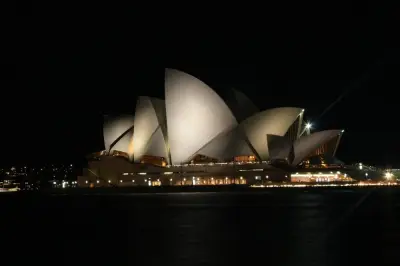
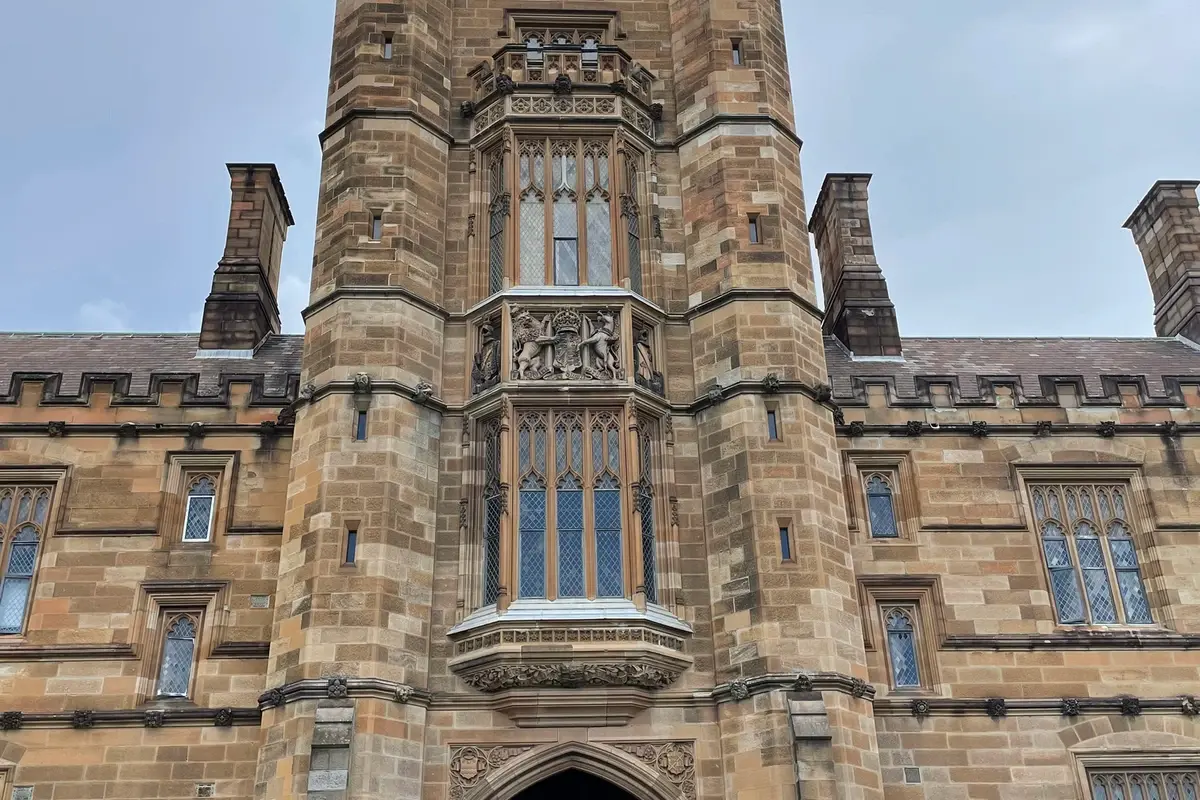
Over the next two or three days, we walked to nearby attractions, including the Anzac Memorial, Hyde Park, then the Art Gallery of New South Wales (which I recommend visiting; it's free and has rich exhibits), the Royal Botanic Garden, the Sydney Opera House, the Wildlife Park, and the University of Sydney. These places were all not far from the hotel, so we went on foot ("11 bus").
Later, we visited farther places, including a friend's home in Epping and the Blue Mountains. Below, I'll mainly introduce transportation. In Sydney, for public transport, you need to get an Opal Card, which is a smart card used to pay for fares on trains, buses, ferries, and light rail in Sydney and surrounding areas. After topping up the card, you can use it on any public transport within the Opal network. It is valid for trains, buses, light rail, and ferries in Sydney, the Blue Mountains, Central Coast, Hunter, Illawarra, and Southern Highlands. You can buy the card at convenience stores, such as 7-Eleven. The adult card is black. After purchase, top it up. For a short trip, topping up around 20 to 30 AUD should suffice. If you need to top up later, you can download the Opal Travel app and do it on your phone, with a minimum of 10 AUD. Note that you must tap on and tap off when using public transport. If you forget to tap off, you will be charged the maximum fare. Once, I forgot to tap off, and was charged nearly 10 AUD, which is quite expensive. Taking buses in Sydney is different from China: you tap on at the stop, not inside the bus. For trains and subways, there is no security check; some subway stations don't even have gates. You tap on at a post near the station exit after getting off the train. Despite the lack of security, I rarely heard of accidents in the news. The trains in Sydney are relatively slow. For example, traveling about 70-80 kilometers to the Blue Mountains takes over two hours by train. As a tourist in an unfamiliar place, you definitely need a map. The best map overseas is Google Maps. As mentioned earlier, using a Chinese SIM card with international roaming does not allow access to Google Maps, so I had to settle for Apple Maps, which worked but was not very accurate. Once, when going to the Blue Mountains, the location was off by a few hundred meters, and it was on a mountain road, causing some detour. Another time, when taking the subway, one station was missing from the map, and I didn't check the station name when getting off, walked a few hundred meters extra. Speaking of maps, I want to say more about the two most used maps in China: Baidu Maps and Amap (Gaode). Baidu Maps is basically usable in Sydney, with correct routes, though it lacks ride-hailing and public transport info. Apple Maps had errors, but Baidu was correct, which is good. Amap is almost unusable in Sydney.
Another common way to get around in Sydney is to rent a car. During this trip, we also rented a car and went to Jervis Bay. Renting a car in Sydney is quite convenient. A Chinese driver's license can be used with a translation. Normally, you can get a translation on rental platforms; after applying, a file will be sent to your email within minutes, and you can print it at the hotel. When renting, you need the original license and the translation. So if you plan to drive, bring your license. I rented a car on the Hertz platform, a mid-to-large SUV, with full insurance. The insurance cost a bit over 40 AUD per day, and the total for two days was about 560 AUD, which is quite expensive. You should pick up the car with a full tank and return it full, otherwise, you'll be charged a high service fee. Now, I'll focus on driving precautions. Since Sydney drives on the left, the driver's seat is on the right side of the car, opposite to China. This includes the turn signal and wiper stalks—they are also reversed. The only thing consistent is that the right foot controls the brake and accelerator, same as in China. At first, many people need time to adapt. It took me about half a day to get used to it, but I still had subconscious habits that took longer to break. For example, when turning right, I was used to mainly checking the left side, which can be problematic here.
As for traffic rules, basically: vehicles on side roads must yield to those on main roads, and turning vehicles must yield to those going straight. If you live in the suburbs, traffic is not as busy as in the city. Many intersections don't have traffic lights; they rely on solid and dashed lines and signs. If at an intersection you have a dashed line or a "Give Way" sign (inverted triangle), you must yield to vehicles on the other road. If you have a solid line or a red "Stop" sign, you must stop before the line for at least three seconds (regardless of whether there is traffic) and then enter the road only when there are no vehicles on the main road. Many intersections in Sydney are roundabouts, even small ones, which is quite different from China. The rule is to always yield to vehicles coming from your right; you don't need to check left. In Australia, drivers generally follow the rules strictly, so they are not as flexible as drivers in China. For example, at intersections in China, drivers often slow down to watch for unexpected pedestrians, but in Sydney, they drive through green lights at full speed and accelerate quickly from stops. Of course, many signs are different from China, so you need to pay attention. Also, there are time limits for parking in many places, e.g., only one hour, after which you must move your car. Speaking of roads, in Australia you rarely see fully enclosed highways like those in China. Most roads are similar to national roads in China, with relatively low speed limits. Common limits are 60, 70, and 110 km/h, with a maximum of 110. I heard from a friend that driving up to 10% over the limit is okay, so most cars drive at around the limit plus 10%. Although I saw electronic speed cameras, I rarely saw cars speeding significantly. The most common cars on the road are Japanese, occasionally American and German. Chinese brand cars are even rarer; I only saw a few Haval and Chery.
We drove to a small town near the Jervis Bay Resort. We arrived in the evening. The town had few people. We went to a popular restaurant for dinner. The indoor seating was full, so we sat outside. It wasn't too cold. Inside, most of the diners were elderly, chatting over food, and they stayed for a long time. We went when many were finishing their meals, and when we left, most were still chatting. Many restaurants do not have a license to sell alcohol, so if you want to drink, you need to buy from a nearby specialty store. The beef here is indeed delicious. After eating, we looked for accommodation. Most lodgings here are motels, and they are fully self-service. At the entrance, there is a self-service machine; just follow the instructions. These self-service operations require an email and a chip credit card. Email is for order confirmation, and the chip card is for payment. Magnetic stripe cards usually can't be used for payment. The next morning, we took a cruise to watch whales. We purchased tickets through a self-service machine as well. There was a slight hiccup: the payment went through but no ticket was issued. I made a phone call, gave my name, and was allowed to board directly—very convenient. After two or three hours at sea, we returned to Sydney in the afternoon to return the car. The return was simple: the staff checked the dashboard, confirmed the tank was full, took a photo, and said an email confirmation would follow.
The short trip ended quickly. On the last day, we revisited the University of Sydney. The university is open-style, with no fences or security guards. Most buildings are open for visitors as long as you don't disturb others. The University of Sydney is really beautiful, picturesque. Groups of students were chatting and laughing everywhere. The lawns are open for anyone to use. Many people were lying on the grass reading, sunbathing, or chatting, very leisurely. I also saw some birds foraging. There were many Chinese faces taking photos. We spent quite a long time at the university, ate at the cafeteria, and walked back to the hotel. On the way back, we passed a guitar shop. The owner was a second-generation Chinese immigrant, and there was also a Chinese international student visiting. Since we could communicate in Chinese, we chatted a lot about school life. Overall, the cost of living in Sydney is high. For studying abroad, an annual budget of over 500,000 RMB is needed to avoid being too tight. For renting or buying property, you can use the Domain app. If your language skills are good, you don't need an agent. Rent varies by location but is typically several hundred AUD per week, often between 500 and 700 AUD. For jobs, you can use the SEEK Jobs app. Some jobs are paid hourly, with a minimum wage of around 23 AUD per hour. Many service jobs pay 30 to 40 AUD per hour. I specifically checked software developer salaries; most were around 100,000 to 130,000 AUD per year. Food delivery is expensive. There are Chinese platforms like Panda Meal and Uber Eats. Most have a minimum order of 10 to 20 AUD, with delivery fees calculated separately based on distance. I haven't ordered, but it's said to be not cheap.
Finally, we took an early morning flight back to Nanjing. The total cost per person was about 10,000 RMB, which is quite reasonable. If you haven't been, it's worth a visit.
Travel Note Directory
1. Visa
2. Pre-trip Preparation
3. First Arrival in Sydney
4. Sydney Tour
5. Transportation
6. Departure
Travel Information
Hotel Index
Strategy Index
Flight Index
Website Navigation
Travel Index
Cruise Index
Corporate Travel Index
Franchise Cooperation
Distribution Alliance
Friendship Links
Corporate Gift Card Purchase
Insurance Agency
Agent Cooperation
Hotel Franchise
Destination and Attraction Cooperation
More Franchise Cooperation
About Ctrip
About Ctrip
Ctrip Hot Topics
Contact Us
Careers
User Agreement
Privacy Policy
Business License
Security Center
Ctrip Content Center
Intellectual Property
Trip.com Group Algorithm Announcement