A Student's Dad Explores Sydney Alone
Personal detailed guide, about 5000 words, reading time 15-20 minutes
I went to Sydney with my daughter, but she was busy with her studies and had her own daily life, so I spent most of the time exploring on my own.
First, I set the basic itinerary: I planned to go from October 5th to October 20th, and then started applying for a visa.
Because of my special circumstances, even though I had an invitation letter from my daughter as an international student, I still recommend using an agent, as they have experience with various special situations and can offer reasonable and effective solutions.
For those without travel experience, don't be overconfident and try to follow online guides on your own. If your visa gets rejected, it's troublesome to find other ways to fix it, and once rejected, reapplying becomes harder.
I provided all the required documents as per the agent's instructions: bank statements, asset proofs, etc. It was quite tedious and required patience and attention to detail.
Honestly, I was 50% prepared for rejection—if it didn't go through, fine; if it did, even better.
The agent, of course, wants to make money, but they also want to increase the approval rate—good口碑 leads to good business.
Once the visa was approved, I backed up the electronic version of the approval letter on my phone and printed two paper copies as backups.
Then I booked the hotel and flights, which my wife did on Ctrip: round-trip tickets and a 14-day hotel reservation.
Packing: (Keep it minimal; ended up with a medium suitcase and a half-full backpack)
1. Documents: One original and one copy of passport, two copies of the visa approval letter (one in backpack, one in suitcase just in case), original ID card (barely used, but good to have).
2. Money: One credit card (Visa and Master combined), 50 AUD cash as backup. The credit card was linked to my Apple Wallet, so I could pay with my phone, but swiping the card directly worked better.
3. Two Apple charging cables (with charging heads), one USB-C cable as backup, one power bank with 3C certification (Australia uses three-pin sockets; I regretted not bringing a converter—highly recommended).
4. My regular medications, with English names written on them for reference. Before landing in Sydney, remember to declare medications on the arrival card. When going through customs at Sydney Airport, an officer asked and let me through.
5. For a person with myopia: two pairs of prescription glasses, one pair of prescription sunglasses (essential: Sydney has mostly sunny weather, good for eye protection and photos), a pencil case with two pens and one pencil, and a small notebook as backup.
6. Toiletries: Manual razor (not electric, as batteries cause issues at customs), toothbrush (toothpaste bought at a supermarket after landing), one bar of soap, one towel (backup). Clothing details below.
Mobile Apps:
1. China Telecom App: I activated the 7-day Oceania data package twice. It worked decently, but signal was poor sometimes in taxis, old buildings, and certain areas.
2. Maps: Google Maps is essential (for food, fun, and everything—details in the eating and transportation sections). Apple Maps is also good; when Google Maps glitches, I use it.
3. Xiaohongshu (Little Red Book): Self-explanatory. Baidu Translate can translate text in photos in real time, useful for museums and ordering food.
4. Opal Travel app (public transport card), Uber app—essential for getting around.
5. Email app: Many restaurant reservations and payment receipts are sent via email. Optional but recommended.
6. Your credit card's corresponding app: For checking transactions and emergency handling.
Check Sydney weather in advance; you can look up 15-day forecasts online. Australia's seasons are roughly opposite to China's.
In early to mid-October, Wuhan is transitioning from autumn to winter, while Sydney is transitioning from spring to summer.
Low temperatures are around 15°C, highs between 25-30°C.
Tops: 4 short-sleeve shirts, 2 casual button-downs, one light jacket, and one thick hoodie (layer like an onion based on temperature).
Bottoms: 2 pairs of shorts, 2 pairs of jeans. Turns out I brought too few shorts and too many long pants, as I slept in and usually went out around noon, and returned to the hotel by 7-8 PM due to safety concerns.
Shoes and socks: One pair of sneakers, one pair of cloth shoes (backup, light and easy to carry), one pair of disposable slippers (most budget hotels don't provide them).
6 pairs of socks, 2 packs of disposable underwear (12 pairs total), and 2 pairs of cotton underwear (all came in handy).
Self-service laundry: I found this place on Google Maps. Although it was a bit farther than the nearest laundromat, it was affordable and accepted my old card.
Left machine: washing 7 AUD (30 minutes); right machine: drying 2 AUD for 8 minutes, 4 AUD for 16 minutes. There's a touchscreen at the entrance for payment.
After loading clothes, select your machine number on the screen and complete payment. The receipt can be sent to your email.
Remember to select HIGH Temp for drying, then press Start. I made a mistake the first time—I chose medium temperature and started, and the clothes sat still for 24 minutes, wasting 6 AUD.
Smartwash Laundry Newtown
Address: 154 Missenden Rd, Newtown NSW 2042 Australia
Nearby is a large second-hand clothing store with good reviews. I bought a pair of shorts and two short-sleeve shirts there, each under 8 AUD. The whole process was self-service, so no pressure with English.
I bought them and washed them together with my three-day-old dirty clothes.
Savers
Location: 93-99 Parramatta Rd, Camperdown NSW 2050
On the first evening, I bought a bag of cereal, a bottle of milk, and a loaf of sliced bread at a supermarket near the hotel. Back home, I had the same breakfast during fitness training. I also grabbed a wooden bowl and spoon from my daughter's dorm. Milk and cereal with a slice of bread was enough.
Just missing eggs—I could make up for it at lunch. Local brunch portions are huge, so no worries.
Lunch was always eaten out.
Western food: Of course, I tried various Western dishes at first. On Google Maps, I checked restaurants with high review counts—most were well-regarded local spots. Regardless of ratings, I rarely had a bad experience. In the restaurant details, you can see popular items and menus/drink lists. For those like me with poor English, just copy the hotel name plus Sydney, search on Xiaohongshu, download photos, and show them to the waiter when ordering.
Italian restaurant:
Macchiato Wood Fire Pizza
Address: Shop 2/338 Pitt St, Sydney NSW 2000
You can book via email. I took my daughter there; it was lively, great food, friendly service, a bit pricey.
Greek restaurant: Reservation required, otherwise you might have to wait or miss out. Service was decent. My daughter and I had three dishes. As a Chinese palate, I couldn't tell how authentic it was. The restaurant and dishes were very photogenic, felt upscale, and quite expensive.
Medusa Greek Taverna
2 Market St, Sydney NSW 2000
Local flavor restaurant: I visited this brunch spot twice alone. When I didn't know where to go for lunch, I came here. Service was warm, run by what seemed like a Chinese couple. I ordered Big Nick twice—portions so big I didn't need dinner. A bit salty for an older person's taste, but the restaurant had good reviews.
Three Williams Cafe
Address: 613A Elizabeth St, Redfern NSW 2016
Fusion restaurant: Expensive, a trendy spot near the Opera House with great views. The Opera House cake was very photogenic. As my friend Zhang Jun said, 'Eat a high-end meal, then follow up with something delicious.' This was the former. Those focused on taste and value can ignore it. I wanted to ignore it too... but the photos were great.
Lula Lu
Campbells Cove, Ground Level, Bays 4 and 5, 7-27 Circular Quay W, The Rocks NSW 2000
Chinese food: Just search on Xiaohongshu; there are many well-regarded spots. If the sign has Chinese, you can order in Chinese without pressure.
Er Wu Wei: A Hunan restaurant on the back street of Sydney University. Convenient for students, run by a Chinese uncle alone. He was the first to ask if I wanted hot water or cold water. I almost teared up. I recommend their signature Hunan dishes—generous portions, authentic taste, great with rice. No alcohol, only soft drinks. I wished I had some liquor to go with it. Only downside: a bit salty for me (per person 20-30 AUD).
廿五味 (Pappa's Stew Chilli Cuisine Newtown)
Address: 6 King St, Newtown NSW 2042
1915 Lanzhou Beef Noodles: Authentic noodles, lamb skewers were super hearty and tasty. All service staff were Chinese, young and friendly (per person 12-20 AUD).
1915 Lanzhou Beef Noodles Sydney Central
Shop 1/815/825 George St, Haymarket NSW 2000
Wuhan Hot Dry Noodles: It was already a treat to taste hometown flavor in Sydney. More love and tolerance—10 AUD satisfies you.
Chinese hot dry noodles
180 Broadway, Chippendale NSW 2008 Australia
Dinner: After playing alone until evening, I was tired, so I'd go to the nearby supermarket and get some ginger beer, chips, and Shin Ramyun.
Also, on Friday night, I had a sudden urge to go to a bar. I searched for highly rated ones nearby and walked over.
I only went once, to this place:
Pleasure Club
6 Wilson Street, Newtown
Staff were all friendly. Remember to bring your passport to prove you're an adult. I did, but the bouncer—a big black guy—saw I was an old man and just said 'How are you doing?' and let me in.
You can order drinks via QR code or at the bar.
I had one beer and one martini, total 37 AUD.
Most patrons were University of Sydney students. The music was good, atmosphere nice. It wasn't as scary as some online stories suggested—no fights or drugs.
As an Asian old man, I felt a bit out of place, haha.
On the way back to the hotel, I actually scared an Indian guy ahead who kept looking back, worried I might rob him. I had to sit down at a bus stop to create distance.
Rydges Camperdown
9 Missenden Rd, Camperdown NSW 2050 Australia
My wife booked this four-star hotel on Ctrip. 200 AUD per night, expensive by domestic standards.
Mainly convenient location: close to Sydney University, near bus stops, with a small supermarket, a Thai restaurant, and a local restaurant (also a sports bar) downstairs.
The room was clean, simple decor, no breakfast.
Service was average. Over ten-plus days, I had mixed feelings. I had to remind them to clean the room or hang the cleaning sign.
Sometimes they forgot to replenish towels, or the shower gel ran out and I had to ask.
One day, two dirty pillowcases were thrown on the sofa, and the bedside lamp was knocked askew. The cleaning staff seemed rushed. When I returned at night and opened the door, I thought I'd been burgled. I called hotel staff to check—they apologized and offered a free breakfast.
But the view from the 7th floor was nice, with the CBD skyline. The night view was beautiful, and morning sunlight streaming in felt great.
Note: Bring your own toothpaste, toothbrush, and slippers.
There was a kettle; I bought cups and tea bags at the supermarket and made my own tea.
Two options for transportation: bus and Uber. For regular trips, I took the bus; when tired or in a hurry, I used Uber.
Opal Card: Sold at supermarkets and gas stations. You tell them how much to top up, no card fee. After linking the card to the Opal app, you can recharge on your phone—very convenient. I recommend small top-ups (20 AUD each time) so you won't feel bad if you lose it (both my daughter and I lost one mysteriously).
Remember to tap on and tap off each time you ride the bus; otherwise, you'll be charged the full route. Wave to signal the bus to stop, and press the stop button to get off. Saying 'thank you' when getting off is good.
Be careful on buses; occasionally there are homeless people.
The Opal card also works on trains and at Circular Quay ferries. When the train runs above ground, it becomes a light rail—remember to tap on and off at the platform, not inside the train.
For ferries, tap the card with the crew after boarding.
Uber: Similar to China. I rarely took regular taxis with lights, afraid of being ripped off or treated rudely, so I used Uber. There's also Didi, but I didn't use it. Many Chinese drivers. Since the rating system is two-way, both drivers and passengers behave well. Overall service was good.
Remember to say hello and thank you to the driver; otherwise, a bad rating could affect the driver's future rides.
A friend of mine got a 4-star rating because he left his umbrella on the back seat on a rainy day; his average dropped and was hard to recover.
I met a few Chinese drivers—one from Lanzhou, one from Shanghai. Their recommended hometown dishes were good. On my first Uber ride, an Indian guy canceled, then an elderly Chinese guy picked me up in a Tesla. It was my first time in a Tesla; I didn't know how to open/close the door and felt clumsy, but he was very nice.
The nearly 11-hour flight was exhausting—prepare mentally and physically: bring a neck pillow and slippers, and move around a bit during the flight.
Both flights were with China Eastern, no communication issues. Going was smooth, nothing special.
On the return, my flight (Sydney-Wuhan) was canceled (possibly related to an Emirates cargo plane incident at Hong Kong Airport). Originally at 11:30 AM, it was rescheduled to a 3 PM flight to Hangzhou, then at 7:30 AM the next day to Wuhan. From leaving the Sydney hotel to landing in Wuhan, it took almost 24 hours.
But I made it home. I dropped my luggage and immediately went to the shop across from my neighborhood for a bowl of hot dry noodles, a fried dough cake, and egg liquor. After eating, I took a nap. It felt great to be home.
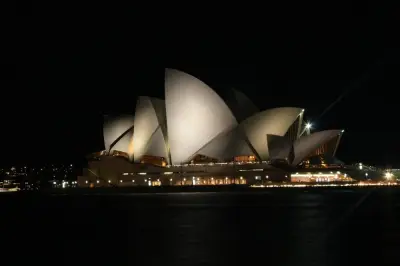
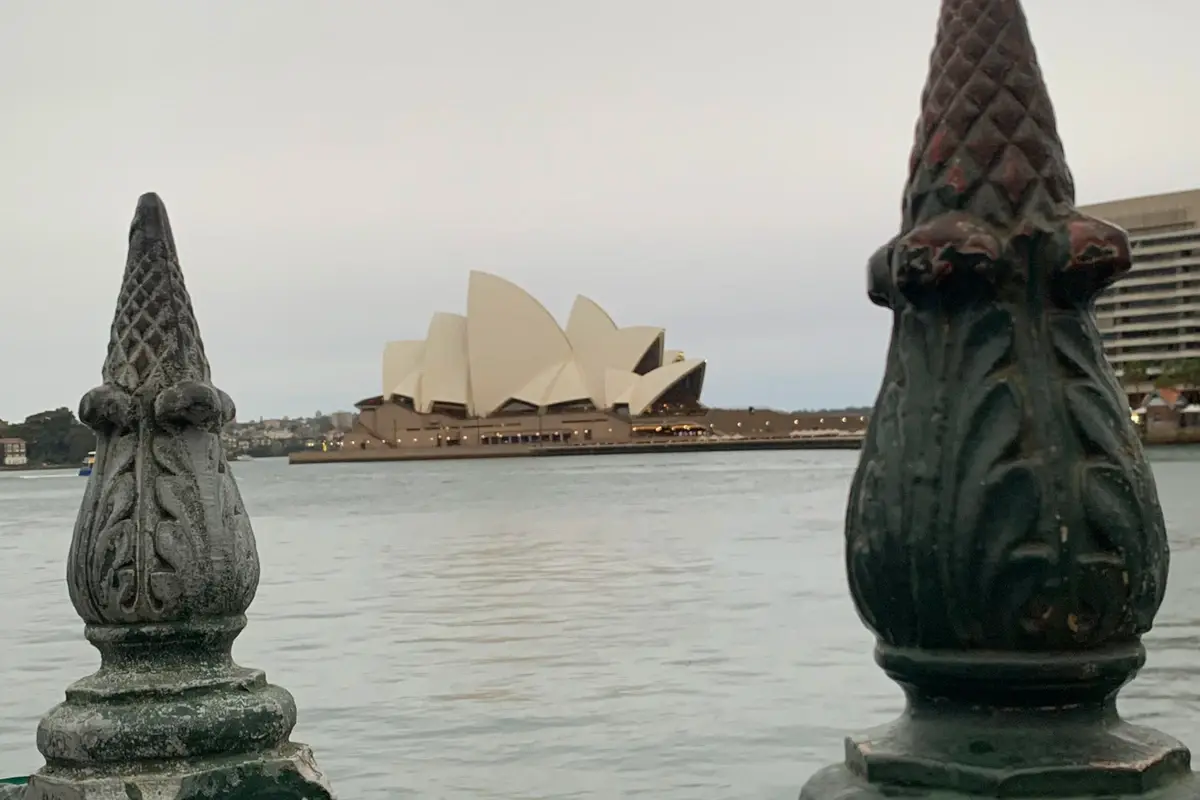
I won't go into detail about attractions—there are plenty of citywalk guides on Xiaohongshu. The main sights in Sydney are mostly near the Opera House. On a sunny day, with the sun behind you, you can take great photos even with your eyes closed.
But with limited energy, I usually visited two attractions and had one proper meal, then went back to the hotel tired.
Blue Mountains is not recommended for short trips. It's better for long-term residents who can go camping and hiking on weekends. Without enough time and supplies, you can't fully enjoy it.
As for souvenirs, they're unnecessary—everything is made in China. You can buy any well-regarded Australian specialty online domestically at reasonable prices. There's no need to carry them back. Travel light, as I experienced on the return trip; lugging heavy bags would have been a pain.
Overall, prioritize safety and preparation. Be cautious of homeless people and teenagers—keep your distance.
Always have a Plan B to reduce surprises and increase pleasant ones. My favorite photo was taken when there were no buses late at night, so I walked to Barangaroo station and captured a sunset shot.
Be polite: Sydney has mostly sunny weather, and locals are generally friendly. As a tourist, you'll interact most with drivers, supermarket staff, and restaurant servers. A warm greeting will get you positive feedback.
Even if your English is poor, 'Hello' and 'Thank you' are enough. If you don't want to talk, a smile works well. Thumbs up is also good.
After spending time here, I felt that friendliness also has a sense of distance. Eating too many Western meals makes you miss home.
I recommend everyone travel more; the more you go out, the more you appreciate your own hometown.