12-Day Leisurely Trip to Tokyo, Japan
Day 1 October 4, 2019 Friday
Shanghai Pudong International Airport, China
21:45 Arrived at Terminal 2 of Shanghai Pudong International Airport.
22:30 Picked up portable WiFi, checked in luggage, and waited for boarding.
Day 2 October 5, 2019 Saturday
Shanghai Pudong International Airport → Tokyo Haneda Airport, Japan → Kuki Apartment → Koshigaya Laketown → Muten Kura Sushi → Kuki Apartment
01:45 Boarded the flight at Terminal 2 of Shanghai Pudong International Airport, heading to Terminal 1 of Tokyo Haneda Airport (Haneda Kuko).
05:40 Arrived at the international terminal of Tokyo Haneda Airport.
Tokyo Haneda International Airport is located on the left bank of the Tama River estuary in Tokyo Bay, Ota Ward, Tokyo, 17 km northwest of central Tokyo. It is a 4F-rated airport, an international aviation hub, Japan’s national central airport, and the country’s largest airport. It opened as Tokyo Airport (Haneda) on August 25, 1931, with Tokyo Airport (Tachikawa) closing simultaneously. On September 12, 1945, the airport was taken over by the U.S. occupation forces and renamed Haneda Airport. It was returned to Japan on July 1, 1952, and renamed Tokyo International Airport. Terminal 1 opened in September 1993, Terminal 2 on December 1, 2004, and the international terminal on October 21, 2010. Terminal 1 covers 292,600 m², has 41 boarding bridges with 23 contact gates, and is mainly used by JAL group airlines like Japan Airlines, Skymark, and StarFlyer. The six-story building has arrivals on the first floor, departures on the second, parking access and dining on the third, more dining on the fourth, offices and dining on the fifth, and offices with an observation deck on the top floor. The basement houses Keikyu Line and Tokyo Monorail stations. On March 14, 2020, the international terminal was renamed Terminal 3.
06:30 Collected luggage, used the “Japan Transit Planner” app on mobile to check train routes, and headed to Kuki.
09:00 Arrived at Kuki Station, exited and walked to the Kuki apartment.
09:30 Reached the apartment, had brunch, and took a nap.
Woke up refreshed, put on some makeup, and got ready to head out!
11:00 Left the apartment, walked to Kuki Station.
11:30 Arrived at Kuki Station, had lunch (Saizeriya).
12:45 Left the restaurant, walked back to Kuki Station.
13:00 Reached Kuki Station.
13:05 Departed from Kuki Station, used the app to plan the route to Koshigaya.
14:00 Arrived at Koshigaya Laketown, shopped and had dinner.
Koshigaya Aeon Laketown, with a commercial area of 245,000 m², is Japan’s largest shopping mall. It consists of three zones: Kaze, Mori, and Lake Town Outlet, each with a distinct theme, housing 710 shops. Kaze is Aeon’s first triangular mall, with no large anchor store; its brand mix resembles a department store, targeting young women. Alongside fashion retailer VIVRE, supermarket Maruetsu, a multiplex cinema, and large sports stores, it features popular clothing and dining brands for the 20s-30s crowd. Mori boasts Japan’s longest mall corridor at about 500 meters, positioned as a lifestyle mall for families, with services ranging from education and beauty to living and medical. Besides an AEON supermarket, it includes beauty, car accessories, sports & outdoor, and new family sections. Lake Town Outlet sits beside a wetland lake, offering a pleasant shopping environment with 140 shops across three themed blocks.
18:30 Arrived at Muten Kura Sushi for dinner.
The sign is eye-catching; every plate is just 100 yen – a great deal. The “Muten” (no additives) in the name reflects their commitment to natural ingredients, a long-standing passion. Don’t miss this conveyor-belt sushi spot if you want tasty, healthy, and affordable sushi. The wasabi is freshly grated, not the paste from a tube, so it’s milder and enhances flavor. After eating, drop your plates into the slot at each table: five plates earn a gacha pull. The prize animations are fun, though the win rate seems low.
21:00 Left Muten Kura Sushi, walked to Koshigaya Station.
22:00 Arrived at Kuki Station, walked back to the apartment.
22:30 Reached the apartment.
Day 3 October 6, 2019
Kuki Apartment → Izu-ei Honten (eel restaurant) → Ueno Park → Tokyo National Museum → Akihabara → Uomin → Kuki Apartment
10:45 Left the apartment, walked to Kuki Station. It started raining just as we were about to step out.
11:15 Reached Kuki Station.
11:25 Departed from Kuki Station, used the app to head to Ueno.
13:00 Arrived at Ueno Station, walked to Izu-ei Honten.
13:20 Reached the famed eel restaurant, had lunch.
Izu-ei Honten, a long-established eel house, lies on the road south of Ueno Park (toward Akihabara), at 2-12-22 Ueno, Taito Ward, open daily 11:00–22:00. The décor is traditional Japanese, with wood everywhere and vintage ornaments and photos. Seating includes chairs and tatami. Elderly waitresses serve with warmth and attentiveness. The eel dishes come mainly as set meals or à la carte, with menus in Japanese, Chinese, English, and Korean. Its fame rests on centuries-old secret grilling techniques. The menu offers grilled eel over rice, in lacquer boxes, kaiseki courses, and combos with sashimi or tempura. When a steaming unajū set arrives in its elegant square lacquer box, the lid reveals a fragrant blend of sauce and eel. One bite of the tender, fatty eel with crispy skin bursts with flavor and a lingering aftertaste. A hundred-year craft indeed: the neatly arranged eel is steamed soft, retaining the aroma of charcoal grilling, with a sweet-savory sauce. The rice underneath is plump and perfectly cooked – a sign of carefully chosen ingredients. For picky eaters, each table has extra seasonings like eel sauce and sanshō pepper. The main branch is grand and impressive, with spacious halls and elegant ambiance, set to classical Japanese music – a truly refined dining experience. This eel shop has thrived since the Edo period, over 260 years.
14:30 Left Izu-ei, walked to Ueno Park.
14:45 Arrived at Ueno Park, strolled and took photos.
Ueno Park is one of Tokyo’s larger parks, packed with attractions. Wander to enjoy nature and culture, or spend a whole day on its art and history. Every spring, the park transforms into a sea of cherry blossoms, drawing hordes of visitors. Beyond the stunning scenery, the park brims with historical sites. Bronze statues are a highlight throughout. Landmarks include Tōshō-gū Shrine, Kan’ei-ji Temple, the Tokugawa family mausoleum, and Kiyomizu Hall, earning it the nickname “treasure trove of historic sites and cultural assets.” Check out Tōshō-gū, a masterpiece of classical Japanese architecture, especially the 6-meter “ghost lantern,” and its collection of valuable artifacts.
15:15 Left Ueno Park, walked to Tokyo National Museum.
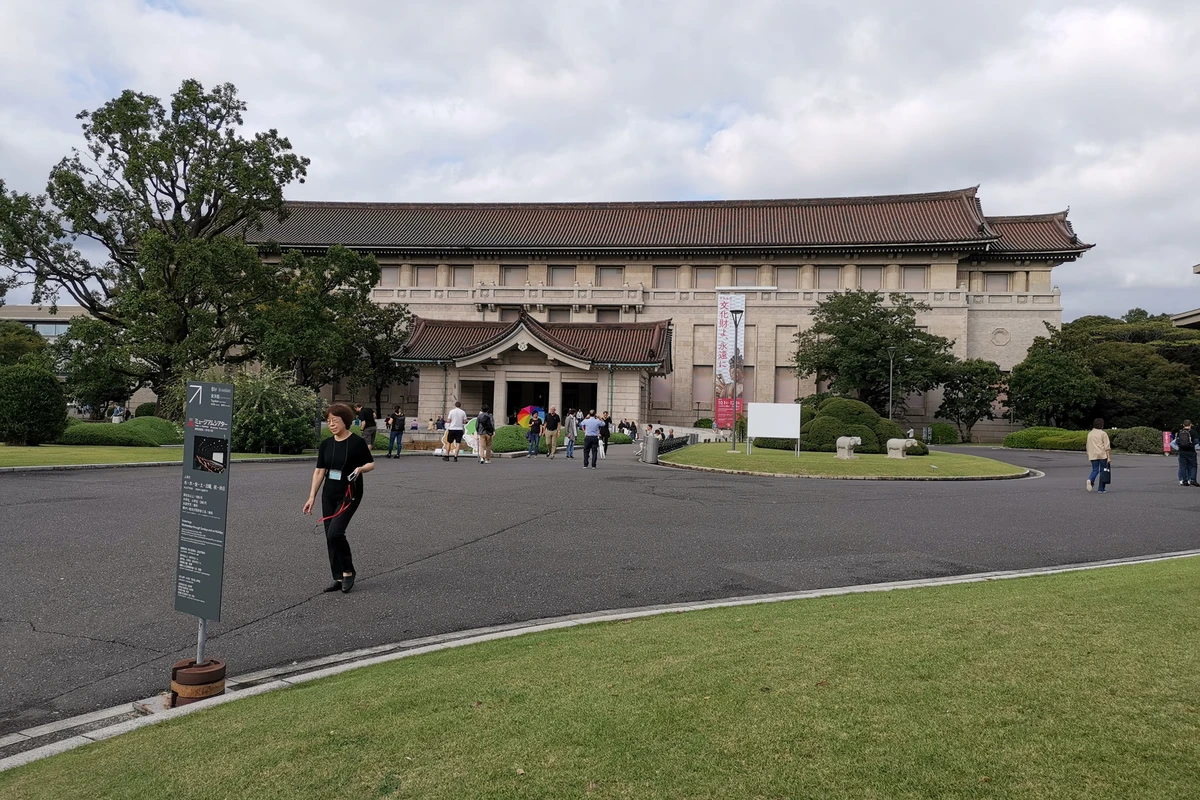
15:30 Arrived at Tokyo National Museum (Tokyo Kokuritsu Hakubutsukan), toured and viewed exhibits.
Founded in January 1877 within Ueno Park, the museum stands on a site with remnants from the Jōmon, Yayoi, and Kofun periods. It houses and displays Japanese and Asian paintings, ceramics, sculptures, and more. It is Japan’s oldest and most prestigious museum in terms of collection quality and quantity, well worth a visit.
17:00 Left the museum, walked to Ueno Station.
17:20 Reached Ueno Station, used the app to travel to Akihabara.
17:45 Arrived in Akihabara, browsed shops and had dinner.
Akihabara is the famous electronics district, packed with hundreds of stores selling everything from small appliances to high-tech gadgets, in ways quintessentially Japanese. It’s also the heartland of anime and manga culture, a must-visit for fans, with numerous maid cafés and the AKB48 theater. From the late 1940s, radio parts shops clustered under the JR tracks, seeding today’s massive electronics town. Akihabara is also home to AKB48, Japan’s top female idol group, with a dedicated theater on the 8th floor of Don Quijote. Uomin is an izakaya here – try the tofu and grilled dishes.
21:00 Left Akihabara, used the app to return to Kuki.
22:30 Reached Kuki, walked back to the apartment.
23:00 Arrived at the apartment.
Day 4 October 7, 2019
Kuki Apartment → Kasukabe → Shinjuku → Kuki Apartment
10:00 Left the apartment, walked to Kuki Station.
10:30 Reached Kuki Station, had lunch.
11:15 Departed from Kuki Station, used the app to go to Kasukabe.
11:45 Arrived in Kasukabe, explored and shopped.
Kasukabe is a city in eastern Saitama Prefecture, south-central Kanto region. Along with neighboring Koshigaya, it is designated as a core city of Saitama and a business hub. Historically part of Shimōsa Province, it flourished in the Edo period as a post town on the Nikko Kaido. Renamed “Kasukabe” from “Kasukabe” during WWII, it officially became a city on July 1, 1954. The famous anime “Crayon Shin-chan” features the Nohara family living here; in 2004, they were made “honorary residents” and now serve as ambassadors for the city.
15:00 Left Kasukabe, returned to Kuki.
15:45 Reached Kuki Station, walked back to the apartment.
16:15 Arrived at the apartment.
17:00 Left the apartment, headed to Kuki Station.
17:30 Reached Kuki Station, used the app to go to Shinjuku.
18:40 Arrived at Shinjuku Station, shopped and had dinner.
Shinjuku centers on its station. West Shinjuku is Tokyo’s planned administrative and business hub, home to the Tokyo Metropolitan Government Building and many corporate skyscrapers – Tokyo’s earliest high-rise cluster. South of the station is a commercial area full of department stores and shopping streets, most notably the Takashimaya Times Square flagship and the Kinokuniya bookstore headquarters.
21:30 Left Shinjuku, used the app to return to Kuki.
22:40 Reached Kuki Station, walked back to the apartment.
23:15 Arrived at the apartment.
Day 5 October 8, 2019
Kuki Apartment → Shinjuku District → Senso-ji Temple → Ikebukuro (Issui)/Tokyo Skytree → Kuki Apartment
10:00 Left the apartment, walked to Kuki Station.
10:30 Reached Kuki Station, used the app to go to Shinjuku.
11:50 Arrived at Shinjuku Station, walked to the Shinjuku district.
12:00 Reached Shinjuku district, shopped and had lunch.
Shinjuku is a bustling commercial hub with many famous sites and movie locations. Shinjuku SUMITOMO is known as Tokyo’s sub-center, located southwest of central Tokyo, a key transport junction connecting the 23 wards to suburbs and neighboring prefectures. Shinjuku Station, slightly west of central Tokyo, is a crucial transit point, served by JR Yamanote, Chūō, Sōbu lines, and private railways Keio and Odakyu, plus several subway lines. Meiji-dori boasts chain stores like H&M, Forever 21, Uniqlo, and Champion, as well as second-hand clothing shops. You’ll also see Laforet, a Harajuku landmark with a fashion museum on the top floor hosting runway shows. Beyond Meiji-dori is “Ura-Harajuku,” full of unique knick-knacks far from mass-produced goods. The Omotesando area features a 10-story Louis Vuitton flagship, Omotesando Hills, and Tokyu Plaza. The nearby Oriental Bazaar is a fascinating place with retro charm, perfect for Japanese-style souvenirs like kimono, tableware, dolls, and samurai-related items.
14:30 Left Shinjuku district, used the app to head to Senso-ji.
15:05 Arrived at Senso-ji, explored.
Senso-ji is in Taito Ward, Tokyo, considered the birthplace of the city and one of the few remaining spots with Edo-style atmosphere. As Tokyo’s oldest temple, its main gate, “Kaminarimon” (Thunder Gate), officially “Fūraijinmon,” symbolizes both Japan and the Asakusa area. Legend says that in AD 628, two fishermen pulled a 5.5-cm gold Kannon statue from the Sumida River. Locals built a temple to house it, thus Senso-ji began. Destroyed by fire many times, it was rebuilt by Tokugawa Ieyasu in the early Edo period, becoming a grand temple complex and popular gathering place. Besides the main hall, the five-story pagoda and other historic structures and scenic spots abound. Every New Year’s, throngs of worshippers visit. A five-story pagoda at the southwest corner is Japan’s second tallest after Kyoto’s Tō-ji. Asakusa Shrine to the northeast is elegantly designed. Festivals are frequent and colorful throughout the year.
17:00 Qiuqiu, Tantan, and I left Senso-ji, used the app to go to Ikebukuro.
17:30 Arrived in Ikebukuro, shopped and had dinner.
Ikebukuro, in Toshima Ward, is one of Tokyo’s bustling districts alongside Ginza, Shinjuku, Shibuya, and Asakusa. It often appears in TV dramas and novels, drawing fashion-conscious youth. The district is divided into West and East by JR Ikebukuro Station.
At 16:45, my daughter left Senso-ji alone, using the app to head to Tokyo Skytree.
17:10 Arrived at Tokyo Skytree, viewed and took photos.
Tokyo Skytree, also called Tokyo Sky Tree, stands 634 meters tall in Sumida Ward, second only to Burj Khalifa. It’s Japan’s tallest structure at 1-1-2 Oshiage, Sumida-ku. Observation decks at 350 m and 450 m provide panoramic Tokyo views; nighttime the tower changes lights. You can dine in the tower’s restaurants and cafés and buy exclusive souvenirs. It’s recommended to visit Tokyo Tower during the day and Skytree at night.
17:50 Left Tokyo Skytree, used the app to go to Ikebukuro.
18:15 Reached Ikebukuro.
18:30 The two groups reunited and walked to the restaurant.
19:00 Reached the restaurant, had dinner.
21:00 Left the restaurant, used the app to return to Kuki.
22:20 Reached Kuki Station, walked back to the apartment.
22:50 Arrived at the apartment.
Day 6 October 9, 2019
Kuki → Kinugawa → Kinugawa Onsen Hotel
11:00 Lunch at the apartment, we cooked ourselves – hearty and satisfying, haha...
12:00 Left the apartment, walked to JR Utsunomiya Line (toward Kuroiso, 05:00–23:59) Kuki Station.
12:30 Reached Kuki Station, used the app to travel to Kinugawa, Nikko City.
12:45 Took JR Utsunomiya Line from Kuki Station, 2 stops to Kurihashi Station; transferred with a 1.3 km walk inside the station to the Tobu Nikko Line (toward Tobu Nikko, 05:00–23:59) at Kurihashi Station, 19 stops to Shimo-Imaichi Station; changed to Tobu Kinugawa Line (toward Shin-Fujiwara, 05:00–23:59) at Shimo-Imaichi, 5 stops to Kinugawa Onsen Station. Total 94.4 km, about 2 hours.
15:30 Arrived at Kinugawa Koen Station on the Tobu Kinugawa Line, walked to Kinugawa Onsen Hotel.
Kinugawa is a river in northern Kanto, originating from Kinunuma in Nikko, Tochigi Prefecture, flowing south across the Kanto Plain and joining the Tone River in Moriya, Ibaraki. At 176.7 km with a 1,760 km² basin, it’s the longest Tone tributary and a Class A river. Historically named “Kenugawa” for frequent flooding, it was later called “Kinugawa,” meaning “river of raging demon fury.” The Kinugawa Onsen resort area near Nikko is a famous getaway. Together with Hakone and Atami, Kinugawa Onsen is known as “Tokyo’s inner garden,” set in a scenic gorge. Before the Showa era and the Tobu Railway, it was called “Taki no Yu” or “Shimotaki Onsen,” renamed in 1927. Merged with upstream Kawaji Onsen, the area boasts nearly a hundred hot spring inns along the valley, mostly large modern hotels with open-air baths overlooking the gorge.
16:00 Arrived at Kinugawa Onsen Hotel.
(Kinugawa Onsen Hotel) is a fine choice; attractions like Kinugawa Onsen, Kinu Tateiwa Suspension Bridge, and the footbath are a short walk away. Tobu World Square and Ryūō Gorge are also nearby. The hotel has a coffee lounge; you can also order in-room dining. From massage to spa to sauna, many relaxation options are available. Guests can use the parking lot.
16:30 Checked in, took a short rest.
18:00 Dinner, onsen soaking, and free time.
21:30 Retired for the night.
Day 7 October 10, 2019
Kinugawa Onsen Hotel → Kuki → Hotel East 21 Tokyo (Okura Hotels) (check-in) → A restaurant → Hotel East 21 Tokyo
Before breakfast, Tantan started her makeup routine as usual...
08:00 Hotel buffet breakfast, rich variety.
09:00 Left the hotel, walked around the neighborhood.
09:45 Returned to the hotel.
10:00 Checked out.
10:15 Left the hotel, walked to Tobu Kinugawa Line (toward Shimo-Imaichi, 05:00–23:59) Kinugawa Onsen Station.
10:45 Reached Kinugawa Onsen Station.
10:55 Boarded Tobu Kinugawa Line (toward Shimo-Imaichi), 5 stops to Shimo-Imaichi Station.
11:15 Arrived Shimo-Imaichi, transferred to Tobu Nikko Line (from Tobu Nikko 05:00 to Tobu Dobutsu Koen direction 23:59).
12:10 Reached Shimo-Imaichi Station.
12:20 Took Tobu Nikko Line from Shimo-Imaichi, 19 stops to Kurihashi Station.
12:45 Exited at Kurihashi Station, walked 1.3 km inside to JR Utsunomiya Line (toward Tokyo, 05:00–23:59).
13:00 Reached JR Utsunomiya Line (from Kuroiso 05:00 to Tokyo direction 23:59) Kurihashi Station.
13:10 Boarded JR Utsunomiya Line from Kurihashi, 2 stops to Kuki Station.
13:40 Arrived Kuki Station, walked back to the apartment, had lunch on the way and rested.
14:20 Left the apartment, walked to JR Utsunomiya Line (toward Tokyo) Kuki Station.
14:50 Reached Kuki Station, used the app to go to Hotel East 21 Tokyo.
15:30 Arrived at Tōyōchō Station on the Tōzai Line (from Nakano 04:30 to Nishi-Funabashi 00:00), walked about 800 meters to Hotel East 21 Tokyo – Okura Hotels & Resorts.
15:50 Checked in, took a nap.
Hotel East 21 Tokyo (Okura Hotels & Resorts) is about an 8-minute walk from Tōyōchō Subway Station, offering easy access to Tokyo’s top sights. You can also book the hotel’s free shuttle to Tokyo Disney Resort. The hotel features early 19th-century European design, with 396 classic rooms in elegant wood tones, all equipped with private bathrooms with bathtubs.
18:30 Left the hotel, had dinner nearby.
19:30 Went to a drugstore after dinner.
20:30 Returned to the hotel.
20:45 Arrived back.
Day 8 October 11, 2019
Hotel → Tokyo Tower → Ginza → Roppongi Hills Observation Deck → Haneda International Airport → Hotel
09:30 Left the hotel, used the app to go to Tokyo Tower. [We misread the station name, got off, then had to backtrack – haha...]
10:15 Reached Tokyo Tower, took photos at the famous spot.
Tokyo Tower, at 4-2-8 Shiba-kōen, Minato Ward, is an iconic landmark often featured in movies. Standing 332.6 m, it broadcasts TV and radio signals, sends JR stop signals during big quakes, and serves as a beacon, wind and temperature gauge. The tower’s red-white color was for aviation visibility; though no longer required, it was kept. Illumination, designed by Motoko Ishii, runs from dusk to midnight, white in summer, orange in spring, autumn, and winter. A main observation deck is at 150 m, and a special one at 249.9 m, offering city views and even Mount Fuji on clear days.
11:00 Left Tokyo Tower, used the app to go to Ginza.
11:45 Arrived in Ginza, had ramen for lunch, shopped.
Ginza is Tokyo’s premier upscale shopping district, often called the most expensive real estate in Asia, symbolizing Japan’s prosperity. Packed with top-brand flagship stores, luxury department stores, and century-old shops, it rivals the Champs-Élysées and Fifth Avenue. You’ll find Issey Miyake, Comme des Garçons, Uniqlo, Louis Vuitton, and more. Eight avenues run from 1-chōme to 8-chōme, with the 4-chōme intersection being the busiest.
13:30 Left Ginza's main area, walked to Ippudo.
13:40 Reached Ippudo, had lunch.
Ippudo originated in Hakata, Fukuoka, on October 16, 1985, now with over 80 branches worldwide. Its philosophy: “Keep tradition, keep innovating.” It serves ramen with quality ingredients, traditional cooking, and secret broths. Founder Kawahara Seimi is a legendary ramen master, winning TV Champion’s Ramen Pro Tournament three times (1995–98) and earning a spot in the Ramen Hall of Fame. The first mainland China branch opened in Shanghai Pudong in 2012, then Guangzhou in 2013, Shenzhen in 2013, Beijing in 2014, and Chengdu in 2014.
17:15 Left Ippudo, used the app to go to Roppongi Hills (Roppongi Hills Observation Deck, Mori Tower).
18:15 Arrived at the observation deck, viewed Tokyo’s nightscape. [The approaching typhoon made the view unusually hazy.]
Roppongi Hills is a large mixed-use complex at 6-10-1 Roppongi, Minato Ward, with offices, residences, hotel, shops, art museum, TV station, and cinema, centered around the 53-story Mori Tower. Opened in 2003.
[Typhoon warnings on our phones indicated all flights canceled, so we decided to rush to Haneda to rebook.]
19:15 Left Roppongi Hills, used the app to go to Haneda International Airport.
20:00 Reached Haneda, lined up to rebook.
The departure hall was packed with people, some with luggage already waiting. We queued early, so the wait wasn’t long. After negotiating with staff, our flight was postponed by three days.
22:30 Left Haneda on the last airport limousine bus, returned to the hotel.
23:30 Arrived back at the hotel.
Day 9 October 12, 2019
Hotel → Supermarket → Hotel [Typhoon hit, flight delayed...]
09:30 Extended our stay at the front desk; the lobby was teeming with stranded travelers. The receptionist warned that the neighboring supermarket would close before noon, and transport was mostly halted due to the typhoon, so we should stock up quickly.
10:40 Left the hotel, rushed to the supermarket downstairs.
10:45 Reached the supermarket, bought supplies, food, and drinks.
11:30 Returned to the hotel.
11:40 Hunkered down in our room...
While lying flat, I suddenly felt the whole building sway sideways two or three times – an earthquake?! Soon, TV reported a quake in Chiba, not far from Tokyo.
Filmed a short video through the hotel window; the wind was really howling, streets empty.
Day 10 October 13, 2019
Hotel → Ginza → Hotel → Kuki
10:00 Checked out, stored luggage.
10:20 Left the hotel, used the app to go to Ginza.
11:00 Reached Ginza, had lunch (McDonald’s), shopped. After the typhoon, Ginza became a pedestrian paradise under bright sunshine... though some shops were still closed.
14:30 Left Ginza, returned to the hotel for a late lunch.
15:20 Picked up luggage at the hotel.
15:30 Left the hotel, used the app to go back to Kuki.
17:30 Arrived in Kuki; Young Master Yu greeted us at the station, and we walked back to the apartment.
18:00 Reached the apartment.
Day 11 October 14, 2019
Apartment → Kuki Station (breakfast) → Koshigaya → Apartment
09:00 Left the apartment, headed to Kuki Station.
09:30 Arrived at Kuki Station, had breakfast at a café.
10:20 Left the café, used the app to go to Koshigaya.
11:10 Reached Koshigaya, shopped, had afternoon tea and dinner.
19:00 Left Koshigaya, returned to Kuki.
20:10 Reached Kuki, walked back to the apartment.
20:40 Arrived at the apartment.
Day 12 October 15, 2019
Apartment → Kasukabe → Apartment (dinner) → Haneda International Airport → Shanghai Pudong International Airport
10:30 Left the apartment, headed to Kuki Station.
11:00 Reached Kuki Station, used the app to go to Kasukabe.
11:30 Arrived in Kasukabe, shopped and had lunch.
15:30 Left Kasukabe, used the app to return to Kuki.
16:00 Reached Kuki Station, walked back to the apartment.
16:30 Arrived at the apartment, packed and had dinner.
17:45 Left the apartment, went to Kuki Station.
18:15 Reached Kuki Station, used the app to go to Haneda International Airport.
19:30 Arrived at Haneda, cleared security and waited for boarding.
23:30 Arrived at Shanghai Pudong International Airport Terminal 2, ending a pleasant journey.


