A Different Weekend: Dreaming of Ancient Xi’an in an RV
Once again I came to Xi’an, but this trip was different from previous ones—I opted to drive an RV and dream of the ancient capital Chang’an, visiting the Shaanxi History Museum, the Terracotta Warriors, the Big Wild Goose Pagoda, and Tang Paradise.
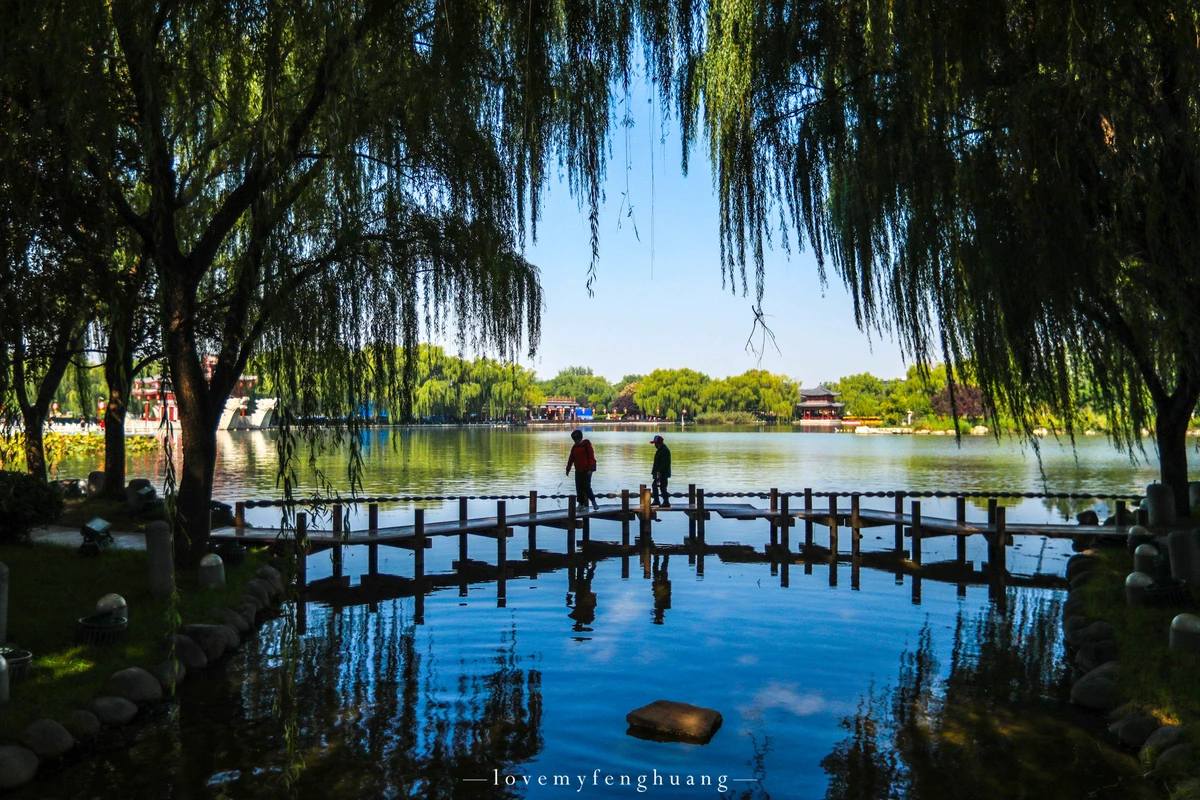
Tang Paradise is located in the Qujiang Development Zone south of Xi’an city, southeast of the Big Wild Goose Pagoda. It was rebuilt north of the original Tang Dynasty Furong Garden site in the style of a Tang imperial garden. It is China’s first large-scale royal garden–themed cultural park showcasing the full glory of the Tang Dynasty in all its aspects. It covers an area of 1,000 mu (approx. 66.7 hectares), including 300 mu of water.
“Palaces by the river locked behind a thousand gates, tender willows and fresh reeds—for whom do they grow green?” After the Zhenguan Reign of Emperor Taizong, the reigns of Emperor Gaozong and Ruizong saw major garden construction here, laying the foundation for the cultural prosperity of the Great Tang.
Tang Paradise is divided into fourteen themed cultural zones, including the Imperial Culture Zone, Women’s Culture Zone, Poetry Culture Zone, Imperial Examination Culture Zone, Tea Culture Zone, Song and Dance Culture Zone, Food Culture Zone, Folk Culture Zone, Diplomatic Culture Zone, Buddhist Culture Zone, Taoist Culture Zone, Children’s Entertainment Zone, Gate Landscape Culture Zone, and Water Show Zone. Together, they vividly display the Tang Dynasty’s spirit of towering might and luminous influence, its unparalleled and dazzling culture and arts, and its majestic presence that swept across the heavens. Main sights in the park include: Ziyun Tower, Fengming Jiutian Theatre, Yuyan Palace, Tang Market, Fanglin Garden, Ladies’ Hall, Caixia Pavilion, Lu Yu Tea House, Apricot Garden, Soul of Poetry, Tang Poetry Gorge, Qujiang Flow and Drink, Qi Pavilion, Beauties on a Spring Outing, Peach Blossom Wharf, and Zhuyu Platform. These attractions are built around Furong Lake. Ziyun Tower stands at the heart of the whole area.
The Imperial Culture Zone is epitomized by the park’s landmark building, Ziyun Tower, presenting the Tang emperor’s aura of “soaring form and spirit, a purple-cloud scene; all under heaven submit to the royal heart.” According to historical records, the original Ziyun Tower was built in the 14th year of Kaiyuan. During the grand assemblies at Qujiang, Emperor Minghuang would ascend this tower to enjoy music, feast his ministers, and celebrate with the people. The Ziyun Tower reconstructed based on historical documents now stands in the center of the park and is one of the most important Tang-style architectural complexes in the garden.
Shaanxi History Museum is located northwest of the Big Wild Goose Pagoda. Its planning started in 1983, and it opened to the public on June 20, 1991. It is China’s first large modern national museum. Its predecessor can be traced back to the Shaanxi “Quangong Exhibition Hall” established in 1909. Its completion marked a new milestone in the development of China’s museum enterprise.
The museum buildings are a Tang-style complex of “central halls and towering corner towers,” well-ordered and varied in height, imposing and dignified, blending national tradition, local characteristics, and the spirit of the times. The site covers 65,000 square meters. The floor area is 55,600 square meters, with a storage area of 8,000 square meters and an exhibition area of 11,000 square meters. The collection contains 1,717,950 pieces (or sets), spanning from simple stone tools used by early humans to various artifacts from daily life before 1840, covering over a million years. The artifacts are not only numerous and diverse in type, but also of high quality and wide value. Among them, the Shang and Zhou bronzes are exquisite, the pottery figurines of various dynasties are in countless postures, the gold and silver objects of the Han and Tang dynasties are unrivaled nationwide, and the Tang tomb murals are unmatched anywhere. It is truly a dazzling collection of masterpieces.
The exterior design of the Shaanxi History Museum deliberately highlights the grandeur of the prosperous Tang. Chang’an has been an imperial capital since ancient times. Over history, thirteen feudal dynasties—including Zhou, Qin, Han, Sui, and Tang—established their capitals here, leaving rich above- and underground cultural relics that form Shaanxi’s unique historical and cultural landscape.
The Neolithic painted pottery basin with human face and fish design, the Warring States bird-shaped gourd vessel, the Qin Dynasty painted kneeling archer—looking even closer than at the Terracotta Warriors, you can see the face, neck, and armor details, with traces of color still faintly visible. The Qin Dynasty tiger-shaped tally (Duhu Fu), the multi-faceted jet seal of Dugu Xin from the Western Wei period, the exquisite Tang Dynasty walking dragons made of pure gold, and the silver perfume pouch with grape, flower, and bird patterns from the Tang Dynasty—which especially catches the eyes of female visitors.
The Big Wild Goose Pagoda is located in Xi’an’s new district, where construction and consumption levels are relatively high. Directly opposite stands the Westin Hotel, and many of Xi’an’s luxury-brand hotels are concentrated in this area. Locals say there is a bar street not far from the pagoda, renovated from old buildings, with a great atmosphere at night. There are also many large shopping malls and supermarkets nearby. I recommend a cost-effective restaurant in the vicinity—No.1 Noodles Under Heaven (Tian Xia Di Yi Mian), a local chain. Its interior reflects local character, the service is good, and you can find all kinds of local specialties at reasonable prices.
My initial impression of the Big Wild Goose Pagoda was just a historic tower, but once I visited, I fell in love with it. The surroundings are beautiful. In spring, there are cherry blossoms, both red and yellow, and magnolias. In autumn, the layered woods are painted with color. If you come between late October and November, you can also see the golden ginkgo trees. As the sun sets, the scene becomes even more serene.
In terms of shape, the Big Wild Goose Pagoda cannot compete with the graceful towers of the south, lacking any delicately carved beauty. Built of grey bricks, it has the rugged look typical of the northwest.
The ticket sold outside the scenic area is only for the main entrance. To climb the pagoda, you need to buy a separate ticket and queue inside. There are student tickets for the main entrance.
The central walkway is paved with smooth bluestone slabs, reflecting the shadows of people passing by. Walking on the bluestone path, you almost feel like a Buddhist pilgrim. Although I have no religious belief, whenever I face a pagoda, temple, or shrine—places filled with incense and an otherworldly tranquility—a devout heart silently prays for the well-being and happiness of family and myself, and even longs for a place that transcends the mundane world.
Ivy climbs along the walls, its tendrils covering the ancient pavilions and halls with an unyielding vitality, stretching from the base all the way to the eaves, like a green cloak that fills the monochrome brick walls with life.
When visiting the Big Wild Goose Pagoda, you simply must climb it—just as you wouldn’t come to Wuhan without seeing the Yellow Crane Tower or just linger at the gate. To protect this square pavilion-style brick tower imitating wooden structure, all visitors entering must undergo strict security checks, similar to boarding a train or subway. Suspicious liquids are inspected before entry, and a separate ticket is required. Despite the long queues, the extra ticket, and the thorough security, climbing up for a panoramic view and satisfying one’s curiosity about the mysterious interior is truly worthwhile.
Inside the Big Wild Goose Pagoda, the entrance is lined with stone steles and inscriptions in various fonts. Behind glass covers, you can faintly make out the ancient marks on the weathered stone tablets. Over time, most of the characters have become illegible, but you can still guess some content from the fragments. Compared to the Yellow Crane Tower, the Big Wild Goose Pagoda feels more cramped inside; a single staircase serves both up and down traffic. During busy times, it is steep and crowded, and the lighting inside is dim, so watch your step. From the first floor upward, each level has viewing windows in all four directions. As you rise, the view changes, giving you a 360-degree panorama of the new district. Besides the views, each floor houses rare treasures. The second floor enshrines a statue of Sakyamuni Buddha, regarded as the pagoda’s guardian treasure. There are also pieces of the pagoda’s original wall and wind chimes (fengduo) that once hung from the eaves. The Tang bricks are thick, dense, and finely crafted. Looking down, you see the street scene of Qujiang New District. For visitor protection, the viewing spots on each floor are fitted with glass windows, with a small opening for people to reach out and take photos.
The ivy trailing down the walls, in places reduced to bare branches and old vines, seems to have traveled through time together with the Big Wild Goose Pagoda from the era when Xuanzang went on his pilgrimage. The walls are etched with the vicissitudes of time. In a quiet corner, the setting sun casts its glow on the mottled old walls, quietly counting the years.
The pedestrian street outside the Big Wild Goose Pagoda scenic area is especially beautiful at night, with a touch of Japanese romance and dreaminess. That moment’s beauty owes much to the lush floral clusters like those of spring. Such a lovely night is rarely seen; the real scene is far more beautiful than any photo. Unfortunately, without a tripod, I couldn’t capture its beauty.
The large musical fountain square was crowded with locals and visitors from around the world—a truly spectacular sight. Note the show times and schedules; performances run both day and night. If you miss one, you’ll have to wait a long time for the next.
Arriving at the RV campsite, the most delightful part was having a barbecue and beer with my travel companions—chatting and laughing, falling asleep under the stars, dreaming peacefully. It was a memorable experience quite different from previous trips.
The Terracotta Warriors scenic area has two gates, one for entry and one for exit only—you can’t go back, a design that also encourages tourism commercialization. Leaving through the exit, you enter a commercial pedestrian street that combines dining, entertainment, and shopping. Some parts were still under construction and decoration. Compared to the only small shop inside the Terracotta Warriors site with its expensive drinks and snacks, this food street after the exit offers a wide variety of local specialties and fast food, allowing you to eat to your heart’s content at relatively fair prices.
The Terracotta Warriors truly deserve the title of the Eighth Wonder of the World. Only by visiting in person can you feel the shock and awe they inspire. Discovered by a local farmer in 1974, this massive underground army of pottery figures has since been revealed. As of 2016, Pit No.1 (the largest and relatively intact), Pit No.2 (the smallest), and Pit No.3 (large but relatively incomplete) are open to the public.
The pits are rectangular, mainly displaying an army composed of chariots, infantry, and pottery horses. After centuries and millennia of upheaval, geological changes, and natural decay, many warriors are broken and heavily damaged. Almost all have lost their original colors, showing various degrees of corrosion and destruction.
According to research, Qin Shi Huang had over 8,000 terracotta warriors made. The most astonishing thing is that no two are alike—each is unique. Restoration work is huge and time-consuming, sometimes taking several years per figure.
The Emperor Qinshihuang’s Mausoleum Site Museum has opened a restoration studio where visitors can observe restorers at work and gain a close-up understanding of the restoration process, as well as the natural and cultural knowledge involved. The tools, equipment, and steps are on display. Every fragment, no matter how small, is labeled. The broken pieces you see today—years later, when you return, that restored piece may be standing in the neat ranks of infantry.
Inside Pit No.2, the lighting is also quite dim. Walking around, you see many pits of various sizes, but many are still being excavated and restored. A distinctive feature is the glass cabinets displaying standing archers, general figures, kneeling figures, chariots, etc., allowing a clear view of the warriors’ armor, accessories, facial expressions, and postures. Examining them from bottom to top, you notice broken areas and that many figures need metal supports to stand. The chariots are said to be replicas of the actual vehicles and horses used by Qin Shi Huang, scaled down several times but identical in style.
Pit No.3 is considered the command center of the entire army, so compared to Pits No.1 and No.2, it is rather mini. You see many headless warriors there.
Inside the Terracotta Warriors scenic area, there is no accommodation, and barely a small café. Prices are steep—coffee starts at 25 yuan, and even getting a cup of hot water after buying something feels stingy. The drinks on offer are basically just coffee, along with some biscuits and snacks. The Qingming weather was overcast and chilly. Price aside, this café did bring a bit of warmth in the cold early spring. I recommend visitors to the Terracotta Warriors bring their own food and water. If you can hold out until you exit, there are many restaurants outside the exit. You know, many of the small gardens inside the Big Wild Goose Pagoda area are planted with these pink cherry blossoms, and the landscaping and maintenance there are better than at Qinglong Temple.
Opposite the ticket office at the entrance, there is a place to rent audio guides, along with many licensed guides touting their services, calling out, “If you don’t hire a guide, seeing the Terracotta Warriors is a waste…!” The audio guide requires a deposit and a rental fee. You return it at the exit with your deposit receipt. It’s easy to use and reasonably priced. If there are two of you, I found that much of what the guides say is similar to the audio guide content. I won’t comment further; choose to rent an audio guide, hire a guide, or go without, based on your needs.
I suggest renting one device: put one earpiece in one ear each—that’s enough. If you both plug into both ears, you won’t hear anything except the audio guide.
Xi’an has an abundance of food. Beyond the Muslim Quarter, you can find delicious eats like roujiamo (Chinese burger) and noodle shops in streets and alleys everywhere. Here are a few of the must-try foods I’ll share with you:
1. Roujiamo: Unlike the usual ones with chopped green pepper and other fillings, this is just solid meat inside the bun. The meat is stewed so tender you barely need to chew, and the saltiness is just right. Overall, it’s a very satisfying, delicious roujiamo.
2. Red oil noodle skin (or rice sheet): It looks fiery and heavy, but after trying it, I’ll tell you it’s just visually spicy—only mildly hot. It’s topped with shredded cucumber and soybean sprouts. A refreshing bowl of noodle skin goes perfectly with a savory roujiamo.
3. Biangbiang noodles: Although it’s a mixed noodle dish, the generous amount of toppings and seasonings saturate the noodles with salty, fragrant, and slightly spicy flavors. The noodles are wide and long, chewy and springy, and utterly delicious. Accompaniments include spinach, dried tofu, and green beans.
4. Zenggao (steamed glutinous rice with jujubes): It’s like an eight-treasure rice pudding, with layers of jujubes wrapped in sticky rice. If you eat a whole serving, you might feel there’s not enough jujube; you can ask to add more.
5. Oil-splashed chili (Po La Zi): Oily, but the heat is only mild. It may not be as fragrant as southwestern chili oil, but the taste is balanced. You can buy it as a souvenir for family and friends.
6. Lamb paomo (crumbled bread in lamb soup): A must-try dish in Xi’an. Xi’an food tends to be hearty and meat-heavy. What I love most is the milky white broth simmered with lamb, with a bit of chili oil—the taste is incredibly fresh and rich.
[About Transportation]
For this trip, I chose a SAIC Maxus automatic RV. Anyone with a C driver’s license can drive it. The RV is fully equipped, with ample space—you can sit or lie down comfortably. It’s automatic. The 2-day, 1-night itinerary included one night camping at Hancheng Lake. Open the window and you’re met with scenery.
For the past three or four years, around Qingming every year, I’ve been heading down to the Jiangnan region. Jiangsu has become a frequent destination. I have a soft spot for the river towns, bridges, and waterside homes of Jiangnan. But with limited time, I always want to explore more and see unknown parts of the world. As it happens, there’s a direct high-speed train from Beijing to Xi’an, non-stop, arriving in just over five hours. You can easily enjoy Xi’an even on a two-day weekend.
Xi’an North Railway Station vs. Xi’an Railway Station
Xi’an Station: Located on North Huancheng Road in Xincheng District (near Jiefang Road, by the ancient city wall). It’s conveniently connected in all directions, but the area around the station is quite chaotic and disorganized. The station itself is not large. Nearby, you can find Bus You 5 to the Terracotta Warriors, and buses to Xianyang Airport are also a 5–10-minute walk away.
Shangjian Gate & Qinjian Gate: Xi’an Railway Station faces the ancient city wall’s Shangjian Gate and Qinjian Gate. When walking the wall, you can overlook the station. Past the wall is the main artery, Jiefang Road. Taking a taxi from the station square isn’t easy—many drivers are unwilling to pick up fares here because of surveillance cameras and strict parking time limits.
Jiefang Road: After passing through the city wall, you reach Jiefang Road. The flagship store of ‘Qin Zhi Roujiamo’ mentioned later is right on this main road, with an eye-catching shopfront that’s easy to spot.
Buses: (Some bus routes passing major scenic spots are listed below)
Note: There are many bus stops around the train station, covering almost all scenic spots in Xi’an. Although the stop is named “Train Station,” the buses stop at several different locations around the station—some on Jiefang Road, some inside Shangjian Gate, and some on other streets or intersections.
Tiesheyuan → Train Station (passing Qinglong Temple, Party School, Big Wild Goose Pagoda)
Terracotta Warriors → Train Station (passing Huaqing Pool and other minor stops; if the bus is full, it may skip intermediate stops but passengers can still get off)
Dahua Commercial District → East of Train Station (passing Qinglong Temple, Shapo)
Hansen Village → Xitan Village (passing Qinglong Temple, Big Wild Goose Pagoda)
Daming Palace Hardware & Lighting City → Chang’an University (passing Wenchang Gate, East of Train Station)
Xianyang Airport is well-planned and has good services. After a bit of a walk to baggage claim and exiting the arrivals hall, signs direct you to the airport bus ticket hall. One side is for long-distance buses (to places outside Xi’an), the other for city routes.
Airport → Xi’an Railway Station (Longhai Hotel) P.S.: Located on Jiefang Road, a 10-minute walk to Xi’an Railway Station.
Average departure interval: 30 min
Fare: 25 yuan per person. Scan your ticket to board; there’s no assigned seat, just sit wherever you like. The bus departs when full. The journey takes about an hour. Passing through Shangjian Gate from the train station can get stuck in traffic for over ten minutes. The Longhai Hotel on Jiefang Road is a good value-for-money hotel; I saw a large banner advertising special rooms for over 200 yuan.
Tickets for Xi’an’s major scenic spots are quite pricey. Student tickets are available. Adult tickets bought online can save a few yuan.
1. Big Wild Goose Pagoda: 55 yuan (main entrance only, not including the tower climb; climbing the tower: 30 yuan)
2. Terracotta Warriors: 150 yuan (audio guide: 25 yuan per unit)
3. Shaanxi History Museum: Tang Treasures Hall ticket 20 yuan, Mural Hall ticket 300 yuan. Free admission policy: children under 1.4m tall, seniors over 65, active military personnel, and disabled visitors with valid certificates.
4. Tang Paradise: 120 yuan (free since August 1, 2020, reservation required) (Pedal car: single-seater 45 yuan/120 min; Dream of Chang’an performance ticket: 260 yuan) Opening hours: 10:00–22:00. The Tang music and dance spectacular “Dream Back to the Tang” Golden Edition at 17:00; Water and Light Show “Tang Dynasty Dream” at 20:30.
Travelogue Contents
1. Exploring Xi’an by RV
2. Tang Paradise: Large Royal Garden–themed Cultural Park
3. Shaanxi History Museum: China’s First Large Modern Museum
4. Big Wild Goose Pagoda: Sunset Over Ci’en Temple
5. Entering a World Heritage Site: Terracotta Warriors
6. mhm About Food
7. Practical Tips
Travel Information
Hotel Index
Tips Index
Airfare Index
Website Navigation
Travel Index
Cruise Index
Corporate Travel Index
Partnership & Distribution
Friendly Links
Corporate Gift Card
Insurance Agency
Agency Cooperation
Hotel Affiliation
Destination & Scenic Spot Cooperation
More Partnership Opportunities
About Ctrip
About Ctrip
Ctrip Hot Topics
Contact Us
Careers
User Agreement
Privacy Policy
Business License
Security Center
Ctrip Content Center
Intellectual Property
Trip.com Group Algorithm Notice