![Tracing the Roots of Chinese Civilization: A Self-Drive Tour [July 4–13, 2020]](/img/ab0bf928b522306e_l.webp?src=https%3A%2F%2Fdimg04.c-ctrip.com%2Fimages%2F1mf5a12000bykrfy0333B_W_320_0_Q80.jpg)
Tracing the Roots of Chinese Civilization: A Self-Drive Tour [July 4–13, 2020]
Day 1: 965km and 11 hours, from Hangzhou, Zhejiang to Dengfeng, Henan, our family of four finally embarked on our 2020 "Root-Seeking Journey of Chinese Civilization" self-drive tour. Driving is a bit tiring, but the spirit is free; with the family in harmony and joy, I think that must be the most beautiful scenery in the world. The hotel room directly faces Mount Song, the majestic and towering grandeur is awe-inspiring; authentic Henan stewed noodles with a couple of simple dishes made a satisfying dinner; in the nearby Songyang Park, listening to the locals performing Henan opera with rhythmic precision, quietly soaking in the local people's contented and leisurely slow life. Tomorrow we will visit Shaolin Temple, White Horse Temple, and a mysterious place...
Day 2: Shaolin Temple, a name that excites just by hearing it, now appears so vividly before us! Opening the auto-guide function on Gaode Map, we could listen to explanations wherever we walked in Shaolin Temple, very convenient; hearing the theme song of the movie "Shaolin Temple" and seeing with my own eyes the hollows worn by martial monks’ training, a special feeling rose in my heart. The Erlitou Xia Dynasty Capital Site Museum, not far from Shaolin Temple, was the second stop of our tour today. For a long time, archaeological discoveries (such as Yinxu) have confirmed the existence of the Shang Dynasty, but the authenticity of the Xia Dynasty has been questioned. The Erlitou archaeological discovery is a "major breakthrough" in the chronological study of Xia and Shang. Of course, I feel that the lack of written evidence, the most convincing proof, remains a great pity. The Erlitou Museum is grand and solemn, with extensive use of information technology, well worth a visit for history enthusiasts. Near our hotel is the famous White Horse Temple in Luoyang, the first government-run temple in Chinese history, the "First Ancient Temple of China"—quite a pedigree!
Day 3: Under bright sunshine, we visited the Longmen Grottoes in Luoyang, Henan. The facilities at this 5A-level scenic spot are dependable; we could even park in a cool underground parking lot. The most representative Vairocana Buddha at Longmen is a must-see, said to have been carved based on the features of Empress Wu Zetian. During the visit, we could see many Buddha statues in the grottoes that are incomplete. I think the reasons might be the repeated anti-Buddhist campaigns in history, natural weathering, but more likely the plunder by Western powers over the past 200 years. Some precious Buddha heads are still in museums in Europe and America, which is deeply saddening... Leaving Longmen Grottoes, we continued driving westward, next stop—Mount Hua!
Day 4: Mount Hua, magnificent and majestic! With the cable cars on the West Peak and North Peak, the perilous paths of Mount Hua are no longer unreachable. Today, we went up via the West Peak and down via the North Peak, especially experiencing the thrilling Cliffside Plank Walk! Even with more than 25,000 steps in a day and returning to the hotel exhausted, deep down I knew: Mount Hua was well worth the trip!
Day 5: In the morning, we set off from the foot of Mount Hua, driving a hundred kilometers to the Museum of Emperor Qin Shihuang's Terracotta Army in Lintong, Xi'an. Only by coming here can you truly feel the pulse of Chinese civilization and the profoundness of Chinese history! The terracotta warriors we saw are just the tip of the iceberg of the underground treasures of Qin Shihuang's mausoleum; archaeological excavations are still ongoing, and I believe more spectacular discoveries will come! Our second stop was Huaqing Palace at the foot of Mount Li, less than 10 km from the Qin Mausoleum. Apart from some newly built pseudo-ancient structures, the highlights of Huaqing Palace are the Huaqing Pool and the Five-room Hall. The former is a historical site of royal bathing in the Tang Dynasty, along with the love story of Emperor Xuanzong Li Longji and Yang Yuhuan; the latter is where the "Xi'an Incident" took place, with bullet holes clearly visible on the walls, as if telling the historical turning point that changed the course of China's anti-Japanese war. Hangzhou is deep in water, Xi'an is blazing hot! After a few days of travel, my neck is already sunburned dark. But we finally arrived in Xi'an!! Xi'an’s night doesn’t get dark until after 8 p.m. Right at the hotel entrance is Shuyuanmen, and not far away are Xi’an City Wall, the Bell and Drum Towers, and the Muslim Quarter. A casual stroll nearby is an authentic Xi'an experience.
Day 6: Today during the day we holed up in the hotel, simply because of Xi'an's scorching sun; besides, after several days of continuous sightseeing, we really needed some rest. At dusk, we geared up again. First stop: Yongxingfang near Zhongshan Gate on the east city wall, where Shaanxi cuisine can be sampled almost in its entirety. Compared to the Muslim Quarter, Yongxingfang feels more down-to-earth and genuine; no wonder locals prefer Yongxingfang when they crave local snacks. We had dinner at Yongxingfang, then climbed up Xi'an City Wall. At night, with the lighting, the wall looks even more magnificent. This is the best-preserved and largest ancient city wall in the world, and the ups and downs of Xi'an City Wall are a legendary and vicissitudinous history. How can you come to Xi'an and not go up the city wall?
Day 7: Today we joined a local one-day tour in Xi'an, heading to Maoling, Qianling, and Famen Temple. This is a route we had long desired, as for a family fond of history, there are too many stories there. So-called "Qin Emperor, Han Wu", the mausoleum of Qin Shihuang lies at the foot of Mount Li, while Emperor Wu of Han’s mausoleum is Maoling. The development has just begun, but national treasures like the "Horse Trampling a Xiongnu" stone sculpture have already been discovered. Qianling is the joint burial mausoleum of Empress Wu Zetian and Emperor Gaozong Li Zhi, and we finally saw the famous Wordless Stele. Wu Zetian, the only female emperor in Chinese history, her tenacity, wisdom, and decisiveness are deeply admirable. The archaeological findings from the underground palace of Famen Temple once shocked the world, especially the discovery of the Buddha's true finger bone relic, demonstrating Famen Temple's high status in Buddhism; together with 2,499 Tang Dynasty artifacts unearthed, they showcase a fascinating and flourishing Tang Dynasty. After bidding farewell to days of high temperature, Xi'an was hit by torrential rain today. By the end of the day's tour, we were soaked through, but with such rich gains, why fear the wind and rain?
Day 8: To visit the Shaanxi History Museum, you must make a reservation at least 2 days in advance; we set our alarm for 4 a.m. the day before yesterday and barely managed to snatch tickets. The artifacts displayed at Shaanxi History Museum are only a tiny fraction of its entire collection, yet they are enough to awe the world. Most of the exhibits are originals, showing the museum’s deep holdings. On the way, we visited Ci'en Temple and the Big Wild Goose Pagoda, landmark buildings of Xi'an, famous because of the Tang Dynasty monk Xuanzang. Huangdi Mausoleum has always been a place we yearned for, because the Yellow Emperor is the common ancestor of our Chinese nation! In the parking lot, cars with license plates from all over the country were everywhere, a testament to the significance of Huangdi Mausoleum in Chinese hearts. Our daughters have "Xuanyuan" in their names (Zhang Lexuan, Zhang Leyuan), and they took a photo together in front of the Xuanyuan Temple at Huangdi Mausoleum today, which felt especially meaningful. At dusk, we safely arrived in Yan'an, the sacred revolutionary base of China.
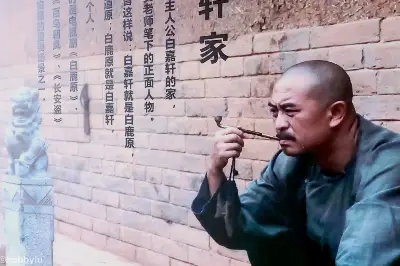
Day 9: Yan'an, the cradle and holy land of the Chinese revolution. Today we visited in sequence: Pagoda Hill, Yan'an Revolutionary Memorial Hall, Yangjialing Revolutionary Site, and Zaoyuan. What moved me most was the power of faith! Long live Chairman Mao!
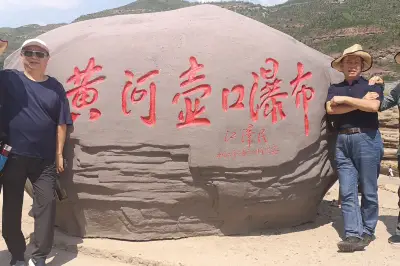
Day 10: Hukou Waterfall on the Yellow River was even more soul-stirring than imagined—the irresistible force of thunder and fury! The hotel is right inside the scenic area; opening the door, the waterfall is in full view. Accompanied by the roaring water, we slept soundly. Also, the local Yellow River carp was delicious! Leaving Hukou Waterfall, we ended our tour and headed back to Hangzhou.
![Tracing the Roots of Chinese Civilization: A Self-Drive Tour [July 4–13, 2020] image 1](/img/1268fe51c07ad4a1_l.webp?src=https%3A%2F%2Fdimg04.c-ctrip.com%2Fimages%2F1mf5a12000bykrfy0333B_W_640_400_Q90.jpg%3Fproc%3Dautoorient)
![Tracing the Roots of Chinese Civilization: A Self-Drive Tour [July 4–13, 2020] image 2](/img/5782366e56b7aaac_l.webp?src=https%3A%2F%2Fdimg04.c-ctrip.com%2Fimages%2F1mf4j12000bypzerzA4C9_W_671_0_Q90.jpg%3Fproc%3Dautoorient)
![Tracing the Roots of Chinese Civilization: A Self-Drive Tour [July 4–13, 2020] image 3](/img/063214ecc5289faf_l.webp?src=https%3A%2F%2Fdimg04.c-ctrip.com%2Fimages%2F1mf6c12000bypzf7j1861_W_671_0_Q90.jpg%3Fproc%3Dautoorient)
![Tracing the Roots of Chinese Civilization: A Self-Drive Tour [July 4–13, 2020] image 4](/img/0b8d01f08b3db17d_l.webp?src=https%3A%2F%2Fdimg04.c-ctrip.com%2Fimages%2F1mf7212000bykucd752D1_W_671_0_Q90.jpg%3Fproc%3Dautoorient)
![Tracing the Roots of Chinese Civilization: A Self-Drive Tour [July 4–13, 2020] image 5](/img/9ded027f3d00fb40_l.webp?src=https%3A%2F%2Fdimg04.c-ctrip.com%2Fimages%2F1mf4012000bypzrpsA7B7_W_671_0_Q90.jpg%3Fproc%3Dautoorient)
![Tracing the Roots of Chinese Civilization: A Self-Drive Tour [July 4–13, 2020] image 6](/img/f90debcf811b6805_l.webp?src=https%3A%2F%2Fdimg04.c-ctrip.com%2Fimages%2F1mf1912000bykv74x7F56_W_671_0_Q90.jpg%3Fproc%3Dautoorient)
![Tracing the Roots of Chinese Civilization: A Self-Drive Tour [July 4–13, 2020] image 7](/img/4b14e6e2c63f4923_l.webp?src=https%3A%2F%2Fdimg04.c-ctrip.com%2Fimages%2F1mf2y12000bypzl5r83A0_W_671_0_Q90.jpg%3Fproc%3Dautoorient)
![Tracing the Roots of Chinese Civilization: A Self-Drive Tour [July 4–13, 2020] image 8](/img/11b8f4662679a02d_l.webp?src=https%3A%2F%2Fdimg04.c-ctrip.com%2Fimages%2F1mf5912000bykrncy7D29_W_671_0_Q90.jpg%3Fproc%3Dautoorient)
![Tracing the Roots of Chinese Civilization: A Self-Drive Tour [July 4–13, 2020] image 9](/img/fbcf9505d86b53a8_l.webp?src=https%3A%2F%2Fdimg04.c-ctrip.com%2Fimages%2F1mf3b12000bypzxpa77B8_W_671_0_Q90.jpg%3Fproc%3Dautoorient)
![Tracing the Roots of Chinese Civilization: A Self-Drive Tour [July 4–13, 2020] image 10](/img/b6ba91c0e48856b5_l.webp?src=https%3A%2F%2Fdimg04.c-ctrip.com%2Fimages%2F1mf1q12000byq080w5747_W_671_0_Q90.jpg%3Fproc%3Dautoorient)
![Tracing the Roots of Chinese Civilization: A Self-Drive Tour [July 4–13, 2020] image 11](/img/044880cea8e26991_l.webp?src=https%3A%2F%2Fdimg04.c-ctrip.com%2Fimages%2F1mf1712000byq0lfp55C0_W_671_0_Q90.jpg%3Fproc%3Dautoorient)
![Tracing the Roots of Chinese Civilization: A Self-Drive Tour [July 4–13, 2020] image 12](/img/12afaa0398c0e8ce_l.webp?src=https%3A%2F%2Fdimg04.c-ctrip.com%2Fimages%2F1mf4z12000byq0xc5D6B1_W_671_0_Q90.jpg%3Fproc%3Dautoorient)