Traveling to Xi'an with Hanfu: Embracing the Cultural Heritage of the Millennia-Old Imperial City
In the northwest, there is a city that was the Fenghao of the Western Zhou, the Xianyang of the Qin Dynasty, the Chang'an from the Western Han to the Tang Dynasty, and is now Xi'an in China. The cultural depth of Xi'an is the source of my intense and lasting love for it—a longing for the five thousand years of Chinese civilization. The profound sense of history that this ancient capital has accumulated over time is always captivating.
Looking at a map of Xi'an, you'll be surprised to find that the city is often labeled as an 'internet-famous' destination, but to me, Xi'an has its own unique charm: the art inherited from the Western Zhou, the eternal relics left by the Qin Empire, and the open and inclusive culture of the Tang Dynasty... these are all aspects of Xi'an I wanted to explore.
The Western Zhou was the creator of the term 'Huaxia' in history books and the first dynasty to establish a capital in Xi'an, thus making Xi'an the starting point of Chinese civilization and culture. Although it's not my first visit, this city, revered by emperors through the ages and renowned as the ancient capital of thirteen dynasties, still exerts an inexplicable pull that compels me to explore further.
Perhaps it's because of my everyday work in a modern city, surrounded by towering, sleek buildings that leave me weary. This year, I've visited natural landscapes like the sea in Sanya, the desert in the northwest, and the green waters of Jiuzhaigou, but I still felt something missing. It wasn't until I casually revisited old travel notes and came across photos of Xi'an that I was momentarily stunned—the architecture steeped in historical vicissitudes energized my tired heart. Xi'an, a city of historical sedimentation, might just be my next stop, this millennia-old capital.
With anticipation of seeing Xi'an again after eight years, I set off from Guangzhou on another ancient city journey. Xi'an, here I come again!! The antique charm of Xi'an always evokes a rich historical culture, and in autumn and winter, the scenery adds a touch of tenderness to the city.
DAY1: Terracotta Warriors → Mausoleum of the First Qin Emperor → Lishan Mountain → Huaqing Palace → Yongxingfang
DAY2: Shaanxi History Museum → Giant Wild Goose Pagoda → Daci'en Temple → Grand Tang Dynasty Ever-bright City
DAY3: Xi'an Museum → Small Wild Goose Pagoda → Tang Paradise
DAY4: Ancient City Wall (Yongning Gate) → Shuyuanmen → Forest of Stone Steles Museum → Bell Tower → Drum Tower → Huimin Street
DAY5: Daming Palace National Heritage Park → Tang West Market Museum
DAY6: Xi'an city center - Mount Hua (challenge the Plank Road in the Sky)
DAY7: Xi'an - return home
During my last visit to Xi'an, I was just a hurried passerby and regretted not having time to see the Terracotta Warriors in person. This time, I finally had the chance to explore thoroughly! The Terracotta Warriors are an unmissable part of any trip to Xi'an. They are among the first batch of national key cultural relics protection units and the first Chinese World Heritage site. I remember seeing photos of the Terracotta Warriors in history textbooks as a child—the neatly arranged pottery figures fascinated me.
Are the Terracotta Warriors really that awe-inspiring? With that question in mind, I finally stepped into this mysterious Eastern pyramid. The official recommended visiting routes offer two options: the first is Pit 1 → Pit 3 → Pit 2 → VR panoramic film → Mausoleum of the First Qin Emperor Museum, which is a route from micro to macro. The second is the reverse: Mausoleum of the First Qin Emperor Museum → VR panoramic film → Pit 1 → Pit 3 → Pit 2, which takes you from a macro to micro view of history. The VR film requires a separate ticket, and we ultimately chose the second route. However, to save more time for Huaqing Palace, we skipped the film.
The Mausoleum of the First Qin Emperor Museum is currently exhibiting a forty-year special, detailing the discoveries, collection, and preservation of cultural relics over these four decades.
Pit 1 is the largest of the three pits, with over 2,000 pottery warriors and horses unearthed. Although you can only look down at them from the surrounding platforms, the sheer scale is breathtaking. That unparalleled grandeur instantly pulled me back a millennium, as if thousands of horses and soldiers were roaring in my ears. The excavated warriors are divided into soldiers and military officers, with officers further categorized into junior, middle, and senior ranks, while soldiers include infantry, cavalry, and charioteers.
Pit 2 is where the general figure, saddled horse figure, and kneeling archer figure were first discovered. Pit 3 retains many painted pottery figures. On close inspection, each figure has unique facial features and expressions—they represent real people who lived a thousand years ago. Every time I think about this, I am filled with admiration for the Terracotta Warriors. Without such a form, we modern people would never be able to unveil the mysteries of the ancient Qin Empire in our entire lifetimes.
In addition to the groups of figures in the pits, some intact pottery figures are displayed individually, such as the standing archer, saddled cavalry figure, and high-ranking officer figure, allowing visitors to observe them up close. As I viewed these figures one by one, I realized that even those who attained high ranks were ordinary flesh and blood. They should have been completely lost in the torrent of history, yet through such serendipity, their visages and voices have been passed down to the present, making me marvel at the magic of fate.
The Mausoleum of the First Qin Emperor is not far from the Terracotta Warriors, with free shuttle buses available. Friends who are not in a hurry can drop by for a look.
The Huaqing Palace scenic area encompasses both Huaqing Palace and Lishan Mountain. It's really vast; if I had more time, I would recommend spending a full day here, so you can leisurely stroll past each pool and hot spring, calmly explore sites like Laomu Palace, Laojun Hall, Qixi Bridge, Riyue Pavilion, and Bingjian Pavilion, and unhurriedly enjoy the beautiful scenery of Lishan Mountain.
Huaqing Palace in Xi'an, located in Lintong District, Xi'an, Shaanxi Province, was the famous bathing retreat for Yang Guifei and a favorite spot of Emperor Xuanzong of the Tang Dynasty. Huaqing Palace was a detached palace for Tang emperors' excursions, and inside it is the 'Huaqing Pool,' the bathhouse where Yang Guifei bathed.
Many stories have taken place on Lishan Mountain in history: King You of Zhou fooled the feudal lords with beacon fires here, Emperor Qin Shi Huang built his mausoleum here, and even the Xi'an Incident, where Zhang Xueliang urged Chiang Kai-shek to resist Japan, occurred here.
Huaqing Palace also records the love story between Emperor Xuanzong of the Tang Dynasty and his beloved Yang Guifei. The line 'In the cold spring, he bestowed a bath at Huaqing Pool; the smooth waters of the hot spring washed her creamy skin' fully captures the emperor's affection. Although their story did not end happily and the Tang Dynasty went from prosperity to decline, for visitors, a poignant romance adds a layer of reverie and mystery to this site.
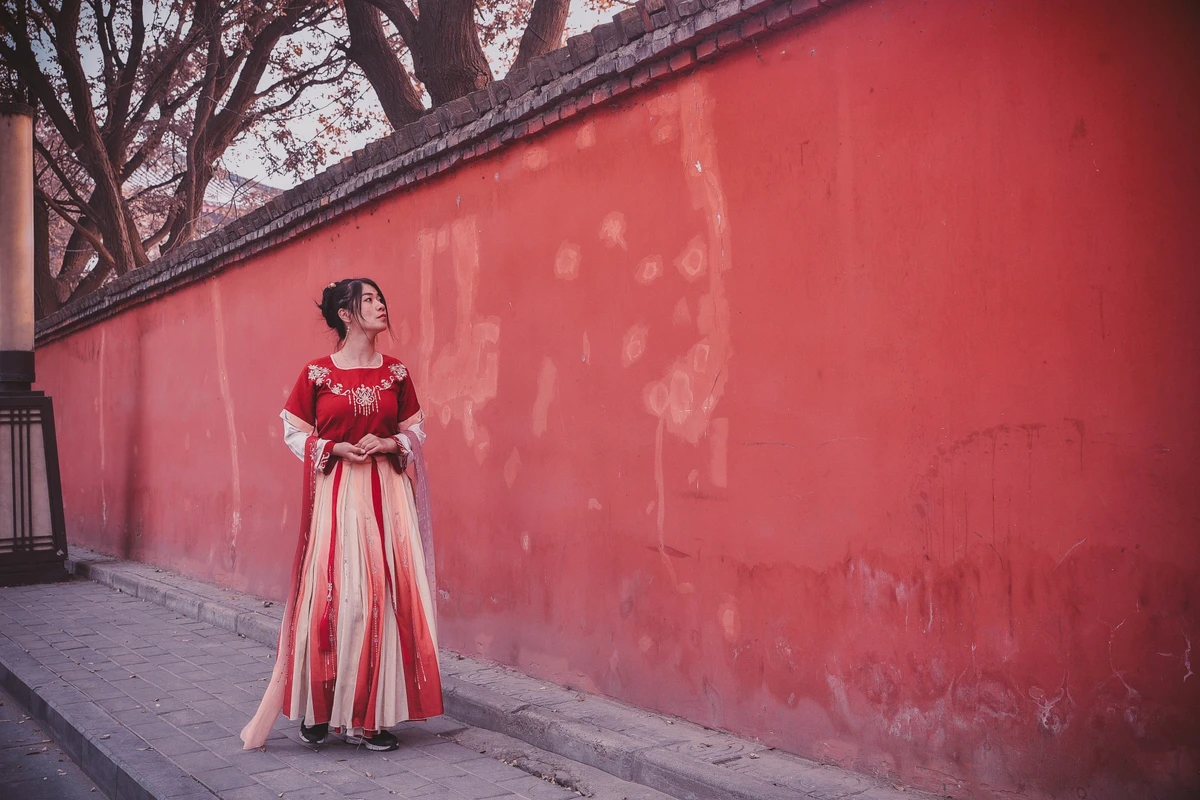
This is also a photography holy land for fans of ancient costumes and Hanfu. If interested, come here to snap a unique set of photos and create special memories. My friend KIKI has been obsessed with this lately; to get beautiful shots, she got up early to do her styling, haha.
When visiting the Terracotta Warriors-Huaqing Palace route, try to go on weekdays, as weekends bring significantly larger crowds.
Huaqing Palace scenic area closes relatively early in winter, at 4:30 p.m. If you have purchased a combo cable car ticket, it's recommended to take the cable car up the mountain first upon arrival, then work your way down.
Taking the Lishan cable car from Huaqing Palace to the top of Lishan Mountain offers a panoramic view of the mountainous scenic spots in all of Lintong.
Lishan National Forest Park is divided into East Embroidered Ridge and West Embroidered Ridge, with most attractions concentrated on the west side, including the Beacon Tower where the story of 'beacon fires fooling the feudal lords' took place and the Bingjian Pavilion from the Xi'an Incident.
This pavilion is 4 meters high and 2.5 meters wide. It may seem unremarkable, but because it is closely linked to significant events in Chinese history, it carries special meaning, making it worth a visit to learn about the history.
Around Laomu Palace on Lishan Mountain, temple fairs are often held. During these fairs, visitors gather from all directions, firecrackers roar, and a variety of folk opera performances take place.
The pomegranates and fire crystal persimmons in Lintong District are very famous—super sweet and not expensive, a treat for foodies.
Xi'an's Giant Wild Goose Pagoda was personally supervised by the renowned Master Xuanzang. Despite a thousand years of vicissitudes, it remains intact today. The Giant Wild Goose Pagoda is one of China's famous Buddhist pagodas and a unique symbol of the ancient city Xi'an.
Historical records state that in the third year of Yonghui (652 AD), Xuanzang oversaw the construction of the pagoda to preserve the sutras and Buddhist statues brought back to Chang'an via the Silk Road from India. The Giant Wild Goose Pagoda, with its serene surroundings, has withstood over 1,200 years of wind and rain and more than 70 earthquakes, having experienced three separations and reunions in history.
The Giant Wild Goose Pagoda is not just a pagoda but the center of a tourist area with many plazas. It's one of the places where visitors gather most in Xi'an. Coming out from the Giant Wild Goose Pagoda, there's the North Square, said to be Asia's largest musical fountain; opposite is the South Square, where the Giant Wild Goose Pagoda's Xinhui complex of blocks is located—well worth a visit.
The Giant Wild Goose Pagoda is also known as the Daci'en Temple Pagoda, located within Daci'en Temple, originally called the West Courtyard Stupa (stupa meaning pagoda). It was built in the Tang Dynasty by Xuanzang to store scriptures, and the statue standing in front of the temple is of Tang Xuanzang.
As the ancient capital of thirteen dynasties, Xi'an is undoubtedly a city filled with a sense of historical weight. But what surprised me most on this trip was that it not only has historical sedimentation but also overflows with boundless vitality and vigor. The Grand Tang Dynasty Ever-bright City is a sight where history meets modernity.
During my last visit to Xi'an, TikTok wasn't popular yet, the 'tumbler' hadn't gone viral, and I didn't even know what the Grand Tang Dynasty Ever-bright City was. But this time, it's already one of the first national demonstration pedestrian streets. The Grand Tang Dynasty Ever-bright City stretches 2,100 meters, set against the culture of the glorious Tang Dynasty, with Tang-style elements as the main theme. It's divided into areas like Tang-style Zen, Ten Thousand People Praying, Folk Customs Gala, Resplendent Tang Dynasty, Trendy Tech, and Dazzling Performances—full of sincerity and stunning.
Here you'll find stone men, figures in paintings, marionettes, and various performance arts that keep your eyes busy and never dull.
As it's an 'ever-bright city,' the most splendid moments naturally begin after sunset, when the lights blaze, and it dons its most dazzling garment. The colorful beams of light make the Xi'an night sky as bright as day.
The singing and dancing performances are superb. Stages like the tumbler, float dance-off, and Dunhuang Flying Apsaras are always packed with crowds, with audiences surrounding them several layers deep. On weekends or holidays, it's even more jam-packed.
On the central axis, Tang-themed sculptures run north to south, showcasing well-known Tang Dynasty figures like Li Shimin, Wu Zetian, Li Longji, and Xuanzang. The statues march in a grand procession, exuding the grandeur of a great empire. Is there a historical figure you love among them?
Although performances start in the evening, it's said that the performers arrive in the afternoon for long hours of makeup and hair styling. Their dedication and hard work allow visitors to enjoy one exquisite show after another at night.
Walking through the Ever-bright City, from the street scenes to the small details like lampposts and trash cans, everything is brimming with Tang flavor. Many young men and women in Hanfu stroll about, making you feel as if you've traveled back to the Tang Dynasty. Coupled with the nightly lively atmosphere, every visitor's joyful laughter, the non-stop performances, and the endless music, I was suddenly filled with inexplicable emotion: this prosperous age belongs not only to the Tang but also to us.
To create a beautiful memory for this trip, we specially chose a luxurious hotel for one night—Films Hotel Xi'an. From the moment we walked in, the design impressed us.
The dark furniture was steady and elegant, while the white bathtub, bedding, and wall art added a touch of lively freshness to the space. The bathroom, with its black-and-white dolomite tones, appeared even more upscale. Every visible spot was clean and bright, absolutely meeting the standards of a high-end hotel.
The most surprising feature was a small music nook. A CAV Bluetooth speaker was placed by the bedside; just plug it in, connect your phone, and pick your favorite songs. With the bedhead surrounding on three sides, it created a wonderful surround sound effect. At night, lying leisurely in bed, playing a few lyrical jazz tunes and enjoying the low-frequency music experience was truly rare.
The hotel boasts a superior location, right in the most bustling downtown area of Xi'an, near the Bell Tower and within walking distance. The hotel also offers free airport pickup, newspapers, tourist maps, luggage storage, and other services, making travel more worry-free. Overall, it's recommended.
As a popular tourist city in China, Xi'an has numerous attractions, and most of the nice, fun places require admission fees. Many ask if there are free yet enjoyable spots. My answer: visit the local museums. They're not only free but also offer a more comprehensive understanding of Xi'an's culture. They are truly conscience sites. Let me introduce two such museums.
Speaking of museums, [Xi'an Museum] is extremely famous and known to everyone. But as a museum lover, if you have time, don't hesitate to explore other Xi'an museums. Xi'an Museum is located less than 200 meters from the Small Wild Goose Pagoda, so you can conveniently visit it while touring the pagoda. Upon entering the first floor, the theme 'Happy Life in Chang'an' immediately catches your eye. It turns out to be an exhibition on the lives of Tang Dynasty Chang'an residents. What was life like for the renowned Chang'an residents in ancient times? Here, I gained much knowledge.
The exhibition systematically introduces the population, layout, clothing, utensils, travel, diet, and entertainment of Tang Chang'an. Through these themes, ancient China's largest capital slowly unveils its veil. The tri-colored glazed courtyard building models provide insight into the living environment of the time, while tri-colored glazed civil official/warrior figures and various lady attendant figures vividly display the elegance and grace of Chang'an people. Also, the pastry snacks in the shape of noodles look just like today's bread, highlighting the close cultural exchange between China and the West (Western Regions).
Ancient Chang'an had two markets: the East Market and the West Market. The East Market was surrounded mostly by official residences, selling goods domestically and serving high-ranking officials and nobles. The West Market was where ordinary people shopped daily, and it was also a gathering place for foreign merchants, lending it a more exotic color and making it far busier than the East Market. Moreover, the West Market was the starting point of the Silk Road, holding unique significance for this transcontinental route. The Tang West Market Museum was built as a commemoration of the West Market.
The museum has free volunteer guides, usually college students interning there. Under their guidance, you can better appreciate the realistic scene arrangements, such as the gongs and cymbals at the entrance—it's said that when the West Market opened each day, drums would be beaten 300 times to signal trading hours, and when it closed, cymbals would sound 300 times to mark the end of business.
The museum provides detailed introductions to the origin, management, finance, goods, and shops of the West Market. Visitors can also glimpse its prosperity through various artifacts like Kulun slaves, white marble elephants, foreign figurines, bronze mirrors, and tri-colored glazed small cups.
The museum also collects many epitaphs of 'foreigners' who lived in Chang'an, including distinguished guests like princes. According to statistics, over 100,000 foreigners resided in Chang'an at the time, nearly one-tenth of the total population.
During the Qin Dynasty, the famous 'Yichun Garden' was established in the Qujiang area of Xi'an, later renamed 'Lotus Garden' by Emperor Wen of Sui. From Emperor Taizong of Tang onwards, through Gaozong and Ruizong, the Lotus Garden flourished under the Tang Dynasty's prosperity. Emperor Xuanzong then expanded it on a large scale, making it an unparalleled imperial forbidden garden.
Today, no remnants of the original Lotus Garden remain, but to the north of the site, a Tang-style cultural theme park in the style of an imperial garden has been built—this is Tang Paradise. The centerpiece is Furong Lake, surrounded by over ten attractions including Ziyun Tower, Fengming Jiutian Theatre, Royal Banquet Hall, Tang Market, Fanglin Garden, Ladies' Pavilion, Caixia Pavilion, Lu Yu Tea House, and Xingyuan Garden.
It's recommended to visit in the evening rather than during the day. Under daylight, it's just an ordinary park, but after sunset, when the lights come on, it transforms into a lantern festival. Not only are the pavilions and towers brilliantly illuminated, but there are also water screen laser shows and grand dance dramas like 'Dream Back to the Tang Dynasty.'
Perhaps many Xi'an locals prefer that the city preserves its sedimentation and may not be fond of this man-made attraction. But I think while ancient relics hold great historical value, after dynasties fall, they often appear somewhat desolate. Occasionally, attractions like the Grand Tang Dynasty Ever-bright City and Tang Paradise can truly showcase the prosperity of old, spark more imagination, and inject more vitality into Xi'an.
If you visit Xi'an, you'll often see a map of Chang'an's imperial city layout. The map shows palaces, wards, and markets, all protected by the city walls that encircled this peaceful and prosperous world. Xi'an Ancient City Wall is the largest and best-preserved ancient city wall in China, with a circumference of 13.74 kilometers. It takes a long time to walk the entire length, so renting a small two-wheeled cart is a good alternative.
The ancient city wall was first built during the Sui Dynasty, then rebuilt and reinforced over the Tang, Song, Ming, and Qing dynasties, eventually becoming what we see today. The current Great Wall we see is mainly a Ming Dynasty structure, with 18 gates in total, of which the four most important are: Changle Gate (East Gate), Yongning Gate (South Gate), Anding Gate (West Gate), and Anyuan Gate (North Gate).
This area authentically preserves the Ming Dynasty 'three-tiered gate and tower' system. Before climbing the stairs after ticket check, we even met a volunteer uncle who explained the basics of the city wall to visitors. The ancient bricks and tiles are engraved with historical marks of defending the country, making future generations proud.
The South Gate, Yongning Gate, is the oldest, longest-used, and most visited gate among all the city wall gates. So we also chose to ascend the wall from here.
The day we went up, it happened to be foggy. Gazing out, the whole city suddenly seemed half real, half illusory. As the dusty wind blew past, only a similarly antique hotel remained clearly visible, making us momentarily feel like ancient people—until we reached the bicycle rental point and modern equipment pulled us back to reality.
Exiting from the Shuyuanmen gate of Xi'an's city wall, you'll find yourself on a street selling calligraphy and paintings. Very down-to-earth, it's a nice place for a stroll.
Yongxingfang was once very close to the imperial city in ancient Chang'an and the residence of Tang Dynasty minister Wei Zheng. Today, it has transformed into a popular tourist spot. The prosperity of the Tang Dynasty and the hustle and bustle of the 108 wards are now history, but the rise of Yongxingfang lets you experience the joy of casual wandering.
Inside, there are all kinds of Shaanxi specialty foods, local products, and souvenirs. As it's persimmon season, persimmons adorn an entire wall, bright and eye-catching. It's said that this persimmon wall has 15 tons of persimmons harvested from Fuping, Shaanxi, and they will eventually be dried into persimmon cakes. Visitors can join in peeling the persimmons, and when the dried ones are ready, they can taste them. What a creative and interactive theme!
Apart from fresh persimmons, the viral bowl-smashing wine costs only 5 yuan a bowl. Foodies shouldn't miss the authentic local snacks; many shops offer free samples. In the end, we found our true love here—crispy 'gaba.' Gaba is rice crust, and each shop's version varies in texture, some crispy, some hard, but what remains is the fragrance of rice that spreads in your mouth after chewing.
Yongxingfang is not small: 130 meters east to west, 88 meters north to south, covering 15 mu. With you leading and me bringing my stomach, it's enough for a half-day visit.
If you're a fan of stone steles, this place is worth a trip. The Forest of Stone Steles Museum is near Wenchang Gate, housing numerous stone tablets and epitaphs from various dynasties.
This museum is a place to admire calligraphy art. If you're interested in calligraphy, you could spend an entire day here. With over 900 years of history, it's a specialized museum built on the foundation of the Confucian Temple, collecting ancient stone carvings, epitaphs, inscriptions, and sculpted figures with great viewing value.
Right inside the courtyard, on the left, we found many collections by ancient calligraphers. Although the lighting inside the exhibition rooms isn't great, upon close inspection, it's still clear enough to read.
The stone carvings on display at the Forest of Stone Steles hold great historical value, and some are masterpieces of calligraphy. Works like the 'Shitai Xiao Jing,' 'Kaicheng Stone Classics,' 'Yan Family Temple Stele,' and 'Xuan Mi Ta Stele' are rare treasures. It's best to hire a guide here; otherwise, what you see will just be blocks of stone.
An audio guide at the Forest of Stone Steles costs 30 yuan per unit; I'm not sure about the deposit. We downloaded a historical commentary app on our phones, listened with earphones while viewing the artifacts on site, and found it very useful. There's also an exhibition hall with explanations in the Xi'an Forest of Stone Steles Museum, so listening to commentary greatly enhances the visit.
If you're particularly interested in history and culture, besides the steles, there are many statues worth seeing here. You can reserve a good half-day for a thorough visit.
As a national 5A scenic spot, we didn't realize how rich the museum's collection was until we entered—it was already 3 p.m., and later we couldn't finish seeing everything, just skimming through. Despite the regret, we still saw many collections. So anyone planning to visit this museum should allow plenty of time.
After a short afternoon break, we headed straight to the subway to go to Huimin Street. I felt the subway walls in Xi'an are quite cultural. As soon as you step out of Bell Tower subway station, the Bell Tower and Drum Tower are right there. Huimin Street is actually a large area west and north of the Drum Tower, and the food we wanted is mostly concentrated on four main streets. North Courtyard Gate, directly north of the Drum Tower, is a gathering place for foodies, so I suggest strolling from the Drum Tower to Huimin Street to eat.
Walking to the end and turning left is Dapiyuan; turn left again at the end for Beiguangji Street. In between, parallel to Dapiyuan, is Xiyangshi. West of Beiguangji Street is Daxuexi Lane. Almost all the good food is concentrated on these five streets. Rose Mirror Cake, 5 yuan each—the rose sauce was a bit too sweet, but okay.
Old Liu's Lamb Paomo was alright, 30 yuan a bowl, with tasty broth.
As a true foodie in Xi'an, for a long time I had been seeking a guide covering all the delicacies of Huimin Street. The most comprehensive one I found only skimmed the surface, like the picture below, leaving me drooling!
I must mention the delicious Zhenchuan 'Wantuo' (right) near the hotel. The ingredients are buckwheat flour, salt, and five-spice powder. The Yangyu Chacha on the left was even more incredibly tasty.
In Xi'an, besides noodles, one must try Shaanxi cuisine. This restaurant is the most recommended on major platforms. We ordered several signature dishes: Gourd Chicken, Consort’s Smile, Guanzhong Six Small Bowls, and Fermented Rice Ice Cream. Truly lived up to its name, and the two of us were stuffed to the brim. Gourd Chicken: worth a try. This traditional salty dish undergoes three steps: boiling, steaming, and deep-frying. The chicken becomes tender after boiling and steaming, and the skin turns crispy after frying. With just a slight pull of the chopsticks, the meat easily separates from the bone. Upon tasting, the skin is rich with fatty aroma, the meat fragrant and flavorful. You can also pair it with four dipping sauces to enrich the taste.
We also ordered Sanyuan Oil Tower, Oil-splashed Belt Noodles, Saozi Noodles, and some grilled skewers. The most recommended is the Oil-splashed Belt Noodles—extremely fragrant, with noodles that are chewy. The Sanyuan Oil Tower is dipped in sauce, one bite at a time, becoming more fragrant as you chew, very satisfying.
For the Saozi Noodles, we specially ordered thin noodles, but the texture was rather soft. The barbecue was up to standard, okay for those wanting meat.
Consort’s Smile: an elegant dish. Deep-fried shrimp balls wrapped in a red coating, bright and tempting, whetting the appetite. Dipped in a sweet and sour sauce, it was appetizing. One after another, quickly finished.
The cold rice noodles were good, worth experiencing.
Guanzhong Six Small Bowls: a very cost-effective dish. Six small bowls served at once, containing vegetables, meat, dessert, and appetizing fruits—very abundant and generous, each bowl tasted good.
Fermented Rice Ice Cream: the taste was a bit hard to accept, as the fermented rice was sour, making the ice cream's texture and flavor quite different from usual.
Daming Palace was once a witness to the glorious Tang Dynasty, the largest of the three palace complexes in Tang Chang'an. Starting from Emperor Gaozong Li Zhi, successive Tang emperors lived and governed here until it was destroyed over 200 years later. The greatest destruction occurred after the Huang Chao Rebellion, when war left it unrecognizable.
Today, Daming Palace is a place where Xi'an residents come for morning exercise. Weeds grow everywhere, and almost nothing of the original palace can be seen. The most intact remains are the foundations of several gates, now housed in the exhibition hall inside Daming Palace. Standing on the ruins, one can't help but recall scenes from history.
Daming Palace was once a witness to the glorious Tang Dynasty, the largest of the three palace complexes in Tang Chang'an. Starting from Emperor Gaozong Li Zhi, successive Tang emperors lived and governed here.
'Crossing gravel and climbing heights, choosing one trunk among a thousand trees' reflects the importance attached to Daming Palace from its construction. Just the transportation of timber took over half a year. 'The nine heavens' palace gates open wide; envoys from ten thousand lands pay homage to the crown' is a portrayal of its splendor. Every day, the emperor and ministers discussed state affairs in the front court, and rested in the rear gardens.
Sadly, with the decline of the Tang Dynasty, the palace suffered repeated damage and eventually left only a desolate ruin. The contrast between past glory and present desolation is stark. Today, visitors' exclamations at the vastness of the park are themselves a kind of lament for the Tang Dynasty's former grandeur.
Fortunately, the 2009 documentary 'Daming Palace' narrates the story of the palace from its construction, through prosperity, to its abandonment, combined with Tang history. This allows us a more comprehensive understanding of this enormous palace complex. The film also uses special effects to restore many panoramas of Daming Palace, enabling us to reasonably imagine the magnificence of Hanyuan Hall, Linde Hall, Xuanzheng Hall, Zichen Hall, and Sanqing Hall when we visit the few remaining authentic ruins.
Today, Daming Palace is a place where Xi'an residents come for morning exercise. Weeds grow everywhere, and almost nothing of the original palace can be seen. The most intact remains are the foundations of several gates, now housed in the exhibition hall inside Daming Palace. Standing on the ruins, one can't help but recall scenes from history.
Mount Hua, known as the 'Western Mountain' of the Five Great Mountains of China, is divided into East Peak, West Peak, South Peak (highest), and North Peak. You can take a cable car up to North or West Peak. If you want to reach the summit, the fastest way is to take the cable car and then climb to South Peak. The most thrilling part is the Plank Road in the Sky; this time, I mustered up the courage to challenge it.
If departing from Xi'an Railway Station, take tourist bus No. 1 from the East Square, fare 22 yuan. For hikers not taking the cable car, it's recommended to depart at 8:00 a.m. from the East Square, passing West Mountain Temple, with the final stop at Jade Spring Temple climbing entrance; return at 5:00 p.m. from Jade Spring Temple, about a 2-hour ride.
After reaching West Peak summit, it takes about half an hour to an hour to reach North and South Peaks. Climbing to the summit of North Peak is physically taxing but worth it. Unmissable sights on Mount Hua: Plank Road in the Sky, Cloud Ladder, Canglong Ridge, Sparrow Hawk Turning Over, Axe-splitting Rock, and the King of Maple Trees.
Without stopping, we reached North Peak and overlooked Canglong Ridge—a truly unforgettable view. Next came the highlight: the most breathtaking Plank Road in the Sky. Everyone moved in an orderly manner, afraid of making a mistake with the safety clips. It was exhilarating. The scariest part was walking back along the same path, as the plank is only about the width of two feet. Glancing down at the cliff below, I feigned calm and continued.
Mount Hua (7:00 a.m.–12:00 p.m.): student tickets 100 yuan. Round-trip bus to cable car station: 40+40 yuan. Cable car round-trip to West Peak: 100+100 yuan. Then climb from West Peak summit to the main summit (about half an hour). After the scariest Plank Road in the Sky (safety harness 30 yuan). Things on the mountain are expensive: mineral water 10 yuan per bottle, so bring enough water.
After dinner, take a bus back to downtown Xi'an from the scenic area. Xi'an East Bus Station has tourist buses to Huayin (Mount Hua) with frequent departures, every 15 minutes, timely, fare around 43 yuan, about 1 hour (or take high-speed train from the scenic area to Huashan North → Xi'an).
During the off-season in autumn and winter, flights to Xi'an from all over the country are inexpensive, and accommodation prices are similar. Many people opt for seaside guesthouses or hotels after arriving in Xi'an, where a comfortable stay can make the trip very pleasant. Good accommodations require advance booking, so it's important to book early in Xi'an. It's recommended to stay in a convenient downtown location, as many attractions are easily accessible by public transport. Xi'an is a famous cultural tourism destination; during holidays, it gets packed with tourists. With so many attractions, each seems worth visiting. The spots mentioned here are for your reference.
During autumn and winter in the ancient city of Xi'an, when the morning sunlight streams in, you can feel the coziness of life. Sitting in a comfortable chair, sipping coffee, and enjoying the slow pace of travel—I think nothing can make you stop and forget this beautiful moment. The total cost for this trip was 4,476 yuan.
The temperature difference in Xi'an during autumn and winter is large, so remember to stay warm. Especially when it rains, it gets even colder, so bring extra clothes to reduce the chance of catching a cold. Below is a packing list; you can check off items according to your needs.
Standing within the ancient city of Xi'an, the wind, like a mischievous child, blew my hair into disarray, yet it didn't disturb my thoughts at all. Whenever I stand before these historic sites in Xi'an, my mind always drifts back to Chang'an a thousand years ago, that prosperous era of the Tang Dynasty.
Although the weather didn't cooperate on this trip, I unexpectedly discovered many surprises. This journey taught me not to dwell on regrets about weather or missed timing. It only took a few minutes to make a decision: as for the next stop in this ancient capital, where will I take my Hanfu?
Travelogue Contents
1. About My Feelings for Xi'an
2. 7-Day Xi'an Itinerary
3. Terracotta Warriors: The Great Project of the Qin Empire
4. Huaqing Palace: The Story of Yang Guifei Echoes Here
5. Climbing Lishan Mountain: Overlooking Lintong's Best Mountain Scenery
6. Giant Wild Goose Pagoda: The Key Pagoda on Xuanzang's Silk Road
7. Grand Tang Dynasty Ever-bright City: Performing the Dynasty's Prosperity
8. Xi'an Has No Night Scenery, Moonlight Through Floor-to-Ceiling Windows
9. Two Museums: Understanding a City
10. Tang Paradise: A Dazzling, Colorful Dream World
11. Standing on Xi'an City Wall, Reminiscing the Past
12. Yongxingfang: Experiencing the Fun of a Night Stroll
13. Huimin Street: Food Solace for a Tired Body
14. Daming Palace: Xi'an's Forbidden City of the Past
15. Mount Hua Adventure: Challenging the Plank Road in the Sky
16. Travel Guide: Join Me in Touring Xi'an
17. Goodbye, Until I Don't Know When We'll Meet Again
Travel Information
Hotel Index
Travel Guide Index
Airfare Index
Website Navigation
Travel Index
Cruise Index
Corporate Travel Index
Partnership Distribution Alliance
Friendship Links
Corporate Gift Cards
Procurement Insurance Agency
Agency Cooperation
Hotel Partnership
Destination and Scenic Area Cooperation
More Partnership Opportunities
About Trip.com
Hot Topics
Contact Us
Recruitment
User Agreement
Privacy Policy
Business License
Security Center
Trip.com Content Center
Intellectual Property
Trip.com Group Algorithm Disclosure