Meet Xi'an
"If you want to see China's five thousand years, come to Xi'an." This line tells you about its long history. Xi'an was the capital of thirteen dynasties, one of the seven ancient capitals of China, and together with Athens, Cairo, and Rome, it is hailed as one of the "Four Ancient Capitals of World Civilization." Xi'an, called Chang'an in ancient times, is dotted with imperial tombs, palace ruins, ancient temples, and scenic gardens, making it a treasure trove of history and culture. Countless cultural relics and historic sites reveal its past glory and profound charm. In this city, you can feel the vicissitudes of China over thousands of years, the development of Chinese civilization, and the greatness of the Chinese nation. An impromptu trip begins, and with a foodie's heart, I'm on my way to Xi'an.
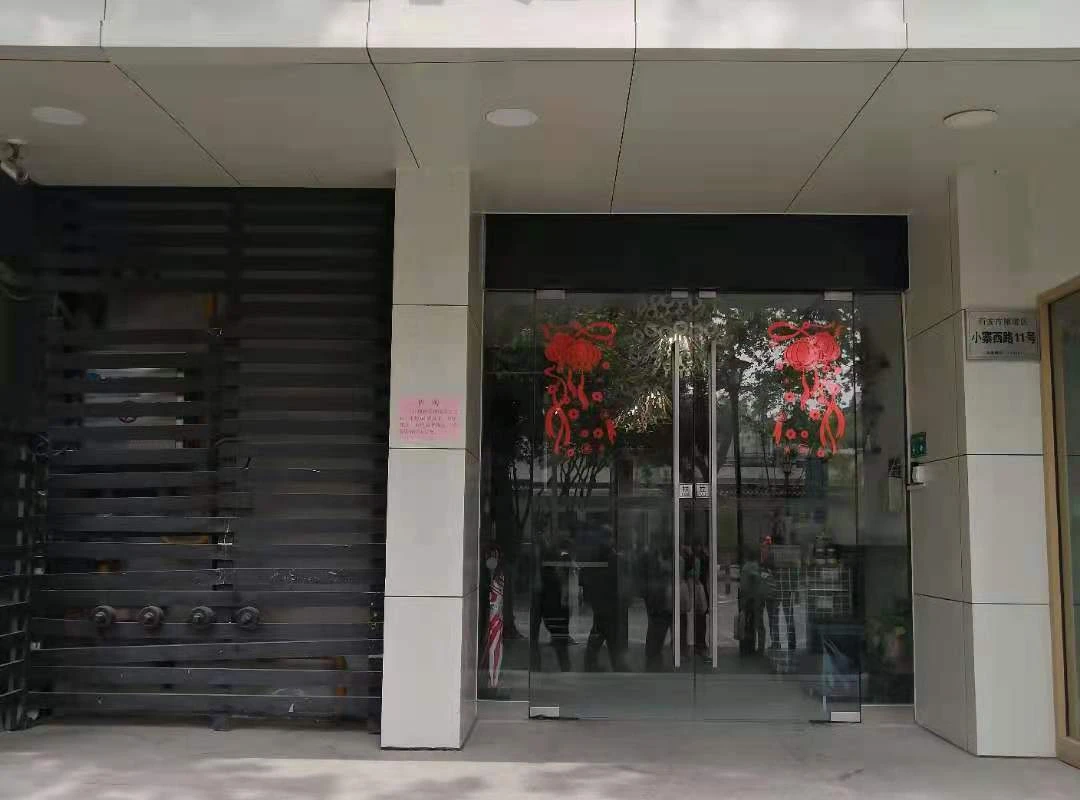
First, I recommend a hotel: Jinjiang Inn Xi'an Xiaozhai Subway Station Branch. I chose it for two reasons. First, Jinjiang Inn is a trusted, established hotel brand. Whether for leisure or business, I always pick Jinjiang for its good value and excellent service and cleanliness. Second, our hotel was right next to Saige Shopping Center and the Shaanxi History Museum. Just one subway stop on Line 3 took us to Dayanta and Datang Everbright City. Line 2 goes straight to Zhonglou, Gulou, and Huimin Street—incredibly convenient. Though the lobby isn't huge, it feels warm and welcoming. The front desk even had little fish—a nice touch. The receptionist was gentle, polite, and pretty (pretty important!) ^_^ She patiently told us about nearby food and fun, and suggested routes that saved us time.
After settling in, our first stop: the internet-famous Saige Shopping Center. It's about a 200-meter walk from the hotel. Exit C of the subway station leads right to B2, where many snack shops are. Floors B1 to 6 have mid-to-high-end brands—perfect for shopaholics. Floors 7 and 8 are a food paradise, a godsend for foodies. At mealtimes, every restaurant has a line, including many internet-famous spots. You can't go wrong eating and strolling at Saige.
Second stop: Dayanta / Datang Everbright City
Just one subway stop on Line 3 to Dayanta and Datang Everbright City.
Dayanta is the symbol of ancient Xi'an and a key national cultural relic. Built in the third year of the Yonghui era of the Tang Dynasty (652 AD), the 64-meter-tall pagoda features brick brackets, beams, and lintels in imitation wood construction. It was erected by Master Xuanzang to house Buddhist statues, relics, and Sanskrit scriptures brought from India. As the earliest and largest Tang-dynasty square brick pagoda with multi-tiered eaves still standing, Dayanta is a quintessential example of how the Indian Buddhist stupa form was adapted into Chinese culture.
The North Square of Dayanta boasts a huge musical fountain plaza, 218 meters wide and 346 meters long—the largest in China and Asia. Visit in the evening; the night view is absolutely stunning.
The central axis of Datang Everbright City is a 2,100-meter-long north-south pedestrian street lined with sculptures, the largest landscape avenue in Asia. It features statues of Tang emperors, historical figures, and heroes like Li Shimin, Li Longji, Wu Zetian, and Xuanzang, arranged in nine thematic groups. Integrated with modern water features, lighting, and traffic systems, the sculptures vividly showcase the Tang Empire's achievements in religion, literature, art, science, and technology, recreating its prosperous grandeur. This is a must-visit internet-famous spot—the tumbling fair lady you saw on Douyin originates here. The crowds are huge, but the nightscape is simply gorgeous.
Day 2: First stop: City Wall
Walk 200 meters east from the hotel to the subway station and take Line 2 to Yongningmen Station.
Xi'an City Wall, also known as the Ming City Wall, is the largest and best-preserved ancient city wall in China and a first batch national key cultural relic and AAAA tourist attraction. Usually, "Xi'an City Wall" refers to the Ming-era section, though the Tang wall also exists. Located in the city center, the Ming wall is 12 meters high, with a top width of 12–14 meters and a base width of 15–18 meters, forming a closed rectangle with a perimeter of 13.74 kilometers. The area inside is called the ancient city, covering 11.32 square kilometers, with the famous Zhonglou and Gulou at its heart. The wall originally had four main gates: Changlemen (East Gate), Yongningmen (South Gate), Andingmen (West Gate), and Anyuanmen (North Gate). Since the Republican era, more gates have been added for convenience, bringing the total to 18 today.
Second stop: Huimin Street / Zhonglou / Gulou
Walk 200 meters east from the hotel to the subway, take Line 2 to Zhonglou Station. After exiting and using the underground loop, walk 500 meters west.
Huimin Street, with over a thousand years of history, is Xi'an's famous food and culture district—a must-visit. The name refers to a cluster of several lanes, including Beiyuanmen, Beiguangji Street, Xiyangshi, and Dapiyuan. The variety of snacks here is staggering; you couldn't try them all in a day. Foodies, mind your drool!
Zhonglou: Open a Xi'an map and you'll see that Zhonglou sits right at the city's heart. It is Xi'an's absolute center, built in the 17th year of the Hongwu reign of the Ming dynasty (1384 AD). It stands at the intersection of the four main avenues: East, South, West, and North. Constructed on a square base in brick and wood, it has three tiers of eaves and a pyramidal roof, totaling 36 meters in height with each side 35.5 meters long, covering 1,377 square meters. A spiral staircase leads up. The eaves are covered with dark green glazed tiles, the interior is gilded and painted, and the golden roof finial gleams brilliantly. Four main avenues radiate from it, connecting to the four city wall gates.
Gulou: Just west of Zhonglou, pass through the underground passage to reach Gulou. In ancient times, it was used to beat the drum at dusk, though the original drum is gone. The building bears two majestic plaques: "Wen Wu Sheng Di" on the south and "Sheng Wen Yu Tian" on the north. Gulou was built in the 13th year of the Hongwu reign (1380 AD), four years earlier than Zhonglou, and is equally magnificent.
Day 3: The Qin Terracotta Warriors and Horses, one of the Eight Wonders of the World, showcases the city's profound historical heritage. Xi'an is often called a "Natural History Museum" for its sheer number, variety, and value of cultural relics, many unique or extremely rare.
The Museum of Qin Terracotta Warriors and Horses is 1.5 kilometers east of the Emperor Qinshihuang's Mausoleum, built right over the original pits. It's the world's largest underground military museum. The pits are burial accompaniments to the mausoleum.
Walking slowly, you can study each warrior's expression and imagine who they were and what they were thinking. You'll deeply feel the culture's long and rich history.
The Jinjiang Inn provided a great stay; its location was so convenient we kept using it as our base. Nearby food recommendations:
No trip to Xi'an is complete without the "Three Qin Set"—liangpi, bingfeng soda, and roujiamo. The receptionist told us the following eatery has been near Xiaozhai for ages, so we couldn't wait to try it. We ordered mi pi, gan mian pi, and sesame liang pi—all delicious. In Shaanxi dialect: liao za lie, hahaha!
A short walk from Ziwulu Zhangji is Shaanxi First Bowl, specializing in hulu tou. Out of curiosity, we gave it a try. It's made with pork intestines. Personally, I loved it. If you like intestines, go for it.
My three-day trip ended too soon, leaving small regrets. Time was tight, so I missed Huaqing Hot Springs, The Song of Everlasting Sorrow, Tang Paradise, and the Shaanxi History Museum. What a pity! Next time I must see them. I hear The Song of Everlasting Sorrow is truly spectacular—don't miss it if you get the chance.
Most memorable of all: the luck of meeting the friendly Jinjiang Inn staff, who treated us like family and warmed our hearts.
Xi'an—I'll be back! ^_^