Ancient Capital Xi'an: Three Days of History and Cuisine, a Fusion of Han and Tang Elegance
In China's northwest, there is a city that was the Western Zhou’s Fenghao, the Qin’s Xianyang, the Western Han through Tang’s Chang’an, and now China’s Xi'an. The profound cultural heritage of Xi'an is the source of my deep and enduring love for this city—a lingering yearning for five millennia of Chinese civilization, where the weight of an ancient capital polished by time always captivates the imagination.
Open a map of Xi'an, and you'll be surprised to find that it’s often labeled an internet-famous city, but to me, Xi'an has a unique charm: art passed down from the Western Zhou, millennia-old relics of the Qin Empire, the open and inclusive culture of the Tang Dynasty... these are the Xi'an I want to discover.
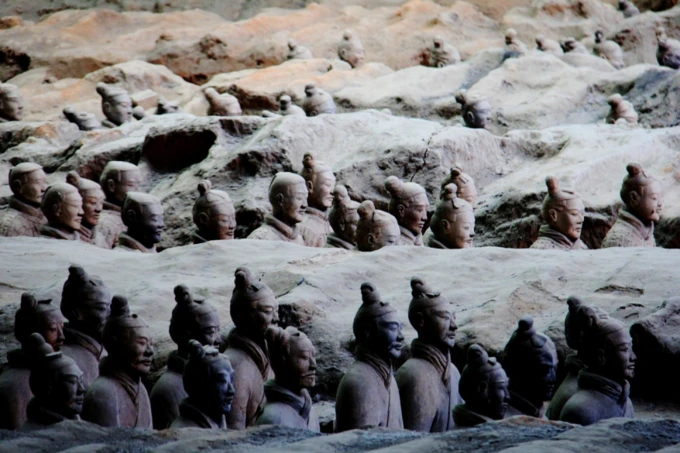
Emperor Qinshihuang's Mausoleum Site Museum (Terracotta Warriors)
Looking up at the fiery red lanterns and slowly passing through Yongning Gate amid the crowd, the prosperity of a golden age feels just like yesterday.
The Great Wild Goose Pagoda against blue skies and white clouds has witnessed a millennium of historical change and the passage of stars.
DAY 1:
Terracotta Warriors Museum – Muslim Quarter – Xi’an City Wall – Bell and Drum Tower Square
DAY 2:
Great Wild Goose Pagoda South Square & Daci’en Temple – Qujiang Furong New World (Chinese Guardian, Qujiang Book City) – Tang Paradise
DAY 3:
Xi’an Museum – Small Wild Goose Pagoda – Saige International Shopping Center (Chang’an Old Tea House)
Xi'an Bell Tower Sen De Hotel
Since most of Xi'an’s tourist sites are in the city center, with only the Terracotta Warriors and Huaqing Pool in the suburbs about 30 km from the center, finding a well-located hotel is crucial. As the saying goes, a hotel is a scenery itself, and every stay is a journey. In a leisurely, slow-paced city like Xi'an, staying in one hotel for several days spares you much travel trouble and lets you fully immerse in the sights. This time I stayed at the Xi'an Bell Tower Sen De Hotel, and I still feel the unspoken peace of settling body and soul, letting go in this unhurried ancient city.
I chose this hotel for a few reasons. First, location: it’s right next to the Bell Tower in the heart of the old city, with two subway stops nearby. The Muslim Quarter, Yongning Gate on the City Wall, Drum Tower, and many famous or trendy streets are just a few minutes’ walk away. Slightly farther spots are mostly a direct metro ride. The location is unbeatable.
The hotel’s common areas, like the corridors, showcase artworks and photography by artists from different countries. The overall interior vibe is understated luxury, simple yet refined—a first impression of cozy elegance. Bright, airy rooms with high-quality furniture and warm tones make for a supremely comfortable stay. When the afternoon sun pours in, it casts beautiful shadows, bringing a sense of calm and comfort from deep within.
At night, you can enjoy stunning views right from your room. Turn off the lights and gaze at the brilliantly lit Bell Tower and the bustling streets below; sit with a cup of tea—rare moments of leisure. The room has a smart voice assistant that controls all appliances. Amenities include everything you need: toiletries neatly arranged on the vanity—toothbrush, shower cap, cotton swabs, comb, toilet paper, shower gel, shampoo, slippers, towels, and bath towels.
The hotel’s buffet breakfast is commendable, meticulously prepared with excellent taste.
Xi’an is a perennial top-10 tourist destination, so visitor numbers are predictably high. Try to avoid public holidays (I visited during summer break, Friday through Sunday, and it was still swarming with people...). Otherwise, you won’t be looking at history and scenery but a sea of heads.
Emperor Qinshihuang's Mausoleum Site Museum (Terracotta Warriors)
The Terracotta Warriors are Xi’an’s hottest attraction, so to minimize the crowds (zero crowds are impossible), I chose a Friday instead of the weekend (though it’s summer, the effect was limited). I woke my friend early and left the hotel at 7:50. From the gate, it’s a long walk along a stone path lined with green trees to reach the warrior pits. Entering is scenic; exiting is through all sorts of commercial streets...
There are three pits, all packed with visitors. To avoid capturing a sea of people, I had to aim my camera upward at the upper half of the pits. The rightmost pit is like a museum displaying the best-preserved, most classic warriors. The middle one is Pit 2, where you can barely see any warriors. The leftmost, Pit 1, is the most crowded—beneath, the majestic Qin army; above, a human torrent. Buried in damp earth for over two millennia, the original paint on the clay figures has worn away, so you can no longer see the brightly colored warriors of old.
When it’s crowded, getting a photo from the perfect spot facing the warriors requires endurance, sharp observation, and decisive action. Uncle Ye, possessing all these traits, helped me squeeze to the front for a direct view of the warriors. At the exit, there’s a row of super cute Q-version Terracotta Warriors, perfect for fun photos—yellow fatty Shuang and blue fatty Uncle Wang~ Adorable Q-version warrior sculptures: “I’m not looking,” “I’m not telling,” “I’m not listening,” haha.
Xi’an Muslim Quarter, a symbol of local flavor, is a collective name for several streets in the Hui district, including Beiguangji Street, Beiyuanmen, Xiyangshi, Dapiyuan, Huajue Lane, and Sajinqiao, located behind the Drum Tower. Entering via the Drum Tower, the shaded boulevards block the summer sun, and a bustling Muslim Quarter unfolds. Shouts of vendors, the sizzle of grilled meat, the slap of noodle dough... it all seems to end with the sound of gulping saliva. The dizzying array of street snacks is overwhelming.
Walk through the busiest part and you’ll find Xiyangshi, a more secluded lane but equally crowded. There are also two famous sights: Gao’s Grand Courtyard and the Great Mosque. If you have time, both are interesting. When we returned at the end of the day, it was even livelier—foodies seemed to pour out after dark. “Clang, clang,” a man in ethnic attire selling candy on the street.
Now, let’s talk about the food we tried. Biangbiang noodles: long and thick, you never seem to reach the end. The flavor wasn’t as mind-blowing as expected (maybe not the best old shop), but still decent. Soup dumplings: delicious, though prone to leaking. Stir-fried bean jelly: a delicacy, perfectly matching my bold palate. Fried potato cubes: not particularly unique, but a walk-anywhere snack I can’t resist. We didn’t seek out famous joints; we’d buy whatever looked good and gathered everything to eat at one shop. Snacks like lamb skewers we ate while walking were devoured too quickly for photos.
City Wall adult ticket: 54 yuan (unlimited entries for the day). Flags flutter on the wall, red banners melding with the azure sky. As the sun set, light through the leaves cast dappled shadows on the ancient ramparts. I was lucky to witness a breathtaking sunset—clouds draping the red sun, magnificent and transient. As the wind rose at dusk, the wall’s lanterns all lit up. Illuminated, the pavilions and towers grew even more exquisite. Every stretch revealed similar gatehouses. The Xi’an City Wall stretches nearly 14 km; you can cycle it in daylight, but at night, with crowds and limited visibility, it’s better to stroll. A full moon hung over the wall—tomorrow would be the fifteenth. I set my camera in a crevice for a time-lapse to capture the night traffic. From the wall, inside is ancient charm; outside, high-rises line up. Yongning Gate hosts song-and-dance performances at night; when they’re about to start, those without tickets can’t enter through the main gate. The wall has many gates, but I recommend entering via the South Gate’s front approach; it’s great for photos by day.
Back at the Sen De Hotel that evening, the sight of the bed made me instantly weary. A good sleep, then on to the next day’s adventure.
The Great Wild Goose Pagoda is the earliest and largest surviving Tang-dynasty square brick pagoda, also known as Ci’en Temple Pagoda, built by Xuanzang to preserve Buddhist scriptures and statues brought back from India via the Silk Road. Soon after entering, I saw devout Buddhists chanting together in the main hall. Viewing the pagoda from different angles reveals its varied faces, like the flourishing Tang dynasty itself—a time of poetry, painting, blended cultures, and diverse splendor. When the wind blew, copper bells at each corner chimed crisply, a sound echoing from the Tang’s Chang’an to today’s fast-paced Xi’an. In a temple corner, a strange fiery red fruit sprouted from a tree branch.
Chinese Guardian – Guanzhong Food Haven
Qujiang Furong New World is very close to the Great Wild Goose Pagoda, super convenient after visiting the pagoda. Cost: 30–40 yuan per person. We three ordered five snacks, total 97 yuan, and were stuffed. Prices are really fair, generally cheaper than the Muslim Quarter, with flavor just as good. Qujiang Furong New World is a commercial street; Chinese Guardian is on the ground floor. It’s a food court like those in malls, requiring a refillable card (refundable if unused). The interior is decorated in old Shaanxi style, with small tables for three or four and long tables for eight. Colorful, antique wooden chairs. Chinese Guardian has over 20 stalls, each different, all famous Shaanxi snacks—some even intangible cultural heritage passed down through generations. Qujiang Book City is also here; after eating, it’s perfect to relax and escape the midday heat. Estimated visit: 1 hour (leisurely browsing, sitting on soft chairs reading or napping). Rows of adorable Xi’an cultural creative products, every little item exquisite and cute. Finally some rest—Uncle Ye and Shuang looking for books.
Tang Paradise is a theme park built north of the original Tang Furong Garden site, modeled after Tang imperial gardens. Though a replica, it beautifully recreates the grandeur of Tang royal gardens. The Caixia Pavilion corridor tells stories of Tang women’s lives; every few steps, you look up to see a vignette with text on one side and painting on the other (neck aches after a while). Almost every spot has timed performances, though we didn’t track them; we’d occasionally stumble upon them—like a Yunnan lad performing “climbing knife ladders and walking through fire.” Resting in Caixia Pavilion, we unexpectedly encountered a close-up jet ski show. Me: “Wow, I want to ride one too,” Uncle Ye: “Are they... performing?” Shuang: “Haha, I guess so.” Later, at the Lady Museum, we caught a flyboarding show. Tang Paradise’s nightscape is top-tier; just after lights come on, when the sky is still half-dark, is the best time for photos. Lanterns everywhere bear Tang court portraits, adding a Tang accent to the distant towers. Near Ziyun Tower, I snapped tons of photos, stuck with an upset stomach, repeatedly running between restroom and square—and every trip revealed something new... So, even with a sore belly, I took photos for dear life. As dusk deepened, on the fifteenth of the lunar month, a full moon quietly rose above the towers. Flags wave at the entrance turret. Not sure if that puddle was man-made or from rain, but it created a perfect reflective shot.
Xi’an Museum
With the Shaanxi History Museum unreachable (reason mentioned earlier), I opted for the less crowded Xi’an Museum to fill the museum gap, so the itinerary got a bit twisty. At 9 a.m., compared to the long street queue at the Shaanxi History Museum, Xi’an Museum was eerily quiet.
Small Wild Goose Pagoda (Jianfu Temple)
Also called Jianfu Temple Pagoda, it, along with the Great Wild Goose Pagoda, is a key Tang-era landmark preserved in Xi’an, named for its resemblance. The museum and pagoda are very close—cross an arched bridge and follow the dappled park path, and you’ll see it. The pagoda has endured multiple “separations and reunions”: split by an earthquake, closed by another, in a cycle lasting over 1200 years. The pathway is lined with stone pillars, each carved with different figures, giving a strong sense of depth and quiet—great for photos. Haha, here’s a happy little donkey child~