Shaanxi Travel: A Whirlwind Photo Tour of Xi'an (Photos)
As the capital of Shaanxi Province, I have visited Xi'an many times. Yet for various reasons, each trip has always been a hurried one. But even so, I always managed to explore this culturally rich city with the limited time I had. The following account of my three self-driving trips to Xi'an is a real record of my whirlwind photo tours of the city.
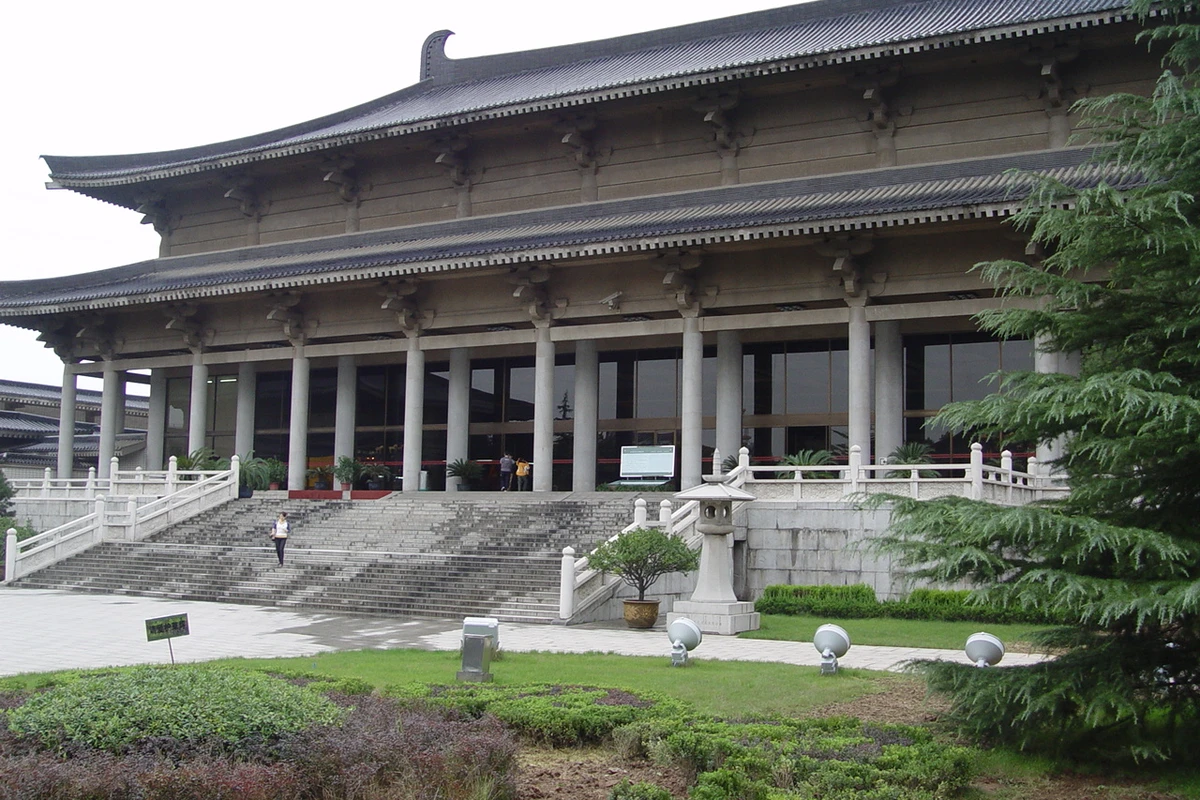
Shaanxi History Museum (Photo: Feng Ganyong)
I remember on the afternoon of September 30, 2004, after finishing the itinerary in Lintong, I arrived in Xi'an with the 'Large-Scale Environmental Western Tour' organized by the Beijing Aiche Yangguang self-driving team. This was my second visit to the city after more than 30 years. Given our limited time in Xi'an, we planned to definitely visit the Shaanxi History Museum. So the convoy drove straight to the museum, located northwest of the Big Wild Goose Pagoda in the ancient capital.
Photo from first self-driving trip to Xi'an (Photo: Cao Qun)
This is China's first large-scale national museum with modern facilities, hailed as the 'Pearl of the Ancient Capital and Treasure House of China.' Built in accordance with the last wishes of Premier Zhou Enlai, construction began in 1983, and it opened on June 20, 1991. The museum covers 65,000 square meters, with a building area of 55,600 square meters, an artifact storage of 8,000 square meters, and exhibition halls totaling over 2,000 meters in length.
Museum courtyard (Photo: Feng Ganyong)
When the convoy arrived at the museum, I looked at the Tang-style architectural complex characterized by a 'central hall and four towering corner towers,' and I was deeply struck by its elegant solemnity, grand scale, and the perfect blend of ancient architectural styles and modern technology. It fully embodies national traditions, local characteristics, and the spirit of the times.
Selected national treasure exhibits (Photo: Feng Ganyong)
Since ancient times, Shaanxi has been an imperial capital, with thirteen feudal dynasties including Zhou, Qin, Han, and Tang establishing their capitals here. The region is extremely rich in both above-ground and underground cultural relics. After completion, the Shaanxi History Museum amassed over 370,000 precious artifacts unearthed from the Shaanxi area, characterized by their quantity, variety, and high quality. Among them, bronzes, pottery figurines, gold and silver wares, and Tang tomb murals are mostly exquisite treasures of superb craftsmanship.
Photo with the museum guide (Photo: Feng Ganyong)
When my group visited this renowned museum, we were warmly received by Deputy Director Wang Bin of the Shaanxi History Museum. Deputy Director Wang arranged for museum guide Zhu Jinbo to give us a tour. Her clear and vivid explanations left a deep impression on the team members. While admiring numerous national treasures, we also gained a fairly detailed understanding of a period of Chinese history, which was truly enlightening.
Beiyuanmen Snack Street (Photo: Feng Ganyong)
If the ancient capital culture of Xi'an offers a feast for the spirit, then its culinary delights are a tangible treat for the senses.
Sampling northwest flavors (Photo: Feng Ganyong)
That evening, on the several-kilometer-long Muslim food street at Beiyuanmen, west of the Bell Tower, amid the bustling crowds, you could spot groups of our team members here and there. Though our visit to Xi'an was just a short day, the ancient capital's charm left an unforgettable impression on me and all the teammates who took part in this grand western environmental tour.
Photo from second Xi'an trip (Photo: Yang Yong)
My second self-driving trip to Xi'an was on April 2, 2012. At that time, after finishing the 'Self-Drive to Hanzhong, Shaanxi to Enjoy the Rapeseed Flower Sea and Visit the Three Kingdoms Battlefield of Dingjun Mountain' activity organized by Beijing Aiche Yangguang, I stopped by Xi'an on the way back to Beijing from exploring the ancient battlefield at Dingjun Mountain.
Old Bai's Paomo Restaurant (Photo: Feng Ganyong)
That day, after arriving in Xi'an at noon, we first went to the famous Old Bai's Muslim Lamb Paomo Restaurant, which had once been patronized by the President of Finland, for a northwest-style lunch. Then we began our half-day tour of Xi'an.
A striking corner of the Big Wild Goose Pagoda (Photo: Feng Ganyong)
During our sightseeing, we visited the Big Wild Goose Pagoda Square and Zhengguan Culture Square. The Big Wild Goose Pagoda Square, built in 589 AD, is one of Xi'an's iconic landmarks. It was here that the great Tang Dynasty monk Xuanzang translated Buddhist scriptures. It's a must-see for anyone visiting Xi'an. Interestingly, we also saw traditional Beijing-style peep shows (la yang pian) from Old Beijing's Tianqiao area here.
Peep show in Xi'an (Photo: Feng Ganyong)
The Big Wild Goose Pagoda Square sits at the foot of the world-renowned Buddhist sacred site, the Big Wild Goose Pagoda. It is the largest Tang culture-themed square in Asia and has become a popular cultural and leisure attraction for Xi'an residents—a place for sightseeing, gatherings, and relaxation. After visiting, the renowned Chinese scholar Huo Songlin joyfully wrote a poem: 'Sparkling waters and lush greenery, new halls and palaces; flowers like brocade, grass like a carpet. The square combines garden beauty, bringing joy to all who visit and relax.'
Zhengguan Square (Photo: Feng Ganyong)
Zhengguan Culture Square is not far from the Big Wild Goose Pagoda Square. It is a perfect example of the harmonious blend of traditional culture and modern architecture. The square consists of four cultural and artistic buildings: Xi'an Grand Theatre, Xi'an Concert Hall, Qujiang Art Museum, and Qujiang Pacific Cinema. Built according to the highest principles of Chinese architecture, it conveys a majestic Tang Dynasty style.
A corner of the square's statue groups (Photo: Feng Ganyong)
Strolling through Zhengguan Square, the highlight is the central sculpture landscape pedestrian street that runs north-south along the axis. Here, themed group sculptures depict prosperous emperors, historical figures, heroic stories, and classic artistic works.
Flowers in the square (Photo: Feng Ganyong)
Among these many statues, the most representative is the Zhengguan Monument, featuring an equestrian statue of Li Shimin and surrounding auxiliary sculptures. The front of the monument is engraved with the four characters 'Zhenguan Zhi Zhi' (the Reign of Zhenguan), and the back bears several hundred characters from the 'Zhenguan Political Essentials,' reflecting the prosperity of the Tang Empire.
Photo with South American travel companion (Photo: Ling Yingsheng)
My third self-driving trip to Xi'an was on September 9, 2017. At 8 a.m., I joined the Beijing Aiche touring team for the '2017 Belt and Road and Cities along the Yellow River Ordos Self-Drive National Touring Exhibition.' After leaving the Magnolia Hotel in Zhengzhou, Henan, we drove toward the final destination, Xi'an, Shaanxi. After over five hours on the road, we arrived in the rain at the Vienna International Hotel in Xi'an around 2 p.m.
Qujiang Heritage Park (Photo: Feng Ganyong)
At 5 p.m., accompanied by my friend Ma Lei, who had come to attend the touring promotion event from a South America trip, we braved the drizzling rain and drove to explore several sites during the twilight hours: Xi'an's South Lake, Qujiang Pool Heritage Park (one of the Eight Scenic Spots of Chang'an), Qujiang Cold Cave Heritage Park, and Tang Paradise, taking in Xi'an's beautiful night scenery.
Photo at the heritage park (Photo: Ma Lei)
During our tour, Ma Lei told me that Xi'an is famous for its Eight Great Scenic Spots of Chang'an: the Fairy Palm of Mount Hua, Evening Glow on Mount Li, Wind and Snow on the Ba River Willows, Qujiang Drifting Cup, Morning Bell of the Wild Goose Pagoda, Ancient Ferry of Xianyang, Mist over Thatched Cottage, and Snow on Mount Taibai. The area southeast of present-day Xi'an was a beautiful scenic spot during the Han and Tang dynasties.
Qujiang cruise boat dock (Photo: Feng Ganyong)
The pool got its name 'Qujiang' (meaning 'winding river') because of its winding waterways. It gradually dried up after the Song Dynasty. In the Tang Dynasty, when new scholars passed the imperial examination, the emperor would host a banquet at Qujiang Pool. The scholars would set wine cups afloat on the twisting stream and drink them as they floated by, becoming a popular custom. After finishing our tour of Qujiang, we drove a short distance to Qujiang Cold Cave Heritage Park.
Entrance of Cold Cave Heritage Park (Photo: Feng Ganyong)
Cold Cave Heritage Park is a theme park highlighting love autonomy and loyalty. Built on rich historical and cultural heritage, it taps into modern emotions to create a place for young couples to pledge their love, symbolizing enduring and steadfast affection.
Photo at Cold Cave (Photo: Ma Lei)
At the same time, the park offers unique folk-style wedding services for newlyweds, promoting social virtues and celebrating loyal and pure love, fully embracing the love theme. Around the scenic area, I saw some vividly crafted statues on the theme of love and truly felt that this is indeed a rare love-themed park in China.
A corner of Cold Cave Heritage Park (Photo: Feng Ganyong)
The story of the Cold Cave originates from a legend set in Chang'an during the late Tang Dynasty. Wang Baochuan, the third daughter of then-Prime Minister Wang Yun, threw an embroidered ball from a tower to choose a husband and hit the impoverished Xue Pinggui. Facing her family's opposition because they despised poverty and loved wealth, she severed ties with her father, left home alone to marry Xue, and lived in the cold cave by Qujiang Pool.
Night view of Qujiang, Xi'an (Photo: Feng Ganyong)
Later, Xue Pinggui went on an 18-year western expedition. Wang Baochuan faithfully waited for him in the cold cave. With no food, she dug up all the shepherd's purse in the nearby fields and endured those days. After 18 years, Xue returned with great military honors, reunited with Wang at the cold cave, and made her the empress. The famous Qin opera 'Wu Dian Po' tells this story, and the audience rejoices at the final reunion of Xue and Wang.
Night view of Tang Paradise (Photo: Feng Ganyong)
When we drove from Cold Cave Heritage Park to Tang Paradise, the evening lights were just coming on. The classical-style buildings were especially beautiful in the night. Ma Lei explained that Tang Paradise was built on the original site of a Tang Dynasty lotus garden, and is China's first large-scale royal garden-style cultural theme park that comprehensively showcases the grandeur of the full Tang Dynasty. It was designed and planned by Zhang Jinqiu, a member of the Chinese Academy of Engineering and a renowned architectural master.
Night view of Bell Tower, Xi'an (Photo: Feng Ganyong)
Tang Paradise gathers the splendid and glorious Tang culture in one park, allowing visitors to 'step into history, feel the culture, and experience the life.' It offers viewing, feeling, learning, consuming, and experiencing, enabling people to seek the spiritual roots of the Chinese nation. It has become a park of history, humanity, art, ecology, and spirit, hailed as a grand architectural spectacle, a garden masterpiece, a treasure trove of art, and a monumental work of culture in China.
The Big Wild Goose Pagoda at night (Photo: Feng Ganyong)
That evening, guided by my travel friend Ma Lei, I went to a famous old Zhang's Chinese Hamburger (roujiamo) shop on Ziwu Road in Xi'an. I tasted the northwest-style delicacy of their roujiamo. After dinner, we drove around Xi'an in the light rain. The brilliantly illuminated, magnificent night scenery along the way left a deep impression on me.
Xi'an on a rainy night (Photo: Feng Ganyong)
On the morning of September 10, 2017, I concluded my third quick self-driving trip to Xi'an. With lingering fond memories, I left Xi'an together with Cao Qun, President of Aiche Global Self-Driving Group, and others. After a 13-hour, 1,110-kilometer drive, we successfully arrived back in Beijing at 10:20 p.m., bringing my three short self-driving tours of Xi'an to a perfect close. (Text and photos: Feng Ganyong)