The 'Versailles Literature' of the Stele World: Do You Know the 19 Groups of National Treasures at the Stele Forest Museum?
Xi'an Stele Forest Museum
As the number one holy land of Chinese stele calligraphy
'The forest is big, and all kinds of steles can be found.'
With over 4,000 inscriptions, all originals, the 19 groups of national treasures are world-famous.
But chances are, ninety-nine percent of people don't know what those 19 groups are.
Today, let's find out!
One of the 195 groups of national treasures prohibited from being exhibited abroad
The 'Great Xia Stone Horse' is the only known cultural relic bearing a Great Xia reign mark.
When something is labeled 'unique,' its rarity makes it either priceless or an extremely rare national treasure.
The Great Xia Stone Horse thus earns its place among the heavyweight treasures of the Stele Forest Museum.
Prefaced and annotated by Emperor Xuanzong (Li Longji) of the Tang Dynasty, who personally wrote the text directly on the stone with cinnabar,
fully displaying the grandeur of the prosperous Tang.
It is the first welcome stele at Xi'an Stele Forest Museum.
Kaicheng Stone Classics: The greatest Tang Dynasty textbook of China
The Kaicheng Stone Classics have been carved for over a millennium.
Because ancient printing was underdeveloped, errors crept in through the printing and copying of Confucian classics over the generations.
To ensure accuracy and authority, Emperor Wenzong of Tang accepted the suggestion to engrave these officially proofread classics on stone steles,
allowing scholars to copy and collate them for the imperial examinations.
Hence, the Kaicheng Stone Classics are also called the earliest 'gaokao textbook' in China.
Nestorian Stele: The most famous Chinese stele in the West
Erected in the second year of the Jianzhong reign of the Tang Dynasty (781 AD), it was established for the spread of Christianity in China.
The stele records the spread of Nestorian Christianity in China from the ninth year of the Zhenguan reign (635 AD) to the second year of Jianzhong,
along with its doctrines and rules.
It is one of the 195 groups of national treasures prohibited from exhibition abroad.
Ouyang Xun's Huangfu Dan Stele: One of Ouyang Xun's only surviving national treasure steles
The strokes are tight and restrained, firm and unyielding; dots and lines are meticulously precise, with the strength to withstand a thousand-pound weight.
It is one of the few surviving national treasure steles by Ouyang Xun, one of the Four Masters of regular script.
Yan Zhenqing's Duobao Pagoda Stele: The first stele of the Sage of Regular Script
To learn regular script, start with Yan Zhenqing; to learn Yan's style, start with the Duobao Pagoda.
Yan Zhenqing's Duobao Pagoda Stele was completed in the 11th year of Tianbao (752 AD),
with text by the literatus Cen Xun, title inscribed by calligrapher Xu Hao, calligraphy by Yan Zhenqing, and carving by the stele engraver Shi Hua.
It is the very first stele of the Sage of Regular Script, Yan Zhenqing.
Liu Gongquan's Xuanmi Pagoda Stele: Liu Gongquan's number one stele
Calligraphy lovers are no strangers to the saying 'Yan tendons and Liu bones.'
The Xuanmi Pagoda Stele marks the full maturity of Liu Gongquan's 'Liu style' of calligraphy.
It has always been regarded as the canonical model for beginners of calligraphy and has had a profound influence on later generations.
Monk Huairen's Collection of Wang Xizhi's Sacred Teaching Preface Stele: If you want to learn the calligraphy of the Sage of Calligraphy, this is the one
The stele is 9.4 chi high and 4.2 chi wide, with 30 lines, each containing over 80 characters.
It is the most commonly used stele for beginners learning the Sage's script, bar none.
Cao Quan Stele of the Han Dynasty: The most beautiful stele in Han clerical script
The full name is 'Stele of Cao Quan, the Commandant of Heyang in the Han Dynasty.'
It is an important stele from the Eastern Han period of China.
Yan Zhenqing's Yan Qinli Stele: One of Lu Xun's favorite steles
The Yan Qinli Stele is one of Yan Zhenqing's masterpieces from his most mature period.
Its structure is dignified and magnanimous, open and bright, combining movement and stillness, skill and simplicity, with an air of grace.
It is also one of Lu Xun's favorite steles.
Next year marks the 100th anniversary of its excavation.
Six Steeds of Zhao Mausoleum: The most famous national treasure at Li Shimin's tomb, without a doubt
The most famous national treasure in front of Li Shimin's tomb, bar none.
Among the top four most well-known national treasures of China.
One of the 195 groups of national treasures prohibited from exhibition abroad.
Because of their immense fame, the state assigned four separate treasure group numbers, one for each.
Six Steeds of Zhao Mausoleum — Shi Fa Chi (the Chestnut Horse)
Six Steeds — Qing Zhui (the Blue-and-White Horse)
Six Steeds — Te Qin Biao (the Turkic Horse)
Six Steeds — Bai Ti Wu (the White-hoofed Crow)
Stone Rhinoceros from Li Yuan's Xianling Mausoleum: The heaviest national treasure in the Stele Forest
The mightiest tomb-guarding stone beast in front of the tomb of Li Yuan, the founding emperor of the Tang Dynasty.
It's probably also the only emperor to have a rhinoceros carved at his tomb.
Weighing 10 tons, it's the heaviest national treasure in the Stele Forest.
Tang Dynasty Laozi Statue: Said to have been carved in the likeness of Li Longji
A white jade statue presented to Li Longji by An Lushan.
The statue of Laozi is carved in the round.
The weighty carving technique brings out the fineness and smoothness of the white jade, making it a national treasure-level masterpiece of Taoist sculpture.
Tomb Gate, Epitaph, and Stone Coffin of Li Shou: The earliest Tang Dynasty prince's tomb in China
The earliest Tang Dynasty prince's tomb in China,
belonging to Li Shou, the most fortunate perennially defeated general, who was the cousin of Tang Gaozu Li Yuan.
The stone coffin of Li Shou is carved inside and out with rich and exquisite patterns, vividly reproducing the court music, dance, and aristocratic life of the Tang Dynasty.
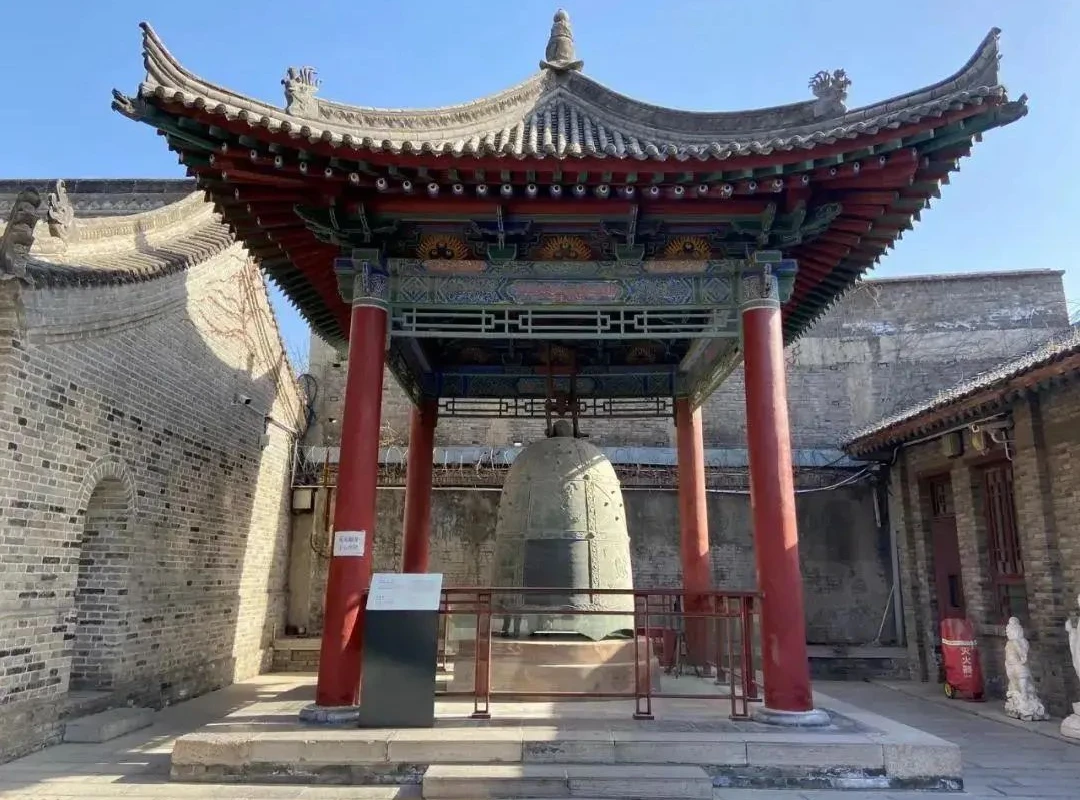
Liu Gongquan's Bell Tower Inscription for Huiyuan Temple: The earliest Tang Dynasty prince's tomb in China
The inscription recounts the historical evolution of the Huiyuan Temple site and the state of its scenery and facilities,
and extols the bronze bell inside.
According to Bai Xuesong, a guide at the Stele Forest Museum, this is the only national treasure that is not on display and kept in storage.
The reason is very 'Versailles' — it was only excavated in 1986 and there’s simply no room for it now...
A thousand-year ancient capital, encounter the Stele Forest
The national treasures of the Stele Forest Museum await your visit!