Inner Mongolia Self-Driving Travel Notes (July 2019): Chapters on Hohhot, Baotou, and Ordos
In July 2019, I traveled by car to Hohhot, Baotou, and Ordos in Inner Mongolia for 4 days.
1. Inner Mongolia, Hohhot, Zhaojun Museum:
4A, ticket 60 yuan. Located near the area before entering Hohhot city from Datong.
It is the tomb of Wang Zhaojun, the Mingfei (Bright Consort) of the Han Dynasty in historical records and folklore. Originally built in the Western Han period before the Common Era, over 2000 years ago.
The tomb mound resembles an inverted bucket, 33 meters high, with a base area of 13,000 square meters, making it one of the largest Han tombs in China.
Covered with green grass, lush and verdant, it is known as the "Green Tomb."
Zhaojun's marriage to the Xiongnu: Wang Zhaojun, whose given name was Qiang, was from Zigui, Nan Commandery of the Western Han (today's Xingshan County, Hubei Province), and is one of the Four Great Beauties of ancient China. Originally a maid in the imperial palace, during the Western Han dynasty, Huhanye Chanyu (king) of the Xiongnu came to the court to seek a marital alliance. Zhaojun volunteered to marry the Xiongnu far away, later being titled Ninghu Yanzhi (queen), which brought peace between the Han and Xiongnu after nearly half a century of war. This is the famous story of "Zhaojun going beyond the frontier."
2. Inner Mongolia, Hohhot, City Area:
1. Xilitu Zhao:
Xilitu Zhao: A quiet corner, spectacular statues, fragrant incense, murmured scriptures, devout faith.
Ticket: 25 yuan
Xilitu is Mongolian for "chief" or "throne." Also known as "Small Zhao Temple."
It is the largest Lamaist temple in Hohhot and controls the Yellow Sect authority in this region.
2. Dazhao Temple:
4A, ticket 34 yuan.
Mongolian name "Yike Zhao," meaning "Great Temple."
Built in the Ming Dynasty.
Dazhao is the earliest Tibetan Buddhist temple in Hohhot, the largest Yellow Sect temple, and one of the few temples in Mongolia without a reincarnated Living Buddha, with a broad influence in the Mongolian region.
Dazhao is famous for its silver Buddha, murals, and dragon carvings.
The silver Buddha is 3 meters tall, cast from 30,000 taels of pure silver, one of the largest existing silver Buddhas. Its surface is gilded.
The murals, after centuries, are dark and almost indistinguishable in color.
The dragon carvings are 10 meters high, with two dragons facing each other, "lifelike."
Additionally, Dazhao has three precious items granted by Emperor Kangxi: a yellow silk umbrella with phoenix and dragon patterns inlaid with peacock feathers, a pearl-embellished eight-treasure palace lantern used in the court, and a golden Buddha. They have all turned black over time, losing their golden appearance.
In fact, Dazhao also has another treasure: a jade Buddha, a white and crystal-clear seated statue of Shakyamuni meticulously carved from Burmese jade, with gems glittering on its crown and robes.
3. SaisShang Old Street:
A layout that narrows to widen, uneven floor tiles, clean and tidy environment, strong ethnic atmosphere.
4. Islamic Style Street:
Ethnic flavor, distinctive architecture, halal atmosphere.
5. Bao'erhan Buddha Pagoda:
6. Five Pagoda Temple (Diamond Throne Relic Pagoda):
Built during the Yongzheng reign of the Qing Dynasty, about 16.5 meters high, the top composed of five small relic pagodas.
7. Qing Princess Mansion:
8. General's Yamen.
Suiyuan City General's Yamen: During the Yongzheng reign (1723–1735), the Qing Dynasty built a new city 2.5 km northeast of the old Hohhot to consolidate the northwestern border and station the Eight Banner Manchu troops.
Construction began in the 13th year of Yongzheng (1735) and was completed in the 4th year of Qianlong (1739), named Suiyuan City, with a Suiyuan General in command, overseeing the Mongol princes of the southern desert and the garrisons of Datong and Xuanhua.
The Suiyuan General's Yamen was built to the specifications of a first-rank frontier official's yamen, covering 15,000 square meters.
On the way to the Inner Mongolia Museum, a torrential rainstorm hit, lasting over half an hour. The ground was heavily flooded, with poor drainage; the deepest water reached half a tire height. Driving in water felt like steering a boat, with splashes rising on both sides.
Upon arriving at the museum, we were told the parking lot was full and not allowed to enter. After circling around twice with no place to park, we had to give up visiting the museum. Such a large museum had nowhere to park? It was a Friday! I couldn't understand this management mindset?!
The museum covers a huge area with a large square and wide internal roads. Parking would have been no problem if allowed.
On the way to Baotou:
3. Inner Mongolia, Baotou,
1. Tumd Right Banner, Meidaizhao
4A, ticket 30 yuan.
Meidaizhao is located in Meidaizhao Village, Tumd Right Banner, about 50 km east of Baotou.
Built during the Qinglong reign of the Ming Dynasty (1564–1582), it was an important center for the spread of Lamaism into Mongolia.
Meidaizhao is set against hills and near water, with pleasant scenery and a unique architectural style. It imitates the Han Chinese style, blending Mongolian and Tibetan elements, forming a "city-temple combination where humans and Buddha coexist." It contains a large number of murals.
Many famous poems from ancient and modern times describe the Yin Mountains. For example, the famous folk song of the Northern and Southern Dynasties: "At the foot of the Yin Mountains, the vast steppe stretches under the dome of heaven; the sky is blue, the wilderness vast, wind blows the grass low to reveal cattle and sheep." Another famous line is by Tang poet Wang Changling: "If the Flying General of Dragon City were still here, the barbarian horses would not dare to cross the Yin Mountains." These phrases also invigorate the Yin Mountains with new charm in the new era.
2. Saihantala Urban Wetland Park
4. Inner Mongolia, Ordos,
5A scenic area, ticket 170 yuan, shuttle bus 30 yuan. A standard newly-built mausoleum.
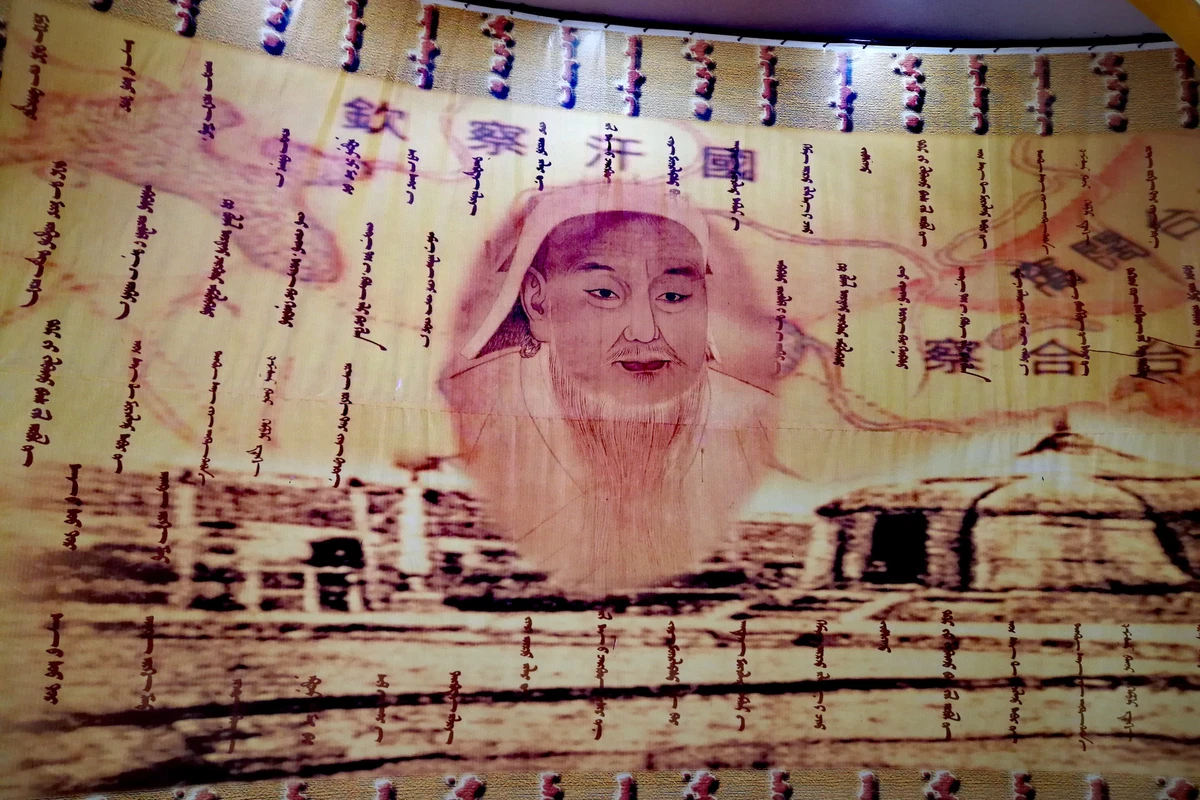
It is a sacred site for worshipping Genghis Khan.
The Mongols practice "secret burial," so the true tomb of Genghis Khan remains a mystery.
This is my 40th travel note.
If you like it, don't forget to give a thumbs up!


